
Reviewed · MONASTERY TOURS
11-Day Romania Tour from Bucharest with Transylvania & Bucovina
Romania reveals itself in layers on this 11-day private tour: grand Bucharest, fortified Saxon towns, Dracula lore, painted monasteries, wooden churches, and remote mountain valleys. I like the route because it reaches far beyond the usual Bucharest and Bran combination.
I especially like the private vehicle and guide, which make a wide-ranging route practical, and the chance to see Bucovina and Maramures, two regions that are easy to miss on a shorter trip. The tradeoff is distance. Several days involve long drives and a brisk run of short visits, so you should enjoy road travel and changing scenery.
The company does not name the guide assigned to this departure. Past tours have used guides including Chris, Christian, Gabriel, and Gabriel “Gabby” Florea. The strongest pattern is personal service, flexible planning, and guides who explain Romania’s complicated past in plain language.
Key points at a glance
- Bucharest begins with grand scale: See the Palace of Parliament, Village Museum, and Lipscani Old Town.
- Transylvania mixes legend and real history: Visit Peles Castle, Bran Castle, Rasnov, Brasov, Biertan, Sighisoara, and Sibiu.
- Bucovina delivers Romania’s finest religious art: The painted monasteries of Voronet, Humor, Sucevita, and Moldovita are the visual high point.
- Maramures feels distinctly rural: Wooden churches, traditional villages, the Mocanita steam train, and Merry Cemetery give this region a different character.
- The price includes useful basics: Private transport, an English-speaking guide and driver, 10 nights of accommodation, 10 breakfasts, and airport transfers.
- You need to budget for extras: Entrance fees, lunches, dinners, drinks, and souvenirs are not included.
Bucharest begins with Ceausescu’s enormous palace
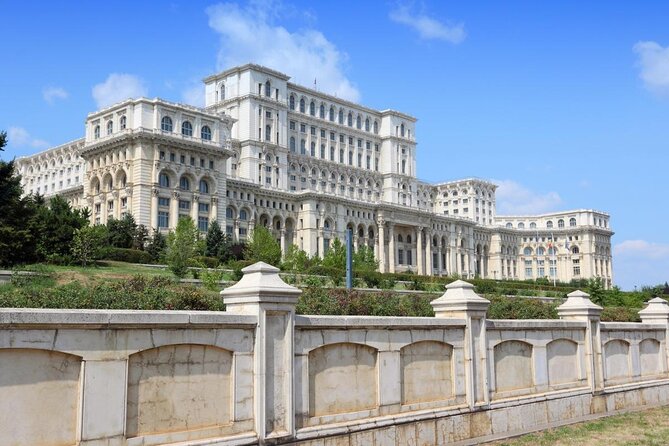
The tour opens in Bucharest with the Palace of Parliament, the former Communist leader Nicolae Ceausescu’s colossal project. It is often described as the world’s second-largest administrative building after the Pentagon, and the scale is hard to grasp until you are inside it.
Your 90-minute visit takes you through a display of marble, oak, crystal chandeliers, mosaics, gold leaf, stained glass, and thick carpets. The building is not subtle. That is precisely why it works as an introduction to Romania’s recent past. You see the excess of the communist state before moving into the country’s older royal, religious, and village traditions.
Admission is not included, so set aside money for the palace and other paid sights. The exact ticket arrangements can also affect the pace of the first morning.
Next comes the Dimitrie Gusti Village Museum beside Lake Herastrau. This outdoor museum covers about 30 acres and contains roughly 50 traditional buildings from across Romania. It gives you a quick look at rural homes, farm structures, and regional building styles without waiting until the later villages and mountain regions.
I like this stop because it gives context to the rest of the trip. When you later see wooden churches and old village houses in Maramures, you will have a better sense of how varied Romanian rural life can be.
The day ends in Lipscani, Bucharest’s historic center. The former residential quarter is now filled with streets, restaurants, shops, and restored façades. Your walking tour is free, and one hour is enough for an introduction, though not enough for every lane or museum.
More monastery visits around Bucharest:
- Princely Court of Târgoviște and Curtea de Argeș Monastery
★ 4.5 · 50 reviews - Small Group Tour to Mogosoaia Palace & Snagov Monastery
★ 4.4 · 41 reviews - Sacred Monasteries Private Tour: Snagov, Țigănești & Căldărușani
★ 5.0 · 32 reviews
Sinaia and Brasov bring castles and mountain air
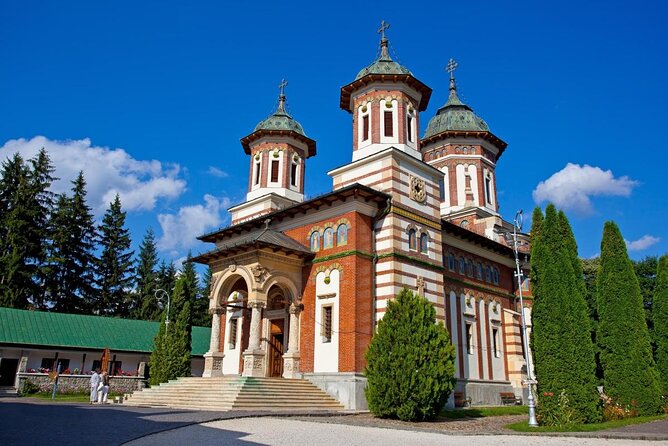
Day two heads north toward Sinaia. The Orthodox Monastery of Sinaia is a short visit, only about 20 minutes, but it helps explain the religious tradition that appears again and again across Romania.
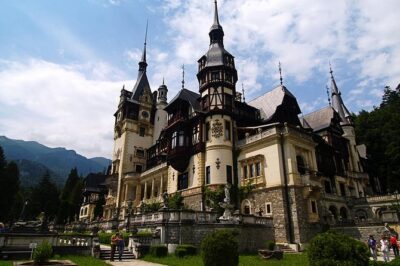
Peles Castle is the major stop. Set against the Carpathian Mountains, this German Renaissance-style royal residence is one of the country’s most polished sights. Inside, expect elaborate woodwork, decorative rooms, and a very different mood from the stark Palace of Parliament.
The scheduled visit lasts about 90 minutes. Admission is extra, and you should keep in mind that castles are usually more rewarding when you have enough time to absorb the rooms rather than rush through them. Here, the private format helps because your guide can give context before and after the visit.
Brasov gets two hours for a walking tour. The old center combines Gothic, Baroque, and Renaissance buildings with mountain views and a strong medieval identity. The route includes Council Square, the Black Church, Ecaterina’s Gate, the White Tower, the Black Tower, and the old citadel area.
Brasov is one of the more comfortable walking days. The sights are close together, and you get a useful contrast between the grand castle at Sinaia and an old town that still functions as a living city.
Bran and Rasnov balance myth with medieval stone
Bran Castle is the most famous stop on the trip, but it is important to arrive with realistic expectations. The connection to Dracula comes from the modern legend surrounding Vlad the Impaler and Bram Stoker’s story. Vlad Tepes was a real Wallachian ruler, remembered in Romania for resisting the Ottoman Empire and enforcing harsh laws.
The castle itself is a medieval stronghold dating to the 14th century. Its setting and narrow interior spaces make it atmospheric, but the Dracula connection often receives more attention than the actual political and military story.
You get about two hours here, with admission not included. That time allows for the castle and a look around the surrounding area, though the stop can feel busy in peak periods.
Rasnov Citadel follows with one hour. Built to protect local people and their livestock from invasions, the fortress sits above the town and offers broad views. The route description emphasizes the garden and panorama, so access conditions may shape exactly what you see on the day.
I like pairing Bran with Rasnov. Bran is the famous name, while Rasnov gives you a clearer sense of why hilltop fortifications mattered to ordinary communities.
Biertan and Sighisoara reveal Saxon Transylvania
Day four shifts toward the fortified churches and medieval towns of Transylvania. Biertan is a quieter, more atmospheric stop than Bran. Its fortified church preserves a late 15th and early 16th-century architectural group and is recognized by UNESCO.
After the church, take time to walk through the village. The setting is part of the appeal. You are not simply checking off a building, but seeing how the church relates to the surrounding settlement.
Sighisoara receives two hours and offers one of the clearest medieval town experiences on the route. German craftsmen and merchants founded the town, and its historic center includes the Clock Tower and History Museum, the Church on the Hill, the covered school stairs, Central Square, and the house associated with Vlad Tepes.
The old streets are easy to enjoy at a walking pace, but the town’s slopes and stairs require comfortable shoes. Admission to the principal sights is not included, even though the walking portion is free.
A few more Bucharest trips worth a look
- Bucovina Painted Monasteries Day Tour
★ 5.0 · 83 reviews - 1-Day Bucovina Painted Monasteries tour from Suceava – English
★ 5.0 · 33 reviews - Day trip from Iasi to the UNESCO Painted Monasteries in Bucovina
★ 5.0 · 26 reviews - Bucovina Painted Monasteries & Transylvania Tour: 4-Day Private
★ 5.0 · 6 reviews
Crossing the mountains into Bucovina
Day five is one of the tour’s most scenic but also one of its longest driving days. The road through Bicaz Gorge cuts between steep limestone cliffs for about three miles. The scheduled photo stop is only 15 minutes, so you should treat it as a chance to stretch and take pictures rather than a hike.
Red Lake provides a longer break. The lake is known for the reddish material in its water and the tree stumps rising from the surface. You get about an hour for lunch and a walk beside the water. Food is not included, but the planned restaurant stop gives you a practical chance to eat with a view.
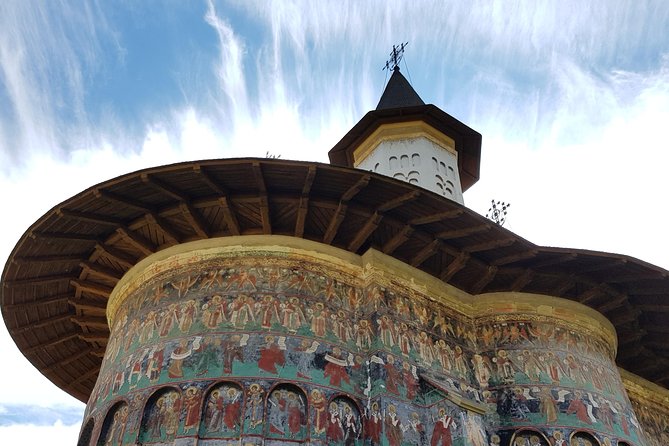
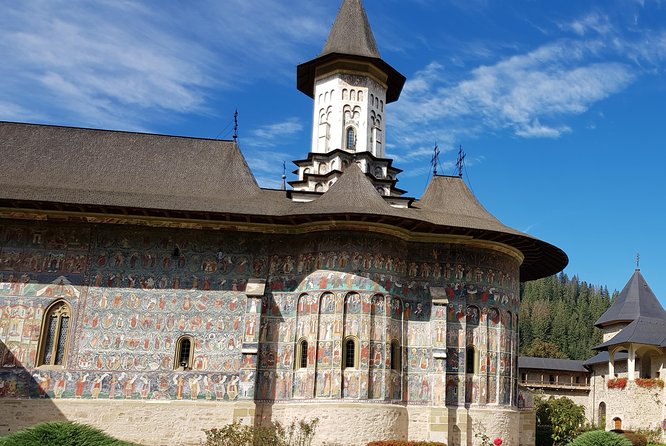
The afternoon brings Voronet Monastery, the best-known of Bucovina’s painted monasteries. Its exterior frescoes show biblical scenes, saints, angels, demons, heaven, and hell. The famous blue color on the Last Judgment wall has remained remarkably strong.
The visit lasts about 40 minutes. That is enough to see the main church and hear the essential explanation, but anyone especially interested in religious art may wish for more time. The value here lies in the combination of image, setting, and age. The paintings were designed to teach faith to people who could not read, and the walls function like a book spread around the building.
Bucovina’s painted monasteries and handmade traditions
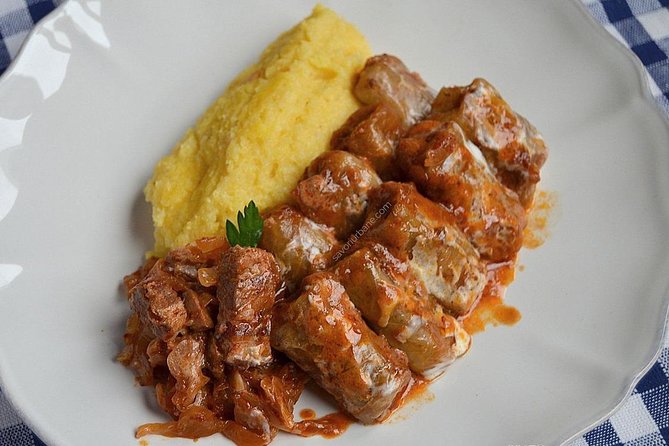
Day six packs several stops into one full day. Humor, Sucevita, and Moldovita are all painted monasteries recognized as UNESCO sites. Each has its own color balance and painted scenes, though the short 30-minute visits mean you will need to focus.
I recommend listening closely to the guide’s explanation of the exterior paintings before walking around the church. Without context, the images can blur together. With context, you can look for the repeated themes of judgment, salvation, saints, and local religious identity.
Marginea adds a practical, hands-on element. The village is known for black pottery, a craft tradition dating back to around 1500. This is one of the better places to buy a souvenir because the object connects directly to the region rather than simply carrying a Romanian label.
The Painted Eggs Museum near the monasteries offers another look at local craft. The collection contains more than 3,000 eggs, including eggs from emu, rhea, crocodile, flamingo, ostrich, quail, and many smaller birds. You also see the symbols and techniques used in Bucovina egg decoration.
This day is excellent for anyone interested in art and folk traditions, but it is not leisurely. Five stops, plus driving, can make the day feel full. If you like taking photographs or reading every display, you may wish the schedule allowed longer at each monastery.
Maramures keeps old village traditions in view
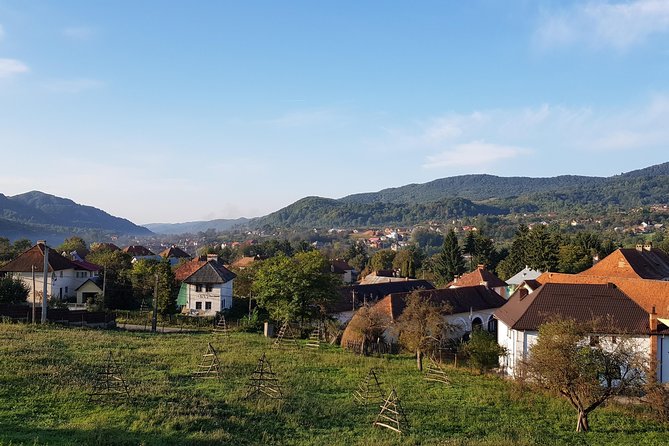
The route continues to Maramures on day seven. This region is known for small villages, hills, meadows, wooden buildings, and traditional rural customs. The pace and appearance differ from Transylvania, which is one reason this long detour earns its place.
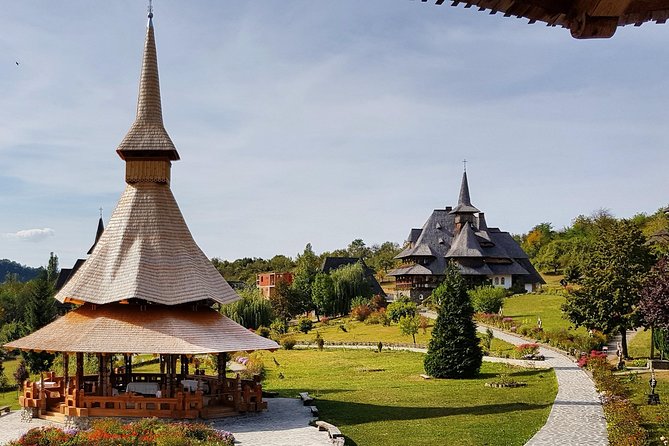
Barsana Monastery has a striking two-level wooden church and offers a look at active monastic life. Rozavlea and Ieud add UNESCO-listed wooden churches, while Ieud Deal is described as the oldest of the group, dating to the 14th century.
The wooden churches are not grand in the way Peles Castle is grand. Their appeal comes from construction, proportion, and the way they fit the villages around them. You see how local builders used wood to create places of worship that were practical, distinctive, and deeply tied to the region.
This part of the tour is especially good for you if you want more than famous castles. The drawback is again the road time. Maramures is remote in relation to Bucharest and Brasov, and reaching it requires patience.
Steam power and dark humor in Sapanta
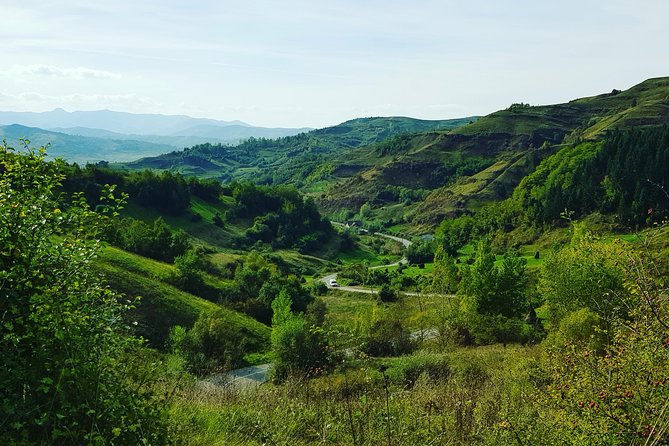
The Mocanita steam train is the signature experience of day eight. The narrow-gauge railway runs from Viseu de Sus for about 30 miles through a mountain valley. The old steam engine stops for firewood and water, and the railway still provides access to settlements farther up the valley.
You have around three hours for the ride. It is not a fast sightseeing transfer. The pleasure is the slow movement, the machinery, the valley views, and the sense of following a working mountain railway rather than a polished theme-park attraction.
Train admission is extra, and the schedule may make this one of the more structured days. Bring patience and allow yourself to enjoy the rhythm of the ride.
In Sapanta, the Merry Cemetery offers one of Romania’s most unusual cultural stops. Blue wooden crosses carry carved scenes and humorous verses about the lives and flaws of the dead. The humor can feel startling at first, but it reflects a local view of death as a beginning rather than a final end.
The nearby Sapanta-Peri Monastery has a very tall wooden church, set in a dendrology park. Together, the cemetery and monastery show two sides of local belief: one playful and direct, the other solemn and devotional.
Cluj-Napoca and Sibiu close the Transylvanian loop
Day nine brings two city visits. Cluj-Napoca’s Union Square is dominated by St. Michael’s Church, a Gothic building dating to the 15th century. The city tour also includes the Opera House, the historic center, and the Orthodox Cathedral.
You receive about 90 minutes, so think of Cluj as a guided introduction rather than a full city stay. It breaks up the rural sections and gives you a glimpse of modern urban Romania.
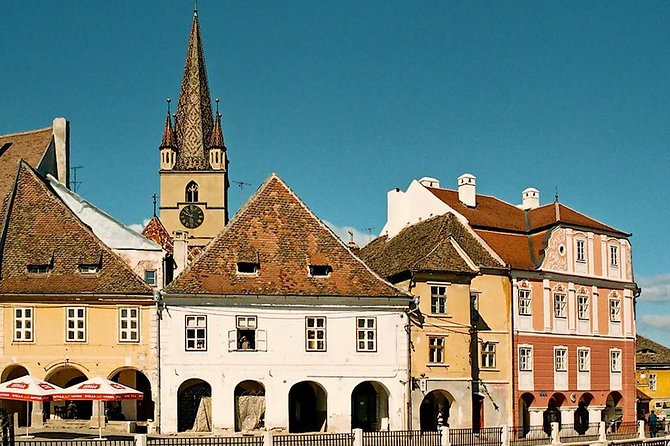
Sibiu gets another 90-minute walking tour. Its old center has guild-era buildings, broad squares, sections of medieval wall, and a distinctly Germanic character. Look for the Evangelical Church, the Bridge of Lies, the Stairs Passage, the Great Square, and the Little Square.
Sibiu is one of the most attractive urban stops on the route, but the visit is short. If you want museums, especially the Brukenthal Museum, you may need to choose between browsing indoors and seeing more of the streets.
Curtea de Arges ends the route in Wallachia
The final sightseeing day visits Curtea de Arges, once the capital of Wallachia. The walking tour includes the Princely Church, old court ruins, the Episcopal Church, and the unusual Olari Church, a painted Moldavian-style church in Wallachia.
This stop brings the journey back toward Bucharest and adds a final layer to the country’s regional story. You have seen Saxon Transylvania, Moldavian Bucovina, Maramures, and now an important Wallachian center.
Day eleven is limited to a 30-minute transfer from your hotel to Bucharest Airport. Round-trip airport transfers are included, which is useful after a trip covering so much ground.
What the $2,367.30 price really covers
At $2,367.30 per person, the value depends heavily on how many people are in your private group and how much you value having the route organized for you. The price includes 10 nights of accommodation, 10 breakfasts, private transportation in an air-conditioned car or van, an English-speaking licensed guide and driver, assistance throughout, and airport transfers in both directions.
Those inclusions remove several practical headaches. You do not need to arrange a rental car, plan mountain routes, or coordinate accommodation across multiple regions. A private guide can also adjust explanations to your interests and help connect the different parts of Romania.
You still need to pay for meals beyond breakfast, drinks, entrance fees, and souvenirs. Since the tour visits many paid attractions, admission costs can add up. Ask for the hotel categories and expected entrance costs before booking so you can compare the full price with a self-drive trip or a shorter private tour.
The accommodation may change according to availability, with a similar hotel offered if needed. That flexibility is useful, but it means you should not treat a particular hotel as guaranteed unless the company confirms it in writing.
Who should book this Romania route?
I would choose this tour if you want to see a large part of Romania without driving yourself. It suits couples, families, and small private groups that value personal attention and do not want to manage hotels, parking, mountain roads, or borderless regional planning.
It is also a strong choice for anyone interested in castles, religious art, traditional craft, and rural culture. The route has far more variety than a simple Dracula-themed holiday.
I would hesitate if you prefer slow travel. The schedule includes several 30-minute monastery visits, short city tours, and long drives between regions. You should also be comfortable spending many hours in a car or van.
Book it if you want breadth, private guiding, and a serious look at Romania beyond Bucharest. Skip it if you want long stays in each town or a relaxed base-and-day-trip holiday. Before paying, confirm the guide, hotel standard, entrance-fee budget, and the exact vehicle arrangement. Those details will decide whether this ambitious route feels convenient or rushed.
FAQ
How long is the Romania tour?
The tour lasts approximately 11 days and includes 10 nights of accommodation.
Where does the tour start?
The tour starts in Bucharest, with a stated start time of 9:00 am. Airport pickup and drop-off are included.
Is this a private tour?
Yes. Only your group participates in the private activity.
What type of transportation is provided?
Transportation is provided by a comfortable, air-conditioned car or van.
Is a guide included?
Yes. An English-speaking licensed guide and driver are included, along with assistance throughout the tour.
Are meals included?
Ten breakfasts are included. Lunches, dinners, other food, and drinks are not included.
Are attraction entrance fees included?
No. Entrance fees for places such as the Palace of Parliament, Peles Castle, Bran Castle, the monasteries, and other attractions are not included.
Is a passport required?
Yes. You need a current valid passport on the day of travel.
Can the hotel change?
Yes. Hotels may change based on availability. If that happens, a similar hotel is provided.
Newest Bucharest trips on the site
- Winery touring & private wine tasting – one day private tour★ 5.0 · 3 reviews
- Bucharest: Dealu Mare Winery Private Trip with Wine Tasting★ 4.9 · 6 reviews
- Village Museum Bucharest Guided Tour★ 5.0 · 6 reviews
- Private Transfer from Giurgiu Port to Bucharest★ 4.5 · 12 reviews
- Airport Henri Coanda (Otopeni) to Bucharest – Private Transfer – Driver★ 5.0 · 5 reviews
- Salt Mine Tour from Bucharest with Entrance Ticket★ 4.5 · 19 reviews
- Wine tasting in Bucharest Old town – bonus cheese platter★ 4.5 · 6 reviews
- Walking tour of Bucharest★ 5.0 · 3 reviews
Monastery Tours, compared.
3-Castle: Peles,Bran,Rasnov,Sinaia Monastery from Brasov w pickup
Read our review →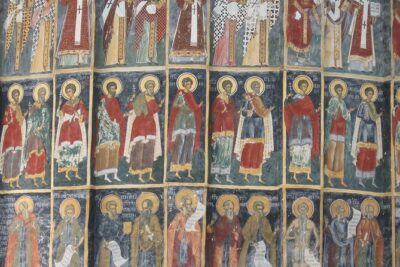
Peles Castle, Bran Castle, Rasnov Fortress and Sinaia Monastery Tour from Brasov
Read our review →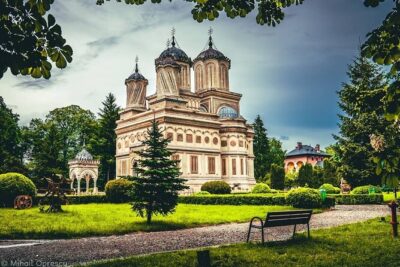
Princely Court of Târgoviște and Curtea de Argeș Monastery
Read our review →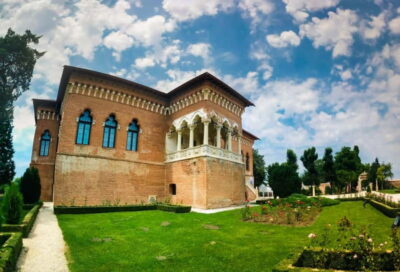
Small Group Tour to Mogosoaia Palace & Snagov Monastery
Read our review →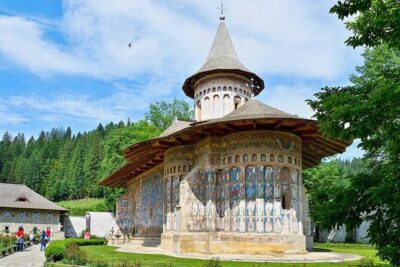
1-Day Bucovina Painted Monasteries tour from Suceava – English
Read our review →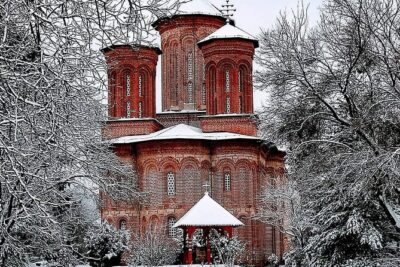
Sacred Monasteries Private Tour: Snagov, Țigănești & Căldărușani
Read our review →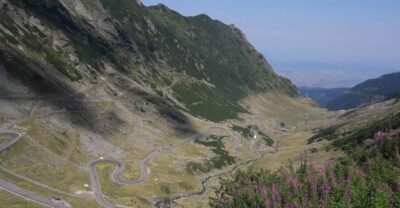
Transfagarasan Highway, Balea Lake & Carta Monastery
Read our review →Browse the lists this tour appears in