
Reviewed · 4-DAY EXPERIENCES
4 Days Private Tour in Transylvania Brasov Sighisoara Sibiu
The best part of this four-day journey is the change of scene each day. You move from royal castle rooms and Dracula legends to Saxon villages, UNESCO-listed towns, mountain roads, and Orthodox churches. Guide Mircea, also called Frank, brings a strong grasp of local history and can adjust the pace for your private group.
I like the small-group freedom and the broad mix of places. You are not limited to one town or one type of attraction, and the private format makes it easier to pause, ask questions, or customize the route. I also like the practical balance of famous stops and quieter villages such as Viscri and Mălâncrav.
The main consideration is cost. At $872.67 per person, this is not a budget bus trip, and you still pay separately for hotels, meals, and entrance tickets. The payoff is privacy, door-to-door transport, and a four-day route that would be awkward to arrange on your own.
Key points to know before booking
- Four days, four distinct sides of Transylvania: castles, medieval towns, fortified churches, and mountain scenery all fit into one route.
- Private transport keeps the schedule flexible: only your group participates, and the program can be customized.
- The route includes major UNESCO sites: Sighișoara, Viscri, and Biertan give you more than the standard Bran Castle stop.
- Day four is strongly seasonal: the Transfăgărășan and Bâlea Lake are reached by car in summer, while Bâlea has cable-car access during the rest of the year.
- The guide is part of the value: Mircea, known as Frank to English-speaking clients, is praised for his history and cultural knowledge.
- Budget for extras: accommodation averages about $70 per night with breakfast, meals cost roughly $15 to $20, and admissions total about $35 to $40 per person.
Why this route works for a first look at Transylvania
This tour gives you a useful introduction to Transylvania without making you change transport every morning. You start in Bucharest at 9 a.m., ride in an air-conditioned vehicle, and spend each night in a different historic center: Brașov, Sighișoara, and Sibiu.
That structure matters. You get enough time in each town to see the main sights, but you also reach rural places that are difficult to visit by train. The route includes famous names, especially Peleș Castle and Bran Castle, yet it does not stop there. Viscri, Biertan, Mălâncrav, and Rupea add a stronger sense of the region’s Saxon past.
The four days are full. Most stops last one or two hours, while Sighișoara gets three hours. You should expect a sightseeing holiday rather than a slow village break. The private format helps, but you will still spend a fair amount of time on the road.
More four-day trips from Bucharest:
- 4-Day Private Tour in Transylvania from Bucharest
★ 5.0 · 48 reviews - Transylvania Castles 4-day tour from Bucharest
★ 5.0 · 31 reviews - 4 Days Private Tour in Transylvania: Sibiu, Sighisoara and Brasov
★ 5.0 · 18 reviews
Day one: Peleș Castle, Bran, and Brașov
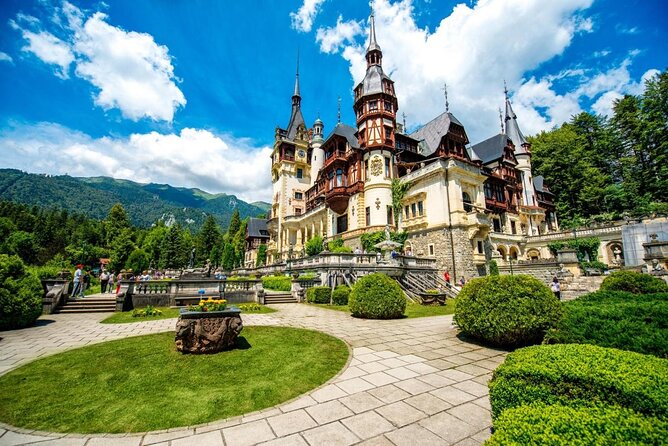
Your first stop is Peleș Castle near Sinaia, built for King Carol I between 1873 and 1914. Its Neo-Renaissance design makes it one of the grandest buildings on this route, and its setting in the Carpathian Mountains gives the opening morning real drama.
The planned visit is about two hours. That is enough time to appreciate the exterior and see the castle as the royal retreat it was, though you should check current interior access and ticket arrangements before departure. The tour price does not include admissions, so the phrase admission ticket free in the schedule should not be read as confirmation that every interior visit costs nothing.
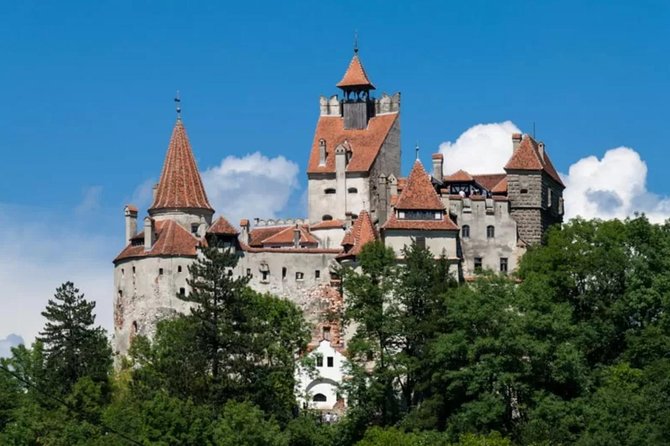
Bran Castle comes next. The building sits on a high rock and is closely tied to Bram Stoker’s Dracula, even though the connection is largely one of legend and marketing. The castle itself has towers, narrow rooms, and a strong defensive look, which explains why the story took hold so easily.
I like having both castles on the same day because they show two different ideas of power. Peleș is royal and decorative. Bran is military, compact, and wrapped in folklore. Two hours is allotted at each, giving you enough time for a meaningful visit without turning the day into a single-site outing.
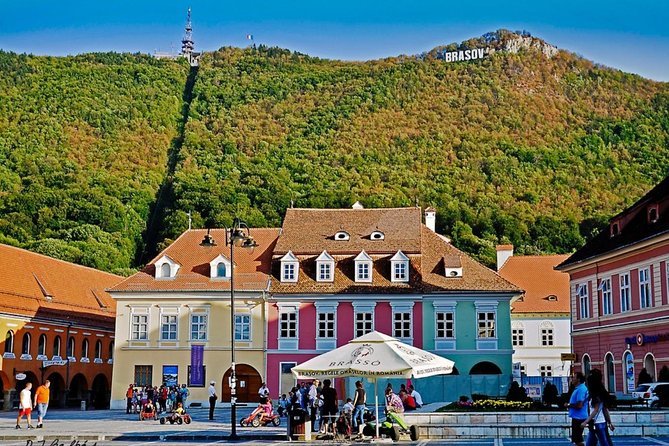
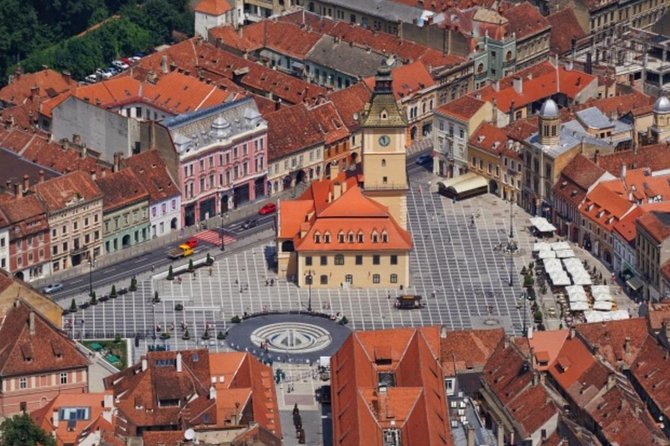
The day ends in Brașov, one of the most pleasant old towns in Romania. Its historic center brings together medieval lanes, Baroque buildings, the Black Church, and Council Square. You can walk among colorful façades and cafés while the Carpathians form the backdrop.
Brașov is also a good first overnight stop because it gives you a proper town evening after a busy sightseeing day. The schedule allows about two hours in the center, but your overnight stay may give you more time if the day runs smoothly. Accommodation is not included, so you arrange and pay for your own room.
Day two: Rupea, Viscri, and medieval Sighișoara
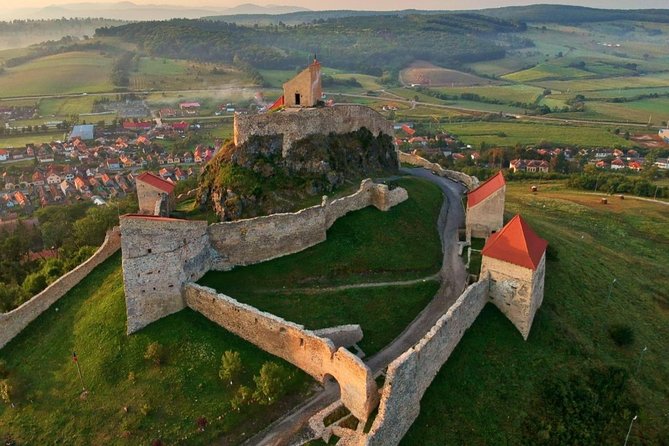
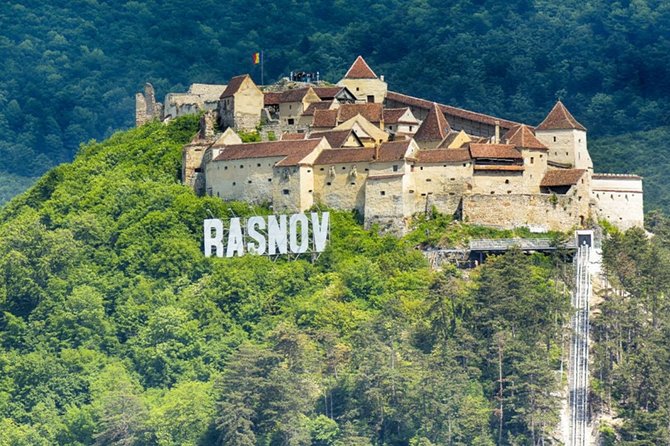
Rupea Fortress adds a hilltop stop with a much older story than its restored walls may first suggest. Human settlement in the area reaches back to the Paleolithic and early Neolithic periods, and the site was documented in 1324 when Saxons took refuge there during a revolt.
The citadel also occupied an important position between Transylvania, Moldavia, and Wallachia. You get about an hour here. That is a sensible length for walking around the fortifications and taking in the views, though anyone with mobility concerns should ask the supplier about the climb and walking surfaces before booking.
Viscri is one of the most valuable stops on the route. Its fortified Lutheran church was built by the Transylvanian Saxon community and later changed from Catholic to Lutheran after the Reformation. The church and village form part of the UNESCO World Heritage group of fortified villages in Transylvania.
The visit lasts about an hour. I would treat this as a chance to look beyond grand castles. The church shows how rural communities protected both faith and daily life in a region that often sat between competing powers. The tour description also links Viscri with King Charles, adding a modern royal connection to an old Saxon settlement.
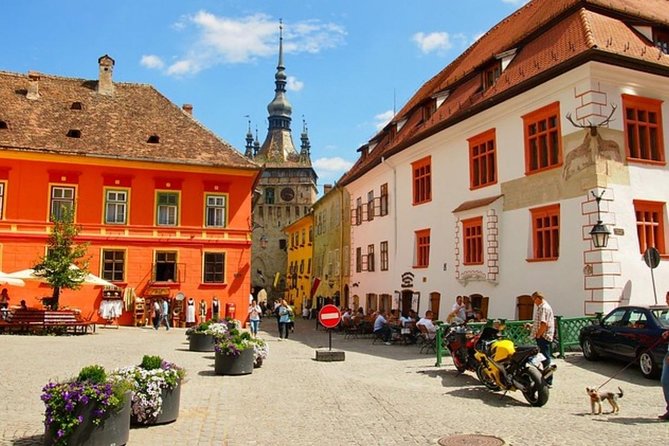
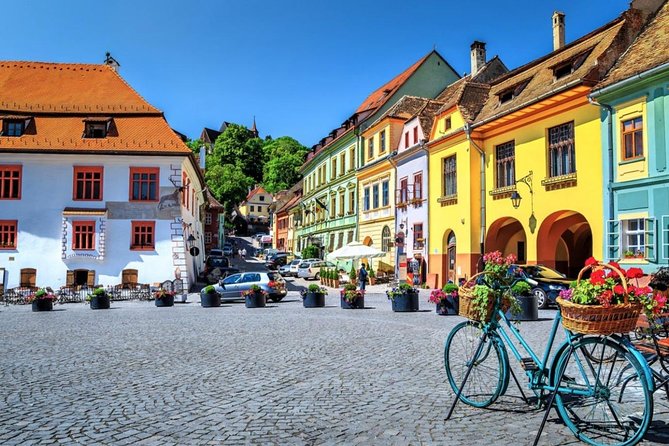
Sighișoara receives the longest stop of the day, about three hours. That is welcome because this UNESCO-listed town rewards walking. Fortified walls surround colorful buildings, and the Clock Tower gives the old center its most recognizable profile.
You can also see the house associated with Vlad Dracula’s birthplace. Here again, the legend is part of the fun, but the town has more to offer than Dracula branding. Its cobbled streets, towers, and compact squares make it one of the clearest medieval town experiences in Romania.
The three-hour visit should let you explore at a reasonable pace rather than simply photograph the Clock Tower and leave. You overnight in Sighișoara, which means you can enjoy the setting after the day’s main traffic has passed. That is one of the strongest practical features of the route.
Day three: Biertan and Sibiu’s Saxon character
Biertan is a short but worthwhile stop between Sighișoara and Sibiu. Its fortified church sits on a hill in the middle of the village, surrounded by three defensive wall tiers and several towers and gates.
The church dates from the 15th century and has late-Gothic details, heavy doors, and a large wooden altar made of many panels. A remarkable wooden door once guarded the sacristy treasures. You get about an hour here, which should cover the church and fortifications without leaving much spare time for a long village walk.
Biertan helps explain why fortified churches matter in Transylvania. These were not castles built only for rulers. They were places where village communities could protect themselves during danger. The setting among village streets and vineyards also gives the visit a calmer feel than the more famous castle stops.
Sibiu is the main destination for day three and your overnight base. Once the center of the Transylvanian Saxons, it became European Capital of Culture in 2007. Its old town is known for attractive squares and a strong Germanic influence, giving the route another urban style after the smaller medieval centers.
The schedule allows two hours in Sibiu. That is enough for a focused walk through the central area, but not enough to see every church, museum, and lane. You may want to decide in advance if you care most about architecture, cafés, or the main square, then use your private schedule wisely.
I like the progression from Biertan to Sibiu. Biertan shows the defensive village system in a compact form. Sibiu shows what happened when Saxon settlement grew into a major city. Together, they make the region’s cultural story easier to understand than a series of disconnected photo stops.
A few more Bucharest trips worth a look
- Castles of Transylvania: Private Day Trip from Bucharest
★ 4.5 · 248 reviews - Small Group Tour to Viscri Church Sighisoara Town Rupea Fortress
★ 5.0 · 225 reviews - 2-Day Medieval Transylvania with Brasov,Sibiu and Sighisoara Tour from Bucharest
★ 4.5 · 145 reviews - Sibiu: Alba Iulia and Corvin Castle Guided Tour
★ 4.7 · 66 reviews
Day four: The Transfăgărășan and Vlad’s Wallachia
The final day changes the mood again. Instead of medieval streets, you head into the Făgăraș Mountains on the Transfăgărășan, a paved mountain road built in the 1970s as a strategic military route.
The road crosses the southern Carpathians for about 90 kilometers and reaches some of Romania’s highest terrain. The schedule gives one hour specifically to the highway, though the road itself is part of the journey rather than a single attraction. Your views depend heavily on weather and road access.
Bâlea Lake sits at 2,034 meters and is the scenic high point of the day. It is a glacial lake with mountain cabins, a weather station, and a mountain rescue station. In summer, you can reach it by car along the Transfăgărășan. During the rest of the year, access is by cable car from Bâlea Cascadă.
This is the most important seasonal detail in the entire tour. If seeing the highway and lake is a top priority, confirm the operating conditions before booking. The route may need adjustment when the high road is not open to vehicles.
Vidraru Dam offers a brief fifteen-minute stop. Completed in 1966, the 166-meter arch dam created Lake Vidraru and remains an impressive piece of engineering. The visit is short, so think of it as a viewpoint and photo pause rather than a full attraction.
The final major stop is Curtea de Argeș Monastery. Its Orthodox cathedral dates from the early 16th century and is dedicated to the Dormition of the Mother of God. Pale gray limestone covers the building, while the interior has frescoes and plaster decoration.
The monastery is also tied to the legend of Meșterul Manole, the builder who could not finish the walls. The story gives the visit a strong place in Romanian folklore, while the building itself shows a style quite different from the Gothic and Saxon churches earlier in the trip.
This last day connects Transylvania with Wallachia and brings the journey back toward Bucharest. It is a fitting finish because you leave the mountain roads and medieval towns with a final look at Romanian Orthodox architecture and royal tradition.
What the $872.67 price really covers
The listed price is $872.67 per person. That buys private transportation in an air-conditioned vehicle, pickup, and a four-day route for your group alone. It does not cover accommodation, meals, or entrance fees.
You should add roughly $210 for three nights of accommodation if you use the stated average of $70 per night. Breakfast is included in that average, but restaurant meals are extra at about $15 to $20 per person. Entrance tickets add another estimated $35 to $40.
That puts the known added cost at about $245 to $250 per person, before any optional spending. The total is therefore closer to $1,118 to $1,123 per person, assuming the quoted averages and one room cost per night. Your actual total will depend on hotel choice, meal habits, and which attractions require paid entry.
For a solo visitor, that is a substantial sum. For two or more people sharing the private vehicle and room costs, the value improves. Group discounts are offered, and the private setup is especially useful if you want to shape the timing around your interests instead of joining a fixed coach schedule.
The strongest value is not the individual attraction ticket. It is the transport between places that are poorly connected by simple public transport, plus a guide who can explain the castles, churches, legends, and regional cultures as you go.
The guide, vehicle, and pace
Mircea, also called Frank, is the named guide associated with the experience. The information provided describes him as able to explain the area’s history and culture in detail, and the program can be adjusted for your group.
That flexibility is important. If you want more time in Sighișoara, a shorter stop at a dam, or more attention to fortified churches, discuss it before setting off. Customization is offered, but it works best when you state your priorities clearly.
The vehicle is air-conditioned, and pickup is offered. The start time is 9 a.m. The tour is private, so only your group participates. Most people can take part, and the meeting area is near public transportation, but the route includes castle grounds, old cobblestones, hilltop sites, and possible uneven paths.
The pace is active but not frantic on paper. The route contains three overnight towns and several stops each day. I would not choose it if you want long mornings in bed or several unplanned hours in every village. I would choose it if you want a broad first visit and prefer having transport and explanations handled for you.
Who should book this tour?
This tour suits you best if you want:
- A private route instead of a large group departure
- Castles and Dracula lore balanced with churches and village life
- A guide who can explain Romanian and Saxon history
- Mountain scenery, especially the Transfăgărășan and Bâlea Lake
- Three different overnight towns
- A flexible plan that can be tailored to your group
It is less suited to you if you want the lowest possible price, dislike changing hotels, or plan to spend several days in just one town. The route covers a lot of ground, and the high-mountain portion depends on seasonal road conditions.
The published rating is five stars from three reviews, with particular praise for the guide, comfortable car, historical explanations, relaxed itinerary, and accommodation arrangements. Those are the areas that matter most on a private multi-day tour, since poor transport or weak guiding can make a busy route tiring.
Should you book the four-day Transylvania route?
I would book this tour if you have four days, want to see more than Bran Castle, and value a private guide over a lower-cost group bus. The combination of Sighișoara, Viscri, Biertan, Sibiu, and the mountain road gives you a fuller view of the region than a short castle excursion.
Before paying, confirm the hotel arrangements, entrance fees, and the operating status of the Transfăgărășan and Bâlea Lake for your dates. If those details suit you, the tour offers an efficient and culturally varied way to connect Bucharest with Transylvania and return through Wallachia.
FAQ
Where does the tour start?
The tour starts in Bucharest, with a stated start time of 9 a.m. Pickup is offered.
How long does the tour last?
The tour lasts approximately four days.
Is this a private tour?
Yes. Only your group participates.
Is accommodation included?
No. Accommodation is not included. The stated average is about $70 per night for a hotel room with breakfast.
Are meals included?
No. Meals are not included. A restaurant meal is estimated at about $15 to $20 per person.
Are attraction entrance fees included?
No. Entrance fees are separate and are estimated to total about $35 to $40 per person.
Can the itinerary be changed?
Yes. The program is described as flexible and can be customized for your group.
Newest Bucharest trips on the site
- Winery touring & private wine tasting – one day private tour★ 5.0 · 3 reviews
- Bucharest: Dealu Mare Winery Private Trip with Wine Tasting★ 4.9 · 6 reviews
- Village Museum Bucharest Guided Tour★ 5.0 · 6 reviews
- Private Transfer from Giurgiu Port to Bucharest★ 4.5 · 12 reviews
- Airport Henri Coanda (Otopeni) to Bucharest – Private Transfer – Driver★ 5.0 · 5 reviews
- Salt Mine Tour from Bucharest with Entrance Ticket★ 4.5 · 19 reviews
- Wine tasting in Bucharest Old town – bonus cheese platter★ 4.5 · 6 reviews
- Walking tour of Bucharest★ 5.0 · 3 reviews
4-Day Experiences, compared.
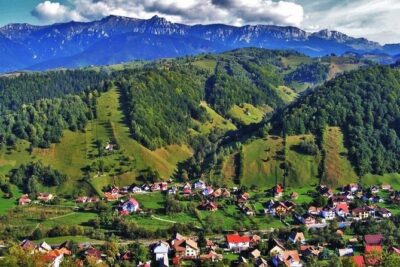
4-Day Private Tour in Transylvania from Bucharest
Read our review →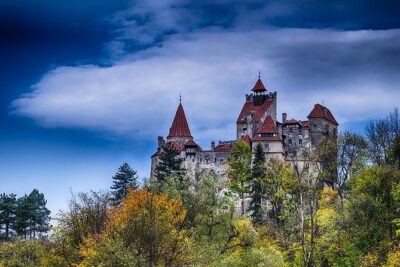
Transylvania Castles 4-day tour from Bucharest
Read our review →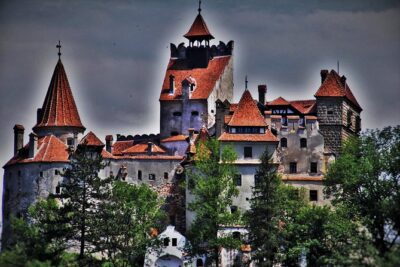
4 Days Private Tour in Transylvania: Sibiu, Sighisoara and Brasov
Read our review →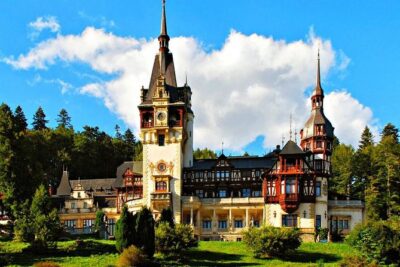
4-Day Private Tour of Transylvania from Bucharest
Read our review →
4-Day Carpathian Trek: Bucegi Mountains and Piatra Craiului National Park
Read our review →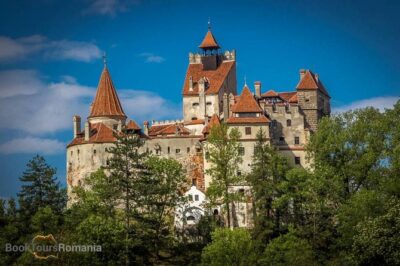
Private Tour: 4-day Transylvania Famous Landmarks
Read our review →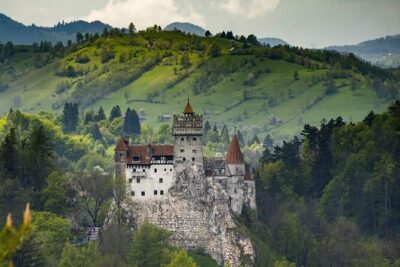
Private 4-Day Tour in Transylvania including Transfagarasan Road from Bucharest
Read our review →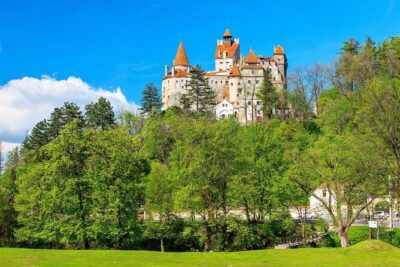
4-Day Transylvania and Dracula Tour from Bucharest
Read our review →Browse the lists this tour appears in