Reviewed · BUCHAREST TOURS
4h Bucharest Panoramic Tour by Car with stops
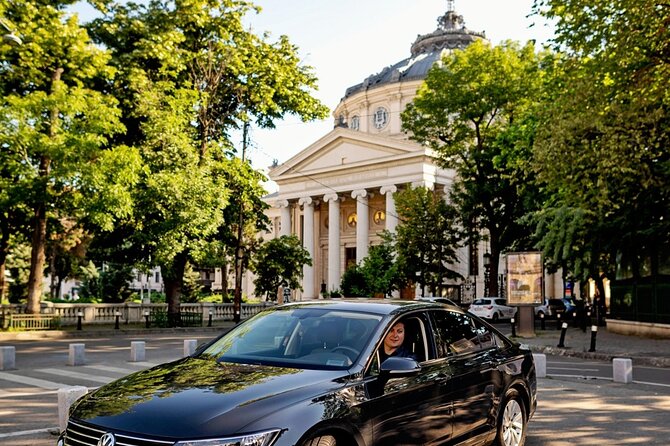
Bucharest makes more sense once you see its sharp contrasts: the huge Palace of Parliament, quiet old churches, grand nineteenth-century avenues, and broad Communist-era boulevards. This four-hour private car tour gives you a fast, useful orientation without asking you to master public transit on your first day.
I like the personal format, since your guide can adjust the pace and explain the city’s complicated past as you move between major sights. I also like the range of stops, from Revolution Square and Calea Victoriei to the Triumph Arch and the House of the Free Press. The main drawback is time: with eleven stops in four hours, several visits are brief exterior looks rather than long, detailed explorations.
Key points before you book
- Private car and guide: Your group travels together, with pickup offered and no need to work out Bucharest’s transit system.
- Eleven central stops: You see political landmarks, churches, royal-era buildings, monuments, and major avenues in one half-day.
- Strong history focus: The route gives special attention to Bucharest’s Communist legacy and the 1989 Revolution.
- Flexible guiding: Guide Sebastián has been praised for adjusting the tour to the time available and the interests of the group.
- Good use of a short stay: Four hours leaves room for lunch, museums, or an evening activity afterward.
- A practical value question: At $117.11 per person, the tour makes the most sense for a small group that values private transport and personal explanation.
Why this four-hour tour works well in Bucharest
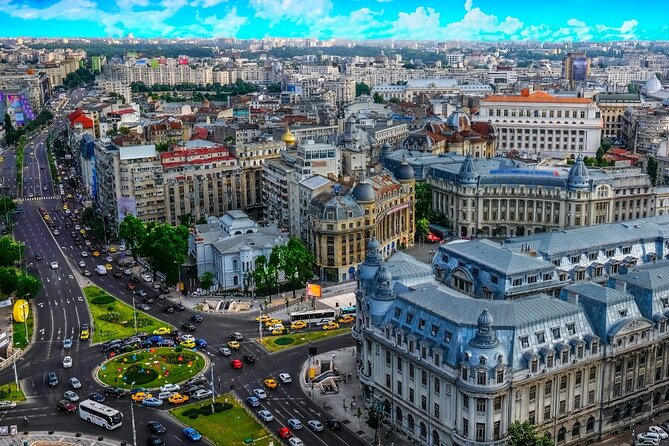
Bucharest is spread out enough that a car can save you time, especially if you are trying to connect western and northern landmarks with the old center. You will not simply circle the same few blocks. The route moves through political centers, historic streets, monumental government buildings, and parts of the city shaped by the Communist period.
The private setup matters. You travel only with your own group, and the guide and driver manage the route. That gives you a more relaxed way to see Bucharest than piecing together several public-transit rides, especially if you have just arrived or have only one day in town.
The tour is offered in English, and pickup is available. Confirmation arrives at booking, and a mobile ticket is accepted. The activity is near public transportation, so it also fits travelers who plan to continue exploring independently after the car tour.
The pace is brisk. Most stops are planned for about twenty minutes, while Revolution Square receives about forty minutes. Think of this as a well-organized city introduction, not a series of full museum visits. You will see and discuss many places, then return later to the ones that catch your interest.
A few more Bucharest trips worth a look
- Bucharest: Palace of Parliament Tickets and Guide
★ 4.3 · 3,182 reviews - Bucharest: Palace of Parliament Tickets and Guided Tour
★ 4.4 · 1,877 reviews - Bucharest: Parliament Palace Skip-the-line Ticket
★ 4.2 · 1,518 reviews
Palace of Parliament: Bucharest’s oversized first impression
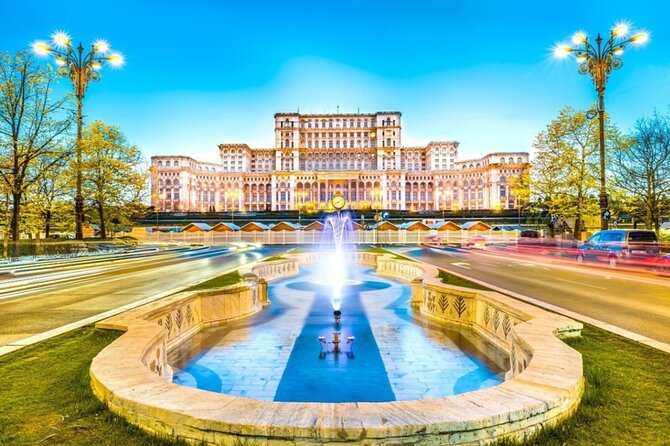
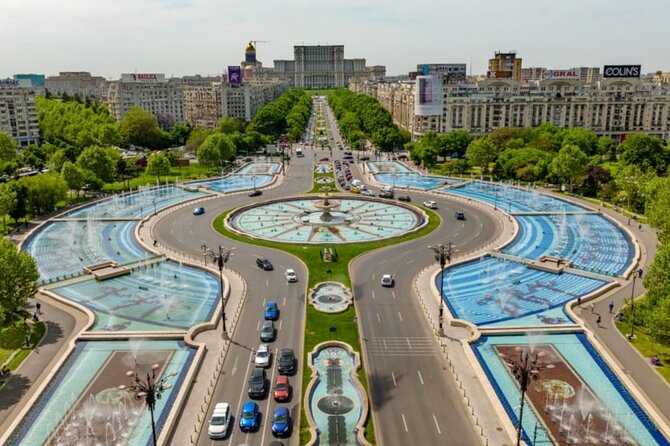
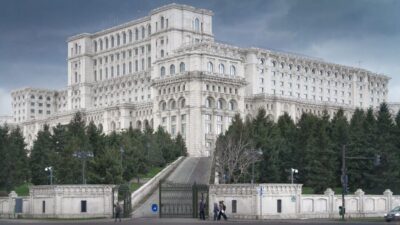
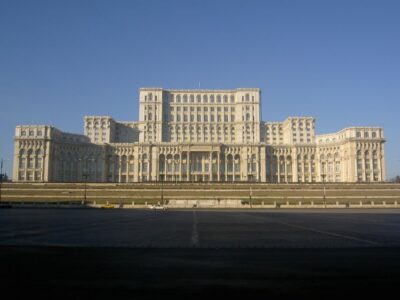
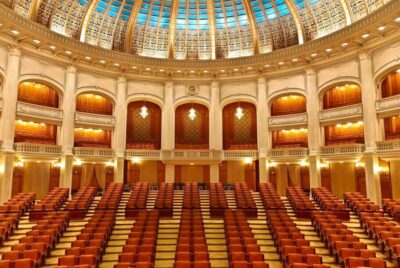
The Palace of Parliament is the most striking opening stop. Its scale tells you a great deal about Nicolae Ceaușescu’s Communist regime before a guide says much at all. This enormous government building dominates the surrounding area and remains one of Bucharest’s defining sights.
You receive about twenty minutes here, with no admission fee included for the stop. The value is the setting and the explanation rather than an interior visit. If you want to tour the inside, check the separate arrangements before booking, since this four-hour route is built around exterior stops and city touring.
I would pay close attention to the urban space around the building. The broad avenues and cleared areas reflect the scale of the redevelopment carried out under Ceaușescu. Seeing the palace early helps you understand why Bucharest can feel both historic and dramatically reshaped.
Piața Unirii and Biserica Bucur
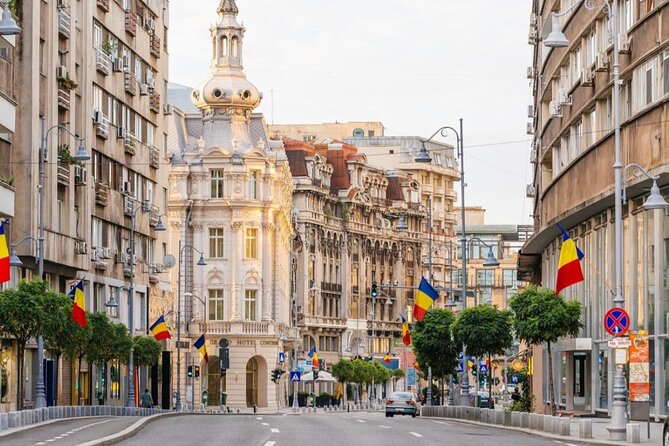
Piața Unirii gives you a look at one of the city’s major public spaces. It is a useful counterpoint to the Palace of Parliament because it connects the monumental center with the everyday movement of Bucharest. Your guide can place the square within the city’s changing political and urban story.
The nearby Biserica Bucur offers a smaller, more intimate stop. After the oversized government buildings, this church reminds you that Bucharest is not only about grand state projects. The contrast is part of the appeal: a compact religious building can sit within the same broad city route as one of Europe’s largest administrative structures.
Each stop is allotted around twenty minutes. That is enough for an explanation, photographs, and a quick look, but not enough for a slow architectural study. If religious sites are especially important to you, use the guide’s comments to decide if you want to return later on foot.
University’s Square and Revolution Square
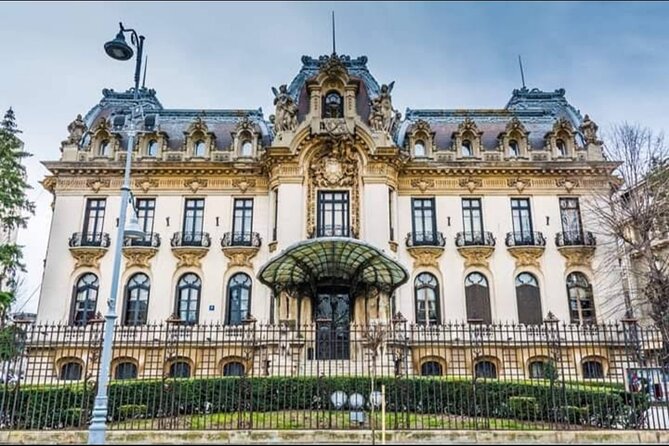
University’s Square brings you into one of Bucharest’s key civic areas. It is tied to public life, education, and political change, making it a useful place to hear how the city’s recent past affected ordinary streets and public spaces.
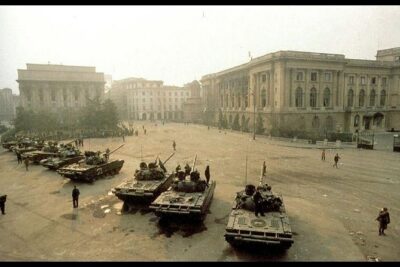
The longer stop comes at Revolution Square, with about forty minutes. This is the strongest part of the tour for understanding the 1989 uprising and the fall of Communist rule in Romania. The square links several important buildings and memories, so the extra time is welcome.
I would treat Revolution Square as the historical center of the experience. The guide’s explanation can connect the visible architecture with the events that took place there. You are not just checking off another landmark. You are seeing the setting for a major turning point in modern Romanian history.
This stop also shows why a private guide can add real value. A bare list of buildings would not explain why the square matters. A good guide can give you a clear timeline and answer questions in the moment. Sebastián, one of the named guides associated with the experience, has been praised for being flexible and easy to talk to.
A different sort of day out, same corner of Romania:
- Bucharest: City Highlights Guided Walking Tour
★ 4.9 · 1,482 reviews - Taste Bucharest: A Food Lover’s Tour of Markets & Neighbourhoods
★ 5.0 · 689 reviews - The Real tour of Communism
★ 5.0 · 666 reviews - Bucharest: Therme Bucharest Entry Ticket and Transfer
★ 4.6 · 608 reviews
Victoria Palace and the northern side of the city
Victoria Palace is the seat of Romania’s government and another stop that puts current politics into the city tour. It pairs naturally with the Palace of Parliament, but the two buildings represent different parts of the state. One is famous for its sheer scale and Communist-era origins. The other is connected to the country’s modern government.
The stop lasts about twenty minutes and is primarily an exterior look. I would listen for the guide’s explanation of how the building fits into Bucharest’s political geography. This is one of those places that can seem ordinary without context, but becomes more interesting when connected to the wider story of Romanian government.
The route then reaches the Triumph Arch, or Arcul de Triumf. Its form recalls other European victory arches, but its meaning belongs to Romania’s own national story. It is a good photo stop and a change of pace from government buildings and civic squares.
The timing is again about twenty minutes. Do not expect a long climb or a full monument visit. The benefit is seeing the arch in relation to the city around it, while your guide supplies the context.
House of the Free Press and Bucharest’s Communist legacy
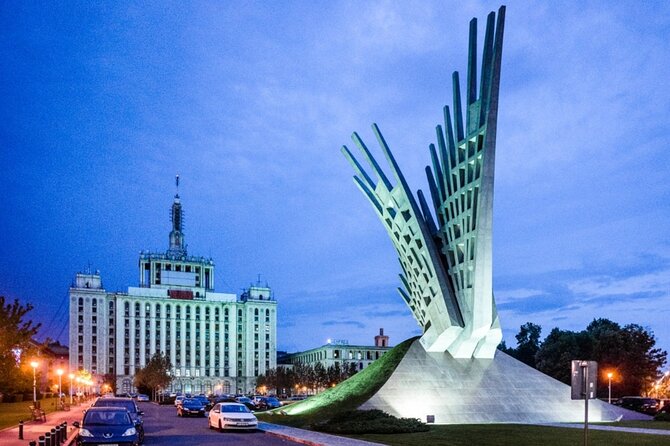
The House of the Free Press is one of the clearest reminders of the former Communist system. Its design and scale reflect an era when public architecture carried political weight. The building is especially useful on this tour because it broadens the Communist story beyond the Palace of Parliament.
You will see how the regime used monumental structures to project authority. The route does not treat Communist Bucharest as a single building or a single event. Instead, it shows how the period affected government centers, avenues, public squares, and the city’s visual character.
This stop lasts about twenty minutes. It is another exterior-focused visit, so the guide’s explanation matters. I would ask questions here if you want to understand the difference between Romania’s pre-Communist architecture and the later state buildings.
One advantage of the car is that you can connect these sites without losing time to long walks between them. You are not left trying to work out which bus or metro line gets you from one symbolic building to the next.
Calea Victoriei and the Romanian Athenaeum
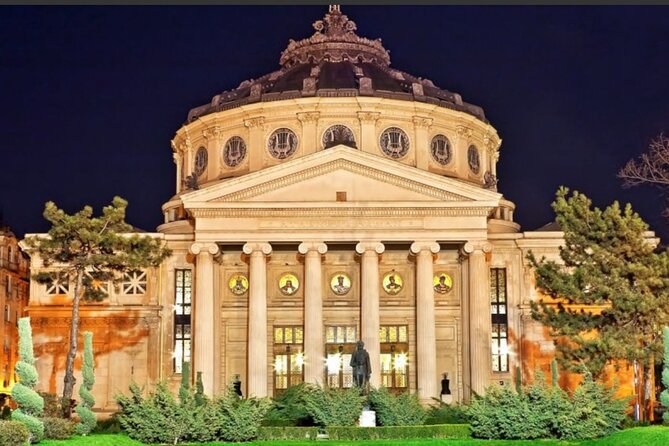
Calea Victoriei brings a different mood. This important avenue is associated with Bucharest’s older urban identity and provides a stronger sense of the city’s pre-Communist character. As you move along it, you can compare grand civic architecture with the broader boulevards built or altered during the Communist period.
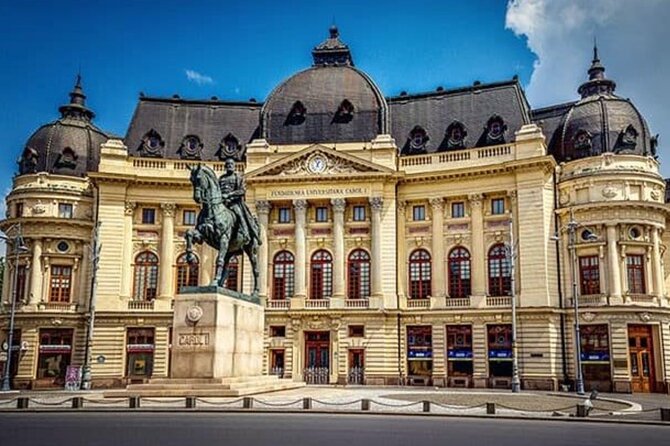
The Romanian Athenaeum, or Ateneul Român, is one of the city’s best-known cultural buildings. Its elegant exterior gives the route a welcome change from government offices, Communist monuments, and political squares. You have about twenty minutes here, enough to appreciate the building and hear why it matters.
I like this section because it keeps the tour from becoming too narrowly political. Bucharest is not only a capital shaped by dictatorship and revolution. It also has music, art, historic avenues, and formal architecture. The Athenaeum helps you see that wider picture.
Again, the stop is short. If you want to attend a performance or spend time inside cultural buildings, plan a separate visit. This tour helps you identify what deserves more of your time later.
CEC Palace and the final city-center details
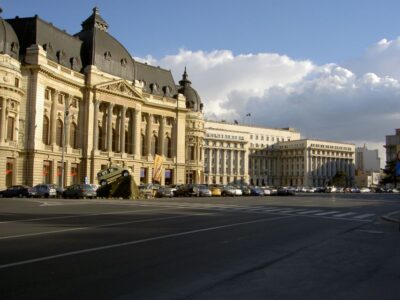
Palatul CEC, or the CEC Palace, is another architectural highlight along the central route. Its ornate appearance fits the city’s older civic and financial identity, and it creates a useful final contrast with the Palace of Parliament and House of the Free Press.
The stop is planned for about twenty minutes. You can photograph the exterior and use the guide’s comments to place it within Bucharest’s architectural mix. Seeing CEC Palace after Revolution Square and Calea Victoriei makes the city’s layers easier to read.
The route’s strength is this side-by-side comparison. You are shown formal older buildings, places linked to national politics, Communist-era monuments, and public spaces shaped by recent events. A normal sightseeing loop might show you attractive buildings. This one gives you a framework for understanding why the city looks the way it does.
What the private format adds
A private tour is most useful when you care about questions and flexibility. You can ask for more detail about Romanian history, spend less time on a stop that does not interest you, or focus on landmarks that match your schedule. One account of the tour specifically praised the guide’s ability to tailor the route to the time available.
That does not mean every stop becomes a long visit. The schedule still covers eleven places in roughly four hours. The flexibility is better understood as personal attention and route adjustment, not unlimited time at each landmark.
The car also gives you a comfortable way to cover ground. One account specifically praised the vehicle’s comfort and the driver’s ability to show both central landmarks and suburban areas. That broader view can be useful if you want more than the postcard center.
Guide quality is central to the value. Sebastián received particularly warm praise for being flexible and well informed about the city and country. Another guide was described as easy to talk to and strong at explaining Bucharest’s past. Since guide assignments can vary, treat these names as examples of the service rather than a guarantee that a particular person will lead your tour.
Is $117.11 per person fair?
The price is $117.11 per person. That is not a budget walking tour, but the comparison is not simply between a car ride and a cheap group excursion. You are paying for a private activity, an English-speaking guide, a driver, pickup, and a route that covers much of Bucharest in half a day.
For a small group, the price may feel high when compared with using public transportation and visiting exterior landmarks independently. You can see many of these places without paying admission, since the listed stops have no admission ticket charge. The paid value here is the time saved, the private transport, and the historical explanation.
Group discounts are available, which may improve the calculation for larger parties. I would book it if you want a clear first look at Bucharest and prefer comfort over figuring out the route yourself. I would skip it if you enjoy slow walks, want to enter museums and monuments, or prefer to explore each neighborhood at your own pace.
The tour is also easier to justify when your stay is short. Four hours gives you a city overview while leaving the rest of the day open. You can use the tour to decide which places deserve a return visit.
Who should book this Bucharest tour?
I would recommend it most to first-time visitors, couples, families, and small groups who want a practical introduction without public-transit planning. It also suits anyone interested in Romania’s Communist period, the 1989 Revolution, and the way those events shaped Bucharest’s streets.
It is less suitable for someone who wants a deep interior visit at every major building. The route is designed for exterior sightseeing and explanation. Expect many short stops, not long museum sessions.
Most people can participate, and the tour is near public transportation. Pickup is offered, and the mobile ticket makes the booking simple. Free cancellation is available if you cancel at least 24 hours before the local start time. A cancellation made inside that window is not refundable, and changes are not accepted less than 24 hours before departure.
FAQ
How long does the Bucharest panoramic tour last?
The tour lasts approximately four hours.
What language is the tour offered in?
The tour is offered in English.
Is this a private tour?
Yes. Only your group participates in the private tour or activity.
Is pickup available?
Yes. Pickup is offered.
What landmarks are included?
Stops include the Palace of Parliament, Piața Unirii, Biserica Bucur, University’s Square, Victoria Palace, the Triumph Arch, the House of the Free Press, Calea Victoriei, the Romanian Athenaeum, Revolution Square, and Palatul CEC.
Are admission tickets included at the stops?
The listed stops have no admission ticket charge. The route is primarily a city sightseeing tour with brief stops.
Can I cancel for a full refund?
Yes, if you cancel at least 24 hours before the experience’s local start time. Cancellations made less than 24 hours in advance are not refunded.
Should you book it?
Book this tour if you want to get your bearings quickly, cover Bucharest’s major sights by private car, and hear the political story behind the buildings. Its best features are the personal guide, the broad route, and the focus on Communist-era Bucharest and the 1989 Revolution.
Skip it if you would rather spend four hours walking slowly, entering museums, or lingering at one or two landmarks. At $117.11 per person, the tour earns its price through convenience and personal explanation, not through included admission tickets. For a first visit or a short stay, that trade can make very good sense.
Newest Bucharest trips on the site
- Winery touring & private wine tasting – one day private tour★ 5.0 · 3 reviews
- Bucharest: Dealu Mare Winery Private Trip with Wine Tasting★ 4.9 · 6 reviews
- Village Museum Bucharest Guided Tour★ 5.0 · 6 reviews
- Private Transfer from Giurgiu Port to Bucharest★ 4.5 · 12 reviews
- Airport Henri Coanda (Otopeni) to Bucharest – Private Transfer – Driver★ 5.0 · 5 reviews
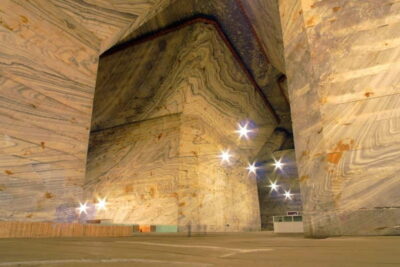
- Salt Mine Tour from Bucharest with Entrance Ticket★ 4.5 · 19 reviews
- Wine tasting in Bucharest Old town – bonus cheese platter★ 4.5 · 6 reviews
- Walking tour of Bucharest★ 5.0 · 3 reviews
Bucharest Tours, compared.

Taste Bucharest: A Food Lover’s Tour of Markets & Neighbourhoods
Read our review →