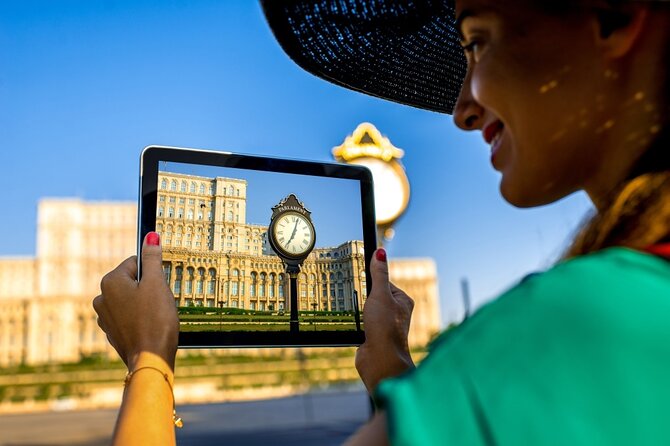
Reviewed · PRIVATE
8 Days Private Romania Tour from Bucharest
Romania reveals itself slowly on this eight-day private circuit, one long road at a time. You move from Wallachian monasteries and Vlad the Impaler’s fortress to Transylvanian citadels, Maramureș wooden churches, Bucovina’s painted monasteries, and the high Carpathian roads. It is less a quick highlights tour than a broad introduction to the country’s past and present.
I like the private car and flexible schedule, which let you adjust the day with your guide rather than follow a fixed group timetable. I also like the range of experiences: the Merry Cemetery’s sharp humor, the eerie salt mine at Turda, mountain scenery, traditional villages, royal castles, and the hard story of communist repression.
The tradeoff is simple: you will spend many hours on the road. The $2,825.81 price is per person, but it does not include your hotels, food, drinks, or attraction tickets, so your final cost will be higher. This trip suits you best if seeing much of Romania matters more than having slow mornings.
Key points to know before booking
- Eight days cover a huge slice of Romania: You reach Bucharest’s surrounding regions, Transylvania, Maramureș, Bucovina, Moldavia, and the Carpathians.
- Private guide-driver Nicolas: The tour includes a licensed English-speaking guide-driver throughout, with a reputation for punctuality, friendly service, useful information, and plenty of jokes.
- Expect serious driving time: Several days combine distant regions and mountain roads, so comfortable road clothes and patience matter.
- Entrance fees are extra: The price covers the private vehicle, fuel, parking, tolls, Wi-Fi, and the guide’s costs, but not your admissions.
- The route mixes famous and local sights: Bran Castle, Peleș Castle, Sighișoara, and the Transfăgărășan share the schedule with Ciocănești, the Popa Museum, and the Lucia Condrea egg museum.
- You control the private experience: Changes to the daily plan can be made even after the tour begins, subject to what the route and timing allow.
What the $2,825.81 tour price really buys
The headline price covers a private tourism car or minibus for you and your family or friends, not a shared coach. You also get a licensed English-speaking guide-driver, wireless internet in the vehicle, fuel, parking, and road tolls. The guide’s accommodation, meals, and entrance fees are covered by the operator.
That package matters in Romania, where the route crosses several regions and includes mountain roads, small villages, and attractions that are not always easy to connect by public transport. You are paying for transport and local guidance across a large country, not simply for admission to a few monuments.
Still, budget honestly. Your accommodation, meals, beverages, and every entrance fee listed in the program come out of your pocket. The operator recommends hotels according to your budget, but the supplied details do not specify hotel standards or whether breakfast is included.
For two people, the private format may feel more reasonable than it does for a solo visitor. A family or small group can also spread the cost of the vehicle and guide across the party. The listed price is per person, and group discounts are offered, so ask for the exact total before booking.
A few more Bucharest trips worth a look
- Bucharest: Palace of Parliament Tickets and Guide
★ 4.3 · 3,182 reviews - Bucharest: Palace of Parliament Tickets and Guided Tour
★ 4.4 · 1,877 reviews - Bucharest: Parliament Palace Skip-the-line Ticket
★ 4.2 · 1,518 reviews
Day 1: Curtea de Argeș, Poienari, Sibiu, and the Transfăgărășan
The opening day quickly shows you what this trip is about: royal history, Dracula connections, an old city, and one of Romania’s great mountain roads. It also shows you the main weakness. You will cover a lot of ground.
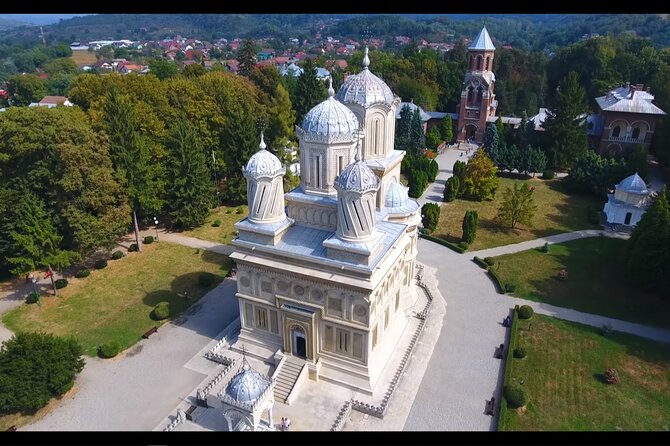
At Curtea de Argeș Monastery, you spend about 30 minutes around one of Romania’s important religious monuments. The town also preserves the ruins of a Wallachian princely court and a 13th-century Royal Church. The monastery contains royal tombs, making this more than a pretty stop. Admission is extra.
Poienari Fortress is the more demanding visit. The ruined stronghold sits high above the Argeș River at the foot of the Carpathians, and the visit is scheduled for two hours. Its link to Vlad the Impaler gives it a dark medieval appeal, but the site is a ruin rather than a furnished castle. You should expect the visit to involve walking and stairs, though the supplied information does not give a current step count or access details.
Sibiu’s Big Square gives you a welcome change of pace. The one-hour stop includes the old city center and the Evangelical Cathedral area. Sibiu’s 900-year story and mix of architectural styles make it a good place to wander, take photographs, and eat later in the trip if your schedule allows.
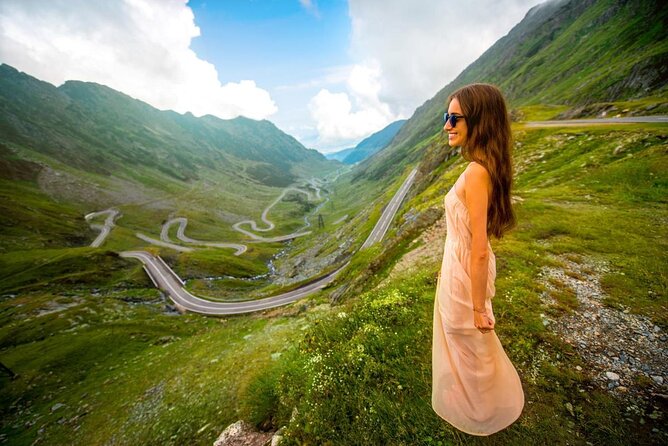
The Transfăgărășan Highway is the day’s grand finale. This road crosses the mountains for more than 150 kilometers and reaches 2,042 meters at the tunnel near Lake Bâlea. It is normally fully open only from June through October, so the season matters greatly. In clear weather, you get dramatic mountain views. In poor weather or outside the open season, this part may be limited by road conditions.
Day 2: Turda salt mine and northern wooden architecture
Salina Turda is one of the tour’s most unusual stops. You spend about two hours below ground among former salt mines named Iosif, Terezia, and Rudolf. Salt extraction here reaches back to Roman times, and the mine still contains old equipment, including the crivac, salt mill, and other machinery.
The saline air is often presented as helpful for respiratory problems such as allergies or asthma. Treat that as a pleasant feature, not medical treatment. The main reason to visit is the setting: vast underground chambers, carved salt surfaces, old mining technology, and the Stairway of the Rich with its woodwork. Admission is not included.
The botanical garden in Cluj-Napoca gives you roughly 90 minutes in the city. The stop also places you near the old center, where Baroque, Renaissance, and Gothic buildings reflect the city’s long development. The schedule is short for a full city visit, so think of this as a focused introduction rather than enough time to know Cluj.
Surdești Wooden Church brings you into a very different Romania. The church was built in 1721 and is known for its towering wooden construction, with the supplied description giving two different height figures. Either way, the impression is clear: this is an ambitious wooden church with serious craftsmanship. The visit lasts about 45 minutes and admission is extra.
Day 3: Maramureș humor and the cost of repression
The Merry Cemetery in Săpânța is one of Romania’s most memorable cultural stops. Its brightly painted crosses carry humorous poems about the people buried there. The tone is unusual, sometimes playful and sometimes blunt, and it offers a glimpse into a local way of handling death without treating the cemetery as a solemn museum alone.
You have one hour here, enough to see the main work and read some of the inscriptions. You may want to allow extra time if you like folk art or want to study the carvings closely. Admission is not included.
The Memorial of the Victims of Communism and of the Resistance in Sighetu Marmației changes the mood completely. Plan on two hours. The museum deals with communist oppression, imprisonment, and the suffering caused by totalitarian rule. It is an important counterweight to the castles and legends elsewhere on the route. Romania’s past is not only medieval and royal, and this visit makes that clear.
Săpânța-Peri Monastery closes the day’s listed visits. The wooden church is associated with the Maramureș region and sits beside the village in a dendrology park. The site’s story reaches back to 1391, when land was donated to Peri Monastery. You get 45 minutes here, with admission listed as free.
A different sort of day out, same corner of Romania:
- Bucharest: City Highlights Guided Walking Tour
★ 4.9 · 1,482 reviews - Taste Bucharest: A Food Lover’s Tour of Markets & Neighbourhoods
★ 5.0 · 689 reviews - The Real tour of Communism
★ 5.0 · 666 reviews - Bucharest: Therme Bucharest Entry Ticket and Transfer
★ 4.6 · 608 reviews
Day 4: Bârgău Mountain roads and painted homes in Ciocănești
Bârsana Monastery is one of the prettiest stops in Maramureș, with tall wooden buildings and a church listed at 57 meters. You have 45 minutes to walk through the grounds and take in the carved architecture. Admission is extra, so keep small costs in mind across the many religious sites.
The three-hour drive through Tihuța Pass is less about a single monument and more about crossing the mountains between Moldavia and Transylvania. The pass reaches about 1,201 meters and follows a road first built in the early 19th century. Traffic can be crowded, especially behind trucks, although the road itself is described as being in good condition.
This is a good example of why the private format helps. You can stop for views or adjust the pace with Nicolas, rather than waiting for a large coach. The same flexibility cannot erase the distance, though. Bring water, keep your phone charged, and expect a substantial part of the day to happen from the vehicle.
Ciocănești provides a colorful village stop after the long road. Homes are decorated with patterns inspired by traditional egg designs, giving the settlement a distinctive look. You have about an hour to walk, photograph the details, and see how local identity appears in everyday buildings. Admission is free.
Day 5: Bucovina’s painted monasteries
Bucovina is the artistic center of the tour. Voroneț, Humor, Sucevița, and Moldovița each offer painted religious architecture, but visiting several in one day requires attention. After the first two or three, the colors and biblical scenes can begin to blur together unless you slow down and compare them.
Voroneț Monastery is the star for many people. Built by Stephen the Great in 1488, it is famous for the intense blue used in its frescoes. The visit lasts 45 minutes, and admission is extra. That is enough time for a focused look, but not for a leisurely study of every exterior scene.
Humor Monastery adds the defensive side of Bucovina’s religious buildings. The church is about 500 years old, and the site reflects the effort to protect places of worship during unsettled times. Again, you have 45 minutes, with the entrance fee separate.
Sucevița is known for its fortified church and extensive painted walls. Its biblical scenes make the building feel like an illustrated book, and it is included among the region’s internationally recognized cultural sites. Moldovița, founded in 1532, combines Byzantine, Gothic, and Moldavian elements, with murals inside and out.
The Lucia Condrea International Egg Museum in Moldovița breaks up the religious focus. The museum displays more than 5,500 decorated eggs across two floors and 56 display cases. You have 90 minutes, which gives this stop more breathing room than the monastery visits.
I would not rush this day. The four monasteries are close enough in theme that the value comes from noticing differences: fortress walls, fresco colors, church shapes, and the way the sites fit their surroundings.
Day 6: Bicaz Gorge, Red Lake, and one local artist

Bicaz Gorge is one of the most scenic drives on the route. The road follows about eight kilometers of ravines, often with rock walls on one side and steep drops on the other. You get two hours here, including time for the road and stops. The gorge is also known for rock climbing and the wallcreeper, an uncommon cliff bird.
At Red Lake, you have 45 minutes beside a lake formed by a landslide in the 19th century. The exact formation date is debated, with 1837 and 1838 both associated with the event. The lake sits at about 980 meters and has cabins and hotels around it. This is a short stop, so do not expect a full outdoor day.
The Popa Museum in Târpești gives you a personal view of Romanian folk art. Nicolae Popa founded it in his own home in the 1970s. After being wounded in World War II and imprisoned by the communist regime, he devoted himself to Romanian artistic traditions and became a respected naive sculptor.
That background makes the one-hour museum visit especially worthwhile. It connects the region’s objects and carvings to one person’s life, rather than presenting folk culture as decoration without context. Admission is extra.
Day 7: Sighișoara, Viscri, and Brașov
Sighișoara is one of the route’s strongest medieval stops. The citadel has been inhabited for more than 700 years, and the Clock Tower visit includes the Arms Museum. You get two hours to explore the old town and understand its connection with Vlad the Impaler, who was born here.
The town works well because it is not only a preserved monument. People still live and move through its streets. The Clock Tower is the paid focus, while the citadel itself rewards a slow walk and attention to its lanes.
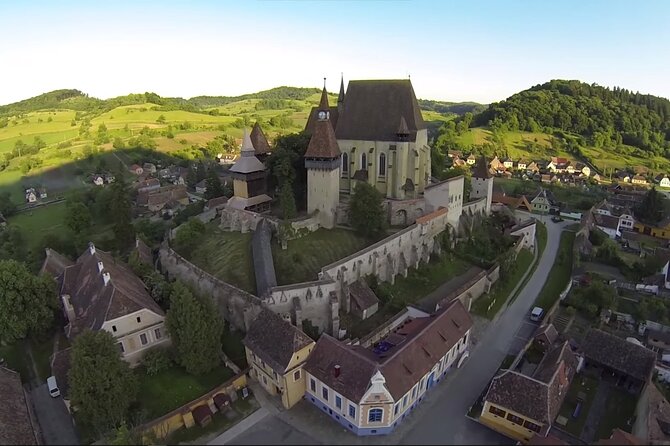
Viscri offers a smaller-scale rural contrast. The village dates to the 12th century and is known for its fortified church, conservation work, and connection with Prince Charles. You have two hours, enough to see more than a roadside photograph. Admission is listed as free.
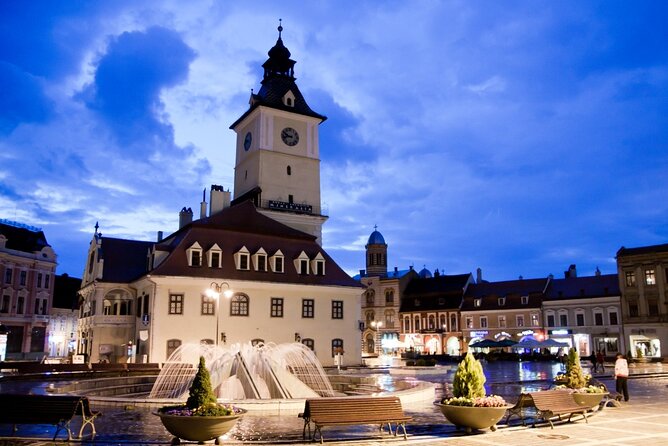
Brașov’s Council Square finishes the day with a larger urban setting. The square has held markets for centuries and is surrounded by 18th- and 19th-century buildings. Its two-hour visit gives you time to walk, eat, and look at the historic center without the pressure of a brief photo stop.
Day 8: Bran, Peleș, and Sinaia
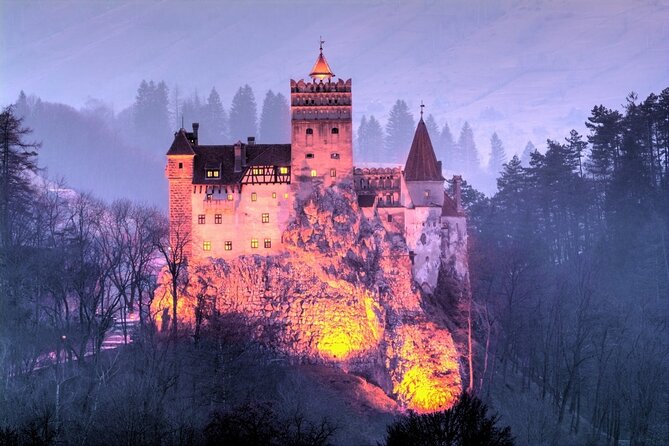
Bran Castle is the famous Dracula stop, though the connection between the real building and Bram Stoker’s fictional castle is mainly a matter of resemblance and popular imagination. You get two hours to see the castle and browse traditional foods outside, including handmade cheeses, fruit brandy, ham, and sausages.
The food stop is a useful part of the visit because Bran can otherwise become only a Dracula photograph. You should still keep your expectations grounded. This is a popular attraction, and the price does not include admission.
Peleș Castle gives the final day more royal polish. It was the Romanian royal family’s summer residence and is one of the country’s most important castles. The two-hour schedule allows time to appreciate the building rather than race through it.
Sinaia Monastery provides a quieter final stop. Founded in 1695 by Prince Mihail Cantacuzino and named after Saint Catherine’s Monastery on Mount Sinai, it remains an Orthodox religious site. You have 30 minutes, with admission extra.
What the guide adds to a long private route
A good guide matters more here than on a compact city tour. Nicolas is identified as the English-speaking guide-driver, and the strongest praise centers on punctuality, friendliness, preparation, local places, and humor. That last point is not trivial when you spend so many hours in a car.
The private setup also means only your group participates. You receive Wi-Fi in the vehicle, and the daily route can be changed after the tour starts. That could mean spending more time in a town you like or trimming a stop when the road day feels too heavy.
The operator describes the tour as a trip with plenty of funny stories. Take that as part of the experience: the guide is not simply driving between attractions, but helping connect Romania’s customs, legends, food, and difficult history.
Who should book this Romania tour?
Book it if you want a broad first look at Romania and prefer a private vehicle to trains, buses, or self-driving. It is especially suitable for families, couples, and small groups who value flexibility and want a guide available every day.
It is also a strong choice for people who want more than Dracula. You see monasteries, salt mining, folk art, communist history, medieval towns, mountain roads, and local villages.
Think twice if you dislike long drives, early starts, repeated church visits, or paying separately at many attractions. The route is ambitious, and the program leaves limited room for unplanned wandering. Also check the season if the Transfăgărășan Highway is a priority, since full access is normally limited to June through October.
Free cancellation is available up to 24 hours before the start time for a full refund. Changes or cancellations inside that window are not accepted or refunded.
FAQ
Is this a private tour?
Yes. Only your own group participates, using a private car or minibus.
Is an English-speaking guide included?
Yes. A licensed English-speaking guide-driver is available throughout the tour. The guide named in the supplied information is Nicolas.
Are hotels included in the price?
No. Accommodation is not included. The operator can recommend hotels based on your budget.
Are meals and drinks included?
No. Your meals, beverages, and accommodation are separate expenses. The guide’s accommodation and meals are covered by the operator.
Are attraction entrance fees included?
No. Entrance fees are not included for the listed attractions, so budget extra for places such as Poienari Fortress, Salina Turda, the monasteries, Sighișoara Clock Tower, Bran Castle, and Peleș Castle.
Is the Transfăgărășan Highway open year-round?
The road is fully open only from June to October, according to the supplied tour information. Access may therefore depend on the season.
Can the daily itinerary be changed?
Yes. The private format allows flexibility, including changes after the tour has begun.
What is included in the vehicle service?
The vehicle service includes Wi-Fi, fuel, parking, road tolls, and the private car or minibus. The guide’s related costs are also included.
Should you book it?
Book this tour if your goal is to see the breadth of Romania in eight days, with a private guide who can keep the long drives informative and light. The strongest features are the wide route, Nicolas’s personal service, and the mix of famous sights with smaller cultural stops.
Skip it if you want a relaxed holiday based in two or three places. This is a road tour first, with castles, churches, museums, and villages strung across a very large itinerary. If that sounds like the right kind of adventure, the private format gives you a practical way to see Romania without having to manage the roads yourself.
Newest Bucharest trips on the site
- Winery touring & private wine tasting – one day private tour★ 5.0 · 3 reviews
- Bucharest: Dealu Mare Winery Private Trip with Wine Tasting★ 4.9 · 6 reviews
- Village Museum Bucharest Guided Tour★ 5.0 · 6 reviews
- Private Transfer from Giurgiu Port to Bucharest★ 4.5 · 12 reviews
- Airport Henri Coanda (Otopeni) to Bucharest – Private Transfer – Driver★ 5.0 · 5 reviews
- Salt Mine Tour from Bucharest with Entrance Ticket★ 4.5 · 19 reviews
- Wine tasting in Bucharest Old town – bonus cheese platter★ 4.5 · 6 reviews
- Walking tour of Bucharest★ 5.0 · 3 reviews
Private, compared.

Castles of Transylvania: Private Day Trip from Bucharest
Read our review →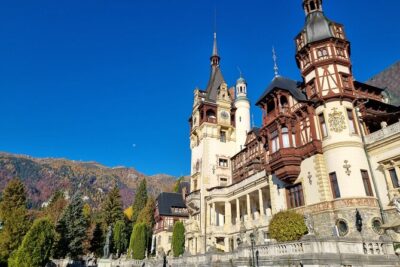
Dracula’s Castle, Peles Castle and Brasov – Private Day Trip from Bucharest
Read our review →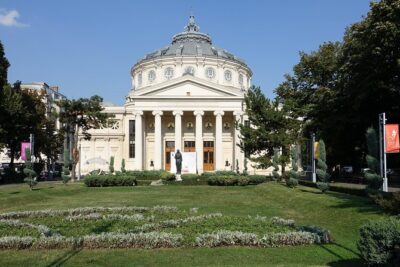
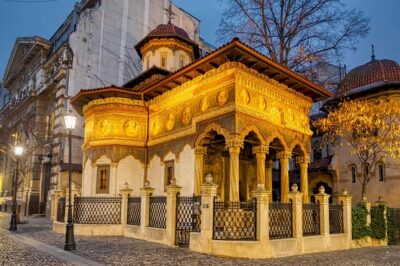
Bucharest Panoramic Sightseeing – Private City Tour
Read our review →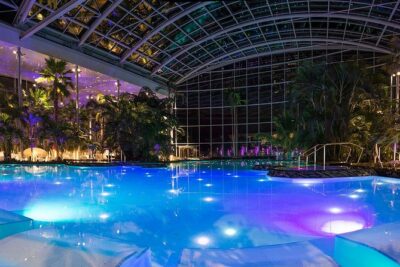
THERME “Take It Easy” Pack: Full Spa Access + Private Transfers
Read our review →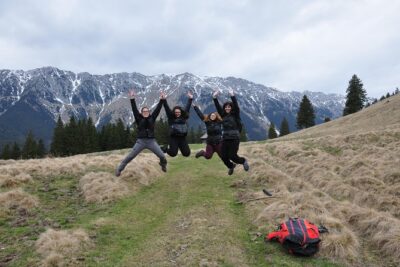
Piatra Craiului National Park Private Hiking Tour from Brasov
Read our review →
4h Bucharest Private Tour (2h by Car and 2h Walking in Old Town)
Read our review →