

Reviewed · WALKING TOURS
Bucharest Walking Tour with a Native Italian Speaking Guide
Bucharest reveals itself in layers on this 2.5-hour walking tour, from a quiet Orthodox monastery to the scarred political heart of Revolution Square and the vast communist-era Parliament Palace. Guides Giuseppe Spadaro and Filippo DiCataldo are experienced Italian-speaking professionals who bring both historical detail and humor to the route.
I like the small group limit of 15 and the way the walk links major sights into one clear story. I also like the mix of intimate places, such as Stavropoleos Monastery and Macca-Villacrosse Passage, with grand civic spaces such as Calea Victoriei and Constitution Square. The main drawback is the pace: eight stops in 150 minutes means some visits are brief, and no attraction admission or other expense is included.
Key points at a glance
- Italian-speaking guidance: Expect a native Italian-speaking guide, with Giuseppe Spadaro and Filippo DiCataldo named among the guides associated with the experience.
- A compact old-town route: Stavropoleos, Curtea Veche, Lipscani, and Macca-Villacrosse Passage show Bucharest’s older and more atmospheric side.
- Strong 20th-century history: Revolution Square and Constitution Square explain the fall of Ceaușescu’s regime and the building of Parliament Palace.
- Mostly exterior sightseeing: The tour includes free admission at the listed stops, but Parliament Palace is viewed from outside.
- Limited participation: The group can include no more than 15 people, a useful size for a walking tour with frequent explanations.
- Good value for a short visit: At $36.76 per person, the walk can be a practical introduction if you have only a few hours in Bucharest.
A city walk that connects old Bucharest with communist power
Bucharest can feel confusing at first. Medieval churches, Belle Époque façades, polished cafés, and enormous communist buildings occupy the same central area. This walk works because it does not treat those sights as separate postcard stops. It traces a route from the city’s older religious and commercial center toward the government district shaped by the Ceaușescu era.
You begin at Strada Stavropoleos 5 at 10:00 a.m. and finish at Piața Constituției. That point-to-point shape is useful. You are not sent back to the starting place, and the final stop leaves you near one of the city’s most important modern landmarks.
The Italian-language focus is the central feature. The guides named for this experience, Giuseppe Spadaro and Filippo DiCataldo, are described as certified or authorized guides with decades of experience in Romania. The strongest praise centers on their clear explanations, professional manner, humor, and ability to keep children and less attentive members of a group involved.
That tone matters. Bucharest’s political history can become a dry list of dates, especially around the 1989 Revolution. A guide who can add personal warmth and funny anecdotes helps you remember the city as a place where people lived, argued, celebrated, and endured, not just as a collection of monuments.
More Walking Tours in Bucharest
- Bucharest: City Highlights Guided Walking Tour
★ 4.9 · 1,482 reviews - Bucharest Highlights Walking Tour
★ 5.0 · 469 reviews - Bucharest: Ghost Stories & Romanian Mythology Walking Tour
★ 4.9 · 287 reviews
Stavropoleos Monastery starts the morning quietly
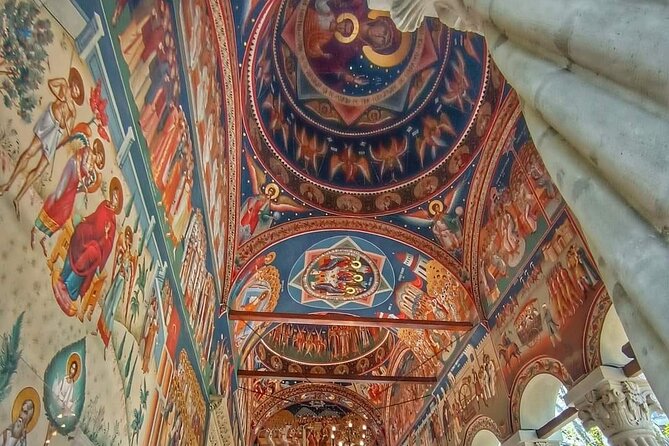
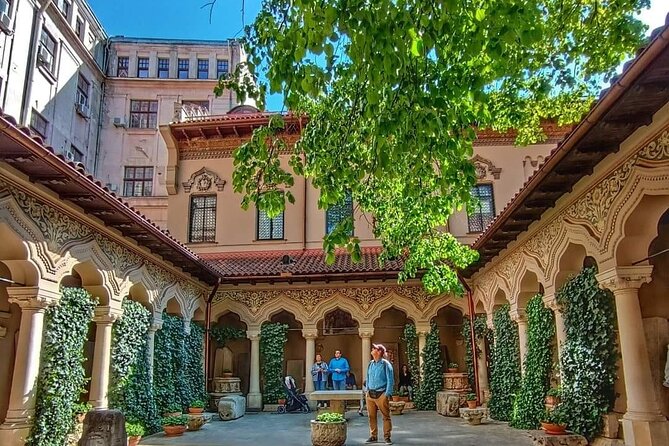
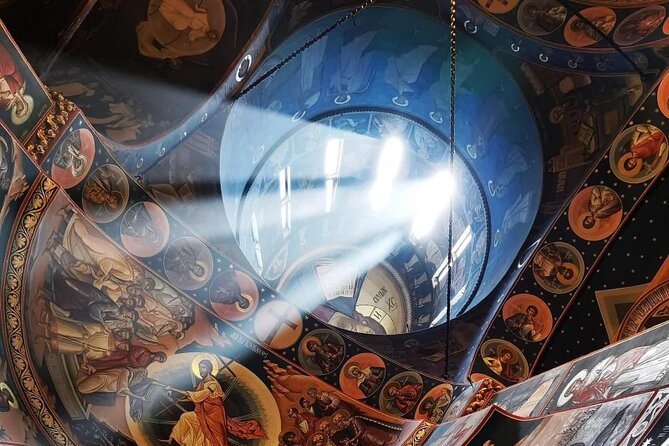
The first stop is Stavropoleos Monastery, one of Bucharest’s most appealing small landmarks. Its Brâncovenesc design combines Romanian Orthodox traditions with carved stone, ornamental details, and painted decoration. The walls and frescoes give you an immediate sense of the city’s religious and artistic past.
You have about 20 minutes here. That is enough for an explanation and a close look, but it is not a long, unhurried visit. Admission is free, and the monastery is located in the center, so the stop makes a good opening: calm, compact, and visually detailed before the busier streets begin.
The value of having a guide here is easy to understand. Without context, the monastery may look like a pretty courtyard and church tucked between restaurants and offices. With an explanation of Brâncoveanu style and Orthodox tradition, the details have a clearer place in Bucharest’s story.
Keep your expectations practical. This is a walking tour, not a dedicated architecture visit. You will see the monastery as part of a larger route, rather than spending an hour examining every painted surface.
Curtea Veche and Manuc’s Inn bring the medieval city closer
The next stop covers Biserica Sfântul Anton, the ruins of Curtea Veche, and Manuc’s Inn. This small area is one of the best places on the route for understanding Bucharest before its grand avenues and modern political buildings.
Curtea Veche refers to the remains of the old princely court. The site is tied to the medieval rulers of Wallachia, and it helps explain why this part of town became the center of early Bucharest. The nearby Church of Saint Anthony adds a religious landmark, while Manuc’s Inn recalls the era when merchants and caravans moved through the city.
You get about 20 minutes here. That is a useful amount of time for a concise explanation of the buildings and their role, though not enough for a full archaeological visit. The appeal is the combination of different types of evidence: church, palace ruins, and commercial lodging in one compact square.
This is also the point where the guide’s storytelling can make a real difference. Ruins rarely explain themselves. You need someone to connect them to the city’s rulers, trade routes, and changing center. If you are interested in the older side of Bucharest, pay close attention here, since later parts of the tour focus more heavily on modern history.
Lipscani shows Bucharest’s social center
The walk continues along Lipscani, a famous old-town street and a major part of Bucharest’s nightlife district. The stop is listed at only 10 minutes, so expect a guided orientation rather than a long pause for shopping, food, or drinks.
Lipscani is useful because it shows the city in its present-day social role. You see the contrast between old commercial streets and the cafés, bars, and evening venues that now fill the area. The guide can also explain how the street fits into the older trading center of Bucharest.
I would not plan to eat here during the tour. Ten minutes is too short to settle into a restaurant, and stopping for a full meal would break the route. Instead, mark the area for later. The tour gives you a quick introduction, then you can return on your own if you want more time among the old-town bars and restaurants.
A different sort of day out, same corner of Romania:
- Bucharest: Palace of Parliament Tickets and Guide
★ 4.3 · 3,182 reviews - Bucharest: Palace of Parliament Tickets and Guided Tour
★ 4.4 · 1,877 reviews - Bucharest: Parliament Palace Skip-the-line Ticket
★ 4.2 · 1,518 reviews - Taste Bucharest: A Food Lover’s Tour of Markets & Neighbourhoods
★ 5.0 · 689 reviews
BNR Palace and the Belle Époque city
The Romanian National Bank Palace is another brief stop, lasting about 10 minutes. The building sits in a central financial district surrounded by façades that recall Bucharest’s Belle Époque period.
This section helps correct the lazy idea that Bucharest is defined only by medieval churches and communist concrete. The city also developed a polished European style, with grand public buildings, formal architecture, and commercial power. The National Bank headquarters is a useful marker of that period.
The visit is primarily exterior. Nothing in the tour information promises entry to the bank, so you should expect to admire the building from outside while the guide explains its role and architectural setting. Ten minutes is enough for photographs and an overview, but not for a detailed architectural study.
Macca-Villacrosse Passage is a small visual change
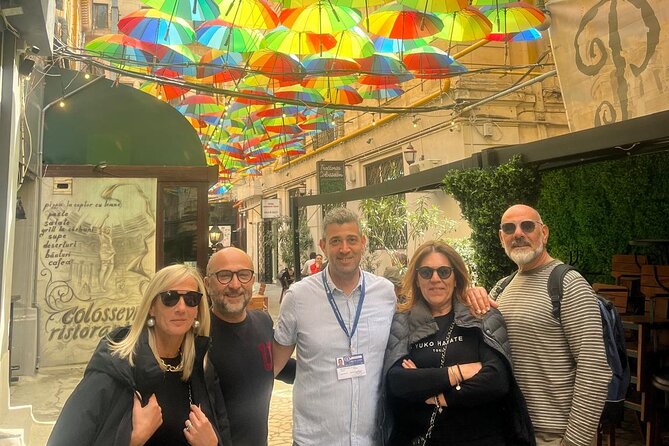
Macca-Villacrosse Passage gives the route a different mood. This covered gallery has a curved, enclosed form and now houses elegant bars. It is a pleasant place to step out of the street for a few minutes, especially in very hot or cold weather.
The stop lasts about 10 minutes. That makes sense for a passage, where the main attraction is the design and atmosphere rather than a long list of exhibits. Your guide can explain how the space has served different purposes over time, linking its current cafés to Bucharest’s older commercial life.
This is one of the route’s more photogenic pauses. It also breaks up the sequence of churches, squares, and monumental façades. If you enjoy urban details, look beyond the cafés and notice how the passage frames the surrounding buildings.
Calea Victoriei provides the grand avenue moment
Calea Victoriei is the tour’s most elegant stretch of street. It is lined with historic buildings, fashion shops, and refined cafés, and it gives you a strong sense of Bucharest’s ambition during its more cosmopolitan periods.
The stop lasts about 20 minutes. You will walk rather than simply view the avenue from one point, with time to take in the façades and hear how the street fits into the city’s development. The route also includes the famous umbrella-covered street, where the group pauses for a photograph.
The umbrella stop is lighter in tone than the political sites. That is a plus. A good city walk needs a few easy moments between heavier historical subjects, and this gives the group a shared picture and a change of pace.
Still, Calea Victoriei deserves more time than the schedule allows if you care about architecture. The tour offers an introduction, not a full examination of every palace, museum, or church along the avenue. You may want to return later, especially if you like taking photographs or stopping at cafés.
Revolution Square explains the end of dictatorship
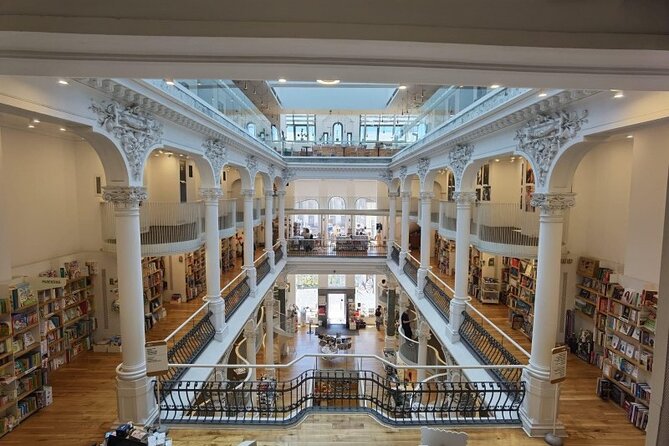
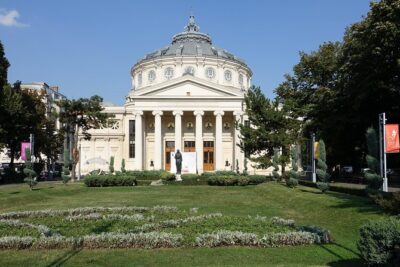
Revolution Square is the emotional center of the route. Here, the guide reconstructs the final events that brought down Nicolae Ceaușescu’s dictatorship in 1989. The surrounding buildings include the Romanian Athenaeum, the former Royal Palace, and the National Library, so the square also gives you a concentrated view of Bucharest’s political and cultural architecture.
You have about 20 minutes. That is enough for a clear timeline and an explanation of why the square matters, but the subject deserves attention. Listen for the connection between the buildings, the government, and the crowds who gathered during the revolution.
This is where the guide’s experience becomes especially valuable. The story is not only about a change of government. It is about fear, public protest, violence, and the sudden collapse of a regime that had shaped daily life for decades. A guide who can explain the sequence clearly helps you understand what happened without reducing it to a dramatic anecdote.
The square also brings an important balance to the tour. Bucharest’s attractive architecture can make the past look polished. Revolution Square reminds you that the city’s recent history was painful and unsettled.
Constitution Square ends beneath Parliament Palace
The final stop is Constitution Square, where you view the exterior of the Palace of Parliament. The building is described as the largest administrative building in Europe and the heaviest building in the world. Its scale is difficult to grasp from photographs alone, and the square gives you room to see its broad frontage and surrounding space.
The guide explains the political setting in which it was built, connecting the structure to Ceaușescu’s rule and the sweeping redevelopment of central Bucharest. This is the right place to discuss the cost and symbolism of the project, even though the tour does not include an interior visit.
That limitation is important. You will admire Parliament Palace from outside, not tour its halls. If entering the building is a priority, you will need to arrange a separate visit, and no admission is included in this experience.
Ending here works well. The route has moved from intimate religious architecture to the immense expression of authoritarian power. You finish with one of Bucharest’s most recognizable sights and a clearer understanding of why its size and location remain so controversial.
What $36.76 buys you
At $36.76 per person, this is not the cheapest way to walk around Bucharest, since most stops are free and the tour includes no admissions, food, or transport. You are paying for the guide, the language service, the route design, and the historical interpretation.
I think the price makes reasonable sense if you want an Italian-speaking guide. The route covers a lot of ground and several periods of Bucharest’s past in only two and a half hours. The group limit of 15 also makes the cost easier to accept than a large bus-style sightseeing tour.
The value is strongest for a first visit or a short stay. You can get your bearings, identify places to revisit, and hear the historical links that are easy to miss when you walk alone. The value is weaker if you already know central Bucharest well or want long visits inside individual monuments.
This tour is usually booked about 15 days in advance, so reserve early if your dates are fixed. The mobile ticket is convenient, and confirmation is provided at booking.
Who will enjoy this walk most
I would choose this experience if you:
- Prefer touring in Italian and want a certified local guide.
- Have only a few hours for central Bucharest.
- Want history explained with humor rather than a formal lecture.
- Like seeing both old-town streets and major political sites.
- Are comfortable walking outdoors for about two and a half hours.
- Want a small group, but do not need private guiding.
Families may appreciate the guide’s entertaining style, especially if younger members lose interest during historical explanations. The route also suits adults who want a broad first look before choosing museums and interiors for a later visit.
You may want another option if you need wheelchair-specific route information, want to enter Parliament Palace, or prefer a slow architecture walk. The available details confirm that service animals are allowed, the tour is near public transportation, and most people can participate, but they do not provide a full accessibility assessment.
Practical details before you book
The meeting point is Strada Stavropoleos 5 in Bucharest, and the start time is 10:00 a.m. The walk ends at Piața Constituției, so plan your next activity from the final square rather than from the monastery.
Wear comfortable shoes. The itinerary moves through streets, passages, historic squares, and broad civic spaces, with no included vehicle transfer. Weather matters because the experience requires good conditions. If poor weather cancels the walk, you are offered another date or a full refund.
The group can have up to 15 people. That is small enough for a more personal exchange, though the actual group size may vary. The tour has free cancellation until 24 hours before the start time. Inside that window, changes and refunds are not accepted, except when the operator cancels for weather or because the minimum number of participants is not met.
Should you book it?
Book this walk if you want a focused Italian-language introduction to Bucharest, especially on a first visit or during a short stay. The best parts are the clear progression from Stavropoleos and Curtea Veche to Revolution Square and Parliament Palace, plus the guides’ reported mix of preparation, warmth, and humor.
Do not book it expecting museum admissions, an interior tour of Parliament, or leisurely time at every stop. At $36.76, the price is fair for the language service, expert commentary, and small group, but the tour’s main product is interpretation, not entry tickets. For an Italian-speaking visitor who wants Bucharest’s old streets and difficult modern history explained in one compact walk, it is a strong choice.
FAQ
How long does the Bucharest walking tour last?
The tour lasts approximately 2 hours and 30 minutes.
What language is the tour conducted in?
The tour is led by a native Italian-speaking guide.
Who are the named guides?
The guides associated with the experience include Giuseppe Spadaro and Filippo DiCataldo.
Where does the tour begin?
The meeting point is Strada Stavropoleos 5, București 030167, Romania.
Where does the tour end?
The tour ends at Piața Constituției in Bucharest.
Is Parliament Palace visited inside?
No. The tour includes an exterior view of Parliament Palace and an explanation of the historical setting in which it was built.
What is the cancellation policy?
You can cancel at least 24 hours before the start time for a full refund. Cancellations or changes made less than 24 hours before the start are not refunded or accepted. If poor weather or an insufficient number of participants causes cancellation, you are offered another date or a full refund.
Newest Bucharest trips on the site
- Winery touring & private wine tasting – one day private tour★ 5.0 · 3 reviews
- Bucharest: Dealu Mare Winery Private Trip with Wine Tasting★ 4.9 · 6 reviews
- Village Museum Bucharest Guided Tour★ 5.0 · 6 reviews
- Private Transfer from Giurgiu Port to Bucharest★ 4.5 · 12 reviews
- Airport Henri Coanda (Otopeni) to Bucharest – Private Transfer – Driver★ 5.0 · 5 reviews
- Salt Mine Tour from Bucharest with Entrance Ticket★ 4.5 · 19 reviews
- Wine tasting in Bucharest Old town – bonus cheese platter★ 4.5 · 6 reviews
- Walking tour of Bucharest★ 5.0 · 3 reviews
Walking Tours, compared.
Ghost Stories & Romanian Mythology Walking Tour
Read our review →
Walking Tour- Delightful Bucharest (Highlights, Stories, Sights)
Read our review →
Browse the lists this tour appears in