
Reviewed · DRACULA CASTLE TOURS
8h Bucharest Communism Tour – Best of Bucharest with Dracula’s Tomb
The most striking part of this Bucharest day is the collision of two very different stories: the grand, wasteful Palace of Parliament and the modest wooden homes at the National Village Museum. Add Revolution Square, Ceaușescu’s former home, and a boatless trip to an island tomb linked to Dracula, and you get a full day with plenty to talk about.
I like the private format, which lets your group stay together and gives the guide room to adjust the pace. I also like the range: Nicolas or Răzvan can connect communist-era politics, royal Bucharest, village life, and local legend in one day. The main drawback is cost. At $297.38 per person, this is a serious purchase, and entrance fees and meals still come out of your pocket.
Key points to know before booking
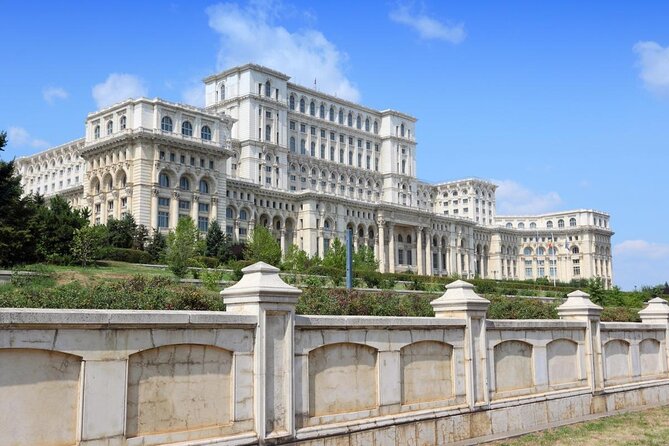
- The Palace of Parliament puts communist excess front and center, but its admission fee is not included.
- Nicolas and Răzvan are named guides associated with the experience, with strong praise for their clear explanations, humor, flexibility, and local advice.
- Snagov Monastery adds a surprising Dracula connection, about 40 minutes outside Bucharest on an island.
- Ceaușescu Mansion shows how the ruling family lived privately, a useful counterpoint to the giant public buildings.
- Private hotel pickup and a clean, air-conditioned vehicle make the long day easier.
- The $297.38 price includes transport and guiding, not tickets or food, so budget for extras.
Why this eight-hour Bucharest route works
Bucharest can feel scattered at first. Its royal buildings, Orthodox churches, communist monuments, broad boulevards, and quiet residential areas do not fit into one neat historic district. This tour solves that problem with private transport and a route that links the city’s major political and cultural sites.
The theme is communism, but the day is wider than that label suggests. You see what existed before communist rule, how the regime reshaped the capital, how the 1989 revolution unfolded, and what daily life looked like inside the Ceaușescu family home.
You also get a strong contrast between official power and ordinary life. The Palace of Parliament represents state control on a massive scale. The Village Museum presents a Romania of timber houses, adobe walls, mills, and wooden churches. Those two stops are especially useful together because neither one tells the whole story alone.
Since this is a private activity, only your group participates. That matters on a long day. You can ask questions without worrying about holding up a large group, and the guide can explain details that match your interests. The tour includes hotel pickup and drop-off, private transport, fuel surcharge, facility fees, a driver-guide, and a local guide.
The vehicle has been described as clean and air-conditioned, with comfortable seats and large windows. That is more than a small comfort when several stops sit outside central Bucharest and the day includes time on the road.
More Dracula Castle Tours in Bucharest
- Private Tour to Salt Mine, Lunch at Winery and Dracula Grave
★ 5.0 · 60 reviews - 4×4 Nature Tour in Land of Dracula – 1 day
★ 5.0 · 34 reviews - Small-group max 7, Salt Mine, Lunch at Winery & Dracula Grave
★ 5.0 · 25 reviews
The Palace of Parliament and the price of power
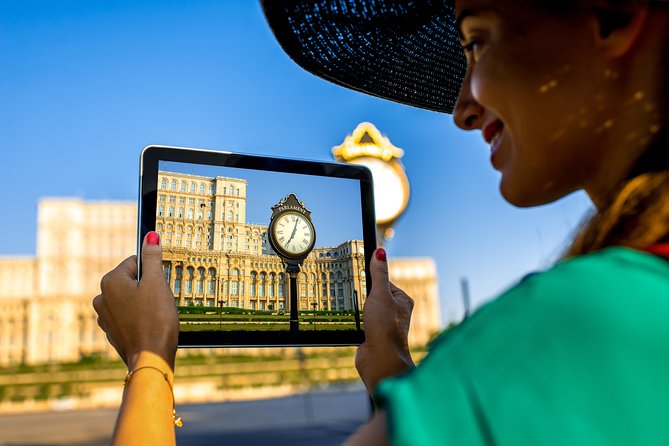
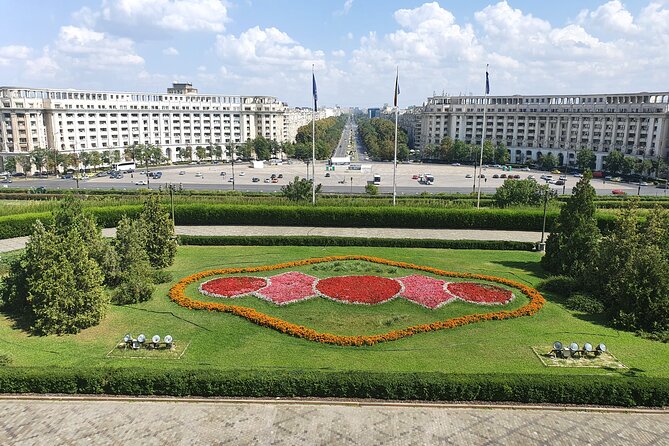
Allow about two hours for the Palace of Parliament, also called the People’s House. It is the day’s clearest lesson in how a totalitarian state can turn political power into physical mass.
The building is described as the second-largest administrative building in the world after the Pentagon. The scale is the point. Vast rooms, heavy materials, and grand official spaces express the ambition of Nicolae Ceaușescu’s regime, while the human cost and disruption behind the project give the building a darker meaning.
Your guide can help you look past the sheer size. The useful question is not simply how large the building is, but why a government chose to spend so much on it while ordinary people faced shortages and strict control. The experience is strongest when the architecture is read as political evidence, not just as an impressive photo stop.
The admission ticket is not included, so confirm the current entry cost when planning your budget. The same applies to the other paid stops. This matters because the advertised price covers the private service and transport, but not every expense during the day.
The building may feel overwhelming, and that is part of its effect. If you prefer small museums and quiet streets, two hours here may feel long. If you want a direct introduction to Ceaușescu-era ambition, it is essential.
Romanian village life at the National Village Museum
The National Village Museum changes the tone completely. Here you see traditional houses from different parts of Romania, built from wood, adobe, stone, and other local materials.
The museum gives you a practical look at how rural communities organized life around available materials and the surrounding environment. You can expect more than pretty old buildings. Mills, wooden churches, and other national symbols show how work, worship, family life, and local construction fit together.
I find this stop valuable because it gives context to the country that existed outside the capital’s political center. After the imposing Palace of Parliament, the village homes offer a smaller and more human scale. Their simple design also helps explain the gap between traditional Romanian life and the controlled modernity promoted by the communist state.
The supplied itinerary gives this stop a substantial place in the day, but the exact visit length is not clearly stated. Wear comfortable shoes and leave room for walking around the grounds. The experience is outdoors and spread across a large area, so weather may affect your comfort.
Calea Victoriei, where Bucharest changes character
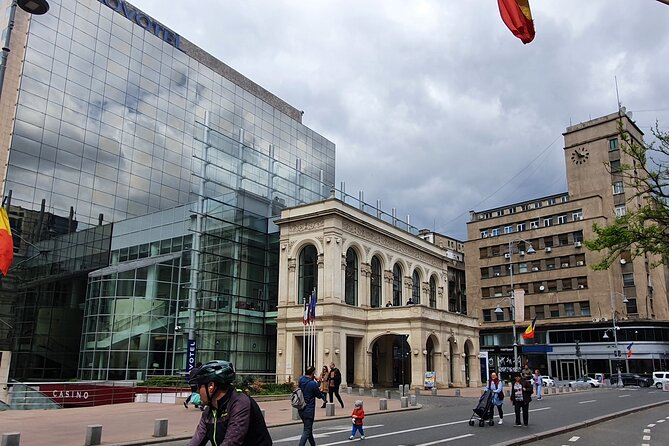
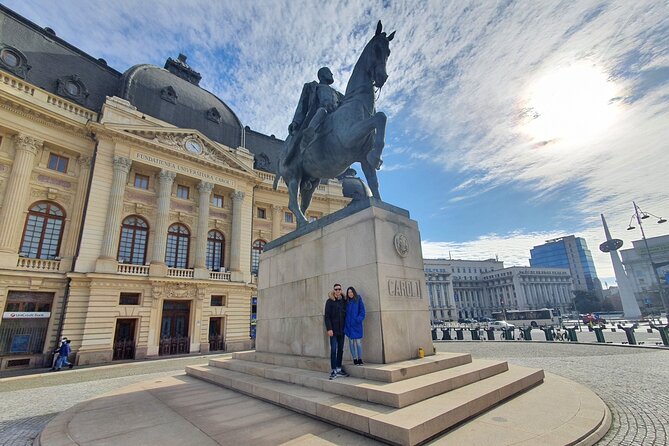
Calea Victoriei is a 45-minute city walk and drive through one of Bucharest’s most revealing streets. It brings together royal power, religious buildings, museums, theaters, shops, restaurants, and reminders of the communist period.
Your guide points out the contrast between the Royal Palace and the former Central Committee of the Romanian Communist Party. That pairing helps you see how Bucharest’s political center changed hands and meaning over time.
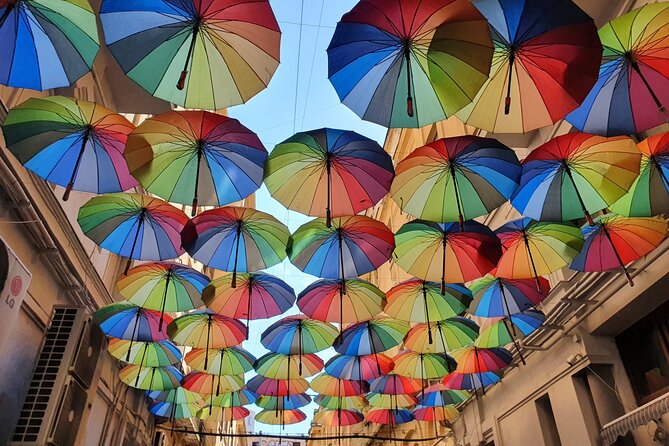
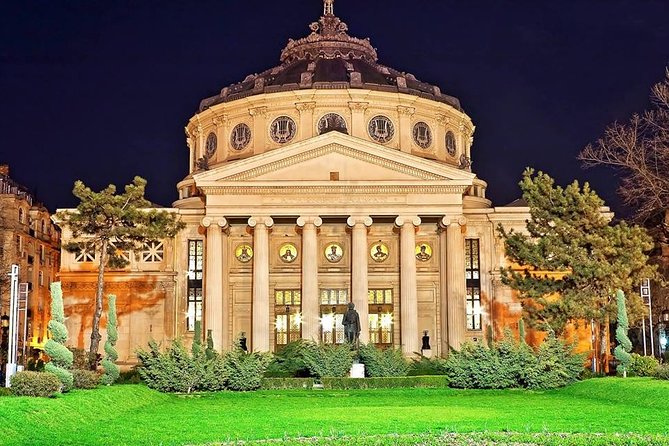
You may also pass Orthodox churches, the National History Museum, the Romanian Athenaeum, CEC Palace, music shops, casinos, tea shops, retail stores, and gift shops. The route is not only about monuments. It shows how the city now uses historic buildings and public streets for ordinary modern life.
Because the stop lasts less than an hour, do not expect a detailed visit inside every building. Think of Calea Victoriei as a guided orientation to the city’s main architectural and political contrasts. It is a good place to note where you might return later on foot.
More ways to get to Bran Castle:
- Searching for Dracula: Private Day Trip from Bucharest
★ 4.5 · 21 reviews - Mystical Monasteries, Dracula’s Tomb and Mogosoaia Lake Palace – Private Tour
★ 5.0 · 20 reviews - 5h Abandoned Fort, Dracula’s Grave and Mogoșoaia Palace, Private
★ 5.0 · 20 reviews - Bucharest Day Trip to Discover Dracula’s Life Journey
★ 4.5 · 18 reviews
Revolution Square and the December 1989 turning point

Revolution Square gives the communist theme its political center. The stop lasts about 30 minutes and focuses on the events of December 1989, when Ceaușescu was removed from power.
You see the building that once housed the Central Committee of the Romanian Communist Party. From here, the guide explains how the revolution began and how the dictator eventually fled by helicopter. The site connects a physical building with a dramatic change in Romanian government.
This is one of the places where a good guide matters most. Dates and political titles alone can make the story hard to follow. Nicolas has been praised for explaining Bucharest’s past in an entertaining way, while Răzvan has been described as professional, flexible, and well informed. Expect the guide to add context and answer questions rather than simply point at buildings.
Thirty minutes is enough for a focused explanation, but not for a full study of every monument in the square. If the revolution is your main reason for booking, ask questions during the drive between stops so the subject can receive more attention.
Snagov Monastery and the Dracula connection
About 40 minutes outside Bucharest, Snagov Monastery brings a change of pace and a touch of mystery. The monastery sits on an island, and the visit is presented as a surprise stop connected with Dracula’s tomb.
This is not the same kind of history as the Palace of Parliament or Revolution Square. The Dracula link brings legend into a day otherwise grounded in Romanian politics and social history. The monastery itself gives you a religious and rural setting after a series of urban stops.
The visit is scheduled for about an hour, and the admission fee is not included. Since the stop involves travel outside Bucharest and an island setting, allow the full time rather than treating it as a quick photo stop.
The Dracula connection may appeal to you if you want folklore alongside documented history. If you prefer a strictly academic tour, keep in mind that this part of the day has a different tone. That contrast is one reason the overall route feels varied rather than repetitive.
Ceaușescu Mansion and the private face of the regime
The Ceaușescu Mansion, also known as the Spring Palace, was the private residence of Nicolae and Elena Ceaușescu and their children from 1965 to 1989. The visit lasts about one hour and 20 minutes.
The mansion is important because it shows the family away from public ceremonies and government offices. The Palace of Parliament demonstrates the scale of the state. This house helps you consider how the ruling family lived behind private gates.
The residence was built in the mid-1960s and enlarged between 1970 and 1972. Aron Grimberg-Solari designed the house, while architect Robert Woll worked on the furnishings and the grounds, with engineer Teodosiu involved in the outdoor design.
That detail gives the visit more substance than a simple look at rooms and furniture. You can see how a private home became part of the machinery of power, comfort, and status. It also helps explain why the contrast between official communist ideals and the leadership’s private life remains such a sensitive subject.
Admission is not included. The mansion is one of the most useful paid stops for anyone interested in Ceaușescu personally, rather than only in the political system he led.
What the $297.38 price buys you
At $297.38 per person, this tour is not a low-cost sightseeing loop. Its value comes from the private vehicle, pickup and drop-off, guide services, fuel surcharge, facility fees, and the ability to cover Bucharest plus Snagov in one day.
For a group that wants convenience and historical explanation, that can be worthwhile. You avoid arranging separate transport to the Palace of Parliament, Village Museum, Ceaușescu Mansion, and Snagov Monastery. You also have a guide available throughout the route instead of piecing together the story from signs and phone searches.
The price is harder to justify if you plan to visit only central Bucharest or if you do not want to pay separately for several admissions. Food and drinks are also excluded. Ask yourself how much you value private transport, hotel pickup, and a guide who can adjust the day around your group.
Group discounts are offered, so larger parties should check how the final price changes. Since only your group takes part, the cost may make more sense when shared by several people than when booked by one or two passengers.
Guide style and transport details
The named guides connected with this experience include Nicolas and Răzvan. Nicolas is described as friendly, professional, flexible, entertaining, and highly familiar with Bucharest. Răzvan is praised for his professional manner and strong command of the city’s story.
A sense of humor is part of the appeal. That can help during a long day with several serious subjects, especially at the Palace of Parliament and Revolution Square. At the same time, the political material deserves thoughtful treatment, so you should expect a mix of jokes, facts, and direct discussion.
The private vehicle is air-conditioned, clean, and comfortable, with large windows and comfortable seats. Hotel pickup and drop-off reduce the need to find a meeting point, which is especially helpful when the day includes Snagov.
Most people can participate, and service animals are allowed. Confirmation is provided at booking. You can cancel for a full refund up to 24 hours before the start time. Changes or cancellations inside that window are not accepted for a refund.
Who should book this Bucharest tour?
I would choose this experience if you have one full day in Bucharest and want a guide to explain how the city moved from royal Romania through communism and into the 1989 revolution.
It suits you especially well if you:
- Want private transport rather than public transit or several taxis
- Care about modern Romanian political history
- Like mixing major buildings with village traditions and religious sites
- Want to visit Snagov without arranging separate transport
- Prefer a guide who can add humor and local suggestions
- Are traveling with family or friends and can use a group discount
I would think twice if your priority is a slow museum day. The schedule covers a lot of ground, and several admissions are extra. You also spend much of the day moving between sites, so it is not designed for lingering at one attraction.
Should you book it?
Book this tour if you want the broadest possible first look at Bucharest and you value a private guide more than a low ticket price. The combination of the Palace of Parliament, Village Museum, Revolution Square, Ceaușescu Mansion, and Snagov gives you a clear set of contrasts: power and ordinary life, fact and legend, public image and private comfort.
Skip it if you already know Bucharest well, want to explore at a slow pace, or would rather pay for individual attractions as you go. For everyone else, the strongest reason to book is not the Dracula connection alone. It is the way the guide and private transport connect places that would otherwise feel unrelated.
FAQ
How long is the Bucharest tour?
The experience lasts about eight hours.
Is this a private tour?
Yes. Only your group participates in the private activity.
Is hotel pickup included?
Yes. Hotel pickup and drop-off are included.
Is transportation included?
Yes. The tour provides transport by private vehicle, along with a driver-guide, fuel surcharge, and facility fees.
Are entrance tickets included?
No. Entrance tickets are not included for the Palace of Parliament, Snagov Monastery, Ceaușescu Mansion, or other paid attractions.
Are food and drinks included?
No. Food and drinks are not included.
Which places are visited?
The route includes the Palace of Parliament, National Village Museum, Calea Victoriei, Revolution Square, Snagov Monastery, and Ceaușescu Mansion.
How far is Snagov Monastery from Bucharest?
Snagov Monastery is about 40 minutes outside Bucharest.
Is the Dracula tomb visit included in the itinerary?
Yes. The Snagov Monastery stop is described as the place connected with Dracula’s tomb.
Can I cancel for a full refund?
Yes, if you cancel at least 24 hours before the experience start time. Cancellations or changes made less than 24 hours before the start time are not accepted for a refund.
More Communist-Era History Walks in Bucharest
- The Real tour of Communism
★ 5.0 · 666 reviews - Life under Communism
★ 5.0 · 358 reviews - 3-Hour Guided Tour of Communist Bucharest
★ 4.9 · 303 reviews - Bucharest Essential Tour: Old Town, Calea Victoriei & Communism
★ 5.0 · 142 reviews
Newest Bucharest trips on the site
- Winery touring & private wine tasting – one day private tour★ 5.0 · 3 reviews
- Bucharest: Dealu Mare Winery Private Trip with Wine Tasting★ 4.9 · 6 reviews
- Village Museum Bucharest Guided Tour★ 5.0 · 6 reviews
- Private Transfer from Giurgiu Port to Bucharest★ 4.5 · 12 reviews
- Airport Henri Coanda (Otopeni) to Bucharest – Private Transfer – Driver★ 5.0 · 5 reviews
- Salt Mine Tour from Bucharest with Entrance Ticket★ 4.5 · 19 reviews
- Wine tasting in Bucharest Old town – bonus cheese platter★ 4.5 · 6 reviews
- Walking tour of Bucharest★ 5.0 · 3 reviews
Dracula Castle Tours, compared.
Dracula’s Castle, Peles Castle, & Brasov Old Town
Read our review →
Dracula Castle, Peles Castle & Brasov Old Town
Read our review →
Dracula’s Castle, Peleș Castle & Brașov Day Trip
Read our review →
Day Trip to Dracula Castle, Peles Castle & Brașov
Read our review →
Bucharest to Dracula Castle, Peles Castle and Brasov Guided Tour
Read our review →
Dracula’s Castle, Peles Castle and Brasov Day Trip from Bucharest
Read our review →
Transylvania and Dracula Castle Full Day Tour from Bucharest
Read our review →
Browse the lists this tour appears in