
Reviewed · WALKING TOURS
Private Walking Tour: Essential Bucharest + Hidden Gems
Bucharest makes more sense when you see its grand avenues beside the scars left by war, earthquakes, and dictatorship. This private walk connects elegant Calea Victoriei with Revolution Square and Ceaușescu’s oversized city center, while a local guide explains what you are looking at and why it matters.
I like the private format, since you can ask questions without waiting for a large group. I also like the way the route moves beyond postcard sights, especially the story of how old neighborhoods were cut away to create the People’s House and its broad avenues.
The main drawback is the walking distance and the open-air nature of the tour. You will be on your feet for two to three hours, and poor weather can cause a cancellation. The route also focuses on exterior views and urban history rather than interior museum visits.
Key points at a glance
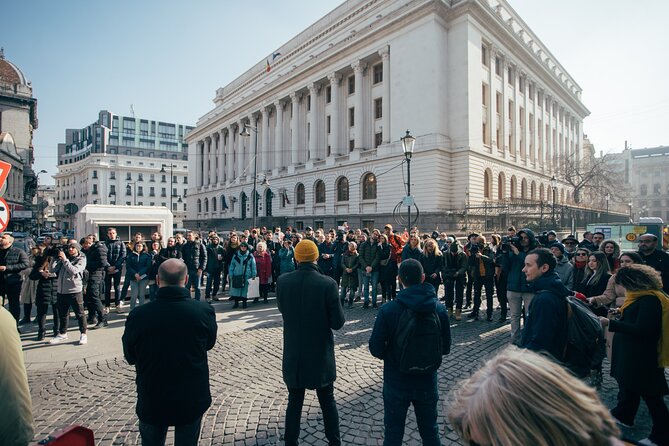
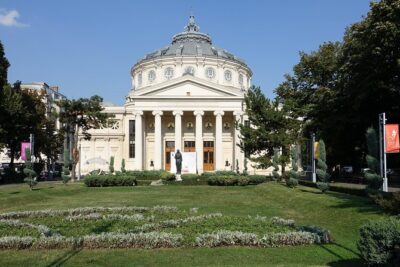
- Start at the Romanian Athenaeum: Meet at one of Bucharest’s grandest cultural landmarks on Strada Benjamin Franklin.
- Follow Calea Victoriei: See palaces, museums, mansions, and the city’s most famous historic avenue.
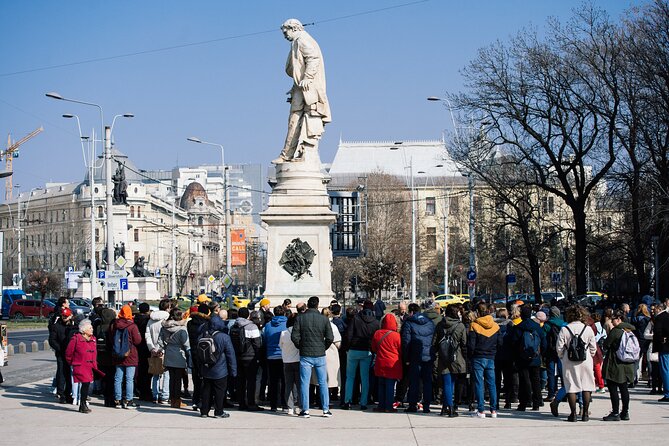
- Spend serious time at Revolution Square: The 45-minute stop gives the guide room to explain its political importance.
- Understand Ceaușescu’s city plan: The final section connects Liberty Boulevard and Constitution Square with the forced reshaping of central Bucharest.
- Ask for the city’s earlier faces: Guides such as Cristi and Radu use old photographs and stories to show how buildings and streets changed.
- Best for first visits: The route gives you a useful mental map when your time in Bucharest is short.
Why this private Bucharest walk works well
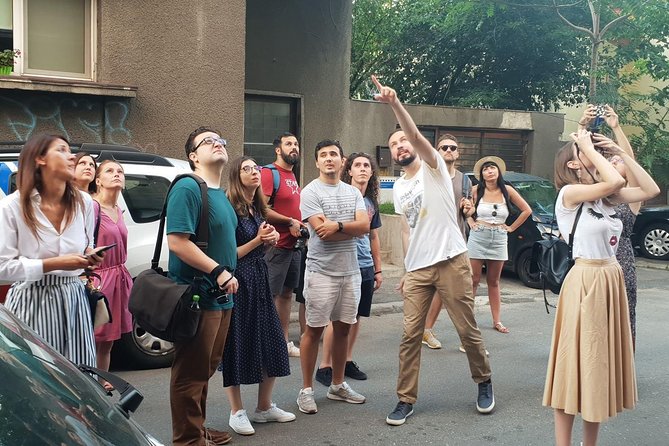
Bucharest can feel scattered at first. One block may show a 19th-century mansion, the next a Communist-era apartment building, and the next an ornate church or a damaged facade. This tour gives those contrasts a clear thread.
You begin in the historic center and finish at Constitution Square, beside the enormous Palace of Parliament, often called the People’s House. Along the way, the guide explains how Bucharest became a capital shaped by royal ambition, earthquakes, war, political upheaval, and forced redevelopment.
That context is the real value here. Without it, the People’s House can look like a single oversized building. With it, you begin to understand the streets, churches, homes, and older neighborhoods that disappeared to make room for Ceaușescu’s vision.
The tour is private, so the pace can suit your group. You can pause for a photo, ask about a building, or spend longer on a subject that interests you. A family with children can ask for simpler explanations, while a history-minded group can press for more detail.
The experience is priced at about $86.89 per person. That is not the cheapest way to walk around Bucharest, but the price makes more sense for a private tour where the guide’s attention belongs only to your group. It is particularly useful if you have just arrived and want a strong orientation before exploring alone.
More Walking Tours in Bucharest
- Bucharest: City Highlights Guided Walking Tour
★ 4.9 · 1,482 reviews - Bucharest Highlights Walking Tour
★ 5.0 · 469 reviews - Bucharest: Ghost Stories & Romanian Mythology Walking Tour
★ 4.9 · 287 reviews
Meeting the guide at the Romanian Athenaeum
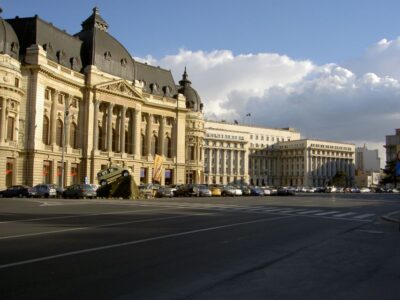
The tour begins at the Romanian Athenaeum, at Strada Benjamin Franklin 1-3. This is a practical meeting point because it places you directly beside one of central Bucharest’s most recognizable buildings.
The starting location also sets the tone. You are not beginning at a generic transit stop or a shopping street. You are starting among the grand facades and formal avenues that helped give Bucharest its old nickname as the Paris of the East, although the tour’s purpose is to show you a city that is far more complicated than that label suggests.
The scheduled operating hours are Tuesday through Sunday, from 9:30 a.m. to 3:30 p.m. The activity uses a mobile ticket, and confirmation is provided at booking. You should check the exact meeting instructions before setting out, especially if your accommodation is outside the central area.
Calea Victoriei, Bucharest’s grandest avenue
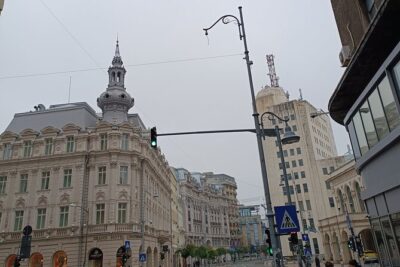
The first stop takes about 30 minutes on Calea Victoriei. This is the city’s best introduction to the way Bucharest layers different eras in a short distance.
The avenue is lined with palaces, museums, and mansions that reflect the period when it became the center of high society. The guide places those buildings in their political and social setting rather than treating them as isolated photo stops.
You can expect stories about how the avenue changed through wars and earthquakes, then found new life again. That matters because Bucharest has not preserved its past in one neat package. Some buildings survived, some were altered, and others remain reminders of periods when the city had to rebuild.
The guide also points out less obvious places and urban mysteries along the route. Since the walk is private, you can ask about an unusual facade, a damaged building, or a street that seems out of place beside the grand avenue.
This section is especially useful for first-time visitors. You get the city’s architectural vocabulary early: royal ambition, French influence, local design, wartime damage, and the practical marks left by repeated earthquakes.
The limitation is that 30 minutes is enough for an introduction, not a full architectural tour. If you want to enter museums or tour every palace, you will need separate time. The strength here is the broad picture.
Revolution Square and the city’s political turning point
The second stop, Revolution Square, receives about 45 minutes. That is the longest single stop before the final section, and for good reason.
The square is tied to some of Bucharest’s most important political events. Your guide offers background on the landmarks around it and explains why the space matters beyond its formal buildings.
This is where a guide can make a major difference. A building may look elegant or imposing, but its meaning changes when you learn how it relates to Romania’s monarchy, Communist rule, and the country’s political rupture. The tour’s focus is not only on what survives but also on what happened around it.
One particularly useful part of the guiding style is the use of old photographs. Radu, one of the guides associated with the experience, has been praised for showing how buildings looked in earlier periods and explaining why they changed. That turns a simple facade into a before-and-after lesson in urban history.
Cristi is also described as a strong storyteller who can connect individual places to larger events. If your guide is Cristi or Radu, you can expect the experience to lean heavily on explanation and conversation rather than a quick list of dates.
Revolution Square is a good place to ask questions. You might want to know how the city’s architecture reflects different rulers, how earthquakes affected central Bucharest, or why certain buildings survived while others did not. A private tour gives you room to follow those questions.
A different sort of day out, same corner of Romania:
- Bucharest: Palace of Parliament Tickets and Guide
★ 4.3 · 3,182 reviews - Bucharest: Palace of Parliament Tickets and Guided Tour
★ 4.4 · 1,877 reviews - Bucharest: Parliament Palace Skip-the-line Ticket
★ 4.2 · 1,518 reviews - Taste Bucharest: A Food Lover’s Tour of Markets & Neighbourhoods
★ 5.0 · 689 reviews
Union Square and the route toward the new city center
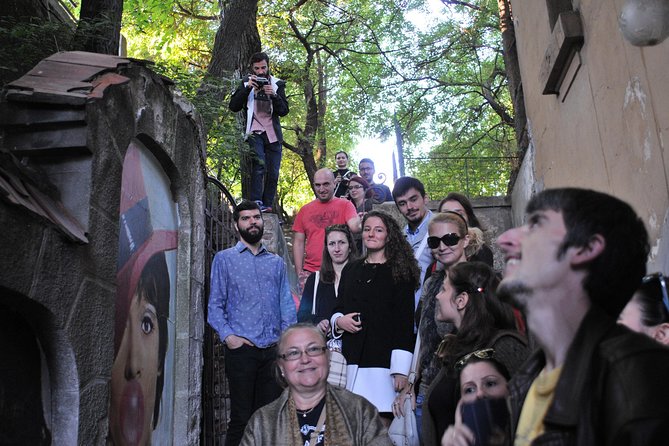
The brief stop at Piața Națiunile Unite takes about 15 minutes. It is not designed as a long visit, but it helps connect the earlier parts of the route with the broad avenues ahead.
Here, the guide discusses important landmarks around the square and helps you understand the movement from older central streets toward the monumental district created under Ceaușescu. The stop is short, so expect a useful explanation rather than a long pause.
This transition is one of the route’s practical strengths. You do not simply jump from historic Calea Victoriei to the People’s House. You move through the urban structure that links them, which makes the later discussion of demolished streets and isolated neighborhoods easier to follow.
Liberty Boulevard and the cost of grand planning
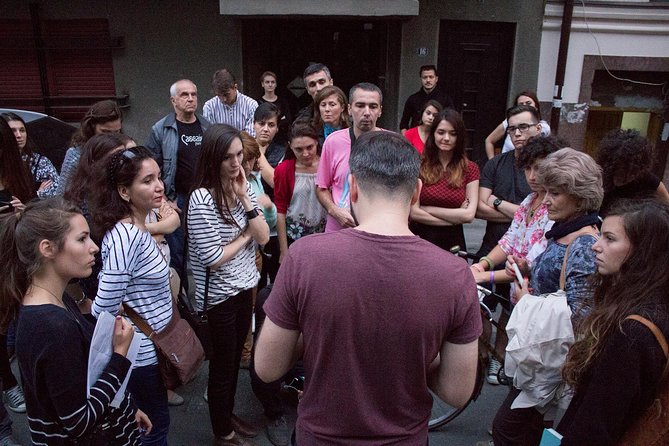
The walk continues along Bulevardul Libertății for about 30 minutes. This broad avenue is important not just because of its size but because of what it replaced.
The guide explains how central Bucharest’s street network was altered and how historic areas were cut off from ordinary city life. Ceaușescu’s plan sought a controlled, monumental capital centered on political power. The result was a city center of huge scale, where the relationship between people, older neighborhoods, and public space changed sharply.
You will notice a different feeling here than on Calea Victoriei. The earlier avenue is associated with palaces, mansions, and layers of social life. Liberty Boulevard points toward authority, ceremony, and scale. The contrast helps you read Bucharest as a city shaped by competing ideas of what a capital should be.
This section may be less immediately charming than the opening walk. That is part of its purpose. You are not being shown only the prettiest streets. You are being asked to look at the cost of a political project and the way architecture can serve power.
Because the tour is on foot, you can see how the broad avenues affect movement through the center. You do not need to rely on an abstract explanation of urban planning. The scale is visible around you.
Constitution Square and the People’s House
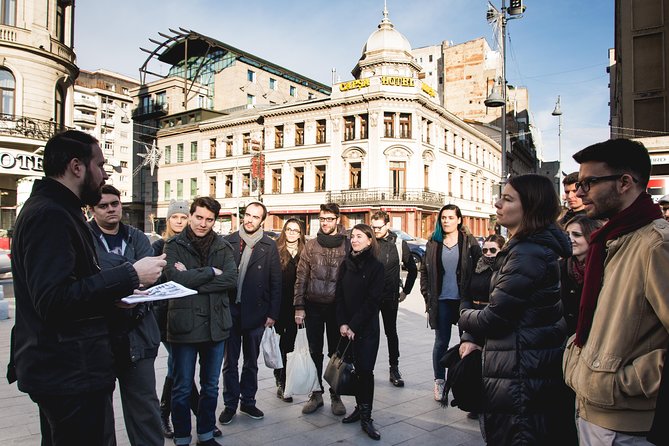
The tour ends at Piața Constituției, beside the large clock. The stop lasts about 45 minutes and focuses on the People’s House and the avenues around it.
Most first-time visitors notice the building’s size first. It is hard not to. The guide’s job here is to help you look past the spectacle and understand what had to happen for this district to be created.
The central story is the destruction of older sections of Bucharest. Historic streets and residential areas were removed, communities were displaced, and parts of the city were left isolated from normal urban life. The new center was designed around Ceaușescu’s authority, with the People’s House at its heart.
This is the tour’s strongest lesson. Instead of treating the palace as a strange architectural curiosity, you see it as the centerpiece of a much wider transformation. The surrounding avenues, open spaces, and empty feeling are part of the story.
The tour ends outside at Constitution Square. The supplied details do not promise an interior visit to the People’s House, so you should book this experience for the exterior history and city context, not as a palace admission tour.
The ending point is also useful for planning the rest of your day. Since you finish at a major square, you can continue exploring central Bucharest or make your own way elsewhere. The experience does not return you to the Romanian Athenaeum, so plan for that when arranging your schedule.
The guides can shape the experience
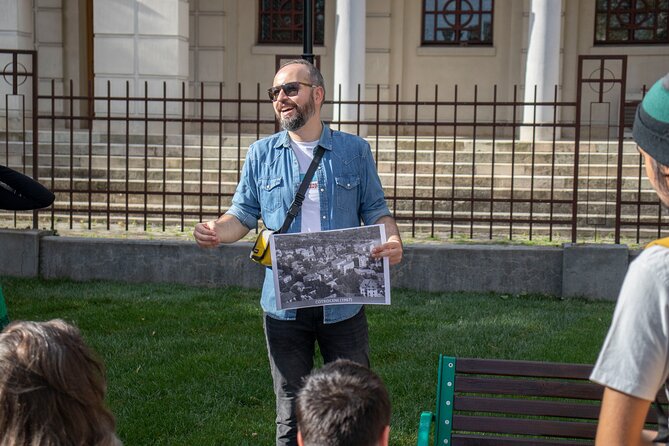
The provider is Cristi Radu, and the guide names most associated with the experience are Cristi and Radu. The strongest praise centers on their ability to tell stories, answer questions patiently, and connect buildings with older photographs.
That matters more on this route than a rehearsed speech would. Bucharest’s story involves several eras and many abrupt changes. A good guide needs to explain not only what happened, but how one period affected the next.
Cristi is described as able to turn the walk into a history lesson without losing the personal side of the city. Radu is noted for his patience and for caring about how you understand Bucharest. Those qualities are especially useful if this is your first visit and you are still trying to make sense of the city.
One family found the experience suitable even for an eight-year-old, who considered it a favorite activity during the trip. That does not mean every child will enjoy two to three hours of urban history, but the private format lets the guide adjust explanations and pause for questions.
In one case, a solo participant received extra time and explored additional places with the guide. You should not assume that extra hours are guaranteed, but a private tour can offer more flexibility than a fixed group walk.
Timing, walking effort, and weather
The advertised duration is about two to three hours. The planned stops add up to roughly two hours and 45 minutes, not counting the time spent walking between them. One particularly long experience extended beyond three hours, and an individual tour included extra time in the city.
You should wear comfortable shoes and expect a steady urban walk. The route includes several major avenues and squares, with no promise of a return ride. Since the activity is outdoors, weather matters. If poor weather forces cancellation, you are offered another date or a full refund.
The tour operates Tuesday through Sunday during the stated daytime hours. It is not listed for Mondays. Most people can participate, and service animals are allowed. The route is near public transportation, which helps with reaching the meeting point and leaving from Constitution Square.
The tour requires a minimum number of participants, even though it is private for your own group. If that minimum is not met, you are offered another date or experience, or a full refund.
Who should book this Bucharest tour?
I would recommend it most strongly to first-time visitors, people with only a short stay, and anyone who wants Bucharest’s complicated past explained while looking directly at the city.
It also suits families who prefer a private pace and couples or small groups who like to ask questions. If you have already spent several days studying Romanian history or taking architecture tours, the route may cover familiar ground, but the old photographs and local stories can still add depth.
You may want another kind of activity if you dislike walking, want extensive interior access, or prefer a food-focused introduction to the city. This is an urban history walk, not a tasting tour, museum tour, or transport-based sightseeing trip.
The price is easiest to justify when you value personal attention. For a group of several people, the private format can feel more reasonable than paying separate rates for multiple short activities. For a solo visitor, $86.89 is a larger outlay, but the one-on-one format may allow more questions and a flexible pace.
Should you book the Essential Bucharest walk?
Book it if you want to understand how Bucharest became the city you see today, not simply collect a few landmark photos. The route links elegant Calea Victoriei, politically charged Revolution Square, and the People’s House into one clear story.
I would schedule it early in your visit. The guide’s explanations can help you read the rest of Bucharest with better eyes, especially the contrast between old streets and Ceaușescu’s monumental center.
Skip it if you need a short, low-cost stroll or a tour that enters major buildings. For everyone else, this is a strong private introduction, with the best value coming from the guide’s stories, old images, and willingness to explain why the city changed so sharply.
FAQ
How long does the private Bucharest walking tour last?
The advertised duration is approximately two to three hours. The planned stops total about two hours and 45 minutes, not including walking time between them.
Where does the tour begin?
The meeting point is the Romanian Athenaeum at Strada Benjamin Franklin 1-3 in Bucharest.
Where does the tour end?
The tour ends at Piața Constituției, at the big clock.
Which Bucharest landmarks are included?
The route covers Calea Victoriei, Revolution Square, Piața Națiunile Unite, Bulevardul Libertății, and Piața Constituției, including exterior views and explanations of the People’s House area.
Is this a private tour?
Yes. Only your group participates in the private activity.
Who leads the tour?
The experience provider is Cristi Radu. The guides associated with the experience include Cristi and Radu.
Is the People’s House interior visit included?
The provided details describe the People’s House and the surrounding avenues at Piața Constituției. They do not state that an interior visit is included.
Is the tour suitable for children?
Most people can participate, and one eight-year-old particularly enjoyed the experience. The private format also allows the guide to adjust the pace and explanations for your group.
Can I cancel for a full refund?
Yes. You can cancel at least 24 hours before the start time for a full refund. Changes or cancellations made less than 24 hours before the start time are not accepted for a refund.
Newest Bucharest trips on the site
- Winery touring & private wine tasting – one day private tour★ 5.0 · 3 reviews
- Village Museum Bucharest Guided Tour★ 5.0 · 6 reviews
- Bucharest: Dealu Mare Winery Private Trip with Wine Tasting★ 4.9 · 6 reviews
- Private Transfer from Giurgiu Port to Bucharest★ 4.5 · 12 reviews
- Airport Henri Coanda (Otopeni) to Bucharest – Private Transfer – Driver★ 5.0 · 5 reviews
- Salt Mine Tour from Bucharest with Entrance Ticket★ 4.5 · 19 reviews
- Wine tasting in Bucharest Old town – bonus cheese platter★ 4.5 · 6 reviews
- Walking tour of Bucharest★ 5.0 · 3 reviews
Walking Tours, compared.
Ghost Stories & Romanian Mythology Walking Tour
Read our review →
Walking Tour- Delightful Bucharest (Highlights, Stories, Sights)
Read our review →
Browse the lists this tour appears in