Reviewed · BUCHAREST TOURS
Troubled – Notorious Neighborhood – area known for social issues
Bucharest’s polished center is only one part of the city. This private tour takes you into Ferentari and Rahova, then out to Sintești, where you see poor neighborhoods, local markets, a former feared penitentiary area, and the grand houses built by wealthy Roma families. It is a direct look at places most visitors never reach.
I like the small private format and the strong local guidance. Guides including Sebastian, Bogdan, Cătălin, Matthew, and Valerica are praised for explaining difficult subjects with humor and care. I also like the mix of walking and driving, which lets you visit markets and streets without turning the whole outing into a long walk.
The main drawback is clear: this is a tour about poverty, exclusion, and a minority community, not a light sightseeing trip. You must dress simply, leave jewelry and expensive items behind, and accept that photographs may not be welcome in every place.
Key points to know before booking
- Three very different stops: Ferentari, Rahova, and Sintești show separate sides of life on Bucharest’s edges.
- Private group format: Only your party takes part, giving you more room for questions and discussion.
- Mostly by vehicle: Walking is included at markets and selected streets, but much of the route is driven.
- Guides set the tone: Sebastian, Bogdan, Cătălin, Matthew, and Valerica are named as guides associated with the experience.
- Respect matters: Ask before taking photos, pay attention to local customs, and avoid flashy clothing or valuables.
- Plan ahead: The tour costs $130.83 per person, is offered in English, and is often reserved about 48 days ahead.
A different view of Bucharest
This is not a standard city tour with grand boulevards and palace interiors. It is built around the parts of Bucharest and its outskirts that are usually left out of a first visit.
The route focuses on Ferentari and Rahova, two Bucharest neighborhoods associated with poverty and social problems, then continues to Sintești, a village known for its large Roma houses. The purpose is not simply to look at hardship. Your guide explains how these areas developed, how Roma communities live, and how poverty and wealth can exist side by side.
That context matters. Without it, you might see a rough street, a crowded market, or an oversized house and make quick assumptions. A guide can explain the local setting, the history of the neighborhoods, and the rules of conduct that help you move through them respectfully.
The tone depends partly on your guide. Sebastian is described as mixing humor with detailed explanations. Cătălin is praised for explaining what you can and cannot do. Valerica is noted for taking time with questions about Roma life, daily routines, social codes, and ongoing struggles.
This makes the tour feel more like a guided conversation than a collection of photo stops. You still see unusual places, but the value comes from understanding what you are seeing.
A few more Bucharest trips worth a look
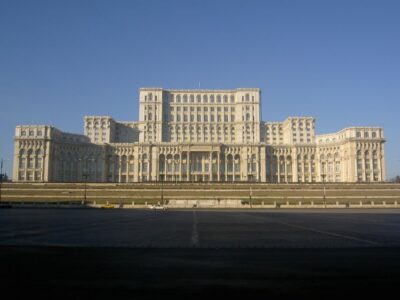
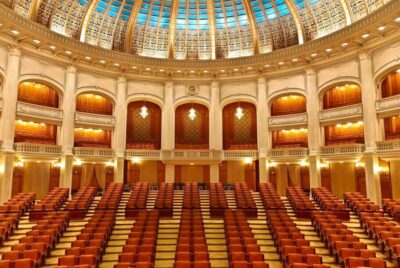
- Bucharest: Palace of Parliament Tickets and Guide
★ 4.3 · 3,182 reviews - Bucharest: Palace of Parliament Tickets and Guided Tour
★ 4.4 · 1,877 reviews - Bucharest: Parliament Palace Skip-the-line Ticket
★ 4.2 · 1,518 reviews
Ferentari: Bucharest’s hardest edge
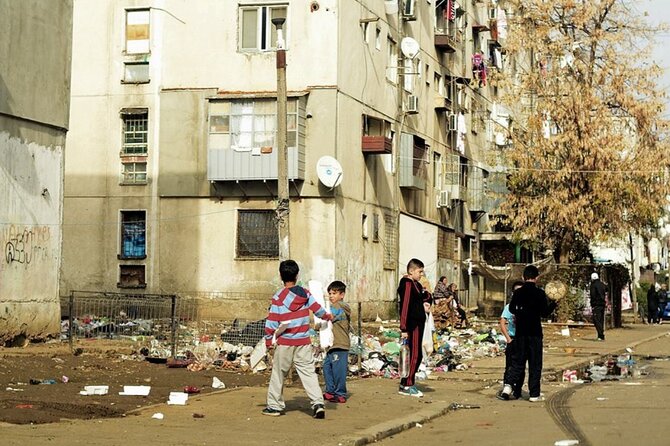
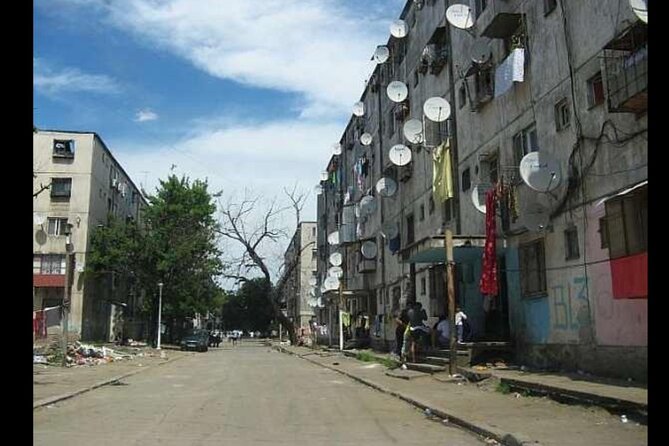
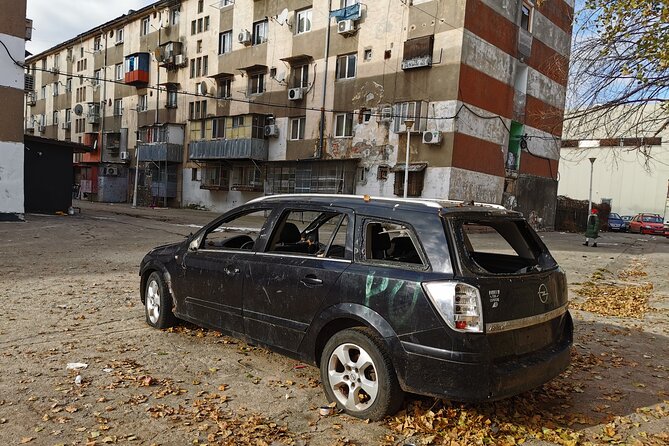
The first stop lasts about 1 hour and 10 minutes. Ferentari is presented as one of Bucharest’s poorest and most troubled neighborhoods, with a low standard of living compared with the rest of the capital.
You should expect the guide to point out local conditions and explain the area rather than treat it as a spectacle. The tour may include streets around Strada Zăbrăuțului 5, Aleea Iacob Andrei 11, Aleea Livezilor, Strada Pucheni 1, and Strada Amurgului 4.
The exact amount of walking may vary, but the experience is not limited to looking through a vehicle window. Parts of the route take place on foot, and this is where your behavior matters most. Keep your phone away unless your guide says photography is acceptable. A camera pointed at homes or residents can quickly feel intrusive.
One useful feature is the private format. With only your own group, you can ask direct questions without competing with a large crowd. You can also tell the guide if a subject needs more explanation or if you prefer to observe quietly.
I would not book Ferentari if you want a cheerful or polished side trip. I would book it if you want to understand how urban poverty looks in Bucharest and are willing to approach the neighborhood with restraint.
Rahova, markets, and the penitentiary area
The second part also lasts about 1 hour and 10 minutes and focuses on Rahova. The route includes Aleea Livezilor and nearby streets, along with the area around Rahova Penitentiary on Strada Adrian 4.
Rahova gives the tour a wider social frame. You may see streets where Roma families live, local commerce, and markets used for ordinary shopping. The market visits are among the more practical parts of the experience because they show daily life rather than only hardship.
You may walk through a flower market and a local market, and you can see where residents buy groceries. One account describes buying food at the market, but you should treat that as optional rather than an expected part of the tour. Your guide will be the best person to tell you what is appropriate.
The penitentiary reference adds another layer to the stop. You are not signing up for a prison tour, and the information provided does not promise entry. Instead, the area helps explain Rahova’s reputation and the difficult image attached to the neighborhood.
This section may be the most useful for visitors who want to see ordinary routines alongside serious social problems. Markets give you a more human picture than a simple drive through poor streets. At the same time, you should not mistake a short visit for a full understanding of the community. Listen closely, ask polite questions, and avoid treating residents as part of the attraction.
Sintești and the Roma palaces
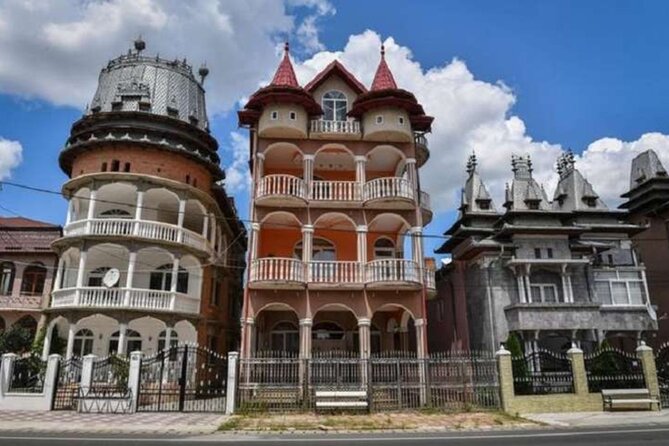
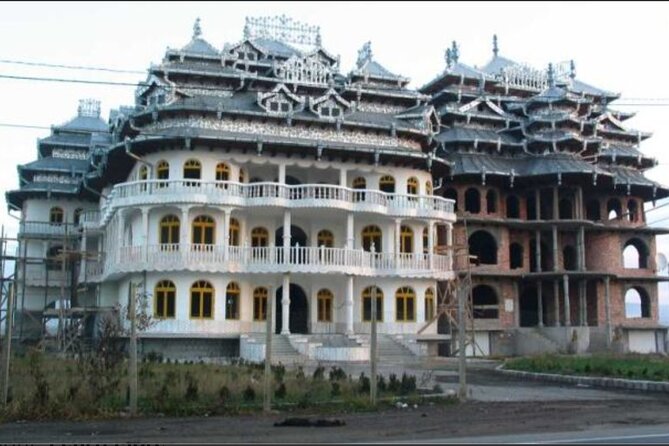
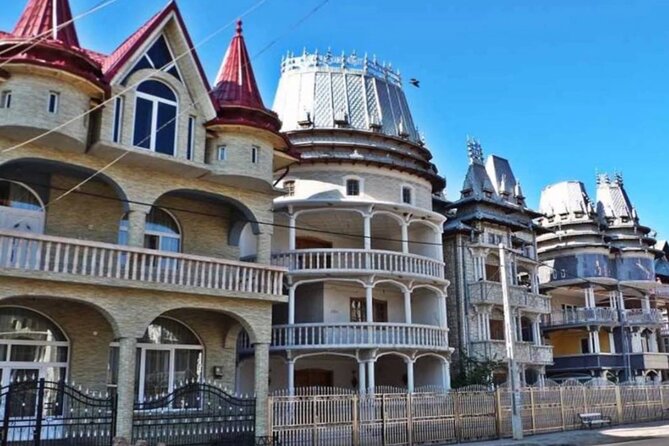
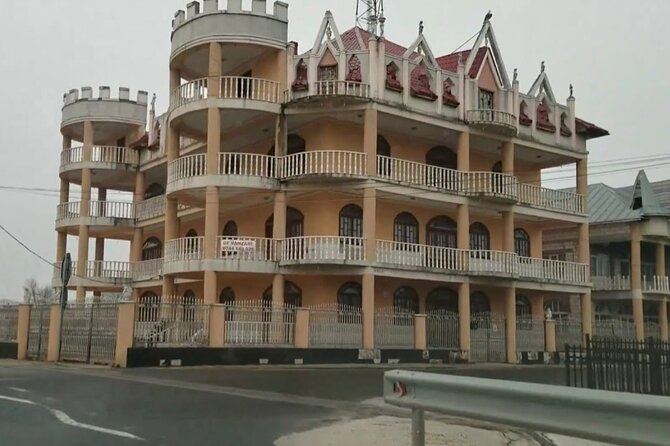
The final stop takes about 1 hour and 10 minutes and brings you to Sintești, a village outside Bucharest known for its ornate Roma palaces. The route includes Strada Principală Nr. 353A, Sintești.
This is the tour’s sharpest contrast. Ferentari and Rahova show hardship, while Sintești shows conspicuous wealth through large, highly decorated homes. The tour presents these houses as part of the range of Roma life, not as proof that every Roma family shares the same story.
That contrast is one of the strongest reasons to choose the experience. You see that the community cannot be reduced to one image. Some families face poverty and exclusion, while others have built impressive homes and accumulated considerable wealth. Your guide can discuss the social and economic differences behind that contrast.
You should also keep your expectations in check. The information promises a visit to the village with Roma palaces, not entry into the homes. You may be viewing buildings from public areas, with the guide explaining what you see.
The village visit can raise uncomfortable questions about wealth, business, and social status. That is useful if you are prepared to listen without turning the stop into a hunt for extravagant photos. The best experience here is one where you notice the architecture but also think about the unequal paths that produced it.
A different sort of day out, same corner of Romania:
- Bucharest: City Highlights Guided Walking Tour
★ 4.9 · 1,482 reviews - Taste Bucharest: A Food Lover’s Tour of Markets & Neighbourhoods
★ 5.0 · 689 reviews - The Real tour of Communism
★ 5.0 · 666 reviews - Bucharest: Therme Bucharest Entry Ticket and Transfer
★ 4.6 · 608 reviews
Why the private format changes the experience
This is a private activity, so only your group participates. That matters more here than it would on a standard city sightseeing trip.
In a large group, a guide might need to keep moving and avoid sensitive questions. In a private group, you have more freedom to discuss Roma identity, poverty, local customs, and Bucharest’s social divisions. The guide can also explain when a street or market is suitable for walking and when it is better to remain discreet.
The named guides bring different personalities. Sebastian is described as safe, entertaining, and good at adding city context. Bogdan is praised for a friendly manner and for explaining Bucharest’s story. Cătălin is noted for clear boundaries about behavior. Valerica is described as disciplined, patient, and willing to explain daily life in detail.
Those qualities are especially important on this route. A guide should do more than point at poor housing or wealthy palaces. The strongest part of the experience is the explanation of what you are seeing and the reminder that real people live in these places.
Safety, clothing, and respectful behavior
The instructions are unusually direct: dress as simply as possible, do not wear jewelry, and avoid expensive items. Follow that advice. It helps you look less like someone arriving to display wealth in an area where that may be unwelcome.
The tour is described as suitable for most people, and pickup is offered. It is also near public transportation. Much of the route is done by vehicle, with walking at markets and selected areas, so you are not walking between every stop.
Safety is not something to ignore, even though the experience is designed with a guide. Stay with the group, follow instructions, and do not wander off to explore a side street. Keep phones, cameras, and wallets secure.
Photography deserves special care. One of the clearest practical lessons from the experience is that you should not automatically take pictures or videos. Ask first, especially in markets, residential areas, and places where people are present. If your guide says no, accept it without debate.
Also avoid using poverty as a backdrop for humorous photos. The tour can be eye-opening, but it should not become a performance for social media.
Is $130.83 per person fair?
At $130.83 per person, this is expensive compared with a basic Bucharest walking tour. You are not paying for museum admission or a long list of included attractions. The listed stops have no admission charge.
You are paying for a private vehicle-based experience, an English-speaking guide, local access, and several hours of explanation in places that are difficult to visit sensibly on your own. The value rises if you are traveling with a small group and care about direct conversation. It is less attractive if you mainly want famous sights or cheap sightseeing.
The three-and-a-half-hour duration is well judged for the subject. A shorter trip might feel rushed, while a much longer visit could become tiring or uncomfortable. Dividing the time evenly among Ferentari, Rahova, and Sintești gives you a useful comparison between urban poverty, local markets, and Roma wealth.
Group discounts may improve the price for larger parties. Pickup is also helpful because the route covers several areas and one stop lies outside Bucharest in Sintești. Since the tour is often booked about 48 days ahead, reserve early if your schedule is fixed.
Who should book this experience?
I would recommend it to you if you have already seen central Bucharest and want to understand more about the city’s social divisions. It suits curious adults who can listen, ask thoughtful questions, and accept that some moments may feel uncomfortable.
It is also a good match if you care about Roma history and present-day life but do not want a lecture detached from real streets and markets. The tour connects broad issues to specific places.
I would hesitate to recommend it to families with young children unless the adults know the children can handle difficult subjects. The provided information says most people can participate, but it does not describe a child-focused format.
I would also skip it if you want an easygoing photo tour. The instructions about plain clothing and respectful photography are not minor suggestions. They are central to having a responsible experience.
My booking advice
Book this tour for its access and conversation, not for a checklist of sights. Ferentari, Rahova, and Sintești offer a view of Bucharest that you will not get from the old town, grand avenues, or famous museums.
The strongest reasons to go are the private group, the time spent with a local guide, the market visits, and the contrast between poor neighborhoods and Roma palaces. The main caution is ethical: you are entering lived-in communities, so curiosity must come with restraint.
At 4.8 out of 5 from 21 ratings, with 95 percent recommending it, the experience has a strong record. Still, the subject matter is more important than the score. If you can follow local guidance and see people as more than scenery, this can be a valuable addition to a Bucharest visit. If not, choose a conventional city tour.
FAQ
Where does the tour take place?
The tour visits Ferentari and Rahova in Bucharest, then continues to Sintești, a village known for Roma palaces.
How long does the experience last?
The tour lasts approximately 3 hours and 30 minutes. Each of the three main stops is scheduled for about 1 hour and 10 minutes.
Is the tour private?
Yes. Only your group takes part in the activity.
Is the tour offered in English?
Yes. English is the listed tour language.
Is transportation included during the tour?
Pickup is offered, and much of the experience takes place by vehicle. Walking is also included at markets and in selected parts of Rahova and other neighborhoods.
What should I wear?
Dress as simply as possible. Do not wear jewelry or bring expensive items.
Can I cancel for a full refund?
Yes, if you cancel at least 24 hours before the experience start time. Cancellations or changes made less than 24 hours before the start time are not accepted for a refund.
Newest Bucharest trips on the site
- Winery touring & private wine tasting – one day private tour★ 5.0 · 3 reviews
- Bucharest: Dealu Mare Winery Private Trip with Wine Tasting★ 4.9 · 6 reviews
- Village Museum Bucharest Guided Tour★ 5.0 · 6 reviews
- Private Transfer from Giurgiu Port to Bucharest★ 4.5 · 12 reviews
- Airport Henri Coanda (Otopeni) to Bucharest – Private Transfer – Driver★ 5.0 · 5 reviews
- Salt Mine Tour from Bucharest with Entrance Ticket★ 4.5 · 19 reviews
- Wine tasting in Bucharest Old town – bonus cheese platter★ 4.5 · 6 reviews
- Walking tour of Bucharest★ 5.0 · 3 reviews
Bucharest Tours, compared.


Taste Bucharest: A Food Lover’s Tour of Markets & Neighbourhoods
Read our review →