
Reviewed · MONASTERY TOURS
Bucovina Painted Monasteries & Transylvania Tour: 4-Day Private
Romania’s finest medieval art is not locked inside a museum. It covers the walls of working Orthodox monasteries in Bucovina, where centuries-old scenes remain part of daily religious life. This four-day route adds Saxon towns, a fortified church, and a royal castle, giving you a broad first look at northern Romania without joining a large bus group.
I like the private vehicle and one-on-one guide service, especially on a route that covers a lot of ground. I also like the mix of famous sights and quieter monastic settings. Toni and Marius are named guides associated with this experience, and both are praised for their care, history skills, and practical help. The main drawback is pace: four days is efficient, but not leisurely, and the listed price is high for a tour that still requires several entrance payments.
Key things to know before booking
- The frescoes are the heart of the trip: Sucevița, Moldovița, and Voroneț display remarkable painted exteriors and interiors.
- You travel with your own group: Private transport means more flexibility and direct access to your guide.
- The route covers three different parts of Romania: Bucovina’s monasteries, Transylvania’s medieval towns, and the Carpathian royal resort of Sinaia.
- The guide can make a major difference: Toni and Marius are specifically associated with strong explanations and attentive personal support.
- Several admission fees are extra: Some stops are marked as included, while interior visits to the Black Church and Peleș Castle are not.
- Modest dress matters: Trousers or a long skirt are required for access to the monastery grounds.
Why the Bucovina monasteries are worth the long route
The painted monasteries are not simply pretty churches placed along a sightseeing route. Their walls tell biblical stories in large, carefully arranged scenes, created when images were a central way to teach religious ideas. At Voroneț, the famous blue pigment gives the paintings their signature look. At Sucevița and Moldovița, the full exterior walls turn the churches into open-air storybooks.
You will see both interiors and exteriors at several monasteries, though photography rules can vary. At least one monastery charges a small fee for outdoor photography and does not allow indoor photos. Bring a little Romanian currency, follow posted instructions, and dress respectfully. Head covering was not required in the information provided, but trousers or a long skirt are required for access to the grounds.
The route also lets you compare different periods and artistic approaches. A good guide can point out how the paintings differ from one monastery to the next, where restoration is taking place, and how religious art shaped local culture. Marius is particularly praised for explaining the difference between artists and artisans and for connecting the paintings to regional religion and history.
More monastery visits around Bucharest:
- Princely Court of Târgoviște and Curtea de Argeș Monastery
★ 4.5 · 50 reviews - Small Group Tour to Mogosoaia Palace & Snagov Monastery
★ 4.4 · 41 reviews - Sacred Monasteries Private Tour: Snagov, Țigănești & Căldărușani
★ 5.0 · 32 reviews
Day one: Agapia and Văratec, two large nunneries
The first day begins with pickup anywhere in Bucharest at 9:00 a.m. You travel north in private transport toward Neamț County, with your guide accompanying only your group. The private setup matters here. You can ask questions as they arise, stop for practical needs, and set the tone for the days ahead without trying to keep up with a large coach.
Agapia Monastery gives you an early introduction to the region’s Orthodox tradition. Founded between 1641 and 1643 by Gavriil Coci, the church was later painted by Nicolae Grigorescu between 1858 and 1861. That detail is important: the monastery is not only an old religious site, but also a place connected with one of Romania’s best-known painters.
Plan on about an hour at Agapia. The complex is one of the country’s largest nunneries, with roughly 300 to 400 nuns. That living religious community changes the feel of the visit. You are not walking through an abandoned monument. Keep voices low, dress modestly, and treat the grounds as an active place of worship.
Văratec Monastery follows, also for about an hour. With more than 400 nuns, it is described as Romania’s largest nunnery. The two visits work well together because they show the size and continuing importance of Orthodox monastic life in this part of the country.
Day one is not built around a single blockbuster sight. It is a quieter opening, useful if you want religious history rather than only famous photo stops. The limitation is that much of the day is devoted to reaching northern Romania, so you should be comfortable with road time.
Day two: three painted churches and three different visual stories
Day two is the visual centerpiece. You visit Sucevița, Moldovița, and Voroneț, with about two hours scheduled at each. That allows time to study the frescoes, hear the background from your guide, and see the setting without racing from gate to gate.
Sucevița combines Byzantine and Gothic elements with local Moldavian design. Both the inside and outside walls carry mural scenes from the Old and New Testaments. Two hours is a sensible allowance here because the paintings reward close attention. You will want time to look at composition, color, and the way scenes are arranged across the walls rather than simply take a quick lap around the church.
Moldovița was built in 1532 by Petru Rareș, the son of Stephen the Great. It was founded partly as a defensive religious center during a period of pressure from Ottoman forces. That background adds weight to the paintings. They were not created as decoration alone. The monastery was a place of faith, identity, and protection.
Voroneț is the best-known stop for many people. Stephen the Great built it in 1488 after his victory at the Battle of Vaslui, and the church was constructed in only three months and three weeks. Its frescoes are often compared with those of the Sistine Chapel of the East, especially because of the intense blue known as Voroneț blue.
You will want to keep your expectations practical. The phrase Sistine Chapel of the East signals the importance of the art, not the scale of the building. Voroneț is a medieval monastery, not a giant hall. Its power comes from the detail, color, and survival of the paintings over more than five centuries.
The three-stop structure is strong, but demanding. Three hours of formal visits are built into the day, and the route between them adds more time on the road. A private guide helps because you can ask for a shorter explanation at one site and a longer one at another. If you are prone to information overload, tell the guide when you need a quiet look around.
Some versions of this experience have included an egg museum and a newly painted monastery, but those are not part of the stated four-day itinerary. Do not book expecting those additions unless the operator confirms them directly.
Day three: Sighișoara, Viscri, and Saxon Transylvania
Day three shifts from Orthodox Moldavia to the medieval towns of Transylvania. Sighișoara’s historic center is a UNESCO World Heritage Site and is known for its preserved walled citadel. The two-hour visit gives you time to walk through the old town and take in its medieval character.
Sighișoara works as a counterpoint to the monasteries. Instead of religious murals covering church walls, you see a fortified urban center shaped by trade, defense, and the Transylvanian Saxon community. The change of setting keeps the tour from becoming repetitive.
Next comes Viscri Fortified Church, a UNESCO World Heritage Site. The church offers a look at Saxon defensive architecture and village life. One hour is scheduled here, enough for a focused visit, though the shorter stop means you should listen carefully to the guide’s explanation and avoid spending the entire time taking photos.
Admission to Viscri is not included. This is one of the places where the price information needs careful reading. Some attractions are described with included admission, while the general notes also say interior entrance tickets can be purchased locally. Confirm the current ticket plan before departure so you know what cash or payment method to carry.
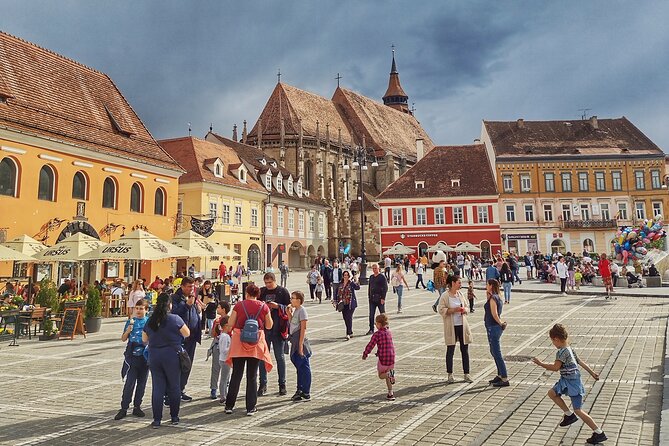
The day ends in Brașov, with two hours in the historic center. Brașov developed as a major commercial hub on routes between East and West and was once the regional capital of the Transylvanian Saxons’ Burzenland area. It is a good place to see how commerce and mixed cultural traditions shaped a Romanian city.
You should enjoy this section if you like walkable old towns more than isolated monuments. The drawback is that three historic places in one day can feel compressed. The private format helps, but it does not remove the distances between them.
More four-day trips from Bucharest:
- 4-Day Private Tour in Transylvania from Bucharest
★ 5.0 · 48 reviews - Transylvania Castles 4-day tour from Bucharest
★ 5.0 · 31 reviews - 4 Days Private Tour in Transylvania: Sibiu, Sighisoara and Brasov
★ 5.0 · 18 reviews - 4-Day Private Tour of Transylvania from Bucharest
★ 5.0 · 16 reviews
Day four: the Black Church and Peleș Castle
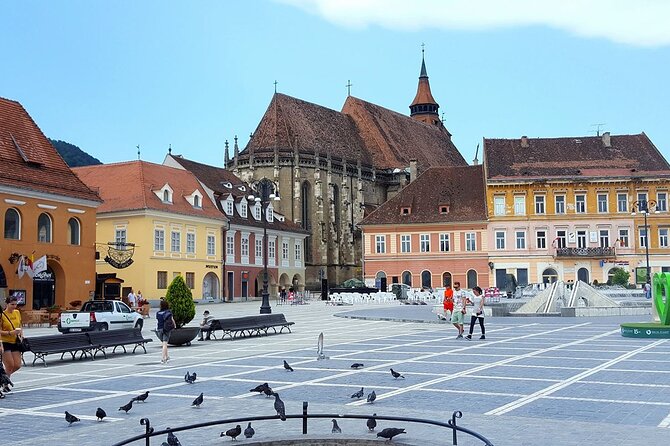
The final morning begins with the Black Church in Brașov. Built by the city’s German community, it is the country’s major Gothic monument and an important Lutheran church. Its inclusion broadens the religious story of the tour. You have already seen Orthodox monasteries, and now you encounter a major Protestant place of worship shaped by the German-speaking Saxon community.
Admission to the Black Church is not included. Allow about an hour, and check the service or opening schedule if your visit falls on a religious holiday or special event. The supplied information does not give a specific ticket amount, so plan to pay locally.
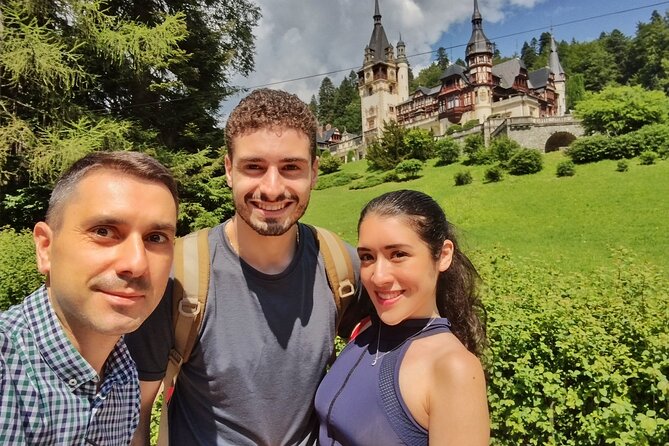
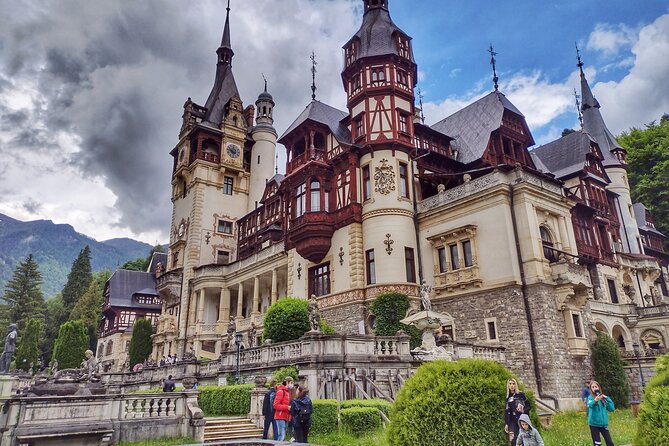
Peleș Castle is the final major stop. Set near Sinaia in the Carpathian Mountains, it was built between 1873 and 1914 as the summer residence of King Carol I. Its Neo-Renaissance design makes a sharp change from both the medieval monasteries and the Gothic church.
You have about an hour at the castle. That is enough for a focused visit, but not for an unhurried inspection of every room if interior access is busy. The castle entrance is not included, and the exact cost can depend on the areas open for viewing. Confirm the available interior visit when booking or at the entrance.
The castle’s location on an old route between Transylvania and Wallachia gives the stop a useful historical role. It is not just a grand house at the end of the tour. It connects the royal period with the older roads and mountain crossings that shaped the country.
Private transport and the value of a personal guide
The tour includes hotel pickup and drop-off in Bucharest, private transport, an English-speaking guide, three hotel nights, and three breakfasts. You avoid the usual problem of finding your way back to a city after several days in rural areas.
The vehicles used on this type of tour have been described as spacious, air-conditioned, and comfortable. That matters because the route covers a large portion of northern Romania. A new or well-kept van also makes a difference when you are carrying luggage between hotel stops.
The strongest reason to choose the private format is the guide. Toni is described as a pleasant companion who worked hard to make the trip enjoyable. Marius is praised for his explanations of art, religion, and local history, as well as for planning full days without pushing the group past its limits.
The personal attention can matter in unexpected ways. Marius is also described as helping a sick participant find medical care, navigate the emergency system, and reach the hospital. That is not a promised tour feature, and you should not book a tour expecting medical assistance. Still, it shows the practical value of having one responsible person with you in an unfamiliar country.
Price, hotels, meals, and extra tickets
At $1,356.43 per person, this is a major purchase. The value comes from privacy, four days of transport, a dedicated guide, three hotel nights, breakfasts, and the amount of ground covered. You are not paying only for admission to monuments. You are paying to connect distant regions without arranging cars, hotels, routes, and local explanations yourself.
The accommodation is listed as three-star hotels. Some previous stays connected with this company were described as especially comfortable, but the formal package promises three-star lodging, not luxury hotels. Ask for the hotel names and locations before booking if room quality is a deciding factor.
Lunches, dinners, drinks, and snacks are not included. The guide can likely help with restaurant choices, but meals remain your expense. The supplied information also gives conflicting signals about admission fees: several individual stops say admission is included, while the general notes say interior tickets are extra, with a figure of roughly €25 to €30 per person.
Treat the €25 to €30 amount as a planning estimate, not a final guaranteed total. Ask exactly which tickets are covered and which are paid locally. At minimum, the Black Church, Peleș Castle, and Viscri are marked as not included in the detailed schedule.
Who should book this four-day route?
I would choose this tour if you want a concentrated introduction to Romania and prefer a private guide over a fixed large-group schedule. It suits people who care about art, religious buildings, medieval towns, and national history more than nightlife or long stays in one city.
It also works well for first-time visitors who do not want to drive. The route reaches places that are awkward to connect by public transport, and the Bucharest pickup and return keep the arrangement simple.
You should think twice if you want slow mornings, long meals, or several hours at each castle. This is a broad route with significant road time. A moderate level of fitness is requested, and you should expect walking through historic centers and monastery grounds.
Cancellation is generous only when handled early. A full refund is available when you cancel at least six full days before the start time. Cancellations two to six days ahead receive 50 percent, while cancellations less than two full days ahead are not refunded. Poor weather can lead to a different date or a full refund.
Should you book it?
Book this tour if the painted monasteries are your main reason for visiting Romania and you want them paired with Transylvanian towns and Peleș Castle. The strongest features are the private transport, the guide’s personal attention, and the chance to compare Orthodox, Saxon, Gothic, and royal architecture in one compact trip.
Before paying, confirm the hotel names, the guide assigned to your departure, the exact admission policy, and the amount of road time each day. If you are comfortable with a brisk schedule and extra local ticket costs, this is an efficient and unusually varied way to see northern Romania.
FAQ
Where does the tour start and finish?
The tour starts in Bucharest and returns to Bucharest. Hotel pickup and drop-off can be arranged anywhere in Bucharest.
What time does the tour begin?
The stated start time is 9:00 a.m.
Is this a private tour?
Yes. Only your group participates, and private transport and a private guide are included.
Is the tour offered in English?
Yes. The experience is offered in English.
How many hotel nights and breakfasts are included?
The package includes three nights in three-star hotels and three breakfasts.
Are meals included?
Only breakfast is included. Lunches, dinners, drinks, and snacks are not included.
Are all entrance fees included?
No. The detailed schedule marks Viscri Fortified Church, the Black Church, and Peleș Castle as not included. The general information also says some interior tickets are purchased locally, so confirm the exact coverage before booking.
What clothing should I wear at the monasteries?
Wear trousers or a long skirt to access the monastery grounds. Respectful clothing is appropriate at all religious sites.
Newest Bucharest trips on the site
- Winery touring & private wine tasting – one day private tour★ 5.0 · 3 reviews
- Bucharest: Dealu Mare Winery Private Trip with Wine Tasting★ 4.9 · 6 reviews
- Village Museum Bucharest Guided Tour★ 5.0 · 6 reviews
- Private Transfer from Giurgiu Port to Bucharest★ 4.5 · 12 reviews
- Airport Henri Coanda (Otopeni) to Bucharest – Private Transfer – Driver★ 5.0 · 5 reviews
- Salt Mine Tour from Bucharest with Entrance Ticket★ 4.5 · 19 reviews
- Wine tasting in Bucharest Old town – bonus cheese platter★ 4.5 · 6 reviews
- Walking tour of Bucharest★ 5.0 · 3 reviews
Monastery Tours, compared.
3-Castle: Peles,Bran,Rasnov,Sinaia Monastery from Brasov w pickup
Read our review →
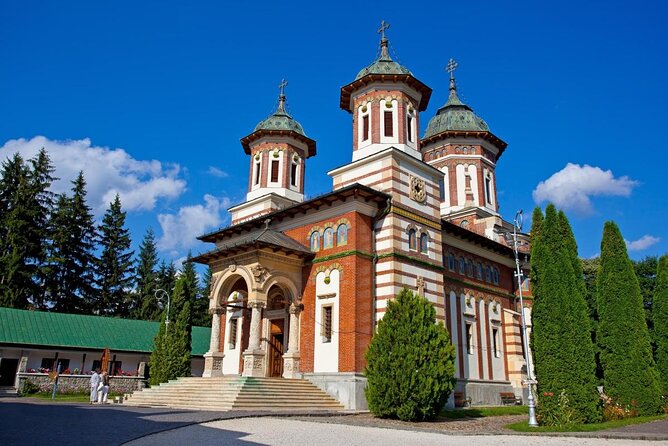
Peles Castle, Bran Castle, Rasnov Fortress and Sinaia Monastery Tour from Brasov
Read our review →
Princely Court of Târgoviște and Curtea de Argeș Monastery
Read our review →
Small Group Tour to Mogosoaia Palace & Snagov Monastery
Read our review →
1-Day Bucovina Painted Monasteries tour from Suceava – English
Read our review →
Sacred Monasteries Private Tour: Snagov, Țigănești & Căldărușani
Read our review →
Transfagarasan Highway, Balea Lake & Carta Monastery
Read our review →Browse the lists this tour appears in