Reviewed · PRIVATE
Private: RedPatrol Bucharest Contrasts Tour in a Vintage Car
Bucharest’s sharpest story is told through its neighborhoods, not just its grand center. In a restored Dacia, you travel from royal villas and belle époque streets to communist apartment blocks, abandoned factories, and Ferentari, an area marked by poverty and post-socialist change. The car itself turns the ride into a small piece of Romanian history.
I like the private format, which lets your guide explain difficult subjects at a human pace. I also like the route’s range: you see Cotroceni, Drumul Taberei, Rahova, Ferentari, and the huge reconstruction around the Palace of Parliament in one half-day.
The main consideration is comfort. A Dacia 1300 or 1310 is a lovingly restored 1970s or 1980s classic, but it has no air conditioning, ABS, GPS, power steering, or automatic transmission. It is part of the experience, not a modern limousine.
Key points at a glance
- A restored Dacia is part of the history: You ride in a Romanian classic car rather than a standard tour vehicle.
- The route crosses social and political borders: Royal Bucharest, communist housing, abandoned industry, and post-1989 poverty all appear in one circuit.
- Private pickup makes the half-day easy: Pickup and drop-off are available from any address in Bucharest.
- Ferentari receives serious attention: You see the Rahova and Ferentari districts, a peasant market, old factories, and the remains of working-class Bucharest.
- Guides add personal context: Guides such as Mihai, Ivan Crinu, and Crinu have led tours praised for clear stories, humor, and local insight.
- The price reflects a tailored experience: At $126.43 per person, the value depends on your group size and interest in modern Romanian history.
Why the Dacia makes the tour different
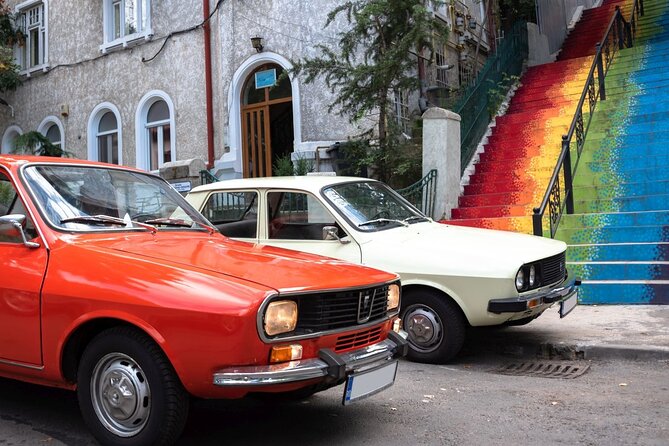
The Dacia 1300 and 1310 were familiar cars during Romania’s communist period. Red Patrol uses fully restored examples that meet current traffic safety rules, but keeps the old-fashioned character intact.
You will not drive the car. Your professional local guide also serves as driver, allowing you to watch the city rather than deal with traffic. Water is provided, and the cars are heated in winter.
The lack of modern equipment matters. There is no air conditioning, ABS, GPS navigation, power steering, or automatic gearbox. On a warm day, this may feel less comfortable than a newer vehicle. On the other hand, the car gives the route a strong sense of time and place. You are not simply looking at communist-era buildings through a modern van window. You are riding in a vehicle closely tied to that period.
The tour is private, so only your group participates. That makes it easier to ask about sensitive subjects, request more time for a photo, or focus on the parts of Bucharest that interest you most.
A few more Bucharest trips worth a look
- Bucharest: Palace of Parliament Tickets and Guide
★ 4.3 · 3,182 reviews - Bucharest: Palace of Parliament Tickets and Guided Tour
★ 4.4 · 1,877 reviews - Bucharest: Parliament Palace Skip-the-line Ticket
★ 4.2 · 1,518 reviews
Starting at Uranus and the Romanian Academy
The first stop is near the Romanian Academy in Uranus, an area tied to Nicolae Ceausescu’s massive redevelopment plans during the 1980s. Entire sections of Bucharest were demolished to make room for monumental government buildings and broad new avenues.
The tour explains where that demolition stopped after the Romanian Revolution. This is an important introduction because Bucharest’s modern appearance cannot be understood without seeing what was erased and what survived.
The stop lasts about 20 minutes. Admission is not included, and the experience focuses on the surrounding area and its story rather than a formal interior visit.
One especially striking contrast in this part of the route is the meeting of two political eras. The Romanian Academy building was created during the communist period for Elena Ceausescu, while nearby Bragadiru Palace recalls the capitalist world of Dumitru Bragadiru. That pairing gives you a clear visual lesson: Bucharest often places different versions of Romania next to each other.
Fântână and the first royal quarter
At Fântână, your guide introduces the bourgeois neighborhood that developed in the 19th century around Romania’s first Royal Palace. This short 15-minute stop helps explain the city before communism reshaped it.
Expect a brief presentation rather than a long museum visit. Admission is free. The value here is the setting and the comparison. After Uranus, where state power and demolition dominate the story, this area points to a more prosperous Bucharest built around monarchy, private wealth, and urban growth.
If you enjoy architecture, listen closely to how your guide links the streets, villas, and royal presence. The tour is less about checking off individual buildings than understanding how the city’s social divisions took physical form.
Cotroceni and the belle époque city
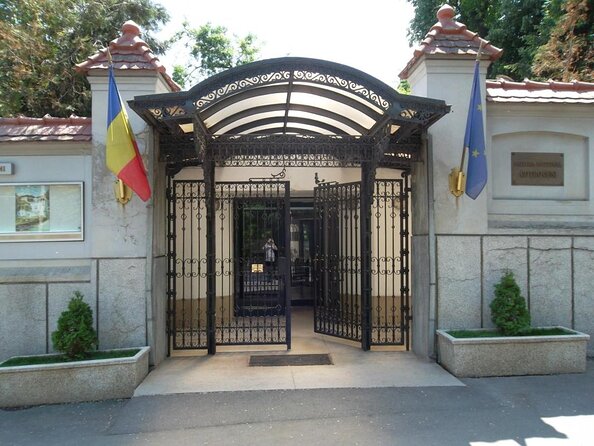
The gardens of Cotroceni Palace provide another look at royal Bucharest. Cotroceni was the first Royal Palace of Romania, built during the modern monarchy era, and the stop presents the city’s belle époque character.
You spend about 30 minutes here. Admission to the palace or gardens is not included, so do not expect this tour to function as a palace interior visit. Instead, you receive an outdoor presentation and historical setting.
I like this stop because it gives the tour a calm counterpoint to the later industrial and working-class districts. It also helps you see why Bucharest was once known for its villas, royal institutions, and European ambitions.
The private format is useful here. If you want to understand the difference between royal Cotroceni and the communist districts later in the route, ask your guide to draw out that comparison. The tour’s central idea is not simply old versus new. It is how power, money, and public policy shaped different parts of the same city.
A different sort of day out, same corner of Romania:
- Bucharest: City Highlights Guided Walking Tour
★ 4.9 · 1,482 reviews - Taste Bucharest: A Food Lover’s Tour of Markets & Neighbourhoods
★ 5.0 · 689 reviews - The Real tour of Communism
★ 5.0 · 666 reviews - Bucharest: Therme Bucharest Entry Ticket and Transfer
★ 4.6 · 608 reviews
Drumul Taberei and everyday communist housing
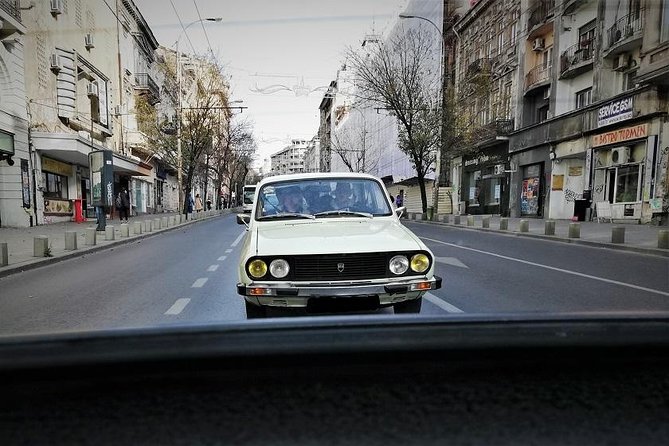
Drumul Taberei presents a working-class area built around communist apartment blocks. The tour explains how residents lived in these large housing districts and how the neighborhood has changed since the socialist period.
The stop lasts around 20 minutes and includes time for photos and stories. A shopping mall now occupies the site of a former communist canteen, an ordinary but telling example of how post-1989 Bucharest reused or replaced socialist infrastructure.
This is one of the most useful parts of the route if you want to understand daily life beyond political slogans. Apartment blocks, canteens, churches, markets, and shopping centers show how a planned working-class district became part of a modern capital.
You should not expect polished sightseeing here. The appeal is precisely that Drumul Taberei is a lived-in neighborhood rather than a preserved monument. The guide’s explanation gives meaning to buildings that might otherwise look like anonymous concrete housing.
Ferentari and the hard edge of post-socialist change
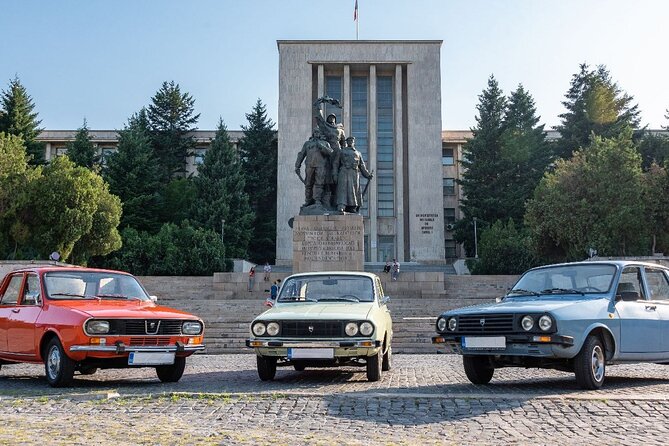
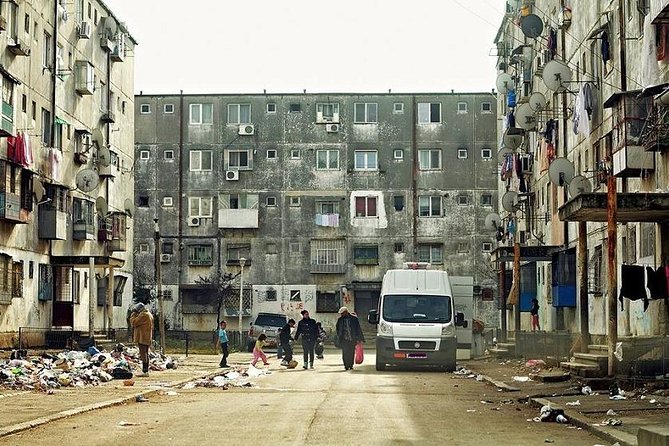
The tour then moves through Ferentari, including the Rahova area. This is the most difficult part of the route, and it should be approached with respect. Ferentari developed as an industrial and working-class district under communism. After the factories closed, parts of the area suffered severe economic decline.
The route includes a stop at Piața Rahova, where you visit a peasant market and see blocks of flats associated with the district. The stop lasts about 30 minutes. It offers a closer look at local life, but it is not presented as a glossy attraction.
The tour describes Ferentari as one of Bucharest’s most contrasting areas, shaped by poverty, ghetto-style housing, and cultural diversity. This can be valuable if you want to understand the social problems that followed Romania’s transition from state socialism to a market economy.
At the same time, this is where responsible guiding matters most. Ferentari should not be treated as a backdrop for shock photos. The strongest part of the experience is the explanation of how an industrial workers’ district changed after the factories disappeared. You see a real neighborhood with real residents, not a theme park about hardship.
The former Rocar factory and abandoned industry
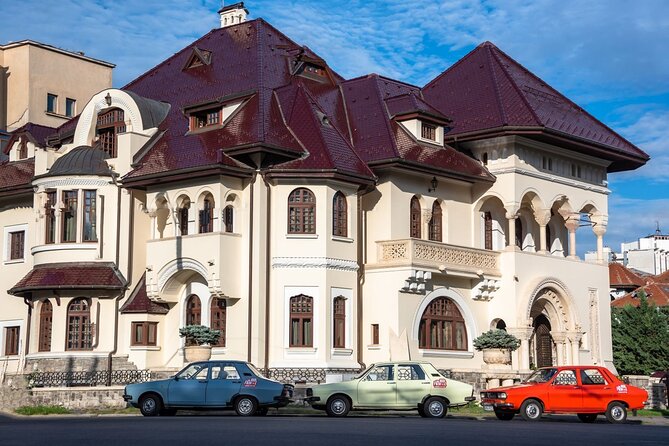
The stop at the former Rocar factory lasts about 20 minutes and is included in the tour. Rocar was part of Bucharest’s socialist industrial system. After the collapse of the factories, the surrounding area was left with ruined buildings and a broken economic purpose.
Your guide explains the rise and fall of the neighborhood. That story connects directly to Ferentari and Rahova: when factories provided jobs, housing areas had a clear role. When those factories shut, the buildings and communities faced a very different future.
This stop may appeal most to anyone interested in industrial history, urban change, or the practical effects of Romania’s transition in the 1990s. It is not a polished attraction, and conditions may feel stark. That is the point, though the appeal will be limited if you want only beautiful architecture.
Broscuțe Park and the Stalinist years
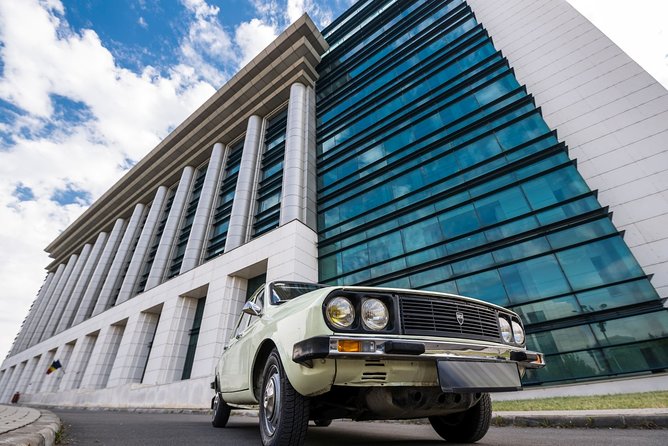
Broscuțe Park is associated with the Colonel’s Quarter, described as Bucharest’s first neighborhood from the Soviet occupation era. The stop lasts about 20 minutes and is included.
Here the focus shifts to the early Stalinist period and daily life in Bucharest under Soviet influence. This adds an earlier chapter to the communist story. The route does not treat all communist architecture and policy as one single period. Instead, it helps separate the first years of Soviet pressure from the later Ceausescu era.
For me, this kind of stop is valuable because political history can otherwise become a blur of dates and dictators. A neighborhood gives the story a physical address. You can connect the guide’s explanation to the apartment blocks, street plan, and public spaces around you.
The Palace of Parliament and a city rebuilt
The final stop is the Palace of Parliament, the world’s largest civil building according to the tour description. You spend about 20 minutes hearing how a roughly 20-square-kilometer section of Bucharest was demolished and rebuilt around the House of Parliament.
Admission is not included, so this is an exterior and neighborhood presentation rather than an interior tour of the building. If you want to enter the Palace of Parliament, you will need to arrange that separately.
The scale of the project is difficult to grasp from a photograph. The surrounding district was not simply renovated. It was largely cleared and remade to serve Ceausescu’s vision of state power. Ending the Contrasts Tour here brings the route back to its opening theme at Uranus: what happens when political authority reshapes a capital by force.
What the $126.43 price gets you
At $126.43 per person, this is not a low-cost sightseeing circuit. The price makes more sense for a private group that values a specialist route, hotel pickup, and a local guide who drives a restored historic car.
Included are pickup and drop-off from addresses in Bucharest, transport throughout the circuit, a professional guide and driver, water, a small personalized gift, and heating during winter. Food, drinks beyond the water provided, and personal purchases are not included.
For one person, the price may feel high compared with a standard group bus tour. For a couple or small private group, the personal attention and unusual vehicle improve the value. You are also covering a route that would be hard to assemble independently in three or four hours.
The tour is booked, on average, 132 days ahead. That suggests planning early is sensible, especially if you want a particular date or are visiting during a busy period.
Who should book this Bucharest tour?
I would choose this experience if you want more than the historic center. It suits people interested in communism, monarchy, urban planning, industrial decline, architecture, photography, and the social changes of modern Romania.
It is also a strong first activity in Bucharest if you prefer context before museums. Guides including Mihai, Ivan Crinu, and Crinu have been praised for friendly delivery, humor, and clear historical explanations. The best outcome comes when you ask questions and treat the route as a conversation, not just a photo circuit.
I would think twice if you need a quiet, air-conditioned vehicle or want a tour focused only on famous monuments. Children under 10 are not allowed, and pets cannot participate. Most other travelers can take part.
Free cancellation is available until 24 hours before the start time. After that cutoff, the amount paid is not refunded, and late changes are not accepted.
Should you book the Red Patrol Contrasts Tour?
Book it if you want to see how Bucharest’s past remains visible in its streets, apartment blocks, factories, markets, and grand political buildings. The restored Dacia adds fun, but the real strength is the route from royal Cotroceni to working-class Drumul Taberei and troubled Ferentari.
Skip it if your priority is a conventional city-center tour, a modern vehicle, or palace interiors. For the right visitor, though, this is a thoughtful and unusual half-day introduction to the forces that shaped Bucharest. It gives you stories you are unlikely to get from the standard Old Town walk.
FAQ
How long does the Contrasts Tour last?
The tour lasts approximately 3 to 4 hours.
What is the price?
The listed price is $126.43 per person.
Is hotel pickup included?
Yes. Pickup and drop-off are offered from all addresses in Bucharest.
Is this a private tour?
Yes. Only your group participates in the activity.
What kind of car is used?
The tour uses fully restored Dacia 1300 or 1310 cars, classic Romanian vehicles from the 1970s and 1980s.
Will I drive the Dacia?
No. You will not drive the car. A professional local guide also serves as your driver.
Does the car have air conditioning or automatic transmission?
No. The cars do not include air conditioning, ABS, GPS navigation, power steering, or automatic transmission. They are heated during winter.
Are children and pets allowed?
Children under 10 and pets are not permitted.
Is admission to the Palace of Parliament included?
No. Admission to the Palace of Parliament is not included. The tour provides a presentation of the building and its surrounding neighborhood.
Newest Bucharest trips on the site
- Winery touring & private wine tasting – one day private tour★ 5.0 · 3 reviews
- Bucharest: Dealu Mare Winery Private Trip with Wine Tasting★ 4.9 · 6 reviews
- Village Museum Bucharest Guided Tour★ 5.0 · 6 reviews
- Private Transfer from Giurgiu Port to Bucharest★ 4.5 · 12 reviews
- Airport Henri Coanda (Otopeni) to Bucharest – Private Transfer – Driver★ 5.0 · 5 reviews
- Salt Mine Tour from Bucharest with Entrance Ticket★ 4.5 · 19 reviews
- Wine tasting in Bucharest Old town – bonus cheese platter★ 4.5 · 6 reviews
- Walking tour of Bucharest★ 5.0 · 3 reviews
Private, compared.

Castles of Transylvania: Private Day Trip from Bucharest
Read our review →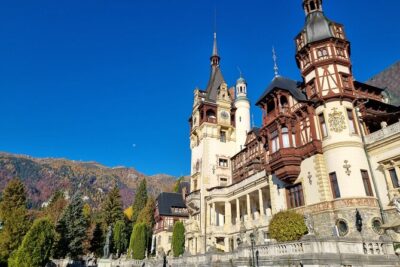
Dracula’s Castle, Peles Castle and Brasov – Private Day Trip from Bucharest
Read our review →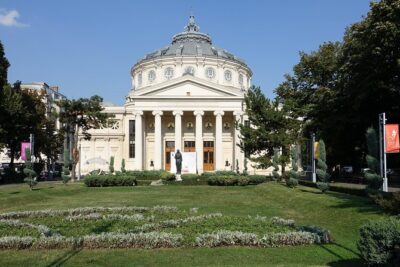
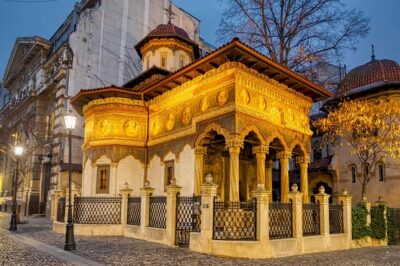
Bucharest Panoramic Sightseeing – Private City Tour
Read our review →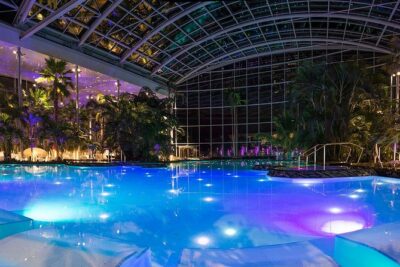
THERME “Take It Easy” Pack: Full Spa Access + Private Transfers
Read our review →
Piatra Craiului National Park Private Hiking Tour from Brasov
Read our review →
4h Bucharest Private Tour (2h by Car and 2h Walking in Old Town)
Read our review →