Reviewed · PRIVATE
10-Day Private Tour of Romania with Pick Up
Romania packs an astonishing range of places into this 10-day private route: communist-era Bucharest, Dacian mountain ruins, painted monasteries, wooden churches, Saxon towns, and castles linked to both royalty and Dracula. You travel with only your own group, in a private car or minibus, with an English-speaking guide-driver available throughout.
I like the freedom to adjust the daily plan after the tour begins, and I like the route’s genuine variety. Nicolas is the guide-driver named in the experience, and his company and knowledge of Romania receive especially warm praise. The main drawback is the pace: this is a long road journey with many sightseeing stops, and you pay separately for accommodation, food, and most entrance fees.
Key points to know before booking
- A true cross-country route: You move from Bucharest through Wallachia, Transylvania, Maramures, Bukovina, and back toward Brasov and the capital.
- Private transport and flexible planning: Your group has its own car or minibus, with changes possible even after the tour starts.
- Romania’s strongest cultural sights: Expect Voronet’s famous blue frescoes, Sucevita and Moldovita monasteries, the Merry Cemetery, and traditional wooden churches.
- Big mountain-road days: The Transfagarasan Highway and Bicaz Gorges bring fine scenery, but driving times and weather can shape the day.
- History without a single theme: You move from communist repression and royal power to Dacian fortresses, Saxon towns, Orthodox monasteries, and local folk art.
- A price that requires careful budgeting: At $3,918.13 per person, the private service has value for a group, but hotels, meals, and attraction tickets are not included.
Why this Romania route is unusually ambitious
Many Romania tours focus on Bucharest, Dracula sites, and a few Transylvanian towns. This one goes much farther. In ten days, you reach the far north of the country, visit Maramures and Bukovina, cross several mountain regions, and return through Sighisoara and Brasov.
That reach is the tour’s greatest strength. You see Romania as a country of distinct regions rather than as one broad Dracula-themed destination. You also get a private guide-driver who can explain the connections between places and help your group decide where to spend more time.
The tradeoff is road time. Some days contain three or four major stops, and several attractions are spread across large areas. You should expect full days, changing scenery, and plenty of time in the vehicle. This suits you if you want breadth and private control more than a slow stay in one town.
A few more Bucharest trips worth a look
- Bucharest: Palace of Parliament Tickets and Guide
★ 4.3 · 3,182 reviews - Bucharest: Palace of Parliament Tickets and Guided Tour
★ 4.4 · 1,877 reviews - Bucharest: Parliament Palace Skip-the-line Ticket
★ 4.2 · 1,518 reviews
Bucharest begins with communism, village life, and revolution
The first day gives you a sharp introduction to Bucharest. At the Palace of Parliament, you confront one of the most imposing buildings ever created for a government. Its scale reflects the megalomania of Nicolae Ceausescu’s communist regime, and the visit works best when you treat the building as political history, not just architecture.
Allow two hours here. The admission fee is not included, and the visit may feel heavy rather than pretty. That is part of its value. The building helps you understand the human and economic cost behind communist-era grandeur.
The Dimitrie Gusti National Village Museum offers a useful contrast. In about an hour, you can see traditional houses and rural structures gathered in an open-air setting. The museum shows how village life was shaped by local materials, practical design, customs, and religious traditions. It gives the rest of the trip a helpful cultural frame, since you will later encounter wooden churches and painted village homes in their original regions.
The Romanian Athenaeum is a shorter stop, lasting about 45 minutes. Its role is less about a long visit and more about seeing one of Bucharest’s leading cultural symbols along Calea Victoriei. If you care about architecture, music, and civic identity, this is a worthwhile pause.
At Revolution Square, your guide can place the December 1989 uprising in its physical setting. You see the former Central Committee building and the Senate Palace, tied to the fall of Ceausescu. This stop gives the Palace of Parliament a second meaning: one building shows authoritarian power at its height, while the square recalls the moment that power broke.
Finish in the Old Town, where Hanul lui Manuc, old churches, restaurants, museums, and shops create a more relaxed close to the day. Two hours here gives you time to walk rather than simply photograph buildings. Admission is not included at these Bucharest stops, so set aside money for tickets.
Curtea de Arges and the Transfagarasan road
Day two moves into Wallachia and the Carpathians. Curtea de Arges Monastery is a compact visit, but it carries royal importance because of its tombs. The nearby old town and princely court ruins add context, including the 13th-century Royal Church.
Poienari Fortress is the day’s physical challenge. The ruins sit high above the Arges River and are linked to Vlad the Impaler, the historical figure later associated with Dracula. The visit is scheduled for two hours, so expect the attraction to involve more effort than a roadside photo stop. Its appeal comes from the cliff-top setting and the connection to Vlad’s defensive stronghold, not from a preserved palace.
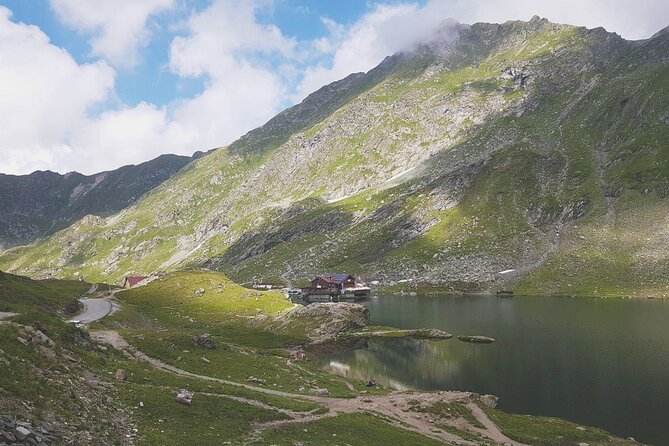
The Transfagarasan Highway is one of Romania’s signature road experiences. It runs for more than 150 kilometers, reaches 2,042 meters, and crosses between the northern and southern sides of the mountains near Lake Balea. The road is fully open only from June through October, so the timing of your tour matters greatly.
This is a place where weather and road conditions can affect the plan. The two-hour stop listed for the highway is enough for views and photographs, but not for a leisurely exploration of the entire route. Still, the mountain drive adds a strong sense of place to the journey.
Sibiu’s Big Square gives you a gentler finish. The city’s old center, Evangelical Cathedral, and well-kept streets show the influence of Transylvanian Saxon culture. You have about an hour here, enough to get a taste of the city, though not enough for a deep visit to every corner. If Sibiu appeals to you, note that this itinerary favors coverage over extended free time.
Castles, ancient Dacians, and an old stone church
Day three is packed with some of Romania’s most distinctive historical sites. Corvin Castle in Hunedoara is a large Gothic-Renaissance fortress with towers, courtyards, and a strong medieval presence. Two hours gives you room to explore its main areas and take in the theatrical setting.
Densus Church is a very different experience. The present stone church dates to the 13th century and was built on the site of a Roman temple, with reused materials linked to the Dacian Sarmizegetusa fortress. Inside, 15th-century murals show Jesus in Romanian traditional clothing. This small church rewards close attention, especially if you enjoy unusual layers of history in one building.
Sarmizegetusa Regia requires the longest stop of the day, at three hours. It was the Dacian capital and an important military, religious, and political center before the Roman wars. Built on a mountain about 1,200 meters high, it forms part of a defensive system in the Orastie Mountains.
The site is valuable because it takes you beyond Romania’s better-known medieval stories. You are not simply seeing castles and churches. You are also visiting the remains of a pre-Roman civilization in a mountain setting. Wear practical shoes and expect this day to feel more active and less polished than a city tour.
A different sort of day out, same corner of Romania:
- Bucharest: City Highlights Guided Walking Tour
★ 4.9 · 1,482 reviews - Taste Bucharest: A Food Lover’s Tour of Markets & Neighbourhoods
★ 5.0 · 689 reviews - The Real tour of Communism
★ 5.0 · 666 reviews - Bucharest: Therme Bucharest Entry Ticket and Transfer
★ 4.6 · 608 reviews
Turda Salt Mine and the road into Maramures
Salina Turda is one of the route’s most memorable changes of scene. Two hours underground gives you a look at a major salt mine, where the saline air is often considered helpful for people with allergies or asthma. It is an unusual attraction, both industrial and atmospheric.
The visit is not only about health claims, so you should approach it as a historic mine with distinctive underground spaces. Admission is extra, and the temperature below ground may differ from the conditions outside.
Cluj-Napoca follows with a shorter stop at the Alexandru Borza Botanical Garden. The itinerary also points you toward the city center, where Baroque, Renaissance, and Gothic buildings provide a quick taste of Transylvanian urban culture. One hour is brief, so this is a sampler rather than a full Cluj visit.
Surdesti Wooden Church brings the day back to local craftsmanship. The church was built in 1721 and has a remarkable tower height of about 54 meters. The supplied description also gives a total height of 72 meters, so the figures are presented differently, but the central point is clear: this is an extraordinary wooden structure built long before modern equipment.
Maramures: humor, memory, and wooden architecture
The Merry Cemetery in Sapanta may be the most unexpected stop on the entire journey. Its colorful carved crosses use humorous poems to describe the lives and deaths of local people. The tone is direct and sometimes playful, offering a very different way to think about mourning.
You should not expect a quiet, solemn cemetery in the usual sense. The art is lively, personal, and tied to local folk tradition. One hour is enough to see the main character of the place.
The Memorial of the Victims of Communism and of the Resistance brings the mood back to something more serious. The museum examines imprisonment, political repression, and the suffering caused by Romania’s communist regime. Two hours allows time for a meaningful visit, though the subject matter can be emotionally demanding.
Together, these two stops show why Maramures is more than a scenic rural region. One uses humor to preserve personal memory. The other records the damage inflicted by a political system. Both are important if you want to understand how Romanians remember the past.
Barsana, Tihuta Pass, and painted houses
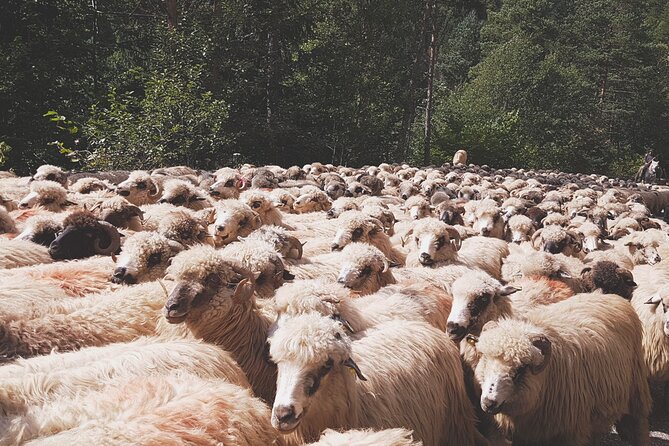
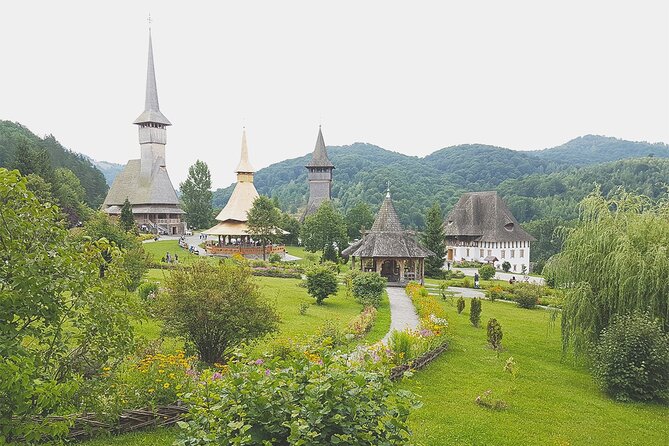
Barsana Monastery is known for its tall wooden church, listed here at 57 meters. The grounds provide a calmer pause after the memorial museum, with traditional wooden architecture and a strong religious atmosphere. The visit lasts about 45 minutes, so you will see the main setting without spending half a day there.
The route then crosses Tihuta Pass in the Bargaului Mountains. The pass connects Transylvania with Bukovina and is linked to Bram Stoker’s fictional Borgo Pass. Stoker apparently never visited the area, which makes this a useful reminder that Romania’s Dracula image is partly literary invention.
The Hotel Castel Dracula, built in 1976 and renamed after 1989, adds a modern attraction to the pass. Its medieval-villa style plays on the connection with the novel. You get about two hours here, including time to take in the mountain setting and the Dracula theme without confusing fiction with local history.
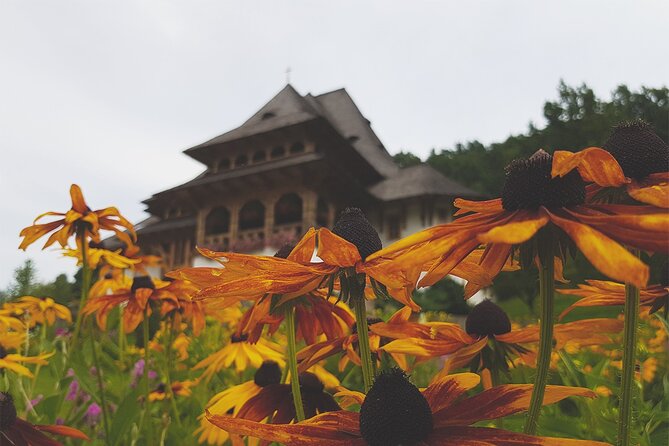
Ciocanesti is a charming contrast. Its houses are painted with traditional motifs, and the village sits along the Golden Bistrita River near forests and meadows. The one-hour stop is a chance to see how folk design continues in everyday places, not only inside museums.
Bukovina’s painted monasteries
Day seven is one of the cultural high points. Voronet Monastery was founded by Stephen the Great in 1488 and is famous for its intense blue frescoes. The color is so closely associated with the site that it is known as Voronet blue.
The church is often compared with the Sistine Chapel because of its painted surfaces, but the comparison can distract from what makes Voronet distinctive. You are seeing a specifically Moldavian style, with religious scenes placed on exterior walls and designed for a largely non-literate population. Give yourself time to look closely rather than simply taking a quick photograph.
Humor Monastery dates from about 1530 in its present form and was built with thick river-rock walls after an earlier church was destroyed. Sucevita Monastery adds a fortified setting and extensive biblical scenes painted on its walls. Moldovita Monastery, built in 1532, combines Byzantine, Gothic, and Moldavian elements.
The schedule gives 45 minutes at Humor and Sucevita, and an hour at Moldovita. That is enough for an overview, but the stops can feel compressed if you want to study every mural. Modest dress is a sensible choice for monastery visits, although the supplied tour details do not specify a formal dress code.
Folk art and the Bicaz Gorges
The Lucia Condrea Egg Museum in Moldovita offers a highly specialized look at local art. The museum contains more than 5,500 decorated eggs arranged across two floors and 56 display cases. One hour is enough to understand the scale of the collection and the precision of the work.
The Popa Museum in Tarpesti presents another personal art collection. Nicolae Popa founded it in his own home in the 1970s after wartime injury and imprisonment under the communist regime. His sculpture and folklore work give the visit a strong human connection. This is not a grand national museum. Its appeal lies in the story of one artist preserving Romanian values through his own labor.
The day ends at Bicaz Gorges, where a river cuts through the mountains and forest. Three hours provides the longest stop here, and the admission fee is included. This is one of the better places on the route for a slower walk and a change from indoor museums and churches.
Sighisoara, Biertan, and the road back south
Sighisoara’s Clock Tower anchors a two-hour visit to the old citadel. The town remains inhabited and retains its medieval fortification, making it more than a reconstructed display. You also visit the Arms Museum and can connect the town with Vlad the Impaler, who was born here.
Biertan Fortified Church offers another view of Transylvanian Saxon settlement. The church sits on a hill in the center of town and is surrounded by three defensive walls and seven bastions. Two hours gives you time to appreciate both the church and its setting.
The final day brings three major attractions. In Brasov, you walk through the Old Town, see the Black Church, visit the main square, and view medieval walls. One hour is short, but free time in a café helps you enjoy the city at a less hurried pace.
Bran Castle is the famous Dracula stop, though the link to Stoker’s castle is based on resemblance and popular imagination. The surrounding food stalls and local products, including cheeses, plum or pear brandy, ham, and sausages, add a practical reason to linger.
Peles Castle closes the route with royal architecture. It was the Romanian royal family’s summer residence and is one of the trip’s major highlights. Two hours gives you a proper visit, though entrance fees are extra.
Price, comfort, and what you still pay
The price is $3,918.13 per person. That is a serious amount, but it buys private transport, an English-speaking licensed guide-driver, fuel, parking, road tolls, wireless internet in the vehicle, and the guide’s own accommodation and meals.
The private format matters most for a route this long. You can travel only with your own family or friends, request changes during the tour, and avoid being tied to a large group’s pace. For a group sharing the vehicle, the value improves. Group discounts are also offered, though the exact reduction is not stated.
You must budget separately for your own hotels, food, drinks, and entrance fees. The only attraction specifically listed as included is Bicaz Gorges. That makes the headline price less all-inclusive than it may first appear. Ask for a clear estimate of additional admission costs and accommodation before committing.
Free cancellation is available up to 24 hours before the start time. Pickup is offered, but you need to provide the preferred time, address, and phone number.
Who should book this private tour?
I would choose this tour if you want to see a large part of Romania in one organized journey and prefer a private vehicle to public transport. It is especially suited to families, friends, and couples who value flexibility and want one guide-driver, such as Nicolas, available throughout.
You should think twice if you prefer slow travel, long meals, or several nights in one town. The route covers a great deal of ground, and the days can be tiring. It also works best for people who enjoy history, religious art, mountain roads, and smaller cultural museums rather than only famous city sights.
FAQ
Is this a private tour?
Yes. Only your group participates, and transport is provided by a private car or minibus.
Is pickup included?
Pickup is offered. You need to provide the pickup time, address, and phone number.
Is the tour conducted in English?
Yes. A licensed English-speaking guide-driver is available throughout the tour.
Are accommodation and meals included?
No. Your accommodation, meals, and beverages are not included. The guide’s accommodation and meals are covered.
Are entrance fees included?
Most entrance fees are not included. Bicaz Gorges is specifically listed with admission included, while the other attractions state that admission is extra.
Can the itinerary be changed during the tour?
Yes. The tour allows flexibility for changes to the daily itinerary even after the tour has started.
Should you book it?
Book this tour if Romania’s regional variety matters more to you than a relaxed pace. You will see communist Bucharest, Dacian ruins, Transylvanian castles, Maramures folk traditions, Bukovina’s painted monasteries, and the Carpathian mountain roads in one private trip.
Before booking, price the hotels, meals, and entrance tickets separately and confirm the seasonal condition of the Transfagarasan Highway. If those costs and the long driving days fit your plans, the private format offers a practical way to connect places that would be difficult to combine independently.
Newest Bucharest trips on the site
- Winery touring & private wine tasting – one day private tour★ 5.0 · 3 reviews
- Bucharest: Dealu Mare Winery Private Trip with Wine Tasting★ 4.9 · 6 reviews
- Village Museum Bucharest Guided Tour★ 5.0 · 6 reviews
- Private Transfer from Giurgiu Port to Bucharest★ 4.5 · 12 reviews
- Airport Henri Coanda (Otopeni) to Bucharest – Private Transfer – Driver★ 5.0 · 5 reviews
- Salt Mine Tour from Bucharest with Entrance Ticket★ 4.5 · 19 reviews
- Wine tasting in Bucharest Old town – bonus cheese platter★ 4.5 · 6 reviews
- Walking tour of Bucharest★ 5.0 · 3 reviews
Private, compared.

Castles of Transylvania: Private Day Trip from Bucharest
Read our review →
Dracula’s Castle, Peles Castle and Brasov – Private Day Trip from Bucharest
Read our review →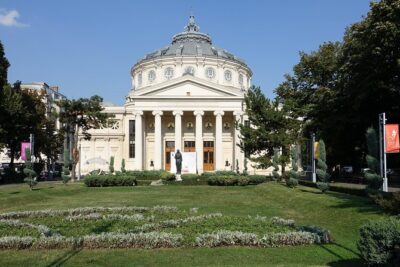
Bucharest Panoramic Sightseeing – Private City Tour
Read our review →
THERME “Take It Easy” Pack: Full Spa Access + Private Transfers
Read our review →
Piatra Craiului National Park Private Hiking Tour from Brasov
Read our review →
4h Bucharest Private Tour (2h by Car and 2h Walking in Old Town)
Read our review →