
Reviewed · SAXON VILLAGE TOURS
Sighisoara and Biertan: UNESCO in Transylvania
Sighisoara and Biertan give you two very different views of Transylvania in one long day. Sighisoara is a remarkably well-preserved citadel of steep lanes, small squares, and colorful old buildings, while Biertan is a quiet village built around a fortified church in a secluded valley. The contrast is the real appeal.
I like the personal guidance, with guides such as Istvan, Andrei, George, Adrian, and Aurelian praised for clear storytelling, humor, and local insight. I also like that the tour includes round-trip transport, entry tickets, and a typical Romanian lunch, so you can focus on the towns rather than sorting out every detail yourself.
The drawback is the day’s length. At about 11 hours, the drive from Cluj-Napoca takes up a serious part of your day, and one person specifically wished for a coffee or comfort stop on the way to Sighisoara. Wear good walking shoes and expect a full, active outing.
Key points to know before booking
- Sighisoara gets about three hours: Use this time to wander the citadel’s lanes and squares at an unhurried pace.
- Biertan adds a quieter UNESCO stop: Its fortified church sits in a small village and offers a different mood from Sighisoara.
- Several guides are praised by name: Istvan, Andrei, George, Adrian, and Aurelian are noted for history, humor, patience, and safe driving.
- Lunch is part of the day: You eat a typical Romanian meal at a local restaurant.
- The tour is capped at 15 people: That keeps the group smaller than a large coach outing.
- Plan for a long day on the road: The 11-hour schedule is worthwhile, but this is not a light half-day excursion.
Why these two UNESCO places work so well together
Sighisoara and Biertan are linked by their Saxon heritage and medieval defensive architecture, but they do not feel alike. Sighisoara is a compact historic citadel with lively streets and plenty to look at around each corner. Biertan is quieter and more rural, with the fortified church as its main focus.
That pairing gives you a more useful sense of Transylvania than visiting only a famous town. In Sighisoara, you see how a fortified settlement functions as a town. In Biertan, you see how a religious center could also serve as a place of refuge.
I especially like the rhythm of the day. You begin with the larger and more visually striking stop, then shift to a smaller village where the pace slows. The result is not just two photo stops. You get a look at architecture, village life, regional culture, and the mix of Hungarian and German influences that shaped Transylvania.
The tour is offered in English, and the strongest part of the experience is likely to be the guide’s interpretation. The named guides bring different strengths. Istvan is praised for making the past easy to follow, Andrei for humor and clear explanations, George for his broad command of Romanian and Transylvanian culture, Adrian for energy and warmth, and Aurelian for a relaxed manner and careful driving.
More Saxon Village Tours in Transylvania
- Small Group Tour to Viscri Church Sighisoara Town Rupea Fortress
★ 5.0 · 225 reviews - Secrets of the Citadels: Brașov, Viscri, Sighișoara and Sibiu
★ 5.0 · 52 reviews - From Brasov: Sighisoara, Viscri, and Rupea Unesco Day Trip
★ 4.9 · 32 reviews
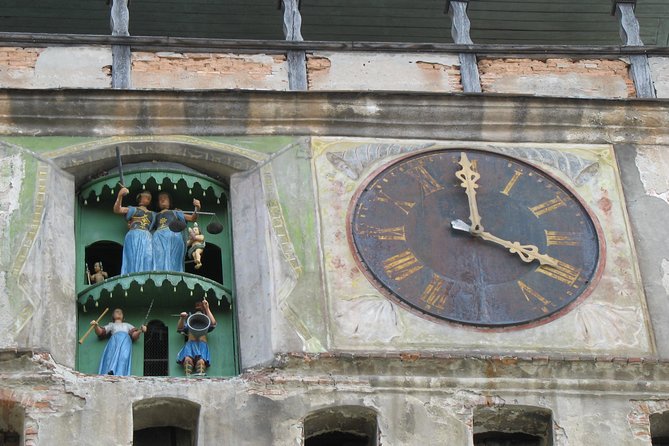
Sighisoara: three hours inside a preserved citadel
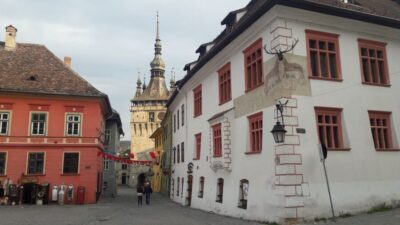
Sighisoara is the star of the day. The historic center is compact enough to explore on foot, but it has enough slopes, steps, lanes, and small squares to reward a slow pace.
Your three hours here should give you time to get your bearings, listen to the guide, and then wander independently. The best approach is not to rush from one sight to the next. Let yourself follow a narrow lane, pause in a square, and look closely at the old façades.
The citadel’s appeal comes from its overall condition. This is not a reconstructed theme park or a few isolated ruins. You are walking through a functioning historic center with a strong sense of place. The preserved streets and buildings make it easy to picture how the town worked as a fortified settlement.
You will want comfortable shoes. The tour includes walking through the old center, and the streets are not presented as a smooth, flat museum floor. The exact walking route can vary, but you should arrive ready for several hours on foot.
The guide matters here. Sighisoara can be enjoyed through photographs alone, but the stories give the town more weight. A good guide can explain the German and Hungarian connections, the region’s changing identity, and the practical reasons behind fortified town design. George is singled out for his detailed explanations, while Istvan is praised for making the history inviting rather than dry.
Three hours is a useful amount of time, though it is not enough for every possible sight or a leisurely stop at every café. You get a strong introduction, not an exhaustive study. If you like to browse every shop, linger over lunch, and explore every side street, you may wish for more time.
Still, the schedule makes sense. You have another major stop ahead, and the day needs to return to Cluj-Napoca. The important thing is to avoid spending your first hour trying to see everything. Stay with the guide at the beginning, then use your free time with a clear idea of what you most want to photograph or explore.
Biertan: a fortified church in a quiet valley
Biertan changes the mood completely. Instead of a compact citadel filled with lanes and squares, you arrive in a small village set in a secluded valley. The fortified church is the focus, and the surrounding setting gives the stop a calmer, more rural character.
The visit lasts about an hour and a half, with admission included. That is enough time to see the church, hear how the fortifications worked, and take in the village without feeling rushed. It is also a good counterpoint to Sighisoara because the setting feels less urban and less focused on tourism.
The church’s defensive design is the key detail to watch for. Here, religion and security were closely connected. A fortified church was not simply a place for worship. It also served the local community during danger, which helps explain why the walls and defensive features are such an important part of the visit.
Biertan also helps you understand the region beyond its famous towns. The village setting makes the cultural mix of Transylvania easier to place. German and Hungarian influences are not just abstract points in a lecture. They appear in the built environment, local traditions, and the long story of the communities that lived here.
The stop is especially good for people who enjoy architecture and history but do not want every hour of a tour spent in a crowded center. You might find Biertan more peaceful than Sighisoara, and that change of pace is one reason the pairing works.
A long drive, but useful countryside views
The tour begins and ends in Cluj-Napoca and uses round-trip transportation. That makes the day practical if you do not have a car or do not want to manage rural roads and parking yourself.
The tradeoff is time. This is an 11-hour outing, and the first drive to Sighisoara is described as long. You should think of the transport not as a short transfer but as a major part of the experience.
The countryside gives the journey value. You get to see more of northern Transylvania between the two main stops, rather than flying directly between isolated attractions. Still, do not assume the vehicle will stop whenever you want. One useful practical point is that a coffee or comfort break may not be built into the early drive, so plan accordingly before departure.
The tour has a maximum of 15 people, which is a reasonable cap for a guided day out. It should allow the guide to answer questions without the unwieldy feel of a full-size coach group. The experience is also described as a private tour, so confirm the exact group arrangement when booking if that distinction matters to you.
Driving quality can make or break such a long day. Aurelian is specifically praised as a safe driver, and several guides are described as friendly, patient, and attentive. That matters when you are spending hours in a vehicle and relying on one person for both transport and interpretation.
More Saxon village and fortified church trips:
- From Brasov: Sighisoara and Viscri UNESCO Day Tour
★ 4.8 · 86 reviews - Sighisoara and Viscri Private Full-Day Tour from Brasov
★ 5.0 · 51 reviews - From Cluj: Sighișoara and Church of Biertan Guided Tour
★ 4.8 · 36 reviews - UNESCO TOUR :Sighisoara ,Viscri and Rupea Tour from Brasov
★ 5.0 · 30 reviews
Lunch and the value of the $119 price
The price is about $119.27 per person. That is not a budget bus ride, but it covers several costly and useful pieces: round-trip transportation from Cluj-Napoca, admission tickets at both stops, guiding in English, and a typical Romanian lunch at a local restaurant.
I see the value most clearly if you have limited time in Romania. You avoid arranging separate transport to two UNESCO sites, comparing rural connections, and working out how to return to Cluj the same day. You also get context that would be difficult to reproduce by simply walking around on your own.
The lunch adds a local element rather than being just a break at a roadside stop. The details of the menu are not specified, so you should not book this expecting a particular dish or special dietary setup. The important point is that a typical Romanian meal is included in the day’s plan.
You are paying for convenience and interpretation as much as for entry. If you already have a rental car and are comfortable planning the route yourself, you may find the price less compelling. If you prefer a guide, do not want to drive, and value a structured day, the package is easier to justify.
Group discounts are available, which may improve the per-person value for a small party. The tour is often booked well in advance, with an average booking lead time of about 46 days, so leaving it until the last minute may not be wise if your dates are fixed.
The guides are a major part of the experience
The places are strong enough to visit independently, but the guide shapes how much you take away. This tour has received especially strong praise for its guiding, and the names attached to that praise are worth noting.
Istvan is described as personable and skilled at presenting the past in a way that encourages further curiosity. Andrei is praised for his humor, patience, and detailed explanations of local history. George is noted for an encyclopedic grasp of Transylvanian and Romanian culture, along with a generous approach to questions.
Adrian is described as extroverted and capable, with the kind of personality that can keep a long excursion lively. Aurelian is portrayed as laid-back and humorous, with a willingness to show extra sights when possible. The guide assigned to your departure may vary, so you should not book on the assumption that one particular person is guaranteed.
What you can reasonably expect is a tour that goes beyond names, dates, and architectural labels. The guides are praised for answering questions and connecting what you see with the wider cultural story of Transylvania.
That is useful at Biertan, where the buildings may not explain themselves to a first-time visitor. It is equally helpful in Sighisoara, where the charm of the streets can distract you from the reasons the town developed as it did.
Who should take this day trip
I would choose this tour if you are based in Cluj-Napoca and want to see two major Transylvanian sites without arranging a car. It suits people who enjoy historic towns, architecture, cultural change, and guided storytelling.
It also works well for first-time visitors who want a broad introduction rather than a narrow specialty tour. In one day, you get a famous citadel, a rural fortified church, a Romanian meal, and views of the countryside between them.
You should think twice if you dislike long road days or prefer to explore at your own pace. Three hours in Sighisoara may feel short if you want a relaxed meal there, and the total 11-hour schedule can be tiring. The itinerary is structured, not open-ended.
Bring comfortable walking shoes and prepare for a full day. Most people can participate, but the walking component and length of the outing make it less suitable for anyone who needs a very light schedule.
Cancellation is free up to 24 hours before the start time for a full refund. Changes or cancellations inside that window are not accepted for a refund. The tour also depends on good weather and a minimum number of people. If the provider cancels for either reason, you are offered another date or experience, or a full refund.
Should you book Sighisoara and Biertan?
Book it if you want efficient access to two important Transylvanian sites and prefer a guide to driving yourself. The strongest reasons are the well-preserved citadel at Sighisoara, the quieter fortified church at Biertan, and the level of personal attention associated with the guides.
The value is good for a visitor without a car, especially because transport, entry, and lunch are bundled together. The main cost is your time. This is an 11-hour day with a long drive, so it rewards enthusiasm for history and countryside more than a desire for a relaxed morning.
If you can accept the early start, the road time, and the possibility that you will want more time in Sighisoara, I would book it. You will come away with a clearer sense of how Transylvania’s towns, villages, and cultures fit together.
FAQ
Where does the tour begin?
The tour is based in Cluj-Napoca and includes round-trip transportation.
How long does the experience last?
The full day lasts approximately 11 hours.
Which places are included?
The tour visits the historic center of Sighisoara and the fortified church in Biertan.
How long do you spend in Sighisoara?
The scheduled visit to Sighisoara lasts about three hours.
How long is the Biertan visit?
The Biertan stop lasts about one hour and 30 minutes.
Is lunch included?
Yes. The experience includes a typical Romanian lunch at a local restaurant.
Are admission tickets included?
Yes. Admission tickets for the listed visits are included.
Is the tour offered in English?
Yes. The tour is offered in English.
How many people can join?
The tour has a maximum of 15 participants.
Can I cancel for a full refund?
Yes, if you cancel at least 24 hours before the experience begins. Cancellations made less than 24 hours before the start time are not refunded.
Newest Cluj Napoca trips on the site
- Private tour to Turda Salt Mine, Rimetea and Alba Iulia★ 4.8 · 5 reviews
- Turda salt mine and Corvin Castle day tour from Cluj★ 5.0 · 9 reviews
- Turda Salt Mine, Gorge & Rimetea Village (private from Cluj)★ 5.0 · 5 reviews
- 1250cc Motorcycle Rental from Turda★ 5.0 · 4 reviews
- Day Trip to Turda Salt Mine and Corvin Castle from Timisoara★ 5.0 · 10 reviews
- Discover Apuseni Mountains – Scarita Summit,Sipote Waterfall and Dumesti Village★ 5.0 · 17 reviews
- CLUJ ADVENTURE TOUR ! ZIP LINE and HIKE★ 5.0 · 15 reviews
- Turda salt mine, Rimetea village and Alba Iulia, from Cluj★ 5.0 · 11 reviews
Saxon Village Tours, compared.
Small Group Tour to Viscri Church Sighisoara Town Rupea Fortress
Read our review →
Secrets of the Citadels: Brașov, Viscri, Sighișoara and Sibiu
Read our review →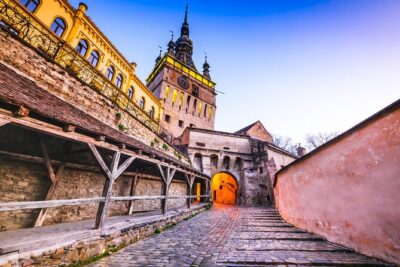
Sighisoara and Viscri Private Full-Day Tour from Brasov
Read our review →

UNESCO TOUR :Sighisoara ,Viscri and Rupea Tour from Brasov
Read our review →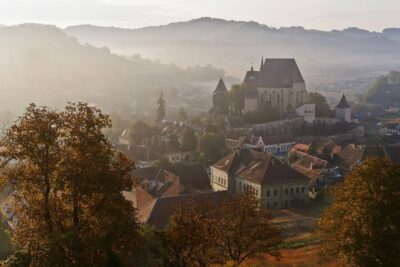
Transylvania Gems: Sighisoara, Medias, Biertan & Gypsy life
Read our review →Browse the lists this tour appears in