
Reviewed · CORVIN CASTLE TOURS
Cluj: Turda Salt Mine, Corvin Castle, Alba Carolina Tour
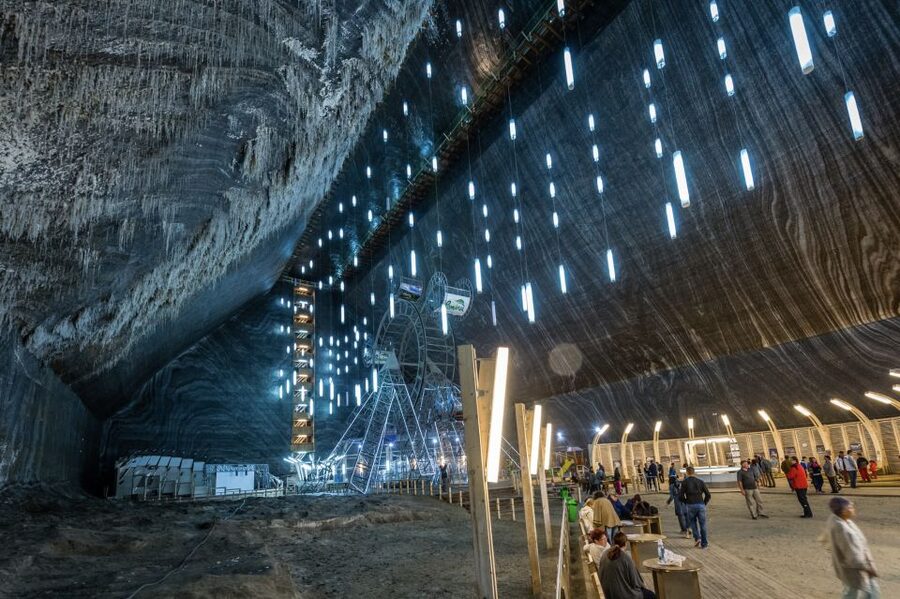
Turda Salt Mine is the surprise star of this long day. Far below ground, you’ll find huge salt chambers, old mining machinery, striking formations, and even an underground lake where rowing boats may be available. I like that this tour pairs that unusual sight with Corvin Castle, then finishes at the grand Alba Carolina Fortress, so the day never feels like three versions of the same monument.
I also like the small group, capped at seven, and the guides’ strong local storytelling. Robert, George, Florin, Mihai, Istvan, and others have been praised for clear history, careful driving, photo stops, and useful food and Romania tips. The tradeoff is simple: 11 hours is a long day, and the castle and fortress can feel rushed if you want time to explore every room or sit over coffee.
Key points to know before booking
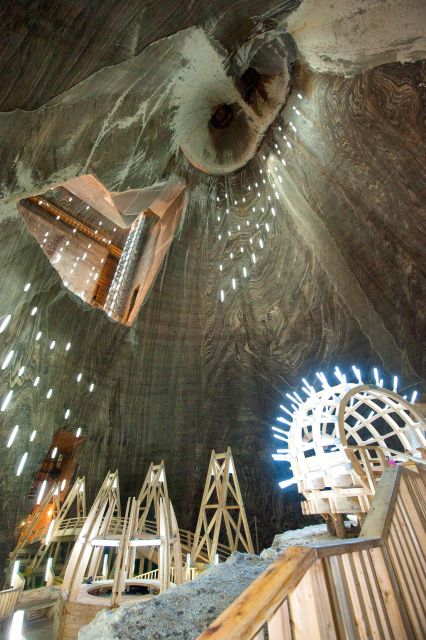
- Turda Salt Mine goes far beyond a standard mine visit: Expect giant underground halls, historic equipment, salt walls, and an unusual subterranean setting.
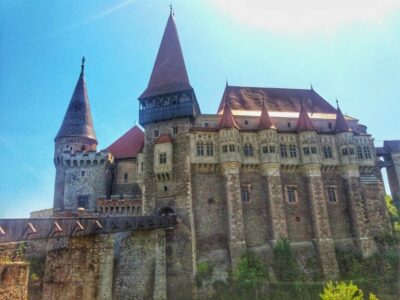
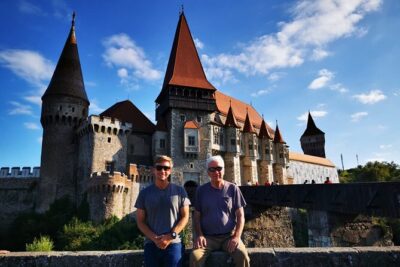
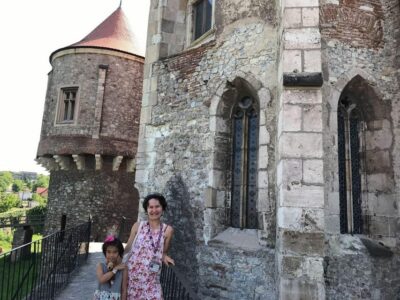
- Corvin Castle supplies the fairy-tale drama: Towers, bridges, Gothic details, courtyards, and defensive walls make this the visual high point for many people.
- Alba Carolina adds military scale and modern Romanian history: The fortress connects grand Vauban-style defenses with the 1918 union of Transylvania and Romania.
- The group stays small: With no more than seven participants, the guide can answer questions and adjust the pace more easily than on a large coach trip.
- The day covers a lot of ground: You spend substantial time in the vehicle, but you reach three major sights that are difficult to combine by public transport in one day.
- Budget for extras: The $140 tour price does not include the Turda Salt Mine fee, Corvin Castle admission, or lunch.
Why this three-stop route works
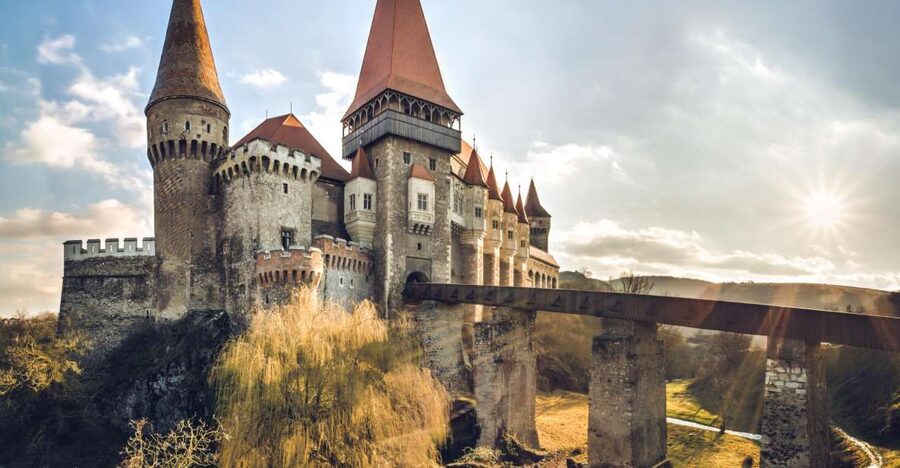
This is a day for contrast. Turda is underground and industrial, Corvin Castle is medieval and theatrical, and Alba Carolina is an enormous planned fortress with broad courtyards and defensive layers. I like the route because each stop gives you a different way to understand Transylvania.
The tour begins at the Matthias Rex Monument in Cluj-Napoca’s Union Square, near the Romano-Catholic church. Look for the guide with a participant list. A blue Rolandia shirt is common, though not guaranteed. From there, you travel in a modern vehicle, usually with a group no larger than seven and an English-speaking guide.
The first drive is about 40 minutes to Turda. After the salt mine, you have a longer ride of about two hours toward Corvin Castle. A one-hour lunch stop in Hunedoara breaks up the day, followed by roughly an hour to Alba Iulia and about 90 minutes back to Cluj. The schedule allows around 90 minutes at Turda, 90 minutes at the castle, and 90 minutes at Alba Carolina, though road conditions and the pace of the group can affect the exact timing.
That is a lot for one day. If you prefer slow travel, this will feel brisk. If you have only a short stay in Cluj, it is an efficient way to reach three important places without sorting out several regional trains, buses, and taxis.
More Salt Mine Tours in Cluj-Napoca
- From Cluj: Turda Salt Mine, Gorge, and Remetea Full-Day Trip
★ 5.0 · 84 reviews - Turda salt mine 4h tour from Cluj
★ 5.0 · 73 reviews - Turda Salt Mine, Corvin Castle and Alba Fortress from Cluj
★ 5.0 · 65 reviews
Inside Turda Salt Mine
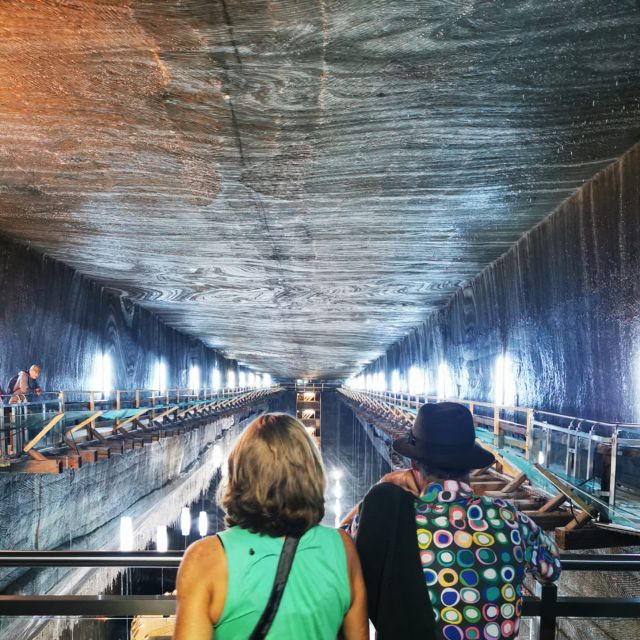
Turda Salt Mine has been worked since Roman times, with salt extraction beginning during the occupation in 107 AD. The history matters, but the physical setting is what makes the visit memorable. You walk into vast underground chambers where the scale is hard to judge at first, then notice the salt surfaces, old machinery, and unusual shapes formed by the mine itself.
You should expect a mix of history and sightseeing rather than a quiet museum visit. The guide explains how the mine operated and tells you about the people who worked there over the centuries. The large halls give the stop a sense of space that a normal mine tour rarely provides.
One particularly unusual feature is the underground lake. Depending on conditions and access, you may see or take a rowing boat there. One visitor described the experience as beautiful and surreal, which is a fair warning that Turda is not simply a lesson in salt extraction. It has a strange, almost otherworldly mood.
Allow time for stairs and walking. The activity information advises against booking if you have mobility impairments or serious back problems. Wear solid, comfortable shoes, and bring a jacket because the underground temperature can feel cool even on a warm day. Sunglasses, a hat, and sunscreen are useful for the outdoor parts of the day, but the jacket matters most inside the mine.
The early start can be an advantage. One guide, Mihai, was praised for arranging the timing so the group reached Turda before long queues formed. That is useful during busy periods, since the mine is the first major stop and delays there can squeeze the castle and fortress later.
Corvin Castle and its heavy medieval presence
After Turda, the journey to Hunedoara takes about two hours. This is the longest road section, so bring water and settle in for scenery and commentary from the guide. The included bottled water helps, but lunch is not included, so plan to buy your meal during the one-hour stop in Hunedoara.
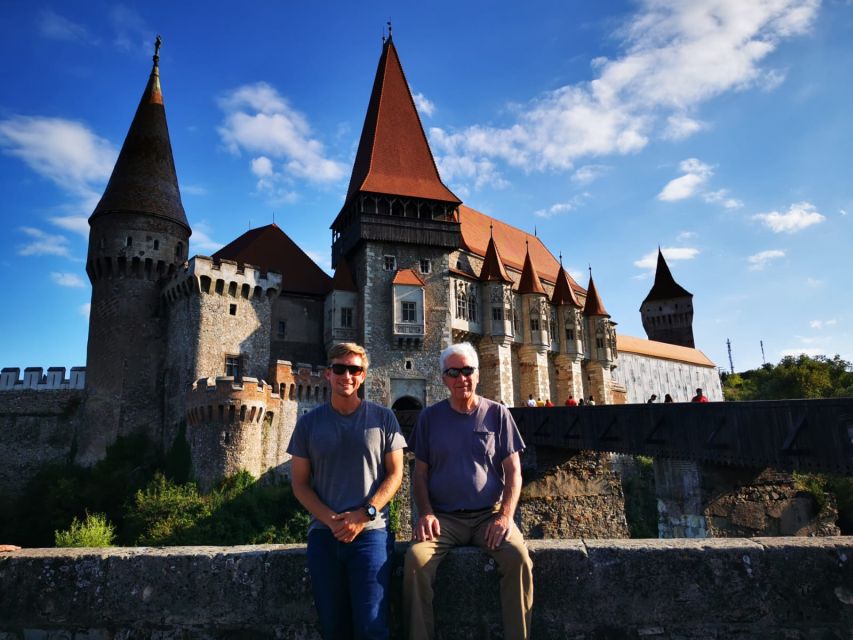
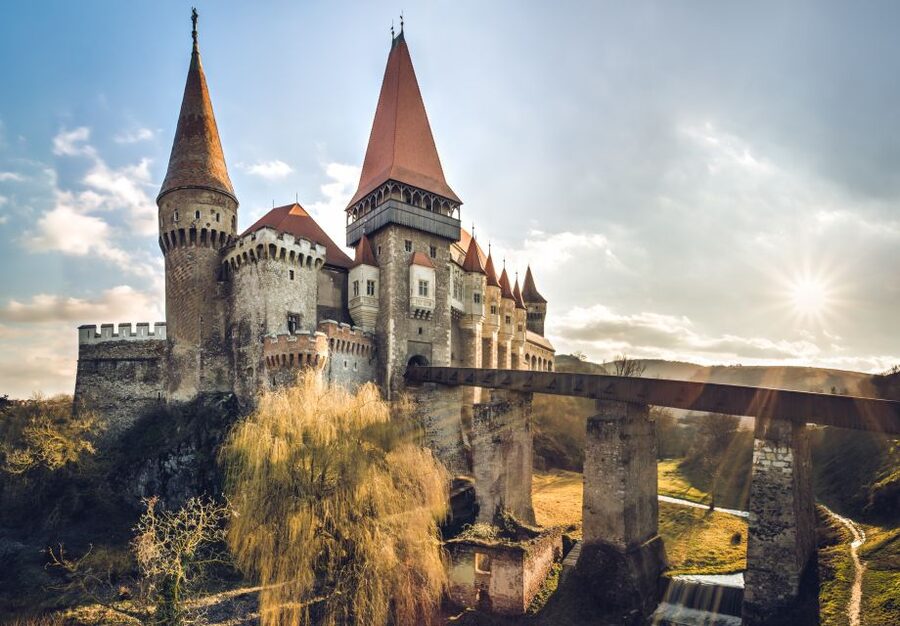
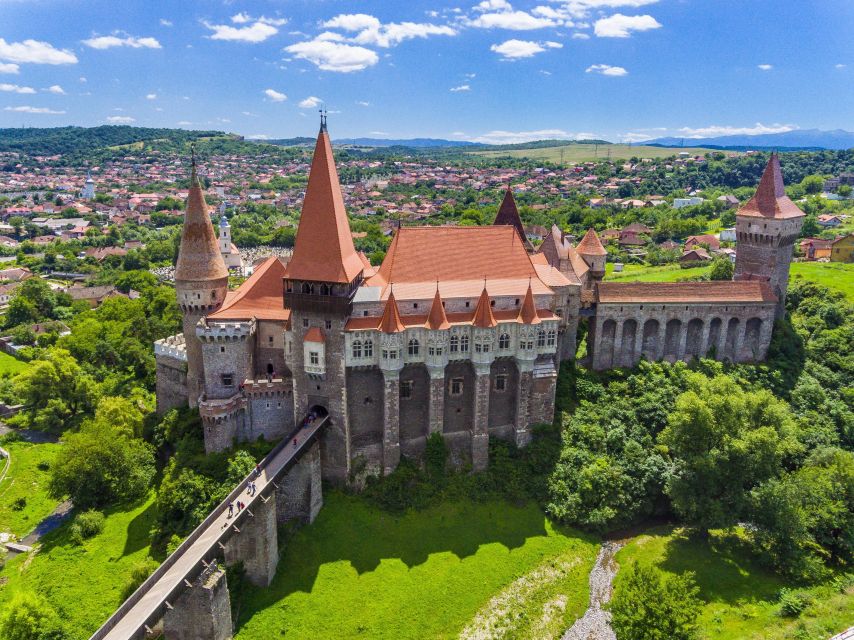
Corvin Castle was begun by Voicu of Hunedoara in the 14th century and later expanded by his son, John Hunyadi. Its role as a military stronghold, including defense against the Ottoman Empire, explains the thick walls, towers, drawbridges, and fortified design.
The castle is easy to appreciate before you know any details. Its towers and Gothic forms give it the look many people expect from a Transylvanian fortress, but the size makes it more than a quick photo stop. Inside, you move through halls, chambers, and courtyards while the guide sets the building within the political and military story of the Kingdom of Hungary.
I would give Corvin Castle your full attention. The exterior is dramatic, but the interior explains how the building functioned. Look for the changes between grand residential spaces and defensive areas. The tour does not pretend you can master every corner in one visit, and that is the main limitation. Several people have wished for more time here, especially when they wanted extra photographs or a slower look at the rooms.
The guided portion lasts about 90 minutes. That is enough for a strong introduction, but not enough for an unhurried study of every chamber. If castles are your main interest, you may leave wanting another visit. If you mainly want to see the castle and understand why it matters, the stop works well.
Lunch and the practical middle of the day
Lunch is scheduled for about an hour in Hunedoara, with the meal paid separately. Guides have recommended traditional Romanian food, and the stop gives you a chance to ask for local suggestions rather than choosing at random.
This is not a long food tour. You should treat lunch as a needed pause between major visits. Some past groups have enjoyed traditional meals, including strongly seasoned dishes with plenty of garlic. If you are sensitive to garlic, ask what comes with your meal before ordering.
The guide’s role can matter here. George and other guides have been praised for suggesting food and offering tips for further travel in Romania. That sort of informal help is one of the better reasons to choose a small-group outing over a rigid coach excursion.
More Corvin Castle trips:
- Turda Salt Mine and Hunedoara Corvin Castle from Cluj
★ 5.0 · 12 reviews - Day Trip to Turda Salt Mine and Corvin Castle from Timisoara
★ 5.0 · 10 reviews - Turda salt mine and Corvin Castle day tour from Cluj
★ 5.0 · 9 reviews - Sibiu: Alba Iulia and Corvin Castle Guided Tour
★ 4.7 · 66 reviews
Alba Carolina Fortress in Alba Iulia
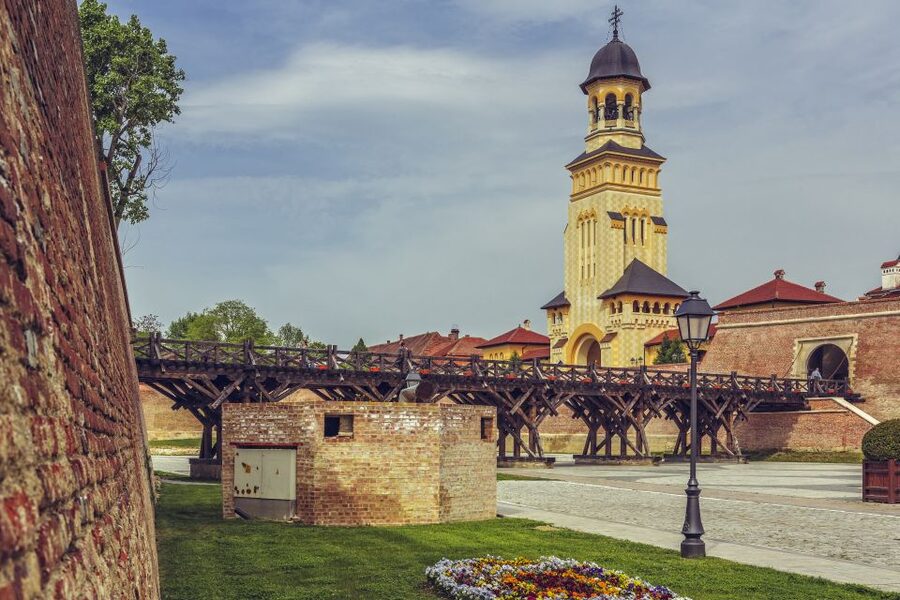
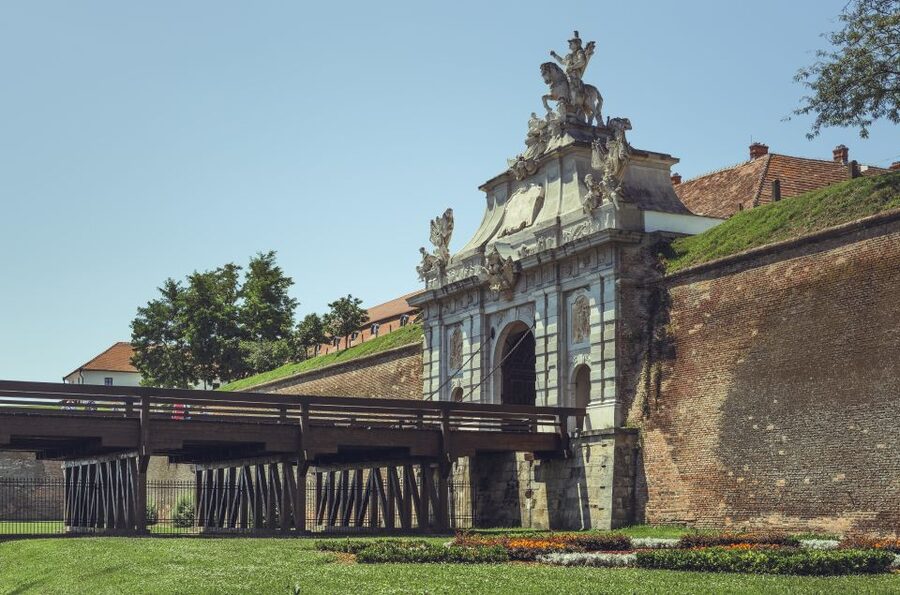
The final major stop is Alba Carolina Fortress in Alba Iulia, about an hour after lunch. This is a different kind of monument from Corvin Castle. Instead of one dramatic residence, you get an enormous fortified complex with walls, towers, bastions, gates, and courtyards laid out in the Vauban military style.
The scale takes time to register. From inside, you see layers of defense rather than one single building. The guide leads you through the complex and explains how the fortress fits into Romania’s past. The broad layout also gives you some of the day’s best chances to understand military architecture as a system.
Alba Iulia has special importance in modern Romanian history. In 1918, more than 1,200 delegates gathered here for the Great National Assembly and declared the union of Transylvania with Romania. The event is commemorated each December 1 on Romania’s National Day.
That story gives the fortress a second identity. It is not only a military monument from an earlier age. It is also tied to the formation of modern Romania. The guide’s explanation helps connect the walls and bastions to a national event that can otherwise seem abstract.
Ninety minutes is enough for a guided introduction and photographs, but it leaves little time for sitting down with a coffee or wandering alone. One practical improvement would be an extra free hour here, yet adding that time would likely make an already long day even longer. If you want independent exploration, tell the guide early and use any available free minutes wisely.
The guides and the small-group advantage
The strongest part of this experience is the human element. Guides including Robert, George, Florin, Mihai, Istvan, Cătălin, Andrei, and Gheorghe have been singled out for clear English, friendly manner, historical knowledge, patience, and safe driving.
That does not mean every departure feels identical. Different guides bring different personalities, and the guide assigned to your date cannot be guaranteed from the information provided. Still, the repeated pattern is useful: the guides explain history on the road and at each site, answer questions, allow photo breaks, and share practical suggestions for food and other Romanian destinations.
A maximum of seven people is a real advantage. You can usually hear the guide without standing at the back of a crowd, and it is easier to ask for a short bathroom or photo stop. In very small groups, the experience may feel nearly private. One group of three was transported in the guide’s own comfortable car, which made the day especially personal.
The vehicle is listed as modern and comfortable. Professional driving was also praised, including careful attention to speed zones and road conditions. You still need to accept the reality of a full day on Romanian roads, with around five hours of total driving built into the route.
Price, extra costs, and overall value
The price is $140 per person. That includes transportation, an English-speaking guide, and bottled water, but not entrance fees or lunch.
The listed admissions are 85 RON, about 17 EUR, for Turda Salt Mine and 50 RON, about 10 EUR, for Corvin Castle. Together, the two entrance fees add roughly 27 EUR per person, followed by the cost of lunch. Check the current exchange rate and ticket prices before departure, since local fees can change.
I consider the price reasonable if you value convenience and interpretation. You are paying to connect three distant sights in one day, avoid arranging regional transport, and have a guide explain what you are seeing. The value is weaker if you dislike long drives or prefer to spend half a day at one castle.
The best comparison is not the ticket price alone. Add up the time, transport, planning, and navigation required to reach Turda, Hunedoara, and Alba Iulia independently. For a short visit to Cluj, this tour gives you a lot of reach in one day. For a longer Romanian itinerary, you might prefer to spend separate days in Hunedoara and Alba Iulia.
Who should book this day trip?

I would recommend it to first-time visitors based in Cluj who want a broad introduction to Transylvania. It suits people who enjoy history, fortifications, unusual industrial sites, and guided storytelling. The three stops are varied enough to keep the day interesting.
It also suits solo visitors and couples who do not want to rent a car. The small group makes it easier to meet other people without the feel of a large bus tour.
I would think twice if you have back problems, limited mobility, or little tolerance for stairs and long vehicle rides. You should also skip it if your priority is relaxed photography, long meals, or detailed exploration of every room at Corvin Castle.
Bring comfortable shoes, a jacket, sunglasses, a sun hat, and sunscreen. Large bags and luggage are not allowed, and pets are not permitted. Departures are guaranteed with at least two confirmed participants, so check availability for your date.
Should you book it?
Book this tour if you want three major sights in one demanding but well-organized day, especially if Turda Salt Mine and Corvin Castle are high on your list. The combination is strong: an underground mine, a Gothic fortress, and a huge military citadel.
Skip it if you want to linger. The tour gives each place a useful introduction, but Corvin Castle and Alba Carolina both deserve more time than the schedule allows. For most short-stay visitors, though, the small group, strong English-speaking guides, comfortable transport, and unusual route make the $140 base price a fair exchange for a very full day from Cluj.
FAQ
Where does the tour begin?
It begins at the Matthias Rex Monument in Cluj-Napoca, near the Romano-Catholic church in Union Square.
How long does the experience last?
The day trip lasts about 11 hours, including travel between Cluj, Turda, Hunedoara, Alba Iulia, and Cluj.
What language is the tour conducted in?
The live tour guide speaks English.
How many people are in the group?
The group is limited to seven participants.
What attractions are included?
The route includes Turda Salt Mine, Corvin Castle in Hunedoara, and Alba Carolina Fortress in Alba Iulia.
Are entrance fees included?
No. Turda Salt Mine costs 85 RON, about 17 EUR, and Corvin Castle costs 50 RON, about 10 EUR, according to the provided tour information.
Is lunch included?
No. Lunch is not included. A one-hour lunch stop is scheduled in Hunedoara.
What transport is provided?
Transportation is provided in a modern vehicle, along with bottled water.
What should I bring?
Bring comfortable shoes, sunglasses, a sun hat, sunscreen, and a jacket.
Is the tour suitable for people with mobility problems?
The activity is not suitable for people with mobility impairments or back problems. Pets and large bags are also not allowed.
More Salt Mine Trips From Cluj Napoca
- Turda Salt Mine 4h guided tour from Cluj
★ 4.9 · 45 reviews - Cluj: Turda Salt Mines, Rimetea, and Coltesti Fortress Tour
★ 4.9 · 42 reviews - Day Trip To Turda Salt Mine, Rimetea Village & Coltesti Fortress
★ 5.0 · 25 reviews - Turda Gorge, salt mine and Rimetea village private tour
★ 5.0 · 12 reviews
Newest Cluj Napoca trips on the site
- Private tour to Turda Salt Mine, Rimetea and Alba Iulia★ 4.8 · 5 reviews
- Turda salt mine and Corvin Castle day tour from Cluj★ 5.0 · 9 reviews
- Turda Salt Mine, Gorge & Rimetea Village (private from Cluj)★ 5.0 · 5 reviews
- 1250cc Motorcycle Rental from Turda★ 5.0 · 4 reviews
- Day Trip to Turda Salt Mine and Corvin Castle from Timisoara★ 5.0 · 10 reviews
- Discover Apuseni Mountains – Scarita Summit,Sipote Waterfall and Dumesti Village★ 5.0 · 17 reviews
- CLUJ ADVENTURE TOUR ! ZIP LINE and HIKE★ 5.0 · 15 reviews
- Turda salt mine, Rimetea village and Alba Iulia, from Cluj★ 5.0 · 11 reviews
Corvin Castle Tours, compared.
Turda Salt Mine, Corvin Castle and Alba Fortress from Cluj
Read our review →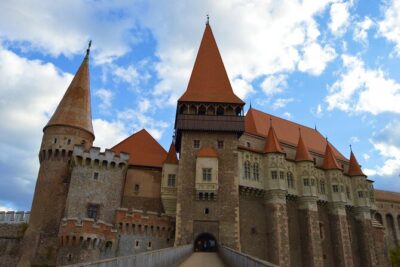
Exclusive Tour: Corvin Castle, Alba Iulia and traditional villages from Sibiu
Read our review →
Day trip to Corvin Castle and Sibiu (and back) from Timisoara
Read our review →
Turda Salt Mine and Hunedoara Corvin Castle from Cluj
Read our review →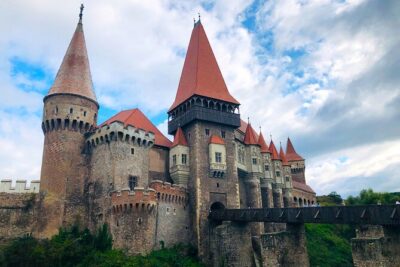
Day Trip to Turda Salt Mine and Corvin Castle from Timisoara
Read our review →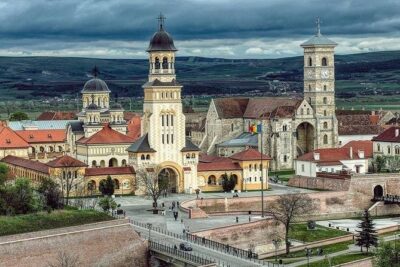
Turda salt mine and Corvin Castle day tour from Cluj
Read our review →Browse the lists this tour appears in