
Reviewed · WALKING TOURS
Bucharest: Hidden Gems 2.5-Hour Walking Tour
Bucharest reveals itself best in the older neighborhoods that survived earthquakes, war, modernization, and Communist demolition. This three-hour walk leads you from the National Theater into Batistei, the Armenian quarter, Casa Melik, Mantuleasa Street, and the Icoanei area, with plenty of local stories along the way. I like the focus on everyday streets and old homes, and I like that a covrig, a salty Romanian pretzel-like snack, is included. The main drawback is that this is a walking tour through city streets, with limited time for long indoor visits.
I also like the small-group format, capped at 12 people. Guides such as Elena, Andrei, and Livia have been praised for clear English, warmth, and practical advice, with Andrei even greeting the group with freshly baked snacks and water. The tour begins and ends at the National Theater, so you’ll need to plan for a morning on foot and bring sun protection in summer.
Key points to know before booking
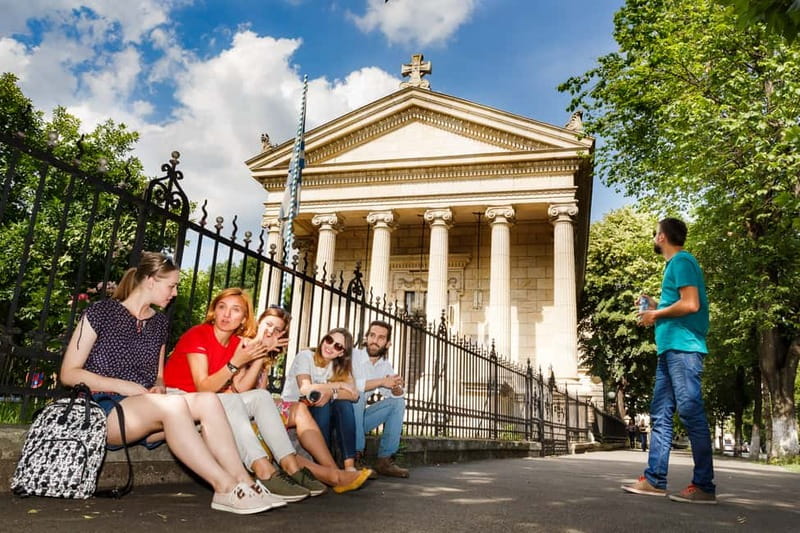
- Batistei’s 18th-century church offers a close look at an old mahala, a neighborhood formed around a religious building.
- The Armenian quarter includes an Orthodox church modeled on the cathedral at Ecmiazin in Armenia.
- Casa Melik is described as Bucharest’s oldest home, with a traditional Wallachian design and an art collection.
- Mantuleasa Street combines neoclassical, Romanian, and modernist buildings and is linked to writer Mircea Eliade.
- A covrig is included, giving you a small taste of a long-standing Romanian street snack.
- The maximum group size is 12, and the tour is available in English with free cancellation up to 24 hours before departure.
Why this Bucharest walk is different
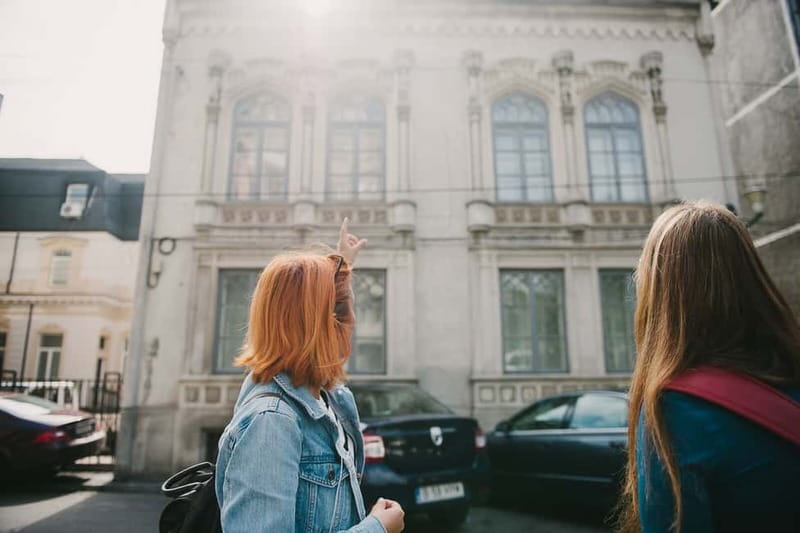
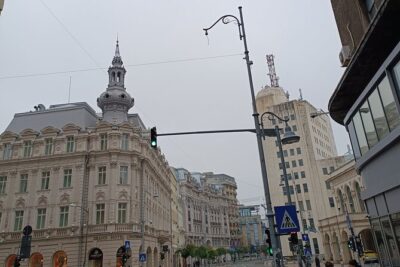
Many first visits to Bucharest center on grand avenues, Communist-era buildings, and the monumental Palace of Parliament. This tour takes another route. It concentrates on smaller streets where religious communities, merchants, writers, and ordinary householders shaped the city.
That makes the walk useful early in your stay. You get an introduction to Bucharest’s layers without spending the whole morning inside a museum. You’ll hear how neighborhoods formed, how they changed, and what was lost during Nicolae Ceausescu’s demolition projects.
The word mahala is important here. It refers to a neighborhood that often grew around a church and housed people with shared ethnic, social, or religious ties. The tour uses Batistei and the Armenian quarter to show you how that pattern worked in practice.
You should expect interpretation rather than a long list of famous sights. The guide connects churches, houses, streets, and people. If you enjoy understanding why a city looks the way it does, that approach is a strong reason to book.
More Walking Tours in Bucharest
- Bucharest: City Highlights Guided Walking Tour
★ 4.9 · 1,482 reviews - Bucharest Highlights Walking Tour
★ 5.0 · 469 reviews - Bucharest: Ghost Stories & Romanian Mythology Walking Tour
★ 4.9 · 287 reviews
Starting at the National Theater
The meeting point is on the stairs in front of the main entrance to Bucharest’s National Theater. The walk ends back at the same place, which keeps the morning simple and makes it easy to continue sightseeing afterward.
The advertised duration is three hours, although the experience title refers to two and a half hours. Check the selected date for the exact starting time and allow the full three-hour period in your plans.
The group limit of 12 matters. Bucharest’s older streets and courtyards are easier to handle with a small group, and you have a better chance to hear the guide when standing outside a church or moving along a narrow street.
The tour is in English. Elena has been praised for being informative and fun, while Livia was noted for her friendly manner, enthusiasm, and excellent English. Andrei received special praise for being attentive from the first greeting through the final directions, including advice on where to walk next.
Those details point to the real value of the experience. You are not simply being led between addresses. A good local guide can help you place the neighborhoods on a map, explain what you are seeing, and suggest where to eat or drink afterward.
Batistei and the old mahala
The first stop is Batistei, one of Bucharest’s best-known mahalas. This area grew around a religious building and changed through earthquakes, wars, modernization, and the Communist period.
The 18th-century stone church is the main focus. It is listed as a historic monument by Romania’s Ministry of Culture and Religious Affairs, giving the visit more weight than a quick look at an old facade.
Here, the guide explains what life in the neighborhood was like before the Communist regime. That social history is one of the most useful parts of the walk. You begin to see the church not only as an architectural object, but as the center of a community.
I would pay attention to the contrast between the old church and the later city around it. Bucharest can shift quickly from low historic buildings to Communist-era high rises and newer development. Batistei helps you notice those changes instead of passing them without thought.
There is a practical limitation. This is a neighborhood walk, not a dedicated church tour. The amount of time spent inside the church, and what you can see there, may depend on access and the day’s schedule. You should come for the setting and the stories as much as for the building itself.
The Armenian quarter and its church
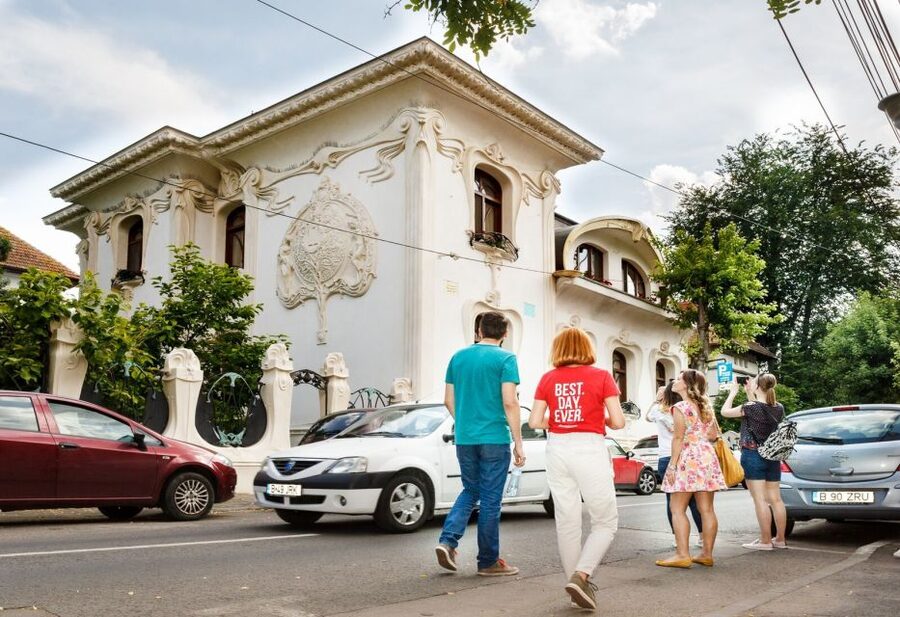
The next part of the walk enters Bucharest’s Armenian neighborhood. The area once served a much larger Armenian population, which has since diminished.
The church here was built in the early 20th century and modeled as an exact replica of a cathedral in Ecmiazin, Armenia. That connection gives the building a clear place in the city’s ethnic and religious story. It also shows how communities maintained links to a distant homeland while establishing themselves in Bucharest.
The church is described as one of the best-preserved Orthodox churches in the city. For you, that means the stop offers more than a pretty photograph. It provides a way to understand how Bucharest’s neighborhoods were shaped by communities with different backgrounds.
I like this section because it adds range to the tour. Batistei introduces the mahala as a local neighborhood form, while the Armenian quarter shows how identity and migration influenced the city.
Again, keep your expectations realistic. The tour is not advertised as an extended architectural study or a full museum visit. The guide’s explanation is the main feature, with the church serving as a memorable anchor.
A different sort of day out, same corner of Romania:
- Bucharest: Palace of Parliament Tickets and Guide
★ 4.3 · 3,182 reviews - Bucharest: Palace of Parliament Tickets and Guided Tour
★ 4.4 · 1,877 reviews - Bucharest: Parliament Palace Skip-the-line Ticket
★ 4.2 · 1,518 reviews - Taste Bucharest: A Food Lover’s Tour of Markets & Neighbourhoods
★ 5.0 · 689 reviews
Casa Melik and Bucharest’s oldest home
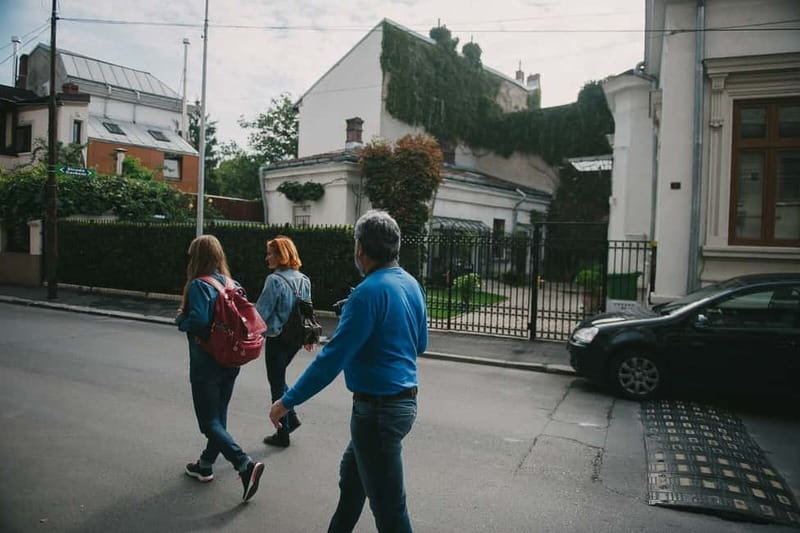
Casa Melik is one of the most distinctive stops. It is described as Bucharest’s oldest house and as a traditional Wallachian peasant home.
Its design includes a high cellar and a veranda covered with glass. Those features help you picture how a traditional house handled storage, weather, and daily life. The building is small in scale compared with Bucharest’s grand public architecture, but that is exactly why it adds balance to the tour.
Inside, Casa Melik contains a notable art collection. One of the strongest parts of the experience is the chance to see the renovated house from within, rather than merely passing it on the street.
The house also carries a collection of stories. Local legend says underground tunnels connect it with nearby Masonic lodges. Treat that as legend, not established fact, but it gives the guide an entertaining way to discuss the city’s layers of secrecy and speculation.
I appreciate the mix here: practical house design, art, restoration, and local folklore. You get a sense of how a home functioned, how it was preserved, and how stories gather around old buildings.
Casa Melik may be the stop that most appeals to anyone interested in interiors and domestic architecture. If you prefer large monuments and sweeping views, however, it will feel modest. The reward comes from looking closely.
A covrig break with local flavor
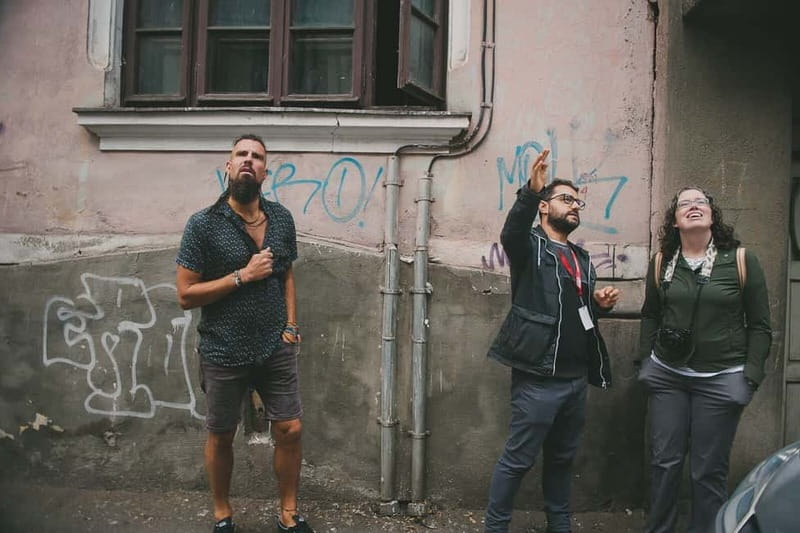
At some point during the walk, you stop for a covrig. This is a salty Romanian snack similar to a pretzel, and it is included in the tour price.
The snack has an interesting story. One explanation says Greek merchants introduced covrig in the 19th century to encourage people to drink more of their wine. Its similarity to German pretzels also raises the possibility that Romanians were eating something similar earlier.
You do not need to settle that argument to enjoy the stop. The covrig gives you a quick connection to ordinary city life, and it breaks up the sightseeing with something edible.
One guide, Andrei, was especially attentive to this part of the experience, greeting the group with freshly baked snacks and a bottle of water. That kind of small gesture can make a morning walk feel more welcoming, though you should remember that the included item is only the covrig. Any extra food or drinks are at your own cost.
If you have dietary restrictions, the supplied information does not specify ingredients or alternatives. Ask before booking if that matters to you.
Mantuleasa Street and Mircea Eliade
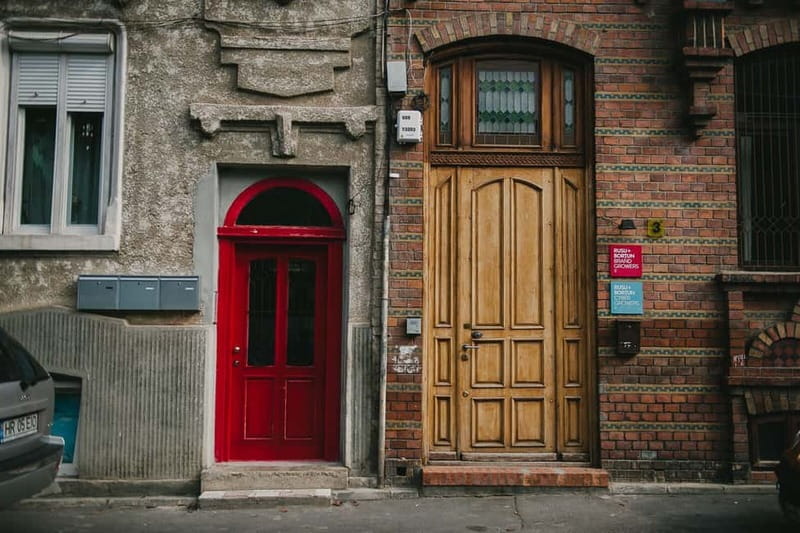
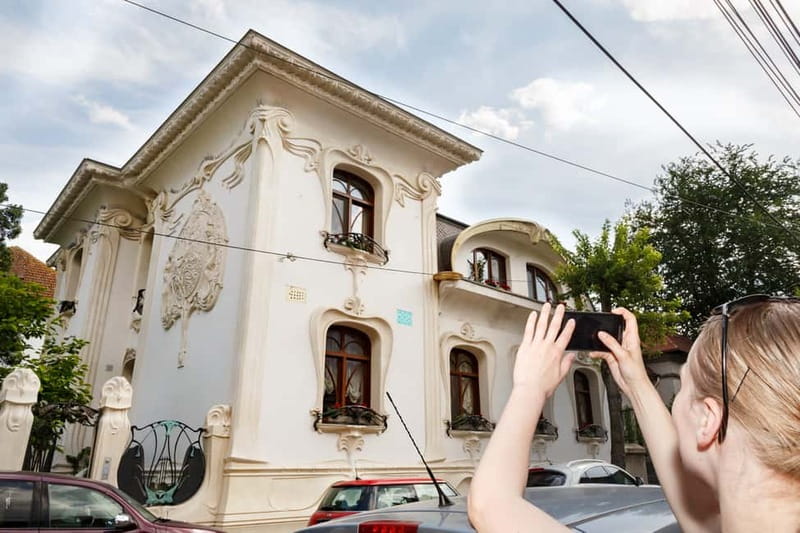
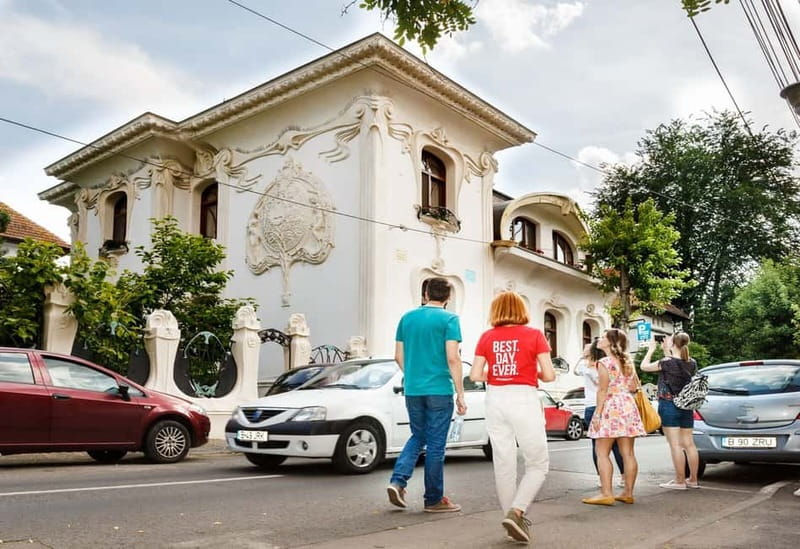
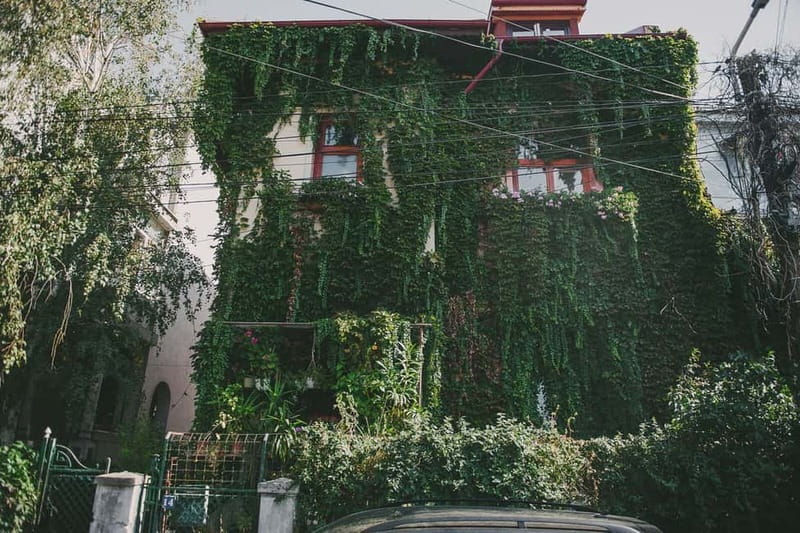
Mantuleasa Street is presented as one of Bucharest’s prettiest areas. It began as a mahala for wealthy merchants, and its buildings bring together neoclassical, Romanian, and modernist styles.
This is where the tour shifts from religious and domestic buildings to literary Bucharest. Mantuleasa was a favorite part of the city for Mircea Eliade, one of Romania’s most respected writers and philosophers.
The guide discusses Eliade’s life and work, including his career as a professor at the University of Chicago until his death in 1986. That gives the stop a wider connection beyond Bucharest. You see the street not only as an attractive collection of buildings, but as a place connected to a major Romanian intellectual.
I like the choice of Mantuleasa because it rewards slow walking. The appeal is found in the combination of styles and the feel of the street, not in a single headline monument. You can look at how older Romanian forms sit alongside neoclassical and modernist details.
The tradeoff is that architectural appreciation requires attention. If you rush through taking photographs, you may miss the differences between the styles. Listen for the guide’s pointers, then take time to look up at the facades and across the street.
Icoanei and the Ioanid block
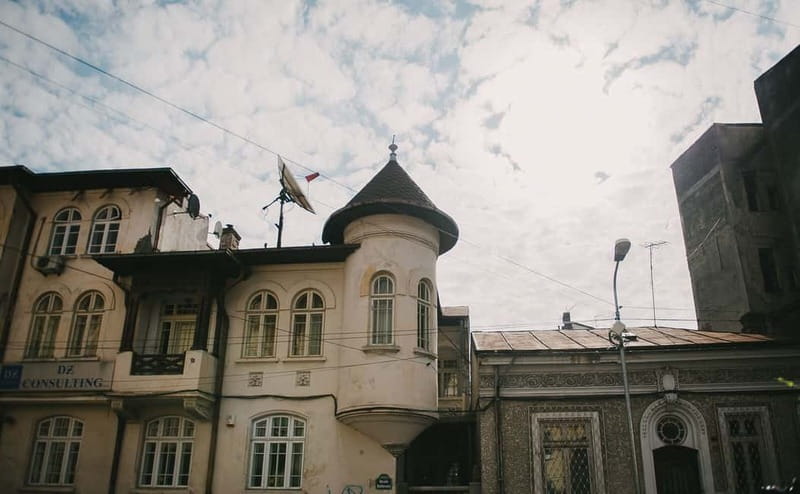
The walk finishes in the Icoanei area, including the Ioanid block. This final section brings together the visual and historical themes from earlier in the morning.
You have already seen a church-centered mahala, an Armenian neighborhood, a traditional house, and a street linked to a famous writer. The Ioanid block and Icoanei mahalla give you another look at Bucharest’s old urban fabric.
The supplied information calls the Ioanid block breathtakingly beautiful, but the more useful point is that it gives the tour a graceful finish. Instead of ending at a single famous monument, the route closes with a district to explore at street level.
At the end, ask the guide for suggestions on other places to visit and for recommendations about eating and drinking in Bucharest. This is particularly helpful because the tour returns to the National Theater, leaving you in a central position for the rest of your day.
What the $45 price gets you
At $45 per person, this is not the cheapest way to spend a morning in Bucharest. You are paying for a local English-speaking guide, a small group of no more than 12 people, a planned route, and the included covrig.
The value depends on how you like to travel. If you are comfortable reading about Bucharest and finding these neighborhoods yourself, you could spend less by walking independently. But you would miss the organized explanation of mahalas, the Armenian community, Casa Melik’s stories, and Eliade’s connection to Mantuleasa.
The price makes more sense for a first visit, especially if you want context rather than a checklist of major sights. It also helps you save time. Three hours gives you a clear introduction without requiring you to research each church and house in advance.
The rating of 4.6 from 23 ratings supports a generally strong experience, but you should not treat that number as a promise. The quality depends in part on the guide assigned to your date. The named guides have received praise for warmth, clear English, useful facts, and practical follow-up advice.
Who should book this walk
I would choose this tour if you like:
- Small historic neighborhoods rather than only major monuments
- Architecture mixed with social and literary history
- Local snacks and short cultural stops
- A guide who can suggest what to do next
- Walking at a steady city pace for about three hours
It is also suitable for families. Children aged 6 through 11 pay the listed child rate, and children under 6 may join free of charge if you mention them when booking.
You should think twice if you want a bus tour, extensive indoor sightseeing, or a tour built around Bucharest’s largest landmarks. The route is about streets, houses, churches, communities, and stories. It asks you to walk and pay attention.
Wear comfortable shoes. Bring sunscreen and something to cover your head because the summer sun can be intense. You may also want water beyond the included drink, especially on a hot morning.
Free cancellation is available up to 24 hours in advance, and you can reserve now and pay later. Those terms are useful if your Bucharest schedule is still changing.
Should you book the Bucharest Hidden Gems walk?
Book it if you want to understand the smaller-scale Bucharest behind the grand avenues. The strongest features are the old Batistei church, the Armenian quarter, Casa Melik, Mantuleasa Street, and the personal guidance from local leaders such as Elena, Andrei, or Livia.
I would make this one of your first activities in the city. It gives you names, neighborhoods, and background that can sharpen the rest of your sightseeing. At $45, it is best value for visitors who want interpretation and a manageable route, not simply a free-form stroll.
Skip it if your time is extremely short and you only want Bucharest’s major headline sights. Otherwise, this is a thoughtful, family-friendly introduction to the city’s older quarters, with a covrig to keep the history from becoming too heavy.
FAQ
How long does the Bucharest walking tour last?
The activity information gives a duration of three hours. The tour title refers to two and a half hours, so check the available starting time and plan for the full three-hour period.
Where does the tour begin and end?
It begins on the stairs of the National Theater, in front of the main entrance. The activity ends back at the same meeting point.
What language is the tour in?
The tour is conducted in English by a live local guide.
What is included in the price?
The price includes the local English-speaking guide and one covrig, a traditional Romanian street snack. Additional food, drinks, souvenirs, and personal purchases are not included.
Can children join the tour?
Yes. Children aged 6 through 11 may join at the listed child rate. Children under 6 may join free of charge, but you should mention them when booking.
How large is the tour group?
The group has a maximum of 12 people. This keeps the walk relatively small and makes it easier to hear the guide during neighborhood and church stops.
Newest Bucharest trips on the site
- Winery touring & private wine tasting – one day private tour★ 5.0 · 3 reviews
- Bucharest: Dealu Mare Winery Private Trip with Wine Tasting★ 4.9 · 6 reviews
- Village Museum Bucharest Guided Tour★ 5.0 · 6 reviews
- Private Transfer from Giurgiu Port to Bucharest★ 4.5 · 12 reviews
- Airport Henri Coanda (Otopeni) to Bucharest – Private Transfer – Driver★ 5.0 · 5 reviews
- Salt Mine Tour from Bucharest with Entrance Ticket★ 4.5 · 19 reviews
- Wine tasting in Bucharest Old town – bonus cheese platter★ 4.5 · 6 reviews
- Walking tour of Bucharest★ 5.0 · 3 reviews
Walking Tours, compared.
Ghost Stories & Romanian Mythology Walking Tour
Read our review →
Walking Tour- Delightful Bucharest (Highlights, Stories, Sights)
Read our review →
Browse the lists this tour appears in