Reviewed · BUCHAREST TOURS
Bucharest Sightseeing Tour
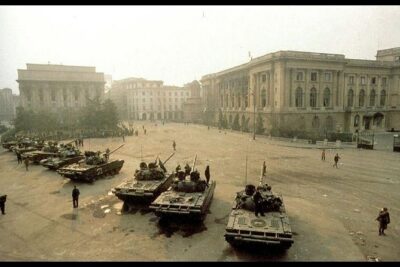
Bucharest’s most revealing story begins in Revolution Square, where grand royal buildings and the memory of the 1989 uprising share the same pavement. This four-hour tour then links the city’s old merchant quarter, monumental boulevards, Orthodox churches, and Communist-era power centers by minivan and on foot. I especially like the small-group format and the chance to see both famous sights and ordinary city streets.
I also like the practical mix of driving and walking. You get a broad look at Bucharest without spending four hours on foot, and the air-conditioned vehicle matters in summer or during long traffic delays. The main drawback is the price: at $324 for up to four people, it is good value for a full private group, but expensive for one or two people. Entrance fees are extra, and the Palace of Parliament may close without warning.
Key points to know before booking
- Revolution Square gives the tour its strongest historical moment, with the 1989 revolution at the center of the story.
- Victoriei Avenue and Lipscani connect old Bucharest to modern city life, with royal buildings, courts, churches, and former merchant streets.
- A private vehicle saves time, letting you cover central Bucharest and possible outlying sights in four hours.
- Parliament is not guaranteed, so you may visit Ceausescu’s Spring Palace or another relevant site instead.
- Guide quality is a major strength, with especially warm feedback for Elisabeth and calm driving from Claudio.
- The tour suits first-time visitors, but independent explorers may find the fixed route and extra admission fees less attractive.
Revolution Square puts 1989 first
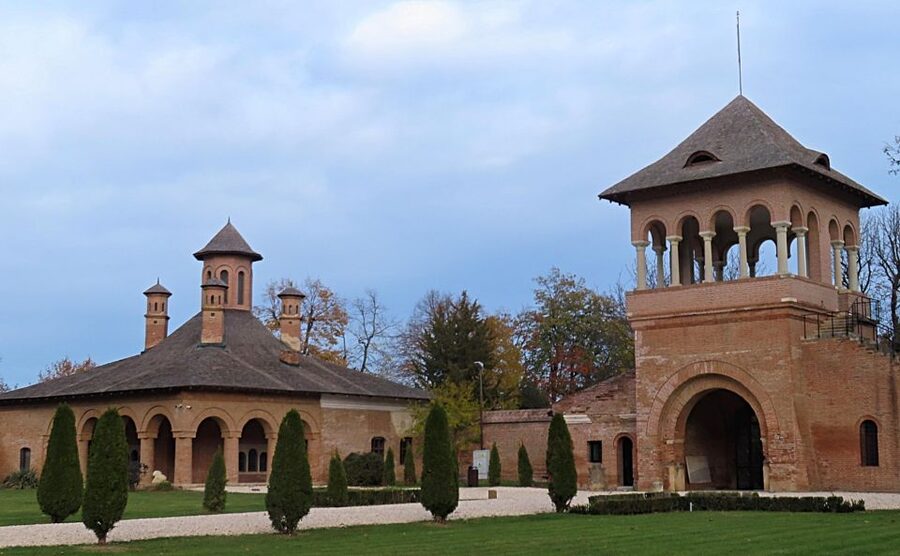
I like that the tour starts with a place that still carries political weight. Revolution Square is not just another open plaza for photographs. It is tied to the 1989 uprising that ended Nicolae Ceausescu’s rule, and your guide uses the surrounding buildings and monuments to explain how the moment unfolded.
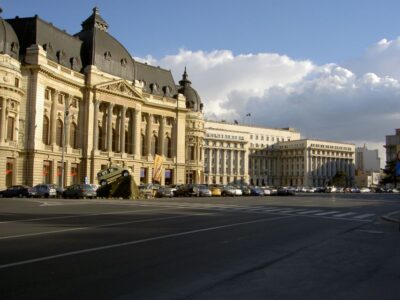
The square includes royal buildings, libraries, and statues. You will see an impressive central Bucharest setting, but the important part is the contrast between the polished architecture and the difficult events connected to it. This is a good place to ask questions about what happened in 1989 and how Romanians remember it today.
The tour description places strong emphasis on historical facts. That works well if you want a clear timeline and a first introduction to Communist Romania. One German-language review appreciated the guide’s explanations along the driving route, but wished for more discussion of current politics, the economy, incomes, and daily life. I would keep that in mind and ask your guide directly if those subjects interest you.
The experience may feel more like a city overview than a long, detailed political seminar. Still, beginning here gives the rest of the tour a useful frame. As you pass royal and government buildings, you can better understand how Bucharest moved from monarchy to dictatorship, revolution, and its present-day identity.
A few more Bucharest trips worth a look
- Bucharest: Palace of Parliament Tickets and Guide
★ 4.3 · 3,182 reviews - Bucharest: Palace of Parliament Tickets and Guided Tour
★ 4.4 · 1,877 reviews - Bucharest: Parliament Palace Skip-the-line Ticket
★ 4.2 · 1,518 reviews
Victoriei Avenue shows Bucharest in layers
From Revolution Square, the route follows Victoriei Avenue toward the older commercial center. This is one of the most useful parts of the tour because you see Bucharest as a city built in layers, rather than as a collection of isolated attractions.
Along the avenue, your guide points out major buildings and explains their place in the city. You will see the Royal buildings and pass toward the Palace of Justice, whose large columns reflect the power once claimed by the state. The architecture can feel grand and formal, but the road also carries ordinary traffic and city noise. That mix is part of Bucharest’s character.
The air-conditioned car or minivan makes this section easier to manage. You will not need to walk every long stretch between sights, and the vehicle gives you a break while the guide continues explaining what you are seeing. This matters during hot weather, when a full four-hour walking tour would be tiring.
The route includes walking stops, but the exact balance depends on timing and site access. One useful detail from the available feedback is that the tour included two occasions to get out and explore sights on foot. That suggests a practical format: drive between districts, then walk where the setting is most rewarding.
Lipscani reveals the old merchant quarter
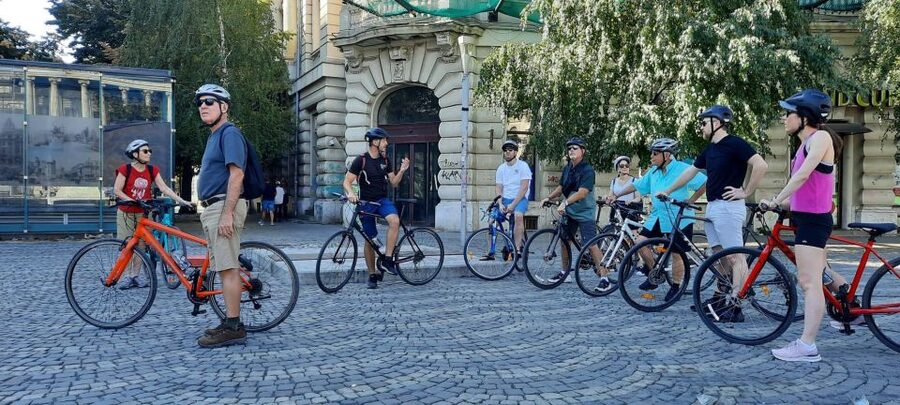
Lipscani is where the city’s commercial past becomes easier to picture. The old district recalls the merchant life that once shaped central Bucharest, with narrow streets and historic buildings replacing the broad scale of the grand boulevards.
Your guide takes you through the old quarters and toward the Princely Court and Church. These sites help explain Bucharest before the monumental state buildings and oversized Communist projects changed the center. You are not simply checking off another church or courtyard. You are seeing where political power and trade once met.
The Princely Court is especially useful as a link to the city’s earlier rulers. The nearby church adds a religious layer, while the old streets show how commerce worked in the historic center. Some areas have been restored, while others may look worn. That uneven appearance is not a flaw to hide. It helps you see a city still working out how to preserve its past while serving present-day residents.
This is also one of the better places to slow down and notice details. You might find a small architectural feature, an old facade, or a street pattern that makes more sense after your guide explains it. The tour does not promise a long food stop or restaurant advice, so you should not book it mainly for local eating. Its value here comes from context and orientation.
Unirii Square brings the Communist scale into view
After the old center, the tour moves toward Unirii Square, a huge transport hub that feels very different from Lipscani. This change in scale is one of the clearest lessons of the route. The old quarter reflects trade and princely power, while Unirii reflects planning on a much larger, more forceful scale.
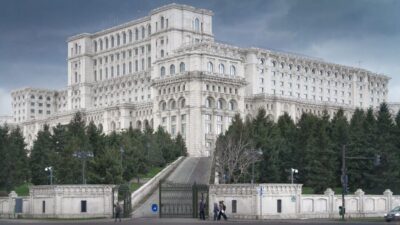
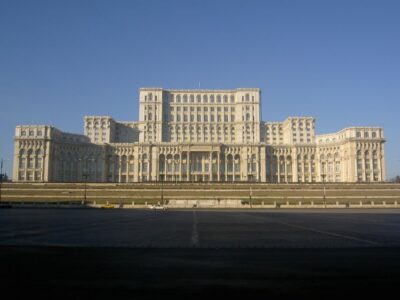
From here, you can see the Palace of Parliament. If the building is open and a visit fits the schedule, the tour can stop there. Admission is not included, and access may require buying a separate ticket. The palace can also close because of international conferences or official meetings, sometimes with little warning.
That uncertainty matters. The Palace of Parliament is one of Bucharest’s most recognizable sights, so it is natural to expect entry. You should instead treat an interior visit as a possible addition, not the sole reason to book the tour.
If Parliament is unavailable, the route may switch to Spring Palace, Ceausescu’s former residence. This gives you a different view of the Communist period. Rather than seeing only a monumental public building, you may learn about the private setting connected to the former leader and his household. The exact replacement depends on access and the conditions on the day.
The tour provider does not accept responsibility when sites close without notice, but the guide will try to offer another relevant stop. That is a fair approach in a city where churches, museums, and official buildings can have changing schedules. Still, you should remain flexible.
A different sort of day out, same corner of Romania:
- Bucharest: City Highlights Guided Walking Tour
★ 4.9 · 1,482 reviews - Taste Bucharest: A Food Lover’s Tour of Markets & Neighbourhoods
★ 5.0 · 689 reviews - The Real tour of Communism
★ 5.0 · 666 reviews - Bucharest: Therme Bucharest Entry Ticket and Transfer
★ 4.6 · 608 reviews
The Metropolitan Church adds a quieter pause
The Metropolitan Church provides a change of mood after the size and traffic of Unirii Square. Here, the focus shifts to Orthodox religious art and the role of the church in Romanian public life.
You can look at the iconography and architecture inside the church when it is open. The setting offers a quieter way to understand Bucharest, especially if most of your visit has focused on political buildings and city planning. Religious sites can also be unpredictable, particularly in the low season, so entry is not guaranteed.
Dress and behavior should be respectful, even though the tour information does not list a formal dress code. Food is not allowed in the vehicle, and you should carry your passport as requested. The passport requirement may matter if you plan to enter certain sites or need identification during the outing.
This stop is best approached as part of the larger story. It is not advertised as a long religious tour. Instead, it gives you a short look at Orthodox visual culture and a chance to see how different institutions shaped the city.
The Arch of Triumph and Village Museum are optional pieces
On the return toward the University area, the route can include Bucharest’s Arch of Triumph and, if timing permits, the Village Museum. These additions broaden the tour beyond the central historic districts.
The Arch of Triumph gives you another example of national symbolism and monumental design. It also shows how Bucharest uses large public structures to tell stories about the country. The information provided does not promise interior access or a long stop, so think of it as a viewing point rather than a separate major attraction.
The Village Museum offers a different angle again. If it is included, you can see traditional Romanian buildings gathered in an open-air museum setting. That can be useful after several hours of urban architecture because it introduces rural building traditions and regional life.
The key phrase here is option. Four hours is not much time for Revolution Square, the central avenues, Lipscani, Parliament or Spring Palace, the Metropolitan Church, the Arch of Triumph, and the Village Museum all at once. Your guide will need to adjust the route based on traffic, opening hours, and your interests.
I would tell the guide at the start which matters most to you. If Parliament is your priority, say so. If you prefer older streets and churches, ask for more time in the center. If the Village Museum interests you, confirm whether it can fit without turning every stop into a rushed photo break.
What the vehicle and group size mean
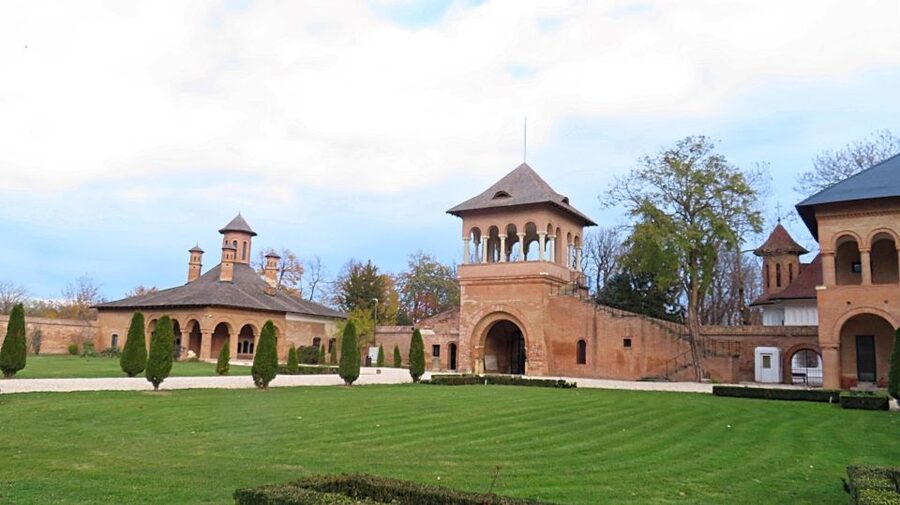
Transportation is provided by a modern air-conditioned car or minivan. The booking information describes a private tour for your group, with a limit of eight participants. The price is listed as $324 for up to four people, so the value improves sharply when four people share the cost.
For four people, the cost works out to $81 per person before entrance fees. For two people, it becomes $162 each, and for one person it is the full group price unless the booking terms offer another arrangement. That makes this easier to recommend to a family or group of friends than to a solo visitor.
The vehicle is more than a comfort feature. Bucharest traffic can make distances feel longer than they look, and the tour covers several districts. Driving lets you see more in four hours and reduces the physical effort between walking sections.
The tradeoff is that you will not experience every street at a slow pace. If you love wandering, stopping for coffee, and choosing your own direction, a self-guided day may feel more rewarding. This tour is designed for orientation and explanation, not complete independence.
The language choice is useful. Guides are available in English, French, German, Italian, and Spanish. A German-speaking guide received positive feedback for clear language and historical explanations. Elisabeth was thanked for valuable information, while Claudio was praised for calm driving. Those comments suggest that both communication and the ride can be strong, although guide assignments can vary.
Price, timing, and the practical tradeoffs
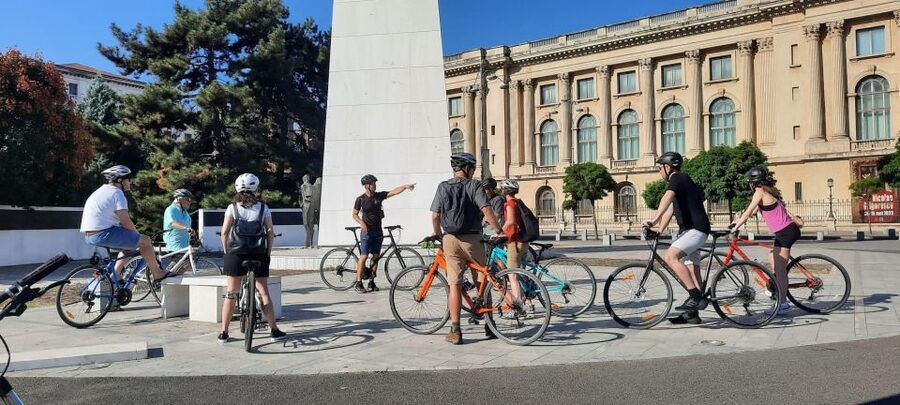
Four hours is enough to get your bearings in Bucharest, but not enough to explore every site in depth. You should expect a fast-moving introduction with a mixture of vehicle time, short walks, exterior viewing, and possible interior visits.
Entrance fees are not included. This is especially important if Parliament or another museum is open and you decide to enter. Build an extra amount into your budget, and remember that a site closure can change the plan even after you have set aside time for it.
You can cancel up to 24 hours before the tour for a full refund, and you can reserve now while paying later. Those policies are useful if your schedule is still changing. Starting times depend on availability, and pickup is provided from the entrance of your hotel, address, or other stated location in Bucharest.
Museums in Romania are usually closed on Mondays. Churches and monasteries can also close without prior notice, particularly outside the main season. If your Bucharest stay includes a Monday, confirm the route and likely substitutions before booking.
The overall rating is 4.7 from 26 ratings, which fits the pattern of the written feedback: strong marks for the guide, driving, language ability, and clear historical information, with a lower score tied to price and the desire for more present-day social and economic context. I would call it a dependable orientation tour, not the cheapest way to see the city.
Who will get the most from this Bucharest tour
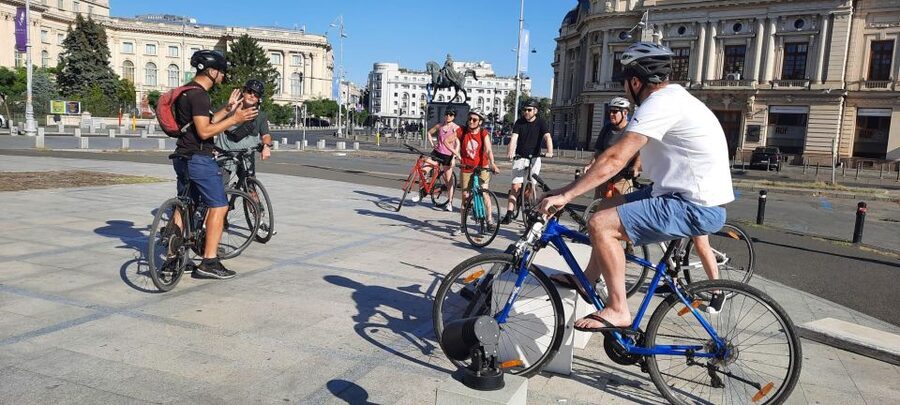
I would recommend this experience to a first-time visitor with only part of a day in Bucharest. You will see the central districts, learn why Revolution Square matters, walk through Lipscani, and get a chance to put major buildings on a map.
It also suits families, older visitors, and anyone who prefers not to manage Bucharest traffic and directions alone. The air-conditioned vehicle and hotel pickup remove several small stresses, while the walking portions keep the day from becoming a sightseeing drive with no contact with the streets.
A group of four gets the strongest financial value. A group of up to eight can also benefit from the shared guide, although the listed price specifically covers up to four people, so confirm the cost for a larger party before booking.
I would be more cautious if you want an in-depth look at contemporary Romania, detailed food recommendations, or long interior visits. One piece of feedback specifically wished for more about present politics, incomes, the economy, and restaurant tips. You can ask for those subjects, but the planned emphasis is clearly on monuments, architecture, and major historical events.
Should you book this four-hour city tour?
Book it if you want a well-organized first look at Bucharest and value having a guide explain the difficult parts of the city’s past. The best features are the route through Revolution Square, Victoriei Avenue, Lipscani, and Unirii Square, plus the comfort of a private air-conditioned vehicle.
Before booking, decide how much Parliament matters to you. It may be closed, entrance fees are extra, and the route may shift to Spring Palace or another site. If you accept that flexibility, the tour gives you a useful, efficient introduction.
Skip it if you are traveling alone on a tight budget or prefer to set your own pace. For a group sharing the $324 cost, though, this is a practical way to connect Bucharest’s royal, merchant, Orthodox, revolutionary, and Communist-era stories in one focused outing.
FAQ
How long is the Bucharest sightseeing tour?
The tour lasts four hours, including transportation, guided sightseeing, and walking.
Where does the tour begin?
Pickup is provided in Bucharest from the entrance of your hotel, address, or other stated location.
Where does the tour finish?
The tour returns to Bucharest.
Is transportation included?
Yes. Transportation is provided by a modern air-conditioned car or minivan.
Is this a private tour?
Yes. It is described as a private tour, with a small-group limit of up to eight participants.
How much does the tour cost?
The listed price is $324 per group of up to four people. Entrance fees are not included.
Can I visit the Palace of Parliament?
You may be able to stop and visit the Palace of Parliament, but access is not guaranteed. The building can close without prior notice because of international conferences or meetings.
What happens if the Palace of Parliament is closed?
The route may substitute Spring Palace, Ceausescu’s former residence, or another relevant site when possible.
Which languages are available?
Live guides are available in English, French, German, Italian, and Spanish.
What should I bring, and what is not allowed?
You should bring your passport. Food is not allowed in the vehicle.
Newest Bucharest trips on the site
- Winery touring & private wine tasting – one day private tour★ 5.0 · 3 reviews
- Bucharest: Dealu Mare Winery Private Trip with Wine Tasting★ 4.9 · 6 reviews
- Village Museum Bucharest Guided Tour★ 5.0 · 6 reviews
- Private Transfer from Giurgiu Port to Bucharest★ 4.5 · 12 reviews
- Airport Henri Coanda (Otopeni) to Bucharest – Private Transfer – Driver★ 5.0 · 5 reviews
- Salt Mine Tour from Bucharest with Entrance Ticket★ 4.5 · 19 reviews
- Wine tasting in Bucharest Old town – bonus cheese platter★ 4.5 · 6 reviews
- Walking tour of Bucharest★ 5.0 · 3 reviews
Bucharest Tours, compared.

Taste Bucharest: A Food Lover’s Tour of Markets & Neighbourhoods
Read our review →