
Reviewed · MARAMURES TOURS
Classic Romania Tour – small group in 8 days: Transylvania and Maramures
Romania’s best moments often come between the famous sights: a horse-drawn ride through Viscri, a home-cooked lunch in Maramureș, or a bright wooden cross in Săpînța’s Merry Cemetery. This eight-day route links those personal encounters with the big names, including Bran Castle, Peles Castle, and Sighișoara.
I like the small maximum group of six, which gives your guide room to adjust the day. I also like the mix of city walks, village visits, monasteries, fortresses, and local food. The main consideration is the pace. You cover a lot of Romania by road, and several days run for about six hours before you even settle into the evening.
Key points to know before booking
- A maximum of six guests: You get the feel of a small private party, with transport in a modern car or minivan.
- Seven hotel nights included: Accommodation is arranged in centrally located hotels, based on two people sharing a double room.
- Maramureș brings the most local contact: Breb, wooden churches, regional food, a folk dinner, and Săpînța’s unusual cemetery give this tour its strongest sense of place.
- The route covers major Transylvanian sights: Sibiu, Alba Iulia, Turda Salt Mine, Cluj-Napoca, Sighișoara, Viscri, Brașov, Bran, and Sinaia.
- Seasonal planning matters: From mid-June to early November, the Cozia Monastery visit is replaced by a drive on the Transfăgărășan.
- The price is built around convenience: At $2,339.64 per person, you pay for a guide, transport, seven nights, breakfasts, airport transfers, and selected meals and activities.
What this eight-day Romanian route does well
This is not a single-city tour with a few day trips attached. It is a moving circuit through central and northern Romania, with Bucharest at both ends. You unpack in a new place most nights, but the route is arranged for you, including the vehicle, hotels, and airport transfers.
That structure is useful if you want to see both famous castles and smaller communities without figuring out Romanian train connections or rural bus schedules. It also lets you reach places such as Breb, Poienile Izei, and Viscri, where independent sightseeing is less straightforward.
The small group size is one of the strongest features. With no more than six people, you should have a better chance to ask questions, pause for photographs, or discuss a possible change with your guide than you would on a full coach tour. One guide named in the tour feedback is Valentin Val Nan, who adjusted the schedule for a couple that wanted to add Constanța and Histria. That does not mean every detour will be possible, but it suggests that flexibility can be part of the experience when timing allows.
The route is also culturally broad. You will see Orthodox monasteries, Saxon fortified churches, Gothic cathedrals, royal residences, communist-era architecture, wooden villages, and an old salt mine. I like that range because Romania is easier to understand when you see how its regions differ.
A few more Bucharest trips worth a look
- Maramures best, full day tour from Cluj
★ 5.0 · 33 reviews - From Cluj-Napoca: Maramures Day Tour
★ 5.0 · 19 reviews - The Best of Maramures in One Day
★ 5.0 · 16 reviews
Bucharest begins with communist power and old-town disorder
Your first day starts with a city tour lasting about six hours. Bucharest gives you a quick lesson in the country’s contrasts: Western and Eastern European influences sit beside the heavy mark left by communist rule.
The Palace of the Parliament is the natural opening subject. The enormous building, also called the House of the People, is listed as the world’s second-largest building after the Pentagon. The planned interior visit is currently unavailable because the palace is closed until June, so the tour replaces it with Spring Palace. Check the operating situation for your dates, since this change affects one of the day’s main attractions.
You then walk through Bucharest’s Old Town, where historic buildings, restaurants, bars, and nightlife crowd together. It is less polished than a purpose-built museum district, and that is part of its appeal. You get a fast introduction to modern Bucharest rather than only a parade of monuments.
You spend the night in Bucharest. Since the tour begins with an airport pickup and ends with a return transfer, it works well if you want a planned arrival and departure rather than arranging separate transport.
Monasteries and Sibiu begin the Transylvania journey
On day two, you leave Bucharest for Transylvania and stop first at Curtea de Argeș Monastery. At the foot of the Carpathian Mountains, it gives you an early look at Romanian religious art and architecture before the road turns toward the Olt Valley.
Cozia Monastery follows in the standard version of the route. It is valued for its medieval design and national artistic importance. If you travel from mid-June to early November, this stop is replaced by a road trip on the Transfăgărășan. That seasonal swap may appeal to you if mountain roads and views matter more than another monastery, but it also means the experience changes considerably by date.
Sibiu is one of the tour’s most rewarding city stops. It was European Capital of Culture in 2007, and its central squares show the city’s mix of Romanian, German, and wider European influences. You walk through the Main Square, see the Brukenthal Museum and Roman Catholic Cathedral, then continue to Huet Square and the Evangelical Church.
The route also includes the Passage of Stairs and the Bridge of Lies. These details keep the walk from becoming a simple list of large buildings. You see the compact scale of old Sibiu and get time to orient yourself before the next long driving day.
Sibiel, Alba Iulia, and the strange beauty of Turda
Day three begins with Sibiel, a rural village presented as one of the best-preserved traditional areas in the region. The stop is short, so you should think of it as an introduction to village life rather than a full rural stay.
Alba Iulia provides a sharp change of scale. Alba Carolina Fortress is Romania’s largest fortress, enclosed by 12 kilometers of walls and built in a star shape. Its site has served as a Roman fort, a medieval fortress, and later a Vauban-style citadel with bastions. You can read several layers of Romanian military history in one place.
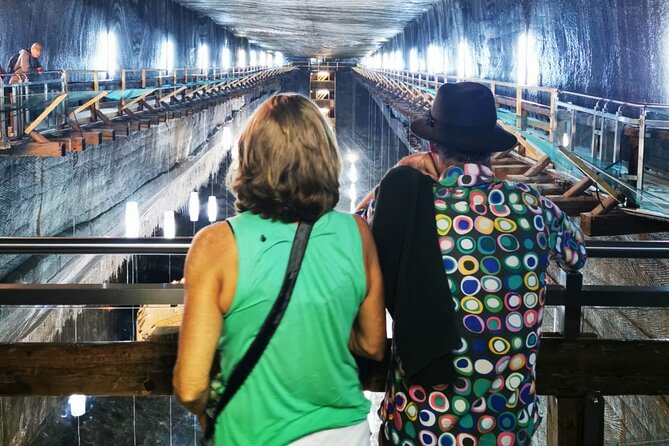
The Turda Salt Mine is the day’s most unusual stop. Hundreds of meters below ground, salt galleries open into giant chambers, including one 118 meters tall, with a lake at the bottom. The setting is visually dramatic, but it is also a reminder that Romania’s industrial past can be as striking as its castles and churches.
The day ends in Cluj-Napoca, the largest city in Transylvania. The route gives you only a short city introduction on arrival, with a fuller walk the following morning. That arrangement makes sense, although the combination of Sibiel, Alba Iulia, Turda, and Cluj creates another full day on the road.
A different sort of day out, same corner of Romania:
- Bucharest: Palace of Parliament Tickets and Guide
★ 4.3 · 3,182 reviews - Bucharest: Palace of Parliament Tickets and Guided Tour
★ 4.4 · 1,877 reviews - Bucharest: Parliament Palace Skip-the-line Ticket
★ 4.2 · 1,518 reviews - Bucharest: City Highlights Guided Walking Tour
★ 4.9 · 1,482 reviews
Cluj and the wooden world of Maramureș
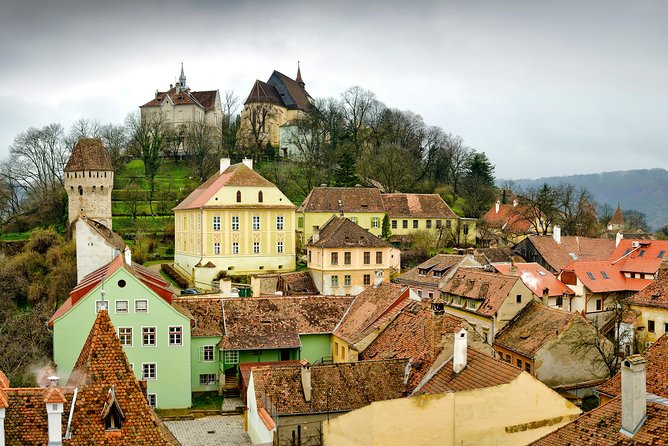
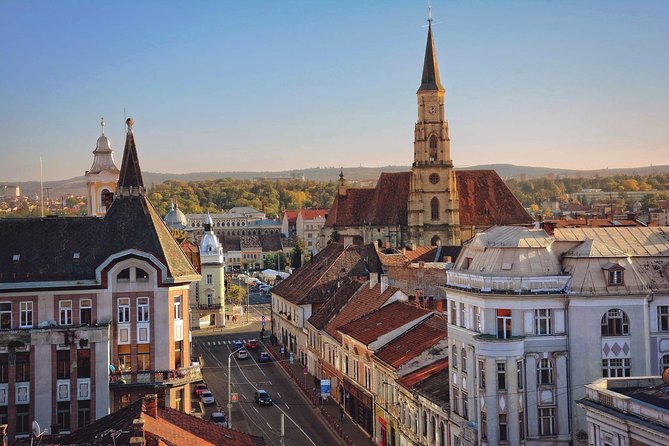
Your fourth day opens with Cluj-Napoca’s main sights. St. Michael’s Gothic Cathedral overlooks the central square, followed by Banffy Palace, the former mayor’s hall, and Mirror Street. These stops show the city’s urban and artistic side before you head north.
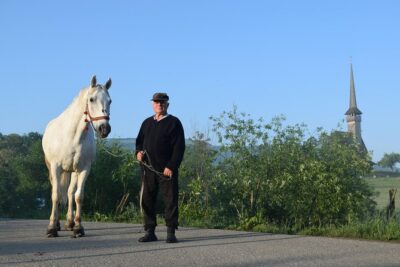
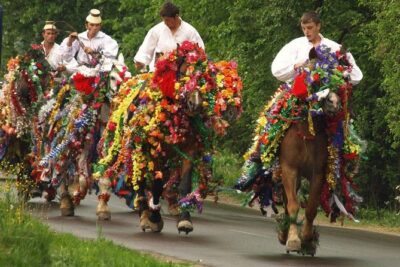
Maramureș feels different from the towns farther south. Traditional wooden houses remain part of daily life, and the region is presented as an open-air museum shaped by local customs and craft. In Breb, you walk through one of the best-preserved traditional villages and visit an authentic house.
This is one of the tour’s most personal sections. You are not only looking at old buildings from the road. You meet local people, eat fresh regional products, and taste fruity liqueurs. The included lunch helps you understand how much of the local food still comes from household gardens and small-scale production.
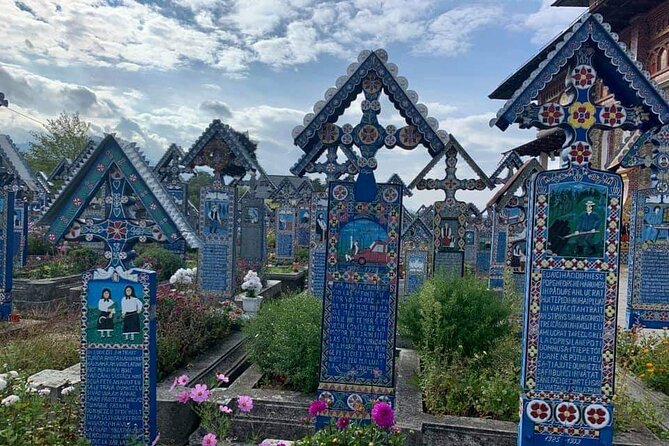
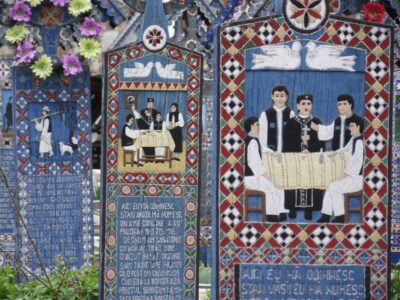
In the afternoon, you reach Săpînța and its Merry Cemetery. Brightly painted wooden crosses carry humorous verses about the people buried there. The cemetery treats death with wit and personality, making it very different from a formal memorial site. It is memorable because the artwork tells human stories rather than simply recording names and dates.
That evening includes a traditional Romanian dinner and folk show. It is a more organized cultural presentation than the village visit, but it gives you a chance to hear and see local traditions in one setting. You sleep in Sighetu Marmației.
Wooden churches and local craft in Maramureș
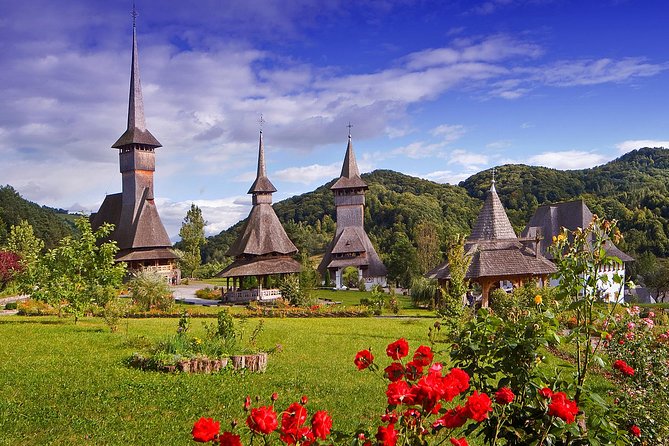
Day five focuses on two wooden churches included in the UNESCO World Heritage Site: Poienile Izei and Bârsana. These churches show the skill of a region where woodcarving has been passed from one generation to the next.
Bârsana is also known for its large Orthodox architectural ensemble. The buildings and carved details are best understood with a guide who can explain how worship, local materials, and regional design fit together. You also visit a local artisan’s workshop, where you see the craft in practice and can buy handmade souvenirs.
Food remains part of the day. The region is known for cooking from its own harvest, and you have another chance to taste local products in a setting that feels tied to the surrounding villages rather than designed only for tourists.
By evening, you reach Târgu Mureș, a city shaped by ethnic and cultural diversity. This is a useful transition point between Maramureș and southern Transylvania, though it also means another long transfer day. If you prefer slow travel with several nights in each place, this itinerary may feel busy.
Fortified churches, Sighișoara, and a carriage in Viscri
Day six brings some of Transylvania’s most recognizable scenes. Biertan has the region’s largest fortified church, built by Saxons in the sixteenth century and now protected as a UNESCO site. The fortified design reflects an era when a place of worship also had to offer protection.
Sighișoara is the major stop of the day. It remains an inhabited medieval fortress, not just a preserved shell, and its cobblestone streets lead up to the Clock Tower. Inside, you find a museum of medieval weapons and a torture chamber, while the tower gives you views over the town.
The climb continues to the Church on the Hill, reached by 300 wooden steps. This is one of the clearest physical tests on the route. You do not need extreme fitness, but comfortable shoes and a willingness to climb are important.
Viscri slows the pace. The village is known for its traditional houses, including one restored by King Charles III, who returns in May. You take a horse-drawn carriage through the village, visit local residents, and enjoy homemade cake. It is a simple experience, but it may be one of the tour’s most appealing moments because you get to see village life at ground level, without rushing from one monument to the next.
The day ends in Brașov, a city at the foot of the Carpathian Mountains.
Brașov, Bran, Sinaia, and the return to Bucharest
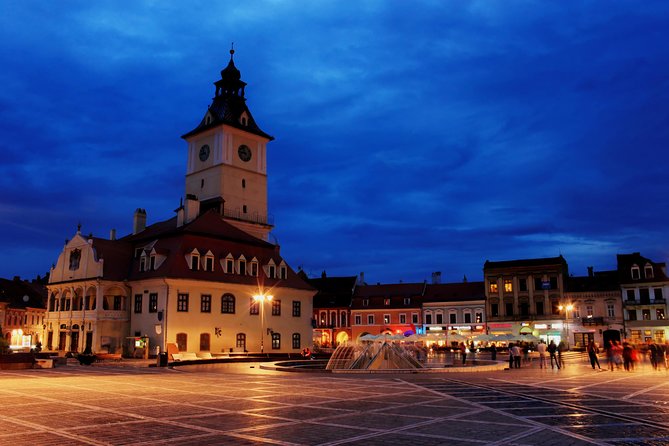
Brașov receives its own walking tour on day seven. You see Council Square, the Black Church, and one of the city’s narrowest streets. The compact historic center is easy to explore on foot, though the stone streets and earlier climbs make supportive shoes a good idea.
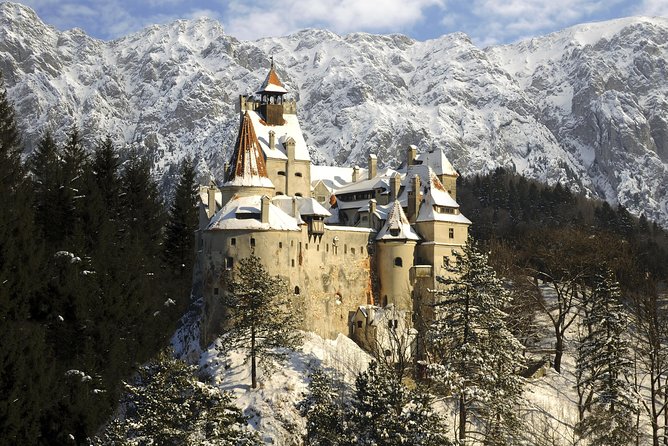
Bran Castle is next. Its association with Dracula gives it a strong popular image, but the visit is also about a medieval fortress built in the thirteenth century on a 60-meter cliff above an important route into Transylvania. Expect a famous sight with a strong legend attached, not a direct historical home of the fictional Dracula.
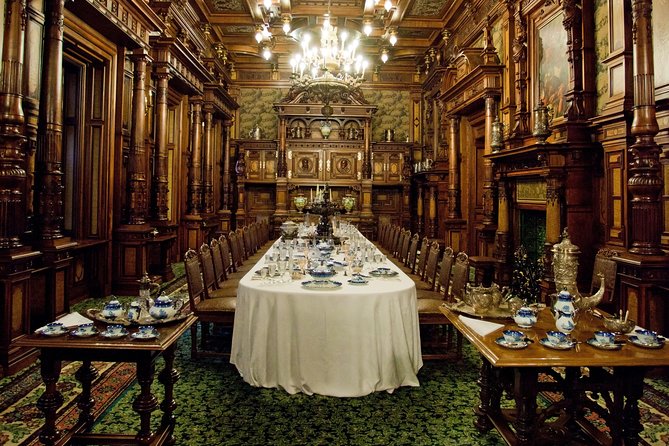
Sinaia offers a final change of mood. You visit the Orthodox monastery before touring Peles Castle, the royal residence built by Romania’s first king, Carol I of Hohenzollern. The castle gives you a closer look at royal life and nineteenth-century architecture than Bran does.
You return to Bucharest in the evening and spend your final night there. Day eight is mainly breakfast, checkout, and the scheduled airport transfer. The tour does not give you a final full sightseeing day in the capital, so plan extra Bucharest time before the tour if you want a slower look at the city.
What the $2,339.64 price really covers
The price is $2,339.64 per person, based on two people sharing a double room. For that amount, you receive seven nights in centrally located hotels, breakfast, a professional English-speaking guide, private vehicle transport, airport pickup and drop-off, and the main planned route.
The package also includes one lunch with traditional local products, one folk-show dinner, and the horse-drawn carriage ride in Viscri. Those inclusions matter because they are tied to the places you visit rather than being generic hotel meals.
You still pay for airfare, health insurance, and meals not listed as included. Entrance fees to monuments are also excluded unless specifically included in the itinerary, so confirm which admissions are covered before booking. A single room requires an added supplement.
The value is strongest for you if convenience matters. You are paying for a guide who handles a complicated route, a vehicle that reaches rural areas, and hotels arranged across seven nights. If you are comfortable planning your own transport and booking each stay, the price may feel high. If you want one organized circuit with personal guiding and little day-to-day planning, it is easier to justify.
Who should book this tour
I would choose this trip if you want a broad first look at Romania and prefer a small group to a large coach. It suits people who care about castles but also want churches, villages, food, craft, and local customs.
It is less suitable if you want long free periods, nightlife, or several quiet nights in one town. The route is active, with about six hours of touring each day and repeated hotel changes. The stated fitness level is moderate, and the climb at Sighișoara is the clearest example of what that means.
Children are welcome when accompanied by an adult. The child rate is €25 lower than the adult rate when the child travels with at least two paying adults. The operator also suggests a private tour for groups with large age differences or different activity levels.
Cancellation is generous only if you act early: cancel at least six full days before the start time for a full refund. Cancellations two to six days ahead receive 50 percent, while cancellations less than two days before the start are not refunded.
Should you book it?
Book this tour if you want Romania’s main Transylvanian sights tied to genuine village visits, especially Maramureș and Viscri. The small group, arranged transport, and guide support make a demanding route much easier.
Before paying, confirm the Palace of the Parliament replacement, monument entrance fees, the seasonal Cozia or Transfăgărășan plan, and the single-room supplement. If you accept the steady pace, this is a strong choice for seeing far more of Romania than you could comfortably manage from Bucharest alone.
FAQ
How long is the Classic Romania Tour?
The tour lasts approximately eight days and includes seven nights of accommodation.
Where does the tour begin and end?
It begins in Bucharest and ends with an airport transfer from Bucharest after checkout on day eight.
What is the maximum group size?
The tour has a maximum of six travelers and uses a modern car or minivan.
Is airport transportation included?
Yes. Airport pickup and drop-off are included.
Is accommodation included?
Yes. Seven nights in centrally located hotels are included, based on two people sharing a double room.
Are breakfasts included?
Yes. Breakfasts are included throughout the tour.
Is the Palace of the Parliament open during the tour?
The Palace of the Parliament is currently closed until June. The planned visit is replaced with Spring Palace during that period.
What happens to the Cozia Monastery visit in summer?
From mid-June to early November, the Cozia Monastery visit is replaced by a road trip on the Transfăgărășan.
Is food included?
One lunch with traditional local products, one traditional dinner with a folk show, and breakfasts are included. Other meals are not included.
Does the tour include a single hotel room?
The listed price is based on two people sharing a double room. A single room is available with an added single supplement.
Newest Bucharest trips on the site
- Winery touring & private wine tasting – one day private tour★ 5.0 · 3 reviews
- Bucharest: Dealu Mare Winery Private Trip with Wine Tasting★ 4.9 · 6 reviews
- Village Museum Bucharest Guided Tour★ 5.0 · 6 reviews
- Private Transfer from Giurgiu Port to Bucharest★ 4.5 · 12 reviews
- Airport Henri Coanda (Otopeni) to Bucharest – Private Transfer – Driver★ 5.0 · 5 reviews
- Salt Mine Tour from Bucharest with Entrance Ticket★ 4.5 · 19 reviews
- Wine tasting in Bucharest Old town – bonus cheese platter★ 4.5 · 6 reviews
- Walking tour of Bucharest★ 5.0 · 3 reviews
Maramures Tours, compared.


Two days tour to Maramures: local experiences and culture
Read our review →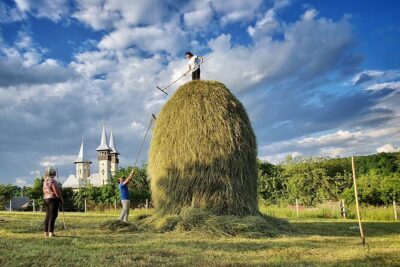
A Journey Back in Time: Countryside from Transylvania and Maramures – 15 Days
Read our review →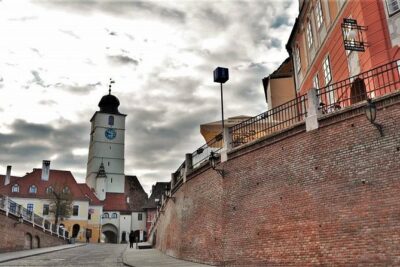
Your rendez-vous with Europe’s past: time-travel to Maramures, Transylvania
Read our review →
Browse the lists this tour appears in