
Reviewed · WALKING TOURS
Cluj : Must-See Attractions Walking Tour
Cluj’s old center is compact enough to explore on foot, yet layered enough to reward a good guide. This two-hour private walk links grand squares, medieval churches, royal monuments, and the university that helps shape the city today. It is a useful first look at Cluj rather than a museum-heavy tour.
I like the customizable route, which lets you ask about the buildings or parts of city life that interest you most. I also like the chance to speak with a local about Cluj today, not only its past. The main drawback is that the tour can feel brief if you want detailed explanations at every stop. One 2025 booking received three stars because the guide gave short answers and needed prompting.
Key points
- Piața Unirii starting point: Begin beside St. Michael’s Church, Banffy Palace, and the National Museum of Art.
- Five central stops: The route includes Piața Mihai Viteazu, Piața Avram Iancu, St. Michael’s Church, Babeș-Bolyai University, and the Franciscan Church.
- Private and adjustable: You can shape the discussion around your interests, with no other group members on the private option.
- A local view of Cluj: Ask about present-day life in Romania as well as the city’s older chapters.
- Short, central format: The two-hour length works well for a first orientation, especially early in a Cluj visit.
- Cosmin is specifically praised: One booking singled out this English-speaking guide for a strong, tailored tour.
Starting beside Cluj’s grandest square
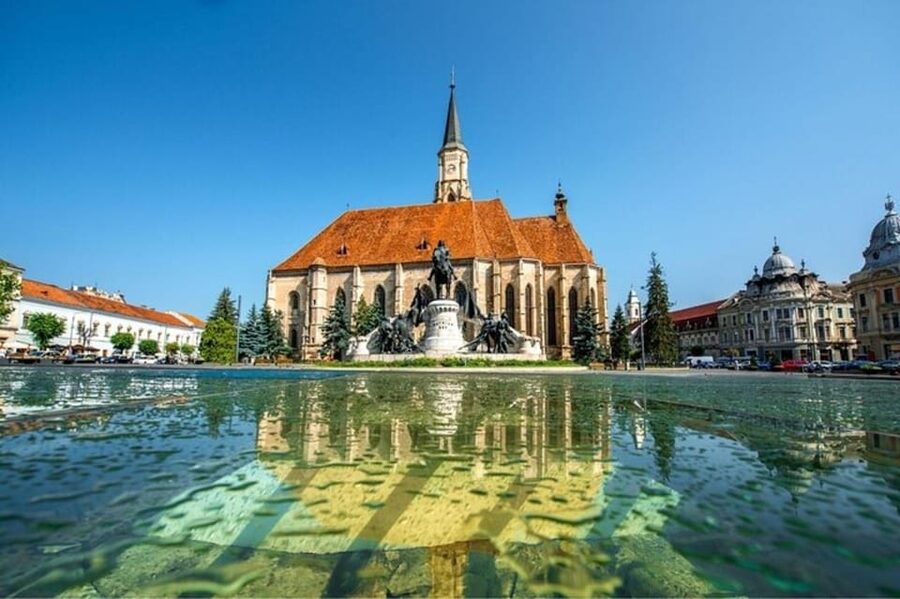
Your meeting point is Piața Unirii, Cluj-Napoca’s main central square. It is a practical place to begin because several major sights sit close together, including St. Michael’s Church, Banffy Palace, and the National Museum of Art.
The square also gives you immediate context. It has hosted cultural events, public gatherings, and celebrations, and its cafés make it an easy place to return to after the walk. I would arrive a few minutes early so you can look around before the guide starts.
This is not a tour that begins in an out-of-the-way corner and spends half its time getting to the center. You start where much of Cluj’s historic core comes together. That matters when you have only two hours.
The supplied route lists Piața Unirii as the starting point, then includes Piața Mihai Viteazu, Piața Avram Iancu, St. Michael’s Church, Babeș-Bolyai University, and the Franciscan Church. The longer description presents the churches and central squares in a different order, so the exact sequence may change. That is worth confirming if one particular sight matters most to you.
More Walking Tours in Cluj-Napoca
- Cluj-Napoca: 2.5-Hour Guided Walking Tour
★ 4.8 · 104 reviews - Cluj-Napoca: 2.5-Hour Guided Walking Tour
★ 4.5 · 29 reviews - Cluj-Napoca Walking City Tour
★ 4.5 · 16 reviews
Piața Mihai Viteazu and a first look beyond the old core
Piața Mihai Viteazu is planned as a 24-minute stop for photographs, sightseeing, walking, and a guided explanation. It adds a broader civic square to the walk, balancing the tighter streets and church façades found elsewhere in the center.
This is a good place to ask your guide how the different parts of central Cluj fit together. The tour is designed to help you get your bearings, and a square of this scale can make the city feel less like a collection of separate monuments.
Do not expect an extended architectural study here. The full experience lasts only two hours, and several stops share the available time. If you want to know why a particular building matters, ask directly rather than waiting for every detail to arrive without prompting.
That advice comes from the uneven level of detail reported in the supplied feedback. One person found the tour informative and entertaining, while another said explanations were often brief. Your questions can make a real difference, especially at buildings that catch your eye.
Piața Avram Iancu and Cluj’s turn-of-the-century face
Piața Avram Iancu brings another side of the city into view. Its architectural character dates largely from the turn of the twentieth century, and monuments around the square help explain Cluj’s cultural development.
The stop is also planned for about 24 minutes. That gives you time for photographs and a guided look, but not necessarily a detailed tour of every façade. I would use this part of the walk to ask about the square’s monuments and the way the city changed as it grew.
The value here is comparison. Piața Unirii gives you a ceremonial historic center, while Piața Avram Iancu offers a different civic setting. Seeing both helps you read Cluj as a living city with several architectural periods rather than a single preserved old quarter.
If your interest is mainly churches, you may find this stop less compelling than St. Michael’s or the Franciscan Church. If you like city planning, public spaces, and architecture, it should be one of the more useful parts of the route.
St. Michael’s Church and King Matthias Corvinus
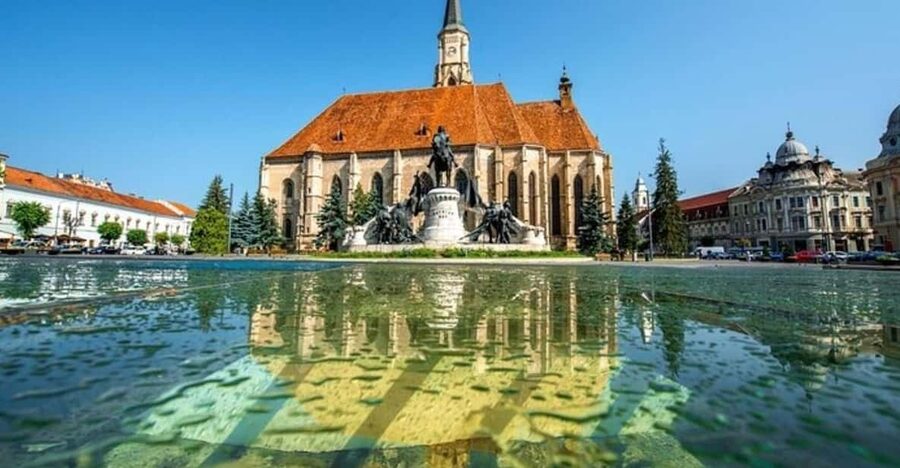
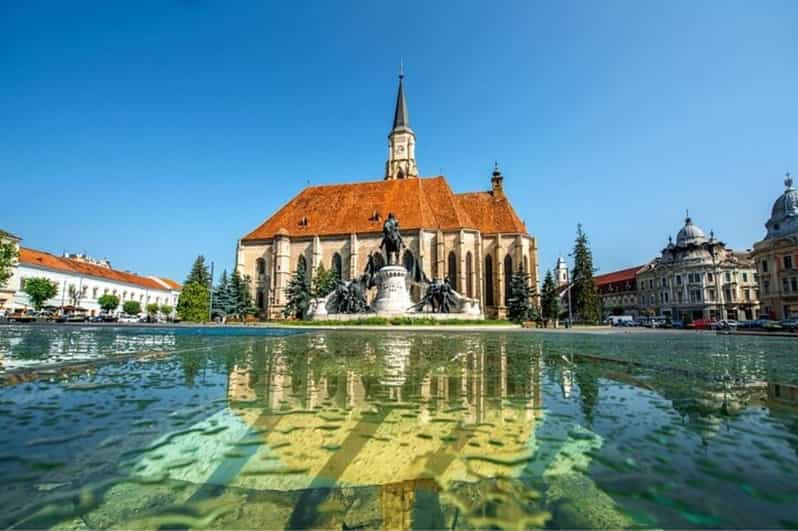
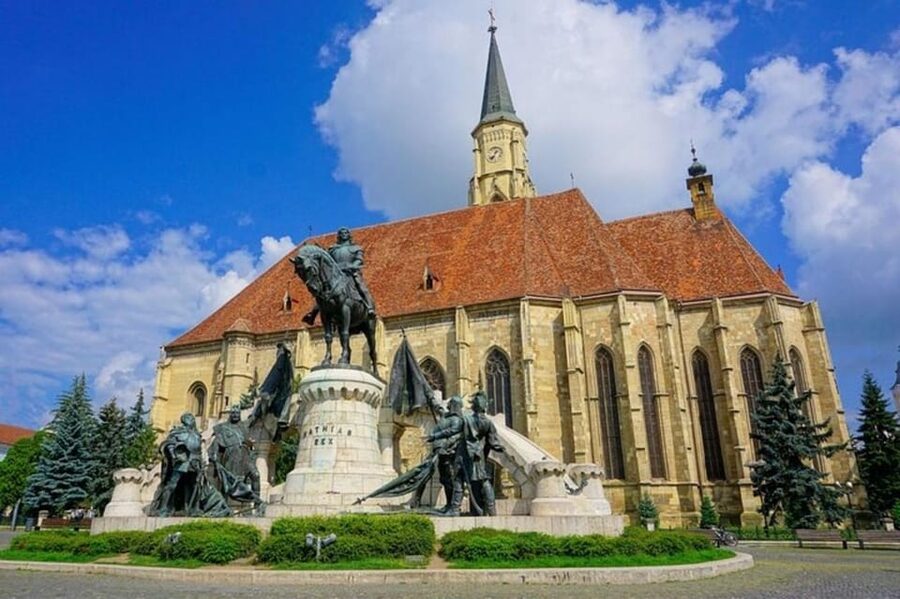
St. Michael’s Church is one of the central sights on this walk. Its façade has changed over time, and the church is closely associated with the statue of King Matthias Corvinus, which gives the surrounding square a strong royal and civic focus.
The tour allows roughly 24 minutes here for a visit, photographs, walking, and explanation. That is enough for an introduction and a look at the main exterior features. It may feel short if you want a full account of the church’s construction, later changes, and artistic details.
This is a place where your guide’s local perspective can add value. Rather than simply taking a picture and moving on, ask why the church matters to Cluj and how the statue fits into the city’s story. The supplied description presents the church as a medieval landmark, so the stop carries more weight than a quick photo break.
Because the church sits in the center of Piața Unirii, it also helps tie together the first part of the walk. If you are deciding what to revisit after the tour, this is likely to be one of the easiest places to return to on your own.
More walking tours in Cluj Napoca:
- Cluj : Private Walking Tour with A Guide ( Private Tour )
★ 5.0 · 7 reviews - From Cluj: Winter Walking Trip on the Great Mountain
★ 5.0 · 5 reviews - Cluj-Napoca Walking City Tour
★ 5.0 · 5 reviews - Cluj: Private City Walking Tour
★ 4.4 · 4 reviews
Babeș-Bolyai University and Cluj’s intellectual life
The stop at Universitatea Babeș-Bolyai din Cluj-Napoca shifts the focus from royal and religious landmarks to education. The university is described as an important force in Cluj’s cultural identity, so this part of the walk helps explain how the city functions today.
You can expect a guided visit or exterior sightseeing period of about 24 minutes. The information provided does not promise access to specific interiors, lectures, collections, or student facilities. Treat this as a city-history stop, not a university campus tour.
I like the balance it brings to the route. A walk made only of old churches and monuments can leave you with a frozen image of a city. The university reminds you that Cluj is also shaped by students, education, and public life in the present.
This is another good moment to ask about everyday life in Romania. Peter from the United Kingdom particularly valued conversations about life in Cluj and Romania, both in the past and now. That suggests the best use of this stop may be a two-way conversation rather than a memorized speech.
The Franciscan Church, a medieval final note
The Franciscan Church is described as a medieval church dating back to the thirteenth century. Its age gives the walk a strong historical finish, although the exact order may vary because the supplied route and description place it differently.
The planned stop lasts about 24 minutes and includes photographs, a visit, sightseeing, and guided commentary. The church is a good place to ask about the religious communities that shaped the old center and how the building fits into Cluj’s earlier centuries.
You should keep your expectations measured. The tour does not state that admission to every interior is included, and the guide can help arrange tickets for desired visits rather than promising that all entries are part of the basic price. If seeing the inside is essential, ask in advance what can be visited during your time.
For me, the Franciscan Church is most useful as part of the larger sequence. You move between public squares, royal symbols, education, and religious architecture. That range gives the tour more substance than a simple list of photo stops.
What the two-hour format really gives you
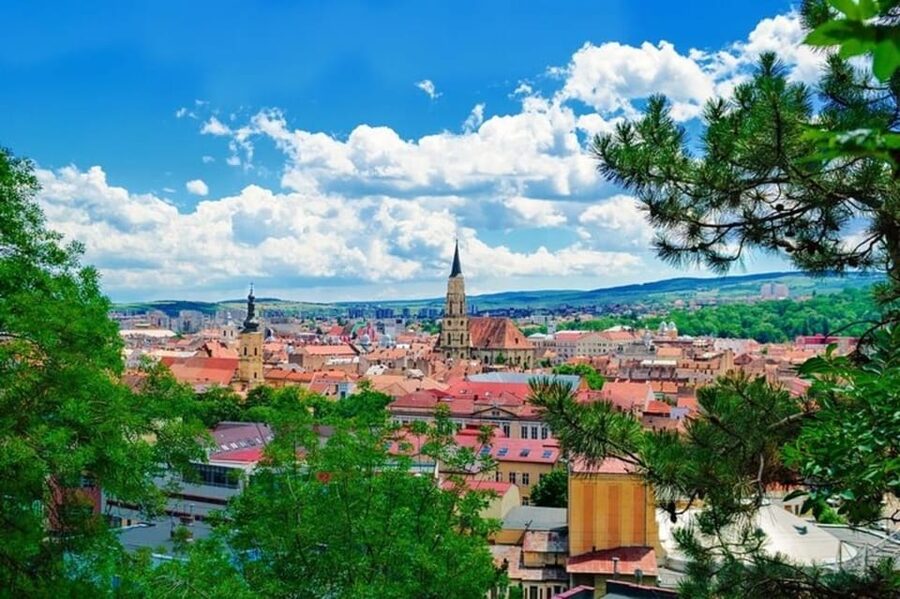
The tour costs $29 per person and lasts two hours. For a private walk with an English-speaking guide, that can be fair value if you want orientation, personal attention, and advice for the rest of your stay.
The price makes more sense for people who will use the guide actively. Ask about the sights you are seeing, request suggestions for later, and explain what you care about before the walk begins. The private format means the discussion can be adjusted, and that is where much of the value lies.
If you prefer long historical talks at each monument, two hours will feel tight. Five main stops, plus walking and photographs, leave only a limited amount of time at each place. One person praised the tailored nature of the experience, while another found the explanations too brief. Both reactions are plausible within this format.
The tour includes walking and public transport unless you select an option that changes that arrangement. Food and drinks are not included, so plan to buy anything you need separately. The guide can also help with booking tickets for visits you want, which is useful if you decide that a particular interior deserves more time.
Private does not always mean highly detailed
The experience is described as private and exclusive, with no one else in your group, and it is also described as a small-group walking tour. The clearest practical reading is that private groups are available, but you should check the exact option you book if group size matters.
A private setting gives you room to ask basic questions without holding up a larger party. It also lets you steer the walk toward architecture, religion, daily life, or modern Cluj. That flexibility is especially useful for repeat visitors who do not need a standard introduction.
Still, private does not guarantee a long lecture at every stop. The feedback is mixed on how forthcoming the explanations are. I would begin by saying what level of detail you want, then ask follow-up questions when a monument interests you.
Guide Cosmin received a direct five-star mention for being a very good guide. Another five-star booking praised a young guide and the conversation about Cluj and Romania across past and present. The specific guide assigned to you may differ, so treat Cosmin’s praise as useful information about one guide rather than a promise about every departure.
Who will get the most from this Cluj walk
I would recommend this tour to a first-time visitor who wants a fast introduction before exploring independently. The route stays in central Cluj and touches several types of places, so you can decide what deserves a longer visit later.
It also suits you if you want local conversation, not just dates and architectural labels. The guide is there to offer advice about other things to do in the city, and the customizable format gives you a chance to make the walk more personal.
Families and older visitors may appreciate the two-hour length and central setting. The activity is listed as wheelchair accessible, although the available information does not describe the surface conditions or any specific access arrangements at each monument. If those details are important, ask the provider before booking.
This is less suitable if you want a specialist church tour, a long indoor visit, or a tightly scripted history lecture. The pace is comfortable, but the time is spread over several sights. You may leave with a good map in your head rather than a fully detailed account of every building.
Timing, flexibility, and a smart way to prepare
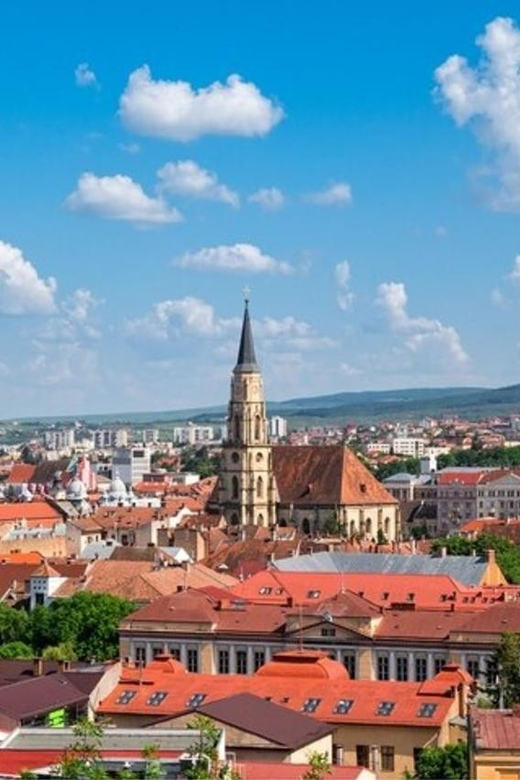
Starting early in your stay is the most sensible use of this walk. The guide can give advice about other things to do, and you can use the route to identify places worth revisiting. The tour has several available starting times, but you need to check availability for the date you want.
Before meeting the guide, choose two or three subjects you care about. You might ask for more detail on St. Michael’s Church, the statue of King Matthias Corvinus, the Franciscan Church, the university, or present-day life in Cluj.
You can also ask for help with desired visits. Ticket booking assistance is included, but entry itself is not described as included. This small distinction matters if you are planning your day around an interior visit.
The booking terms are flexible: you can cancel up to 24 hours ahead for a full refund, and you can reserve now and pay later. Those policies are useful if your Romania itinerary is still changing.
Should you book this Cluj walking tour?
Book it if you want a short private orientation with central sights, an English-speaking guide, and room to shape the conversation. At $29, the experience offers fair value when personal advice and local context matter more to you than exhaustive monument-by-monument detail.
I would be especially comfortable booking it early in a Cluj visit, then using the guide’s suggestions to plan the rest of the city. Tell the guide that you want detailed explanations, and ask questions at every stop.
Skip it if you already know central Cluj well or want a specialist-level historical tour. The mixed feedback about brief explanations is a real consideration. For most first-time visitors, though, the combination of Piața Unirii, St. Michael’s Church, Piața Avram Iancu, Babeș-Bolyai University, Piața Mihai Viteazu, and the Franciscan Church makes this a sensible introduction.
FAQ
Where does the tour begin?
The meeting point is Piața Unirii in central Cluj-Napoca.
How long does the walking tour last?
The tour lasts two hours.
What language does the guide speak?
The live guide speaks English.
Is the tour private?
A private and exclusive option is available, with no one else in your group. The activity information also mentions a small-group walking tour, so check the exact booking option if group size is important.
Which places are included?
The route includes Piața Mihai Viteazu, Piața Avram Iancu, St. Michael’s Church, Babeș-Bolyai University, and the Franciscan Church. Piața Unirii is the starting point.
Can the tour be customized?
Yes. The tour can be adjusted to your interests, and the guide can offer advice about other things to do in Cluj.
Is public transport included?
Walking and public transport are included unless you select an option that states otherwise.
Are food and drinks included?
No. Food and drinks are not included.
Can the guide help arrange tickets?
Yes. The tour includes help from the team with booking tickets for visits you want.
Is the tour wheelchair accessible?
The activity is listed as wheelchair accessible. The provided details do not explain access conditions at each individual stop.
What is the cancellation policy?
You can cancel up to 24 hours in advance for a full refund. Reserve now and pay later is also available.
How much does the tour cost?
The listed price is $29 per person.
Newest Cluj Napoca trips on the site
- Private tour to Turda Salt Mine, Rimetea and Alba Iulia★ 4.8 · 5 reviews
- Turda salt mine and Corvin Castle day tour from Cluj★ 5.0 · 9 reviews
- Turda Salt Mine, Gorge & Rimetea Village (private from Cluj)★ 5.0 · 5 reviews
- 1250cc Motorcycle Rental from Turda★ 5.0 · 4 reviews
- Day Trip to Turda Salt Mine and Corvin Castle from Timisoara★ 5.0 · 10 reviews
- CLUJ ADVENTURE TOUR ! ZIP LINE and HIKE★ 5.0 · 15 reviews
- Discover Apuseni Mountains – Scarita Summit,Sipote Waterfall and Dumesti Village★ 5.0 · 17 reviews
- Turda salt mine, Rimetea village and Alba Iulia, from Cluj★ 5.0 · 11 reviews
Walking Tours, compared.
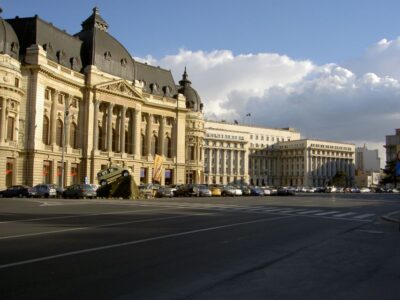
Ghost Stories & Romanian Mythology Walking Tour
Read our review →
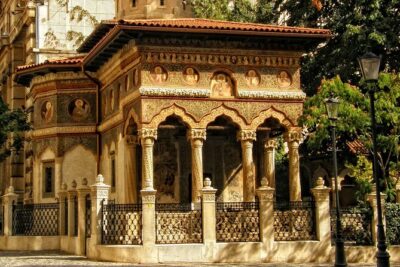
Walking Tour- Delightful Bucharest (Highlights, Stories, Sights)
Read our review →
Browse the lists this tour appears in