Reviewed · BUCHAREST TOURS
Eastern Orthodox Church Art in Bucharest
Bucharest’s Old Town holds a surprising number of small Orthodox churches, many easy to miss behind busy streets and modern shops. This 2.5-hour walking tour links them into a clear story, from Wallachian medieval worship to 19th-century church design, with Byzantine art and painted frescoes at the center.
I like the route’s small-group size, capped at 10 people, and the guide’s ability to adjust the pace. I also like that these are active churches, not staged museum rooms. You may see a baptism or ordinary worship, which gives the art a living setting. The main consideration is that church etiquette is strict, and one part of the advertised final stop needs confirming because the route description names Saint Demetrios while the included list names Saint Cyprian.
Key points to know before you book
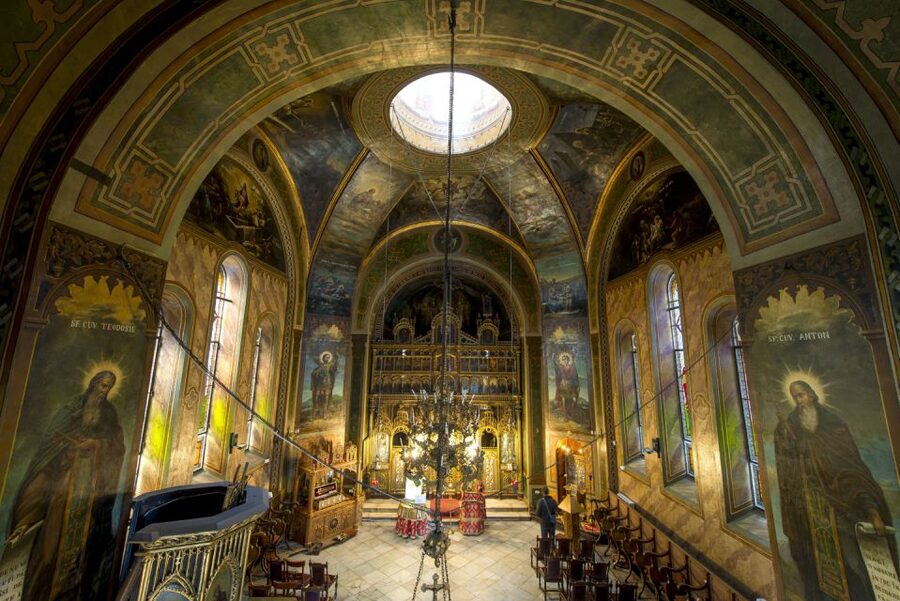
- Six central Orthodox churches are included, beginning near the Old Princely Court and ending in the Old Town area.
- Helen is the guide’s listed name, while one Spanish-language booking refers to Elena, so confirm the guide’s name when booking.
- Active places of worship require modest clothing, quiet behavior, and respectful attention.
- Saint Elias and the Lady’s Church are less obvious stops that can be hard to locate without local help.
- A small group of up to 10 allows questions and some flexibility for walking needs.
- The $57 price is reasonable if you want detailed religious and art context rather than a quick look at church exteriors.
Why Bucharest’s small churches deserve a closer look
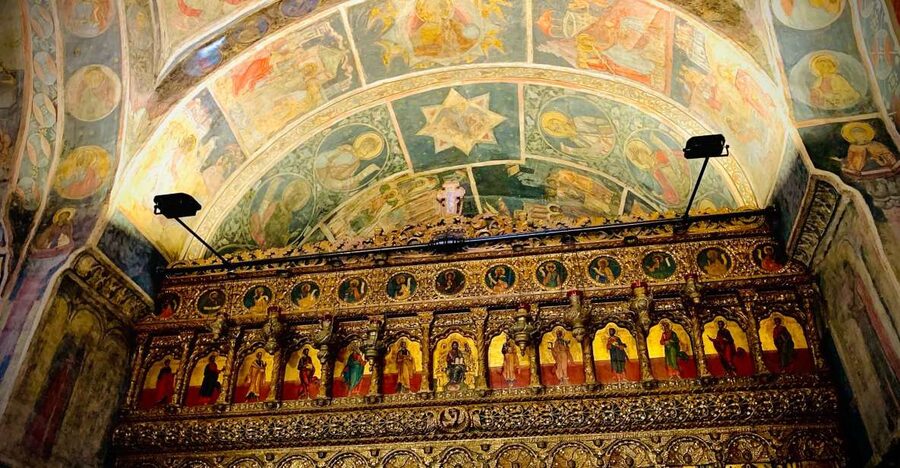
Many first-time visitors treat Bucharest’s Old Town as a place for restaurants, bars, and grand 19th-century buildings. This tour points you toward a quieter layer of the city. Behind the commercial streets are Orthodox churches with painted interiors, old foundations, carved details, and links to Wallachian rulers and urban life.
I like this approach because it does not reduce Romanian church art to a single style. You see Byzantine influence, local Orthodox traditions, older frescoes, and later eclectic and neo-Baroque work. The changes are easier to understand when you see several churches close together.
The tour is also useful if you are not an art specialist. A good guide can explain what you are looking at, why the icon placement matters, and how the churches function during worship. Helen is praised for her clear command of Romanian Orthodox art and the Orthodox Church. Spanish-language feedback identifies the guide as Elena and describes an engaging explanation of Byzantine art, so confirm the name and language when you reserve.
A few more Bucharest trips worth a look
- Bucharest: Palace of Parliament Tickets and Guide
★ 4.3 · 3,182 reviews - Bucharest: Palace of Parliament Tickets and Guided Tour
★ 4.4 · 1,877 reviews - Bucharest: Parliament Palace Skip-the-line Ticket
★ 4.2 · 1,518 reviews
Starting near the Old Princely Court at Saint Anton
The meeting point is in front of the Anton icon shop, near the Old Princely Court. This is a practical starting place because the area connects Bucharest’s medieval center with today’s Old Town.
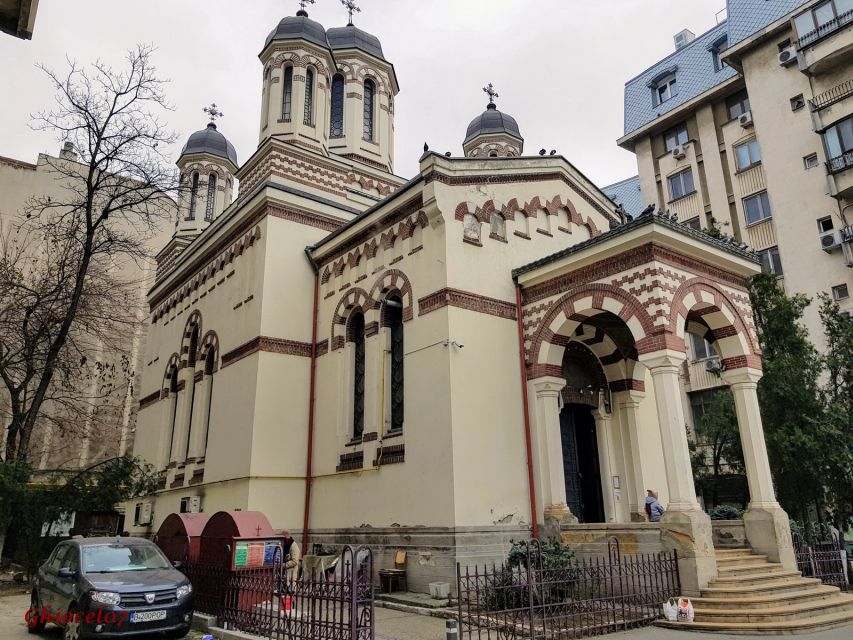
Saint Anton Church is the opening stop. Its setting near the former princely court helps place the tour in the Wallachian Middle Ages. You are not simply looking at a painted church in isolation. You are beginning near the political center of old Bucharest, where religious buildings and princely power were closely connected.
Expect the guide to introduce the church’s Orthodox character and the broader role of painted worship spaces. Since Saint Anton is an active church, the visit depends on what is happening inside. A service or private ceremony may affect how long you can look around. That is not a flaw, but it means you should approach the stop as a place of worship first and a sightseeing site second.
The meeting point is easy to describe, but you still need to allow a little time to find the icon shop. Comfortable shoes are essential because the tour is on foot and includes several stops.
Saint George and the painted work on Lipscani Street
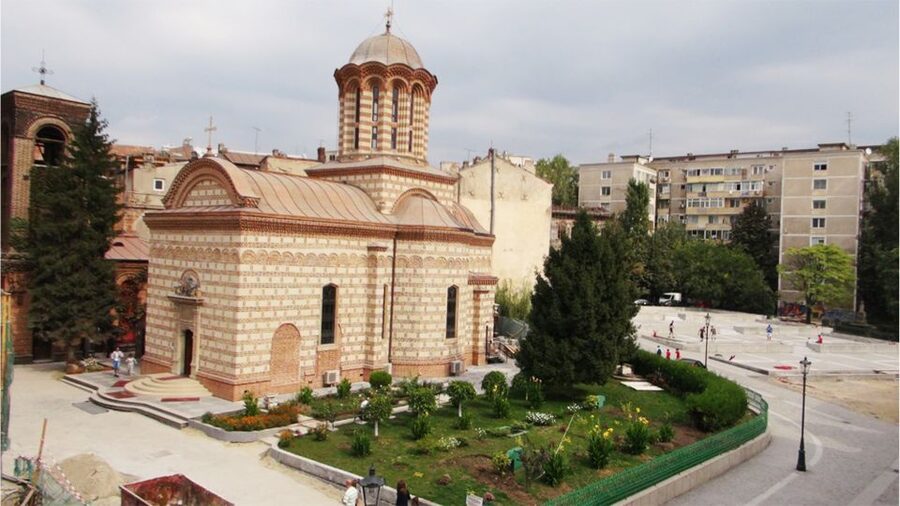
The route continues along Lipscani Street to Saint George Km0 Church. This section shifts from the medieval court area into the more familiar Old Town streets.
The church is especially important for its fresco by one of Romania’s major church painters. That detail gives the stop a clear focus. Instead of trying to absorb every decoration at once, you can pay attention to the painting style, the religious subjects, and the way the artwork works with the church interior.
This is also a good point to ask questions. If you want to understand the difference between an icon and a fresco, or how Orthodox church art guides attention during prayer, this is the kind of stop where the guide’s explanation adds real value. The tour is designed around that kind of context rather than a fast checklist of buildings.
Lipscani can be lively, and the route uses central streets rather than secluded paths. You should expect city noise and foot traffic between churches. The reward is convenience: the tour packs several major religious sites into a compact part of Bucharest.
Saint Elias and the Lady’s Church, two harder-to-find stops
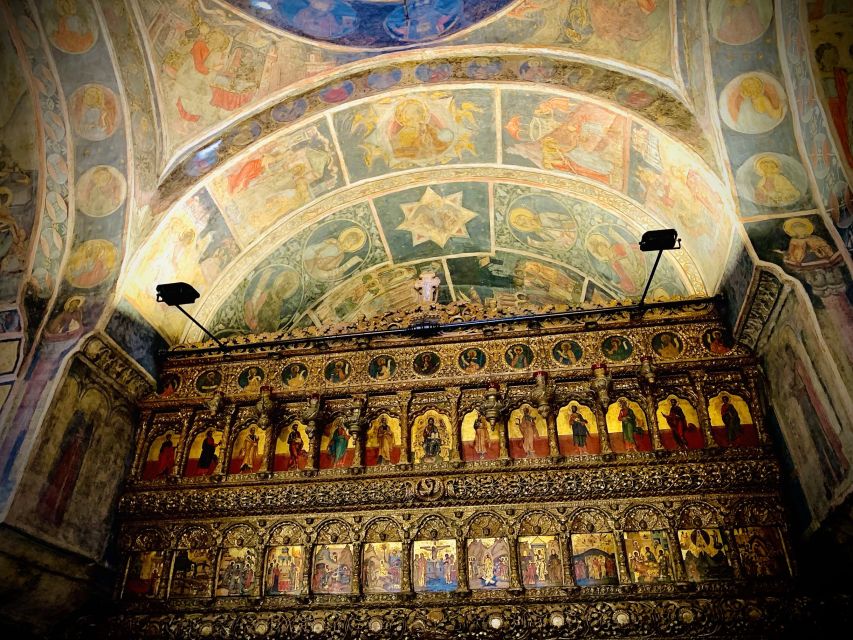
The next pair gives the walk much of its local character. Saint Elias is described as one of only two Orthodox basilicas in Bucharest. That makes it different from the smaller churches on the route and gives you a chance to compare scale and form.
The Lady’s Church is valued for its preserved original frescoes, among the oldest still found in Bucharest. Age alone does not tell you how a church feels, but older surviving paint can show how decoration, worship, and local building traditions have changed over time.
These are also the stops where a guide is most useful. Saint Elias and the Lady’s Church can be hard to locate even for locals. You do not have to spend your limited Old Town time searching down side streets or wondering if you have arrived at the right door.
I would pay close attention here, since these churches may be less obvious from the outside than the better-known monastery. The interiors are the point, and conditions can vary depending on services and access. Keep your voice low, follow the guide’s instructions, and do not assume that every area is open for close inspection.
A different sort of day out, same corner of Romania:
- Bucharest: City Highlights Guided Walking Tour
★ 4.9 · 1,482 reviews - Taste Bucharest: A Food Lover’s Tour of Markets & Neighbourhoods
★ 5.0 · 689 reviews - The Real tour of Communism
★ 5.0 · 666 reviews - Bucharest: Therme Bucharest Entry Ticket and Transfer
★ 4.6 · 608 reviews
Stavropoleos Monastery and its ornate change of style
Stavropoleos Monastery is the route’s most recognizable stop. Its appeal comes from its ornate character and its mix of religious function with elaborate architectural detail.
The tour calls it eclectic, which is useful shorthand. After the older and more restrained churches, Stavropoleos gives you a different visual experience. Look for the contrast between the building’s decoration and the smaller, more intimate churches visited earlier.
This stop can be busy because it is well known and sits close to restaurants and bars. A guide helps you focus on details instead of simply taking a few photographs and moving on. The monastery also makes a good comparison point for the rest of the walk: after seeing several Orthodox interiors, you can better understand what makes its style distinctive.
Remember that it remains an active monastery. Modest clothing and calm behavior are not optional extras here. The tour specifically asks you to avoid short skirts, sleeveless shirts, tight clothing, ripped clothing, and strong fragrances. These rules may feel more formal than those at a sightseeing attraction, but they reflect the purpose of the site.
The final stop needs one practical check
The route description names Saint Demetrios as the final stop, calling it a 19th-century neo-Baroque church. The included attractions list Saint Cyprian instead. That is a genuine detail to clarify before booking.
If Saint Demetrios is the intended final church, you will finish with a later architectural style and a clear contrast to the Wallachian and Byzantine material earlier in the walk. If Saint Cyprian is the actual included stop, the experience may differ from the written route. Ask Bucharest Break to confirm the final church and whether the itinerary has changed.
This does not necessarily undermine the tour, but it matters if you are choosing it for a particular building. A quick confirmation also prevents confusion on the day, especially since the experience is only 2.5 hours long.
What the guide adds to the art
The strongest part of this experience is the interpretation. Church interiors can look beautiful but confusing if you do not know what to notice. The guide connects the paintings and buildings to Romanian religious practice, Byzantine art, and Orthodox history.
Helen is described as flexible, personable, and able to tailor the tour to the people in the group. One booking became a private experience because the participant was the only person attending, and the guide also made time for an icon shop visit. That kind of flexibility cannot be guaranteed, but the small-group format gives it a better chance than a large coach tour.
The tour has also worked well for people with limited mobility. A participant using crutches and another with a walking stick received adjustments to the excursion, and the guide helped with the return to the hotel. You should still discuss your needs before booking rather than assume every church entrance or street surface will be easy.
There is one important caution. One participant felt the guide spoke condescendingly after learning they were Catholic. That complaint is at odds with the otherwise strong praise for the guide’s religious knowledge and manner, but it is worth noting. You can expect a tour centered on Orthodox belief and practice, so visitors from other Christian traditions may want to ask for a respectful, comparative approach before joining.
Is $57 good value for 2.5 hours?
At $57 per person, this is not the cheapest way to walk around Bucharest’s Old Town. You are paying for a specialist-led experience, not transport, food, or admission to a major ticketed monument.
I think the price makes sense if you want the churches explained in detail. Six stops in 2.5 hours would be hard to research and organize efficiently on your own, especially with Saint Elias and the Lady’s Church being difficult to find. The guide’s language skills, art background, and ability to answer questions are the main value.
The price is less compelling if you only want exterior views or prefer to explore at your own speed. You also need to accept that active churches may limit access during worship. No food or drinks are included, but the tour can stop at a cafe, bar, or restaurant if the group wants one.
The small group, with no more than 10 participants, helps the value. You should be able to hear the guide and ask questions without competing with a large crowd. In a very small group, the pace may also be adjusted more easily.
Clothing, walking, and respectful conduct
Dress for a place of worship, not a hot afternoon in the Old Town. Short skirts, sleeveless shirts, tight clothing, ripped clothing, and strong fragrances are not allowed. Modest clothing will make entry simpler and show respect to people who are there to pray.
Wear comfortable shoes. The tour takes place on foot and links several churches through central Bucharest streets. The exact condition of each entrance is not specified, so anyone with mobility concerns should speak with the provider ahead of time.
Do not treat the interiors like photo sets. These churches are active, and a baptism, service, or family gathering may be taking place. One participant was invited to share sweets and drinks with a family during a baptism, an unusually personal moment that also shows why respectful behavior matters.
The tour is offered in English, Spanish, or Romanian. If language matters to you, select the right option when booking and confirm it if needed.
Who will enjoy this church-art walk?
I would choose this tour if you have already seen the main Old Town streets and want to understand what lies behind them. It suits people interested in Byzantine art, Orthodox worship, Romanian history, and architecture that ranges from medieval to neo-Baroque.
It is also a good choice for visitors who prefer small groups and conversation. The guide can explain details that are easy to miss when you wander alone, and the compact route avoids the need for taxis between the churches.
You may not enjoy it if you want a relaxed cafe walk with only occasional sightseeing. The subject is focused, religious, and art-centered. The active churches also require more restraint than a standard museum visit.
The tour is not limited to Orthodox visitors. You can appreciate the art and history from another Christian tradition or from a secular point of view. Still, because one participant reported an uncomfortable exchange about being Catholic, I would confirm that the guide will keep the discussion welcoming and respectful.
Final recommendation: book it with two checks
I would book this tour if Orthodox art is a real interest, especially if you want smaller churches that are difficult to locate alone. The guide’s strong art background, the flexible small-group format, and the chance to see active religious life give it more substance than a simple Old Town walk.
Before paying, confirm the guide’s name and language, and ask whether the final stop is Saint Demetrios or Saint Cyprian. Wear modest clothing, bring comfortable shoes, and arrive ready to treat each church as a working place of worship. With those details settled, the $57 price is fair for a focused, local look at Bucharest’s religious art.
FAQ
Where does the tour meet?
The meeting point is in front of the Anton icon shop, near the Old Princely Court.
How long does the tour last?
The tour lasts 2.5 hours.
How much does the tour cost?
The listed price is $57 per person.
Which languages are available?
The tour is offered in English, Spanish, and Romanian.
How large is the group?
The group is limited to 10 participants.
Which churches are included?
The included list names Saint Anton Church, Saint George Km0 Church, Saint Elijah, the Lady’s Church, Stavropoleos Monastery, and Saint Cyprian Church.
Is food included?
No food or drinks are included. The group can stop at a cafe, bar, or restaurant.
What should I wear?
Wear modest clothing. Short skirts, sleeveless shirts, tight clothing, ripped clothing, and strong fragrances are not allowed.
Can I cancel the booking?
You can cancel up to 24 hours in advance for a full refund. Reserve now and pay later is also available.
Newest Bucharest trips on the site
- Winery touring & private wine tasting – one day private tour★ 5.0 · 3 reviews
- Bucharest: Dealu Mare Winery Private Trip with Wine Tasting★ 4.9 · 6 reviews
- Village Museum Bucharest Guided Tour★ 5.0 · 6 reviews
- Private Transfer from Giurgiu Port to Bucharest★ 4.5 · 12 reviews
- Airport Henri Coanda (Otopeni) to Bucharest – Private Transfer – Driver★ 5.0 · 5 reviews
- Salt Mine Tour from Bucharest with Entrance Ticket★ 4.5 · 19 reviews
- Wine tasting in Bucharest Old town – bonus cheese platter★ 4.5 · 6 reviews
- Private Wine Tasting at Bucharest’s First Wine Bar★ 5.0 · 3 reviews
Bucharest Tours, compared.

Taste Bucharest: A Food Lover’s Tour of Markets & Neighbourhoods
Read our review →