Reviewed · PRIVATE
Private – Romanian Vintage Car Driving Tour of Bucharest 120 min
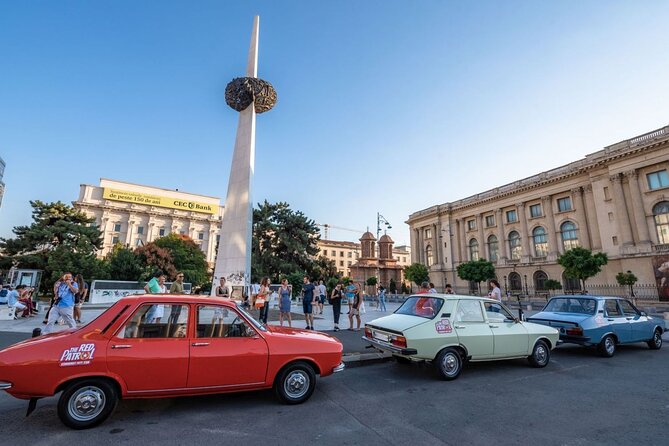
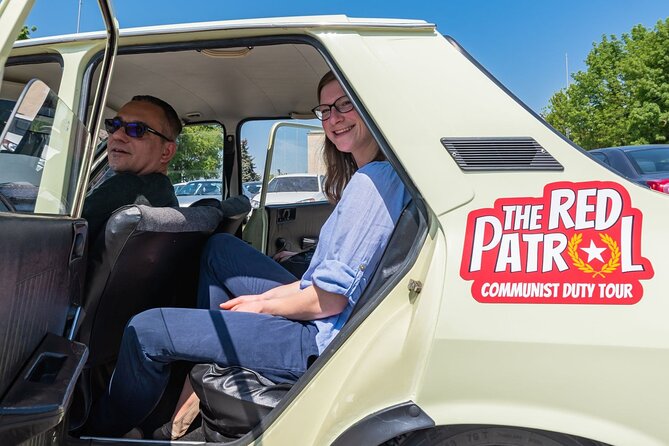
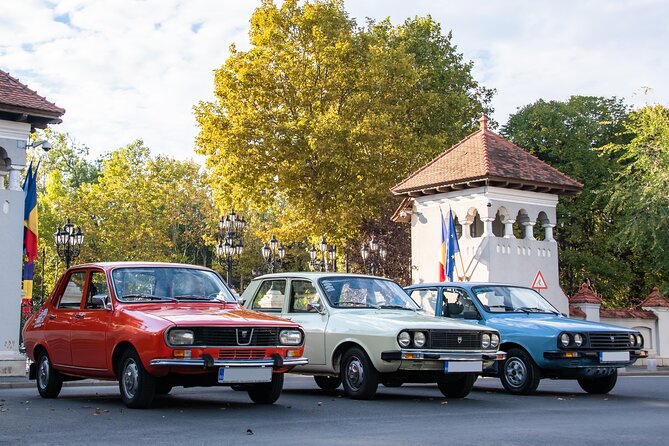
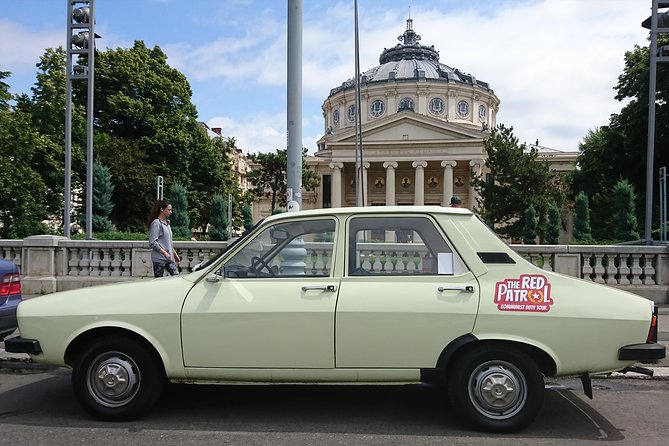
The most unusual thing about this Bucharest tour is the car. You ride in a restored Dacia 1300 or 1310, the boxy Romanian sedan that filled streets during the communist era. The vehicle is not just transport. It gives the city’s recent past a physical, slightly nostalgic feel.
I like the way the tour joins social history with major sights, and I like the chance to drive the Dacia yourself if you have the right license. The main limitation is time: two hours gives you a lively overview, not a full visit inside Bucharest’s landmarks.
I also like the small-group setup. Each car holds up to three people, and larger parties travel in a convoy. Keep in mind that these are genuine old cars, so there is no air-conditioning, ABS, GPS navigation, power steering, or automatic gearbox.
Key points to know before you book
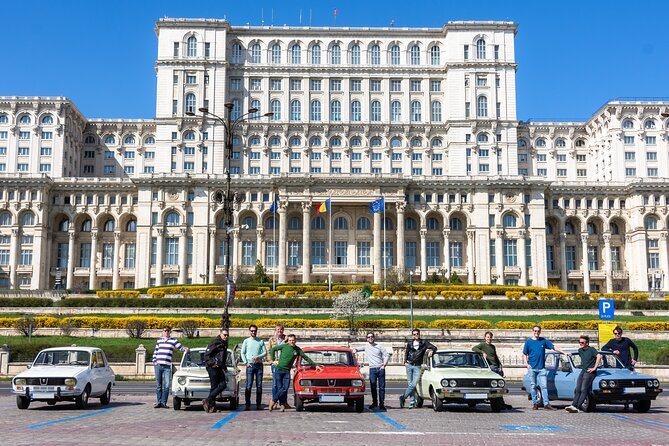
- You ride in a restored Romanian classic: The Dacia 1300 or 1310 dates from the 1970s and 1980s, tying the car directly to the period discussed on the tour.
- You get history beyond dates and buildings: The guide focuses on daily life and social conditions in communist Romania, not only royal and political landmarks.
- You may drive the Dacia: Bring a valid EU or international driving license if you want to take the wheel.
- The group size stays personal: Three people fit in one car. Larger parties split into two or three cars that travel together.
- The route covers key Bucharest sights: Stops include Revolution Square, Cotroceni, Constitution Square by the Palace of Parliament, and the Triumph Arch.
- Winter is manageable: The cars are heated in cold weather, but they do not have air-conditioning for hot days.
Why a Dacia changes the Bucharest sightseeing experience
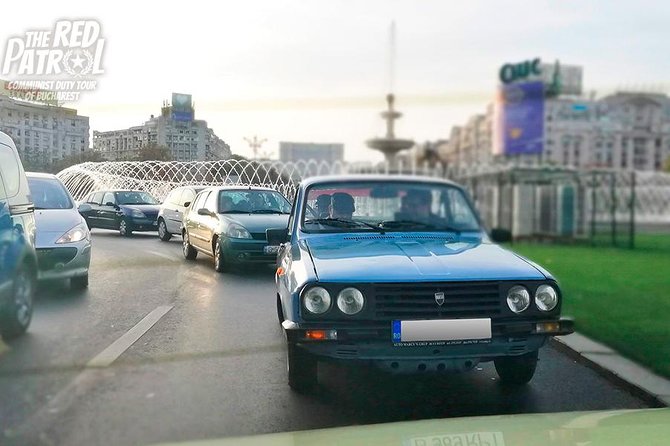
Bucharest can be hard to read at first. Royal buildings, grand communist projects, leafy residential quarters, and ordinary apartment blocks sit close together. A standard city tour can point out the architecture. This one adds the car that many Romanians knew as part of everyday life.
The Dacia 1300 and 1310 were common cars in 1970s and 1980s Romania. Sitting inside one while hearing about that period helps connect political events with ordinary routines. You are not only looking at a former regime’s buildings. You are considering how people moved through the city, what they drove, and how life felt under the communist system.
That social angle is the heart of the experience. The guide, often Serban, brings personal stories and explanations about Romania’s communist years into the drive. The result is less like a string of sightseeing stops and more like a moving conversation about Bucharest and its recent past.
The cars are fully restored and meet current traffic safety rules. Still, restoration does not turn a 1970s sedan into a modern vehicle. You should expect a manual gearbox and a more basic driving experience. That is part of the fun for some people, but it can feel less comfortable if you prefer modern controls and climate systems.
A few more Bucharest trips worth a look
- Bucharest: Palace of Parliament Tickets and Guide
★ 4.3 · 3,182 reviews - Bucharest: Palace of Parliament Tickets and Guided Tour
★ 4.4 · 1,877 reviews - Bucharest: Parliament Palace Skip-the-line Ticket
★ 4.2 · 1,518 reviews
Revolution Square sets the historical tone
The tour begins at Revolution Square, Piața Revoluției, where you meet the guide and see the car before setting off. Allow about 20 minutes here. It is a useful opening because the square gives the guide a place to explain Bucharest’s political past before you start moving through the city.
The meeting includes a presentation of the vehicle. Pay attention to this introduction. The Dacia is the tour’s main object, and understanding its place in Romanian life makes the later stories easier to follow.
Revolution Square is also a natural starting point for a discussion of modern Romania. The tour’s emphasis is on the 1970s and 1980s, so this first stop helps frame the city you are about to see. You may already have heard the broad political story elsewhere. Here, the focus shifts toward how that era affected people and neighborhoods.
There is no admission fee for the stop. You should not expect a long museum visit or an interior tour of a building here. The value comes from the guide’s explanation, the meeting with the car, and the way the square launches the rest of the route.
Cotroceni shows another side of Bucharest
The next stop is listed as Fântână, in the Cotroceni Quarter, for about 10 minutes. Cotroceni grew around the Royal palace, giving it a different character from the monumental central areas connected with communist power.
This short stop matters because it broadens your view of Bucharest. The city is not only Revolution Square and the Palace of Parliament. Cotroceni helps show how royal influence shaped a neighborhood and how different parts of Bucharest developed around major institutions.
Ten minutes is enough for an explanation and a quick look, but not for a full neighborhood walk. If you want to explore Cotroceni in detail, you will need to return independently. Treat this part as a guided glimpse rather than a complete visit.
The car itself remains part of the story. You move between places in the same type of vehicle associated with a later period of Romanian life. That contrast between royal-era surroundings and a communist-era Dacia gives the route a useful rhythm.
Constitution Square and the Palace of Parliament
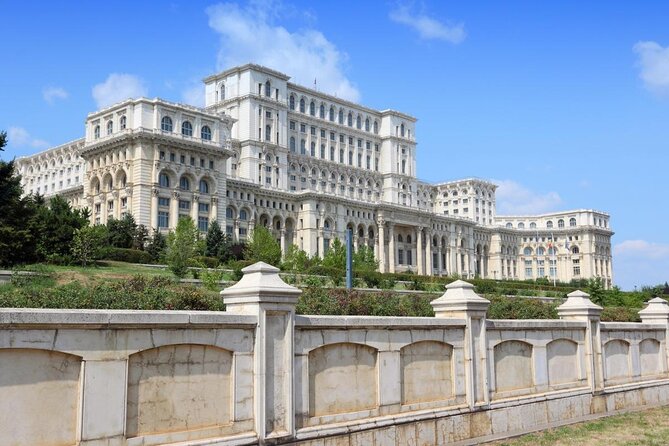
The tour stops in Constitution Square for about 15 minutes, with the Palace of Parliament as the main subject. The guide explains the building’s story and connects it to Romania in the 1970s and 1980s.
This is an important stop, but you should understand what is and is not included. You receive an exterior presentation in the square. Admission fees for buildings are not included, and the activity does not promise an interior visit to the Palace of Parliament.
That limitation is reasonable for a two-hour driving tour. The Palace of Parliament requires more time if you want to go inside, and an interior visit would change the pace of this experience. Here, you get the setting and the historical explanation without turning the whole outing into a formal building tour.
The square also gives the guide room to explain the scale and purpose of the project. The most useful part is not simply seeing a huge government building. It is hearing how the project fits into the story of communist Romania and the changes imposed on Bucharest during that period.
If you have already booked a separate Palace of Parliament visit, this stop works well as background. If you have not, do not assume the 15-minute presentation replaces one. It gives you context, not a full interior tour.
A different sort of day out, same corner of Romania:
- Bucharest: City Highlights Guided Walking Tour
★ 4.9 · 1,482 reviews - Taste Bucharest: A Food Lover’s Tour of Markets & Neighbourhoods
★ 5.0 · 689 reviews - The Real tour of Communism
★ 5.0 · 666 reviews - Bucharest: Therme Bucharest Entry Ticket and Transfer
★ 4.6 · 608 reviews
The Triumph Arch and the city’s grand avenues
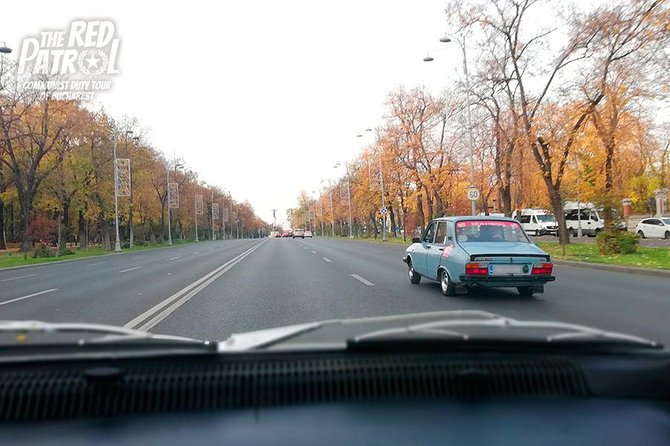
At the Triumph Arch, or Arcul de Triumf, you stop for photographs and another presentation. Plan on about 10 minutes. This is a quick stop, but it adds an important landmark to the route and gives you a chance to get out of the car.
The arch represents a different layer of Bucharest’s public identity from the Palace of Parliament. The tour does not treat every sight as part of one single era. Instead, it moves through several periods and uses the car to connect them.
The short format keeps the tour moving. You will not spend long enough here for an extended architectural study, but you can take photos and hear why the landmark matters. Bring a camera or keep your phone ready, since the stop is designed partly for photographs.
The route then continues with a panoramic drive along the famous promenade area associated with Bucharest in the 1940s. The supplied details do not name the promenade, so you should think of this as a scenic drive rather than a separate walking stop. It gives the tour a final look at the city’s older public face before returning to Revolution Square.
What driving the Dacia is really like
Driving the Dacia is optional, not required. You can take the wheel if you present a valid EU or international driving license. If you do not have one, the professional guide and driver handle the car.
The vehicle has no automatic gearbox, servo-direction, ABS, GPS navigation, or air-conditioning. That list tells you exactly what kind of experience to expect. The car feels connected to the road in a way a modern sedan does not, but it asks more from the driver.
For someone interested in old cars, that is the attraction. You get a direct sense of how a Romanian family car from the 1970s or 1980s operated. For someone seeking a smooth, effortless city ride, the lack of modern equipment may be a drawback.
The cars are fully restored and comply with current traffic safety rules. During winter, they are heated, which makes the tour practical in cold weather. In summer, remember that there is no air-conditioning. Dress for the forecast and do not expect the climate control of a newer vehicle.
Each car holds three people. That works well for a couple, a small family with older children, or three friends. Groups larger than three travel in a convoy of two or three cars. This keeps the party together while preserving the character of the individual-car experience.
A social history tour, not just a photo circuit
The guide’s role matters here. Serban is praised for relaxed delivery, strong knowledge of communist-era Romania, and the ability to answer questions without rushing the group. You should expect the guide to discuss social conditions and daily life, not just recite construction dates.
That distinction makes this tour useful after a conventional Bucharest city tour. A standard sightseeing circuit may cover historical buildings and major events. The Dacia experience adds stories about ordinary life under communism, using the car as a direct link to that period.
The tour has also worked well for mixed international groups. Drivers speak English, and the activity is offered in English. Larger groups can travel together in a convoy, making it suitable for a group outing, provided everyone accepts that the cars are older and the route stays fairly compact.
A printed newspaper or fact sheet has also been provided on some outings. It gives you a reference for the information covered during the drive, though this should be treated as an added feature rather than something to assume is guaranteed on every booking.
Is $115.59 per person good value?
At $115.59 per person, this is not the cheapest way to see Bucharest. You are paying for a private two-hour experience, a restored classic car, a professional guide and driver, and a route built around a specific period of Romanian history.
The value improves if you care about cars, modern Romanian history, or unusual city tours. You are not paying only for transport between monuments. You are paying for the setting, the stories, and the chance to drive a Dacia if eligible.
The price is less attractive if you simply want a broad list of Bucharest sights. Two hours is short, and the stops are brief. Building admission is not included, so you may need separate tickets if you want to enter any landmark afterward.
Group discounts are available, but the exact discount is not provided. For a larger group, ask for the current group price before booking. A convoy can make this a memorable shared activity, especially for friends celebrating a special occasion.
Who will enjoy this most?
I would choose this tour for:
- Couples who want an activity with character rather than a standard bus circuit
- Small groups of friends interested in classic cars
- Visitors curious about Romania’s communist period
- People who have already seen Bucharest’s main sights and want more social context
- International groups looking for an English-language experience
- Drivers who hold a valid EU or international license and want to try the Dacia
I would be more cautious if you need air-conditioning, automatic transmission, modern suspension, or a long stop at each landmark. Families should also note the age rule: children under 10 are not allowed, and pets cannot participate.
The tour suits older children and adults who can appreciate the historical subject and the car itself. It is not designed as a general children’s sightseeing activity.
Practical details that affect your choice
The activity starts and ends at Revolution Square. Confirmation is provided at booking, and most people can participate. The experience is private, so only your own group joins the activity.
Free cancellation is available if you cancel at least 24 hours before the start time. Cancellations made less than 24 hours before departure are not refunded, and changes within that period are not accepted. The cut-off follows Bucharest local time.
Wear clothing suited to the weather. The cars are heated in winter, but they have no air-conditioning. If you want to drive, bring your valid EU or international license and be ready for a manual classic car rather than a modern automatic.
Should you book the Red Patrol Dacia tour?
Book it if you want a personal look at Bucharest’s communist-era life, enjoy old cars, and value a guide who can connect buildings with ordinary people and daily routines. The restored Dacia gives the experience a clear identity, and the private format keeps the conversation flexible.
Skip it if you want long interior visits, a full-day city tour, or modern vehicle comfort. The stops are short, admission fees are extra, and the car’s basic equipment will not suit everyone.
For most visitors, this works best as a two-hour introduction or as a follow-up to a conventional Bucharest sightseeing tour. If Serban is guiding your outing, expect a relaxed presentation with plenty of social context and room for questions. If the Dacia itself interests you, ask about driving when you book. That can turn an already unusual city tour into a hands-on piece of Romanian history.
FAQ
How long does the Romanian Vintage Car Driving Tour last?
The tour lasts approximately two hours, or 120 minutes.
Where does the tour begin?
It begins at Revolution Square, Piața Revoluției, in Bucharest.
Where does the tour end?
The activity ends back at the meeting point at Revolution Square.
Is the tour private?
Yes. Only your own group participates in the activity.
How many people can ride in one car?
The provided information states that each car holds three people. Groups larger than three travel in a convoy of two or three cars.
Can I drive the Dacia myself?
Yes, if you present a valid EU or international driving license. You can also choose to be driven by the professional guide and driver.
What kind of cars are used?
The tour uses restored Romanian Dacia 1300 and 1310 cars from the 1970s and 1980s.
Do the cars have air-conditioning or automatic transmission?
No. The Dacia cars do not have air-conditioning, ABS, GPS navigation, power steering, or automatic gear drive. They are heated during winter.
Are admission fees included?
No. Admission fees for buildings or landmarks are not included. The route includes stops and presentations at the listed sights, but building entry costs extra.
Can children or pets join the tour?
Children under 10 and pets are not allowed to participate.
Newest Bucharest trips on the site
- Winery touring & private wine tasting – one day private tour★ 5.0 · 3 reviews
- Bucharest: Dealu Mare Winery Private Trip with Wine Tasting★ 4.9 · 6 reviews
- Village Museum Bucharest Guided Tour★ 5.0 · 6 reviews
- Private Transfer from Giurgiu Port to Bucharest★ 4.5 · 12 reviews
- Airport Henri Coanda (Otopeni) to Bucharest – Private Transfer – Driver★ 5.0 · 5 reviews
- Salt Mine Tour from Bucharest with Entrance Ticket★ 4.5 · 19 reviews
- Wine tasting in Bucharest Old town – bonus cheese platter★ 4.5 · 6 reviews
- Walking tour of Bucharest★ 5.0 · 3 reviews
Private, compared.

Castles of Transylvania: Private Day Trip from Bucharest
Read our review →
Dracula’s Castle, Peles Castle and Brasov – Private Day Trip from Bucharest
Read our review →
Bucharest Panoramic Sightseeing – Private City Tour
Read our review →
THERME “Take It Easy” Pack: Full Spa Access + Private Transfers
Read our review →
Piatra Craiului National Park Private Hiking Tour from Brasov
Read our review →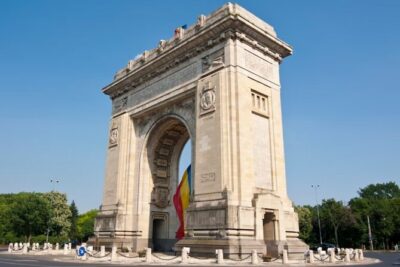
4h Bucharest Private Tour (2h by Car and 2h Walking in Old Town)
Read our review →