Reviewed · BUCHAREST TOURS
Slavery in Romania Myths and Truths About Gypsies
The most important thing about this Bucharest walk is its subject: Roma history in Romania, told through places tied to slavery, politics, education, persecution, and daily culture. Guide Mihai leads the route in English, connecting grand city landmarks with a story often left out of standard sightseeing.
I like two things right away. First, the tour uses ordinary central Bucharest streets and monuments rather than keeping the subject inside a museum. Second, it ends at Mesteshukar ButiQ, where handmade Roma pieces give you something direct and tangible to take away. The main drawback is that $127.37 per person is a serious price for a three-hour walking tour, especially since admission to the stops is free.
Key points to know
- Roma history beyond stereotypes: The tour deals with slavery, political change, education, World War II, and Roma craftsmanship.
- A compact central route: You walk from the Ion Creangă Theatre area through the Athenaeum, Cismigiu Park, and the Holocaust Memorial.
- Mihai’s personal guidance: The experience is led in English by Mihai, whose strong grasp of Roma history was singled out in the available feedback.
- A meaningful final stop: Mesteshukar ButiQ displays handmade pieces made by Roma craftspeople.
- Small-group format: The maximum is 15 people, which should make it easier to hear and ask questions.
- Plan for steady walking: The stops are free, but much of the three hours is spent walking between them.
Why this Bucharest walk matters
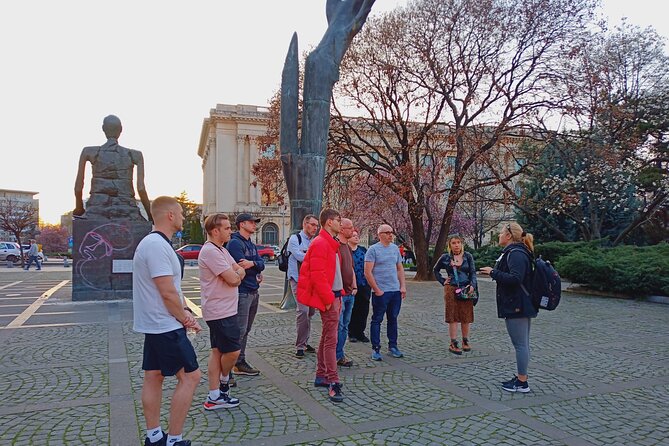
Romania’s Roma story is not a side note. It reaches into the country’s medieval and modern politics, its social divisions, its wartime record, and its present-day culture.
This tour gives you a way to examine that story in the city center. You are not simply looking at statues and buildings. You are asking why certain people were enslaved, how public figures shaped policy, why education matters, and how Roma traditions continue through skilled handwork.
That makes the tour a good fit if you want more than Bucharest’s grand architecture. The city has handsome buildings and leafy parks, but this walk asks you to look at the people and institutions behind them.
The tone appears designed to be direct rather than sentimental. The title promises myths and truths, so you should expect historical explanation and correction of common assumptions. This is especially useful if your knowledge of Roma history is limited or shaped mainly by modern stereotypes.
A few more Bucharest trips worth a look
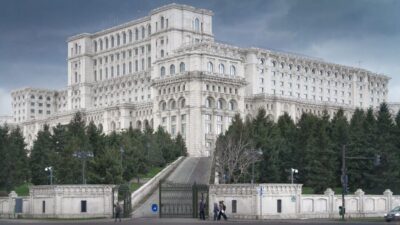
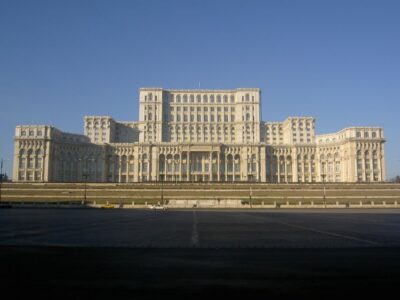
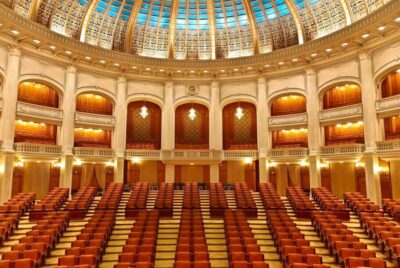
- Bucharest: Palace of Parliament Tickets and Guide
★ 4.3 · 3,182 reviews - Bucharest: Palace of Parliament Tickets and Guided Tour
★ 4.4 · 1,877 reviews - Bucharest: Parliament Palace Skip-the-line Ticket
★ 4.2 · 1,518 reviews
Starting near the Romanian Athenaeum
The meeting point is Teatrul Ion Creangă, Sala Mare, at Strada Piața Amzei 13. The walk begins at 10:00 a.m., placing you near some of central Bucharest’s best-known cultural landmarks.
The first stop is the Romanian Athenaeum, one of the city’s signature buildings and home of the National Romanian Philharmonic. You have about 20 minutes here, with no admission charge.
The Athenaeum may seem like an unusual place to begin a tour about Roma history. That is part of the point. It represents Romania’s polished public image, its arts, and its national culture. Your guide uses that setting to show that every famous building also sits inside a wider social story.
You should not expect a concert or an interior visit to be part of the experience. The Athenaeum is a setting for the discussion, not a separately ticketed attraction on this route. If you want to explore the building at length, allow time before or after the walk.
Iuliu Maniu and the making of modern Romania
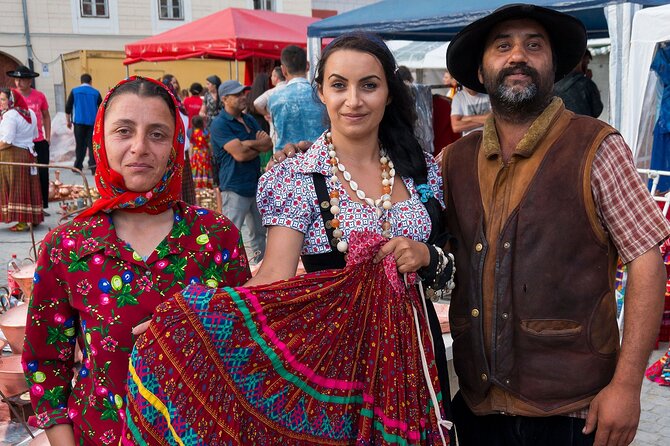
The route continues to the statue of Iuliu Maniu, with about 20 minutes devoted to the stop. Maniu was an important figure in Romanian political life and is presented here in connection with both Roma history and the development of modern Romania.
A statue can be easy to glance at and forget. A good guide gives it a reason to matter. Here, Maniu becomes a doorway into questions about political change, national identity, and the treatment of Roma people within the Romanian state.
This is one reason I prefer a walking tour built around public places. You see how history is displayed in the city, then hear the parts that a plaque may leave out.
Palatul Stirbei and the age of slavery
At Palatul Stirbei, the tour turns toward the 19th century. You spend about 20 minutes learning about Barbu Stirbey, one of the rulers of Wallachia and an important figure in this story.
The palace offers a useful setting for discussing power. Grand residences can make the past look elegant and orderly, but the social system around them was not equal. This stop helps connect the lives of rulers and elites with the experience of Roma people under slavery.
The subject can be uncomfortable, and it should be. The value of the stop is not in admiring a palace alone. It is in seeing how political authority, wealth, and Roma enslavement belonged to the same historical world.
You will want to listen closely here. The available timing allows only about 20 minutes, so this is a focused stop rather than a full palace visit.
A different sort of day out, same corner of Romania:
- Bucharest: City Highlights Guided Walking Tour
★ 4.9 · 1,482 reviews - Taste Bucharest: A Food Lover’s Tour of Markets & Neighbourhoods
★ 5.0 · 689 reviews - The Real tour of Communism
★ 5.0 · 666 reviews - Bucharest: Therme Bucharest Entry Ticket and Transfer
★ 4.6 · 608 reviews
Cismigiu Park brings breathing room
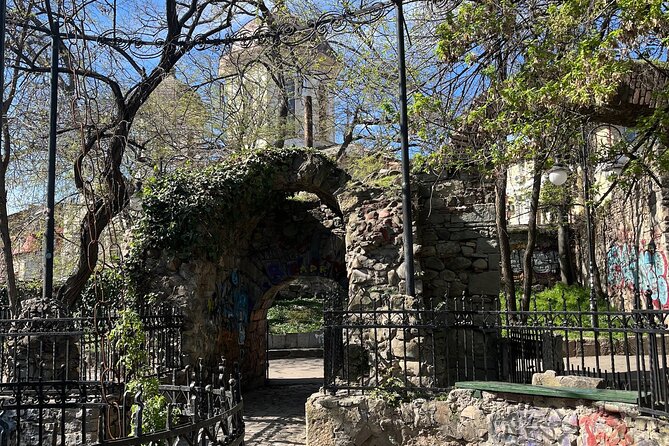
After the more formal city landmarks, the route enters Cismigiu Park for around 30 minutes. It is described as Bucharest’s largest and most beautiful garden, and the walk includes several stops inside or near the park.
This part gives the tour a welcome change of pace. You get a relaxed walk, but the history does not disappear. The route may include a well-known high school, the remains of an old monastery, a viewpoint over the park, and other points connected to the main subject.
I like this section because parks often reveal how a city uses public space. A quiet path can also lead to questions about education, religion, memory, and who gets included in the city’s official story.
The park portion is not just a break between serious subjects. It gives you room to process the earlier discussion and see Bucharest as a lived-in city rather than a string of historic façades.
Gheorghe Lazăr National College and the role of education
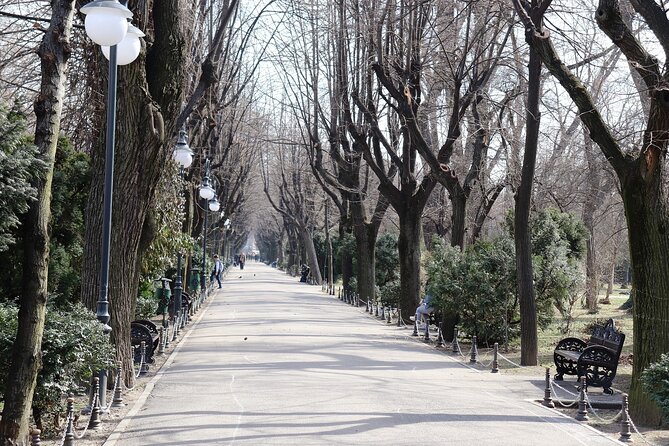
The stop at Gheorghe Lazăr National College lasts about 15 minutes. The school is described as one of Bucharest’s best-known high schools and sits at the entrance to Cismigiu Park.
The central idea here is simple: education can change a person’s choices and a community’s future. That makes the school more than a handsome institution on the route. It becomes a prompt to consider access, opportunity, and the importance of learning for Roma communities.
This is a useful contrast with the earlier discussion of rulers and political power. Palatul Stirbei points toward authority inherited or held by elites. The school points toward opportunity that can be built through study.
You will not be taking a formal school tour. The stop is short, so expect interpretation from the guide rather than an extended look inside the college.
The Holocaust Memorial and the Roma victims of World War II
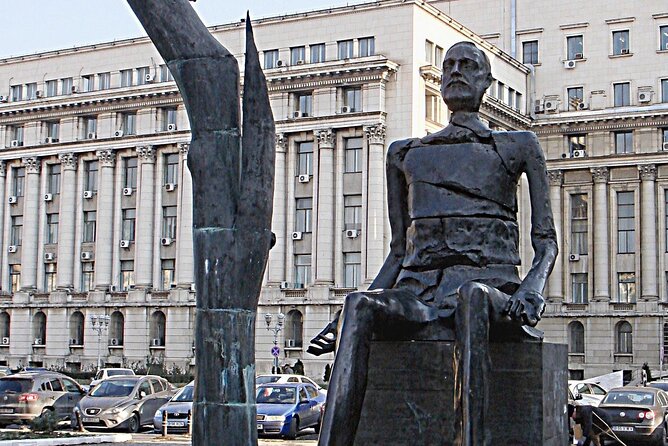
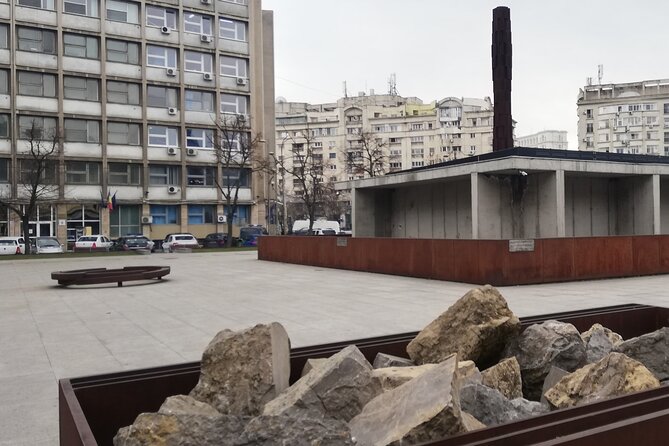
The Holocaust Memorial is one of the most serious stops, with around 15 minutes set aside for it. Here, Mihai discusses the wartime persecution of Roma people and what is often called the Forgotten Holocaust.
The memorial is described as the most impressive monument built in memory of Holocaust victims in Romania. That makes it an important place to pause, not merely another item on a sightseeing route.
This section gives the tour moral weight. Roma history is not only about medieval slavery or 19th-century politics. It also includes the violence and loss suffered during World War II.
The short timing may feel limited for such a major subject. Still, placing the memorial within a longer route can help you connect wartime persecution to the earlier discussions of law, social status, and public memory.
Bring a respectful attitude. This is not a light sightseeing stop, and the subject deserves your full attention.
Mihail Kogălniceanu and the written record
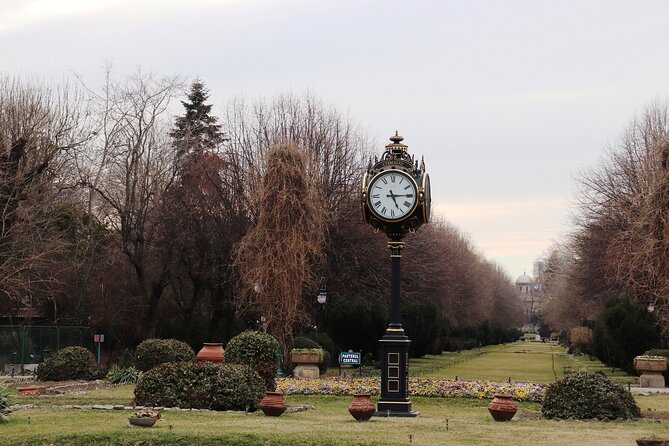
The route then reaches Piața Mihail Kogălniceanu for about 10 minutes. Mihail Kogălniceanu was a major Romanian politician and writer, and he is presented here as the first person to write about Romanian Gypsies.
This stop highlights the power of written records. Political speeches, essays, laws, and public commentary help shape how a group is understood. They can preserve memory, but they can also repeat prejudice or frame people from the viewpoint of those in power.
Because the stop is brief, this will be a concise explanation rather than a long literary discussion. It works best as a bridge between the formal history of the city and the final focus on Roma culture and craft.
Mesteshukar ButiQ gives the route a human ending
The final stop is Mesteshukar ButiQ, at Bulevardul Mihail Kogălniceanu 12. You spend about 20 minutes in this small shop, which sells authentic handmade pieces made by Roma craftspeople.
This is a strong way to end. After hearing about oppression, politics, education, and wartime suffering, you meet Roma culture through skill and work. The shop gives you something practical to see: the quality of the craft, the design, and the continued value of traditional making.
The available feedback specifically highlights the handcrafted jewelry store as a favorite part of the experience. I can see why. A shop like this lets you finish with the present rather than leaving the tour fixed in tragedy.
Admission is listed as free, though the experience could naturally encourage you to browse or buy something. The supplied information does not state that a purchase is required, so you can treat the stop as part of the tour and decide for yourself.
What the $127.37 price means
At $127.37 per person, this is not a budget walk. You are paying for a specialist subject, an English-speaking professional guide, a small maximum group of 15, a three-hour route, and the time needed to connect several locations across central Bucharest.
You are not paying for admission to major attractions. Every listed stop is free, and coffee or tea is not included. A cake snack is included, which is a pleasant small touch but not a major part of the value.
The price makes the most sense for you if Roma history is a central reason for booking. If you only want a general introduction to Bucharest, a standard city walk may offer more sights for less money.
Group discounts may improve the cost for people booking together. Since the group is capped at 15, the setting should be more manageable than a large coach tour, though the actual group size can vary up to that limit.
Timing, walking, and what to bring
The experience lasts about three hours, beginning at 10:00 a.m. The listed stops add up to roughly two and a half hours, with the remaining time used to walk between them.
That means you should treat this as a real walking tour, not a sequence of short vehicle transfers. Comfortable shoes matter. You should also be ready to stay on your feet while listening, especially in public squares, near monuments, and inside the park.
The route ends at Mesteshukar ButiQ rather than returning to the starting point. This is useful if you plan to continue exploring central Bucharest from the Kogălniceanu area.
A cake snack is included. Coffee and tea are not, although there is a short stop along the way where you can purchase them yourself. The route is near public transportation, and service animals are allowed.
The tour asks for a moderate level of physical fitness. No special technical ability is required, but three hours of walking and standing may not suit anyone who needs frequent seating or has difficulty covering an urban route.
Who will get the most from this experience
I would recommend this tour to you if you:
- Want to understand Romania through a subject that standard city tours often skip
- Prefer local streets and public monuments to a museum-only presentation
- Are interested in minority history, human rights, politics, or World War II
- Like small-group walks with time for questions
- Want to support or learn about Roma craftsmanship
- Have enough mobility for several hours of city walking
I would hesitate if you want a broad first look at Bucharest’s main attractions. The route includes important landmarks, but they serve the Roma history theme rather than receiving a full architectural or cultural tour.
Families with older children may find the topic useful, though the material about slavery and the Holocaust is serious. The tour is offered in English, so you should be comfortable listening to historical explanation in that language.
Should you book the Roma history walking tour?
Book it if you want a focused, thoughtful look at Roma history in Romania and you value a guide who can connect politics, public monuments, education, wartime persecution, and craft traditions.
The strongest parts are the clear theme, Mihai’s guidance, the manageable group size, and the final stop at Mesteshukar ButiQ. The main concern is value. At $127.37, the cost is high for a three-hour walk with no paid admissions.
My practical advice is simple: choose it when this subject matters to you. If you mainly want famous buildings, parks, and general sightseeing, spend your money elsewhere. If you want to leave Bucharest with a more honest understanding of Roma life and Romania’s past, this route offers a useful and human way to do it.
Free cancellation is available if you cancel at least 24 hours before the start time. Last-minute cancellations and changes are not accepted for a refund.
FAQ
Where does the tour begin?
The tour begins at Teatrul Ion Creangă, Sala Mare, at Strada Piața Amzei 13 in Bucharest.
What time does the tour start?
The start time is 10:00 a.m.
Where does the tour end?
The tour ends at Mesteshukar ButiQ, Bulevardul Mihail Kogălniceanu 12, Bucharest.
How long does the experience last?
The walking tour lasts approximately three hours.
What language is the tour offered in?
The tour is offered in English and includes a professional English-speaking guide.
How many people can join the tour?
The maximum group size is 15 people.
Is admission to the stops included?
All listed stops have free admission. The experience does not list paid entrance tickets.
Is food or a drink included?
A cake snack is included. Coffee and tea are not included, though there is a short stop where you can buy them.
Do I need to be physically fit?
You should have a moderate level of physical fitness because the time between stops is spent walking.
Can I cancel for a full refund?
Yes. You can receive a full refund if you cancel at least 24 hours before the experience start time. Changes or cancellations made less than 24 hours in advance are not accepted for a refund.
Newest Bucharest trips on the site
- Winery touring & private wine tasting – one day private tour★ 5.0 · 3 reviews
- Bucharest: Dealu Mare Winery Private Trip with Wine Tasting★ 4.9 · 6 reviews
- Village Museum Bucharest Guided Tour★ 5.0 · 6 reviews
- Private Transfer from Giurgiu Port to Bucharest★ 4.5 · 12 reviews
- Airport Henri Coanda (Otopeni) to Bucharest – Private Transfer – Driver★ 5.0 · 5 reviews
- Salt Mine Tour from Bucharest with Entrance Ticket★ 4.5 · 19 reviews
- Wine tasting in Bucharest Old town – bonus cheese platter★ 4.5 · 6 reviews
- Walking tour of Bucharest★ 5.0 · 3 reviews
Bucharest Tours, compared.

Taste Bucharest: A Food Lover’s Tour of Markets & Neighbourhoods
Read our review →