
Reviewed · 5-DAY EXPERIENCES
Transylvania Region In-Depth (5 Days Private Tour from Bucharest)
Bran Castle may sell the Dracula story, but the real pleasure of this tour is the sweep of Transylvania: royal castles, Saxon towns, Roman ruins, fortified churches, and Carpathian roads packed into five days. You travel with a private driver and local guide, rather than trying to connect these scattered sights by public transport.
I like the prebooked four nights in 3-star hotels or guest houses, and I like the depth of the route. You do not stop at Bran and Brasov, then call it Transylvania. You reach Sighisoara, Alba Iulia, Corvin Castle, Sibiu, and the Roman ruins at Ulpia Traiana Sarmizegetusa. The tradeoff is clear: this is an ambitious trip with long touring days, and entrance fees, lunches, dinners, and drinks are not included.
Key points to know before booking
- Bran Castle is only one part of the story: You also visit Peles Castle, Corvin Castle, Alba Carolina Citadel, and Cozia Monastery.
- Guide Toni Cristian Tatar leads the private tour: His replies and past guest feedback point to a guide who stays in close contact, explains Romanian history, and adjusts help to the group.
- The route covers several centuries: You move from Roman ruins to medieval fortresses, Saxon churches, Habsburg military design, and royal architecture.
- Four breakfasts and four hotel nights are included: You avoid the daily task of finding rooms while moving through the region.
- Admission costs need planning: Several major stops list entrance fees separately, including Peles, Bran, the Black Church, Prejmer, Sighisoara Clock Tower, Corvin Castle, and Ulpia Traiana Sarmizegetusa.
- The trip returns to Bucharest on day five: Start time is 9:00 a.m., and pickup is offered.
Why this route gives you more than a Dracula stop
A short Bucharest excursion can show you Bran Castle and Brasov. This tour gives you a much broader look at the region. You see how Transylvania was shaped by Romanian rulers, German-speaking Saxons, Roman armies, Habsburg power, Lutheran communities, and royal ambition.
That variety matters. At Peles, you see the elegant side of Romania under King Carol I. At Prejmer, you see how a village church became a place of defense. At Corvin Castle, you get a dramatic Gothic-Renaissance fortress. At Alba Iulia, the military geometry is completely different. The route keeps changing its subject, so the five days do not feel like a string of similar castles.
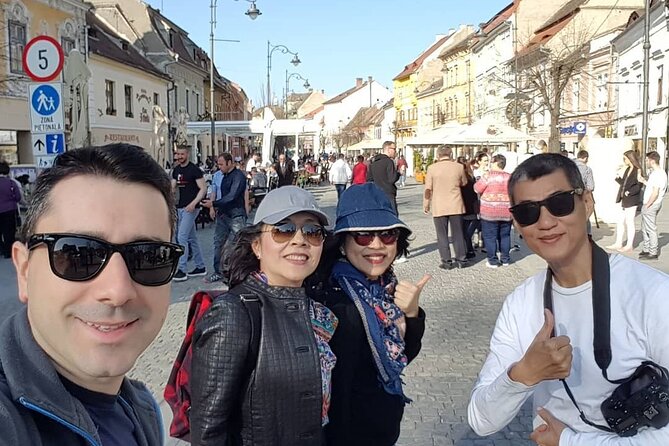
The private format is also useful here. The group is limited to your own party, and you have a driver and local guide rather than a large coach schedule. Toni Cristian Tatar is identified as the guide, and his communication with past groups suggests that he makes a point of staying involved before and during the trip. One family heritage trip, in particular, was shaped around a visitor’s connection to a Romanian grandmother. That kind of personal attention is one reason to choose a private circuit.
More five-day trips from Bucharest:
- Off Road Adventures in Wild Carpathians – 5 Days
★ 5.0 · 13 reviews - 5-Day Private Dracula’s Legends Tour from Bucharest
★ 5.0 · 4 reviews - Private 5-Day Tour in Transylvania from Bucharest Hotel Pick-up and Drop off
★ 4.5 · 11 reviews
Day one: Peles, Bran, and Brasov
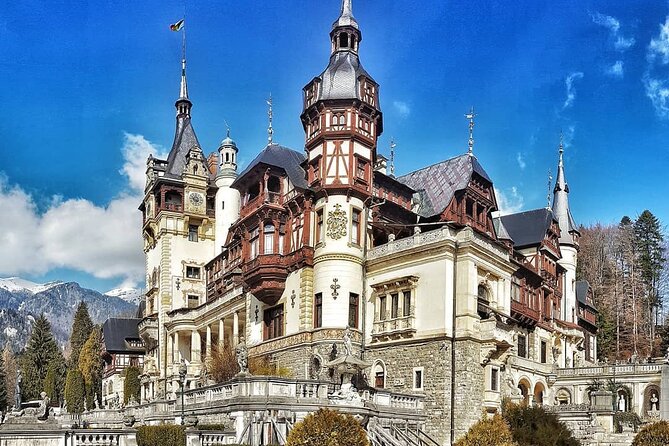
The first day begins at 9:00 a.m. with Peles Castle near Sinaia. Built between 1873 and 1914 for King Carol I, the castle sits along the old route between Wallachia and Transylvania. Its Neo-Renaissance design makes it a sharp contrast to the medieval fortresses later in the trip.
You have about an hour here. That is enough to appreciate the setting and the royal story, but you should check your expectations. The admission ticket is not included, and the schedule does not promise a long interior visit. If the castle is the main reason you came to Romania, you may want to ask Toni in advance how the visit will be handled on your date.
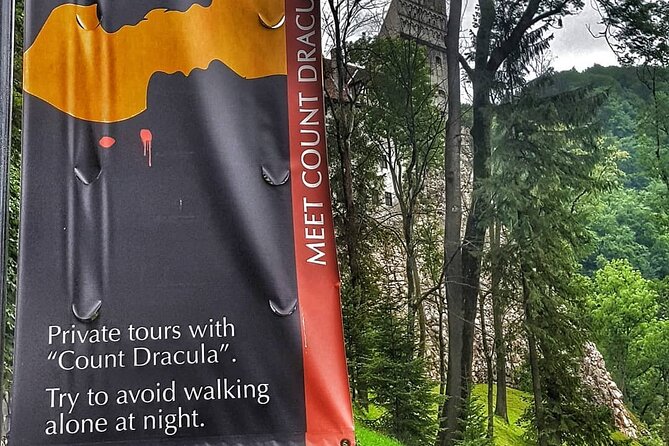
Bran Castle follows, with about two hours. Outside Romania, Bran is widely called Dracula’s Castle. The connection is useful for understanding the country’s tourism, but it is also easy to overstate. Bran is not clearly the home of Bram Stoker’s fictional Count Dracula, and Vlad the Impaler is linked with several other places, including Poenari Castle and Hunyadi Castle.
That distinction makes the visit better, not worse. You can enjoy the hilltop fortress, the Dracula legend, and the chance to separate popular fiction from Romanian history. Admission is extra, so include it in your budget.
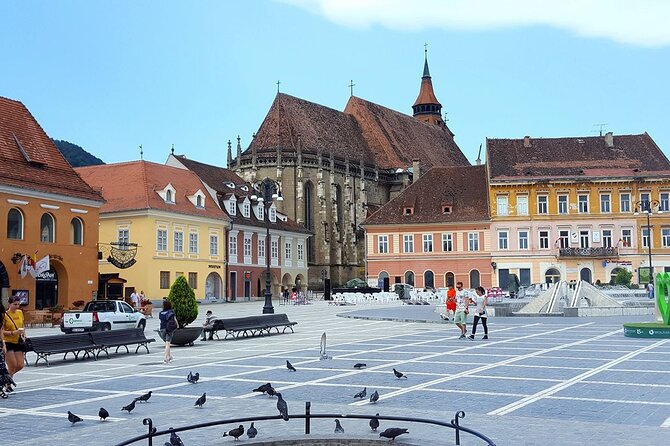
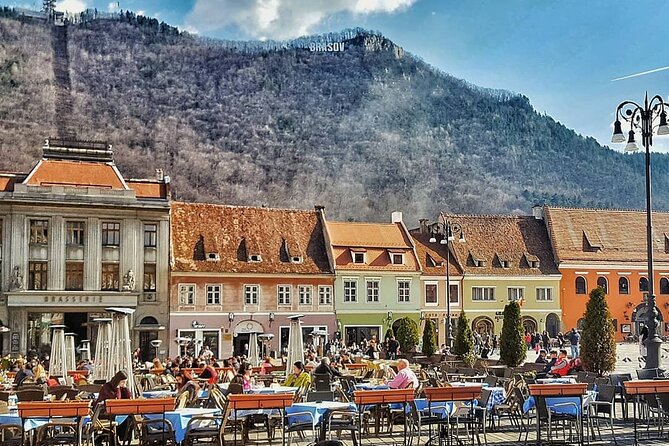
The day ends in Brasov, one of the region’s key medieval cities. You have about two hours in the historic center, followed by one hour at the Black Church. Brasov grew as a major commercial center for the Transylvanian Saxons, positioned on trade roads connecting east and west. The old center gives you a first feel for Saxon urban design and the city’s German cultural roots.
The Black Church is the country’s major Gothic monument and an important Lutheran church. Its admission fee is not included. Since the city-center visit and church visit are listed separately, you should expect a full day rather than a quick photo stop. It is a strong opening, but not a gentle one.
Day two: fortified faith and Sighisoara’s clock tower
Prejmer’s fortified church shifts the focus from castles to village survival. Founded by the Teutonic Knights and later taken over by the Transylvanian Saxon community, the church began as Roman Catholic and became Lutheran after the Reformation. Together with the village, it forms part of the UNESCO World Heritage group of fortified churches in Transylvania.
You have one hour here. That gives you time to understand the basic design and purpose, but the ticket is extra. Prejmer is valuable because it shows how ordinary communities protected themselves, not just how nobles lived in castles.
The route then reaches Sighisoara, with two hours in the historic center and another hour at the Clock Tower. The old town is walled and listed as a UNESCO World Heritage Site. Its compact medieval form makes it easier to read than a large city. You can see how the defenses, towers, and streets work together.
The Clock Tower is the main entry point to the citadel. It was the master tower of the fortification system, facing the Tailors’ Tower on the opposite side. The admission fee is separate. If you enjoy town history more than castle interiors, Sighisoara may become one of your favorite stops because the entire setting, not just one building, carries the story.
Two hours in the center is a useful amount of time, though you should not expect to examine every lane, tower, and museum at leisure. This is one of the places where a private guide helps you decide what deserves your attention first.
Day three: Alba Iulia and the great Corvin fortress
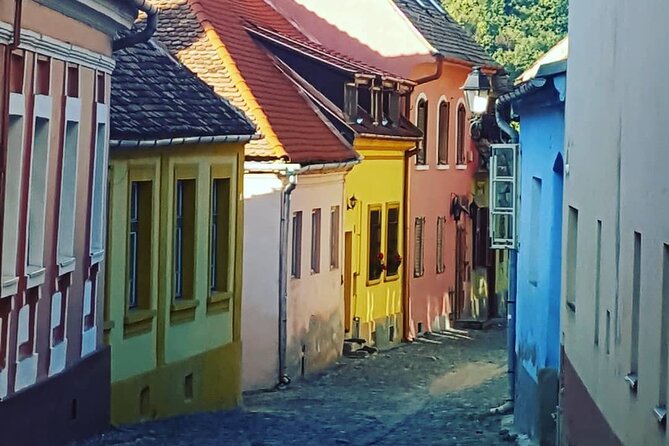
Alba Carolina Citadel in Alba Iulia offers a different kind of military architecture. Construction began in 1715 under Habsburg rule and ended in 1738. The star-shaped fortress replaced earlier Roman and medieval defenses, and about 20,000 serfs worked on the project.
The scale is the point. You are not simply visiting another old wall. You are seeing how a ruling power rebuilt an important Transylvanian site to fit the military needs of the eighteenth century. One hour is scheduled, and admission is included, making this a good stop for understanding the region’s political changes without another ticket to arrange.
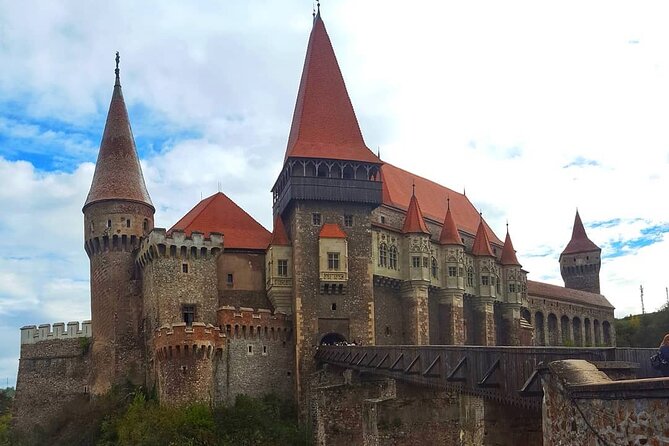
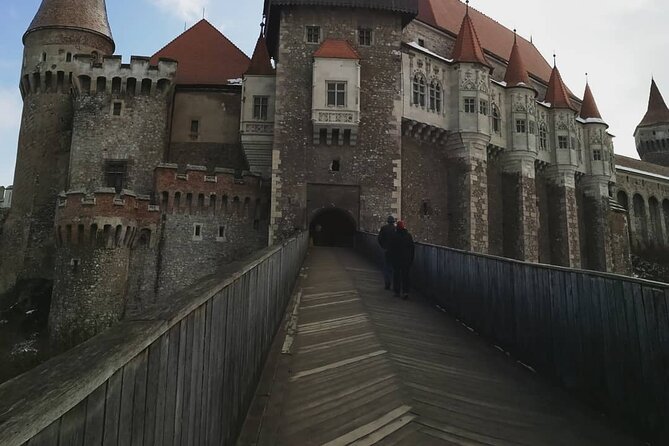
Corvin Castle receives three hours, the longest single stop on the route. Also called Hunyadi Castle or Hunedoara Castle, it is a Gothic-Renaissance fortress and one of the largest castles in Europe. The building is associated with the Hunyadi family and is often placed among Romania’s Seven Wonders.
Three hours gives you room to look beyond the famous exterior. You can take in the castle’s scale, architecture, and setting without racing through it. The entrance fee is not included, so this is another major cost to allow for.
This day is particularly good for castle fans, but it may feel demanding if you prefer slow meals and long wandering. The schedule moves from Alba Iulia to Hunedoara, and the value comes from seeing two very different forms of power in one day.
A few more Bucharest trips worth a look
- Castles of Transylvania: Private Day Trip from Bucharest
★ 4.5 · 248 reviews - Small Group Tour to Viscri Church Sighisoara Town Rupea Fortress
★ 5.0 · 225 reviews - 2-Day Medieval Transylvania with Brasov,Sibiu and Sighisoara Tour from Bucharest
★ 4.5 · 145 reviews - Sibiu: Alba Iulia and Corvin Castle Guided Tour
★ 4.7 · 66 reviews
Day four: Roman ruins and Sibiu

Ulpia Traiana Sarmizegetusa introduces the Roman period. The stop covers the ruins of a Roman settlement and lasts about an hour. Admission is extra.
Do not expect a complete medieval town or a restored castle here. The appeal is archaeological: this is a chance to connect modern Romania with the Roman settlement that once occupied the area. It also breaks up the run of churches and fortresses with a much older layer of the country’s past.
The day continues to Sibiu, with three hours at the city’s tourist information center and historic area. Sibiu was an important center of the Transylvanian Saxons and became European Capital of Culture in 2007, along with Luxembourg. The city’s old core is a fitting place to slow down after several days of fortifications and long-distance sightseeing.
The schedule lists admission as included for this part of the visit, while the next day gives you more time around the Big Square. That suggests Sibiu is not just an overnight base. It is one of the central destinations of the tour.
I like having Sibiu near the end. By now, you have seen the communities and rulers that shaped Transylvania, so the city becomes easier to understand. You can look at its streets and squares with more context instead of treating it as another attractive old town.
Day five: Sibiu’s Big Square and Cozia Monastery
The final morning includes the Big Square, or Piata Mare, in Sibiu’s old town. One hour is scheduled, and there is no admission charge. This is a practical final look at the city before the route turns back toward Bucharest.
Cozia Monastery is the last major stop. Built near Calimanesti by Mircea the Elder in 1388, it holds his tomb and is regarded as one of Romania’s important medieval monuments. The visit lasts about an hour, and admission is included.
Cozia gives the final day a quieter historical note. After grand castles, walls, towers, and city centers, a medieval monastery brings attention back to religious architecture and Romanian rulers. The tour then continues to Bucharest.
The schedule does not give an exact arrival time. That matters if you have a flight or another fixed booking on day five. Ask for an estimated return time before you commit to same-day travel plans.
What the $1,707.46 price covers
At $1,707.46 per person, this is not a bargain bus tour. It is a private five-day service that includes a driver and local guide, four nights in 3-star hotels or guest houses, four breakfasts, and pickup. The price makes more sense if you value a private vehicle, a fixed route, and help linking sites that are spread across the region.
The rate does not cover food and drinks. It also excludes entrance fees at many of the main sights. Budget extra for Peles, Bran, the Black Church, Prejmer, the Sighisoara Clock Tower, Corvin Castle, and Ulpia Traiana Sarmizegetusa. Alba Carolina Citadel, the Sibiu visit, and Cozia Monastery are listed with admission included, while the Big Square is free.
That split is easy to overlook. The advertised rate is not an all-inclusive total. Still, four hotel nights and daily breakfast reduce the number of arrangements you need to make yourself. Group discounts are available, which could improve the per-person value for a larger private party.
The pace, hotels, and practical tradeoffs
This is a sightseeing-first tour. You change locations, cover several historic centers, and spend much of each day visiting named sites. Four nights in prebooked 3-star accommodation remove uncertainty, but the hotel category does not promise luxury. You are paying for a sensible base and a guided route, not a resort stay.
Breakfast is included each morning. Lunches and dinners are not, so you should plan for meals during touring days. The supplied details do not specify hotel names, room features, restaurant arrangements, or vehicle type. Ask those questions if they matter to you.
Most people can participate, and the start point is near public transportation. Pickup is offered. The activity is private, so only your group participates. The tour requires good weather, and a weather cancellation offers either another date or a full refund.
Cancellation terms are strict close to departure. You receive a full refund if you cancel at least six full days before the start time. A cancellation two to six full days ahead receives 50 percent, and cancellations under two full days are not refunded. Changes follow the same cutoff rules.
Who should book this Transylvania tour?
I would choose this tour if you want history beyond Dracula, prefer a private guide, and want one booking to handle hotels and the route. It suits a family heritage trip, a couple interested in medieval towns, or a small group that wants a private schedule. Toni Cristian Tatar’s reported approach also makes the tour appealing if you want a guide who can explain context rather than simply point out buildings.
It is less suitable if you want long free periods, nightlife, luxury hotels, or a relaxed base with day trips. The route is ambitious. You should be comfortable with full sightseeing days and extra costs for admissions and meals.
Should you book it?
Book this five-day circuit if you want the full historical range of Transylvania in one trip. Peles, Bran, Brasov, Sighisoara, Corvin Castle, Sibiu, and Cozia Monastery give you far more than a Dracula-themed outing, while the private format keeps the experience focused on your own group.
Before paying, confirm the hotel locations, expected driving times, entrance costs, and your day-five arrival in Bucharest. If those details fit your plans, the tour offers strong value for a private introduction to Romania’s castles, fortified churches, Roman ruins, and old cities.
FAQ
How long is the Transylvania tour?
The tour lasts approximately five days and starts from Bucharest.
What time does the tour begin?
The listed start time is 9:00 a.m.
Is this a private tour?
Yes. Only your group participates in the private activity.
Who guides the tour?
The experience includes a driver and local guide. The named guide connected with the tour is Toni Cristian Tatar.
Are hotels included?
Yes. Four nights in 3-star hotels or guest houses are included.
Are meals included?
Four breakfasts are included. Food, drinks, lunches, and dinners are not included.
Are entrance fees included?
Some are included, including Alba Carolina Citadel, the Sibiu visit, and Cozia Monastery. Many others are not, including Peles Castle, Bran Castle, the Black Church, Prejmer, Sighisoara Clock Tower, Corvin Castle, and Ulpia Traiana Sarmizegetusa.
Newest Bucharest trips on the site
- Winery touring & private wine tasting – one day private tour★ 5.0 · 3 reviews
- Bucharest: Dealu Mare Winery Private Trip with Wine Tasting★ 4.9 · 6 reviews
- Village Museum Bucharest Guided Tour★ 5.0 · 6 reviews
- Private Transfer from Giurgiu Port to Bucharest★ 4.5 · 12 reviews
- Airport Henri Coanda (Otopeni) to Bucharest – Private Transfer – Driver★ 5.0 · 5 reviews
- Salt Mine Tour from Bucharest with Entrance Ticket★ 4.5 · 19 reviews
- Wine tasting in Bucharest Old town – bonus cheese platter★ 4.5 · 6 reviews
- Walking tour of Bucharest★ 5.0 · 3 reviews
5-Day Experiences, compared.
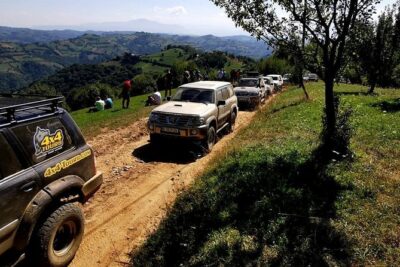
Off Road Adventures in Wild Carpathians – 5 Days
Read our review →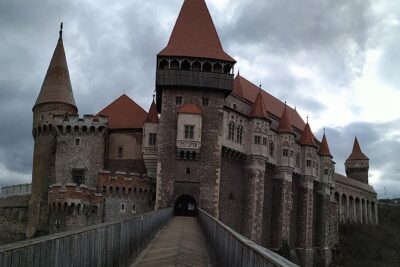
Private 5-Day Tour in Transylvania from Bucharest Hotel Pick-up and Drop off
Read our review →
5 Days Private Tour in Romania from Bucharest to Transylvania
Read our review →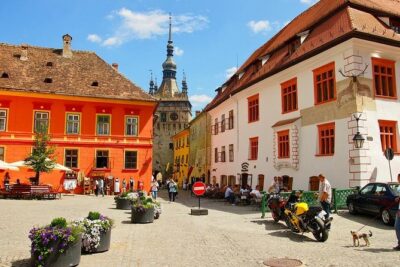
5-Day Private Dracula’s Legends Tour from Bucharest
Read our review →Browse the lists this tour appears in