
Reviewed · MONASTERY TOURS
Bucovina Painted Monasteries Day Tour
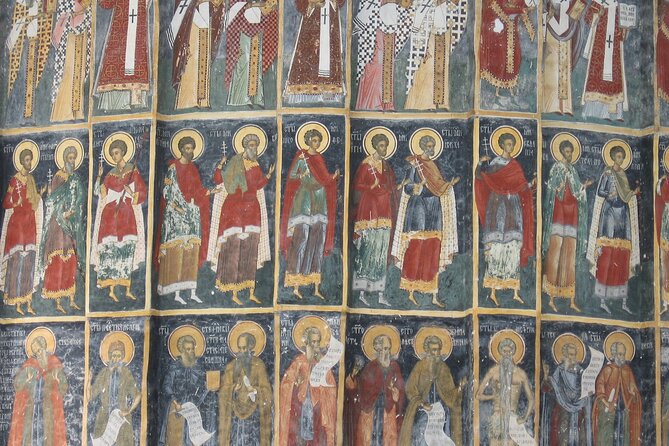
Bucovina’s painted monasteries are not just pretty churches with colorful walls. Their frescoes were made to teach biblical stories to people who could not read, and the details reward a good guide. Voronet’s famous blue and Humor’s unusual image of the Devil as the Scarlet Woman are the sort of sights you could easily miss on a self-drive day.
I like the tour’s small maximum of seven people and its sensible route through four major monasteries. I also like the mix of art, mountain scenery, a local lunch stop, and Marginea’s black pottery. The main catch is that entrance fees are extra and cash-only, and seven to eight hours in a vehicle makes this a full day.
Key points at a glance
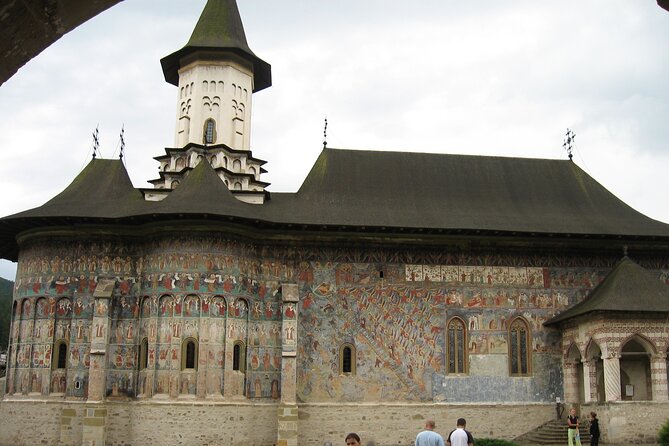
- Four painted monasteries: See Humor, Voronet, Moldovita, and Sucevita, each with a different color scheme and set of frescoes.
- A guide who explains the paintings: Guides such as Sebastian and Andrei focus on symbolism, architecture, and the stories behind the walls.
- Palma Pass views: Cross the Ciumarna, or Palma, Pass at about 1,100 meters, with time for lunch or a picnic.
- Black pottery at Marginea: Watch local craftspeople work in one of Romania’s important pottery centers.
- Small-group transport: Travel in an air-conditioned vehicle with a maximum of seven people.
- Bring 40 lei in cash: Monastery admission costs 10 lei per person at each of four stops.
Why Bucovina’s painted monasteries matter
The monasteries of Bucovina are special because their paintings cover the outside walls as well as the interiors. The scenes are not random decoration. They present religious stories, battles, saints, moral lessons, and symbolic images in a form that ordinary villagers could understand.
That makes a guided visit especially useful. You can walk around, admire the colors, and take photographs, but it is harder to understand why one wall shows a siege, another a ladder, and another a frightening figure from Christian teaching. The strongest part of this outing is the explanation given at each stop.
The tour is led in English by the driver-guide. Sebastian is the guide named most often in the supplied details, while other bookings have had guides including Andrei, Marcus, and Gigi. The exact guide depends on the day, but you should expect a practical, personal style rather than a large coach-tour presentation.
The route begins at 9:00 a.m. in Suceava and returns to the same meeting point. Pickup can also be arranged from a train station, bus station, or another location in Suceava or Gura Humorului. That flexibility matters in northern Romania, where your accommodation and transport may not line up neatly with the central meeting point.
More monastery visits around Romania:
- 3-Castle: Peles,Bran,Rasnov,Sinaia Monastery from Brasov w pickup
★ 5.0 · 274 reviews - Peles Castle, Bran Castle, Rasnov Fortress and Sinaia Monastery Tour from Brasov
★ 5.0 · 55 reviews - Princely Court of Târgoviște and Curtea de Argeș Monastery
★ 4.5 · 50 reviews
Humor Monastery and its Scarlet Woman
The first stop is Humor Monastery, founded in 1530 and set among forested hills. It is smaller than some of the other complexes, which makes it a gentle introduction to the day.
The most unusual detail is the depiction of the Devil as the Scarlet Woman. That image gives Humor a personality of its own. You are not simply looking at a series of faded religious paintings. You are seeing a carefully arranged visual lesson, with color and frightening figures used to make the message memorable.
You get about 45 minutes here. That is enough for a focused visit, especially with an explanation of what to look for, but it does not leave room for a slow, unhurried study of every wall. Admission is not included, so keep cash ready.
The forested setting also helps set the tone. Bucovina is not only an art destination. The road between the monasteries passes through wooded hills and open mountain country, so the views become part of the day rather than empty travel time.
Voronet’s famous blue walls
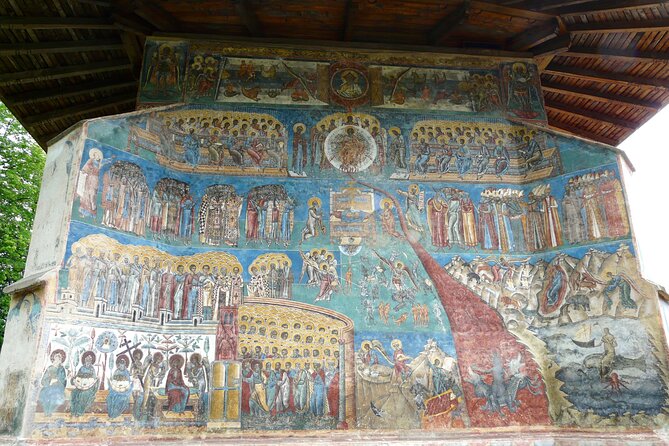
Voronet Monastery, founded in 1488, is the artistic centerpiece for many people. Its deep blue color is known as Voronet blue and is associated with lapis lazuli. The blue gives the exterior a strong visual identity, especially when set against the surrounding greenery.
The large Last Judgment fresco is the reason Voronet is often called the Sistine Chapel of the Orient. The comparison is grand, but it points you toward the scale and ambition of the paintings. Look beyond the overall color. A guide can help you notice figures, gestures, ranks of people, and the way the scene is organized.
You have about an hour here, the longest monastery visit on the route. That extra time makes sense because Voronet has more to take in, and the site also has a large souvenir shopping area. If you want a small painted icon, textile, or other memento, this is likely to be the stop with the broadest choice.
The shopping area can be useful, but it can also shift your attention away from the church. I would visit the monastery first, listen carefully, and shop only after you have seen the frescoes. Admission remains separate and costs 10 lei per person.
Moldovita and the Siege of Constantinople
Moldovita Monastery dates from 1532 and receives about 45 minutes on the schedule. Its paintings include a depiction of the Siege of Constantinople, with the Christians winning.
That subject gives the stop a different feel from Voronet. You are looking at a religious artwork, but also at a scene of conflict and victory. It shows how the painted monasteries connected faith with the concerns of the communities that built and supported them.
The short visit means you should stay close to your guide and ask questions as they arise. If you wander off for photographs first, you may miss the explanation that makes the frescoes easier to read. The route is busy, but the schedule is not rushed to the point of being useless. It is designed to give you a clear look at each place before moving on.
A few more Romania trips worth a look
- 1-Day Bucovina Painted Monasteries tour from Suceava – English
★ 5.0 · 33 reviews - Day trip from Iasi to the UNESCO Painted Monasteries in Bucovina
★ 5.0 · 26 reviews - Bucovina Painted Monasteries & Transylvania Tour: 4-Day Private
★ 5.0 · 6 reviews - 11-Day Romania Tour from Bucharest with Transylvania & Bucovina
★ 5.0 · 6 reviews
Lunch above Bucovina at Palma Pass
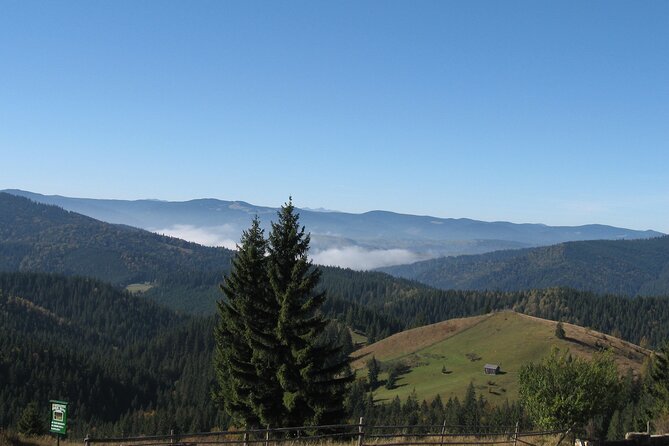
After Moldovita, the road crosses the gentle slopes of the Bucovina Mountains and reaches the Ciumarna, also called Palma, Pass, at about 1,100 meters. The pass is one of the day’s best changes of pace. You leave the painted walls behind and get broad views over the mountain country.
The lunch stop lasts about 45 minutes. You may eat at a grill restaurant or have a picnic, depending on the arrangements for the day. The provided details do not promise a fixed menu, so you should think of this as a flexible local meal stop rather than a prepaid dining experience.
That flexibility can work well. You can choose a simple grilled meal, or use the time to enjoy the view without turning lunch into a long restaurant break. Several accounts of the outing praise the selected eating place for its scenery and reasonable prices, and one describes trying local Romanian dishes there.
This is also the point where the day feels less like a checklist. The mountain road, the fresh air, and the chance to pause over food give the monasteries some context. You are seeing the places within the region that produced them, not visiting isolated monuments by bus.
Sucevita, the fortress-like monastery
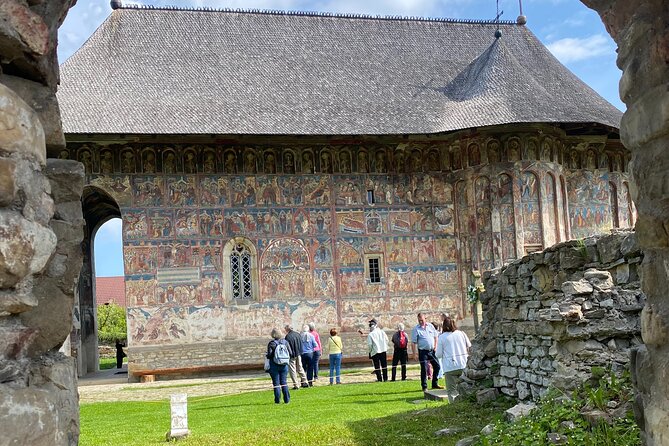
Sucevita Monastery, founded in 1586, is the largest of the four monastery stops. Its walls give it a fortress-like appearance, and the complex feels more imposing than the smaller Humor site.
The frescoes include Moses’ Life in the burial chamber and The Ladder of John Climacus, considered one of Sucevita’s finest works. The ladder image is especially useful to discuss with a guide because it turns religious teaching into a visual climb, with spiritual progress and danger represented through the arrangement of figures.
You have about 45 minutes here. That may feel brief at the largest complex, so use the time with purpose. Start with the guide’s explanation, then look again on your own. If you are interested in architectural details, this is a stop where the fortress-like walls and painted church should be considered together.
Sucevita is also the final major monastery of the day. By this point, the different color schemes and subjects should begin to make sense as a group. Humor is smaller and more unusual, Voronet is famous for its blue and Last Judgment, Moldovita offers the siege scene, and Sucevita closes with the largest, most fortified setting.
Marginea’s black pottery workshops
The last stop is Marginea, a village known as one of Romania’s three important pottery centers. The visit is short, about 10 minutes, so set your expectations accordingly. This is an introduction to the craft, not a long workshop class.
The focus is on seeing where local craftspeople make the renowned black pottery. The dark finish gives these pieces a clear identity, and the stop adds a useful handmade element after a day centered on painted religious art.
You may have time to look at the work and purchase something, but the schedule does not promise a detailed demonstration or extended shopping period. If pottery interests you, pay attention to the time and ask your guide how much opportunity you will have before leaving.
The drive then returns you to Suceava, with the activity ending at the original meeting point. Expect to be pleasantly tired. The day combines repeated walking stops with several hours on the road, but that is the practical price of seeing four monasteries and the mountain route in one outing.
What the $102.58 price really covers
At $102.58 per person, the tour is not the cheapest way to reach one monastery. Its value comes from combining four sites, private transportation, an English-speaking guide-driver, parking fees, and a full mountain route into one day.
The vehicle is air-conditioned, which matters during a long summer drive. A maximum of seven people is also a useful middle ground. You get the efficiency of a shared outing without the scale of a large coach, and the guide can usually explain the paintings in a more direct way.
The price does not include monastery admission. Each of the four monasteries charges 10 lei per person, for a total of 40 lei. The payment is cash-only, so do not arrive with only a bank card. Lunch is also not listed as included, and you should budget separately for food and any pottery or souvenirs.
I consider the cost fair for someone staying in Suceava or Gura Humorului who wants a simple, guided day without arranging several separate transfers. It is less compelling if you only want to see Voronet, or if you already have a car and are comfortable researching the monasteries yourself. The guide is the key part of the value. Without the explanations, the route becomes a pleasant drive with attractive churches. With them, the paintings become much easier to understand.
Practical comfort and clothing advice
Wear decent clothing for the monasteries. Shorts and sleeveless T-shirts are not allowed, so choose longer trousers or a skirt and cover your shoulders. This is a firm practical point, not a minor suggestion.
The tour is offered in English and most people can take part. It is near public transportation, and pickup can be arranged in Suceava or Gura Humorului if requested. The stated start time is 9:00 a.m., with the return to the original meeting point after roughly seven to eight hours.
The small group makes this a good choice for solo visitors, couples, and families who want company without a large crowd. It also suits anyone who prefers a guide who can adapt explanations and stop for questions. The day is less suited to someone who wants long, silent time at each church, since every stop follows a planned schedule.
Free cancellation is available when you cancel at least 24 hours before the start time. Changes or cancellations inside that window are not accepted for a refund. Confirmation is normally sent at booking, although bookings made within one day of departure are confirmed as soon as possible, subject to availability.
Should you book the Bucovina monasteries day tour?
Book it if you want the main painted monasteries in one well-organized day, especially if you are staying in Suceava or Gura Humorului and do not want to arrange the driving yourself. The strongest reasons are the small vehicle, the mountain scenery, and the guide’s attention to symbols that are easy to miss.
I would also choose it for a first visit to Bucovina. You get a useful sweep of the region: Humor’s unusual imagery, Voronet’s blue walls, Moldovita’s battle scene, Sucevita’s fortress-like complex, Palma Pass, and Marginea pottery.
Think twice if you dislike a full driving day, need long visits at every site, or want all costs folded into one payment. Bring 40 lei per person in cash for admissions, dress properly for the monasteries, and leave room in the budget for lunch.
For most people looking for a practical introduction to Bucovina’s painted churches, this is a strong choice. The paintings provide the reason to come, but the guide’s explanations and the mountain road are what make the day worthwhile.
FAQ
How long does the Bucovina Painted Monasteries Day Tour last?
The tour lasts approximately seven to eight hours, beginning at 9:00 a.m. and ending back at the meeting point in Suceava.
Where does the tour start?
The listed starting point is McDonald’s, Strada Ana Ipătescu 10A, Suceava 720026, Romania.
Is pickup available outside the listed meeting point?
Yes. Pickup can be requested from the train station, bus station, or another indicated location in Suceava or Gura Humorului.
What monasteries does the tour visit?
The route includes Humor Monastery, Voronet Monastery, Moldovita Monastery, and Sucevita Monastery.
Are monastery entrance fees included?
No. Admission costs 10 lei per person at each monastery. The total is 40 lei per person for the four monasteries, and payment is cash-only.
Is lunch included in the tour price?
Lunch is not listed as included. The schedule allows about 45 minutes for lunch at a grill restaurant or for a picnic at Palma Pass.
What language is the tour offered in?
The tour is offered in English with an English-speaking guide who also drives the vehicle.
How many people can join the tour?
The maximum group size is seven people.
What should I wear to the monasteries?
Decent clothing is required. Shorts and sleeveless T-shirts are not permitted.
What happens if I need to cancel?
You can receive a full refund if you cancel at least 24 hours before the experience starts. Cancellations or changes made less than 24 hours before the start time are not accepted for a refund.
Newest Romania trips on the site
- Winery touring & private wine tasting – one day private tour★ 5.0 · 3 reviews
- Village Museum Bucharest Guided Tour★ 5.0 · 6 reviews
- Private tour to Turda Salt Mine, Rimetea and Alba Iulia★ 4.8 · 5 reviews
- Bucharest: Dealu Mare Winery Private Trip with Wine Tasting★ 4.9 · 6 reviews
- Transylvania Tour: Dracula’s Castle, Peles Palace & Brasov★ 5.0 · 19 reviews
- Turda salt mine and Corvin Castle day tour from Cluj★ 5.0 · 9 reviews
- Turda Salt Mine, Gorge & Rimetea Village (private from Cluj)★ 5.0 · 5 reviews
- Danube Delta PRIVATE boat trip to Mila23 Village (guided tour)★ 5.0 · 9 reviews
Monastery Tours, compared.
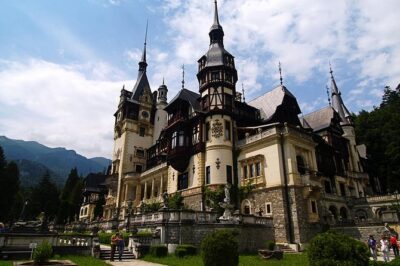
3-Castle: Peles,Bran,Rasnov,Sinaia Monastery from Brasov w pickup
Read our review →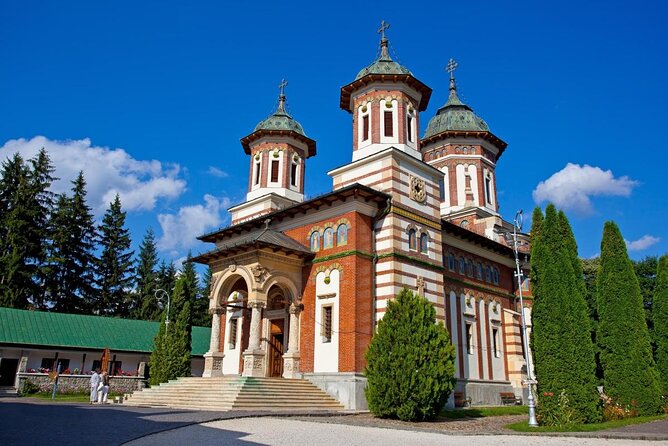
Peles Castle, Bran Castle, Rasnov Fortress and Sinaia Monastery Tour from Brasov
Read our review →
Princely Court of Târgoviște and Curtea de Argeș Monastery
Read our review →
Small Group Tour to Mogosoaia Palace & Snagov Monastery
Read our review →
1-Day Bucovina Painted Monasteries tour from Suceava – English
Read our review →
Sacred Monasteries Private Tour: Snagov, Țigănești & Căldărușani
Read our review →
Transfagarasan Highway, Balea Lake & Carta Monastery
Read our review →
Private Half Day Trip to Snagov Monastery & Mogosoaia
Read our review →Browse the lists this tour appears in