
Reviewed · DRACULA CASTLE TOURS
4-Day Transylvania and Dracula Tour from Bucharest
Dracula is only the doorway into this four-day journey. You also get medieval Saxon towns, royal castles, fortified churches, Orthodox monasteries, and long stretches of Romanian countryside. The route reaches Sibiu, Sighisoara, Brasov, Alba Iulia, and Bran, so you see far more than one famous castle.
I like the mix of major sights and smaller historical stops, especially Cozia Monastery and Alba Iulia, which add real Romanian context to the Dracula story. I also like that hotels, breakfast, transport, and pickup are bundled into one trip. The main drawback is distance: you cover a lot of ground, and some days involve several hours on the road. The tour also needs clarification about guiding, since the booking information says no guide follows the tour while past guests describe guides such as George and Liviu.
Key points to know before booking
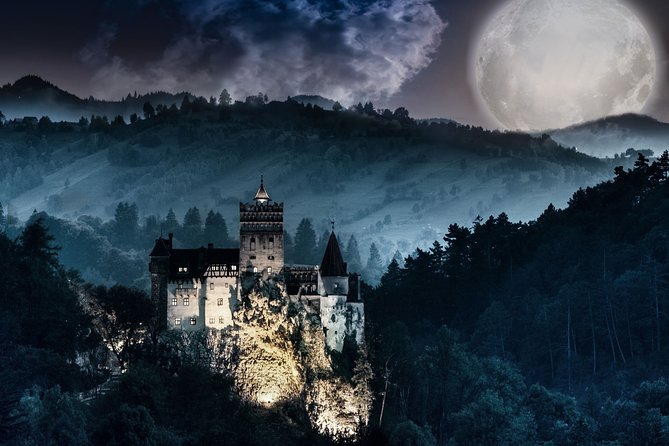
- Dracula’s story is only one part of the trip: You visit Bran Castle, Snagov Monastery, Sighisoara, and places linked with Vlad Tepes, but the tour also focuses on churches, royal history, and medieval towns.
- The route covers a large section of Transylvania: Sibiu, Corvin Castle, Alba Iulia, Sighisoara, Brasov, Bran, and Peles all appear within four days.
- Three hotel nights and breakfast are included: This makes the price easier to assess than a sightseeing tour that charges separately for every overnight stay.
- Entrance fees are mostly extra: Tickets for Corvin Castle, Bran Castle, Peles Castle, and Snagov Monastery are not included.
- The pace is manageable but road-heavy: Stops often last one to three hours, with scenic drives connecting them.
- Ask who will guide you: George, Liviu, and Alex are named in the feedback, but the formal details say local guides may cost extra.
Why this route gives you more than a Dracula story
The real strength of this tour is its range. You begin with medieval Transylvania, move through royal and military history, then finish with the most famous Dracula locations. That sequence gives you a better understanding of Romania than a quick Bucharest to Bran Castle outing.
Sibiu shows you the region’s German-speaking Saxon influence. Alba Iulia brings in the story of modern Romania. Sighisoara connects medieval urban life with Vlad Tepes. Brasov supplies a handsome old town and the Black Church. Bran Castle provides the Gothic setting most people expect, while Peles Castle shows the polished royal side of the country.
I especially like that the route includes religious buildings from several traditions. Sibiu’s Catholic, Orthodox, and Protestant monuments reflect the city’s mixed past. Cozia Monastery offers a Wallachian Orthodox setting, and Brasov’s Black Church brings you into the Protestant history of the region.
This is not a short castle hop. It is a broad introduction to central Romania, with the Dracula theme used as a thread rather than the whole fabric of the trip.
More Dracula Castle Tours in Transylvania
- Private tour Transylvania: UNESCO Gems and Legend of Dracula
★ 4.9 · 13 reviews - 2-Day Small-Group Tour to Dracula’s Castle, Rasnov Fortress, Peles Castle, Sighisoara and Libearty Brown Bear Sanctuary with Overnight in Brasov
★ 4.5 · 9 reviews - Dracula beyond the legend: 8-day private tour in Transilvania
★ 5.0 · 7 reviews
Day 1: Cozia Monastery and Sibiu’s medieval squares
The first day combines a stop in the Olt Valley with several hours in Sibiu. Cozia Monastery is a compact visit, listed at about 30 minutes, so you should think of it as an opening historical stop rather than a long guided tour.
Founded in the 14th century by Prince Mircea the Elder, Cozia is an important Wallachian monument. Its facade has Armenian decorative elements, while the interior contains frescoes. The visit helps place Vlad Tepes and later Romanian rulers within the wider story of Wallachia, the principality south of the Carpathians.
You then continue toward Sibiu, where you have about three hours. That is enough time to walk through the main squares and get a feel for the city, though it is not enough for every museum and church. Big Square, Small Square, and Huet Square are the core of the old center, and their arrangement makes Sibiu easy to explore on foot.
Look up as you walk. The city is known for its houses with eye-shaped roof windows, medieval towers, and surviving sections of defensive walls. You also see the large Gothic evangelical church, one of the city’s main landmarks.
Sibiu was European Capital of Culture in 2007 and remains a major arts center. Its mix of Saxon, Romanian, Catholic, Orthodox, and Protestant influences gives the city more depth than its pretty facades alone suggest.
The practical issue is timing. If you enjoy museums, church interiors, and slow café stops, three hours will feel short. If you want a strong first walk through a medieval center, it works well. The drive into Transylvania also begins the road-heavy pattern that continues through the tour.
Day 2: Corvin Castle and the walls of Alba Iulia
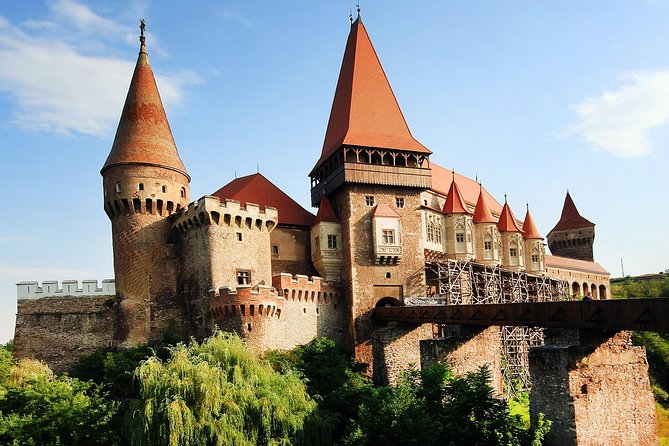
Corvin Castle is one of the most dramatic stops on the route. You have about an hour there, with admission extra. The Gothic fortress has the kind of towers, bridges, and stonework that make it popular for historical films.
The castle is tied to the Corvini family, and the visit focuses on that family and its place in regional history. An hour gives you a useful look at the building and its setting, but you may want more time if you like castle interiors or photography.
Corvin Castle is also one of the places where the scenery matters. The surrounding views make the approach memorable, and the structure feels more like a fortified medieval residence than a polished royal palace. Wear shoes with a good grip, since the tour includes walking through historic sites and recommends comfortable footwear.
Alba Iulia follows, with about two hours inside its citadel. This is one of the most important political places in modern Romanian history. On December 1, 1918, the event associated with the creation of Greater Romania took place here.
The citadel, walls, and museums give you a clear sense of the city’s military and national importance. Compared with Bran Castle, Alba Iulia is less tied to popular fiction and more useful for understanding Romania as a country.
This is a good pairing: Corvin Castle supplies medieval drama, while Alba Iulia explains a major chapter of Romanian identity. The tradeoff is another day with substantial driving. You gain breadth, but you should not expect long, unhurried time at every site.
Day 3: Sighisoara’s citadel and Brasov’s Black Church
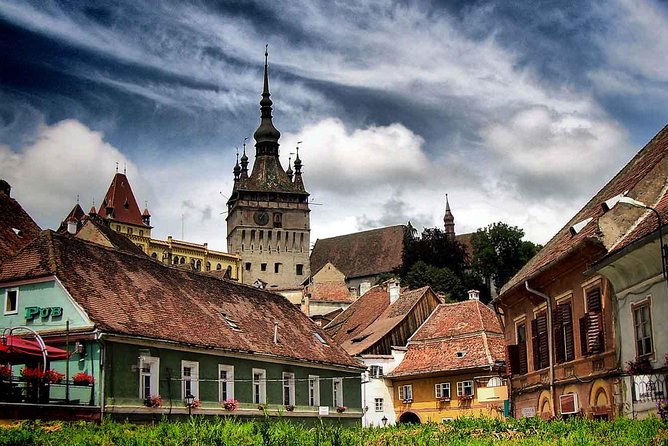
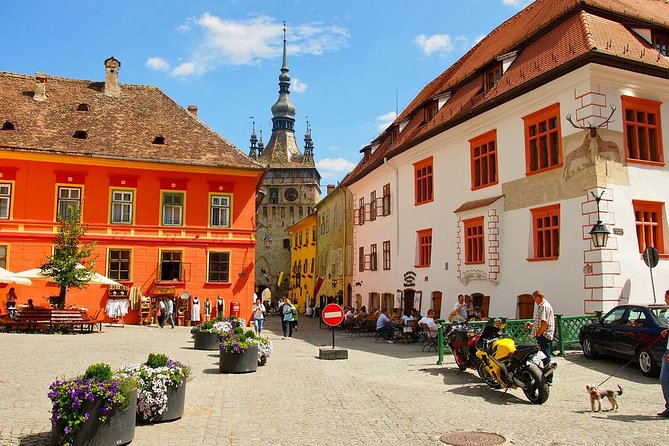
Sighisoara is one of the most appealing stops on the journey. The historic center is a UNESCO site and remains inhabited, so it feels like a real town rather than a preserved museum district.
You have about two hours to explore. The Clock Tower is the obvious landmark, but the steep streets, fortified towers, and hilltop church give the citadel its character. The wooden Schoolchildren’s Staircase leads toward the church on the hill, and the Shoemakers’ Tower adds another reminder of the old craft guild system.
Sighisoara also has links to Vlad Tepes. You can have lunch at the house associated with his birth, though that meal is at your own expense. Keep your expectations clear: this is a historical association within a living medieval town, not a full Dracula attraction.
The town also reflects its Hungarian and German past. The statue of Hungarian poet Petofi Sandor, the Catholic church connected with the Hungarian community, and the old fortifications all point to the area’s mixed cultural background.
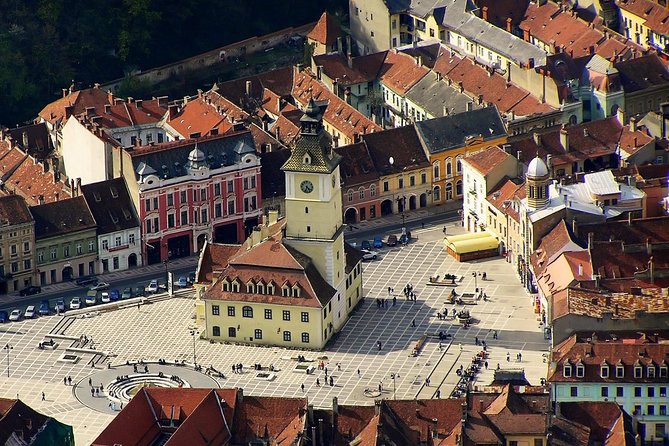
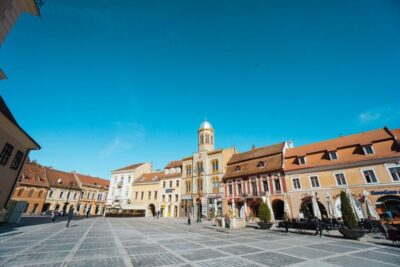
Brasov receives about three hours. The city once had a complete defensive system, and its old center still shows a strong German architectural influence. Gothic, Baroque, and Renaissance elements appear in the streets around Council Square.
The Black Church is the main stop. It is the largest evangelical Gothic church in Eastern Europe, with a 65-meter bell tower and a 90-meter length. Inside, you can see its large 19th-century mechanical organ. Admission is listed as included in the stop, although it is wise to confirm exactly what is covered.
You also visit the Schei district and see historic entrances such as Catherine’s Gate and Schei Gate. The pedestrian Republic Avenue and restored old-center buildings provide an easy route for a first look at Brasov.
This is probably the most balanced day of the tour. Sighisoara gives you a compact citadel, while Brasov offers a larger city with churches, squares, and more time to walk around. If you want a relaxed evening, check how the overnight arrangements work, since the tour may leave limited independent time.
More ways to get to Bran Castle:
- Private Tour to Salt Mine, Lunch at Winery and Dracula Grave
★ 5.0 · 60 reviews - 4×4 Nature Tour in Land of Dracula – 1 day
★ 5.0 · 34 reviews - Small-group max 7, Salt Mine, Lunch at Winery & Dracula Grave
★ 5.0 · 25 reviews - Searching for Dracula: Private Day Trip from Bucharest
★ 4.5 · 21 reviews
Day 4: Bran Castle, Peles Castle, and Snagov
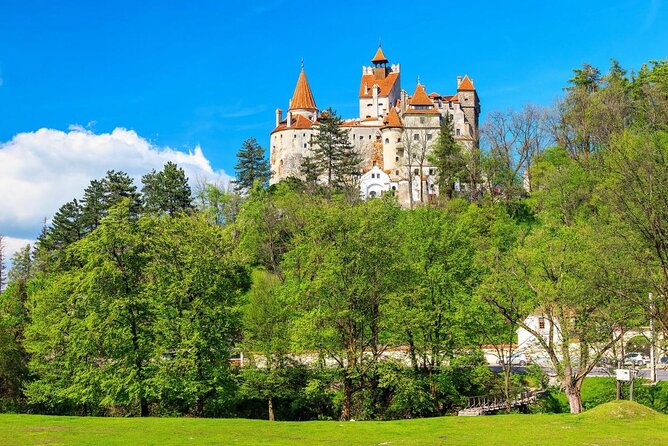
Bran Castle is the headline stop. It sits near the Bran-Rucar passage, around 25 kilometers from Brasov, and is widely known as Dracula’s Castle.
The building predates Bram Stoker’s 1897 novel. Documents mention Bran Castle from 1377, and its early role was strategic, marking the border between Transylvania and Wallachia. It was connected at different times with King Sigismund of Luxembourg, Mircea the Elder, Vlad Tepes, and the city of Brasov.
The castle later became a royal residence. In 1912, Brasov’s municipality donated it to the Romanian royal family. That royal chapter matters because the building is not simply a vampire-themed attraction. Its real story includes border control, medieval rulers, and 20th-century royalty.
You have about two hours here, with admission extra. That should allow time to explore the castle and take in the setting, but crowds and stairways can affect how much you see. Bran is a strong choice for anyone drawn to Gothic architecture and Dracula lore, though the direct connection to Bram Stoker’s fictional character is more atmospheric than historical.
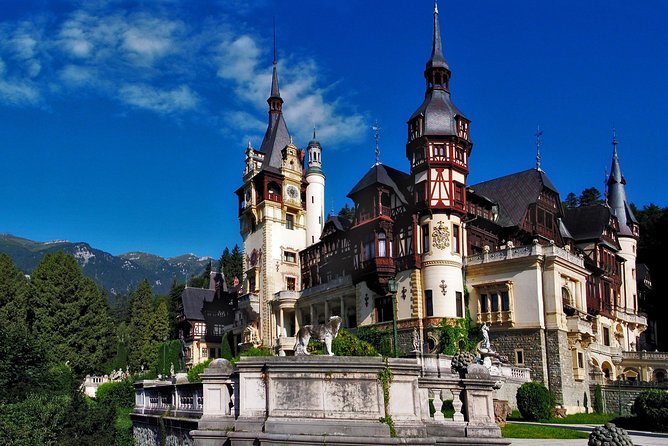
Peles Castle offers a sharp change of mood. Built as the summer residence of Romania’s first king, Carol I of Hohenzollern, it was designed by a Czech architect and constructed between the 19th and 20th centuries.
You have two hours, and admission is not included. The castle is known for rooms that use different decorative styles, including a Florentine room with a Renaissance feel. Compared with Bran’s fortress character, Peles is refined, ornate, and tied to the Romanian monarchy.
I like the pairing because it prevents the final day from becoming a one-note Dracula outing. Bran gives you legend and medieval defenses. Peles gives you court life, architecture, and Romania’s royal period.
The final stop is Snagov Monastery, on a small island in Lake Snagov near Bucharest. The monastery is associated with Vlad Tepes’s burial in 1476. You have about an hour, and the entrance fee is extra.
Snagov is a fitting final stop because it returns the story to Vlad himself. It also gives the tour a quieter ending after the larger castles and city centers. The site’s island setting makes it distinct from the other religious buildings on the route.
What the $1,023.50 price really covers
At $1,023.50 per person, this is a major purchase. The value depends on how much you want handled for you.
The price includes three nights of accommodation, three breakfasts, transport in an air-conditioned vehicle, hotel pickup, and hotel drop-off. A small group is also an advantage, with a maximum of 15 people listed. Past feedback describes comfortable transport, good hotel locations, and restaurant choices with local character.
The package saves you from arranging several hotels, mapping a complicated route, and dealing with long intercity connections. That matters in Romania, where these sights are spread across a wide area.
You still need to budget for entrance fees at Corvin Castle, Bran Castle, Peles Castle, and Snagov Monastery. Lunches, dinners, and guide tips are also extra. A single-room supplement of 70 euros is paid locally in cash.
The biggest value question is guiding. The formal information says no tour guide follows the tour and that local guides can be arranged at extra cost. Yet the strongest feedback describes George as a flexible, friendly guide who adjusted the route, chose restaurants, helped with special needs, and explained sites beyond the planned stops. Liviu is also praised as funny and well informed, while Alex is named in connection with organizing the trip.
Because those details do not line up, ask before paying: Who will drive? Who will explain the sites? Is a guide included in your exact booking? Are local guides added at each stop, and what do they cost? The answer could change the value considerably.
Pace, group size, and practical comfort
Pickup is offered from your Bucharest hotel, with the stated start around 8:30 or 9:00 in the morning. The vehicle is air-conditioned, and the maximum group size is 15.
You should expect regular walking through old towns, castles, churches, citadels, and monastery grounds. Comfortable shoes are a sensible choice. Children must be accompanied by an adult, and the activity says most people can participate.
The road time is not a minor detail. One person found the driving longer than expected, while also appreciating that it allowed more of the countryside to be seen. That is the right way to judge this trip: you are trading slow exploration in one region for a broad route through many of Romania’s best-known sites.
The feedback also describes the tour as suitable for a person with a disability when George was able to adjust around obstacles. That is encouraging, but it is not a formal accessibility guarantee. If mobility is important for you, discuss the vehicle, hotel access, castle stairs, and walking distances before booking.
Who should book this Transylvania tour?
I would choose this tour if you have four days, want to see many headline sights, and prefer one organized route rather than arranging transport and hotels yourself.
It suits solo visitors, couples, families with older children, and anyone interested in castles, medieval towns, Romanian history, or Gothic literature. The small maximum group and private-tour format can also work well if you value flexibility.
I would think twice if you dislike long drives, want deep time in each town, or expect every Dracula connection to be historically direct. You may prefer a slower trip based in Brasov or Sibiu.
The non-refundable policy also makes careful planning important. If the company cancels because the minimum number is not met, you are offered another date or experience, or a full refund. But if you cancel or request a change, your payment is not refunded.
Should you book it?
Book this tour if your priority is coverage. In four days, you see a remarkable list of Romanian places: Sibiu, Cozia, Corvin Castle, Alba Iulia, Sighisoara, Brasov, Bran, Peles, and Snagov.
The strongest reasons to go are the varied route, included hotels and transport, and the chance to have a guide such as George shape the days around your interests. Before booking, confirm the guide arrangement and the extra entrance costs. If you accept the driving, this is a useful and well-rounded first look at Transylvania, with Dracula providing the hook and Romania providing the substance.
FAQ
How long is the tour?
The tour lasts approximately four days and includes three nights of accommodation.
Where does the tour begin?
It begins in Bucharest, with pickup from your hotel.
What time is pickup?
The stated start time is around 8:30 a.m., while the pickup details give 9:00 a.m. Confirm the exact time with the provider.
What accommodation is included?
Three nights of accommodation are included. A single-room supplement of 70 euros is paid locally in cash.
Is breakfast included?
Yes. Three breakfasts are included.
Is transport included?
Yes. Transport is provided in an air-conditioned vehicle, with pickup and drop-off at your hotel.
Are entrance fees included?
No. Entrance fees for Corvin Castle, Bran Castle, Peles Castle, and Snagov Monastery are listed as extra.
Is a tour guide included?
The information is mixed. It says no guide follows the tour and that local guides can be arranged for extra cost, while past guest feedback names guides including George and Liviu. Confirm the exact arrangement before booking.
What is the maximum group size?
The maximum listed group size is 15 people.
Can children join the tour?
Yes, but children must be accompanied by an adult.
More Four-Day Trips From Bucharest
- 4-Day Private Tour in Transylvania from Bucharest
★ 5.0 · 48 reviews - Transylvania Castles 4-day tour from Bucharest
★ 5.0 · 31 reviews - 4 Days Private Tour in Transylvania: Sibiu, Sighisoara and Brasov
★ 5.0 · 18 reviews - 4-Day Private Tour of Transylvania from Bucharest
★ 5.0 · 16 reviews
Newest Bucharest trips on the site
- Winery touring & private wine tasting – one day private tour★ 5.0 · 3 reviews
- Bucharest: Dealu Mare Winery Private Trip with Wine Tasting★ 4.9 · 6 reviews
- Village Museum Bucharest Guided Tour★ 5.0 · 6 reviews
- Private Transfer from Giurgiu Port to Bucharest★ 4.5 · 12 reviews
- Airport Henri Coanda (Otopeni) to Bucharest – Private Transfer – Driver★ 5.0 · 5 reviews
- Salt Mine Tour from Bucharest with Entrance Ticket★ 4.5 · 19 reviews
- Wine tasting in Bucharest Old town – bonus cheese platter★ 4.5 · 6 reviews
- Walking tour of Bucharest★ 5.0 · 3 reviews
Dracula Castle Tours, compared.
Dracula’s Castle, Peles Castle, & Brasov Old Town
Read our review →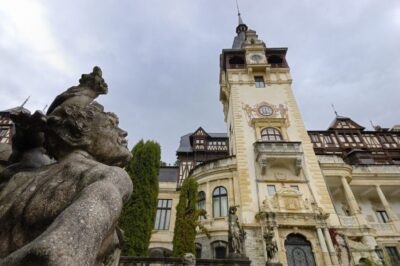
Dracula Castle, Peles Castle & Brasov Old Town
Read our review →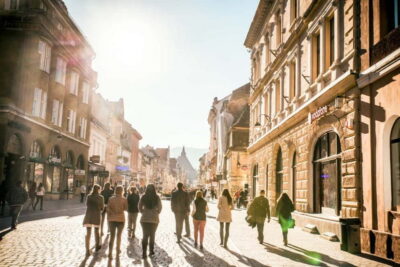
Dracula’s Castle, Peleș Castle & Brașov Day Trip
Read our review →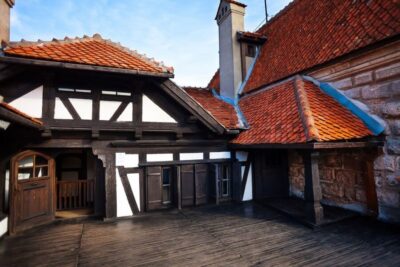
Day Trip to Dracula Castle, Peles Castle & Brașov
Read our review →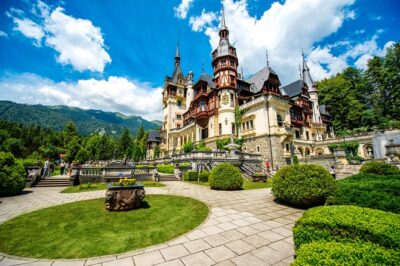
Bucharest to Dracula Castle, Peles Castle and Brasov Guided Tour
Read our review →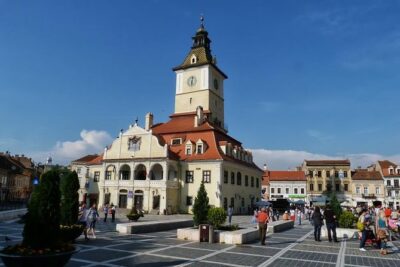
Dracula’s Castle, Peles Castle and Brasov Day Trip from Bucharest
Read our review →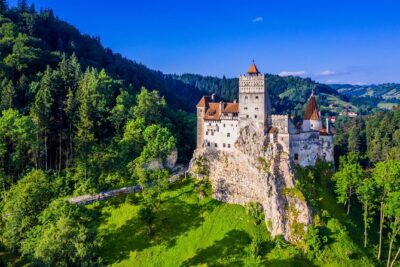
Transylvania and Dracula Castle Full Day Tour from Bucharest
Read our review →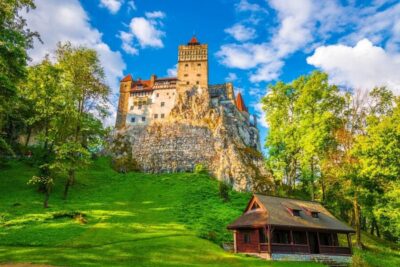
Browse the lists this tour appears in