
Reviewed · FOOD & DRINK
Taste Bucharest: A Food Lover’s Tour of Markets & Neighbourhoods
Bucharest tastes best away from the polished center. This five-hour outing takes you from the National Theatre through old neighborhoods and onto a tram bound for Obor Market, where the food becomes the main event. You might try mici grilled sausages, homemade cheeses, cured meats, spreads, pickles, and a sweet Wallachian doughnut.
I like the mix of food and city history, especially the visit to the Armenian Quarter and the ride through Communist-era Bucharest. I also like the small group size, capped at 12, and the fact that beer, tuica, soft drinks, coffee, tea, and food samples are included. The main consideration is that the food is mainly cold peasant-style fare, with mici as the major hot dish, so do not book this expecting cabbage rolls or soup.
Key points to know before booking
- Obor Market is the food center of the day: You explore its produce, deli counters, traditional goods, and nearby street food before sitting down to eat.
- The menu favors snacks and shared platters: Expect cheeses, sausages, smoked bacon, cracklings, dips, vegetables, bread, pickles, mici, and doughnuts.
- You cover about 6 kilometers on foot: Add a short public transport ride, including a tram journey along Calea Moșilor.
- The history is part of the deal: The National Theatre, Batiștei Church, Armenian Quarter, and Communist-era streets give the meal a clear local setting.
- Guides make a real difference: Angelica, Bogdan, Julian, Mihaela, Andrea, Andreea, Elena, Daniel, and Alex have all led this experience, with strong praise for their warmth, humor, and local insight.
- Small groups keep it personal: The maximum is 12 people, though private or very small departures may feel more like an outing with a local friend.
Why this Bucharest food tour feels different
Many city food tours stay close to the center and move from restaurant to restaurant. This one uses food as a reason to cross Bucharest. You begin among central landmarks, walk through older residential streets, take public transport, and finish near Saint George Square and Unirea Square.
That broader route matters. You see Bucharest as a city of layers, not just a collection of grand buildings. Neo-Romanian houses, Orthodox churches, Armenian architecture, Communist-era streets, trams, produce stalls, and neighborhood cafes all become part of the meal.
The food is generous rather than fussy. A typical spread may include aubergine dip, zacusca, whipped beans, fish roe, telemea and burduf cheeses, sausages, smoked bacon, cracklings, red onions, tomatoes, and toast. You may also taste cow, sheep, and goat cheeses, along with seasonal produce such as wild strawberries, wild garlic, spicy pickles, watermelon, or grapes.
The exact selection depends on the season and what is available that day. That is good news if you want food connected to local markets, but it also means you should not expect every item listed above on every departure.
More food tours in Bucharest:
- Street Food’n’Culture Tour
★ 5.0 · 209 reviews - Wine Tasting in Bucharest
★ 5.0 · 183 reviews - Discover Bucharest: Private Highlights and Traditional Food Tour
★ 5.0 · 86 reviews
Starting at the National Theatre and the Romanian Revolution
The meeting point is the Ion Luca Caragiale National Theatre on Bulevardul Nicolae Bălcescu. The tour begins with the building’s role in the Romanian Revolution and the street fighting that shaped Bucharest’s recent past.
This is a useful opening because it gives you a political and human frame for the city before you start eating. Bucharest can look elegant at first glance, but its streets carry the marks of monarchy, dictatorship, revolution, and rapid change. The National Theatre helps connect those events to the ground beneath your feet.
The opening stop lasts about 15 minutes. That is enough for an introduction without turning the whole tour into a lecture. Guides such as Angelica, Bogdan, Julian, and Mihaela have been especially appreciated for explaining history in a relaxed, personal way.
Batiștei Street and the old American embassy
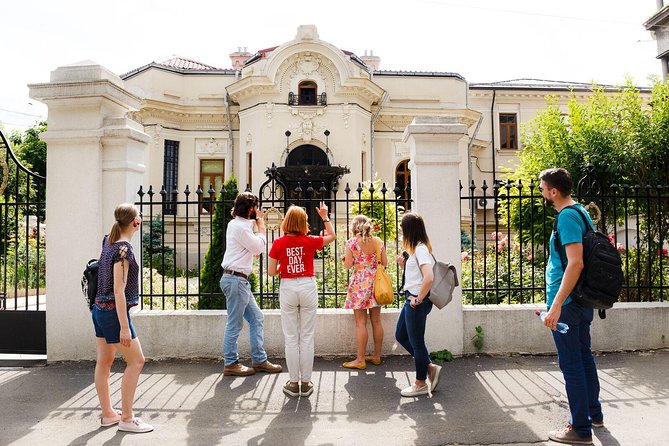
From the theatre, you walk toward Strada Batiștei, a short route that begins to pull you away from the main tourist corridors. Here, the focus shifts to 19th-century Neo-Romanian architecture and the former American embassy.
This section is valuable for anyone who likes cities through their buildings. You are not simply being shown a famous monument. You are looking at a neighborhood shaped by changing governments, foreign connections, and local architectural style.
The stop takes about 20 minutes, followed by a brief visit near Batiștei Church at Strada Batiștei 19. The church offers a look at Romanian Orthodox heritage and gives the guide another chance to explain how religion and architecture fit into Bucharest’s story.
The history portion can feel dense if you mainly want to eat. One person found the food less varied than expected and felt that the historical explanations ran a little long. That is a fair warning. This is a food and culture walk, not a rapid-fire tasting crawl.
The Armenian Quarter and Bucharest’s oldest documented house
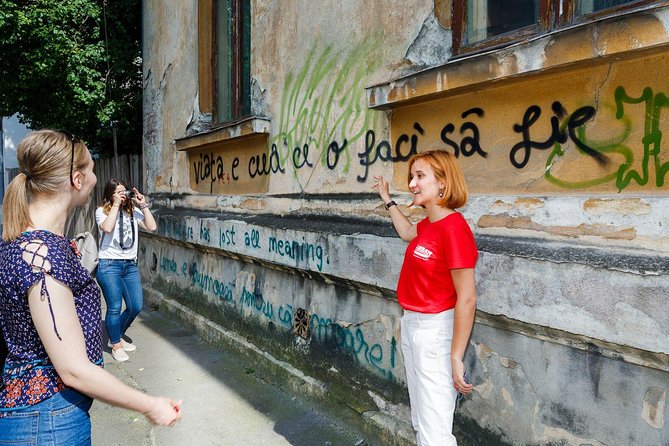
The longest historical stop before the market is the Armenian Church and the surrounding Armenian Quarter. You spend about an hour here, looking at the area’s mixed architecture and visiting Bucharest’s oldest documented house.
This is one of the tour’s strongest features for first-time visitors. You get a part of Bucharest that is easy to miss if you stay around the main squares. The neighborhood helps explain the city’s cultural variety, while the old house gives the past a physical scale you can grasp.
I like this pause in the schedule because it slows the morning down. You have time to look up at facades, notice the contrast between restored and worn buildings, and ask questions. The guide is not just pointing out a church and moving on.
The experience has been led by several guides, and the tone seems to vary slightly by person. Angelica is described as warm and attentive. Julian brings humor and strong English. Alex has been especially good at combining neighborhood history with food knowledge, even helping people track down small palinca glasses and local products in the market.
A different sort of day out, same corner of Romania:
- Bucharest: Palace of Parliament Tickets and Guide
★ 4.3 · 3,182 reviews - Bucharest: Palace of Parliament Tickets and Guided Tour
★ 4.4 · 1,877 reviews - Bucharest: Parliament Palace Skip-the-line Ticket
★ 4.2 · 1,518 reviews - Bucharest: City Highlights Guided Walking Tour
★ 4.9 · 1,482 reviews
Calea Moșilor by tram
Next comes one of the tour’s most useful local touches: a short ride on Bucharest public transport along Calea Moșilor. The route takes you toward Obor and shifts the setting from older central neighborhoods to Communist-era Bucharest.
A tram ride is not a grand attraction, and that is exactly why it works. You get a brief look at how residents move around the city rather than traveling only in a private vehicle or between polished tourist sites.
The ride also breaks up the walking. You still cover about 6 kilometers on foot, but the public transport segment gives your legs a rest and adds another ordinary part of Bucharest life.
Do wear comfortable shoes. Five hours, market floors, sidewalks, neighborhood streets, and roughly 6 kilometers of walking add up. This is not a good match if you want to remain seated or if long walks are difficult.
Obor Market, the tour’s main course
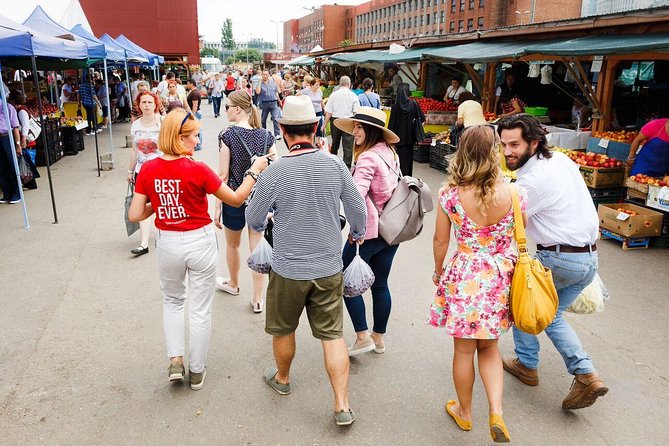
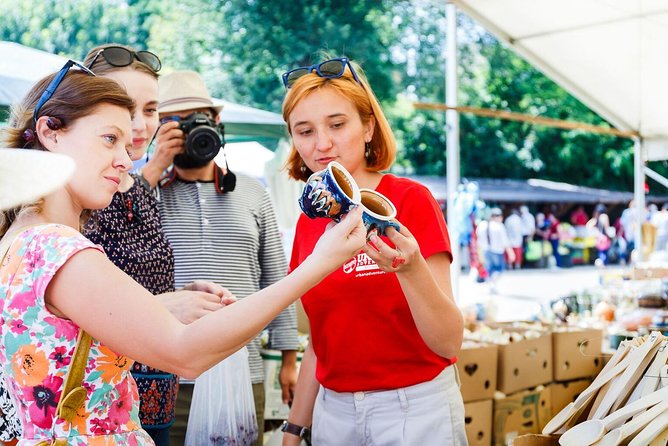
Obor Market is where the food side of the experience takes over. The market is full of produce, traditional items, deli foods, and the smells of everyday Bucharest cooking. You have about 1 hour and 40 minutes in this area, making it the longest stop by far.
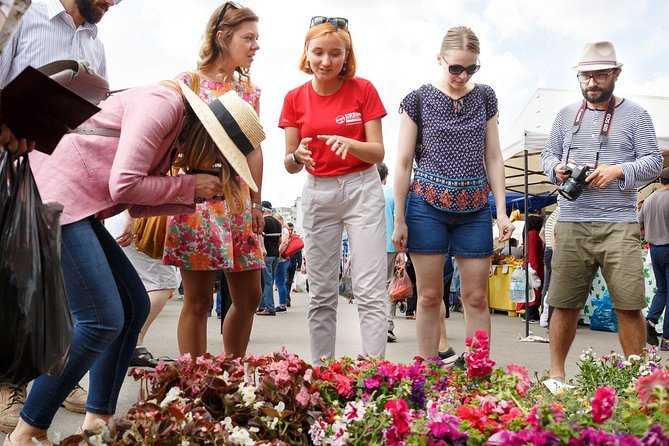
You may walk through the produce sections with your guide, learn how local shoppers use the market, and see seasonal ingredients before tasting them. This is where the experience feels most connected to ordinary city life. It is not just a restaurant meal with Romanian labels attached.
The food usually begins with a shared peasant platter. Think salty cheese, smoked meat, sausages, bacon, cracklings, spreads, onions, tomatoes, pickles, and bread. You may also sample fish roe, zacusca, aubergine dip, or whipped beans.
Romanian cheese is a major part of the meal. Telemea is a firm, salty cheese, while burduf has a stronger character and is traditionally associated with sheep’s milk. The selection may also include cow’s milk, goat’s milk, and sheep’s milk cheeses.
The seasonal tasting is a nice detail. Instead of serving the same fixed plate all year, the guide may offer wild strawberries, wild garlic, grapes, watermelon, or spicy pickles, depending on the time of year. This gives the food a connection to the market rather than treating Romanian cuisine as a museum display.
Mici, beer, tuica, and the final doughnut
The best-known hot food on the route is mici, Romania’s skinless grilled sausage. It is usually served with mustard, and it is one of the dishes most closely tied to casual Romanian eating.
You may eat mici at a local market-side stop or nearby eatery. The setting matters. This is not a formal tasting menu with tiny portions and elaborate plating. It is direct, filling food that people order in a busy market district.
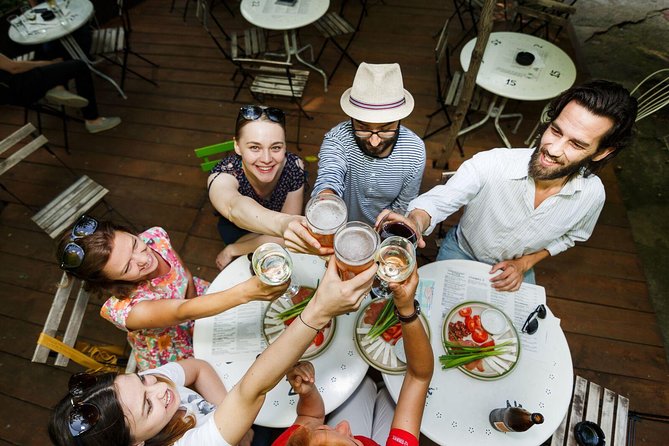
Drinks are included, within the stated selection. You can expect a shot of tuica, Romania’s fruit brandy, and up to three beers. Nonalcoholic choices include soft drinks, coffee, or tea. Craft beer is part of the advertised experience, though the exact brands and number of samples can vary.
The tour usually ends with a Wallachian doughnut. It is a welcome sweet finish after the salty meats, cheeses, and pickles. Several guides have made the final doughnut a memorable part of the day, and you will probably appreciate it even more after the walking.
If you do not drink alcohol, tell the guide or booking provider in advance and choose the soft drink, coffee, or tea alternatives. The tour is not dependent on alcohol, but tuica and beer are central to the standard tasting.
What the price includes, and where the value lies
At $102.79 per person, this is not the cheapest way to eat in Bucharest. The value comes from the amount packed into roughly five hours: several food stops, drinks, market access, local transport, neighborhood walks, and a guide who connects everything.
Food and drink samples are included, so you are not paying the tour fee and then facing a string of surprise tasting charges. You may still want money for extra food, drinks, or market purchases. Tips are not included.
For me, the price makes the most sense if you are new to Bucharest and want a strong orientation in one morning or afternoon. You are paying for access and context as much as for the food. A local guide can explain what you are seeing at Obor, steer you toward items you might not recognize, and make a public market easier to understand.
The value is weaker if you already know Bucharest well or mainly want hot Romanian comfort food. The menu focuses on traditional cold foods, grilled mici, seasonal produce, and sweets. If your idea of a perfect Romanian meal is soup, cabbage rolls, or a long sit-down dinner, this may not meet your expectations.
Guide quality and group size
The guide is the most important variable in a walking tour like this. The strongest departures have been led by people such as Angelica, Bogdan, Julian, Mihaela, Andrea, Andreea, Elena, Daniel, and Alex.
The common thread is a friendly, personal approach. Some guides have extended the outing when the group was small. Others have offered practical help, recommended places to visit later, or answered questions about Romanian food and architecture between stops.
A maximum of 12 people is a sensible limit. It allows you to hear the guide, ask questions, and stay together in a market. A very small group can feel almost private, while a full group will have less room for long individual conversations.
The tour is offered in English. Confirmation arrives when you book, and the start point is near public transportation. The route ends at Piața Sfântul Gheorghe, close to Unirea Square, which is useful if you want to continue exploring central Bucharest afterward.
Food allergies, dietary needs, and walking demands
Tell the operator about allergies, vegetarian or vegan needs, gluten intolerance, or other dietary restrictions at least 24 hours ahead. The team will try to adapt, but choices may be limited because the food depends on the day’s market supply.
That warning matters here. Much of the standard menu includes meat, dairy, bread, and fish roe. A person with broad dietary restrictions may have fewer samples and should confirm what can be offered before booking.
The route involves around 6 kilometers of walking plus a short tram ride. Most people can take part, but comfortable walking shoes are essential. The market portion includes time on foot, and the day is active rather than leisurely.
You can cancel for a full refund up to 24 hours before the start time. Changes or cancellations made less than 24 hours ahead are not accepted for a refund.
Who should book this experience?
Book it if you want to see Bucharest through neighborhoods, public transport, markets, and everyday food. It suits first-time visitors, curious eaters, and anyone who prefers a local market to a formal restaurant.
It is also a good choice if you have limited time. The route gives you history, architecture, city orientation, and a substantial amount of food in one five-hour experience.
Think twice if you want a restaurant-focused food tour, a fixed menu, or a short walk. The route can change, the food depends on season and availability, and the history portion is a real part of the day.
For the right person, this is a practical introduction to Bucharest: salty cheese, smoked meat, market vegetables, grilled mici, tuica, a tram ride, and a guide who can explain why the city looks the way it does. Book it early if your schedule is tight, since it is commonly reserved well ahead of time, but make sure the walking distance and cold-food emphasis suit you.
FAQ
How long does the Bucharest food tour last?
The experience lasts approximately five hours.
Where does the tour begin?
It begins at the Ion Luca Caragiale National Theatre, at Bulevardul Nicolae Bălcescu 2 in Bucharest.
Where does the tour end?
The tour ends at Piața Sfântul Gheorghe, near Saint George Square and Unirea Square.
How much walking is involved?
The route covers approximately 6 kilometers on foot, along with public transportation, including a short tram ride.
What food is usually included?
Samples may include Romanian cheeses, cured meats, sausages, smoked bacon, cracklings, zacusca, aubergine dip, whipped beans, fish roe, seasonal produce, pickles, tomatoes, bread, mici with mustard, and a Wallachian doughnut.
What drinks are included?
The usual drink selection includes a shot of tuica, up to three beers, soft drinks, and coffee or tea. Exact options can vary.
Can dietary restrictions be accommodated?
You should notify the operator at least 24 hours in advance about allergies, vegetarian or vegan needs, gluten intolerance, or other dietary requirements. Options may be limited depending on availability.
What is the cancellation policy?
You can cancel at least 24 hours before the start time for a full refund. Cancellations or changes made less than 24 hours before the experience are not accepted for a refund.
Newest Bucharest trips on the site
- Winery touring & private wine tasting – one day private tour★ 5.0 · 3 reviews
- Bucharest: Dealu Mare Winery Private Trip with Wine Tasting★ 4.9 · 6 reviews
- Village Museum Bucharest Guided Tour★ 5.0 · 6 reviews
- Private Transfer from Giurgiu Port to Bucharest★ 4.5 · 12 reviews
- Airport Henri Coanda (Otopeni) to Bucharest – Private Transfer – Driver★ 5.0 · 5 reviews
- Salt Mine Tour from Bucharest with Entrance Ticket★ 4.5 · 19 reviews
- Wine tasting in Bucharest Old town – bonus cheese platter★ 4.5 · 6 reviews
- Walking tour of Bucharest★ 5.0 · 3 reviews
Food & Drink, compared.
Discover Bucharest: Private Highlights and Traditional Food Tour
Read our review →
Half-Day Private Food and Wine Walking Tour Oradea Romania
Read our review →

Private Bucharest: History & Food with Traditional Meal
Read our review →
Traditions in Bucharest: Village Museum and Wine Tasting Tour
Read our review →Browse the lists this tour appears in