

Reviewed · COMMUNIST HISTORY TOURS
Bucharest: Museum of Communism Ticket with Communist Coffee
Bucharest’s Museum of Communism turns a difficult political era into a hands-on visit. You can type on an old typewriter, read original magazines, try on period clothes, and sit on a communist couch with a cup of nechezol, the coffee substitute linked with Romania’s final communist years. It feels less like a formal gallery and more like stepping into someone’s old living room.
I like the tactile exhibits, which give you something to do while you learn, and the English-speaking staff, who can answer questions in the rooms. The main drawback is size: you may finish in 45 minutes, and some displays rely heavily on posters and simple explanations rather than a full historical presentation.
Key points
- Try a cup of nechezol: Your ticket includes the communist-era coffee substitute served in an original old cup.
- Touch the collection: Type on a vintage machine, handle selected objects, read old magazines, and try on period clothing.
- Expect a small old-town museum: Most visits take about 45 minutes to an hour, though careful readers may stay longer.
- Ask questions in English: Staff are available inside the museum and can add context to the displays.
- Best with a companion: Music, clothing, and photo opportunities are more enjoyable when you have someone to share them with.
- Check access needs first: The museum is not suitable for wheelchair users.
A small museum with a very specific purpose

The Museum of Communism in Bucharest focuses on Romania’s recent past, especially the effect of communism on ordinary people and on the city. This is not a vast national museum with room after room of documents. It is a compact experience built around familiar objects and everyday memories.
That approach matters. Political history can feel remote when it is reduced to dates, speeches, and official portraits. An old typewriter, a magazine, a piece of clothing, or a living-room sofa gives you a more personal entry point. You begin to think about how people worked, read, dressed, relaxed, and made do.
The museum is in Bucharest’s old town, so it works well as a short stop between other sights. I would not plan an entire afternoon around it. Instead, treat it as a focused hour that adds a human scale to your understanding of Romania.
More communist-era history walks in Bucharest:
- The Real tour of Communism
★ 5.0 · 666 reviews - Life under Communism
★ 5.0 · 358 reviews - 3-Hour Guided Tour of Communist Bucharest
★ 4.9 · 303 reviews
What you do when you enter
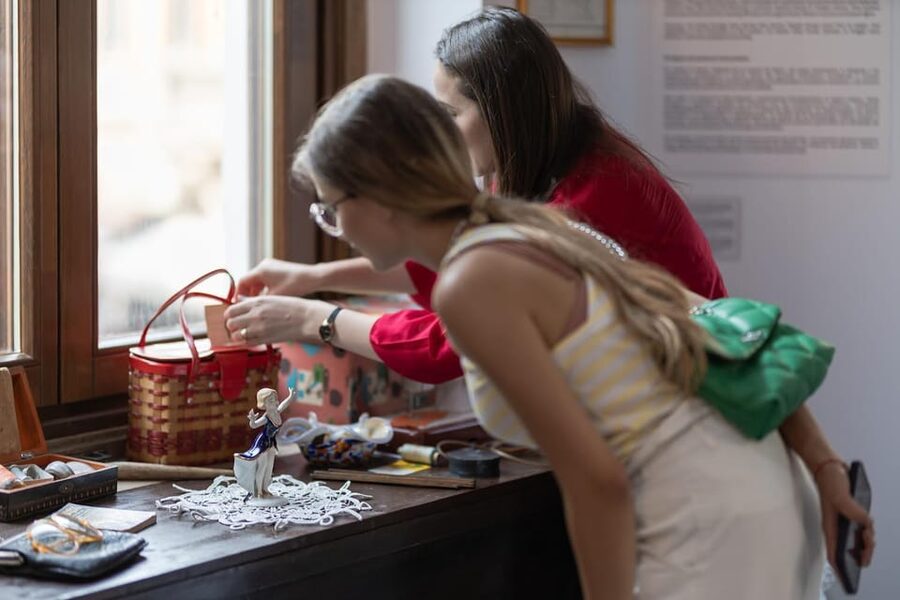
The visit is largely self-guided. You move through the rooms, look at the displays, and use the interactive objects where invited. English-speaking staff are available to answer questions, which is useful because the museum’s short labels cannot explain every part of Romania’s communist period.
The hands-on approach is the museum’s main idea. You can type on an old typewriter rather than only look at one behind glass. You can read original magazines and try on old clothes. Music and photo opportunities add a lighter touch, especially if you visit with a friend or family member.
That also creates a small tension. Some people will find the museum genuinely interactive because it lets you touch and use objects. Others may expect a larger number of activities and find that many rooms still depend on posters and reading. If you prefer detailed historical interpretation, ask the staff questions instead of simply walking from panel to panel.
Old magazines, clothes, and the feel of daily life
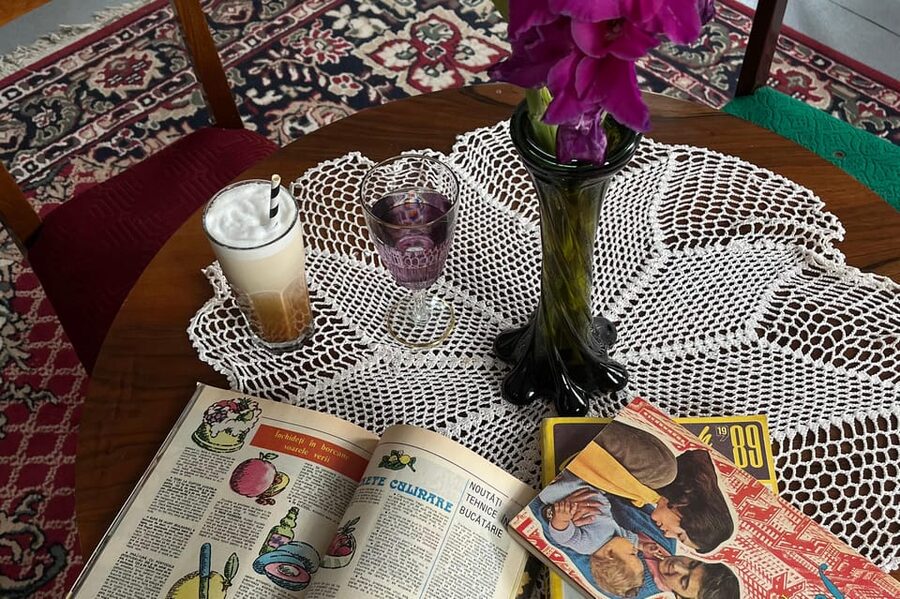
The original magazines are useful because they show more than political information. They give you a sense of the printed world available at the time, including the look and tone of publications from the period. You may not read every page, but handling the material helps make the era less abstract.
The clothing display adds another practical layer. Trying on old clothes is not a major historical lesson by itself, but it gives the visit a social and visual side. This is one reason the museum suits people who enjoy taking photos and doing something with their hands.
I would keep your expectations sensible. The museum presents objects as prompts for discussion, not as a full academic study of every decade. Some explanations may seem broad or overly simple, particularly if you already know a good deal about life in Romania or communist Europe.
For a first introduction, that simplicity can help. You get the main idea quickly, then you can ask for more detail. For a specialist, the limited depth may feel frustrating.
The communist living room and nechezol coffee
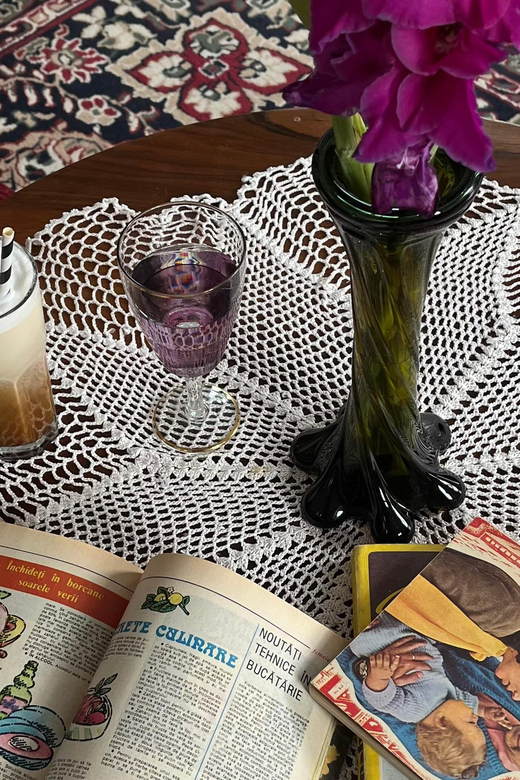
The coffee is the most distinctive part of this ticket. During the final years of communism, Romania imported coffee in very small amounts. The shortage led to the appearance of nechezol, commonly remembered as a communist coffee substitute.
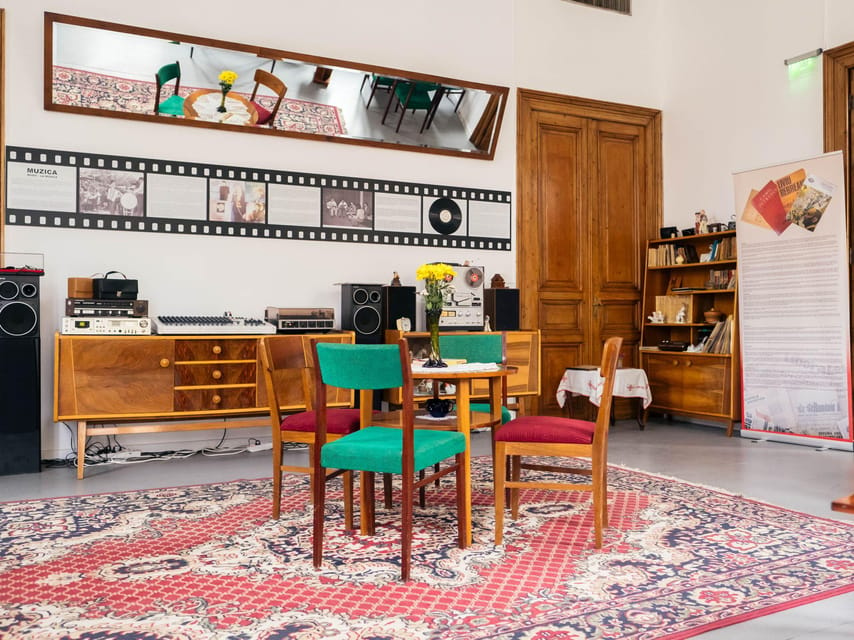
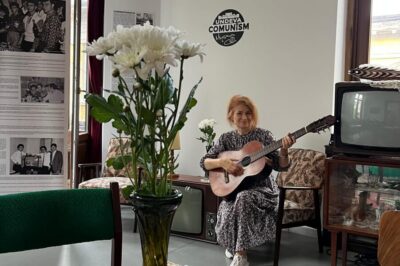
Your ticket includes one cup. You drink it from an original old cup while sitting on the communist couch in the museum’s living room. This is a small detail, but it changes the visit from a display about the past into a brief physical experience connected with it.
The coffee itself may surprise you. One person could not tell it apart from ordinary instant coffee, while another person may find the novelty more interesting than the taste. You should see it as a historical sample and a conversation starter, not as a specialist coffee tasting.
I like this part because it links a national shortage to a normal daily ritual. Coffee is personal and familiar. A cup served in a period setting can help you understand how shortages affected ordinary routines without turning the subject into a lecture.
The living-room setting also gives you a natural pause. After reading and looking around, you can sit down, ask questions, and consider what you have seen. It is a modest idea, but one that gives the museum a clear identity.
More coffee stops in Bucharest:
- Brasov city of legends and good coffee
★ 4.0 · 4 reviews
How long the visit really takes
The ticket is valid for one day, but that does not mean the museum fills an entire day. Plan on about 45 minutes to one hour for a normal visit. If you read much of the written material, ask questions, try the clothing, and spend time with the coffee, you may stay longer.
A quick visitor could cross the rooms in only a few minutes. That is possible because the museum is small and because some of the content is presented on posters. I would avoid rushing. The value comes from stopping at the objects and asking for context, not from simply checking off each room.
This makes the museum easy to fit into a Bucharest schedule. You can visit before lunch, after a walk through the old town, or during a gap between larger attractions. It is also a reasonable choice when you want a shorter indoor activity rather than a major museum commitment.
What the staff add
The staff are important here. Since the collection is compact, a good explanation can make the difference between a quick look and a useful history lesson. English-speaking staff are available inside the museum, so bring questions about the objects, the coffee, or Romanian life during communism.
The most useful moments are likely to come from asking about things the posters do not explain fully. You might ask why a particular household item mattered, how shortages affected daily routines, or what the magazines tell you about the period. The museum gives you the objects, and the conversation can supply the missing links.
The staff have received especially warm praise for being friendly, willing to answer questions, and personally invested in the subject. The people working in the rooms appear to be a real strength of the experience. Since individual staff names are not provided, I would not count on meeting a particular guide, but you can expect English-language help.
At the same time, do not assume every explanation will have the depth of a university history course. Some material presents ordinary features of life from the 1950s through the 1990s as direct examples of the harms of communism. If you want a more careful comparison between political repression, shortages, and everyday life across different decades, ask follow-up questions.
Is the $10 ticket good value?
At $10 per person, the ticket is fairly priced if you want a compact museum visit with an unusual extra. You are paying for entry, access to the interactive displays, staff assistance in English, and the cup of nechezol.
The coffee is not expensive in itself. Its value comes from the setting and the story attached to it. You sit on an old couch, use an original cup, and taste something associated with the final years of communism. That makes the extra feel specific to this museum rather than a standard drink added to a ticket.
The value is lower if you want a large collection or a long guided tour. A reader who enjoys detailed documents and extensive historical interpretation may feel that there are too many posters and too few objects. In that case, the museum works best as a starting point, not as your only source on Romanian communism.
For a short old-town stop, the price makes sense. You do not need to give up half a day, and the activity offers something more memorable than another room of framed text.
Who will enjoy it most

I would recommend this museum to you if you like local history presented through everyday objects. It suits curious first-time visitors to Bucharest, people interested in life behind political systems, and anyone who prefers a museum where touching and trying selected items is part of the experience.
It is also a good choice for couples, friends, and families with older children who enjoy photos, music, clothing, and small hands-on activities. The visit gives you things to discuss, and the coffee creates an easy shared moment.
Solo visitors can still enjoy it, especially if they like reading and asking questions. The experience may feel less playful alone because some of the photo and dressing-up opportunities work better with company.
I would be cautious if you need step-free access, since the activity is not suitable for wheelchair users. I would also choose another museum if you want a major collection, a long formal tour, or highly detailed academic analysis.
Practical planning before you book
The activity is offered in English, with a host or greeter available. Starting times vary, so check availability when choosing your date. You can reserve and pay later, and cancellation is allowed up to 24 hours before the visit for a full refund.
Those flexible terms are useful if your Bucharest schedule is still changing. Since the museum is short, you can place it into an open section of your day without building your whole itinerary around it.
Give yourself enough time to read, try the objects, and have the coffee. If you rush through in five minutes, you may come away with little more than a few photos. If you spend close to an hour and ask questions, the museum has a better chance of delivering what the ticket promises.
Should you book the Museum of Communism?
Book it if you want a short, personal look at Romanian communism and like museums that use objects, clothing, music, and food to make history easier to grasp. The nechezol coffee and old living-room setting give the visit a clear local character, while the English-speaking staff can fill in gaps.
Skip it if you expect a large museum, a long guided program, or a fully developed scholarly account. The displays can feel simple, and some of the visit depends on reading posters. At $10, though, it is a sensible old-town stop for an hour, especially when you want history with a little participation and an unusual cup of coffee.
FAQ
How long does the Museum of Communism visit take?
A typical visit takes about 45 minutes to one hour. You may spend longer if you read the displays carefully, ask questions, try the clothing, and take time for the coffee.
Is coffee included in the ticket?
Yes. The ticket includes one cup of nechezol, the communist-era coffee substitute.
Where do you drink the nechezol?
You drink it in the museum’s living room, sitting on a communist couch and using an original old cup.
Is the experience available in English?
Yes. English is the stated language, and staff are available in the museum to answer questions.
Can you touch the museum exhibits?
The experience allows you to interact with many exhibits. You can type on an old typewriter, read original magazines, and try on old clothes.
Is the museum suitable for wheelchair users?
No. The activity is listed as not suitable for wheelchair users.
Can you cancel the booking?
Yes. You can cancel up to 24 hours in advance for a full refund. You can also reserve now and pay later.
More Museums in Bucharest
- Bucharest: Museum of Senses Entry Ticket
★ 4.2 · 364 reviews - Communism in Bucharest – Landmarks, Museum & Communist Appetizers
★ 5.0 · 111 reviews - Bucharest: Entry ticket at the Museum of Communism
★ 4.6 · 57 reviews - Bucharest: Dinner+Tour at Museum of Communism after closing
★ 4.9 · 46 reviews
Newest Bucharest trips on the site
- Winery touring & private wine tasting – one day private tour★ 5.0 · 3 reviews
- Bucharest: Dealu Mare Winery Private Trip with Wine Tasting★ 4.9 · 6 reviews
- Village Museum Bucharest Guided Tour★ 5.0 · 6 reviews
- Private Transfer from Giurgiu Port to Bucharest★ 4.5 · 12 reviews
- Airport Henri Coanda (Otopeni) to Bucharest – Private Transfer – Driver★ 5.0 · 5 reviews
- Salt Mine Tour from Bucharest with Entrance Ticket★ 4.5 · 19 reviews
- Wine tasting in Bucharest Old town – bonus cheese platter★ 4.5 · 6 reviews
- Walking tour of Bucharest★ 5.0 · 3 reviews
Communist History Tours, compared.


Bucharest Essential Tour: Old Town, Calea Victoriei & Communism
Read our review →
Communism in Bucharest – Landmarks, Museum & Communist Appetizers
Read our review →

Dinner+Tour at Museum of Communism after closing
Read our review →Browse the lists this tour appears in