
Reviewed · COMMUNIST HISTORY TOURS
Bucharest Under Communism: Life, Terror & Hope
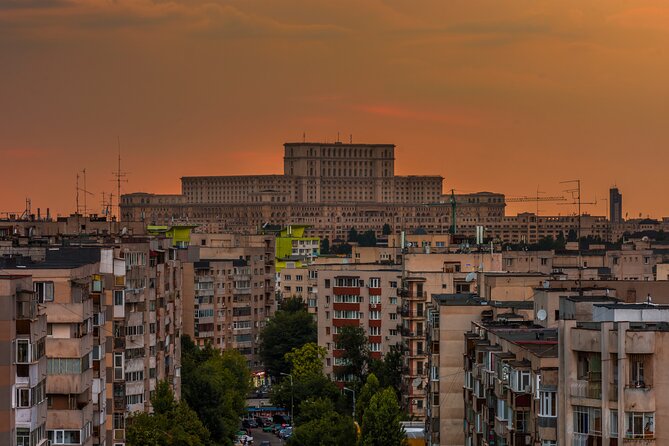
The most striking part of this Bucharest walking tour is the way grand buildings and ordinary suffering are placed side by side. At Unirii Square and the Palace of Parliament, you see Ceaușescu’s grand plans. At Revolution Square and University Square, you face the human cost of keeping those plans alive. This is history told through streets, not just dates.
I like the route’s variety: you get wide boulevards, a medieval monastery, communist architecture, and the sites of the 1989 uprising. I also like the personal style offered by guides such as Laura and Tamar, who use old photographs, family memories, and clear explanations to make the period easier to understand. The main consideration is the length and pace. At roughly three and a half hours, with several stops, this is a serious walking tour rather than a quick city introduction.
Key points to know before you book
- See Ceaușescu’s grand vision at Unirii Square: The fountains and former Victory of Socialism Boulevard show how power was expressed through urban design.
- View the Palace of Parliament from several angles: Entry is not included, but the guide explains its construction, cost, and effect on Romanian life.
- Find a surviving medieval church: Mihai Voda Monastery offers a sharp contrast to the utilitarian buildings placed around it.
- Stand where the 1989 Revolution unfolded: Revolution Square includes Ceaușescu’s former office, his final speech balcony, and memorials to those killed.
- Learn through stories and old photographs: Laura and Tamar have been praised for clear explanations, warmth, and thoughtful answers to questions.
- Expect a small-group format: The tour is private in style and capped at 15 people, with a 4:00 pm start and a finish near the Old Town.
Why Bucharest’s communist story works best on foot
Communist Bucharest is not confined to one museum. It is spread across avenues, squares, apartment blocks, churches, government buildings, and empty spaces where older neighborhoods once stood. Walking helps you connect those pieces.
Romania lived under communist rule for 45 years. The period began after the monarchy was replaced and ended in the street protests and violent upheaval of 1989. Under Nicolae Ceaușescu, the state pushed an especially severe form of control. The city became a stage for official power, while shortages, surveillance, and fear shaped daily life.
This tour gives you a guided route through that story. You are not simply shown the Palace of Parliament and told that it is big. You learn why it was built, what disappeared to make room for it, and how ordinary Romanians experienced the shortages of the 1980s.
I find that approach useful for first-time visitors because Bucharest can look confusing at first. Royal buildings, interwar architecture, socialist blocks, Orthodox churches, and new commercial areas all sit close together. The guide helps you read those layers without pretending the city has a simple story.
More communist-era history walks in Bucharest:
- The Real tour of Communism
★ 5.0 · 666 reviews - Life under Communism
★ 5.0 · 358 reviews - 3-Hour Guided Tour of Communist Bucharest
★ 4.9 · 303 reviews
Starting at Unirii Square and the former socialist boulevard
The tour begins at Piața Sfântul Anton, near the center of Bucharest, and moves to Unirii Square. This is a useful opening because the square shows communist planning on a huge scale.
Unirii Square was reshaped during the final phase of communist rule. Its fountains and broad open spaces were part of a new civic center designed to project order and power. From here, the former Victory of Socialism Boulevard points toward the Palace of Parliament.
The scale matters. You can see how a boulevard was designed not only for traffic but also for ceremony, official parades, and the dictator’s view of the capital. The avenue expresses Ceaușescu’s wish to remake Bucharest according to his own grand plan.
Your guide explains what this vision meant for the people who lived here. Large redevelopment projects required demolitions and major changes to established neighborhoods. The point is not merely that communist architecture can look severe. It is that the appearance of order often came at a human cost.
The 30-minute stop should give you time to look around without rushing. The square is also an easy place to understand the route ahead, since the Palace of Parliament is the obvious visual target.
The Palace of Parliament from the outside
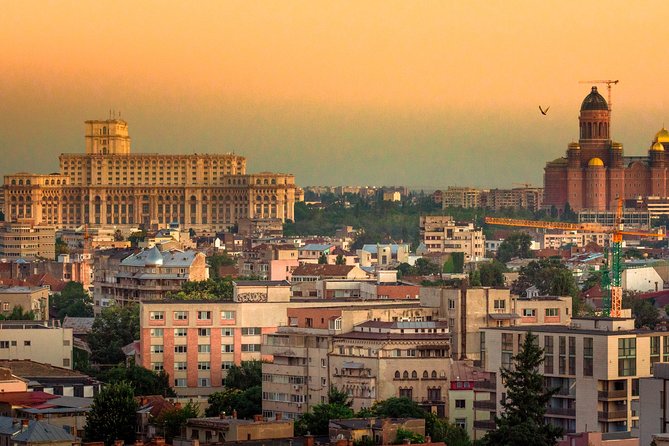
The Palace of Parliament is the tour’s biggest physical subject. It is described as the second-largest building in the world after the Pentagon and the most expensive administrative building ever made. The exact figures matter less than what the structure reveals about Ceaușescu’s priorities.
You view the building from different angles rather than entering it. Admission is not included, so do not book this experience expecting an interior visit. The outdoor examination still has value because the building is so enormous that a single viewpoint cannot explain it.
Your guide covers the labor, materials, and money required for construction. You also hear how the project was linked to food, fuel, and other shortages during the 1980s. That connection is essential. Without it, the palace can seem like an impressive piece of architecture. With it, the building becomes evidence of a state that demanded sacrifice for a leader’s vision.
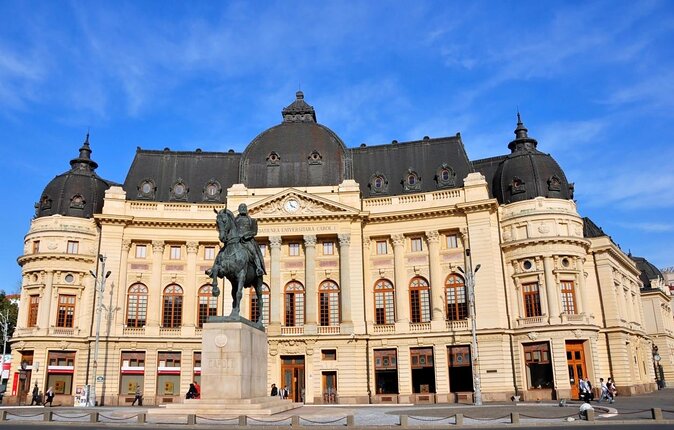
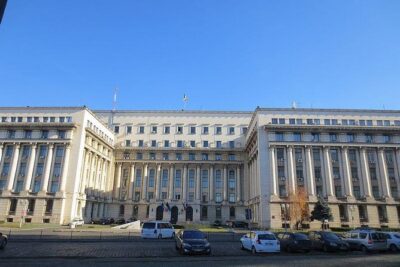
Across from the palace is the Academia Romana building, another large construction associated with Elena Ceausescu. The contrast between the two buildings helps explain how the ruling couple used architecture to give physical form to their power.
This stop is likely to be one of the most memorable parts of the walk, but it may also be the least intimate. The open spaces and monumental scale can feel impersonal. If you prefer small museums and room-by-room exhibits, you may want to pair the tour with a separate visit inside the Palace of Parliament, subject to its own entry arrangements.
Mihai Voda Monastery and the churches that survived
Mihai Voda Monastery changes the mood. After the broad avenues and government buildings, you reach a religious site with medieval origins.
The church survived the demolition campaigns that altered much of central Bucharest. Your guide explains how some churches were destroyed, while others were saved in surprising ways. Churches hidden behind utilitarian buildings are a striking reminder of the compromises and pressures of the communist period.
This is one of the route’s most valuable stops because it shows what can be missed if you only look at the major monuments. Mihai Voda is not presented as a decorative pause between larger sites. It helps you see the older city that existed before communist rebuilding.
The half-hour stop also gives the walk some visual balance. You move from the state’s grand public image to a place tied to older religious and local traditions. That contrast makes the communist policy toward religion easier to grasp.
You should not expect a long interior visit or a full religious tour. The attraction here is the story of survival and the way the church relates to the buildings around it. Listen closely to the guide’s explanation, since the setting itself may not make the history obvious.
A few more Bucharest trips worth a look
- Bucharest: Palace of Parliament Tickets and Guide
★ 4.3 · 3,182 reviews - Bucharest: Palace of Parliament Tickets and Guided Tour
★ 4.4 · 1,877 reviews - Bucharest: Parliament Palace Skip-the-line Ticket
★ 4.2 · 1,518 reviews - Bucharest: City Highlights Guided Walking Tour
★ 4.9 · 1,482 reviews
Revolution Square and Ceaușescu’s final speech
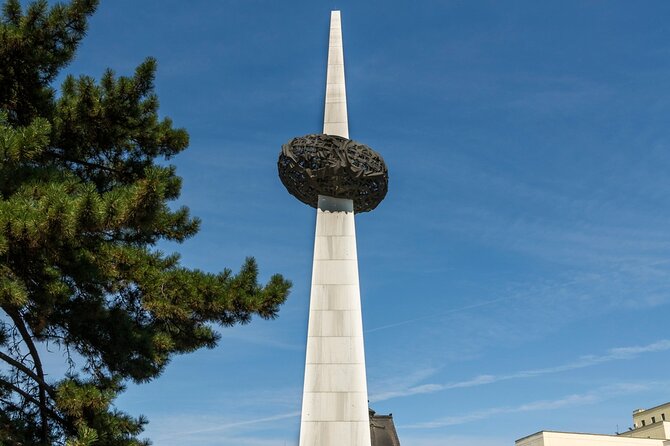
Revolution Square is where the tour reaches its political and emotional center. The square is tied to both the beginning and the end of the communist regime.
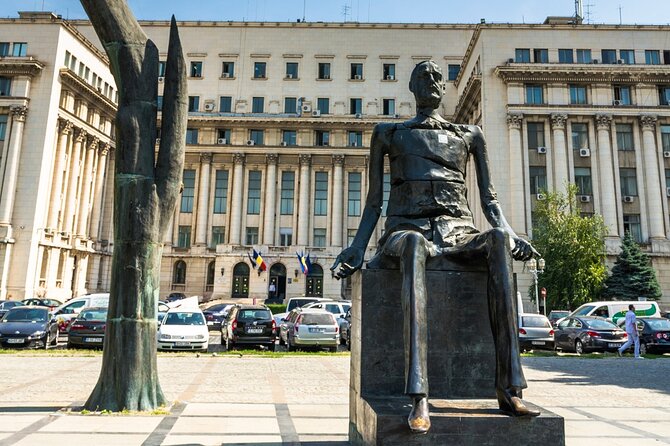
Here you see the building that housed Ceaușescu’s office and the balcony where he gave his final public speech. The scene is famous because the crowd interrupted him, exposing the collapse of authority in front of the cameras. The guide places that moment within the wider protests that brought the regime down in December 1989.
You also learn about the people who demonstrated against totalitarian rule, the violence directed at them, and the aftermath of the Revolution. The monument dedicated to those who died gives the discussion a physical focus, but the guide’s explanation is what connects the site to the wider political change.
I value this part of the route because it avoids treating 1989 as a neat, happy ending. The fall of Ceaușescu was a major break, but the transition to democracy was complicated. Questions about the revolution, those who died, and what followed remain part of Romania’s public memory.
Expect to spend about an hour here. That is enough time for context and questions, but the subject is serious. This is not a stop for a quick photograph before moving on. You will get more from it if you are willing to pause and consider what happened in the square.
University Square and the cost of protest
The final stop is University Square, another important site of the 1989 protests. It was a main gathering place for people demanding a free society, and the confrontation there led to hundreds being killed.
This stop adds another layer to Revolution Square. The earlier square shows the visible collapse of the regime. University Square shows the danger faced by people who continued to protest and the scale of the violence used against them.
Because the tour ends here or at Revolution Square depending on the exact route, confirm the final meeting details when booking. The stated end point is Revolution Square, about five minutes from the Old Town, while University Square is also part of the planned visit. Either way, you finish in central Bucharest, close to restaurants, cafés, and other sights.
The final section is not light sightseeing. You may find the tour’s tone becomes more reflective as it moves from architecture to death, resistance, and political change. That is appropriate for the subject, but families with very young children should consider how comfortable they are with the material.
Guides who make the subject easier to follow
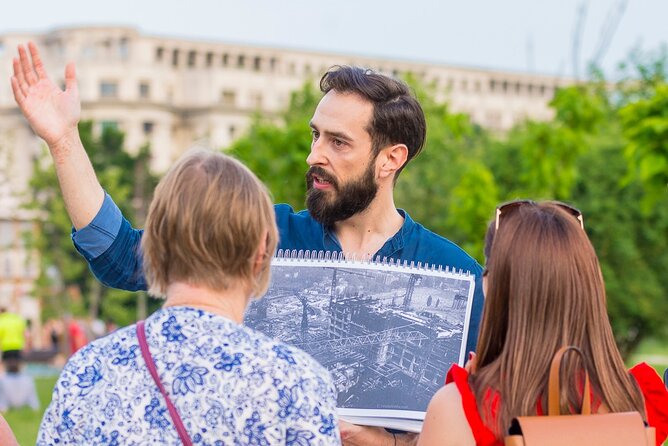
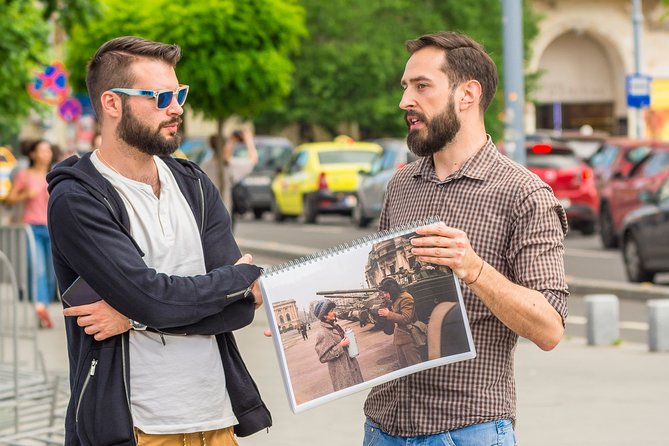
The guide can make or break a history walk, and this experience has a strong record in that area. Laura is described as having a history degree and using personal stories, old photographs, and clear background information to explain the change from monarchy to communism and then to democracy.
Tamar is also praised for strong historical explanations and for answering extra questions without losing the thread of the walk. You may not receive one specific guide, so treat these names as examples of the guiding style rather than a guarantee of assignment.
The best feature of this approach is the blend of facts and ordinary life. You learn about buildings and political events, but you also hear how communism shaped daily routines and how people remember that time. The old photographs are especially useful because they let you compare the present streets with earlier versions of Bucharest.
Several guides have also been described as warm, funny, and attentive to the whole group. That matters during a long walk. Humor can make a difficult subject easier to absorb, provided it does not flatten the suffering involved. The available feedback suggests the guides generally keep the balance between an enjoyable outing and a serious history lesson.
Timing, group size, and walking comfort
The advertised duration is about three hours and 30 minutes. The listed stops total roughly that amount: 30 minutes at Unirii Square, one hour near the Palace of Parliament, 30 minutes at Mihai Voda, one hour at Revolution Square, and 30 minutes at University Square.
Some past descriptions refer to a shorter two-hour experience, so ask for the day’s expected timing if your schedule is tight. The supplied tour details clearly describe a 3:30 pm start and a 4:00 pm start, so confirm the current start time at booking. The stated start time is 4:00 pm.
The group is limited to 15 people. That is small enough for questions and easier listening than a large coach group, though it is not necessarily a one-to-one tour. The experience is described as private, so you should expect a personalized format, but the maximum group size is still worth noting.
This is a walking tour with several outdoor stops. Wear comfortable shoes and check the forecast. The tour requires good weather, and poor conditions may lead to a new date or a full refund. Service animals are allowed, the meeting point is near public transport, and most people can take part.
Is $23.22 a fair price?
At $23.22 per person, the tour offers good value if you want a guided introduction to Bucharest’s communist period rather than a simple stroll past famous buildings.
You are paying for about three and a half hours of commentary across several central sites, including places that can be difficult to interpret on your own. The Palace of Parliament alone is easy to photograph but harder to understand. The guide adds the political and social background that turns the view into a meaningful experience.
The price does not include admission to the Palace of Parliament, so budget separately if you want to visit inside. Still, much of this tour’s value comes from outdoor interpretation, the route between sites, and the guide’s use of photographs and personal stories.
I would compare this cost favorably with a short private city tour, especially if you are interested in modern Romanian history. It is less useful if you want a broad survey of every major Bucharest sight, since the route concentrates heavily on communism, the monarchy’s legacy, and the 1989 Revolution.
Free cancellation is available up to 24 hours before the start time for a full refund. Changes or cancellations inside that window are not accepted for a refund.
Who should book this Bucharest walking tour?
I would recommend it to first-time visitors who want context before exploring Bucharest alone. It is also a good choice for anyone interested in Cold War Europe, political history, urban planning, or the personal effects of dictatorship.
Romanian visitors may find value here too. The route does not assume that every detail of the capital is already familiar, and the guide’s photographs and lesser-known stories can add new meaning to places you have seen before.
You should think twice if you dislike long walks, outdoor sightseeing, or serious political subjects. The tour is not built around shopping, food, or palace interiors. It is also not a complete Bucharest city tour, although you receive useful background on the capital and end near the Old Town.
For the best experience, bring questions. Ask how the guide’s family experienced the communist years, what happened after 1989, and how Romanians view the Palace of Parliament today. The tour’s personal style is strongest when you use the time for discussion.
Final verdict
Book this tour if you want to understand why Bucharest looks the way it does and how ordinary life was shaped by Ceaușescu’s rule. The route links monumental ambition with shortages, surviving churches with demolished neighborhoods, and public squares with the people who risked their lives in 1989.
I especially recommend it early in your stay. Once you understand Unirii Square, the Palace of Parliament, and Revolution Square, the rest of Bucharest becomes easier to read. Choose it for serious history, strong guiding, and a useful three-hour walk. Skip it only if you want a light sightseeing circuit or prefer to spend your afternoon indoors.
FAQ
Where does the tour begin?
The tour begins at Piața Sfântul Anton 64, Bucharest, in the central part of the city.
What time does the tour start?
The stated start time is 4:00 pm. Confirm the current time when booking because the supplied details also include another time reference.
Where does the tour end?
The stated end point is Revolution Square, Piața Revoluției, about five minutes from Bucharest’s Old Town.
How long does the tour last?
The tour lasts approximately three hours and 30 minutes. The planned stops add up to about that duration.
Is entry to the Palace of Parliament included?
No. The Palace of Parliament is viewed from outside, and admission is not included.
How many people can join?
The tour has a maximum of 15 participants. It is described as a private, personalized experience.
Is the tour suitable for most people?
Yes. Most people can participate, and the meeting area is near public transportation. Service animals are allowed.
What happens if the weather is poor?
The experience requires good weather. If it is canceled because of poor conditions, you will be offered another date or a full refund. Free cancellation for a full refund is also available up to 24 hours before the start time.
Newest Bucharest trips on the site
- Winery touring & private wine tasting – one day private tour★ 5.0 · 3 reviews
- Bucharest: Dealu Mare Winery Private Trip with Wine Tasting★ 4.9 · 6 reviews
- Village Museum Bucharest Guided Tour★ 5.0 · 6 reviews
- Private Transfer from Giurgiu Port to Bucharest★ 4.5 · 12 reviews
- Airport Henri Coanda (Otopeni) to Bucharest – Private Transfer – Driver★ 5.0 · 5 reviews
- Salt Mine Tour from Bucharest with Entrance Ticket★ 4.5 · 19 reviews
- Wine tasting in Bucharest Old town – bonus cheese platter★ 4.5 · 6 reviews
- Walking tour of Bucharest★ 5.0 · 3 reviews
Communist History Tours, compared.
Bucharest Essential Tour: Old Town, Calea Victoriei & Communism
Read our review →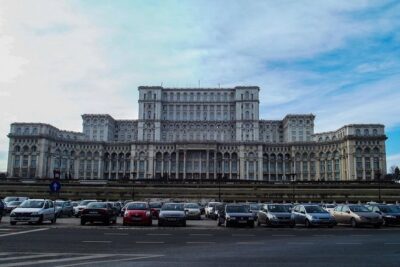
Communism in Bucharest – Landmarks, Museum & Communist Appetizers
Read our review →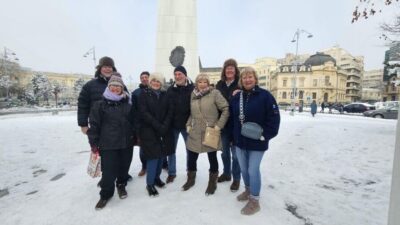

Museum of Communism Ticket with Communist Coffee
Read our review →
Dinner+Tour at Museum of Communism after closing
Read our review →Browse the lists this tour appears in