
Reviewed · CRUISES & BOAT TOURS
Orsova: Danube’s Cauldrons Boat Tours with Audio Guide
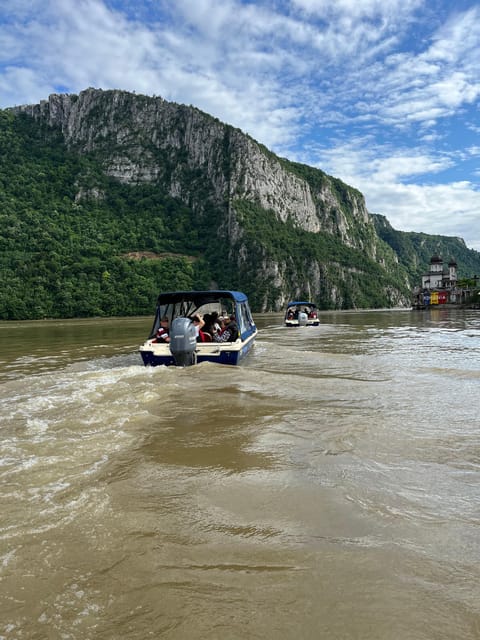
The best part of this Orșova boat trip is the sudden change in scale: you leave the calm waters of Cerna Bay and soon find yourself beneath steep Danube cliffs, with Roman markers, caves, and the huge face of Decebalus cut into the rock. The Danube Cauldrons make a fine setting for a short outing with a lot packed into it.
I like the small-group format and the pauses for photographs. I also like that the tour links nature with very specific pieces of local history, from the 2,000-year-old Tabula Traiana to the vanished island of Ada Kaleh. The main concern is the boat ride itself: it can be noisy and somewhat bumpy, and the audio commentary may be hard to hear at speed.
Key points before you book
- The Decebalus sculpture is the visual centerpiece: The enormous carved head is best seen from the river, where the surrounding cliffs give it proper scale.
- You get six main sightseeing stops: The route includes Roman remains, a monastery, two caves, and engineering landmarks.
- The boat carries 14 people but the booking is for a private group: The advertised rate is $277 for up to six people, so the value improves sharply when shared by a full party.
- The audio guide uses four playback languages: English, Hungarian, Spanish, and German are listed, while the host or greeter speaks English and Romanian.
- Veterani Cave costs extra: Entry is about $2, and a separate cave guide handles the interior visit.
- This is not a gentle sightseeing cruise: People with back problems, recent surgery, mobility impairments, or pregnancy are advised not to join.
Leaving Orșova through Cerna Bay
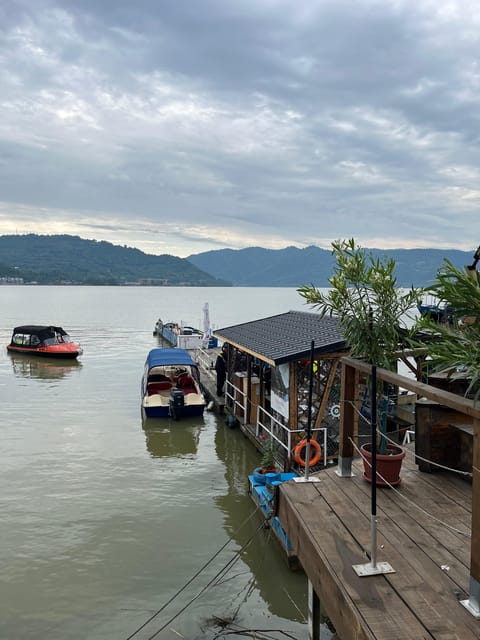
The meeting point is on a wooden platform beside the shore walking path, near Hotel Apolodor. Look for the black-roofed pontoon and the two banners with the Water Taxi Orsova logo. That description matters because the departure point is a deck by the water, not a large terminal with a long line of counters.
Orșova sits at the head of Cerna Bay, a broad stretch of water created after the Iron Gates I Dam was completed in the early 1970s. The town makes a practical base for this outing, since the boat can reach the main sights without requiring a full day on the river.
The advertised ride lasts 110 minutes, described in the tour material as roughly two hours. That is enough time to see the key points, but not enough for long, leisurely stops at every one. Bring sunglasses, sunscreen, comfortable clothing, and shoes that can handle a boat deck and a cave visit.
Life jackets are provided. Large bags and oversize luggage are not allowed, so bring only what you need for the ride. Cash is useful for the extra Veterani Cave charge.
More boat trips from Romania:
- Danube Delta – Private Tour with Boat Trip & Traditional Lunch
★ 4.5 · 24 reviews - Boat Trip to Caraorman Forest – Danube Delta (6–7 hours)
★ 4.8 · 21 reviews - Danube Delta: Boat Tour Through the Water Lily Reserve
★ 5.0 · 19 reviews
What the $277 group price really means
The price is $277 per group of up to six, not $277 per person. For six people, that works out to about $46 per person. For two people, the effective cost is much higher, so this trip makes the most financial sense for a family or group of friends sharing the booking.
The rate includes a round-trip boat ticket, the river tour, the main sightseeing pauses, photo stops, the covered boat area, and audio commentary. Food and drinks are not included, and you must arrange your own way to the Orșova departure point.
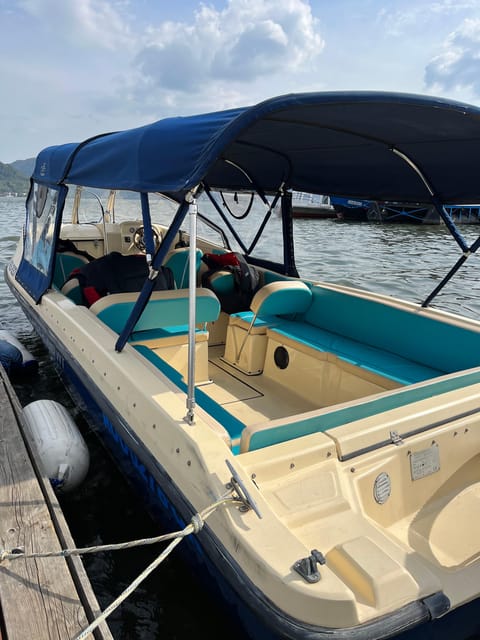
The boat is described as a 14-seat vessel, while the reservation is sold as a private group. If having the whole boat to yourself is important, confirm exactly how the private arrangement applies to your date. The available information clearly supports a small, intimate setup, but the vessel itself has room for more than six passengers.
The tour provider has operated boat trips in this area since 2005. That long operating history is useful here because the route depends on knowing the river, the stops, and the changing access conditions around the caves.
Trajan’s Plaque and the Roman frontier
The first major sight is Trajan’s Plaque, also called Tabula Traiana. It was placed more than 2,000 years ago during the Roman period and is tied to the Roman road and military presence along the Danube.
From a boat, you are viewing the plaque from below and across the water rather than walking right up to it. That makes the photo stop especially important. Have your phone or camera ready before the boat slows, since the pause is meant for sightseeing and pictures rather than an extended shore visit.
The audio guide adds context in English, Hungarian, Spanish, or German. If you need a particular language, download nothing in advance based on the information supplied, but do bring headphones if you prefer a clearer listening experience. The operator specifically recommends them.
Decebalus Rock: the tour’s big moment
The carved head of Decebalus is the image most people associate with this section of the Danube. The sculpture honors Decebalus, the Dacian king who fought the Romans, and is described as Europe’s tallest rock sculpture and the world’s third-largest rock monument.
The river gives you the right viewing angle. From the boat, the face rises directly from the cliff, and the scale becomes obvious. This is the point where a wide-angle camera is useful, although a normal phone can still capture the sculpture and its setting.
The boat pauses for photographs and commentary. Do not expect a museum-style visit or a walk around the monument. This is an outdoor viewing stop, with the river, cliffs, and sculpture doing most of the work.
More self-guided walks and quests in Romania:
- Sibiu Old Town Exploration Game and Self-Guided Tour
★ 4.5 · 82 reviews - Sighisoara Fortress Quest: Exploration Game and Tour
★ 4.5 · 33 reviews - King Matia Secret Treasure Exploration Game in Cluj-Napoca
★ 4.5 · 30 reviews - Orsova: Entire Area Boat Tours with Audio Guide
★ 4.7 · 11 reviews
Mraconia Monastery beside the water
Mraconia Monastery provides a quieter contrast to the massive rock face. The monastery sits beside the Danube and is viewed from the water, giving you a chance to photograph its position against the surrounding hills.
This stop works well for people who want more than scenery. The tour links the building to the area’s religious and cultural past, rather than treating it as just another photo backdrop. The pause is still brief, so listen closely when the audio begins.
You will want to keep your camera ready here, too. The boat’s sunroof helps shield passengers on bright days, but the river remains an open viewing platform, and strong light can make screens difficult to see.
Veterani Cave and the extra fee
Veterani Cave has a more military story. It was used as a strategic hideout, and the visit involves leaving the main boat at the cave’s pontoon when security conditions allow.
Entry costs about $2 and is paid separately. The interior visit lasts about 20 minutes and is led by guides who are not part of the boat company. That division is worth understanding before you go: the Water Taxi Orsova crew provides the river tour and audio guide, while the cave portion is handled by another guide.
All passengers must agree to the cave visit. If you choose not to enter, you remain with the boat’s audio commentary instead. Access may depend on security measures, so the stop is not presented as guaranteed in exactly the same way as a photo pause.
For this reason, carry cash and wear practical shoes. The operator also advises against the tour for people with mobility impairments, recent surgery, back problems, or pregnancy. Even without the cave, this is a boat-based outing rather than an easy-access shore excursion.
Ponicova Cave, where the river cuts through
Ponicova Cave is unusual because of its through-and-through formation. The route includes the western section, listed as Peștera Ponicova, where you get a photo stop and guided sightseeing.
This is one of the more memorable natural features on the trip because the cave is part of the river environment, not an isolated attraction reached by road. The boat brings you close enough to see how water and rock shape the passage.
The schedule treats Ponicova mainly as a sightseeing and photography stop. You should not assume a long underground walk or a full caving expedition. If you want time to study the rock formations, the stop may feel quick.
Széchenyi Plate and engineering along the Danube
Tabula Széchenyi, also called the Szechenyi Plate, marks an engineering achievement connected with navigation on this difficult section of the river. Like Trajan’s Plaque, it is best understood as part of the Danube’s long struggle between natural obstacles and human efforts to control or improve passage.
This stop gives the tour a useful change of subject. You are not only looking at cliffs and caves. You are also seeing evidence of the work required to make this part of the river navigable.
The exact spelling varies between English and local versions, so do not be surprised if the name appears as Tabula Széchenyi or Szechenyi Plate. The audio guide helps connect the marker with the wider story of river engineering.
Ada Kaleh and the Iron Gates extension
The route also includes sightseeing around Ada Kaleh and the Iron Gates. Ada Kaleh was an island that disappeared beneath the water after the reservoir was created. The former island now lies about 30 meters underwater, so there is no surviving village or shoreline to explore during this ride.
The supplied tour details describe a 40-minute extra section downstream near the Iron Gates, with additional views and historical information about Ada Kaleh. Because the main description also lists Ada Kaleh and Iron Gates in the route, confirm at booking whether this section is included in your selected departure or added separately.
This is useful information for planning the day. If you have a tight schedule, do not assume every listed point receives the same amount of time. The six main attractions are the core promise, while the Iron Gates and Ada Kaleh portion may relate to an extended route.
Audio commentary, captain, and sound levels
The host or greeter speaks English and Romanian. The boat also carries an audio guide in English, Hungarian, Spanish, and German, which makes the trip more accessible to international visitors.
The practical weakness is volume. A boat with an engine can be noisy, especially when moving quickly, and commentary played over a speaker may get lost. One useful tip is to sit where you can hear the audio clearly and bring headphones, as requested in the preparation notes.
The captain is central to the experience. The available feedback especially praises the captain’s friendly manner, the clear meeting point, and the pleasant organization. At least one passenger found that arriving late because of road traffic did not end the day, since they were allowed onto the next boat. Do not rely on that flexibility, but it suggests that contacting the operator is worthwhile if your drive into Orșova runs behind.
Who will enjoy this trip most
I would choose this outing if you want to see the major Danube Cauldrons sights without committing to a long cruise. Families, couples, and small groups can use the private booking to keep the outing simple and focused.
It is also a good match for history fans who want variety. In less than two hours, you see Roman remains, Dacian symbolism, a monastery, military caves, a submerged island, and river engineering landmarks.
I would be more cautious if you have a sensitive back or dislike fast boat movement. The speedboat format can be noisy, and one passenger specifically found the ride unsuitable for chronic back trouble. A larger boat with more time may be a better choice in that case, though this experience does not provide that alternative itself.
The outing is also less suitable if your main goal is to spend a long time inside caves or at the monastery. This is a compact sightseeing circuit. Its strength is coverage, not long stops.
Booking details that matter
You can cancel up to 24 hours before departure for a full refund, and the reserve-now, pay-later option allows you to hold a place without paying immediately. Starting times depend on availability.
The stated duration is 110 minutes, but the material also calls it a two-hour journey and describes a possible 40-minute addition near Iron Gates. Ask for the exact duration of your selected departure if your onward plans are fixed.
The tour starts and ends at Debarcader WT in Orșova. Transportation to the dock is not included, so plan your own arrival. The meeting point is near Hotel Apolodor, beside the walking path and black-roofed pontoon.
Should you book the Orșova Danube Cauldrons tour?
Book it if you want a short, packed river trip with the best-known sights of the Danube Cauldrons in one outing. The Decebalus sculpture, Tabula Traiana, Mraconia Monastery, and the cave stops give you a strong mix of nature and history. The $277 price is reasonable when six people share it, less so for a couple unless the private format matters greatly.
Skip it if you need a very smooth ride, long cave visits, or easy access for mobility limitations. Also confirm the audio setup and whether the 40-minute Iron Gates section is part of your booking.
For a small group with comfortable shoes, sunscreen, a little cash, and realistic expectations about noise and timing, this is a practical way to see a dramatic stretch of the Danube from the water.
FAQ
Where does the boat tour leave from?
It leaves from Debarcader WT in Orșova, on a wooden platform beside the shore walking path. Look for the black-roofed pontoon and two Water Taxi Orsova banners near Hotel Apolodor.
How long does the tour last?
The advertised duration is 110 minutes, described elsewhere as roughly two hours. A separate 40-minute downstream section near Iron Gates and Ada Kaleh may be available, so confirm the exact duration when booking.
How much does the tour cost?
The price is $277 per group of up to six people. Food, drinks, transportation to the departure point, and the Veterani Cave entry fee are not included.
Which sights are included?
The route includes Trajan’s Plaque, Decebalus Rock Sculpture, Mraconia Monastery, Veterani Cave, Ponicova Cave, Tabula Széchenyi, Ada Kaleh, and the Iron Gates area.
Is the Veterani Cave visit included in the price?
No. Entry costs approximately $2 and is paid separately. The cave visit takes about 20 minutes and is led by guides from outside the boat company.
What languages are available for the audio guide?
The audio guide is available in English, Hungarian, Spanish, and German. The host or greeter speaks English and Romanian.
Is the boat suitable for children and families?
The tour is designed for families as well as couples, nature fans, and history fans. Life jackets are provided for all passengers.
What should I bring?
Bring comfortable shoes, sunglasses, sunscreen, comfortable clothing, headphones, and cash for the cave entry fee.
Who should not take this tour?
The activity is not suitable for pregnant women, people with back problems, people with mobility impairments, wheelchair users, or people recovering from recent surgery.
Newest Romania trips on the site
- Winery touring & private wine tasting – one day private tour★ 5.0 · 3 reviews
- Private tour to Turda Salt Mine, Rimetea and Alba Iulia★ 4.8 · 5 reviews
- Bucharest: Dealu Mare Winery Private Trip with Wine Tasting★ 4.9 · 6 reviews
- Village Museum Bucharest Guided Tour★ 5.0 · 6 reviews
- Transylvania Tour: Dracula’s Castle, Peles Palace & Brasov★ 5.0 · 19 reviews
- Turda salt mine and Corvin Castle day tour from Cluj★ 5.0 · 9 reviews
- Turda Salt Mine, Gorge & Rimetea Village (private from Cluj)★ 5.0 · 5 reviews
- Danube Delta PRIVATE boat trip to Mila23 Village (guided tour)★ 5.0 · 9 reviews
Cruises & Boat Tours, compared.
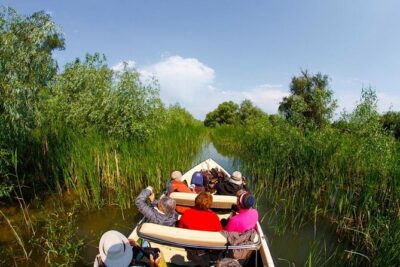
Danube Delta – Private Tour with Boat Trip & Traditional Lunch
Read our review →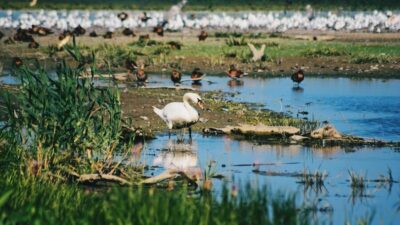
Danube Delta: Boat Tour Through the Water Lily Reserve
Read our review →
Danube Delta PRIVATE boat trip to Letea Forest (guided tour)
Read our review →
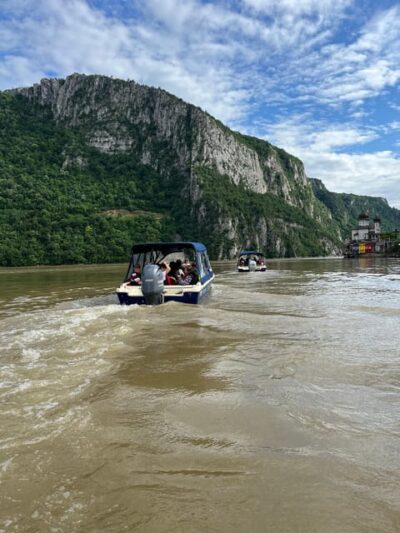
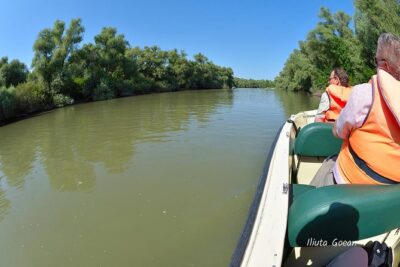
Danube Delta PRIVATE boat trip to Mila23 Village (guided tour)
Read our review →
Browse the lists this tour appears in