
Reviewed · SAXON VILLAGE TOURS
The essence of Saxon Transylvania – 3-day tour of its citadels
The best part of this three-day tour is its range. You move from a 14th-century monastery and fortified Saxon villages to the Gothic cities of Sibiu and Brasov, then finish with Bran Castle and the lavish Peles Castle. Sighisoara, Biertan, and Sibiu give you a better sense of old Transylvania than a castle-only trip can.
I like the private format, since Gelu and Vlad can shape the pace around your group rather than a busload of strangers. I also like the historical thread linking Mircea the Elder, Vlad the Impaler, German settlers, Lutheran bishops, Teutonic Knights, and Romania’s first king. The main drawback is the full schedule: you cover a lot of ground in three days, and some stops are seen from the car rather than visited inside.
Key points at a glance
- Cozia Monastery begins the story: See the 1388 foundation of Mircea the Elder, Vlad the Impaler’s grandfather.
- Three major medieval towns: Explore Sibiu, Sighisoara, and Brasov with guided walks through their old centers.
- Biertan adds real Saxon context: Visit the UNESCO-listed fortified church and pass through ordinary Saxon villages.
- Bran is only part of the Dracula story: The castle is tied more strongly to trade routes and later legend than to Vlad’s actual life.
- Peles changes the mood: Romania’s royal castle is a late 19th-century showpiece, far removed from Bran’s defensive character.
- Private transport keeps things practical: Pickup is offered in Bucharest or at the airport, with two hotel nights and breakfast included.
A fast but meaningful route through Saxon Transylvania
This is a compact introduction to central Romania, not a slow country stay. In three days, you travel from Bucharest through the Olt River Valley, spend a night around Sibiu, continue through Biertan and Sighisoara to Brasov, then return toward Bucharest through Bran and Sinaia.
That route works because the sights are not random. Monasteries, fortified churches, city walls, castles, and old squares all show how religion, trade, and rival powers shaped the region. You will see both polished historic centers and ordinary villages, which gives the trip more balance than a simple Dracula circuit.
The tour is private, with an air-conditioned vehicle and transportation reserved for your group. Gelu and Vlad are named as the guides. Gelu’s English, storytelling, and command of local anecdotes were singled out in the supplied feedback, so you can expect the trip to gain much of its value from explanation rather than from simply being driven between monuments.
The price is listed at $914.51 per person. That is a serious outlay, but it includes private transportation, two nights in a superior three-star hotel or guesthouse, breakfast, admission fees where specified, and a guide over three days. Meals, photo fees, and flights are extra. The value improves for a small group that would otherwise need to arrange several hotels, transfers, and entrance tickets separately.
More Saxon Village Tours in Transylvania
- Small Group Tour to Viscri Church Sighisoara Town Rupea Fortress
★ 5.0 · 225 reviews - Secrets of the Citadels: Brașov, Viscri, Sighișoara and Sibiu
★ 5.0 · 52 reviews - From Brasov: Sighisoara, Viscri, and Rupea Unesco Day Trip
★ 4.9 · 32 reviews
Day one: Cozia Monastery and the streets of Sibiu
Pickup starts in Bucharest or at the airport. The first stretch follows the scenic Olt River Valley, making the drive north more than a simple transfer. Your first stop is Cozia Monastery, founded in 1388 by Mircea the Elder, a Wallachian prince whose family connection leads directly to Vlad the Impaler.
You get about 30 minutes here, with no admission fee listed. That is enough for a focused look, but not a long architectural study. The stop is most valuable for its place in the wider story: before you hear about Dracula, you meet the prince who was Vlad’s grandfather and see the religious foundation associated with his rule.
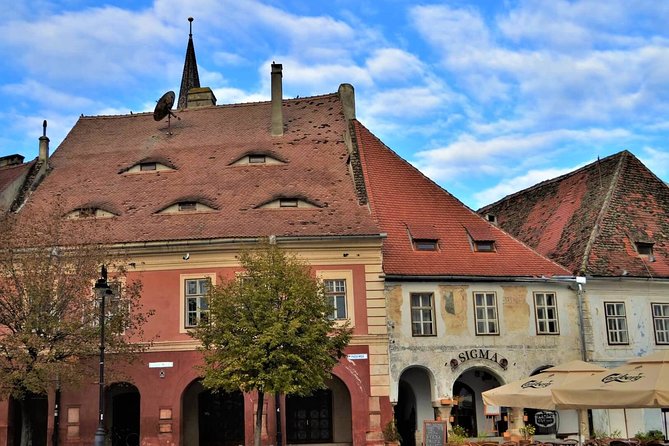
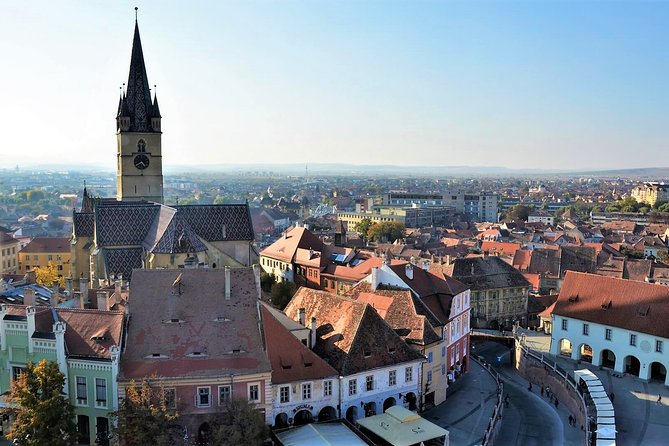
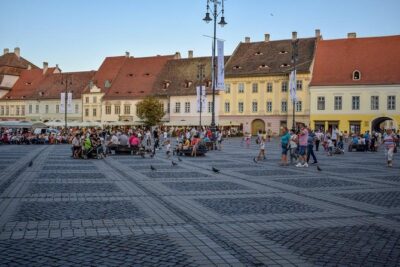
After lunch and a short rest, the tour reaches Sibiu. The old city walk lasts about two hours and includes the Council Tower, the Grand Square, the Small Square, and Albert Huet Square. Albert Huet Square is described as the oldest of the three, dating from the 12th century.
The climb up the medieval stairs of the Council Tower rewards you with a broad view over Sibiu. If stairs are tiring for you, keep that in mind before starting the walk. The route is built around the city’s central historic area, so you get a concentrated introduction rather than a broad tour of modern Sibiu.
Two churches add useful contrast. The Orthodox Cathedral offers a chance to compare its design with Saint Sofia’s Basilica in Constantinople, while the Evangelical Church reflects the city’s German and Lutheran past. This pairing helps explain why Sibiu feels culturally layered rather than simply medieval.
The first day is fairly demanding because much of it is spent on the road before the walking tour. Still, the mix is well judged. Cozia gives you Wallachian and Orthodox context, while Sibiu introduces the urban world of the Transylvanian Saxons.
Day two: Biertan and the fortified world of Sighisoara
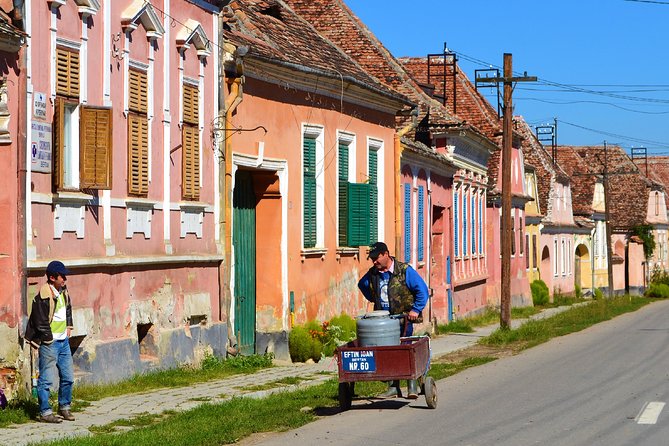
From Sibiu, the route heads toward Sighisoara through the Hartibaciu Valley. The road passes old Saxon villages and forests. You should pay attention between the headline sights, since this is where you see the quieter side of the region: homes, roads, fields, and villages that are not arranged as museum displays.
Biertan is the first major stop. Its fortified church was built between 1486 and 1524, when the village served for centuries as the seat of the Lutheran bishopric. The church’s walls were not decorative extras. They protected an important religious center in an area where communities had to think about defense as well as worship.
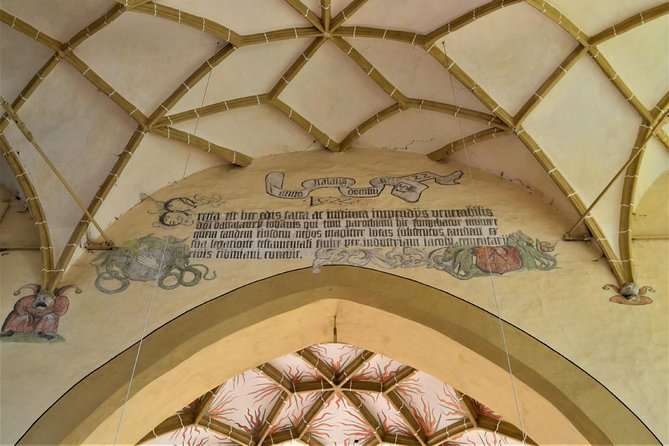
You have about an hour at Biertan, and admission is included. Inside, the nave ceiling, defensive walls, and collection of tombstones belonging to former bishops and local notables give the place a strong sense of continuity. The visit also explains why fortified churches appear so often in Saxon Transylvania: faith, local authority, and physical security were bound together.
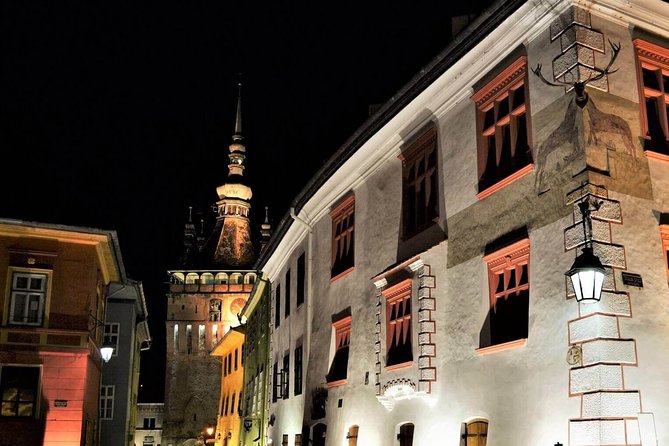
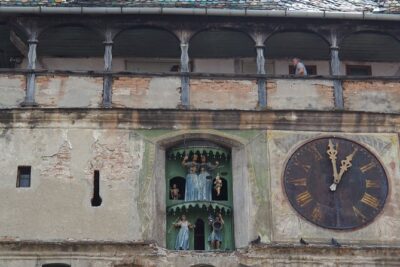
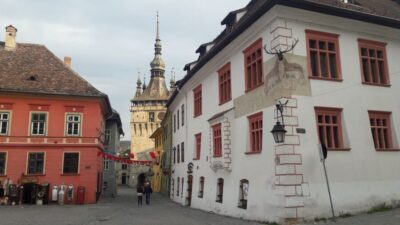
Sighisoara comes next, and you have about two hours to explore its historic citadel. The walk includes the Clock Tower, the Church on the Hill, the covered stairs, and the remaining fortifications and towers. Admission is included.
The citadel is compact but not flat. The stairs to the Church on the Hill require effort, and the old streets can be uneven. Wear shoes that handle stone surfaces comfortably. You should also expect the time to feel short if you want to linger at every tower, church, and viewpoint.
Sighisoara is one of the most important stops for understanding the Dracula story, but the useful fact is simpler than the legend: Vlad the Impaler was born here. His connection to the town is real, while the later Count Dracula story belongs mainly to fiction and popular culture. A good guide can keep those two threads separate without taking the fun out of the visit.
Lunch in Sighisoara comes before the drive to Brasov. On the road, you see Saschiz fortified church, another UNESCO-listed monument, from the outside. Its tower recalls Sighisoara’s Clock Tower. You also catch sight of Rupea fortress, one of Romania’s oldest fortifications, built over earlier Roman and Dacian defensive sites.
These are glimpses rather than full visits. That matters. If Saschiz or Rupea is high on your personal list, this tour may leave you wishing for more time. If you want a broad first look at the region, the views from the road add useful context without forcing another long stop into an already packed day.
Brasov after dark stone and German foundations
After checking in, you tour Brasov’s historic center for about two hours. The city grew around an initial fortress established in 1211 by the Teutonic Knights, then developed further through German settlement after a dispute between the knights and the king.
Brasov later became an important industrial center and drew people from across Romania. That modern growth helps explain why the city feels larger and more active than Sighisoara. You get medieval walls and bastions, but also a city that continued to change rather than remaining only a preserved citadel.
The Black Church is the main architectural highlight. This 14th-century Gothic monument gives the walking tour a strong focal point, while the fortifications, bastions, and towers show how the city protected its position. Rope Street provides a lighter moment. It is famously narrow, and the tour presents it as possibly one of the narrowest streets in the world.
Brasov is a good overnight base because the evening follows a day of churches, citadels, and driving. The tour includes two nights of accommodation in a superior three-star double room, with breakfast. The exact hotel or guesthouse is not specified, so you should treat the accommodation as comfortable mid-range lodging rather than a particular property with guaranteed facilities.
More Saxon village and fortified church trips:
- From Brasov: Sighisoara and Viscri UNESCO Day Tour
★ 4.8 · 86 reviews - Sighisoara and Viscri Private Full-Day Tour from Brasov
★ 5.0 · 51 reviews - From Cluj: Sighișoara and Church of Biertan Guided Tour
★ 4.8 · 36 reviews - UNESCO TOUR :Sighisoara ,Viscri and Rupea Tour from Brasov
★ 5.0 · 30 reviews
Day three: Bran Castle and the real Dracula question
On the way from Brasov to Bran, you see Rasnov fortress from a distance. The fortress dates to the 13th century and may relate to the short period when the Teutonic Knights controlled the area around Brasov, from 1211 to 1225.
Again, this is a passing view, not a full fortress visit. That keeps the day moving toward Bran, but it also means the tour is not designed for anyone who wants to explore every major stronghold in the area.
Bran Castle gets about two hours, with admission included. Built in the 14th century, it guarded a strategic commercial route between Wallachia and Transylvania. Its position on a great rock, with steep drops on three sides, made it a natural defensive point.
The Dracula label came later. Bran was identified with Count Dracula because of its dramatic setting and its resemblance to the castle imagined in the legend. The connection to Vlad the Impaler is much less direct than the marketing suggests. You should visit for the castle’s military purpose, setting, and role in popular culture, while keeping the historical record in view.
Two hours gives you a solid visit, though the castle’s popularity can affect how easily you move through rooms. The tour does not promise a private opening or a quiet visit, so keep your expectations practical. The setting is the main reward, along with the chance to separate Vlad’s real life from Bram Stoker’s fictional count.
Peles Castle brings a royal finish
The final major stop is Peles Castle in Sinaia, reached in the early afternoon. Built at the end of the 19th century, it looks entirely different from Bran. Bran is a defensive medieval stronghold. Peles is a royal residence built during Romania’s drive toward modernization.
Carol I, Romania’s first king, commissioned the castle. He came from the German Hohenzollern-Sigmaringen family and ruled for 48 years. The tour presents an appealing contrast between his sober personal character and the flamboyant building associated with his reign.
You have about two hours here, with admission included. That is enough time to appreciate the rooms and decoration without trying to turn the visit into a full architectural course. The castle gives the final day a change of pace after Bran’s walls and Dracula associations.
Peles also widens the historical frame. The first two days focus largely on medieval princes, religious communities, and fortified towns. Here, you see a later Romania trying to present itself as a modern European kingdom. That contrast is one of the tour’s strongest ideas.
What the private format changes
A private tour is especially useful on this route because the distances are substantial and the stops vary in length. You can ask for more explanation at Biertan, move on from a crowded castle, or take a short rest after the Sibiu walk. The supplied details do not promise unlimited flexibility, so you should discuss priorities with the guide before departure.
Gelu and Vlad are the named guides. Gelu was praised for clear English, strong knowledge of local history, and the many anecdotes he brings to the road. That matters here because the value of the tour is not only in seeing buildings. It is in understanding why a Lutheran church needed fortifications, why Vlad’s birthplace matters, and why Bran’s Dracula connection is partly fiction.
Pickup is offered from your Bucharest hotel or the airport. The air-conditioned vehicle is a practical advantage, especially on a route that covers Bucharest, the Olt Valley, Sibiu, Sighisoara, Brasov, Bran, and Sinaia. You will still spend plenty of time in the car, so this is better for someone who wants a broad regional survey than for someone who prefers one town at a time.
Most people can participate, and service animals are allowed. The tour is listed as suitable for most participants and operates as a private activity for your group. You should still be ready for stairs, uneven historic streets, and walking around church and castle grounds.
Is $914.51 a fair price?
At $914.51 per person, this is not a budget excursion. The price makes more sense when you count what it bundles: a private vehicle, guide service, two nights of accommodation, breakfast, taxes, and listed entrance fees. It also removes the work of linking several cities by public transport or arranging a separate driver and guide.
The value depends heavily on group size. For one or two people, the cost may feel high. For a family or small group sharing the private vehicle and guide, it can become more reasonable, especially if you place a high value on door-to-door pickup and historical explanation.
Meals and photo fees are not included. You should also confirm what is covered at each site, since the details specifically identify included admission for Biertan, Sighisoara, Brasov, Bran, and Peles, while Cozia is listed as free. Bring some flexibility for meals and any photography charges at monuments.
Who should book this three-day tour?
I would choose this tour if you have limited time in Romania and want the main Saxon Transylvanian sights in one carefully connected route. It suits first-time visitors who want both famous castles and less obvious places such as Biertan and Cozia.
It is also a good fit if you prefer a private guide who can explain the difference between medieval fact and Dracula fiction. The strong guide feedback, especially around Gelu’s English and storytelling, is important here.
I would hesitate if you want long, unhurried visits at every fortress. Saschiz, Rupea, and Rasnov are seen from the route, and the three days include substantial driving. You should also look elsewhere if your main goal is to spend several quiet days in one town.
FAQ
Where does the tour begin?
Pickup is offered from your hotel in Bucharest or from the airport.
How long does the tour last?
The experience lasts approximately three days and includes two nights of accommodation.
Is this a private tour?
Yes. Only your group participates in the activity.
What accommodation is included?
The tour includes two nights in a double room at a superior three-star hotel or guesthouse, with breakfast included.
Are entrance fees included?
Admission is listed as included for Biertan fortified church, Sighisoara, Brasov, Bran Castle, and Peles Castle. Cozia Monastery is listed with free admission. Meals and photo fees are not included.
What is the cancellation policy?
You receive a full refund if you cancel at least six full days before the start time. Cancellation two to six full days before the start receives a 50 percent refund. Cancellations less than two full days before the start are nonrefundable.
Should you book it?
Book it if you want a private, well-guided sweep through Transylvania and accept a busy pace. The strongest combination is the link between Cozia, Sibiu, Biertan, Sighisoara, Brasov, Bran, and Peles, with Gelu and Vlad providing the historical thread.
Skip it if you want deep time in each town or if the price is beyond your budget. For a first visit from Bucharest, though, this is an efficient way to see the region’s most important medieval cities, fortified churches, and castles without reducing the trip to Dracula alone.
More Three-Day Trips From Bucharest
- 3 Days Private Tour in Romania from Bucharest with Tour Guide
★ 5.0 · 12 reviews - 3 Days Private Tour in Romania with Transfagarasan Road
★ 5.0 · 6 reviews - 3-Day Medieval Transylvania Package Tour
★ 4.7 · 31 reviews - 3-Day Explore Transylvania from Bucharest
★ 5.0 · 17 reviews
Newest Bucharest trips on the site
- Winery touring & private wine tasting – one day private tour★ 5.0 · 3 reviews
- Bucharest: Dealu Mare Winery Private Trip with Wine Tasting★ 4.9 · 6 reviews
- Village Museum Bucharest Guided Tour★ 5.0 · 6 reviews
- Private Transfer from Giurgiu Port to Bucharest★ 4.5 · 12 reviews
- Airport Henri Coanda (Otopeni) to Bucharest – Private Transfer – Driver★ 5.0 · 5 reviews
- Salt Mine Tour from Bucharest with Entrance Ticket★ 4.5 · 19 reviews
- Wine tasting in Bucharest Old town – bonus cheese platter★ 4.5 · 6 reviews
- Walking tour of Bucharest★ 5.0 · 3 reviews
Saxon Village Tours, compared.
Small Group Tour to Viscri Church Sighisoara Town Rupea Fortress
Read our review →
Secrets of the Citadels: Brașov, Viscri, Sighișoara and Sibiu
Read our review →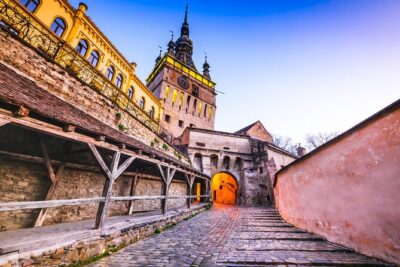
Sighisoara and Viscri Private Full-Day Tour from Brasov
Read our review →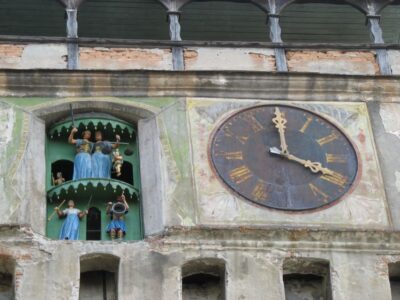

UNESCO TOUR :Sighisoara ,Viscri and Rupea Tour from Brasov
Read our review →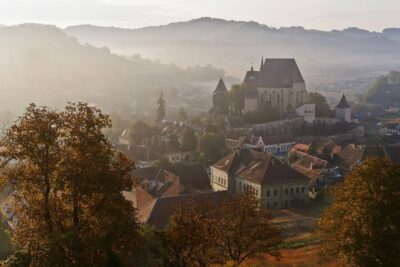
Transylvania Gems: Sighisoara, Medias, Biertan & Gypsy life
Read our review →Browse the lists this tour appears in