
Reviewed · 3-DAY EXPERIENCES
3-Day Tour of Transylvania’s Landmarks from Bucharest
Romania’s most memorable sights come packed into three long days: a royal castle, a Dracula fortress, Saxon citadels, fortified churches, and a spectacular Carpathian road. The real pleasure is moving beyond Bucharest into villages and towns where Romanian, Saxon, Hungarian, and Orthodox traditions still meet.
I like the private format, which gives your group one guide, one vehicle, and some room to adjust the pace. I also like the care taken with the route. Guides such as Ovidiu, Vio, Octavian, and Julian are described as warm, flexible, and well informed, with Ovidiu receiving especially strong praise for explaining history without turning the trip into a lecture.
The main drawback is the pace. You cover a lot of ground in three days, and castle entrance fees are extra on top of the $1,089.92 per-person price. This suits you best if you want a polished introduction to Transylvania, not a slow village holiday.
Key points to know before you book
- Peleș Castle opens the journey with royal style: Expect carved wood, ornate rooms, and a striking mountain setting near Sinaia.
- Bran Castle is historic, but not really Dracula’s castle: Its literary connection is weak, while its medieval story and royal collection are genuine.
- Sighișoara and Biertan reveal Saxon Transylvania: You will see fortified architecture, merchant houses, church towers, and old defensive walls.
- The private vehicle matters: Three days involve considerable road time, so air conditioning and dedicated transport make the schedule easier.
- The Transfăgărășan depends on the season: It is planned for July through September when open. Otherwise, you use the scenic Olt Valley.
- This is a walking tour as well as a driving tour: Sighișoara includes 180 steps to the Church on the Hill and Saxon Cemetery.
Why this three-day route works
I like the shape of this tour because it does not treat Transylvania as a single castle stop. You get royal Romania at Peleș, medieval fortifications at Bran and Sighișoara, Saxon villages at Biertan and Sibiu, and Orthodox architecture at Curtea de Argeș.
The trip begins in Bucharest at 10:00 a.m. and returns you to the capital on the third day. That timing is useful if you are fitting Romania into a wider European journey. You spend two nights away from Bucharest, with accommodation arranged for you, so there is no need to work out every road connection or hotel booking yourself.
The vehicle is air conditioned and private, with parking fees included. That sounds basic, but it matters here. The route crosses mountain country and links places that are not easy to combine by public transport in such a short period. You can watch the scenery, ask questions, and let the guide handle the driving.
The format is private, so only your group participates. That makes the price easier to understand for couples, families, or a small group sharing the cost. At $1,089.92 per person, it is not a budget tour, especially once you add admission fees. You are paying for private transport, planning, accommodation, parking, and a guide for three days rather than for a simple series of tickets.
More three-day trips from Bucharest:
- 3 Days Private Tour in Romania from Bucharest with Tour Guide
★ 5.0 · 12 reviews - 3 Days Private Tour in Romania with Transfagarasan Road
★ 5.0 · 6 reviews - 3-Day Medieval Transylvania Package Tour
★ 4.7 · 31 reviews
Peleș Castle and the road into the Carpathians
The first stop is Sinaia, a mountain resort north of Bucharest. The town takes its name from Sinaia Monastery and sits in the Carpathians, often called the Transylvanian Alps.
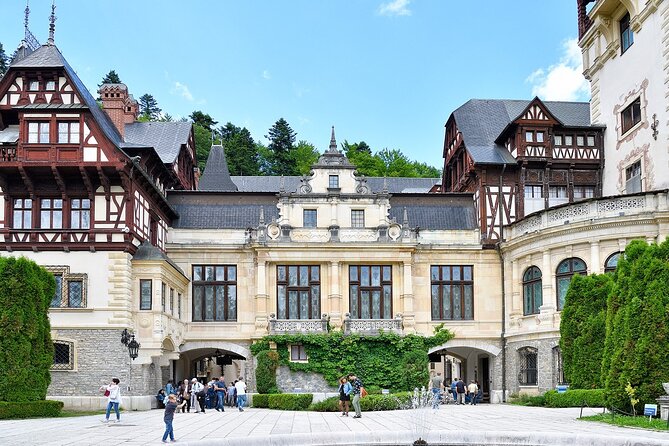
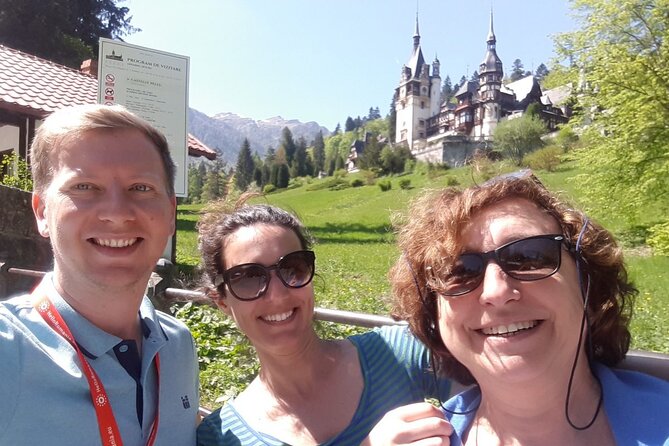
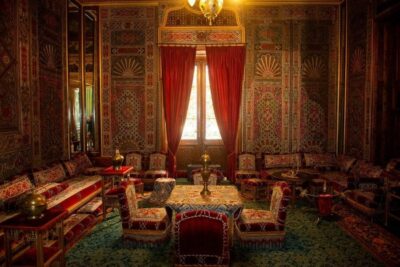
Peleș Castle is the day’s grand opening. King Carol I began the building in 1873, and the result mixes Neo-Renaissance and Gothic Revival design with strong Baroque touches. Inside, expect polished woodwork, elaborate decoration, and luxurious textiles rather than the bare stone rooms found in many medieval fortresses.
You have about 90 minutes here. That is enough for a worthwhile visit, though not enough for a leisurely study of every room. The admission ticket is not included, so allow extra money for entry. Your guide can add useful context about the royal family and the castle’s place in modern Romanian history, but the visit itself is largely an indoor museum experience.
I would make Peleș a priority even if castles are not usually your main interest. It feels different from Bran, and seeing both on the same day gives you a useful contrast: one is a refined royal residence, the other a defensive fortress shaped by medieval politics and later legend.
Bran Castle beyond the Dracula story
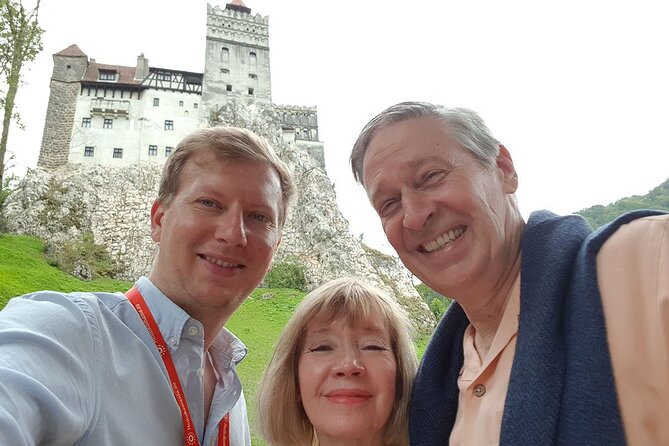
Bran Castle is the most famous stop, thanks to its popular name, Dracula’s Castle. The label is catchy, but you should arrive with the facts straight. There is no proof that Bram Stoker based his fictional castle on Bran, and the site has no proven connection to Vlad the Impaler.
That does not make the visit pointless. The first wooden fortress here was destroyed by Mongols in 1242. Local Saxons later received permission from the King of Hungary to build a stone castle in 1377, using their own money and labor. The present museum also includes furniture and art connected with Queen Marie of Romania.
You get about 90 minutes at Bran. It is a compact stop with a strong visual identity, and the name guarantees crowds at popular times, though the private format means your guide can help you use the time sensibly. Entry costs extra.
I appreciate the honesty of this part of the experience. The Dracula story is fun, but the actual tale of Saxon merchants, Hungarian authority, border defense, and Queen Marie gives the castle more substance. If you want a purely Gothic horror attraction, Bran may feel less dramatic than expected. If you want a real castle with a later layer of folklore, it earns its place.
Brașov, a short look at a beautiful old city
Brașov follows Bran and gives you your first taste of a major Transylvanian city. The old center is framed by the Carpathians and filled with Gothic, Baroque, and Renaissance buildings.
The town was founded in 1211 on an older Dacian site and later settled by Saxons. It became one of the seven fortified Saxon citadels known as Siebenbürgen, or the Seven Cities of Transylvania.
The scheduled visit lasts about 90 minutes, with no admission ticket listed. That is enough to walk through the historic center and hear the basic story of the city, but it is not a full Brașov visit. You will not have time to cover every church, tower, and street at a relaxed pace.
For me, Brașov works well as a first evening stop because it shifts the mood from isolated castles to living urban Romania. Still, if Brașov is high on your personal list, consider adding a separate night before or after the tour. This three-day route gives you an introduction, not a complete city stay.
A few more Bucharest trips worth a look
- Castles of Transylvania: Private Day Trip from Bucharest
★ 4.5 · 248 reviews - Small Group Tour to Viscri Church Sighisoara Town Rupea Fortress
★ 5.0 · 225 reviews - 2-Day Medieval Transylvania with Brasov,Sibiu and Sighisoara Tour from Bucharest
★ 4.5 · 145 reviews - Sibiu: Alba Iulia and Corvin Castle Guided Tour
★ 4.7 · 66 reviews
Sighișoara and the 180-step climb
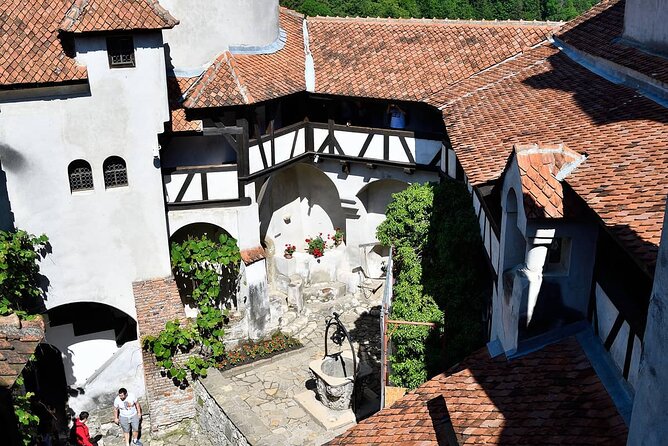
Day two brings you to Sighișoara, one of the strongest stops on the route. Its historic center sits on a hill behind a 930-meter ring of walls, 14 defense towers, and five artillery bastions.
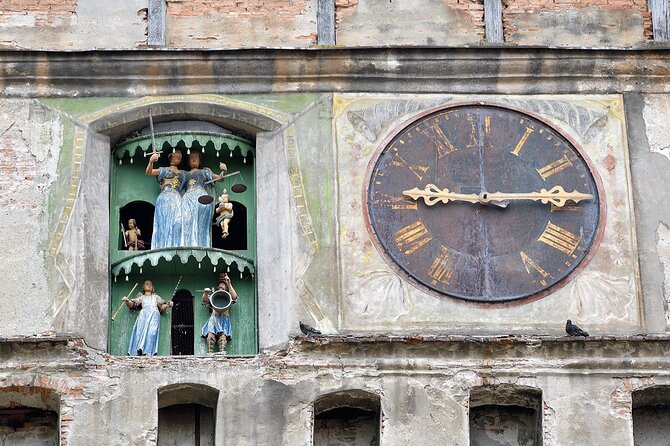
The old merchant houses retain their pastel colors and German architectural details. The Clock Tower rises above the center and dates back roughly 700 years. Here, the pleasure is in walking slowly through the lanes, looking up at the towers, and noticing how much of the medieval street plan remains.
The walking tour lasts about two hours. One important detail is the climb up the Covered Staircase, known as the Scholars’ Stairs. You will go up 180 steps to reach the Gothic Church on the Hill and the Saxon Cemetery.
That climb makes the physical-fitness note worth taking seriously. You do not need to be an athlete, but you should be comfortable walking uphill and using stairs. Wear shoes with a firm grip, especially if the weather is damp.
Sighișoara is also linked to Vlad Țepeș, the 15th-century Prince of Wallachia who helped inspire the fictional Dracula. You can see the house identified as his 1431 birthplace. As with Bran, it is best to separate documented history from later tourism. The link to Vlad is more direct here, but the literary Count Dracula remains a fictional creation.
Biertan and the Saxon fortified church tradition
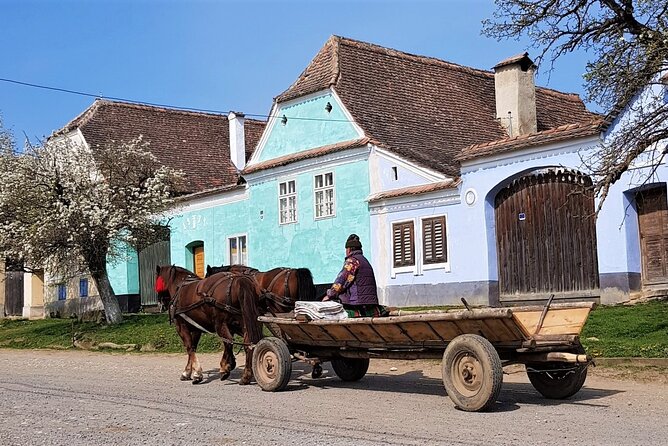
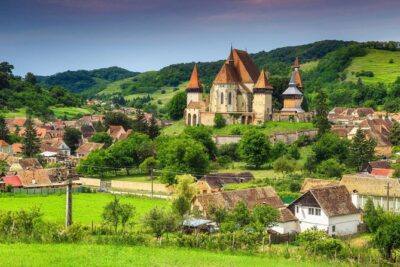
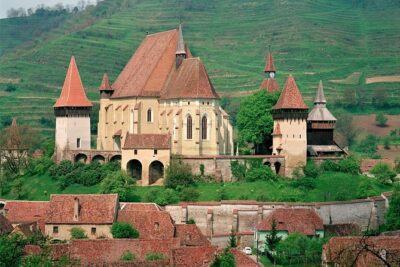
Biertan is smaller and quieter than Sighișoara, but it explains a key part of Transylvanian history. Saxon settlers founded the village sometime between 1224 and 1283, and its position helped it grow as a commercial center.
The fortified church served as the seat of the Transylvanian Lutheran Evangelical bishop from 1572 to 1867. Its walls and defensive design reflect a time when religious buildings also protected the local population.
You have about an hour here, with admission extra. That is a sensible amount of time for a focused visit, though anyone fascinated by church architecture may want longer. The stop is valuable because it shows that Transylvania is not only about dramatic castles. Its smaller villages preserve a distinct German-speaking Saxon legacy that shaped local buildings, religion, trade, and town planning.
The route also identifies Biertan as part of a group of fortified churches recognized by UNESCO. The important thing is not simply collecting another major designation. You are seeing how ordinary communities adapted to danger and built strong religious centers at the heart of village life.
Sibiu’s German character and old walls
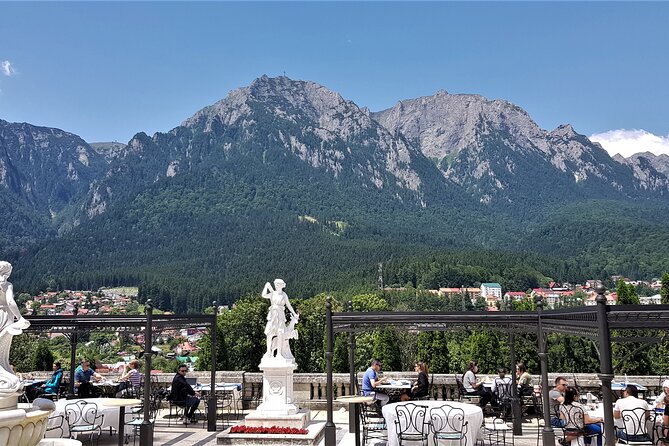
Sibiu gives you a larger urban setting after Biertan. Its old town still looks strongly German, with sections of the medieval wall and three surviving towers from an original 39.
You have about two hours to explore. The Great Square is the natural center, while Brukenthal Palace adds a major museum and a late-Baroque building to the route. You can also see the Bridge of Lies, Haller House, churches, and the distinctive roof windows often associated with Sibiu.
This is another place where the schedule is a sampler. Two hours lets you walk the main squares and absorb the city’s character, but it will not cover every museum or church. If you are an art lover, Brukenthal Palace may deserve extra time beyond this tour.
I like Sibiu because it rounds out the medieval story. Sighișoara feels like a fortified hill citadel. Sibiu feels like a prosperous old city that has continued to function and change. Your guide can connect the buildings to Saxon settlement, trade, religion, and the wider mix of cultures that shaped Transylvania.
The Transfăgărășan Highway or the Olt Valley
The third day is built around the return toward Bucharest. If you travel from July through September and the road is open, the route uses the Transfăgărășan Highway.
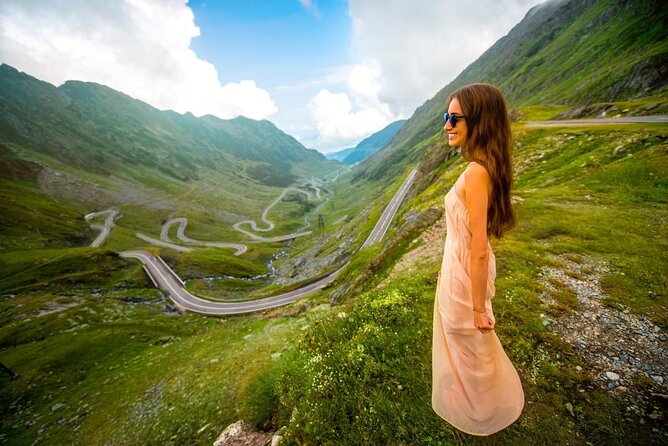
The road crosses the southern Carpathians and links Transylvania with Wallachia. It passes through the country’s highest mountain area, near Moldoveanu and Negoiu. The scheduled time is about two hours, but the appeal is the route itself: mountain curves, high passes, and broad views.
Weather and road conditions control this part of the trip. If the highway is closed, you use the Olt Valley instead. This is not a poor substitute. Romans used the valley as a trade route, and medieval merchants later followed it into Transylvania. It runs between the Căpățânii, Lotru, and Făgăraș mountains.
I would not book this tour solely for the Transfăgărășan unless your dates are flexible. The road is seasonal, and the alternative is scenic but different. The sensible approach is to see the final day as a mountain return route, with the highway as a welcome bonus when conditions allow.
Curtea de Argeș and the final stop
Curtea de Argeș Monastery adds a religious and artistic note before you return to Bucharest. Romania has around 600 Orthodox monasteries, but this one is distinctive for combining Georgian and Armenian influences with Islamic geometric designs.
The church was built between 1515 and 1517. Its construction is tied to the story of Masterbuilder Manole and Prince Negru Vodă, also known as Radu Negru. More than 100 versions of the building legend are said to exist, so the tale is part of the cultural experience rather than a single fixed account.
The visit lasts about 45 minutes, and admission is extra. That is enough for a concise look, though the short stop may feel rushed if you want to study the exterior details or hear every version of the legend.
After Curtea de Argeș, your guide returns you to Bucharest. The day combines mountain scenery, a historic route, and Orthodox architecture, which gives the tour a more rounded finish than simply driving straight back from Sibiu.
Guides, vehicles, and the practical details
The company assigns a single experienced guide for the journey, although the supplied trip experiences also describe colleagues such as Vio, Octavian, and Julian helping on some departures. Ovidiu is the main name associated with the company and is repeatedly described as patient, organized, friendly, and flexible.
That matters because the route includes many dates, names, and cultural layers. A good guide can explain why a castle is famous, where the Dracula story is weak, and how Saxon communities differed from Romanian Orthodox ones. Just as important, Ovidiu is described as filling the days without forcing the group to sprint from one stop to the next.
The vehicle is a top-line Euro 6 model with air conditioning. The tour also includes private transport and parking fees. Single room use costs an extra 60 euros per person, and entrance fees are not included.
Cancellation is free up to 24 hours before the local start time. Poor weather or failure to reach the minimum number of participants can lead to a new date or a full refund. The experience requires moderate physical fitness, mainly because of walking and the Sighișoara staircase.
Who should book this tour?
Book it if you want a carefully arranged first look at Transylvania and value a private guide more than a low price. It is particularly useful for a small group that wants to see several distant places without managing trains, buses, parking, and hotels.
It also suits you if you enjoy architecture and cultural history more than nightlife. The strongest moments are not only Bran Castle. They are the Saxon streets of Sighișoara, the fortified church at Biertan, Sibiu’s old squares, and the contrast between royal Peleș and Orthodox Curtea de Argeș.
Think twice if you want slow mornings, long museum visits, or several nights in one town. The schedule is full, and each stop has a time limit. I would also price the castle and church admissions before booking, since those costs come separately from an already substantial tour price.
For the right group, the value lies in ease and range. You get one vehicle, a consistent guide, arranged accommodation, and a route that covers far more than you could comfortably manage on your own in three days.
FAQ
Where does the tour begin?
The tour begins in Bucharest, with a stated start time of 10:00 a.m. Pickup is offered.
How long does the experience last?
The tour lasts approximately three days and returns you to Bucharest on the third day.
Are entrance fees included?
No. Entrance fees for places such as Peleș Castle, Bran Castle, Biertan Fortified Church, and Curtea de Argeș Monastery are not included.
Is the tour private?
Yes. Only your group participates in the activity.
Will the tour use the Transfăgărășan Highway?
The highway is used when the trip takes place from July through September and the road is open. If it is closed, the guide uses the scenic Olt Valley instead.
Can I cancel for a full refund?
You can cancel at least 24 hours before the experience starts for a full refund. Cancellations or changes made less than 24 hours before the start time are not accepted for a refund.
Newest Bucharest trips on the site
- Winery touring & private wine tasting – one day private tour★ 5.0 · 3 reviews
- Bucharest: Dealu Mare Winery Private Trip with Wine Tasting★ 4.9 · 6 reviews
- Village Museum Bucharest Guided Tour★ 5.0 · 6 reviews
- Private Transfer from Giurgiu Port to Bucharest★ 4.5 · 12 reviews
- Airport Henri Coanda (Otopeni) to Bucharest – Private Transfer – Driver★ 5.0 · 5 reviews
- Salt Mine Tour from Bucharest with Entrance Ticket★ 4.5 · 19 reviews
- Wine tasting in Bucharest Old town – bonus cheese platter★ 4.5 · 6 reviews
- Private Wine Tasting at Bucharest’s First Wine Bar★ 5.0 · 3 reviews
3-Day Experiences, compared.
3-Day Private Tour of Medieval Transylvania from Bucharest
Read our review →
3 Days Private Tour in Romania from Bucharest with Tour Guide
Read our review →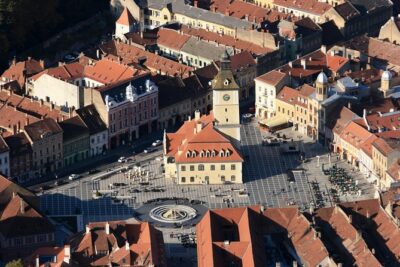
Medieval Transylvania: Shared 3-Day Tour from Bucharest
Read our review →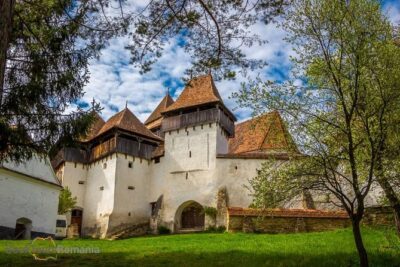
3-Day Tour from Bucharest: Transylvania Villages and Medieval Towns
Read our review →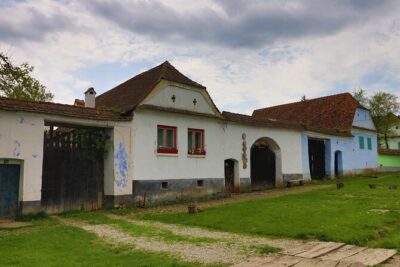
3 Days UNESCO Tour of Transylvania. Private tour from Bucharest
Read our review →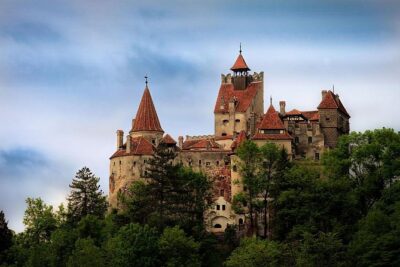
Browse the lists this tour appears in