
Reviewed · COMMUNIST HISTORY TOURS
6h Bucharest Communism Private Tour – Ceausescu Mainson
The striking part of this Bucharest tour is the contrast: Ceaușescu’s oversized Palace of Parliament on one side, then the modest homes and traditions preserved at the Village Museum. Between them, you trace the streets and squares linked to the 1989 Revolution and see where political power, public life, and private privilege met.
I like two things here. First, you get a private car, a private English-speaking guide, and room to adjust the day. Second, Nicolas brings a personal, friendly manner to a difficult subject, which matters when the story includes shortages, fear, and a violent political ending. The main drawback is cost: at $197.81 per person, this is a serious spend, especially before entrance fees.
Key points to know before booking
- A private route through communist Bucharest: Your group travels alone by private car or minibus, with flexibility to change the day’s order or stops.
- The Palace of Parliament takes center stage: Allow about two hours here, but the admission fee is not included.
- Ceaușescu’s private world comes after the public monument: The mansion shows how the ruling family lived from 1965 to 1989.
- The 1989 Revolution gets real places, not just dates: Revolution Square and central Bucharest connect political events to streets you can see.
- The Village Museum adds an important contrast: Traditional rural homes and customs show a way of life far removed from communist state grandeur.
- Extra costs need planning: About 20 euros per person is listed for attraction admissions, with the Palace of Parliament also identified separately as an extra charge.
Why this tour works for understanding communist Bucharest
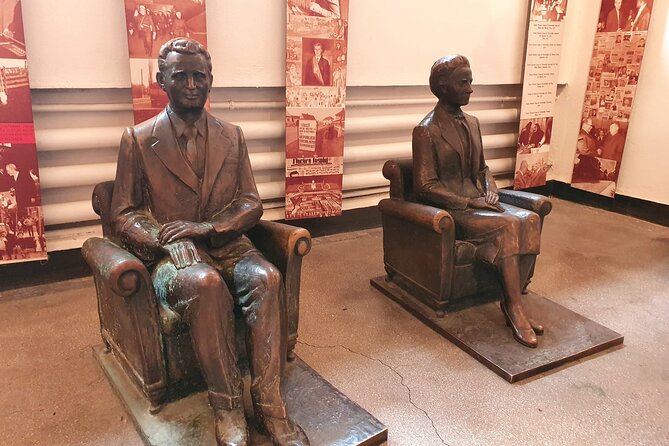
Bucharest can be hard to read at street level. A grand avenue may show French-inspired architecture, a block of communist offices, and a church or old house within the same outing. Without context, the city’s political story can feel scattered.
This tour gives you a clear thread. You see the buildings created by communist power, the public spaces tied to the December 1989 Revolution, and the former home of Nicolae and Elena Ceaușescu. The Village Museum then gives you a useful counterpoint: a look at Romanian rural life, built around practical homes, local traditions, and a close relationship with the land.
I like this mix because it avoids reducing Romania’s communist period to one building or one dictator. The Palace of Parliament explains the scale of the regime’s ambition. Ceaușescu Mansion reveals the private benefits enjoyed by the ruling family. Revolution Square brings the system’s final days into view. The village houses remind you that ordinary Romanian life existed beyond the capital’s monumental projects.
The experience lasts about six to seven hours. That makes it a full day rather than a quick city orientation. You should book it when you want a focused history tour and still have enough energy for several substantial stops.
More communist-era history walks in Bucharest:
- The Real tour of Communism
★ 5.0 · 666 reviews - Life under Communism
★ 5.0 · 358 reviews - 3-Hour Guided Tour of Communist Bucharest
★ 4.9 · 303 reviews
Palace of Parliament: power built in concrete
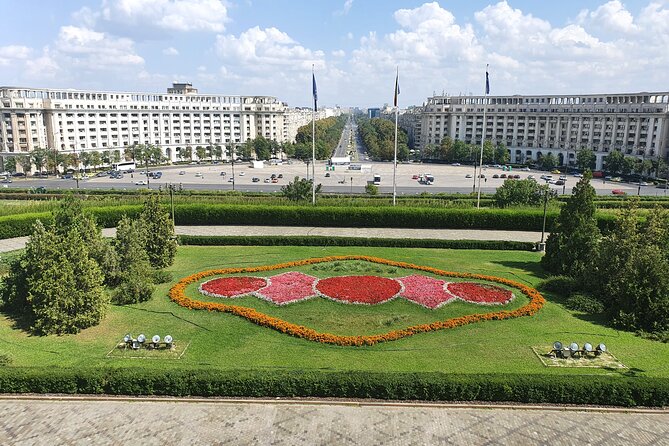
The Palace of Parliament, also known as the People’s House, is the tour’s biggest physical statement. The building is described as the second-largest administrative building in the world after the Pentagon, and its scale is meant to overwhelm.
That size is part of the lesson. The building was not simply an office complex. It represented Nicolae Ceaușescu’s vision of a highly controlled state, with monumental architecture used to project authority. As you move through the site, the useful question is not only how large it is, but what its construction required from the country.
The tour presents the Palace as an example of how a totalitarian regime can damage a nation while chasing grandeur. That framing helps you connect architecture to daily life. Resources devoted to a huge government center existed alongside shortages and strict controls that shaped ordinary Romanian homes.
Plan on about two hours for this stop. That is enough time for the building to feel more than a quick photo stop, though the exact visit inside depends on the admission arrangements. The entrance fee is not included, so check the current cost when booking. The listed information also cites approximately 20 euros per person for attraction admissions, while naming the Palace entrance separately, so you should confirm the final total before the day begins.
The Palace is the right place to ask your guide direct questions. How did the project affect the old city? What did people lose when the area was remade? Which parts were meant for government use, and which were built to impress? A private guide gives you space to shape the conversation around your interests.
Village Museum: a quieter picture of Romania
The National Village Museum, Dimitrie Gusti, changes the mood completely. Instead of monumental state architecture, you see traditional houses and rural buildings gathered in an open-air museum setting.
The stop lasts about one hour. That is not enough for every display in detail, but it gives you a useful introduction to Romanian village life. You can look at the practical construction of homes, the way communities used local resources, and the simple relationship between household, work, and worship.
This stop matters because the communist story can otherwise become too focused on Ceaușescu and Bucharest. Romania was also a rural country with long-established customs and regional building styles. The museum shows an ecological and sustainable way of organizing life, at least in the traditional sense described for the visit. It gives you something human-sized after the Palace’s vast halls.
I would pay attention to the contrast rather than treating the museum as an unrelated attraction. The Palace suggests centralized power and excess. The village homes suggest adaptation, modesty, and local decision-making. Seen on the same day, they help explain the gap between official state imagery and the everyday world most people knew.
Admission is not included. If you are especially interested in folk architecture, you may want to ask whether the one-hour visit can be extended. The route is private, so the guide can offer flexibility, although the tour still has several other stops to cover.
Calea Victoriei: old elegance beside communist power
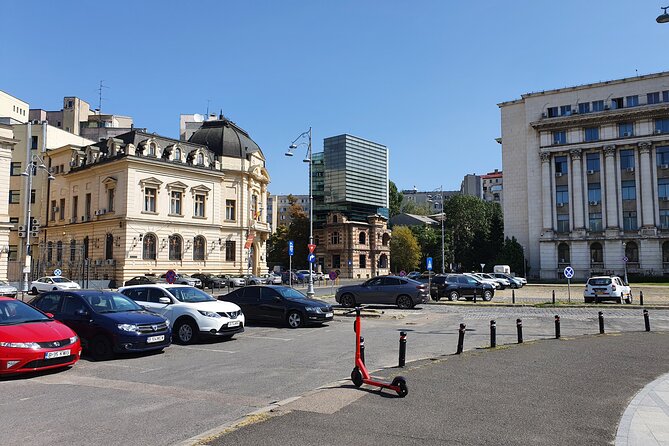
Calea Victoriei gives you a street-level view of Bucharest’s mixed identity. The boulevard includes communist buildings, but it is also known for French-influenced architecture.
The planned stop lasts about 45 minutes and has no listed admission charge. That makes it a useful walking and viewing segment between ticketed attractions. You get to see how different eras sit close together instead of being separated into neat museum rooms.
This is where a guide can help you notice the city’s layers. One building may signal the period before communist rule, while another reflects the state’s later desire for scale and control. The tour does not treat Bucharest as a city with one visual style. Its central streets carry traces of royal, European, communist, and post-communist life.
Because this stop is shorter, do not expect a full architectural tour of every building along the avenue. Its value is in the connection to the wider route. After hearing about the Palace, you see how communist planning affected the city beyond that one massive structure.
A few more Bucharest trips worth a look
- Bucharest: Palace of Parliament Tickets and Guide
★ 4.3 · 3,182 reviews - Bucharest: Palace of Parliament Tickets and Guided Tour
★ 4.4 · 1,877 reviews - Bucharest: Parliament Palace Skip-the-line Ticket
★ 4.2 · 1,518 reviews - Bucharest: City Highlights Guided Walking Tour
★ 4.9 · 1,482 reviews
Revolution Square: the final days of the regime
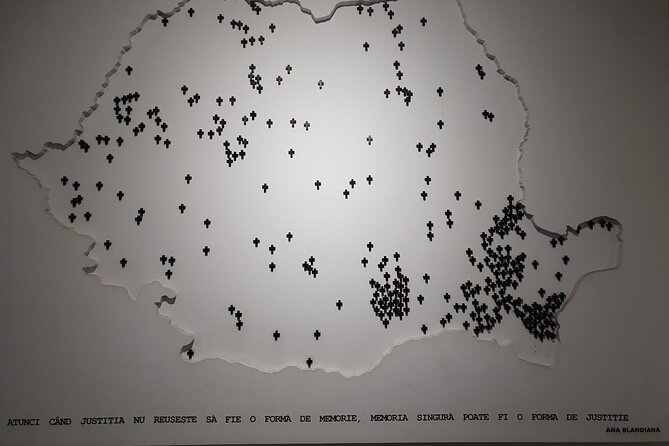
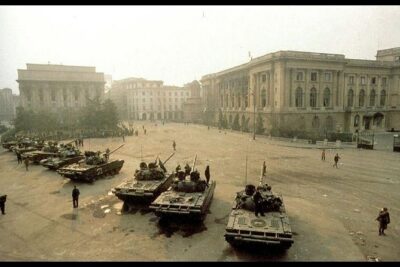
Revolution Square is one of the most important places on this route. It is tied to the Romanian Revolution of December 1989, when the communist regime came to an end.
The visit lasts about 45 minutes and is free of an additional admission fee. The value here comes from explanation and location. Dates and political speeches can feel distant in a book. A square gives them a physical setting.
Your guide can connect the public space with the final crisis of Ceaușescu’s rule. The stop also pairs naturally with Ceaușescu Mansion. One shows the family’s protected private residence over 24 years. The other brings you to the public setting where the regime’s authority began to fail.
This is likely to be one of the more serious parts of the day. The tour deals with a dictatorship, the effects of its policies, and a revolution that was not simply a peaceful change of government. The information provided does not promise a detailed account of every event, so if 1989 is your main interest, tell Nicolas at the start and ask for extra attention here.
Ceaușescu Mansion: behind the official image

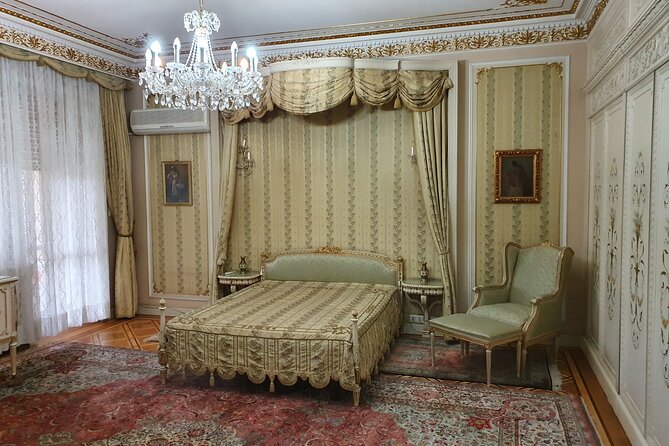
The Ceaușescu Mansion was the private residence of Nicolae and Elena Ceaușescu and their children, Nicu, Zoia, and Valentin, from 1965 until 1989. You spend about 90 minutes here, making it one of the longer stops.
This is where the public story becomes personal. The Palace of Parliament expresses state ambition on a huge scale. The mansion shows the domestic setting of the ruling family. Together, the two sites help you understand the difference between official claims of shared sacrifice and the privileged life at the top.
The mansion is especially valuable for visitors who want more than political dates. Rooms, household spaces, and private surroundings can make the period easier to picture. You may find the experience less abstract than a standard monument visit because it deals with family life as well as government.
Admission is not included. The listed information places all tourist attraction fees at about 20 euros per person, but also separately notes the Palace admission, so ask for a clear breakdown of entrance costs. The mansion may have its own visitor rules or entry arrangements, and the tour price does not cover those fees.
Allow the full 90 minutes. Rushing this stop would weaken the contrast with the Palace and Revolution Square. It is also a good point to ask about the Ceaușescu family’s roles and how the mansion fit into the wider political system.
Patriarchal Cathedral: religion and civic life
The Romanian Orthodox Patriarchal Cathedral sits on Dealul Mitropoliei and functions as both a religious and civic landmark. It is also known as the Metropolitan Church.
The planned visit lasts about 45 minutes, and an entrance fee is not included. Since this is a working cathedral, religious observances may take place there, including major Orthodox holidays and a Palm Sunday pilgrimage. The building is not simply a historical exhibit waiting for visitors. It remains part of Bucharest’s religious life.
That distinction matters when you visit. You should treat the cathedral as an active place of worship, not only as another sightseeing stop. The Orthodox Divine Liturgy is known for its a cappella choir, a practice shared by Orthodox churches during prayer services and liturgy.
This stop adds another layer to the communist story. The regime promoted an official political system that shaped public life, but religious institutions and beliefs remained part of Romanian society. The cathedral gives you a chance to see a civic and spiritual landmark near the Palace of the Chamber of Deputies of the Patriarchate.
The provided details do not say whether you will enter during a service or whether photography is permitted. Follow your guide’s instructions and local signs. The 45-minute allocation should be enough for a respectful visit without making the cathedral the main subject of the day.
Nicolas and the private-tour format

The guide associated with this experience is Nicolas, and the feedback connected with the tour repeatedly highlights his friendly, polite, professional, and natural manner. One family also praised the effort to personalize a Bucharest visit, which fits the format: this is not a fixed coach group with a script that must suit everyone.
You get a private licensed English-speaking guide and driver throughout the outing. The vehicle is described as a private car or minibus for you, your friends, or your family. Fuel, parking, road tolls, and taxes are included.
That setup has real value in Bucharest. Six stops spread across the city can become tiring if you must navigate public transportation or wait for a larger group. A private vehicle keeps the day moving and lets you spend your attention on the subject instead of the transfer between sites.
The route can also be changed during the tour. That does not mean every stop can be expanded indefinitely, since the day still lasts roughly six to seven hours. It does mean you can discuss priorities with Nicolas, particularly if your group wants more time at the Revolution sites, the mansion, or the Village Museum.
Group discounts are offered, which may improve the per-person value for families or friends. For a solo visitor, the $197.81 price is harder to justify. For several people sharing a private vehicle and guide, the cost may make more sense, especially if flexibility is important.
What the $197.81 price really covers
At $197.81 per person, this is not a budget city tour. You are paying for a private experience, not just transportation between attractions. The price covers the private vehicle, licensed English-speaking guide and driver, fuel, parking, road tolls, and taxes.
The strongest value is control. You can travel with your own group, ask questions without holding up strangers, and request changes after the tour begins. That matters if your family has mixed interests or if you want history explained at a slower pace.
The weak point is the extra cost of admissions. Food and drinks are also excluded. The stated attraction fees total about 20 euros per person, while the Palace entrance is specifically listed as an additional charge, so budget beyond the advertised tour price.
I would compare this with the cost of arranging several separate taxis, guides, and entrance tickets. If you want only Revolution Square and the Palace, a shorter arrangement may be cheaper. If you want all six stops in one day with a dedicated guide, the private format offers a clearer reason for the premium.
Who should book this Bucharest experience?
I would recommend it most to you if you want a focused explanation of Romanian communism rather than a general city sightseeing circuit. It suits adults, families with older children, and small groups who appreciate a private guide and do not want to manage transport.
It is also a good fit if you want to connect big political events with places you can see: the Palace of Parliament, Revolution Square, and the Ceaușescu residence. The Village Museum and Patriarchal Cathedral keep the day from becoming a single-topic march through government buildings.
You may want another tour if your main goal is food, nightlife, art, or a broad introduction to Bucharest. This experience gives communism and the 1989 Revolution the center of the day. It is also not ideal if you want a low-cost outing or if you prefer to explore slowly on foot.
The subject can be heavy. That is not a fault, but you should know what you are booking. Nicolas’s warm, natural approach can make the discussion easier, yet the material still concerns dictatorship, deprivation, privilege, and political violence.
Final verdict: a strong history day at a premium price
I would book this tour if the communist period is one of your main reasons for visiting Bucharest. The route is well chosen: the Palace shows state scale, the mansion shows private privilege, Revolution Square marks the regime’s collapse, and the Village Museum gives you a grounded view of Romanian life beyond official power.
The price is high, and admissions are extra. Still, a private car, a dedicated English-speaking guide, flexible timing, and a six to seven-hour route offer a practical way to cover a lot of ground. Ask for the exact entrance total before confirming, then book if you value context and personal attention more than the lowest possible price.
FAQ
How long does the Bucharest Communism Private Tour last?
The experience lasts approximately six to seven hours.
Is this a private tour?
Yes. Only your group participates, and the private car or minibus is for you, your friends, or your family.
Who is the guide?
The guide associated with the experience is Nicolas. The tour includes a licensed English-speaking guide and driver.
Is hotel pickup available?
Pickup is offered, although the provided information does not specify the exact pickup locations or times.
Is transportation included?
Yes. A private car or minibus is included, along with fuel, parking, road tolls, and taxes.
Is admission to the Palace of Parliament included?
No. The Palace of Parliament entrance fee is not included in the tour price.
Are other entrance fees included?
No. Entrance fees for the listed attractions are extra. The provided information states approximately 20 euros per person for tourist attraction admissions.
Can the itinerary be changed?
Yes. The tour offers flexibility to change the daily route, including after the tour has started.
Can I cancel for a full refund?
Yes, if you cancel at least 24 hours before the experience begins. Cancellations made within 24 hours are not refunded, and changes made within 24 hours are not accepted.
Newest Bucharest trips on the site
- Winery touring & private wine tasting – one day private tour★ 5.0 · 3 reviews
- Bucharest: Dealu Mare Winery Private Trip with Wine Tasting★ 4.9 · 6 reviews
- Village Museum Bucharest Guided Tour★ 5.0 · 6 reviews
- Private Transfer from Giurgiu Port to Bucharest★ 4.5 · 12 reviews
- Airport Henri Coanda (Otopeni) to Bucharest – Private Transfer – Driver★ 5.0 · 5 reviews
- Salt Mine Tour from Bucharest with Entrance Ticket★ 4.5 · 19 reviews
- Wine tasting in Bucharest Old town – bonus cheese platter★ 4.5 · 6 reviews
- Walking tour of Bucharest★ 5.0 · 3 reviews
Communist History Tours, compared.
Bucharest Essential Tour: Old Town, Calea Victoriei & Communism
Read our review →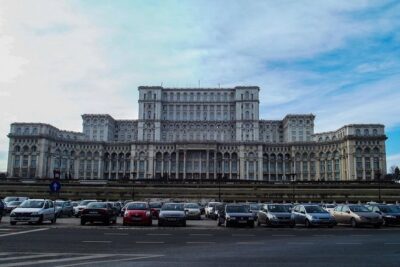
Communism in Bucharest – Landmarks, Museum & Communist Appetizers
Read our review →

Museum of Communism Ticket with Communist Coffee
Read our review →Browse the lists this tour appears in