
Reviewed · 7-DAY EXPERIENCES
7 Day Best of Transylvania Motorcycle Tour from Cluj
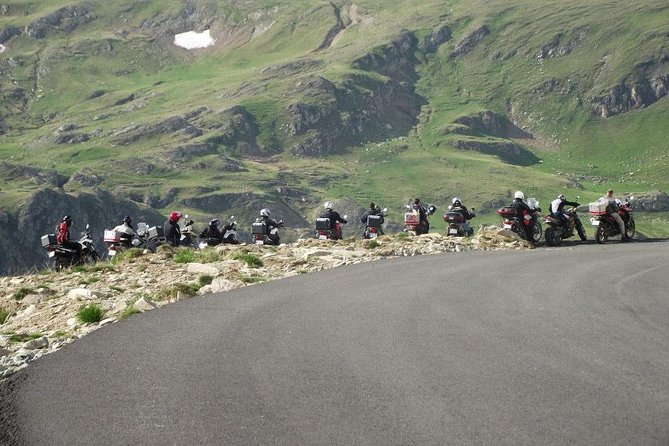
The great appeal here is the mix: serious mountain riding on Transfagarasan and Transalpina, followed by quiet village roads, Gothic castles, Saxon churches, and Romanian meals. This is not a quick castle tour with a few bends added on. The roads are the main event, and the history gives each day a reason to stop.
I like the small group size, capped at 10, and the practical support from local guides Alexe and Claudia. I also like the overnight pattern, with three-star and four-star hotels plus village guest houses rather than one anonymous base for the whole week. The main consideration is that fuel, meals, road taxes, parking, and attraction tickets are extra, so the $1,144.09 price is a starting point rather than your final cost.
Key points to know
- Transfagarasan and Transalpina are the riding stars: Expect tight bends, high passes, and mountain weather.
- The tour links major sights well: Sighisoara, Biertan, Bran Castle, Peles Castle, and Alba Iulia all fit into one route.
- Local guidance matters: Alexe leads with route briefings and regional knowledge, while Claudia helps with planning and communication.
- You can bring or rent a motorcycle: BMW motorcycle rental is available, or you can ride your own machine.
- Six nights keep the pace moving: Accommodation includes one night in a four-star hotel, three in three-star hotels, and two in guest houses.
- This suits fit, properly equipped riders: You need to be at least 21, hold an unrestricted motorcycle license, and bring full riding gear.
Why this seven-day route works
Transylvania is often sold through the Dracula story. This tour uses that familiar hook, then takes you well beyond it. You’ll ride through the Carpathians, stop in old Saxon settlements, see royal and military fortresses, and spend nights in smaller communities.
That variety gives the week a good rhythm. One day may focus on a medieval citadel. The next puts you high above the tree line on a narrow road. You get history without losing the reason you came on a motorcycle tour: time in the saddle.
The route also works well for someone visiting Romania for the first time. Airport transfers from Cluj are included, and the operator provides a general map plus a daily route briefing. You are not left to work out every turn alone, though you should still expect a full riding holiday rather than a relaxed sightseeing trip.
More week-long trips from Transylvania:
- 7-Day Private Tour of Transylvania from Bucharest
★ 5.0 · 13 reviews - Discover Medieval Transylvania Small Group Tour – 7 days
★ 5.0 · 4 reviews - 4×4 Driving Experience at Flying Altitudes – 7 Days
★ 5.0 · 13 reviews
Day one: Turda Salt Mine opens the week
The first major stop is Salina Turda, reached by transfer to the town of Turda. The city began as the Roman settlement of Potaissa, and its salt mine is one of the area’s most unusual sights.
Inside, the mine has large chambers named after kings and queens. The visit lasts about an hour, and the admission fee is not included. That extra cost is worth noting before you arrive, especially because several later attractions also require separate tickets.
Day one is a sensible introduction to the region. It gives you an indoor historical stop before the big mountain rides begin. The mine is also a reminder that Transylvania’s story is not only castles and princes. Salt extraction helped shape local industry long before the Dracula image took over the tourist trade.
Day two: Biertan and the medieval streets of Sighisoara
The morning stop at Biertan Fortified Church brings you into the world of Transylvania’s Saxon villages. The Lutheran church dates to the 12th century and is part of a UNESCO World Heritage Site.
You get about an hour here. That is enough for a focused visit, but not for a slow architectural study. If fortified churches are your main interest, you may wish the stop were longer. Still, the church adds something the castle visits cannot: a look at how rural communities protected both their faith and their homes.
Later, you reach Sighisoara, one of the strongest historical stops on the route. Its medieval citadel is also a UNESCO World Heritage Site, and the Clock Tower gives the visit an instantly recognizable focal point. The town is linked with the Dracula story as the birthplace of Vlad the Impaler, the historical figure behind much of the legend.
You have about two hours here. Use them carefully. The old citadel is best enjoyed on foot, with time to look up at the towers and down the narrow streets rather than rushing from one photo stop to the next. Admission fees are extra.
Sighisoara is also one of the places where the tour’s cultural side comes through most clearly. You are not simply riding to a famous attraction, checking a box, and leaving. The route gives you time to feel the shape of an old fortified town.
Day three: Bran Castle and Rasnov’s hilltop walls
Day three turns toward the most famous Dracula stop, Bran Castle. The fortress dates to 1377 and is widely marketed as Dracula’s Castle.
The connection between Bran and the fictional count is stronger than the direct historical link, so keep your expectations straight. You are visiting a dramatic Transylvanian fortress wrapped in legend, not a confirmed home of Bram Stoker’s character. The one-hour visit is a brisk introduction, and the entry fee is extra.
Bran can be crowded at popular times, though no fixed crowd pattern is supplied for this tour. The practical point is simple: your time inside is limited, so focus on the castle’s rooms, defensive position, and the way the Dracula story shaped its modern identity.
The next stop is Rasnov Citadel, described as the largest medieval peasant fortification in Eastern Europe. You have about an hour for the gardens and panoramic view. That makes this a strong companion to Bran. Bran supplies the legend; Rasnov gives you a clearer sense of how ordinary communities used hilltop defenses.
The visit includes some physical effort, especially if access requires walking uphill. This tour asks for moderate fitness, and Rasnov is one reason why. Good riding condition alone is not the whole requirement. You should be comfortable walking around historic sites after several hours on the motorcycle.
A few more Transylvania trips worth a look
- Castles of Transylvania: Private Day Trip from Bucharest
★ 4.5 · 248 reviews - Small Group Tour to Viscri Church Sighisoara Town Rupea Fortress
★ 5.0 · 225 reviews - 2-Day Medieval Transylvania with Brasov,Sibiu and Sighisoara Tour from Bucharest
★ 4.5 · 145 reviews - Sibiu: Alba Iulia and Corvin Castle Guided Tour
★ 4.7 · 66 reviews
Day four: Transbucegi and the royal rooms at Peles
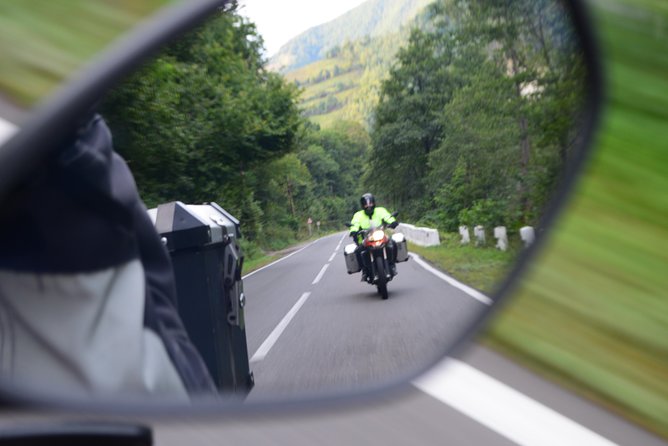
The fourth day brings one of the newer mountain roads, Transbucegi, also called the Babele Road. It is narrow and sinuous, with views from high in the Bucegi Mountains. The route reaches about 1,925 meters in altitude.
For a motorcyclist, this is the kind of road that makes the tour more than a standard cultural circuit. You get a technical ride, changing views, and a strong sense of height. Mountain roads also demand attention. Your guide’s route briefing matters here, and you should be prepared for conditions that can change with altitude.
The road itself is free, but the pace may feel quick if you want long photo stops. This is a guided group tour, not a solo ride where you set every pause. The benefit is that someone familiar with the route handles the day’s structure. The tradeoff is less independence.
Then comes Peles Castle, one of Romania’s finest royal residences. It was home to many of the country’s monarchs, and its interior gives the day a sharp change of mood. After mountain bends and open views, you move into royal rooms and formal design.
The visit lasts about an hour, with admission separate. If you care about interiors, check how much of the available castle you can see during your visit. The one-hour slot makes this a highlights stop rather than a long museum session.
Day five: The famous bends of Transfagarasan
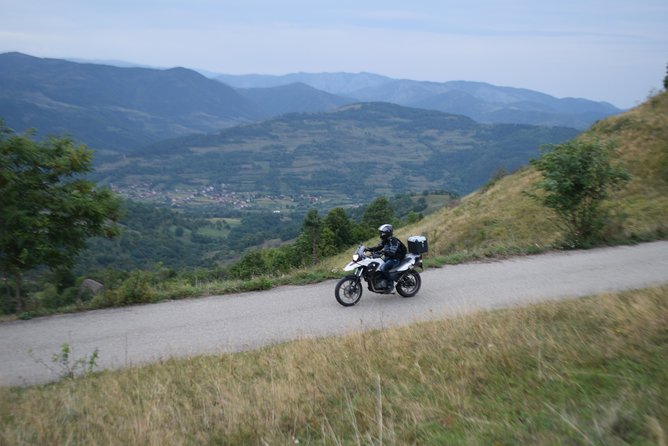
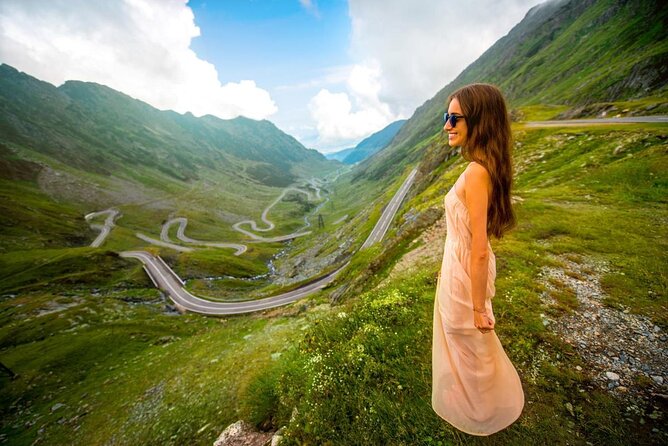
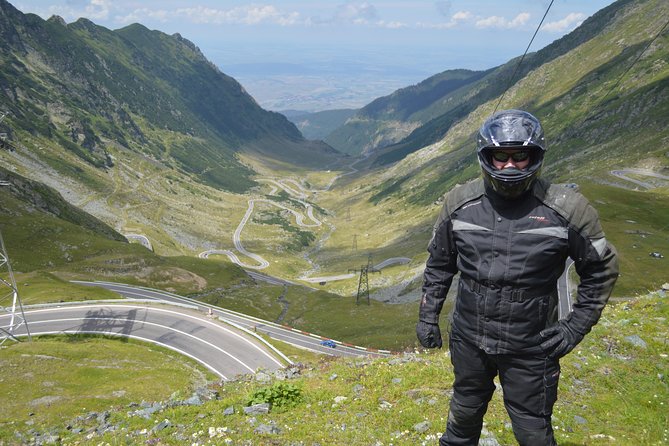
For many riders, Transfagarasan Highway is the reason to book this tour. Built between 1970 and 1974 as a military route under communist leader Nicolae Ceausescu, it cuts through the Carpathians in a series of famous bends.
The route was built after the 1968 Soviet invasion of Czechoslovakia, when Romania’s leadership wanted a military road across the mountains. That history gives the ride more weight than its internet fame alone. You are riding a road shaped by Cold War fears, not just a scenic highway designed for leisure.
The tour allows about an hour at the main stop, and there is no admission fee. That time may sound short for such a major road, but the highway is experienced through the riding itself. The bends, climbs, and views unfold over the route, not only at a single viewpoint.
This is also the day to be honest about your riding ability. Transfagarasan is described as challenging and especially appealing to motorcyclists. You need a valid unrestricted motorcycle license, proper gear, and moderate physical fitness. If tight bends make you tense, this should not be your first serious mountain ride.
The route has become famous through television and motorcycle culture, but the best reason to ride it is not the label of Europe’s most crooked road. It is the combination of engineering, altitude, and changing scenery. You will understand why it draws riders from far beyond Romania.
Day six: Vlad’s fortress, a monastery, and Transalpina
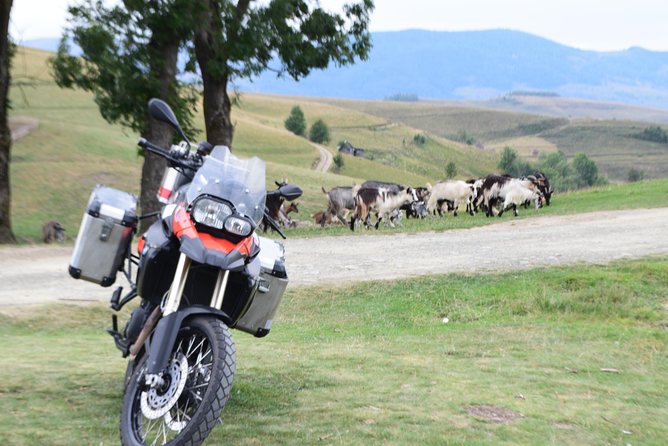
Day six packs in three very different stops. First comes Poienari Fortress, associated with Vlad the Impaler. To reach it, you climb 1,200 steps.
That number is not decorative. The staircase is the day’s clearest physical test, and it should shape your decision to book. You may be a strong rider and still find the climb tiring after several days on the road. Wear comfortable walking shoes beneath or alongside your riding gear, and pace yourself.
Poienari is a useful counterpoint to Bran. Bran is the famous castle connected with Dracula branding. Poienari is the citadel tied more directly to Vlad the Impaler. The distinction matters if you want the history behind the legend, not only the most recognizable name.
Next is Curtea de Arges Monastery, visited for about 45 minutes. Its 16th-century Byzantine cathedral is a place where historical figures and local legends meet. The shorter stop suits the day’s demanding route, though it gives you only a quick look.
The final major ride is Transalpina, Romania’s highest mountain road. Its highest point, Urdele Pass, reaches 2,145 meters above sea level. The road is free to ride, and you get about two hours connected with this portion of the day.
Transalpina differs from Transfagarasan in the way the tour presents it, but both demand focus. You should expect many bends and high-altitude riding, not a simple scenic drive. One past rider even saw brown bears during a ride, though wildlife sightings are never guaranteed and should not be treated as part of the tour.
This is likely the tour’s most demanding day. It is also one of its most rewarding because it joins a hard climb, a historical fortress, a religious monument, and Romania’s highest mountain road in one sequence.
Day seven: Alba Iulia closes the circuit
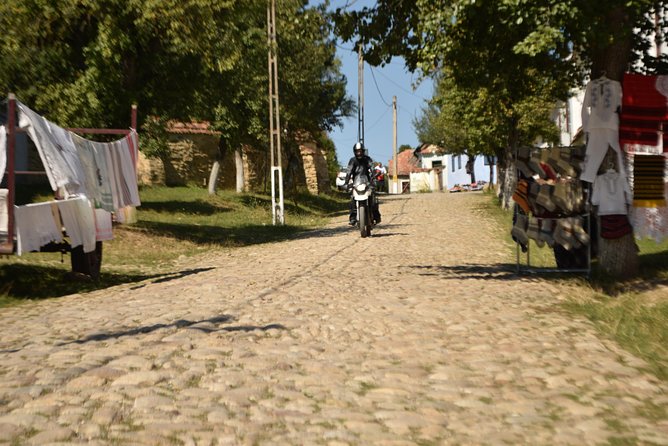
The final stop is Alba Iulia Citadel, a star-shaped fortress with seven bulwarks. Its design follows the style associated with Vauban fortresses, giving the final day a more military and urban character.
The visit lasts about an hour and admission is free. After the mountain roads and village stops, Alba Iulia provides a clear closing point. It also broadens the tour’s story again, moving from medieval fortifications and royal residences to a large engineered citadel.
The activity ends back at the meeting point in Turda. That is important when planning flights or extra nights. The tour includes round-trip airport transfers from Cluj, but you should confirm the exact transfer timing before booking a same-day departure.
Six nights, two riding styles, and practical comfort
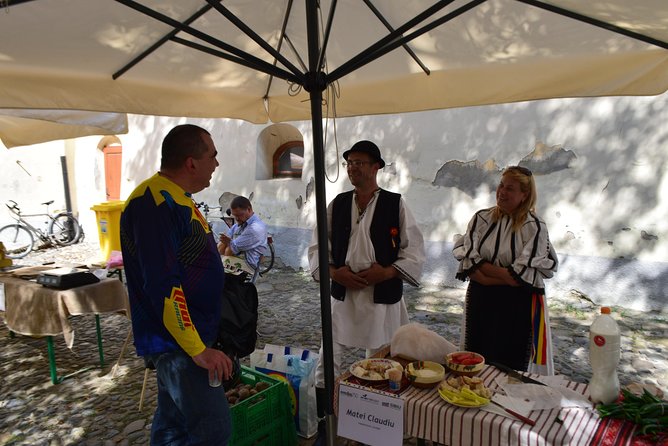
Accommodation covers six nights, split between one four-star hotel, three three-star hotels, and two guest houses. This is a sensible middle ground for a motorcycle tour. You get basic comfort without turning the trip into a luxury hotel holiday.
The guest houses are especially useful for the sense of place. They fit the village focus and give the week a more local feel than sleeping in chain hotels every night. At the same time, standards may vary between properties, so book this with an open mind rather than expecting identical rooms each evening.
Six breakfasts are included. Lunches, dinners, drinks, fuel, parking, road taxes, attraction tickets, and personal activities are not. That arrangement lets you control some spending, but you need a daily budget beyond the headline price.
At $1,144.09 per person, the value depends on what you want to avoid organizing. The fee covers six nights, breakfast, airport transfers, an English-speaking motorcycle guide, route planning, daily briefings, and a carefully connected week of riding. If you rented a motorcycle, arranged hotels, built the route, and handled the mountain logistics yourself, the comparison would change.
The price is less attractive if you expect a fully inclusive holiday. It is not. You will pay extra for fuel and most major sights, and meals are your responsibility. Read the cost as a supported riding package, not as a prepaid seven-day vacation.
Motorcycles, gear, and group size
You can bring your own motorcycle or rent a BMW motorcycle. That flexibility is useful if you are flying into Romania. It also means you should clarify the rental motorcycle, insurance terms, deposit, and fuel arrangement before you commit, since those details are not supplied here.
The guide is described as English-speaking, though the tour may also operate with a multilingual guide using English and Spanish. Alexe is named as a local guide, and Alex and Claudia are involved in guiding and trip support. One particularly useful feature is the daily route briefing, since high mountain roads are easier to enjoy when you understand the day ahead.
The group is limited to 10 people. That is small enough for a more personal pace and easier communication, but it is still a group ride. You will not have complete freedom to stop whenever you wish or set your own speed.
Bring a helmet, gloves, jacket, riding pants, and boots. A passport and unrestricted motorcycle driver’s license are required at departure. The minimum age is 21, and the stated fitness level is moderate. Vegetarian food can be arranged if you advise the operator when booking.
The meeting point is Adventure Motorcycle Tours and Rentals Romania at Strada Razboieni 31 in Turda. Pickup is offered, and the experience returns to that meeting point.
What the strongest feedback tells me
The most consistent praise centers on Alex, Claudia, and the quality of the route planning. One rider had to postpone a 2020 booking until 2024 and described Claudia as excellent at keeping in contact during the long delay. That points to useful communication, especially for a trip that depends on weather, motorcycle availability, and mountain-road conditions.
Another rider praised the rental bikes and Alex’s information, and managed to see brown bears without getting a photo. That is a good reminder to keep your camera ready, but not to book for wildlife.
The detailed route and hotel choices also received strong approval. That matters because the tour covers a lot of ground. Poor lodging or vague daily plans would make this route tiring. Here, the combination of briefings, planned stops, and mixed accommodation appears to be one of the package’s main strengths.
The overall rating is 4.8 from four published reviews. That is a very positive signal, but the sample is small. I would treat it as encouraging rather than conclusive.
Who should book this ride?
You should consider it if you want a motorcycle-first introduction to Romania and enjoy mixing difficult roads with castles, churches, and local food. It works especially well for riders who want a prepared route but do not want a large coach group or a generic city tour.
It is less suitable if you want long, unhurried museum visits, luxury accommodation every night, or an all-inclusive price. The 1,200 steps at Poienari and the high mountain roads also make it a poor choice for anyone who is not comfortable with sustained riding and walking.
Remember that the booking is non-refundable and cannot be changed for any reason. That makes travel insurance and careful date planning sensible, though insurance is not included.
Should you book the Best of Transylvania Motorcycle Tour?
Book it if the roads are your priority. Transfagarasan and Transalpina give you the kind of mountain riding that is difficult to arrange efficiently on your own, while Sighisoara, Biertan, Bran, Peles, and Alba Iulia keep the week from becoming one long series of bends.
I would choose this tour over a standard Transylvania sightseeing trip if I wanted local guides, village overnight stays, and a ready-made route. I would skip it if I wanted a slow holiday or disliked extra costs at nearly every major attraction. For a properly equipped rider with enough stamina for high passes and 1,200 steps, it offers a strong mix of road, history, and Romanian hospitality.
FAQ
How long is the motorcycle tour?
The tour lasts approximately seven days and includes six nights of accommodation.
Where does the tour start and finish?
It starts at Adventure Motorcycle Tours and Rentals Romania, Strada Razboieni 31, Turda, Romania. The activity ends back at the meeting point.
Is airport pickup included?
Round-trip airport transfers from Cluj are included, and pickup is offered.
Can I bring my own motorcycle?
Yes. You can bring your own motorcycle or rent a BMW motorcycle.
What motorcycle license do I need?
You need a valid, unrestricted motorcycle driver’s license at the time of departure.
What age do I need to be?
The minimum age is 21.
Are meals included?
Six breakfasts are included. Lunches, dinners, beverages, and other personal food costs are not included. A vegetarian option is available if requested when booking.
Are attraction entry fees included?
No. Entry fees for places such as Turda Salt Mine, Biertan Fortified Church, Sighisoara, Bran Castle, Peles Castle, Poienari Fortress, and Curtea de Arges Monastery are not included.
Newest Transylvania trips on the site
- Carpathians in Romania: Piatra Craiului National Park with native Spanish guide.★ 5.0 · 11 reviews
- Private Brown Bear Watching Experience near Odorheiu Secuiesc★ 5.0 · 4 reviews
- Day trip on Quad ATV – Transylvanian outdoor adventure★ 5.0 · 8 reviews
- Excursión en Moeciu de Sus (recomendado para familias) con guía español nativo.★ 5.0 · 11 reviews
- Carpathians in Romania: Bucegi Natural Park with native Spanish guide.★ 5.0 · 16 reviews
- One Day in Transylvania – Departure from Timisoara★ 5.0 · 16 reviews
- Tirgu Mures Airport Private Transfer★ 5.0 · 6 reviews
- Targu Mures 3 hours walking tour★ 5.0 · 5 reviews
7-Day Experiences, compared.
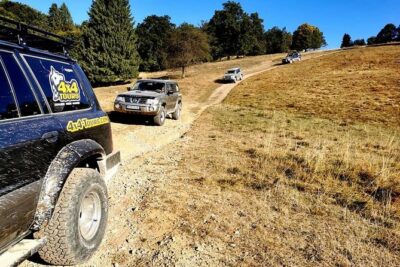
4×4 Driving Experience at Flying Altitudes – 7 Days
Read our review →
7-Day Private Tour of Transylvania from Bucharest
Read our review →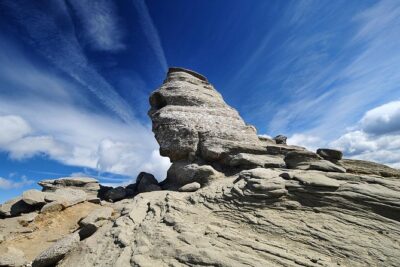
Amazing Romania – Seven day private tour from Bucharest
Read our review →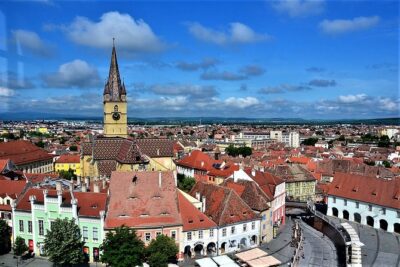
7 days Private Romania Grand Tour from Bucharest
Read our review →
7 Days Private Guided Tour in Romania from Bucharest
Read our review →
Discover Medieval Transylvania Small Group Tour – 7 days
Read our review →
7-Day Dracula Tour in Romania from Bucharest including ‘The Ritual of Killing of a Living Dead’
Read our review →Browse the lists this tour appears in