
Reviewed · COMMUNIST HISTORY TOURS
Bucharest Communist Bike Tour
Bucharest’s communist story is easiest to grasp when you connect the buildings, streets, and political turning points in one sweep. This four-hour bike tour moves from the old city center to the Palace of Parliament, then on to the places tied to the 1989 revolution and Ceausescu’s downfall.
I like the route for two clear reasons: it links major sights without making you walk across central Bucharest, and the guide explains the political story behind each stop rather than leaving you with a stack of dates. The focus on contrasts, especially old Bucharest beside communist construction, gives the tour a useful sense of place.
The main consideration is that this is an outdoor bike tour with several stops, not a building-entry tour. Admission is free at each listed stop, but food, drinks, and any interior visits are not included. You should also confirm the bike and riding arrangements before booking if those details matter to you.
Key points to know before booking
- A private four-hour route: Only your group takes part, so the pace and questions can remain more personal than on a large city tour.
- A clear political timeline: The route moves from pre-communist Bucharest through the communist takeover, Ceausescu’s grand projects, and the 1989 revolution.
- Seven central stops: You visit CEC Palace, Patriarchal Cathedral, the Palace of Parliament, Bragadiru Palace, the National College of Defence, Casa Radio, and Revolution Square.
- A guide-led history lesson: Alex is named in the tour feedback as a guide who brings energy and strong knowledge of Romania’s past.
- Morning or afternoon scheduling: The tour is offered at different times, with the supplied meeting information listing a 9:30 a.m. start.
- Good value for a private outing: At $54.13 per person, the price makes the most sense for people who want a focused guide and a private group rather than a quick self-guided ride.
Why Bucharest’s communist story works well by bike
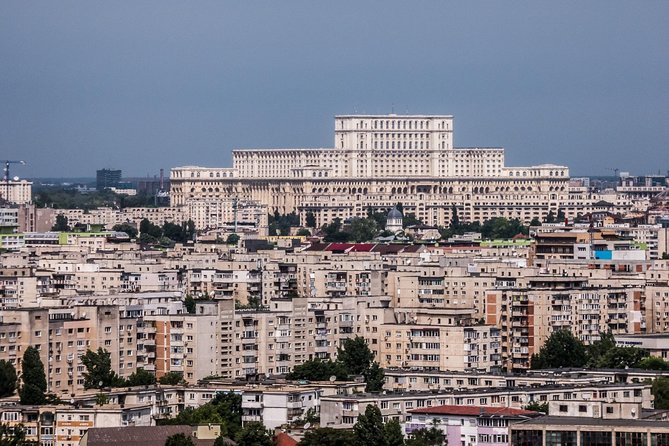
Bucharest can feel spread out when you move between the Old City, the civic center, and the major communist-era buildings. A bicycle gives you a practical way to cover those links while keeping the tour centered on streets and buildings instead of a lecture indoors.
The route also has a useful shape. It begins with the society that existed before communism took power, then follows the communist movement and its monuments before ending with the collapse of the regime. That order matters. The Palace of Parliament means more when you have first heard about the political system and ambitions that produced it.
This is not simply a tour of large buildings. The stops are chosen to show how power changes a city. At some points, the guide deals with architecture and urban planning. At others, the subject is propaganda, political control, foreign influence, or the public revolt that ended Nicolae Ceausescu’s rule.
Because the tour is private, your group will not share the ride with other participants. That can be useful if you want to ask about family life, religion, the communist state, or the revolution. The published information does not give a fixed group size beyond stating that only your own group participates, so ask the operator for any bike or group details that are important to you.
More Bike Tours in Bucharest
- Bucharest: Half Day Bike Tour
★ 4.9 · 379 reviews - Bucharest Half a Day Bike Tour
★ 5.0 · 325 reviews - Bucharest: 2-Hour City Highlights Bike Tour
★ 4.8 · 269 reviews
CEC Palace and the Old City before communism
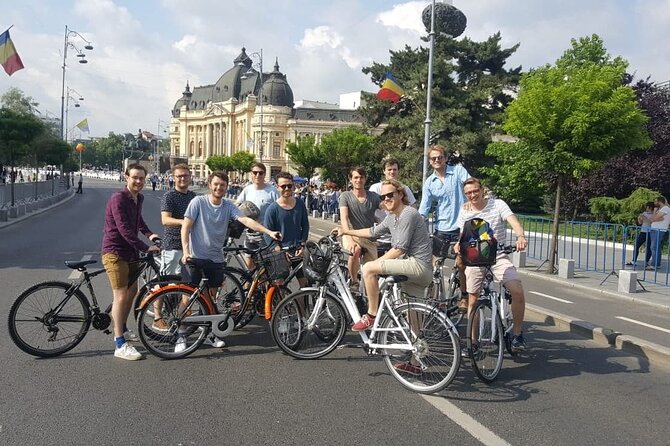
The first stop is CEC Palace, reached through Bucharest’s Old City center. You spend about 40 minutes here, making it the longest stop on the route.
That extra time is well used. The point is not simply to admire the building. The guide sets up the society that existed before the communist takeover, giving you a reference point for the changes that follow. Without that opening, later stops could blur into a parade of imposing government buildings.
CEC Palace also introduces the visual contrast at the heart of the tour. The Old City reflects an earlier Bucharest, while communist planning later imposed a very different scale and purpose on parts of the capital. You can begin to see how the city shifted from commercial and civic life toward the display of state authority.
Admission is free at this stop. The tour information does not promise an interior visit, so expect the emphasis to be on the place, its surroundings, and the guide’s explanation rather than on paid access inside the building.
Patriarchal Cathedral and the first political turning points
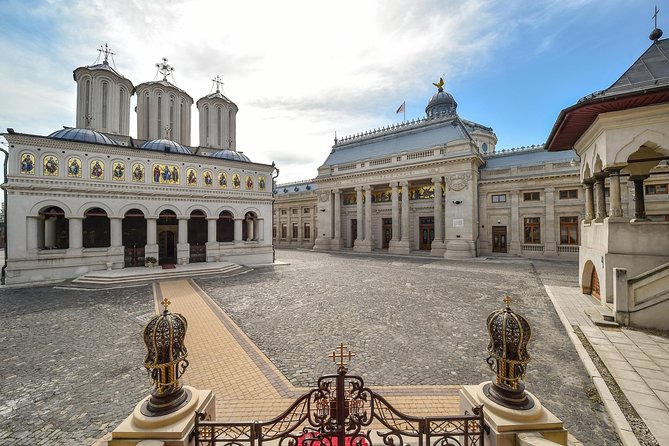
The next stop is the Patriarchal Cathedral, with about 15 minutes set aside. Here the story moves toward the first Romanian Parliament and the early communist attempt to take power.
This is a short stop, so you should expect a concentrated explanation rather than a long visit. The cathedral gives the guide a setting for discussing the relationship between religion, government, and political authority. It also helps show that the communist story did not begin with Ceausescu’s monumental projects. The struggle for power came first.
For anyone who knows little about Romanian politics, this part of the tour can be especially useful. The guide connects a physical site to a political change, rather than treating the cathedral as an isolated architectural sight.
The tight 15-minute timing is also a limitation. If you want to spend a long time examining the cathedral itself, this tour is not built for that. Its goal is to keep the wider story moving.
The Palace of Parliament and Ceausescu’s grand design
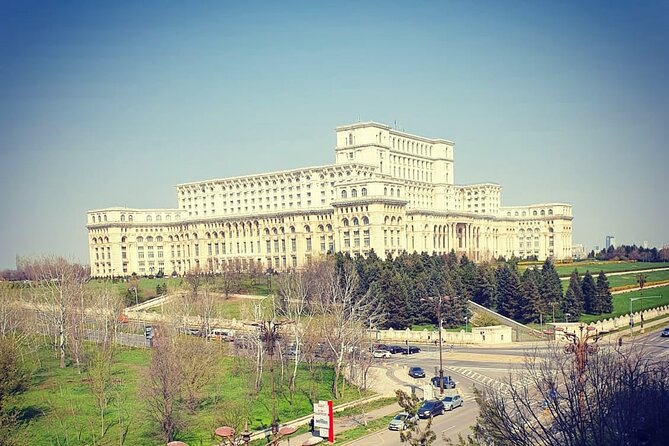
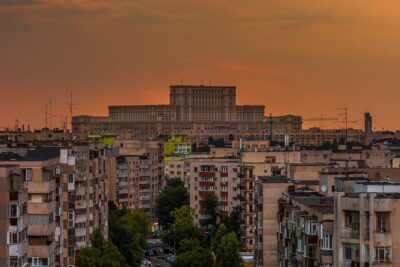
The Palace of Parliament receives another 15-minute stop. The tour describes it as the final megalomaniac communist project, and the wording points to the building’s role as a symbol of state ambition and excess.
You will not get a full palace tour from this experience. The listed stop is brief, and the activity includes a guide rather than admission tickets. The value here is the explanation of what the building represented: the scale of Ceausescu’s power, the resources directed toward a single political vision, and the way architecture can be used to project authority.
This is one reason the bicycle format works well. You can approach the enormous civic center as part of a larger route instead of treating the Palace of Parliament as the entire story. The guide places it between the earlier political stops and the later signs of opposition and collapse.
If seeing the inside of the palace is a priority, plan that as a separate activity. Nothing in the supplied tour details includes an interior admission or a dedicated palace visit.
More communist-era history walks in Bucharest:
- The Real tour of Communism
★ 5.0 · 666 reviews - Life under Communism
★ 5.0 · 358 reviews - 3-Hour Guided Tour of Communist Bucharest
★ 4.9 · 303 reviews - Bucharest Essential Tour: Old Town, Calea Victoriei & Communism
★ 5.0 · 142 reviews
Bragadiru Palace and the old city beside the new order
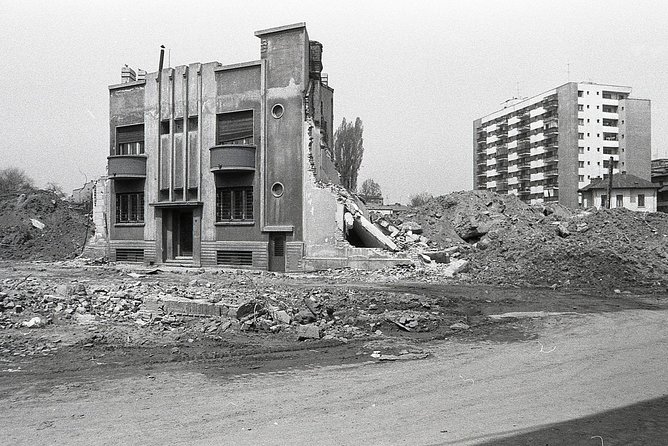
Bragadiru Palace gets only five minutes, but the stop has a clear purpose. It provides the sharpest contrast between the older social order and the communist one.
A five-minute stop does not allow much time for detailed architecture. Instead, you should treat it as a visual comparison within the larger lesson. The guide uses the place to show what changed when private life, property, and social organization were reshaped by the communist state.
This short pause may be one of the most effective parts of the route because contrasts are easier to understand when you see them close together. You are not only hearing that Bucharest changed. You are being shown two different ideas of what the city and society should be.
National College of Defence and the power of competing stories
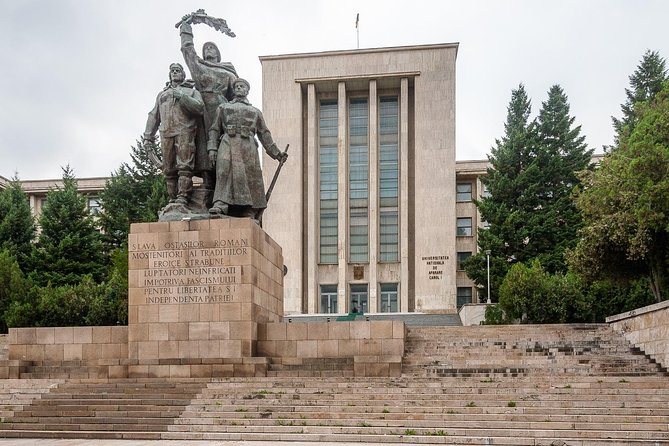
The National College of Defence is allotted about 20 minutes. Here the guide presents a counterfactual view of Romanian history, along with the role of the Russian army and the communist movement’s claim that it was liberating the country from fascist government.
This is a more political stop than an architectural one. It asks you to consider how governments explain their own rise to power. The language of liberation, the presence of the Russian army, and the idea of competing historical possibilities all point to the way political movements build legitimacy.
You may find this section more demanding than the monument stops, especially if Romanian and Eastern European history are new to you. That is also where a good guide matters most. Alex is specifically named in the available feedback, and the description of his approach presents him as engaged and well prepared to explain Romania’s past.
The stop lasts long enough for context, but not for a full seminar. If you have detailed questions about postwar Romania, the private format gives you a better chance to ask them than a large group tour would.
Casa Radio, an unfinished museum of communism
Casa Radio is given about 10 minutes. The building was intended to become the largest communist history museum in the world, but the project remained unfinished.
That unfinished state is the point. Communist regimes often used enormous projects to shape public memory and display confidence in the future. Here, the abandoned or incomplete result tells a different story. It shows the gap between official ambition and what was actually achieved.
This is a particularly useful stop for readers interested in urban planning and political symbolism. A finished museum would have presented a controlled story of communism. An unfinished building leaves you looking at the ambition itself, along with the limits of the system that proposed it.
Again, do not expect an interior tour based on the information provided. The stop is brief and free, with the guide supplying the context.
Revolution Square and the end of Ceausescu’s rule
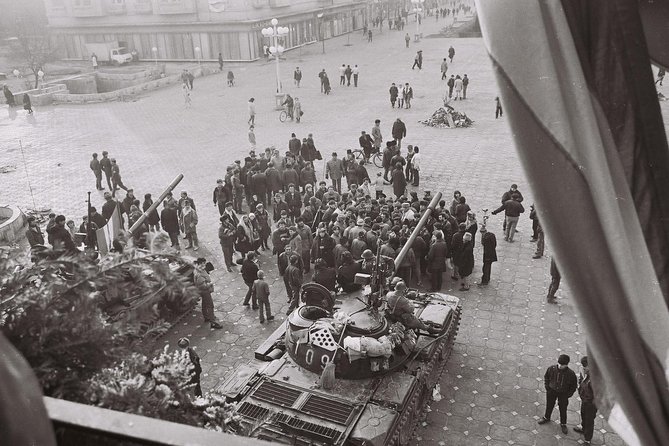
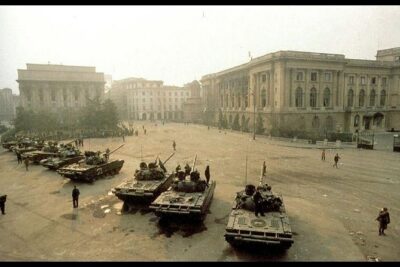
The final major stop is Revolution Square, where the tour spends about 30 minutes. This is where the route reaches the fall of the communist system and the end of Ceausescu’s regime.
The longer timing makes sense. After seeing the state’s buildings and hearing how the system presented itself, you arrive at the place associated with its collapse. The square gives the tour a strong ending because it brings politics back to public space and collective action.
You can use this stop to pull the earlier pieces together. The Old City represents the society before communist rule. The Palace of Parliament represents the regime’s scale and ambition. Casa Radio shows an unfinished project. Revolution Square marks the moment when that system lost its grip.
The tour does not promise a full account of every event in 1989, and 30 minutes cannot cover all the debate surrounding the revolution. Still, it gives you a firm framework for understanding why this square matters and how Bucharest remembers the end of the regime.
What the four-hour schedule feels like
The listed stop times add up to roughly two hours and 15 minutes. The remaining time is used for cycling between locations, orientation, and the movement that ties the route together. That makes the four-hour estimate believable without requiring long lectures at every stop.
You should plan for an active outing, though the information does not state the riding distance, bike type, helmet policy, or route difficulty. If you have concerns about cycling equipment or physical requirements, contact Bike the City before booking.
The tour is offered in English. Children must be accompanied by an adult, and most people can participate according to the supplied information. It is near public transportation, with the meeting point at Strada Operetei 12 in Bucharest. The activity ends back at that same meeting point, which is useful if you have plans elsewhere in the city afterward.
A morning or afternoon option lets you fit the tour around other Bucharest plans. The listed start time is 9:30 a.m., so confirm the exact departure time for your selected date when you reserve.
Is $54.13 per person a fair price?
At $54.13 per person, this is not the cheapest way to see Bucharest’s central sights. You are paying for a private tour, a local guide, and the convenience of covering several locations by bike in about four hours.
The value improves if you are traveling with a small group and want the guide’s attention. The private format means you are not paying for a generic commentary delivered to a crowd. It also gives you a better chance to ask questions about the communist period, the revolution, and the contrasts between old and new Bucharest.
There are limits. Food and drinks are not included, and the tour does not list admission to interiors. If you mainly want to enter the Palace of Parliament or spend time inside historic buildings, you will need additional plans.
For a visitor who wants a connected political story, the price is reasonable. For someone seeking only a casual bike ride or a series of photo stops, it may feel high.
Who should book this Bucharest bike tour?
I would choose this experience if you want an introduction to Romania’s communist past and prefer moving through the city instead of sitting in a museum. It is also a good first-day activity because the route gives you a map of central Bucharest and explains why several major sites matter.
It suits adults, families with accompanied children, and private groups who like to ask questions. The English-language format makes it practical for international visitors, while the morning and afternoon choices help with scheduling.
I would hesitate if you dislike cycling, want long visits at each building, or need a tour built around interior access. The short Bragadiru Palace stop and 15-minute Palace of Parliament stop are designed for context, not detailed sightseeing.
The strongest praise attached to the experience is its clear organization and guide quality. Alex is singled out by name, and the tour is described as a good way to see the highlights while taking a shaded break. That small detail matters in Bucharest, where a four-hour outdoor route is easier to enjoy when the schedule includes pauses rather than nonstop riding.
Final call: a smart history-focused ride
Book this tour if you want Bucharest’s communist period explained through the actual places where power was displayed, challenged, and finally lost. The route is broad, the private setup is useful, and the city becomes easier to understand once the stops are placed in political order.
Skip it if your main goal is palace interiors, food, or an unstructured recreational ride. For everyone else, the combination of Old City contrasts, communist megaprojects, Casa Radio’s unfinished ambition, and Revolution Square gives you a solid four-hour introduction to one of Bucharest’s most important stories.
FAQ
Where does the Bucharest Communist Bike Tour start?
The meeting point is Strada Operetei 12, București 030167, Romania.
Where does the tour end?
The activity ends back at the meeting point on Strada Operetei 12.
How long does the tour last?
The tour lasts approximately four hours.
What time does the tour start?
The supplied meeting information lists a 9:30 a.m. start. Morning and afternoon tour options are also advertised, so confirm the exact time for your chosen booking.
What language is the tour offered in?
The tour is offered in English.
Is this a private tour?
Yes. Only your group participates in the activity.
What sights are included?
The route includes CEC Palace, the Patriarchal Cathedral, the Palace of Parliament, Bragadiru Palace, the National College of Defence, Casa Radio, and Revolution Square.
Are admission tickets included?
The listed stops have free admission. The tour includes a local guide, but no paid interior admission is specified.
Are food and drinks included?
No. Food and drinks are not included.
Can children join the tour?
Yes, but children must be accompanied by an adult. Most people can participate according to the supplied activity information.
More Bike Rides Around Bucharest
- Bucharest Highlights Bike Tour
★ 5.0 · 102 reviews - Bike Rentals
★ 5.0 · 13 reviews - The wine route by bike
★ 5.0 · 8 reviews - Bucharest Bike Rentals
★ 5.0 · 4 reviews
Newest Bucharest trips on the site
- Winery touring & private wine tasting – one day private tour★ 5.0 · 3 reviews
- Bucharest: Dealu Mare Winery Private Trip with Wine Tasting★ 4.9 · 6 reviews
- Village Museum Bucharest Guided Tour★ 5.0 · 6 reviews
- Private Transfer from Giurgiu Port to Bucharest★ 4.5 · 12 reviews
- Airport Henri Coanda (Otopeni) to Bucharest – Private Transfer – Driver★ 5.0 · 5 reviews
- Salt Mine Tour from Bucharest with Entrance Ticket★ 4.5 · 19 reviews
- Wine tasting in Bucharest Old town – bonus cheese platter★ 4.5 · 6 reviews
- Walking tour of Bucharest★ 5.0 · 3 reviews
Communist History Tours, compared.
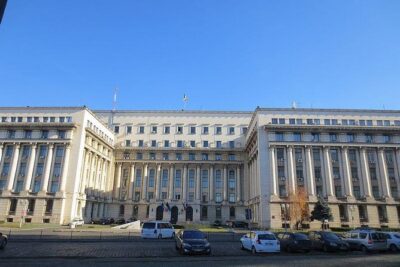
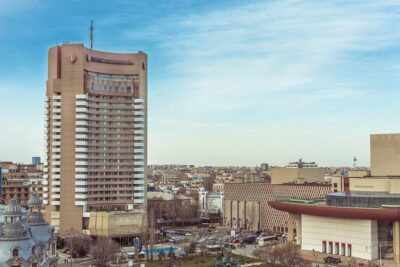
Bucharest Essential Tour: Old Town, Calea Victoriei & Communism
Read our review →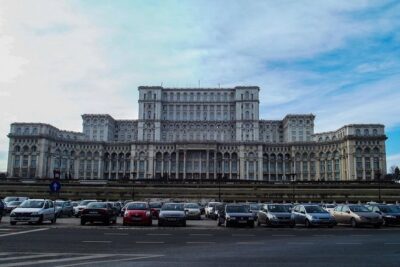
Communism in Bucharest – Landmarks, Museum & Communist Appetizers
Read our review →


Museum of Communism Ticket with Communist Coffee
Read our review →Browse the lists this tour appears in