
Reviewed · COMMUNIST HISTORY TOURS
Private Bucharest Communist Tour with the People’s House and Ceausescu Residence
The most striking part of this Bucharest tour is the contrast between Ceausescu’s enormous Palace of Parliament and the modest, controlled life imposed on ordinary Romanians. You move from grand marble halls to the dictator’s private residence, then through places tied to censorship, political imprisonment, and the 1989 collapse of the regime.
I like two things right away: hotel pickup removes the hassle of getting across Bucharest, and the private format gives you room to ask questions. Guides such as Mihai, Marcel, Nicole, and Bogdan have brought family stories, old photographs, and clear explanations to the day. The main drawback is the price, $261.65 per person, which is a serious outlay unless you value private transport, a full day, and tailored guidance.
Key points to know before booking
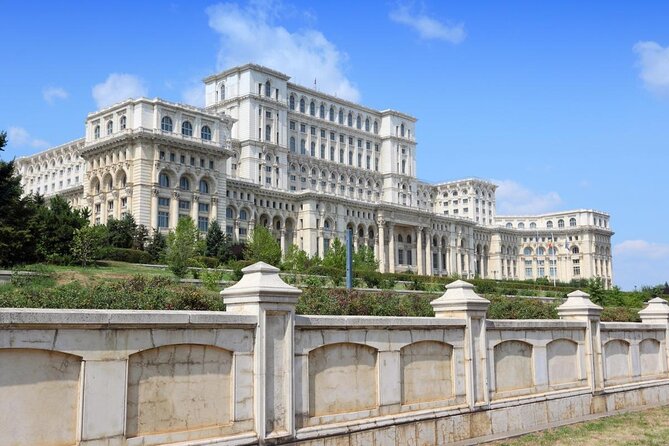
- The Palace of Parliament takes center stage: You get an included visit to the world’s largest administrative building, measured at 240 meters by 270 meters and 84 meters high.
- Spring Palace shows the regime at home: Ceausescu and Elena lived here from 1965 until 1989, surrounded by carefully protected luxury.
- The day connects buildings to people: The guide explains censorship, shortages, political repression, and the fall of communism, not just architecture.
- Lunch is separate: Plan on about €13 per person at a local restaurant with a Soviet-era atmosphere.
- Private transport saves time: Pickup and return are available at any Bucharest hotel, with only your group taking part.
- This suits serious history fans: The minimum age is 12, and the subject matter is political, personal, and sometimes grim.
Why communist Bucharest is best understood through contrasts
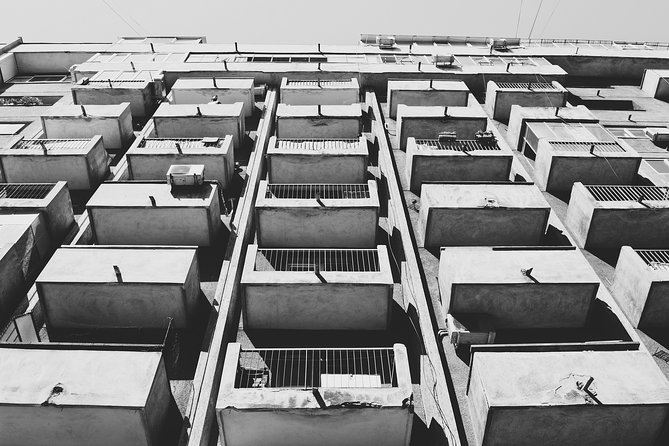
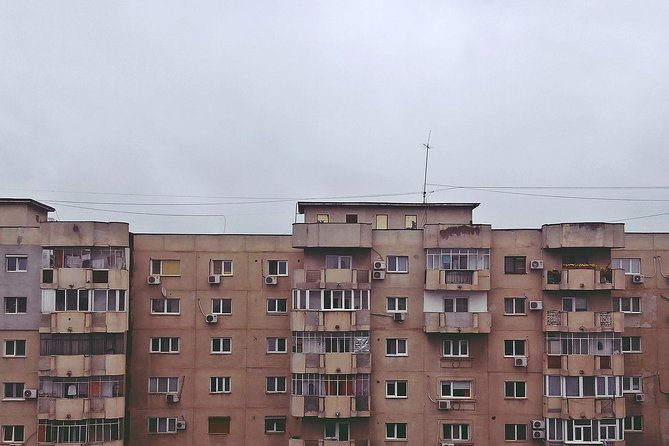
Bucharest can look grand and European at first glance, but its communist story is written into oversized boulevards, heavy government buildings, restricted neighborhoods, and sudden changes in scale. A guide helps you connect those pieces.
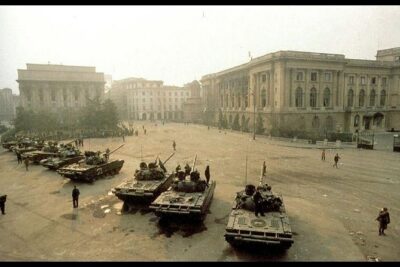
Nicolae Ceausescu ruled Romania from 1965 until his execution in December 1989. His government promoted national pride and independence from Moscow in some areas, but daily life became increasingly harsh. Food and fuel shortages, surveillance, censorship, debt repayment, and strict control shaped ordinary routines.
That background matters because the tour is not simply a parade of large buildings. The Palace of Parliament tells you how power wanted to be seen. Spring Palace tells you how the ruling couple lived. The former Central Communist Press headquarters points to how information was managed. A memorial museum for political prisoners and regime victims brings the human cost into view.
I would allow the full six to eight hours rather than treating this as a quick sightseeing transfer. The pace leaves room for questions, lunch, and the wider city context that makes each stop easier to understand.
More communist-era history walks in Bucharest:
- The Real tour of Communism
★ 5.0 · 666 reviews - Life under Communism
★ 5.0 · 358 reviews - 3-Hour Guided Tour of Communist Bucharest
★ 4.9 · 303 reviews
Entering the Palace of Parliament
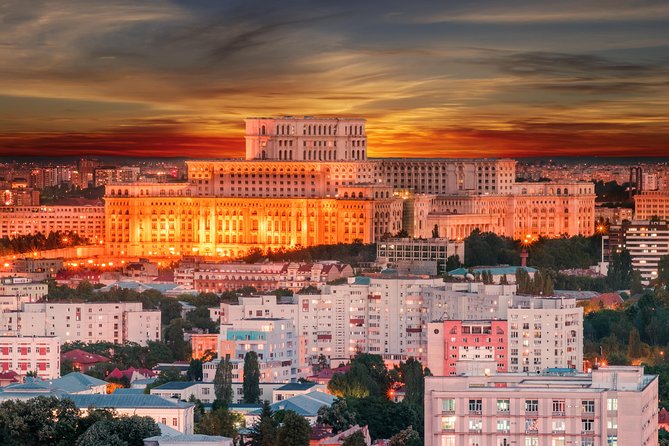
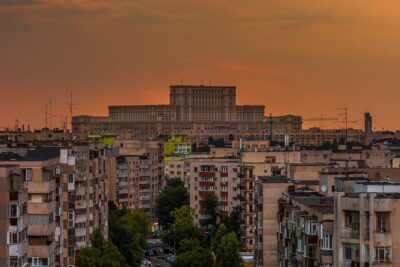
The Palace of Parliament is the day’s heavyweight, both literally and politically. Construction began in 1984 under the name House of the Republic, later widely known as the House of the People. The building was completed between 1984 and 1997, after the communist era had already ended.
Its dimensions are hard to picture until you are beside it. The building measures 240 meters long, 270 meters wide, and 84 meters high. It holds the Guinness World Record for the largest administrative building in the world, a fact that tells only part of the story. Its real impact comes from the political decision to build such a huge complex while many people faced shortages.
Your included visit lasts about one hour. Expect grand rooms, oversized proportions, and a building that was designed to make government look permanent and all-powerful. Architecture fans will find plenty to study, but the guide’s explanation is what keeps the visit from becoming a simple marble-and-chandeliers tour.
The palace also carries a difficult question: who paid for this spectacle? The answer is tied to the sacrifices demanded from the Romanian population. I find that tension more useful than treating the building as either a wonder or a villain. It is impressive to see, but the scale also records the priorities of a dictatorship.
A photography fee is not included, so check the current arrangement before taking pictures inside. The tour price covers admission, but not this extra charge.
Seeing the Spark House and the machinery of control
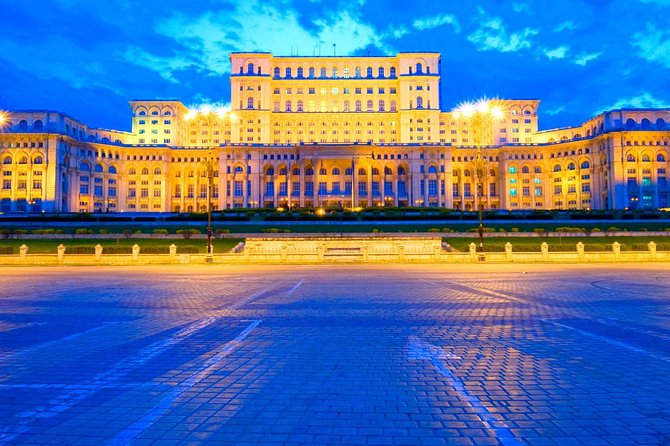
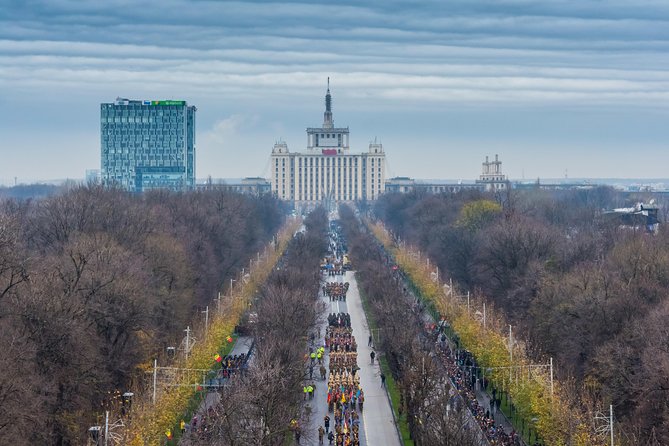
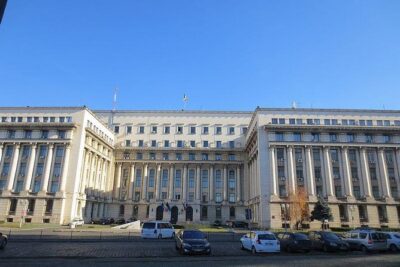
The imposing Spark House, formerly the headquarters of the Central Communist Press, adds an important layer to the day. It was associated with the official press, so it helps explain how the government presented events and restricted competing accounts.
The building is useful in a different way from the Palace of Parliament. The palace shows the public face of state power. Spark House points to the flow of information behind that power. Your guide can place the building within the larger system of newspapers, official messages, and political messaging.
The exact time spent here is not specified, so think of it as part of the driving and sightseeing portion rather than a separately timed interior visit. That distinction matters if you prefer a tour made up only of formal admissions. If you want to understand how an authoritarian state shaped what people could read and discuss, this stop earns its place.
Guides have also used old photographs to show how places changed. Nicole, for example, has been noted for bringing historic images and personal family experiences into her explanations. That approach can make a familiar street or facade easier to read.
Lunch in a restaurant with a Soviet-era feel
Lunch is not included, and the suggested cost is about €13 per person. The meal takes place at a local restaurant that retains the atmosphere of Soviet-era Bucharest, adding a practical pause to a subject that can otherwise feel heavy.
I like the idea of eating somewhere that supports the theme rather than stopping at an interchangeable tourist cafe. The setting gives your guide another chance to explain how dining, supplies, and ordinary routines fit into life under communism.
Do not confuse this with a food tour. The meal is a break within a history day, and the menu or exact restaurant is not specified. Bring cash or a payment method suitable for the meal and budget separately for drinks and personal expenses.
Several guides have also used lunch to make the day feel more personal. Alexandra paired the historic material with a relaxed meal in the old city, while another guide took time to help with practical errands, including a market and pharmacy visit. Those details suggest a useful strength of private touring: the day can respond to your needs rather than following a fixed group schedule.
A few more Bucharest trips worth a look
- Bucharest: Palace of Parliament Tickets and Guide
★ 4.3 · 3,182 reviews - Bucharest: Palace of Parliament Tickets and Guided Tour
★ 4.4 · 1,877 reviews - Bucharest: Parliament Palace Skip-the-line Ticket
★ 4.2 · 1,518 reviews - Bucharest: City Highlights Guided Walking Tour
★ 4.9 · 1,482 reviews
Crossing into the former Ceausescu neighborhood
One of the more revealing parts of the experience is the visit to the formerly restricted neighborhood where Nicolae and Elena Ceausescu lived. It is easy to focus only on the public monuments and miss the spaces reserved for the ruling family.
The neighborhood helps you see how separation worked. Ordinary citizens dealt with rationing, restrictions, and state scrutiny, while the political elite lived behind layers of privilege and protection. A guide can explain the contrast without reducing the story to a simple rich-versus-poor tale.
This portion is also where personal stories can make the history feel less remote. Guides have drawn on their own family experiences, old photographs, and stories about the 1989 revolution. Those details are especially useful if you know little about Romania beyond the broad fact that communism ended suddenly.
The tour does not promise that every street will be open for an interior visit. The guaranteed residential admission is to Spring Palace, also called the Ceausescu Residential Palace. The surrounding neighborhood is best understood as a sightseeing and context stop.
Inside Spring Palace, Ceausescu’s private residence
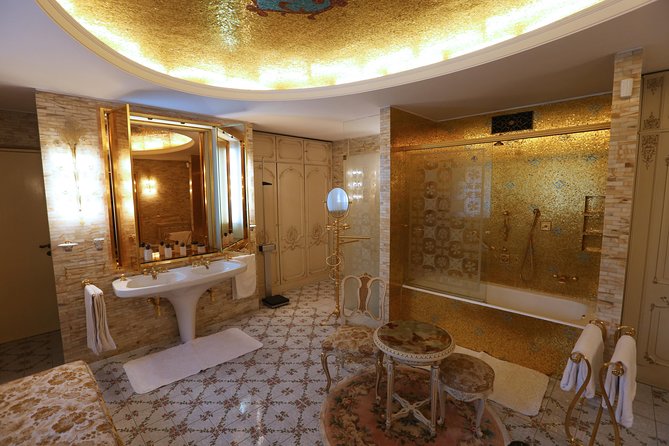
Spring Palace was built between 1964 and 1965 and became the home of Nicolae and Elena Ceausescu from 1965 until their deaths in 1989. After the regime fell, the property served as a VIP residence for official delegations and foreign presidents. It opened as a museum in 2016.
This is the tour’s most intimate stop. The Palace of Parliament shows the state making a public display of power. Spring Palace shows how that power translated into private comfort.
You can expect a luxurious residence with carefully preserved interiors and furnishings that underline the gap between the ruling couple and the people they governed. The home is not interesting only because of its decoration. It shows how political privilege becomes ordinary inside the walls of an elite residence.
The visit lasts about one hour and admission is included. I would pay close attention to the contrast between the residence’s comfort and the scarcity described elsewhere during the tour. That comparison gives the museum its force.
Guides have described the residence as a way to put a real face on the events of 1989. Marcel, in particular, has been praised for explaining the fall of communism in detail and linking the house to the wider crisis. That kind of commentary is valuable here because rooms alone cannot explain why the regime collapsed.
Remembering prisoners and victims of the regime
The tour also includes a memorial museum connected with political prisoners and other victims of communist repression. The supplied schedule does not give a separate visit length or name the museum, so you should ask the operator for the exact site and timing when booking.
This stop changes the emotional register of the day. The large buildings can feel abstract, and the residence can seem almost theatrical in its luxury. A memorial brings attention back to people who were imprisoned, silenced, or harmed by the regime.
I would not rush this part. The purpose is not to collect another photo stop, but to understand the cost of political control. The museum also helps prevent the tour from becoming a study of Ceausescu alone. The story belongs to the people who lived under the system, resisted it, suffered under it, and helped bring it down.
What the private format adds
The tour is private, so only your group participates. That matters most during a complicated subject. You can stop to ask what a term means, request more detail about 1989, or spend less time on a topic that does not interest you.
Hotel pickup begins at 10:00 a.m. from any Bucharest hotel, and private transportation is included. At the end, you return to your hotel. This is a practical advantage in a city where the main sites are spread out and traffic can affect the day.
Past guides have included Mihai, Marcel, Ciprian, Bogdan, Nicole, and Alexandra. The strongest praise has focused on clear explanations, personal stories, old photographs, warmth, and practical help. Mihai has also added a walking tour through the historic center, with time to look into several monasteries. A subway ride has been included on at least one day, but that is not listed as a guaranteed part of every booking, so do not count on it unless confirmed.
The guide may be multilingual, despite the tour being offered in English. If precise English commentary is important to you, confirm the language arrangement before paying.
Is $261.65 per person good value?
At $261.65 per person, this is not a budget sightseeing tour. The price includes a private English-speaking guide, hotel pickup and drop-off, private transportation, and entrance fees for both the Palace of Parliament and Spring Palace.
The value improves if you are a small group that would otherwise pay for several taxis, separate admissions, and a private guide. It also improves if you want a full day built around one subject rather than a short city tour that skims the highlights.
The price feels harder to justify if you mainly want to see the Palace of Parliament from outside or if you are happy using public transport and reading about the history alone. Lunch, photography at the parliament building, and personal expenses are extra, so the final cost will be higher than the headline price.
The strongest reason to pay is the interpretation. You are not just buying transport between two buildings. You are paying for the links between political power, private privilege, propaganda, repression, and revolution.
Who should book this Bucharest history tour?
I would choose this experience if you care about 20th-century politics, architecture, dictatorship, or the 1989 fall of communism. It is also a strong choice for first-time visitors who want to cover major Bucharest sights without managing transport.
The tour suits adults and older children. The minimum age is 12, and children must be accompanied by an adult. Younger children may find the political subject matter and memorial material demanding, but the age limit gives families a clear guide.
Architecture fans should enjoy the Palace of Parliament and Spring Palace. History fans will get the most from the guide’s explanations and the contrast between public monuments and private life. If you want nightlife, food tasting, or a broad survey of Romanian culture, this is too focused.
The experience is also a good fit for anyone who prefers a relaxed private day. You are not tied to the pace of a large group, and the hotel return removes the need to find your way home after several hours of heavy subject matter.
Practical booking advice
Reserve at least 48 hours ahead. Confirmation is sent at booking, and free cancellation is available up to 24 hours before the 10:00 a.m. start time. Changes or cancellations made within 24 hours are not accepted for a refund.
Wear comfortable shoes, since the day combines vehicle transfers, museum visits, and possible walking in central Bucharest. Keep some money aside for lunch, the photography fee at Parliament, and personal expenses.
Ask about the exact memorial museum, the guide’s language, and whether any walking tour or subway segment is planned for your date. Those details can vary, while the two main admissions and hotel transport are clearly included.
Should you book it?
Book this tour if you want Bucharest’s communist past explained through places you can actually enter: the monumental Palace of Parliament, the private Spring Palace, the former press headquarters, and a memorial connected with political suffering.
Skip it if the $261.65 price is beyond your comfort level or if you prefer independent sightseeing. For a small group with a serious interest in Romania’s recent past, the private format, included transport, and strong guide-led storytelling make the cost easier to defend. The day gives you more than grand rooms. It helps you understand why those rooms were built, who paid for them, and what happened when the system finally broke.
FAQ
How long does the private Bucharest Communist Tour last?
The tour lasts approximately 6 to 8 hours, depending on the day’s schedule and stops.
What time does the tour begin?
Pickup and departure are scheduled for 10:00 a.m.
Where can I be picked up?
Pickup is available from any hotel in Bucharest, at the front of your hotel.
Is transportation included?
Yes. Private transportation, hotel pickup, and hotel drop-off are included.
Is the Palace of Parliament entrance included?
Yes. Admission to the Palace of Parliament is included. A photography fee is not included.
Is Spring Palace included?
Yes. Admission to the Ceausescu Residence, also called Spring Palace, is included.
Is lunch included in the tour price?
No. Lunch is separate and costs approximately €13 per person.
What language is the tour offered in?
The tour is offered in English, though it may be operated by a multilingual guide.
What is the minimum age for this experience?
The minimum age is 12. Children must be accompanied by an adult.
Newest Bucharest trips on the site
- Winery touring & private wine tasting – one day private tour★ 5.0 · 3 reviews
- Bucharest: Dealu Mare Winery Private Trip with Wine Tasting★ 4.9 · 6 reviews
- Village Museum Bucharest Guided Tour★ 5.0 · 6 reviews
- Private Transfer from Giurgiu Port to Bucharest★ 4.5 · 12 reviews
- Airport Henri Coanda (Otopeni) to Bucharest – Private Transfer – Driver★ 5.0 · 5 reviews
- Salt Mine Tour from Bucharest with Entrance Ticket★ 4.5 · 19 reviews
- Wine tasting in Bucharest Old town – bonus cheese platter★ 4.5 · 6 reviews
- Walking tour of Bucharest★ 5.0 · 3 reviews
Communist History Tours, compared.
Bucharest Essential Tour: Old Town, Calea Victoriei & Communism
Read our review →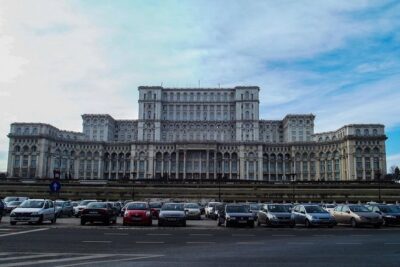
Communism in Bucharest – Landmarks, Museum & Communist Appetizers
Read our review →

Museum of Communism Ticket with Communist Coffee
Read our review →Browse the lists this tour appears in