
Reviewed · COMMUNIST HISTORY TOURS
Exploring a Former Communist Prison
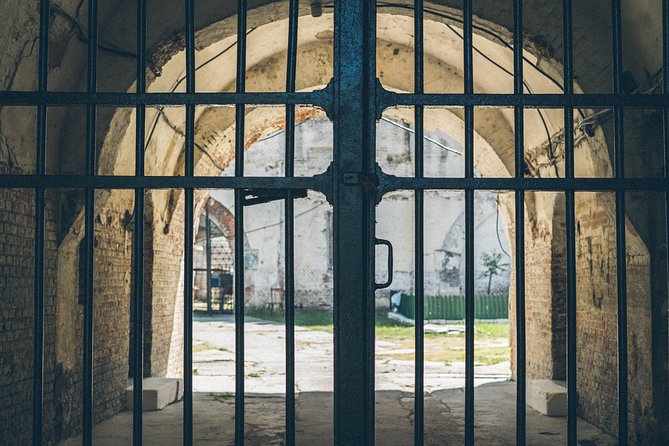
Fort 13 Jilava is the heart of this experience: a 19th-century military fort later used as a communist prison and execution site. You will enter a place built for defense but remembered for confinement, political repression, and the people who resisted Romania’s regime.
I like the way the tour connects the prison to the wider city. You begin at Revolution Square, trace Bucharest’s older military defenses, pass through communist housing districts, and then reach the fort itself. I also like the small local touches: a covrig, traditional bites, coffee or tea, bottled water, and one beer are included.
The main consideration is the subject matter. This is not a light sightseeing outing, and Fort 13 Jilava can be a difficult place to visit. The prison is inside Bucharest’s largest active prison, mobile phones are forbidden inside, and you may take photos only with a camera.
Key points to know before booking
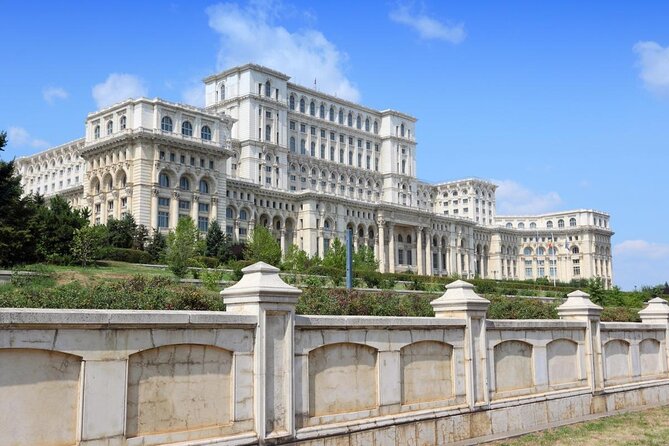
- Fort 13 Jilava is the main event: You spend about two hours inside a former communist detention site.
- The tour links past and present: Revolution Square, communist housing, Ferentari, Carol Park, and Jilava form one connected story.
- Guide Mircea brings personal context: He was in Revolution Square in December 1989 when communism fell.
- Small groups keep the day manageable: The maximum group size is eight people.
- Several refreshments are included: Expect a covrig, local bites, water, coffee or tea, and one beer or equivalent.
- Plan around the phone rule: Mobile phones cannot enter the prison, and photos require a separate camera.
Why Fort 13 Jilava matters
Bucharest can sometimes feel like two cities at once. Grand avenues and ornate older buildings sit close to vast communist housing districts. This tour uses that contrast to explain how the city changed over roughly five centuries, then focuses on the final decades of communist rule.
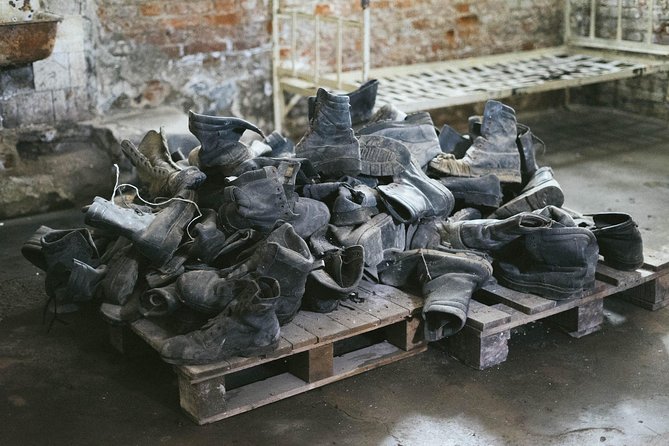
Fort 13 Jilava was first built as part of a 19th-century military system around Bucharest. Later, the fort became part of a prison complex. Under communism, it was used to hold people who opposed the regime, and it became associated with detention and executions.
That setting gives the tour weight. You are not simply looking at a monument or reading a plaque in a square. You are entering a former prison that remains within an active prison. The experience asks you to pay attention to the physical setting and to the human cost of political power.
The prison visit lasts about two hours, which is enough time to make it the day’s central experience rather than a quick photo stop. Because the site is stark and serious, I would not add it to a packed day of cheerful attractions. Give yourself time afterward to process what you have seen.
More communist-era history walks in Bucharest:
- The Real tour of Communism
★ 5.0 · 666 reviews - Life under Communism
★ 5.0 · 358 reviews - 3-Hour Guided Tour of Communist Bucharest
★ 4.9 · 303 reviews
Starting at Revolution Square at 9:30
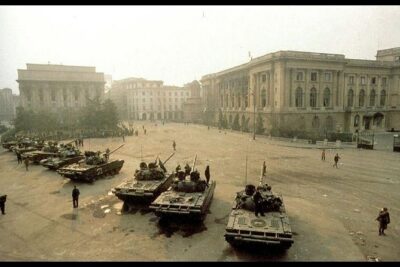
The tour begins at the Memorial of Rebirth in Piața Revoluției, or Revolution Square, at 9:30 in the morning. This is an effective starting point because the square is tied directly to the fall of communism in December 1989.
Your guide sets the political scene while explaining how Bucharest developed and how its fortification system came into being. The focus is not just on the final days of the regime. You get the older city story first, then see how later political decisions reshaped Bucharest.
Guide Mircea has a personal connection to this place. He was present in Revolution Square when communism fell in December 1989. That detail can make the opening discussion more immediate, especially when you are trying to understand events that happened within living memory.
The first hour is spent exploring different parts of Bucharest by car. This means the tour works well for you if you want a broad orientation without walking long distances between widely separated sites. It also means you will spend a fair amount of time looking out the vehicle windows rather than wandering freely.
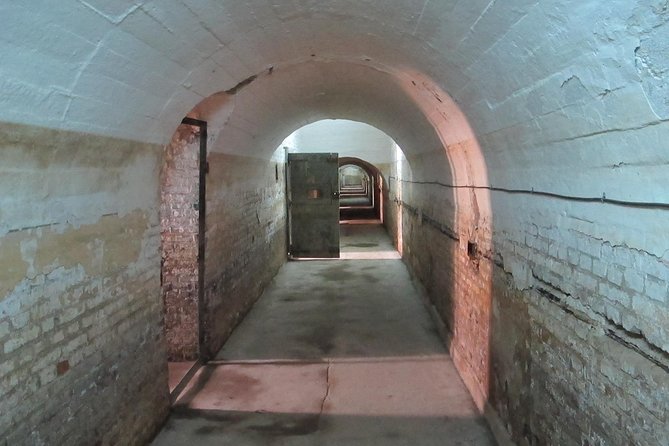
The Palace of Parliament, seen from the outside
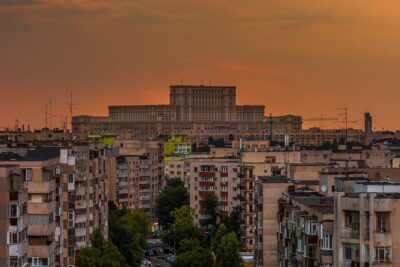
The stop at the Palace of Parliament lasts about 20 minutes. You circle one of the world’s largest administrative buildings and hear about its darker stories and its effect on the local community.
This is not an interior visit. Admission inside is not included, so you should think of this stop as an exterior introduction and a chance to take photographs. The short timing keeps the group moving, but it will not satisfy you if your main goal is a full tour of the building.
The value here is context. The Palace of Parliament is often presented as a giant architectural spectacle. On this tour, it is tied to the forced reshaping of Bucharest under Nicolae Ceaușescu, the scale of state power, and the communities affected by the project.
You get a quick stop for photographs and a sharper sense of why the building remains controversial. If you want a long architectural visit, you would need to arrange that separately.
Ferentari and the communist housing districts
The drive through Ferentari is one of the less polished parts of the day, and that is precisely why it matters. The route takes you away from the standard sightseeing circuit and through areas described as the Bronx of Bucharest.
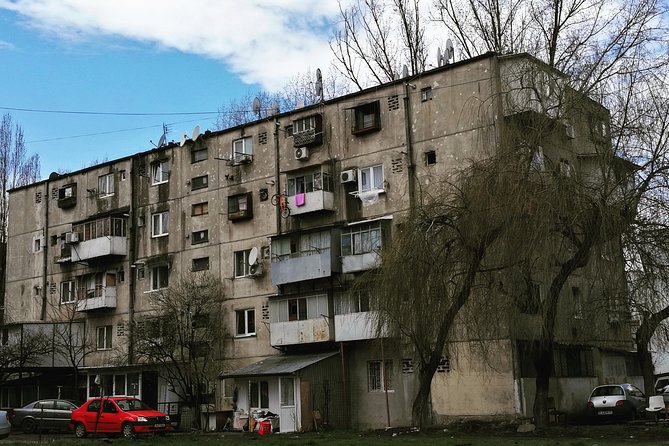
You see the communist bedroom dormitories that shaped much of Romania’s social life during the final 50 years of the regime. These large housing districts were not simply buildings. They reflected how people lived, worked, and were organized under the communist state.
This part of the tour gives you a reality check. Bucharest is not only its historic center, grand avenues, and monumental buildings. The housing districts show the everyday scale of the regime, from the way families were housed to the physical form of neighborhoods.
Since much of this section is viewed from the vehicle, you should not expect a long walking tour of Ferentari. Its strength is the guide’s explanation and the contrast between what you see from the car and what you may have encountered in central Bucharest.
A few more Bucharest trips worth a look
- Bucharest: Palace of Parliament Tickets and Guide
★ 4.3 · 3,182 reviews - Bucharest: Palace of Parliament Tickets and Guided Tour
★ 4.4 · 1,877 reviews - Bucharest: Parliament Palace Skip-the-line Ticket
★ 4.2 · 1,518 reviews - Bucharest: City Highlights Guided Walking Tour
★ 4.9 · 1,482 reviews
Carol Park and a traditional communist meal
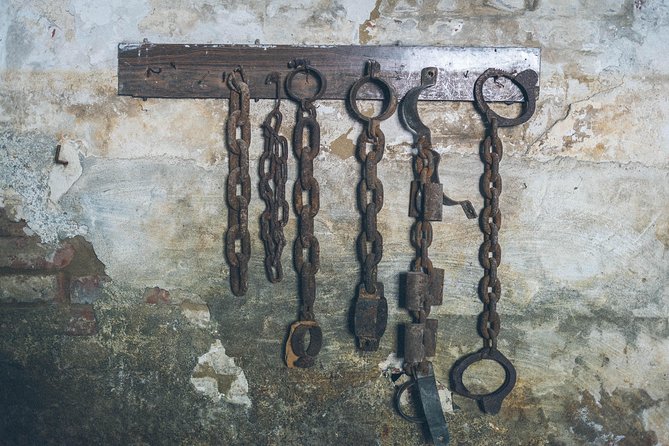
Carol Park provides a pause between the city drive and the prison visit. You stop for about 30 minutes, see the mausoleum associated with communist leaders, and have a traditional communist meal.
This is a useful change of pace. A day focused on prison cells, political repression, and executions could become emotionally heavy without a break. The park offers space to pause, eat, and continue the conversation in a less enclosed setting.
The included food is described as a full traditional communist meal, along with street snacks and local bites. The exact menu is not specified, so you should not book this expecting a particular dish. The package also includes one covrig, a Romanian pretzel, bottled water, coffee or tea, and one 400-milliliter beer or equivalent.
Additional food and drinks cost extra. Still, the included refreshments make the price easier to assess because you are not paying separately for every small break during a six-hour outing.
Entering Fort 13 Jilava
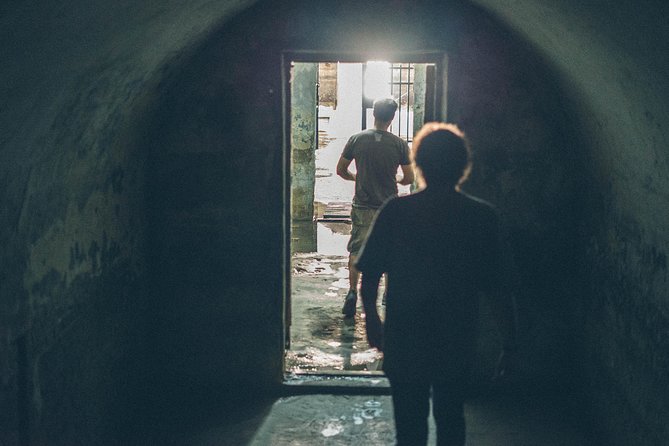
The visit to Fort 13 Jilava lasts about two hours. This is the part that sets the experience apart from a standard Bucharest communism tour.
The fort began as a military structure in the 19th century and was later transformed into a communist detention and execution camp. You enter the old fort as a memorial site, but it remains inside an active prison. That combination gives the place an unusual tension and explains why the access rules are strict.
Mobile phones are not allowed inside the prison. Photos are permitted only with a camera, so leave your phone stored safely and bring a separate camera if taking pictures matters to you. Do not assume that phone photography will be possible once you arrive.
The prison may be physically demanding in small ways, though the supplied information does not specify stairs, lighting, or walking surfaces. Most people can participate, but anyone who dislikes enclosed historic sites or finds prison history upsetting should think carefully before booking.
The visit is strongest when you treat it as a memorial, not as a curiosity. The fort’s importance comes from the people held there and the political system behind their imprisonment. The guide’s role is central, since the building alone cannot explain the full story.
What the six-hour schedule feels like
The full activity lasts about six hours, beginning at 9:30 and ending back at the starting point. You travel by air-conditioned vehicle, which is important because the stops are spread across Bucharest and beyond the central area.
The order creates a clear progression. You start with the 1989 revolution and the older city, see the monumental side of communist power at the Palace of Parliament, pass through housing districts, pause at Carol Park, and finish at Fort 13 Jilava.
Because the prison visit takes two hours, the day is not rushed around the main site. The other stops are shorter, especially the Palace of Parliament, but they serve as pieces of the larger story.
The group is limited to eight people. That is a good size for a subject that depends on explanation and questions. You are less likely to feel lost in a large coach group, and the guide can respond to the group’s interests more easily.
Is the $173.47 price fair?
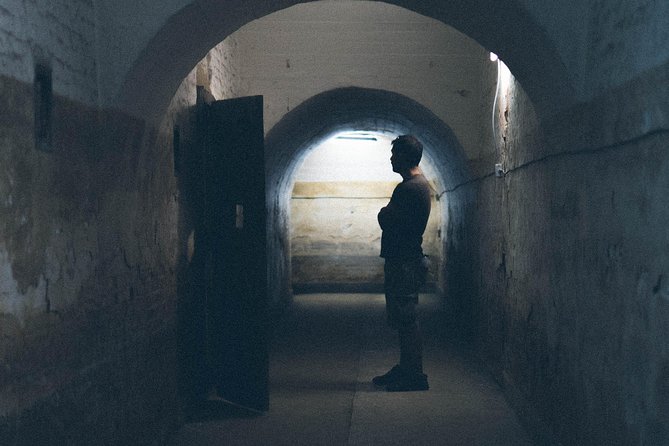
At $173.47 per person, this is not a budget sightseeing drive. The value depends on what you want from Bucharest.
You are paying for about six hours, an air-conditioned vehicle, a small group, access to Fort 13 Jilava, and a guide-led look at difficult parts of the city that are not usually covered by a basic center tour. Food and drinks are also included, though they are modest additions rather than the main reason to book.
The price makes more sense if you would otherwise struggle to reach Jilava or arrange access to the fort independently. The combination of transport, interpretation, and entry to a former prison gives the day a clear purpose.
It makes less sense if you mainly want famous buildings, long free time, or a low-cost overview. The Palace of Parliament is viewed from outside, much of Ferentari is seen from the vehicle, and the subject remains focused on communism and repression.
I would compare it with the cost and effort of arranging separate transport to Jilava, finding a guide, and adding a city history tour. For a small group seeking a serious, organized experience, the price can be reasonable. For casual sightseeing, it may feel high.
Who should book this experience?
I would recommend it to you if you are interested in 20th-century European history, political change, urban planning, or personal stories from Romania’s communist period. It also suits repeat visitors who have already seen Bucharest’s central sights and want a harder-edged view of the city.
The tour is especially useful if you want context rather than a simple list of dates. The route connects places that can otherwise seem unrelated, including a revolution square, a monumental government building, working-class housing, a communist mausoleum, and a prison fort.
You should think twice if you want a relaxed day of cafés and architecture. The subject is serious, and the prison’s role in detention and execution is not softened. Families should decide based on the ages and interests of their children, since the experience centers on imprisonment and political violence.
The maximum of eight people is a plus for anyone who values conversation. The guide’s personal link to Revolution Square, along with the chance to ask questions during the drives, can make this more useful than a self-guided visit.
Practical details that matter
The meeting point is the Memorial of Rebirth in Revolution Square. The tour returns there at the end of the day, which simplifies planning for your evening.
Confirmation is sent within 48 hours of booking, subject to availability. The activity is near public transportation, and most people can participate.
Free cancellation is available up to 24 hours before the start time. Cancellations made less than 24 hours ahead are not refunded, and changes within that period are not accepted. The tour also depends on good weather and a minimum number of participants. If poor weather or low numbers cause cancellation, you are offered another date or a full refund.
Book ahead if your schedule is tight. The average booking point is 24 days before the visit, which suggests that leaving this until the last minute may not work during a busy period.
Should you book Fort 13 Jilava?
Book this experience if you want to understand how communism shaped Bucharest beyond the famous monuments. The strongest reasons are the small group, the direct access to Fort 13 Jilava, the citywide route, and guide Mircea’s personal connection to the 1989 revolution.
Skip it if you want a cheerful introduction to Bucharest or if the prison setting would make the day uncomfortable. For the right audience, though, this is a thoughtful six-hour look at a painful part of Romania’s past, with enough city context to make the prison visit meaningful.
FAQ
Where does the tour begin?
It begins at the Memorial of Rebirth in Piața Revoluției, Bucharest.
What time does the tour start?
The tour starts at 9:30 in the morning.
How long does the experience last?
It lasts approximately six hours.
Where does the tour end?
The activity ends back at the meeting point in Revolution Square.
What is the maximum group size?
The group can include a maximum of eight people.
Is transportation included?
Yes. An air-conditioned vehicle is included, and the route covers several parts of Bucharest and the area outside the city.
Is admission to Fort 13 Jilava included?
Yes. Admission to the former prison at Fort 13 Jilava is included.
Can I use my mobile phone inside the prison?
No. Mobile phones are not allowed inside the prison.
Can I take photos at Fort 13 Jilava?
Photos are allowed only with a camera. Mobile phone photography is not permitted inside.
What food and drinks are included?
You receive a covrig, local traditional bites, one 500-milliliter bottle of water, one coffee or tea, and one 400-milliliter beer or equivalent. Additional food and drinks are not included.
Newest Bucharest trips on the site
- Winery touring & private wine tasting – one day private tour★ 5.0 · 3 reviews
- Bucharest: Dealu Mare Winery Private Trip with Wine Tasting★ 4.9 · 6 reviews
- Village Museum Bucharest Guided Tour★ 5.0 · 6 reviews
- Private Transfer from Giurgiu Port to Bucharest★ 4.5 · 12 reviews
- Airport Henri Coanda (Otopeni) to Bucharest – Private Transfer – Driver★ 5.0 · 5 reviews
- Salt Mine Tour from Bucharest with Entrance Ticket★ 4.5 · 19 reviews
- Wine tasting in Bucharest Old town – bonus cheese platter★ 4.5 · 6 reviews
- Walking tour of Bucharest★ 5.0 · 3 reviews
Communist History Tours, compared.
Bucharest Essential Tour: Old Town, Calea Victoriei & Communism
Read our review →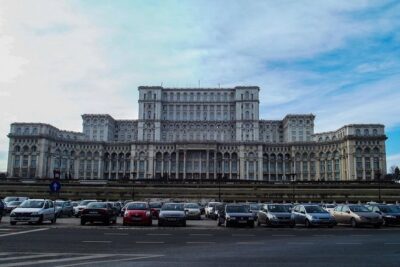
Communism in Bucharest – Landmarks, Museum & Communist Appetizers
Read our review →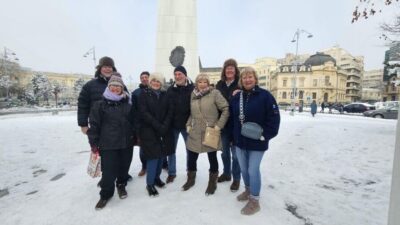


Museum of Communism Ticket with Communist Coffee
Read our review →Browse the lists this tour appears in