
Reviewed · COMMUNIST HISTORY TOURS
Life under Communism
Bucharest’s communist past is easiest to grasp when you see it on foot. This tour connects grand symbols such as the Palace of Parliament with small, easily missed reminders of daily life, including former food shops and an old communist-era food line. I like that Cristina, Stefan, and Victor bring personal and family stories into the walk, making a large political story easier to understand. I also like the route’s balance between famous landmarks and ordinary city corners.
The main consideration is that this is a walking tour, not a museum visit with a seat and air conditioning. Three hours on city streets can feel long in poor weather or at a slow pace, and the Palace of Parliament stop is brief rather than a full interior tour. Still, for a clear introduction to Romania from the postwar period through the 1989 revolution, this is a strong use of an afternoon.
Key points to know before booking
- Personal stories make the era easier to understand: Guides including Cristina connect politics with family memories and ordinary routines.
- The route mixes grand and modest sites: You see the Palace of Parliament, churches, Revolution Square, and less obvious communist buildings.
- The tour covers both power and daily life: Expect discussion of Ceausescu, shortages, religion, foreign policy, political policing, and food queues.
- Revolution Square gives the tour its dramatic ending: Bullet marks and memorial sites help explain the violent collapse of the regime.
- This is a compact English walking tour: It lasts about three hours, costs $42.33 per person, and allows up to 20 people.
- Comfortable shoes matter: The pace can be adjusted, but you should expect to walk between stops and remain outdoors.
Why this Bucharest tour works
Romania’s communist period can be hard to picture from a textbook. You may know the name Nicolae Ceausescu, recognize photographs of the Palace of Parliament, or have heard about the 1989 revolution. What is harder to grasp is how political control affected meals, religion, architecture, movement, family life, and ordinary conversation.
This tour gives those subjects a physical setting. You begin near the Patriarchal Cathedral, see the enormous building project associated with Ceausescu, pass a medieval monastery that survived an aggressively controlled religious system, and finish at Revolution Square. Along the way, the guide explains how the regime took shape, how it functioned, and how it fell.
I especially like the attempt to avoid a simple good-versus-bad lecture. The strongest version of this experience presents communism as a complicated period with real consequences, competing memories, and different effects across generations. Cristina is praised for offering stories from her own life, as well as those of her parents and grandparents. Stefan and Victor also lead the walk, and the central strength of the guides is their ability to connect dates and institutions with lived experience.
The result is not just a tour of buildings. It is a way to understand why Bucharest looks the way it does today.
More communist-era history walks in Bucharest:
- The Real tour of Communism
★ 5.0 · 666 reviews - 3-Hour Guided Tour of Communist Bucharest
★ 4.9 · 303 reviews - Bucharest Essential Tour: Old Town, Calea Victoriei & Communism
★ 5.0 · 142 reviews
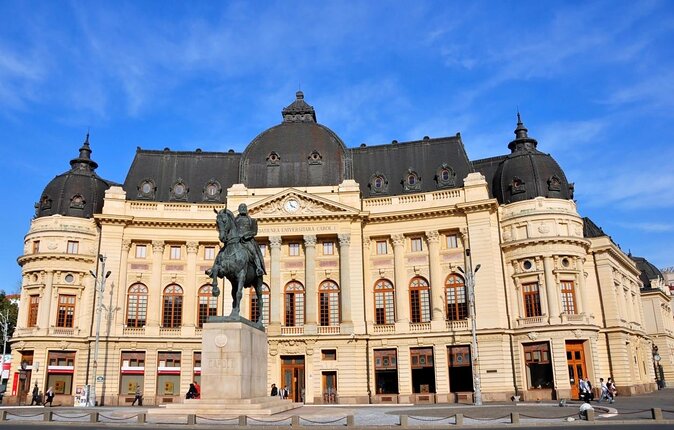
Starting at the Patriarchal Cathedral
The meeting point is Aleea Dealul Mitropoliei 19, at the Patriarchal Cathedral. This is a useful opening because the guide begins with the violent arrival of communism rather than jumping directly to Ceausescu’s later years.
The stop lasts about 10 minutes and admission is free. You will hear about the political shift after the Second World War and the forces that brought Romania into a communist system. That opening matters because Ceausescu did not create the system from nothing. His dictatorship grew from an earlier political structure, changing alliances, repression, and the Soviet influence that shaped postwar Eastern Europe.
The cathedral also introduces an important theme: religion under communism. The regime did not simply erase every church, but it placed religious life under pressure and control. The guide uses this first stop to explain how faith, political authority, and public life collided.
Do not expect a long architectural visit here. The value is the setting and the conversation. You are starting with the question of how the system began, not just how it looked in its final years.
The Palace of Parliament and the cost of power
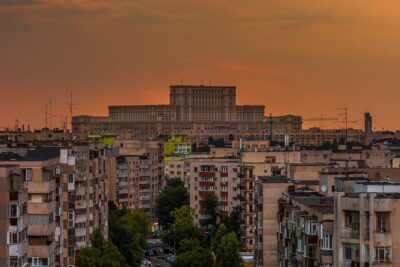
The Palace of Parliament is the tour’s biggest visual statement. The guide spends about 15 minutes explaining the real story behind what is described as the world’s second-largest administrative building. Admission is not included, so this stop should be understood as an exterior discussion rather than a full palace tour.
The building is useful because it puts Ceausescu’s ambitions in concrete form. Its scale, placement, and heavy architectural style show how the regime wanted power to appear: permanent, centralized, and overwhelming. The building also opens a discussion about the human cost of grand state projects and the changes imposed on Bucharest to make room for them.
You will not get every architectural detail in a short stop, and anyone hoping to tour the interior should make separate plans. Still, the brief explanation helps you look at the building with more than simple awe. It becomes a political statement, not merely a large government office.
I like this part of the route because it gives you a clear contrast. The cathedral represents an older Bucharest, while the Palace of Parliament reflects the regime’s desire to reshape the city around itself. That contrast continues throughout the walk.
Antim Monastery and religion under control
Manastirea Antim offers a welcome change of scale. After the vast Palace of Parliament, you visit a picturesque medieval monastery for about 10 minutes. Admission is free.
The monastery lets the guide return to the question of religion. Communist governments often treated churches as possible rivals for loyalty, but the Romanian experience was not a simple story of total closure. Religious institutions continued to exist, yet their freedom and public role were restricted in different ways.
This stop is valuable because it keeps the tour from becoming a parade of dictator-related buildings. You see a place with a much older identity and learn how it adapted to a modern political system that wanted to control public institutions.
The stop is short, so you should not expect a full study of the monastery’s architecture or a lengthy religious history. Its purpose is to show how an older Bucharest survived beside the regime’s new official image.
A few more Bucharest trips worth a look
- Bucharest: Palace of Parliament Tickets and Guide
★ 4.3 · 3,182 reviews - Bucharest: Palace of Parliament Tickets and Guided Tour
★ 4.4 · 1,877 reviews - Bucharest: Parliament Palace Skip-the-line Ticket
★ 4.2 · 1,518 reviews - Bucharest: City Highlights Guided Walking Tour
★ 4.9 · 1,482 reviews
Old Town, Caru’ cu bere, and the politics of hospitality
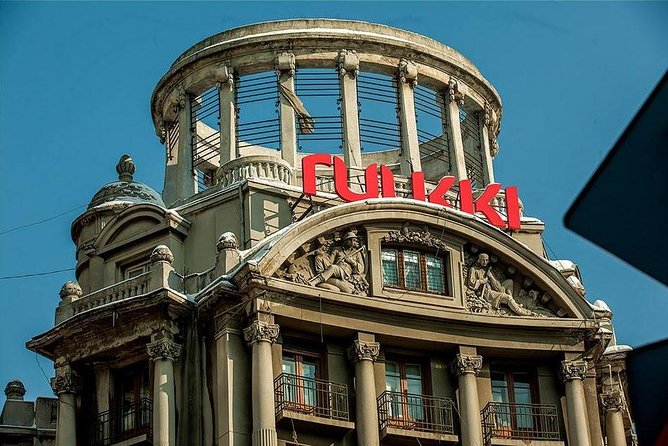
In the Old Town, the route turns toward the famous Caru’ cu bere restaurant. The stop lasts roughly 10 minutes and admission is free. Here, the guide explains the restaurant’s role in foreign policy during the communist period.
That detail adds an unexpected angle. A restaurant may seem far removed from party meetings, surveillance, and state planning, yet places serving foreign visitors could become part of the country’s public presentation. Food, service, interiors, and hospitality all helped shape how outsiders saw Romania.
This is also where the tour can connect official appearances with ordinary shortages. The guide may point out communist-era buildings and former food shops that are easy to miss if you are simply sightseeing through the Old Town. One especially memorable detail from the experience is the old communist food line, a small reminder of how much daily life involved waiting and scarcity.
The contrast is sharp. A restaurant used for foreign policy suggests polished presentation, while a food queue points to the practical frustrations of everyday life. That is exactly the kind of connection that makes the walk useful. You are not only hearing about political slogans. You are learning how the system looked at street level.
The route’s smaller communist details
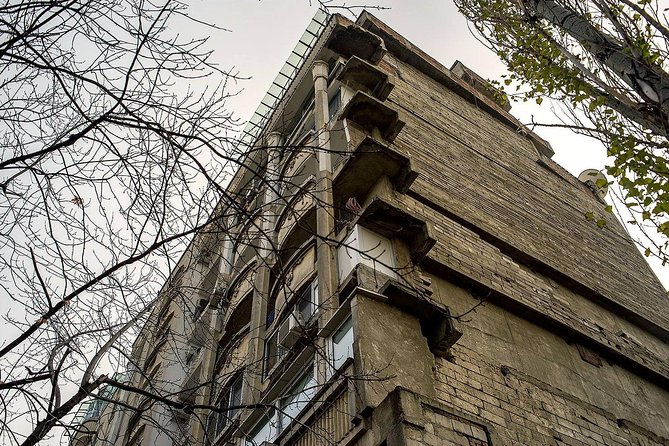
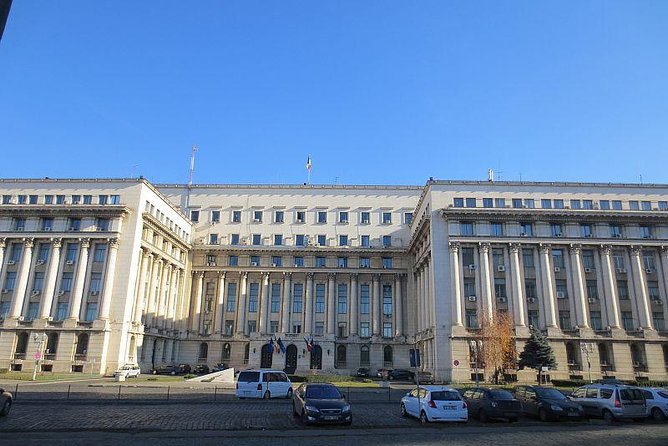
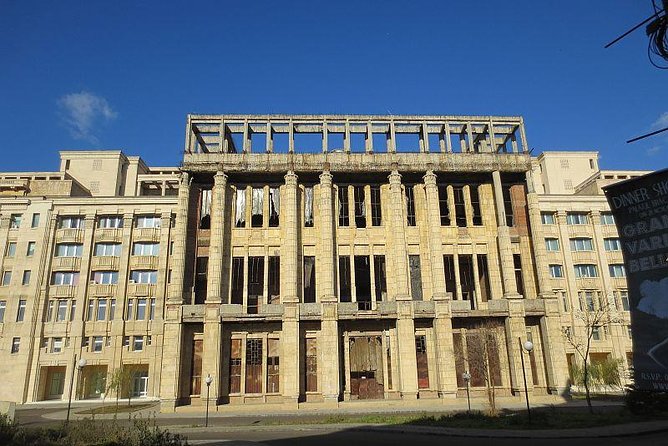
The grand buildings get attention, but the modest details may stay with you longer. The route includes small communist buildings in ordinary or run-down areas, including a former Securitate office and an Alimentara, the kind of state food shop associated with the period.
These places are not presented as polished attractions. That is part of their value. They help you imagine a city where political power was present in offices, shops, apartment blocks, queues, and public buildings, not only in monumental squares.
The Securitate, Romania’s secret police, is an important subject because it helps explain the climate of fear and suspicion. You should not expect a separate museum visit at the office. Instead, the guide uses the location to explain the reach of state surveillance and the way ordinary people lived with political pressure.
The Alimentara and food-line details work differently. They show the practical side of the system: shortages, limited choice, and the routines people used to get basic goods. One guide gives a communist-era snack during the walk, adding a small sensory detail to the discussion. That is a modest touch, but it can make an abstract account of rationing and scarcity feel more real.
Revolution Square and Ceausescu’s downfall
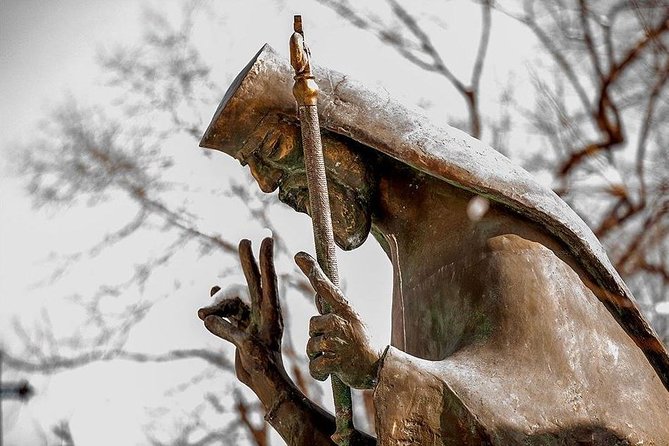
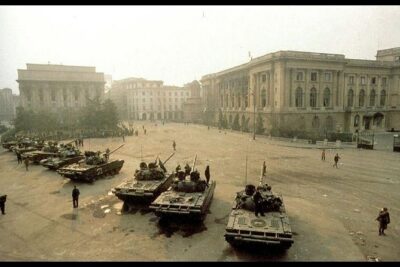
The tour ends at Piața Revoluției, or Revolution Square. This is where the story reaches its most dramatic point: the collapse of communism in 1989 and Ceausescu’s downfall.
The stop lasts about 15 minutes and admission is free. You learn how public anger, political crisis, and violence brought the regime to an end. The square contains memorials and buildings linked to the uprising, and you may see actual bullet marks that remain visible on structures in the area.
This final stop gives the earlier parts of the tour a clear purpose. The Palace of Parliament is no longer just a giant building. The controlled religious life, secret-police offices, food lines, and carefully managed foreign-facing spaces all lead toward a system that eventually broke under pressure.
The ending can be emotionally heavy. This is not a neat story of a peaceful political transition. The guide discusses violence and the human cost of the revolution, so give yourself a little time afterward if you want to process what you have seen.
Because the tour ends in Revolution Square, you are well placed to continue exploring central Bucharest on your own. The experience does not include hotel transport, so plan your next step from the square.
The guides and the value of personal memory
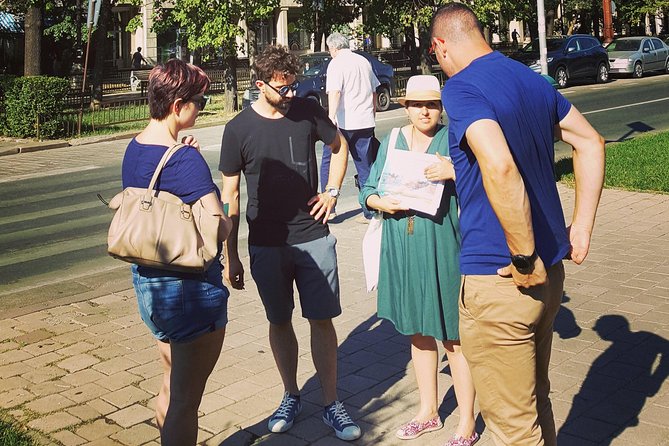
The strongest feature of this experience is the guide’s voice. Cristina receives especially strong praise for clear English, warm delivery, careful answers, and personal stories about life under communism. She has also accommodated people who walk more slowly, stopping where someone could sit or lean.
That does not mean every departure will have Cristina. Stefan and Victor also guide the experience, so the style may vary. The common aim is to make the period understandable without reducing it to a political speech.
Personal memory can be very useful here, but it needs context. One person’s family experience is not the whole story of Romania. The best moments come when the guide places those memories beside broader political events and explains how different generations saw the same period.
You should ask questions. The guides are prepared to discuss Ceausescu’s rise, how people were treated, Romanian culture, and the lasting effects of communism. The small group limit of 20 makes it more practical to speak up than on a large coach tour, although the actual group size may be smaller.
Walking conditions, timing, and price
The tour lasts about three hours and costs $42.33 per person. For that price, you are paying for a guided city walk with historical interpretation, not for entrance tickets, a meal, or transportation.
I consider the price reasonable if you want context rather than a quick list of landmarks. A guide can point out details you might pass without noticing, explain the connection between sites, and answer questions in real time. The value is strongest for first-time visitors who want to understand twentieth-century Romania, or for anyone who has already seen the major sights and wants to know what they mean.
It is less appealing if you prefer to explore independently, dislike walking, or mainly want to enter the Palace of Parliament. The palace admission is not included, and the visit there is brief. You also need to arrange your own way to the starting point and from Revolution Square.
Wear comfortable shoes. Some people have completed the walk at a slower pace, and the guide can make practical adjustments, but this remains an outdoor walking experience. The activity is offered in English, service animals are allowed, and most people can participate.
The tour operates in all weather conditions, so dress appropriately. The provider also says poor weather can lead to cancellation, with a different date or full refund offered. If your plans change, cancel at least 24 hours before the start time for a full refund. A cancellation within 24 hours is not refundable.
Who should book this experience?
I would choose this tour if you enjoy twentieth-century history, political change, architecture, or stories about ordinary life. It is especially useful early in a Bucharest visit, because it gives meaning to the city’s oversized government buildings and its less polished communist-era corners.
It also suits you if you want a human explanation rather than a purely academic one. The personal family stories make the subject easier to follow, while the route keeps you moving through the city.
You may want another option if you need a fully accessible, seated activity, want extensive interior visits, or have only a short time in Bucharest. The tour covers a lot in three hours, but it does so from the street.
Should you book Life under Communism?
Yes, if you want to understand how communism shaped Bucharest and Romanian life beyond the most famous monuments. The strongest parts are the personal storytelling, the smaller everyday details, and the final walk through Revolution Square.
Book it with comfortable shoes, realistic expectations about the Palace of Parliament stop, and enough time to arrive at the meeting point. At $42.33, it offers good value for a thoughtful introduction to a difficult and important period. If you are interested in history, this is one of the more useful ways to see Bucharest’s modern past.
FAQ
How long does the Life under Communism tour last?
The tour lasts approximately three hours.
How much does the tour cost?
The listed price is $42.33 per person.
What language is the tour offered in?
The tour is offered in English.
Where does the tour start?
It starts at Aleea Dealul Mitropoliei 19, Bucharest, near the Patriarchal Cathedral.
Where does the tour end?
The tour ends at Revolution Square, or Piața Revoluției, in Bucharest.
Is admission to the Palace of Parliament included?
No. Admission to the Palace of Parliament is not included.
Are food and drinks included?
No. Food and drinks are not included unless specifically stated.
How many people can join the tour?
The activity has a maximum of 20 participants.
Can I cancel for a full refund?
Yes. You can cancel at least 24 hours before the start time for a full refund. Cancellations within 24 hours are not refundable.
Newest Bucharest trips on the site
- Winery touring & private wine tasting – one day private tour★ 5.0 · 3 reviews
- Bucharest: Dealu Mare Winery Private Trip with Wine Tasting★ 4.9 · 6 reviews
- Village Museum Bucharest Guided Tour★ 5.0 · 6 reviews
- Private Transfer from Giurgiu Port to Bucharest★ 4.5 · 12 reviews
- Airport Henri Coanda (Otopeni) to Bucharest – Private Transfer – Driver★ 5.0 · 5 reviews
- Salt Mine Tour from Bucharest with Entrance Ticket★ 4.5 · 19 reviews
- Wine tasting in Bucharest Old town – bonus cheese platter★ 4.5 · 6 reviews
- Private Wine Tasting at Bucharest’s First Wine Bar★ 5.0 · 3 reviews
Communist History Tours, compared.
Bucharest Essential Tour: Old Town, Calea Victoriei & Communism
Read our review →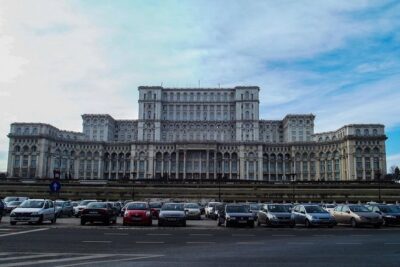
Communism in Bucharest – Landmarks, Museum & Communist Appetizers
Read our review →

Museum of Communism Ticket with Communist Coffee
Read our review →
Dinner+Tour at Museum of Communism after closing
Read our review →Browse the lists this tour appears in