
Reviewed · COMMUNIST HISTORY TOURS
Communist Era Bucharest Tour
Bucharest’s communist past is easiest to grasp on foot, where grand boulevards, oversized government buildings, and revolution memorials sit beside older streets. This private tour connects those places with stories about ordinary life, the 1989 uprising, and the people who lived through the regime. Revolution Square and Nicolae Ceaușescu’s enormous Parliament Palace are the main anchors.
I like the private format, since you can ask direct questions and spend more time on subjects that interest you. I also like the human side of the tour: guides such as Alina and Claire explain food shortages, public life, political control, and family memories rather than offering only dates and building names.
The main consideration is that this is chiefly a walking and outside sightseeing tour. You hear about Parliament Palace but do not appear to have an interior visit included, and one review noted some difficulty understanding the guide’s English. Comfortable shoes and a moderate fitness level matter.
Key points to know before booking
- Private English-language walk: Your group tours alone, with hotel pickup available in central Bucharest.
- Personal stories matter: Guides including Alina and Claire have explained communist life from personal and family experience.
- Major landmarks included: See Unirii Square, Unirii Boulevard, Parliament Palace, Revolution Square, and the Memorial of Rebirth.
- A strong 1989 focus: The route includes Ceaușescu’s final-speech balcony and places tied to the Romanian Revolution.
- Flexible timing: You can choose a morning or afternoon departure, with the walk lasting about three hours.
- Good value at $30.72: For a private guide and a focused introduction to modern Romanian history, the price is modest.
Why this tour helps make sense of Bucharest
Bucharest can feel confusing at first. One block may show elegant older buildings, while the next opens into a broad avenue built for political spectacle. The communist period changed the city in physical ways, not just political ones. This tour gives you a framework for understanding those changes.
I like that the focus is not limited to Ceaușescu’s name or the most famous building in town. You also hear about King Carol I, Romania’s interwar years, the communist takeover, and the experience of ordinary people before and after 1989. That wider timeline helps you see communism as part of Romania’s story, not a sealed-off chapter.
The private setup is useful here. You can ask about sensitive or complicated subjects without holding back a larger group. Several guides have been described as open to questions, including personal ones, and willing to explain both the positive and negative sides people associate with the era.
That balance is important. Many visitors arrive expecting a simple story of villains and victims. Romania’s communist decades included repression, shortages, forced urban change, and fear, but personal memories can also be complicated. The guide’s job is to help you understand those contradictions without turning the tour into a political speech.
More communist-era history walks in Bucharest:
- The Real tour of Communism
★ 5.0 · 666 reviews - Life under Communism
★ 5.0 · 358 reviews - 3-Hour Guided Tour of Communist Bucharest
★ 4.9 · 303 reviews
Starting at Manuc’s Inn in the Old Centre
The tour begins at Manuc’s Inn, Hanul lui Manuc, on Strada Franceză 62, in Bucharest’s Old Centre. You can also request pickup at a centrally located hotel. The activity is private, so only your group participates.
This starting point is useful because it places you in the older heart of the city before the walk turns toward communist planning. You begin in an area connected with Bucharest’s earlier commercial and urban life, then see how the regime reshaped the center with wide roads, monumental buildings, and planned public spaces.
You should allow around three hours. The official schedule describes an approximate duration, but some guide-led walks can run longer when questions and conversations take over. That is a benefit if you enjoy a thoughtful discussion, though it may matter if you have a tightly packed day.
Morning and afternoon departures are offered. I would choose the morning if you want to use the tour as your introduction to Bucharest. An afternoon walk works well if you have already explored the Old Centre and want to place the buildings you saw into their political setting.
Unirii Square and the planned city
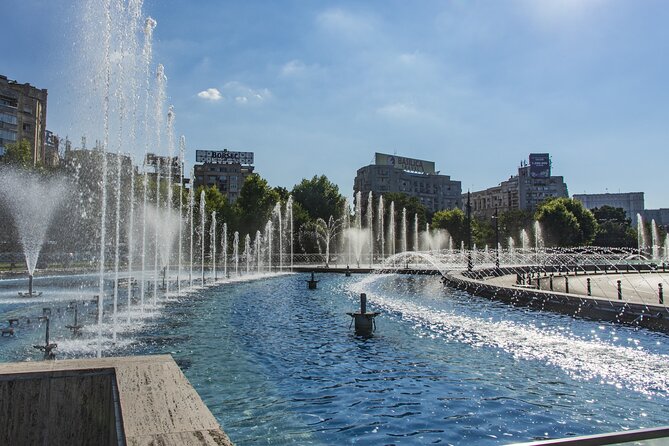
The first major stop is Piata Unirii, one of central Bucharest’s key public spaces. During the communist modernization program, this area was reshaped as part of a planned city center. Today, the square has been regenerated and includes the restored Unirii fountains.
The fountains are more than a photo stop. They belong to the large-scale design language favored by the communist government: broad spaces, long views, formal movement, and projects meant to display state power. Your guide can help you notice how the square’s scale differs from the more intimate streets in the Old Centre.
You spend about ten minutes here, with no admission charge. That is enough for an introduction and photographs, though not enough for a lengthy architectural study. I would treat this as the opening chapter rather than the main event.
From the square, you move along Bulevardul Unirii, once called the Boulevard of Socialist Victory. It was designed as Bucharest’s answer to a grand ceremonial avenue, sometimes compared with the Champs-Élysées in Paris.
The boulevard includes 17 artesian fountains, decorated to represent the four seasons. The five-minute stop is brief, but the avenue itself helps you understand the scale of the regime’s city planning. It was not built simply to improve traffic. It was meant to frame power and create a grand approach to the government district.
Parliament Palace and the cost of grand ambition
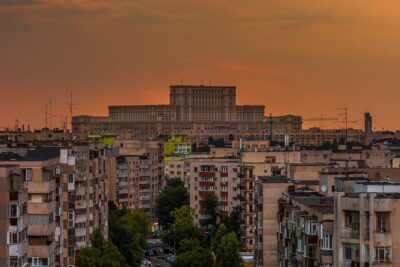
The massive Casa Poporului, now known as Parliament Palace, is one of the tour’s central sights. It was commissioned under Nicolae Ceaușescu and built as the House of the People. The building looms over central Bucharest and is described as the heaviest building in the world.
You hear about its construction, purpose, and place in Ceaușescu’s plans for the capital. The key point is scale. The building is not just large in a conventional sense. Its size reflects a political system that could move people, materials, and money toward one leader’s vision with little public consent.
The tour presents the palace from the city route rather than as a dedicated interior visit. If you want to see the inside, check separately for an admission option and schedule it around this walk. Do not assume that the three-hour experience includes palace entry.
I find the outside discussion valuable because the surrounding streets help show the wider cost of the project. The palace was part of a sweeping redesign that erased older areas of Bucharest. A guide can connect the building to those losses and explain why it remains both a major landmark and a difficult symbol for Romania.
A few more Bucharest trips worth a look
- Bucharest: Palace of Parliament Tickets and Guide
★ 4.3 · 3,182 reviews - Bucharest: Palace of Parliament Tickets and Guided Tour
★ 4.4 · 1,877 reviews - Bucharest: Parliament Palace Skip-the-line Ticket
★ 4.2 · 1,518 reviews - Bucharest: City Highlights Guided Walking Tour
★ 4.9 · 1,482 reviews
Victoria Avenue, banks, hotels, and public institutions
The route continues along part of Victoria Avenue, one of Bucharest’s important central streets. Here, the communist-era story is mixed with older institutions, commercial buildings, and places that continued to serve public life under the regime.
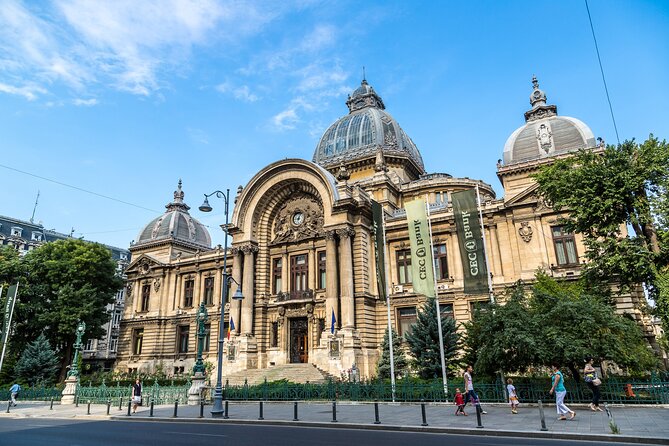
You pass the CEC Bank, described as the bank of the people during the communist years. You also see the National Bank of Romania and hear about its past. These stops broaden the walk beyond political monuments. They show how finance, public services, and national institutions fit into everyday life and state control.
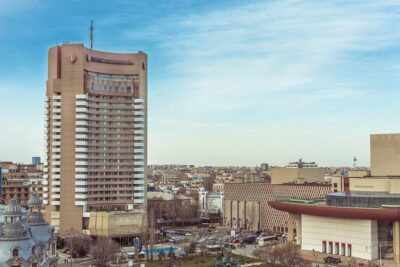
At University Square, you see Bucharest’s oldest and largest university. The nearby Intercontinental Hotel, completed and opened in 1971, adds another useful detail. Hotels and tall modern buildings could signal progress and international confidence, even while ordinary citizens faced limits on travel, goods, and personal freedom.
You also pass the National Theatre of Bucharest. Its design changed several times during its relatively short history, making it a good example of how public buildings can reflect shifting political taste. The stop is not only about architecture. It also opens a discussion about culture, public gatherings, and the changing face of the city.
This middle section is one of the tour’s strengths. You are not simply driven from one monument to another. You walk through central Bucharest and see how political decisions affected banks, theaters, hotels, universities, and streets used every day.
Revolution Square and the final days of 1989
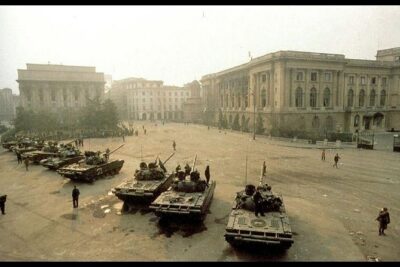
Piata Revolutiei, or Revolution Square, is the emotional center of the walk. This is where the famous Romanian Revolution of 1989 began, and the surrounding buildings preserve the physical setting of those final days.
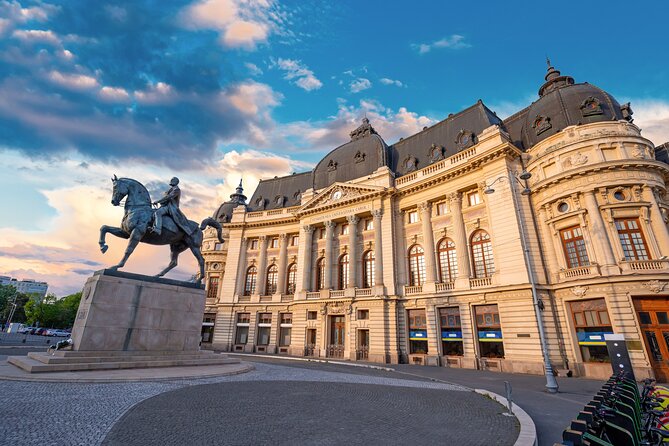
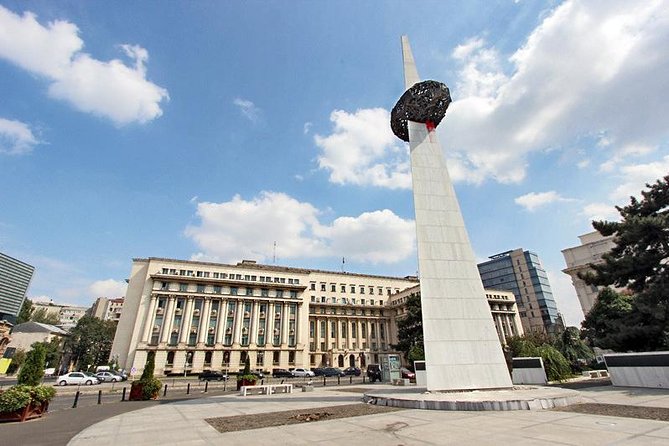
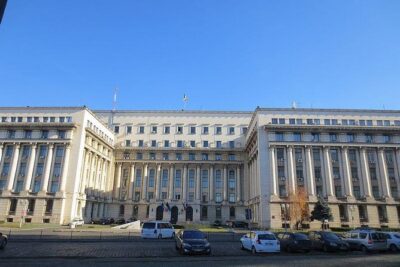
You see the balcony where Ceaușescu made his final speech, the former headquarters of the Communist Party, the Memorial of Rebirth, King Carol I’s equestrian statue, and the university library. The square brings together monarchy, communism, revolution, and the post-communist period in one compact area.
The balcony is especially powerful because it connects a familiar televised moment with a real urban space. Ceaușescu’s speech began as a display of control, but the crowd’s reaction showed that his authority was breaking down. Your guide can explain how the events unfolded and why this place remains important in Romania’s public memory.
The stop is scheduled for about ten minutes and is free. In practice, this is a place where you may want to pause for photographs and questions. The number of buildings and memorials packed into the square can make it hard to take in without guidance.
One point worth keeping in mind is that accounts of the communist period can differ. The guides associated with this experience have generally been praised for presenting positive and negative aspects, but one review raised concern about a presentation that seemed too mild toward Ceaușescu. If you want a strictly academic treatment, ask clear questions and compare the guide’s interpretation with a museum visit or further reading.
Iuliu Maniu and the Memorial of Rebirth
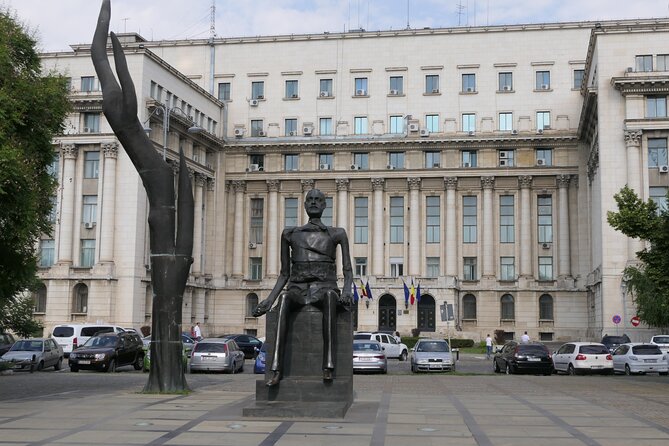
The Iuliu Maniu statue is a small but meaningful stop. Maniu served three times as prime minister and later struggled against the early communist system. His story helps connect the postwar takeover to the political opposition that preceded and followed it.
You spend about five minutes here. That is not long, but the statue gives the guide a chance to explain how political suppression affected figures who represented an alternative future for Romania.
Next comes the Memorial of Rebirth, a 25-meter-high monument dedicated to the struggles and victims of the 1989 Revolution. Its design has prompted different reactions, and the contrast between its modern form and the surrounding historic buildings makes it hard to miss.
I like this stop because it moves the discussion from the fall of communism to the question of remembrance. Romania did not simply wake up on the morning after 1989 with a settled view of the past. The memorial reflects the effort to mark a painful turning point, even when public interpretations remain complicated.
The route also includes a historic building with beautiful gardens, built more than 100 years ago by and for the people of Bucharest. The supplied details do not identify the building by name, so you should treat it as an additional architectural and photo stop rather than plan around a specific attraction.
What the guide adds to the walk
The guide is the heart of this experience. Alina has led walks that covered the royal era, the interwar period, communist rule, and life after 1989. Claire has also been associated with the tour and has shared memories from growing up during the communist period.
Those personal accounts can make an otherwise familiar route much easier to understand. Instead of hearing only that shortages existed, you can ask how ordinary families managed. Instead of seeing a wide boulevard as a piece of urban design, you can discuss why it was built and what it meant to people living nearby.
The best version of this tour is conversational. You should feel free to ask about school, religion, food, work, travel, family life, and the difference between official claims and private experience. Several descriptions of the guides emphasize their willingness to clarify points and adjust the conversation to your interests.
English ability may vary by guide. One review noted some difficulty understanding the guide, while most other comments describe clear, animated explanations. If a detail is unclear, ask the guide to repeat it. This is a private walk, so you do not need to worry about slowing down a larger group.
Price, pace, and practical value
At $30.72 per person, this is a strong price for a private experience lasting about three hours. The value comes less from admission tickets, since the listed stops are free, and more from having a guide interpret a complicated part of Bucharest’s past.
A self-guided walk would let you see many of the same buildings. It would not easily explain the connections between Unirii Square, Socialist Victory Boulevard, the palace, the former Communist Party headquarters, and the 1989 revolution. That context is what you are paying for.
The walk suits you best if you enjoy history, architecture, political change, and personal storytelling. It is also useful if you have only a short stay in Bucharest and want a focused introduction to the city’s twentieth-century transformation.
You should wear comfortable walking shoes. The activity calls for a moderate level of physical fitness, and the route includes several outdoor stops. Service animals are allowed, and the meeting point is near public transportation.
Pickup is available from a centrally located hotel, or you can meet outside the main entrance of Manuc’s Inn at 62 Strada Franceză. The tour ends back at the meeting point. Free cancellation is available up to 24 hours before the start time, but changes or cancellations inside that window are not accepted for a refund.
Who should book the Communist Era Bucharest Tour?
I would book this tour if you want to understand why Bucharest looks the way it does today. The palace and grand boulevards are easy to photograph, but the guide helps you see the political choices and human costs behind them.
It is a particularly good match for first-time visitors, history-minded visitors, and anyone who prefers a private conversation to a large group lecture. The tour can also work well for repeat visitors. One guide helped a person who had already visited Bucharest several times notice the stories behind buildings that had previously seemed familiar.
I would think twice if you want a museum-heavy experience, a long interior visit to Parliament Palace, or a tightly timed architectural tour. This is an outdoor city walk, and its strength lies in interpretation, personal memory, and discussion.
For most people interested in modern Romania, I would book it early in the stay. It gives you useful context for the rest of Bucharest, and the modest price buys something difficult to find on your own: a local explanation of how public monuments and private lives collided during the communist years.
FAQ
How long does the Communist Era Bucharest Tour last?
The tour lasts approximately three hours.
How much does the tour cost?
The listed price is $30.72 per person.
Is the tour private?
Yes. Only your group participates in the private tour.
Is hotel pickup available?
Yes. Pickup is offered from a centrally located hotel. You can also meet outside the main entrance of Manuc’s Inn at 62 Strada Franceză.
What language is the tour offered in?
The tour is offered in English.
What Bucharest landmarks are included?
The route includes Piata Unirii, Bulevardul Unirii, Parliament Palace, Victoria Avenue, CEC Bank, the National Bank of Romania, University Square, the National Theatre, Revolution Square, the Iuliu Maniu statue, and the Memorial of Rebirth.
Can I cancel for a full refund?
Yes. You must cancel at least 24 hours before the experience start time for a full refund. Cancellations or changes made less than 24 hours before the start time are not accepted for a refund.
Newest Bucharest trips on the site
- Winery touring & private wine tasting – one day private tour★ 5.0 · 3 reviews
- Bucharest: Dealu Mare Winery Private Trip with Wine Tasting★ 4.9 · 6 reviews
- Village Museum Bucharest Guided Tour★ 5.0 · 6 reviews
- Private Transfer from Giurgiu Port to Bucharest★ 4.5 · 12 reviews
- Airport Henri Coanda (Otopeni) to Bucharest – Private Transfer – Driver★ 5.0 · 5 reviews
- Salt Mine Tour from Bucharest with Entrance Ticket★ 4.5 · 19 reviews
- Wine tasting in Bucharest Old town – bonus cheese platter★ 4.5 · 6 reviews
- Walking tour of Bucharest★ 5.0 · 3 reviews
Communist History Tours, compared.
Bucharest Essential Tour: Old Town, Calea Victoriei & Communism
Read our review →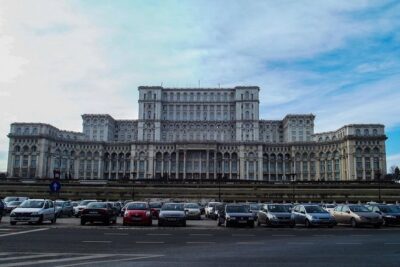
Communism in Bucharest – Landmarks, Museum & Communist Appetizers
Read our review →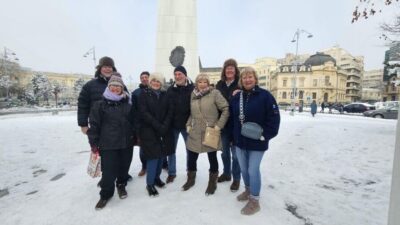

Museum of Communism Ticket with Communist Coffee
Read our review →Browse the lists this tour appears in