
Reviewed · COMMUNIST HISTORY TOURS
Contrasts of Communism – Small Group Walking Tour in Bucharest
Bucharest’s communist past is not locked in a museum. It appears in Revolution Square, in gray apartment blocks, in a cemetery filled with the young people killed in 1989, and in the immense Palace of Parliament. This small-group walk connects those places into one clear story, with Elena explaining both the dictatorship and its effect on ordinary Romanian families.
I especially like the way the tour leaves the grand center for a working-class neighborhood, and the use of public transportation makes Bucharest feel like a real city rather than a backdrop. The old photographs, personal stories, and relaxed question time are also valuable. The trade-off is simple: three hours includes a fair amount of walking, stairs, and transit, so this is not a gentle sightseeing loop for anyone who tires easily.
Key points at a glance
- Revolution Square and University Square: See where Ceausescu gave his last speech and where the 1989 uprising began in Bucharest.
- A ride beyond the center: Use public transportation to reach a typical working-class area where old communist blocks meet new street art.
- The Heroes Cemetery: Hear personal stories about those killed during the revolution of 1989.
- Carol I Park viewpoint: Look across Bucharest from one of the city’s higher hills and examine a monument built under communism.
- A small group of up to eight: Expect room for questions and a more personal pace than on a large coach tour.
- A useful ending point: Finish near the Palace of Parliament, Unirii Boulevard, and Bucharest’s Old Town.
Why this tour makes communist Bucharest easier to understand
Communism can be hard to grasp if you see only a few monumental buildings and hear a list of dates. This tour links political events to streets, homes, memorials, and public spaces. You learn what happened in 1989, but you also get a sense of how the regime shaped Bucharest and how the city has changed since then.
The focus is mainly Romania under Nicolae Ceausescu, with attention to the final years of his rule and the revolution that ended it. Elena also places the period within the wider story of Romania over the last century. Her background in political science, mentioned during the experience, helps her explain the political side without turning the walk into a classroom lecture.
What I find especially useful is the first-person family connection. Elena has spoken about the effect of the communist period on her own mother, which gives the subject a human scale. You are not asked to view the past as a parade of leaders and dates. You hear about the pressure placed on families, the cult of personality, and the way major political decisions reached daily life.
The tour is offered in English, and the many comments about Elena’s clear English and willingness to answer questions suggest that you can ask about details rather than simply listen to a fixed speech. If you are curious about how Romania differs from other former communist countries, this format gives you room to make those comparisons.
More Walking Tours in Bucharest
- Bucharest: City Highlights Guided Walking Tour
★ 4.9 · 1,482 reviews - Bucharest Highlights Walking Tour
★ 5.0 · 469 reviews - Bucharest: Ghost Stories & Romanian Mythology Walking Tour
★ 4.9 · 287 reviews
Revolution Square: the speech that ended in silence
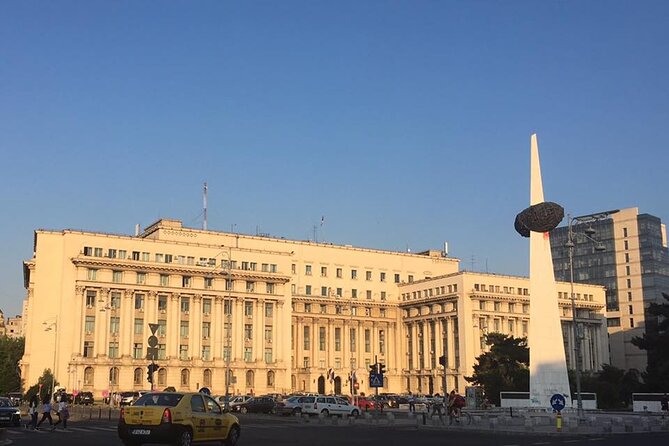
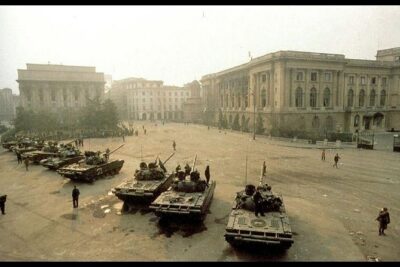
The tour begins near Strada Boteanu and moves to Revolution Square, one of the most important political spaces in modern Bucharest. Here, Ceausescu gave his last public speech in 1989. The scene began as a display of loyalty to the regime, but events quickly turned against him.
Standing in the square helps you understand the shock of that moment. A speech designed to show control became one of the final public failures of the dictatorship. Elena explains the rise and fall of communist rule and places the square within the events of the revolution.
You spend about 30 minutes here. Admission is free, and there is no separate attraction ticket to worry about. The value comes from having someone point out what happened in this specific place and explain why the setting mattered.
I would pay close attention to the photographs Elena brings along. Several people have found the old images useful because they make it easier to compare the Bucharest of 1989 with the city in front of you. That visual link matters in a square where modern traffic and buildings can otherwise make the past feel distant.
University Square and the start of open protest
At University Square, the story shifts from the fall of one leader to the people who challenged the system. You stand at what the tour describes as KM0 of Romanian freedom of speech. The square is also tied to the first deaths in Bucharest on December 21, 1989.
This stop lasts about 30 minutes and includes discussion of Romania’s current political climate. That is an important feature. The tour does not treat 1989 as a sealed-off chapter. Instead, it asks how the revolution still shapes public life, political debate, and the way Romanians view their recent past.
The square is also a good place to ask direct questions. You might want to know why the protests spread, what changed after Ceausescu, or why memories of communism can differ from one Romanian family to another. A small group makes that sort of conversation possible.
There is no admission charge. The main limitation is that this is an outdoor explanation, so the experience depends on the weather and on your comfort standing in a city square.
Beyond the center by metro and public transport
One of the best choices in the route is leaving the polished central areas. You use public transportation to reach Eroii Revolutiei and visit a typical working-class neighborhood. The journey may include the metro and, according to the experience details shared by past participants, a tram or other city transport.
This is not transportation added just to fill time. It changes what you see. Instead of moving from one major monument to another, you pass through everyday Bucharest and reach rows of gray communist apartment blocks from the 1970s. Their plain design reflects the mass housing built during the period.
The neighborhood is not frozen in the past. Colorful street art is helping give some of these blocks and nearby spaces a new identity. That contrast is the point of the stop: the physical structures of communism remain, but the way people use and decorate the city keeps changing.
The stop itself lasts about 15 minutes, though the public transport connection naturally adds movement to the tour. You should expect a little less polish and more ordinary city life here. That is precisely why this section is useful if you want to see Bucharest beyond the postcard center.
More communist-era history walks in Bucharest:
- The Real tour of Communism
★ 5.0 · 666 reviews - Life under Communism
★ 5.0 · 358 reviews - 3-Hour Guided Tour of Communist Bucharest
★ 4.9 · 303 reviews - Bucharest Essential Tour: Old Town, Calea Victoriei & Communism
★ 5.0 · 142 reviews
The Memorial Cemetery and the human cost of 1989
At the Memorial Cemetery of the Heroes of the Revolution, the tone becomes quieter. You walk along the paths among the graves of people killed during the 1989 revolution and hear their personal stories.
This is one of the most meaningful stops because it brings the political story down to individual lives. Revolution Square and University Square show public events. The cemetery shows the cost paid by families and by people whose names can be easy to overlook in a broad account of history.
You spend about 30 minutes here. Admission is free. Comfortable shoes matter, since the route combines several walking sections and public transport.
I would not treat this as a quick photo stop. The cemetery calls for a slower pace and some respect. Elena’s approach, based on the descriptions of her tours, gives you time to ask questions and reflect rather than rushing you from one marker to the next.
Carol I Park and a monument from the communist era
The route continues to Carol I Park, where you get one of Bucharest’s higher views. The park offers a welcome change from busy streets and gives you a chance to see the city from above.
Here, Elena explains the Monument of the Heroes for the Freedom of the Motherland. The monument was built to honor communist party leaders, which gives the stop a useful layer of tension. A monument may present one official version of the past, while the cemetery nearby preserves another, more personal memory of the same era.
You spend around 30 minutes in the park. The hill and the earlier walking make this a point where you may appreciate a short pause. Some people have described the tour as covering plenty of ground but not feeling hurried, with rest stops along the way. Even so, I would eat breakfast first and wear shoes you trust.
The Palace of Parliament, Ceausescu’s final extravagance
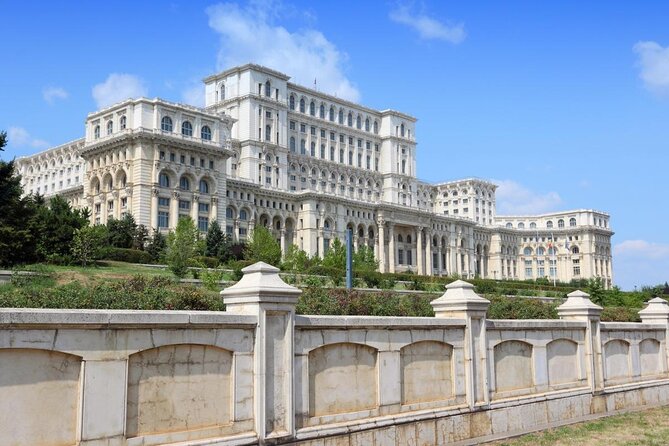
Back in the city center, the tour finishes its major historical sequence outside the Palace of Parliament. You do not enter as part of this experience, and an admission ticket is not included. The stop is about 30 minutes outside the building.
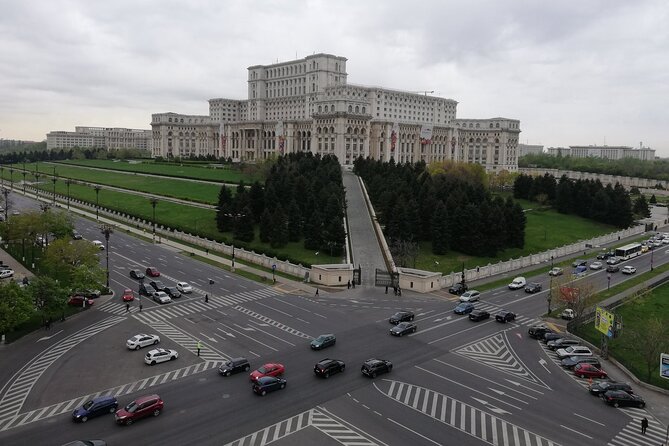
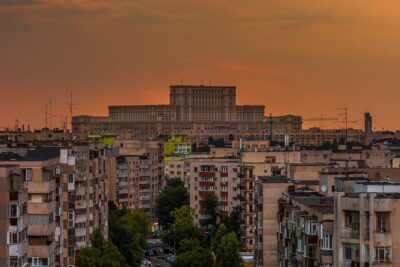
The scale is difficult to absorb from photographs alone. It was the last major whim of Ceausescu and is described as the second-largest administrative building in the world. Its size, location, and cost reflect the ambition of a regime that demanded grand public displays while ordinary people faced severe hardship.
Standing outside gives you a strong sense of the building’s place in Bucharest. Elena can explain how it fits into Ceausescu’s plans for the capital and why it remains such a loaded symbol. You can also ask how Romanians view the building now, decades after the dictatorship ended.
Because the tour does not include entry, you should book a separate visit if you want to see the interior. That is not a flaw if your main goal is historical context rather than a building tour. It does mean you should compare the total cost if you plan to add another ticket later.
Unirii Boulevard and the fountains built to impress
The final stop is on Unirii Boulevard, near the dancing fountains. This broad avenue was designed as a grand approach to the Palace of Parliament and as a way to impress visiting world leaders.
The tour describes the boulevard as a kind of home-court advantage, built to humble powerful visitors. That phrase captures the mood of late communist architecture: scale was used as political theater. The fountains and long sightlines make more sense once you understand that they were part of a carefully controlled image of state power.
You finish near number 25 on Bulevardul Unirii, close to Parliament and Bucharest’s Old Town. This is a practical ending point. You can continue sightseeing, find a meal, or return to the historic center without needing another long transfer.
What the $42.05 price gives you
At $42.05 per person, this is not a bargain-priced orientation walk, but the value is reasonable if you want recent history explained well. The fee covers about three hours, a small group of no more than eight, the guide’s time, and a route that uses public transportation to reach places you might not choose on your own.
The small group matters here. Communism and the 1989 revolution raise questions, and the strongest parts of this experience depend on conversation. A large group with a microphone would make it harder to ask about family memories, politics, or the meaning of a monument.
You are also paying for connections between sites. You could visit Revolution Square, University Square, Carol I Park, and the Palace of Parliament by yourself. What would be much harder is understanding how they relate, finding the cemetery, reaching a working-class district, and making sense of the contrasts.
The Palace of Parliament entrance is not included, so factor that into your plans if you want to go inside. All the listed outdoor stops are free. Confirmation is sent within 48 hours, subject to availability, and the tour is often booked about 17 days ahead, so I would not leave it until the last minute during a busy visit.
Walking demands, weather, and the small-group pace
The experience lasts about three hours and requires a moderate level of fitness. You walk through several parts of Bucharest, use public transportation, spend time outdoors, and cover a hill in Carol I Park. It is wise to eat before you go, especially since there is no meal included.
The tour needs good weather. If poor weather cancels it, you are offered another date or a full refund. You can cancel for a full refund up to 24 hours before the start time, but changes or cancellations inside that window are not accepted.
Service animals are allowed, and the meeting point is close to public transportation. The start is at Boteca 13, Strada Boteanu 3, Bucharest. Check the exact meeting instructions before leaving, since the tour moves across the city and does not finish where it starts.
Elena is the main guide associated with the experience. One supplied account also refers to Martha, so guide assignment may vary. If having Elena specifically is important to you, ask when booking rather than assuming.
Who will get the most from this experience?
You should book this tour if you want more than impressive buildings. It suits you if you are interested in political history, lived experience, memorials, architecture, or the way a city changes after dictatorship.
It is also a good first-day choice. The route gives you a working map of Bucharest and leaves you near the Old Town, while the guide can suggest restaurants and other places to visit. Elena has been particularly helpful to people traveling alone, including with local recommendations and practical support.
You may want a different tour if your priority is interior access to the Palace of Parliament, a relaxed ride with almost no walking, or a broad survey of all Romanian history. This experience keeps its attention on communism, the 1989 revolution, and their continuing effects.
Should you book Contrasts of Communism?
I would book it if you want to understand why Bucharest looks the way it does and how Romania’s recent past still affects public life. The strongest features are the small group, the move beyond the central monuments, the old photographs, and the personal way Elena connects national events with family experience.
Go prepared for walking, public transport, outdoor stops, and a serious subject. If that sounds appealing, $42.05 buys much more than a checklist of sights. If you want only the major monuments or prefer to explore independently, you can see several of these places without a guide. But you will miss the links between them, and those links are the real reason to take this tour.
FAQ
How long does the Contrasts of Communism tour last?
The tour lasts approximately three hours.
Where does the tour begin?
It begins at Boteca 13, Strada Boteanu 3, Bucharest 010027, Romania.
Where does the tour end?
It ends at Bulevardul Unirii 25, near the Palace of Parliament and Bucharest’s Old Town.
What language is the tour offered in?
The tour is offered in English.
How many people can join the tour?
The group has a maximum of eight travelers.
Is admission to the Palace of Parliament included?
No. The tour stops outside the Palace of Parliament, and an admission ticket is not included.
Does the tour use public transportation?
Yes. The route includes public transportation to reach a working-class neighborhood outside the main central sights.
How physically demanding is the experience?
A moderate level of physical fitness is recommended. The tour includes several walking sections, public transportation, and time in Carol I Park.
Can I cancel for a full refund?
Yes. You can cancel at least 24 hours before the start time for a full refund. Cancellations or changes made less than 24 hours before the start time are not accepted.
Newest Bucharest trips on the site
- Winery touring & private wine tasting – one day private tour★ 5.0 · 3 reviews
- Bucharest: Dealu Mare Winery Private Trip with Wine Tasting★ 4.9 · 6 reviews
- Village Museum Bucharest Guided Tour★ 5.0 · 6 reviews
- Private Transfer from Giurgiu Port to Bucharest★ 4.5 · 12 reviews
- Airport Henri Coanda (Otopeni) to Bucharest – Private Transfer – Driver★ 5.0 · 5 reviews
- Salt Mine Tour from Bucharest with Entrance Ticket★ 4.5 · 19 reviews
- Wine tasting in Bucharest Old town – bonus cheese platter★ 4.5 · 6 reviews
- Walking tour of Bucharest★ 5.0 · 3 reviews
Communist History Tours, compared.
Bucharest Essential Tour: Old Town, Calea Victoriei & Communism
Read our review →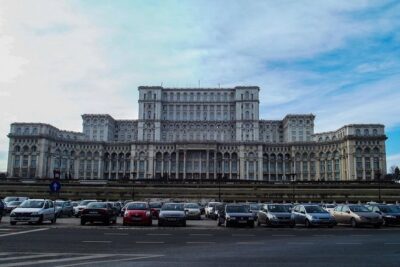
Communism in Bucharest – Landmarks, Museum & Communist Appetizers
Read our review →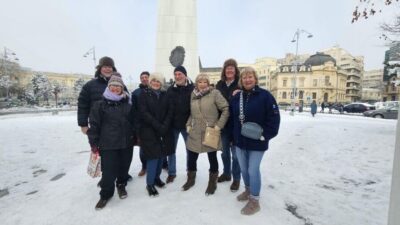


Museum of Communism Ticket with Communist Coffee
Read our review →Browse the lists this tour appears in