
Reviewed · COMMUNIST HISTORY TOURS
Life in Communism
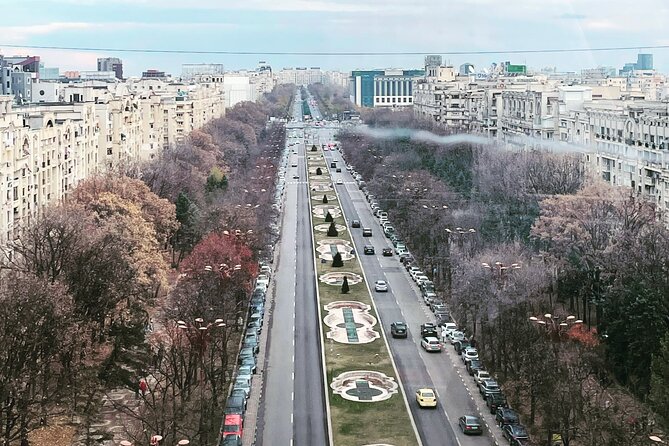
Bucharest’s communist past is written into its streets, grand avenues, missing neighborhoods, and oversized government buildings. This three-hour walk links about 15 places to the period, moving beyond dates and dictators to explain nationalization, secret police, demolitions, and the effect of the regime on ordinary life.
I like two things here. First, the route gives you a useful city orientation before you explore alone. Second, the small group, capped at 15 people, leaves room to ask questions and hear personal stories. Guides including Daniela, Andreea, Augustin, and John have been praised for clear English and thoughtful explanations.
The main drawback is physical: you’ll be on foot for roughly three hours, with no detailed stop-by-stop timing supplied. The mid-tour drinks are not included, so bring some cash. Cold or wet weather could make the walk less comfortable.
What makes this Bucharest walk worth your time
- Around 15 communist-era sites: Each stop connects to a specific change or moment under the regime.
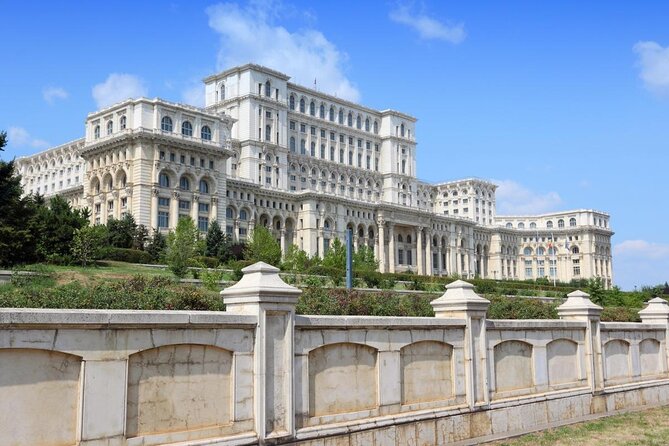
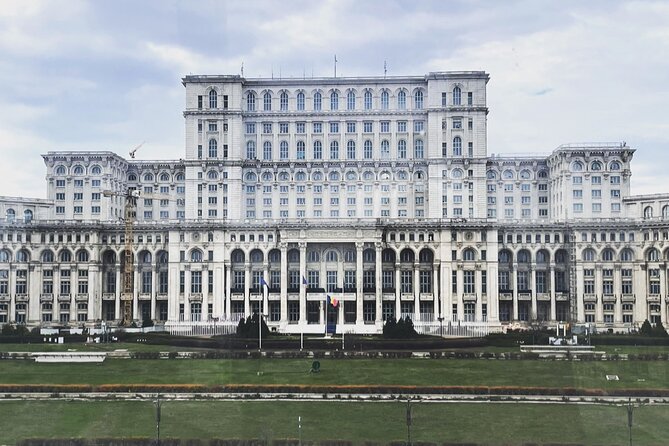
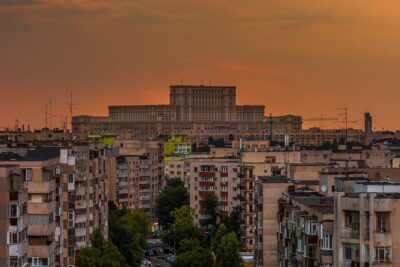
- The Palace of Parliament: See the most famous symbol of Nicolae Ceaușescu’s rule from the outside route.
- Calea Victoriei: Put communist changes into the wider story of Bucharest’s grand central avenue.
- Piața Revoluției: Learn about the dramatic end of communist rule and the events that shaped Romania today.
- Small groups of up to 15: The format makes questions and conversation easier than on a large coach tour.
- Communist-style snacks: A small food sample adds a tangible link to daily life during the period.
Why communist history makes a good walking tour
Romania’s communist era can seem abstract when reduced to names, dates, and political slogans. In Bucharest, the subject becomes much easier to grasp because the city itself provides the evidence.
A broad avenue can show how the government reshaped the capital. A monumental building can raise questions about labor, money, power, and the neighborhoods that disappeared to make room for it. A square can connect architecture with protest and revolution.
That is the strength of this experience. You are not simply placed in front of a museum display and given a prepared speech. You move through the city while the guide explains how policy changed buildings, streets, institutions, and private lives.
The tour covers major themes including nationalization, the Secret Police, demolitions, and the larger changes brought by communist rule. That range matters. You get a picture of both government action and its effect on people, rather than a narrow focus on one leader or one building.
The guides also bring different kinds of explanation. Daniela is described as friendly and clear. Andreea has been praised for her strong English, easy-to-follow voice, and personal stories. Augustin is noted for a carefully researched and balanced account, while John has shared memories from his own experience. Your guide will vary, but the experience is designed around spoken history and discussion.
More communist-era history walks in Bucharest:
- The Real tour of Communism
★ 5.0 · 666 reviews - Life under Communism
★ 5.0 · 358 reviews - 3-Hour Guided Tour of Communist Bucharest
★ 4.9 · 303 reviews
Starting at the Patriarchal Cathedral
The walk begins at the Patriarchal Cathedral, at Aleea Dealul Mitropoliei 25. This gives you a clear meeting point in central Bucharest, and the tour finishes back there.
Starting at a religious landmark is a useful reminder that Bucharest’s communist story did not unfold in a city built only from government blocks. Older religious, civic, and residential spaces existed alongside the new political order. As you walk, the contrast between earlier Bucharest and the communist remaking of the capital becomes part of the lesson.
You should arrive ready to walk rather than expecting a seated lecture. The stated physical requirement is moderate fitness. No detailed distance is provided, so wear shoes you can use comfortably for several hours on city streets.
The meeting area is near public transportation, which helps if you are arranging the tour around other Bucharest sights. Still, the exact connection from your accommodation depends on where you are staying, so allow enough time to reach the cathedral without rushing.
The Palace of Parliament and the cost of power

The Palace of Parliament is one of the key stops, and it gives the tour an unmistakable visual anchor. The building is closely tied to Ceaușescu’s rule and to the scale of the communist state’s ambitions.
Here, the guide can connect architecture with the human and urban cost behind it. The tour’s wider themes include demolitions and the reshaping of Bucharest, so the palace is not treated as an isolated curiosity. It helps explain how political power changed the physical center of the city.
The building is also useful for understanding why Bucharest can feel visually divided. Monumental government architecture and older streets tell different stories. Seeing them during one continuous walk gives you a better sense of the choices made under communism and their effect on the present city.
Do not book this walk solely because you expect a full interior visit to the palace. The supplied details identify it as a stop on a walking route, not as a separate palace admission or interior tour. The value here is the historical explanation connected to the building and the surrounding urban changes.
Calea Victoriei, where old and new Bucharest meet
The route continues to Calea Victoriei, one of Bucharest’s best-known central avenues. Its importance on this walk is not just visual. It helps place communist-era changes within the longer story of the capital.
A street like this can show you how the regime worked with an existing city while also imposing its own priorities. As the guide explains the period, you can compare older architecture, state projects, public spaces, and the way the avenue functions in the modern city.
This stop should appeal to you if you want more than a collection of political facts. The tour asks how architecture affected people and how the city’s appearance changed along with government policy. That link between buildings and daily life is one of the experience’s strongest features.
Calea Victoriei is also a practical orientation point. After the walk, you will have a better sense of how central Bucharest’s major areas connect. The tour is therefore useful early in a city visit, especially if you want historical context before setting off on your own.
A few more Bucharest trips worth a look
- Bucharest: Palace of Parliament Tickets and Guide
★ 4.3 · 3,182 reviews - Bucharest: Palace of Parliament Tickets and Guided Tour
★ 4.4 · 1,877 reviews - Bucharest: Parliament Palace Skip-the-line Ticket
★ 4.2 · 1,518 reviews - Bucharest: City Highlights Guided Walking Tour
★ 4.9 · 1,482 reviews
Piața Revoluției and the end of the regime
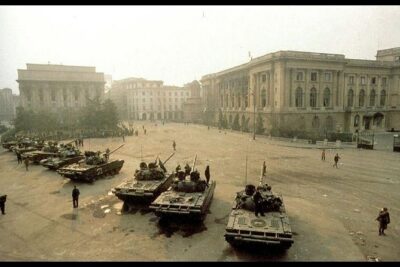
Piața Revoluției, or Revolution Square, brings the story toward the fall of communism. It is the place on the route most directly tied to the upheaval that ended the regime, making it an important counterpoint to the Palace of Parliament.
The guide’s job here is to connect a public square with political change. You can expect an explanation of how Romania’s communist timeline reached its breaking point and why this location matters to the country’s present.
This is also where a nuanced guide matters most. Romania’s communist period was not a simple story with one easy viewpoint. The experience is intended to cover what the regime changed, how it affected people, and how the country emerged from it. A thoughtful account can help you avoid reducing the period to a few familiar images.
One guide, Augustin, has been singled out for presenting a carefully researched and balanced account. Andreea has also been praised for adding personal experiences to the historical material. You cannot guarantee a particular guide unless the provider confirms it, but those names give you an idea of the style available.
The smaller stops fill in daily life

The three named locations provide the best anchors, but the walk includes roughly 15 stops in all. The additional locations are tied to particular moments or changes in the communist timeline.
That is important because the period was not experienced only in major squares and government buildings. The tour also addresses daily life, nationalization, surveillance, demolitions, and the ways institutions affected ordinary people. The communist-style snacks offer a small, physical reminder of that everyday side of the story.
The snack is included, but the tour does not promise a meal. Think of it as a historical sample rather than lunch. You should eat beforehand if you need something substantial, particularly since the route lasts around three hours.
The tour also includes a short break in the middle. Drinks are not included, and you pay for your own refreshment. Bringing cash is specifically advised, which is a useful detail in a city walk where a quick stop may not be set up for card payment.
What the guides add to the experience
A history walk depends heavily on the person leading it. Here, the strongest praise centers on clear explanations, personal warmth, and the ability to make a difficult subject understandable.
Daniela has been described as friendly and effective at explaining life under communism. Andreea is noted for her excellent English, clear voice, passion for the subject, and use of personal experiences. Augustin is associated with a nuanced account, while John has shared stories from his own life.
Those details matter because communist history can become either too academic or too theatrical. The best version of this tour appears to aim for a middle ground: solid historical detail with human examples.
You should still remember that the guide is not a substitute for every book or museum in Bucharest. Three hours can introduce the main changes and give you a framework, but it cannot cover every political, economic, and social issue in depth. Its value is helping you know what you are looking at and what questions to ask next.
Group size, pace, and practical comfort
The maximum group size is 15 people. That is small enough for a guide to hear questions and keep the group together without the feel of a large sightseeing procession.
A small group also helps with a subject that benefits from conversation. If you want to ask what a particular building meant, how nationalization worked, or how the end of communism affected the city, you should have a better chance of doing so than on a much larger outing.
The tradeoff is that this remains a group tour. The pace and stops are shared with other participants, so it will not offer the same flexibility as a private walk. The supplied details also do not give exact start times, walking distance, or the length of each stop.
The activity is offered in English. Service animals are allowed, and the route is near public transportation. You need a moderate level of fitness, and you should plan for outdoor conditions because the experience takes place on city streets.
Is $31.24 a fair price?
At $31.24 per person, the tour is priced as a focused half-day introduction rather than a full sightseeing package. You are paying for a live guide, roughly three hours of interpretation, a small-group setting, and a communist-style snack.
The value depends on how much context you want. If you already know Bucharest well and have studied the communist period, you may find the route less essential. If the subject is new to you, the price buys a useful framework for understanding the city before visiting more sites independently.
You also avoid the effort of connecting about 15 locations yourself and researching the meaning of each one. That is where the cost makes sense. The guide turns separate buildings and squares into one historical story.
Group discounts may be available, which could improve the value for people booking together. Alcoholic drinks are not included, and you should budget separately for the mid-tour refreshment.
Who should book this walk?
I would recommend it most strongly to first-time visitors interested in modern European history, architecture, politics, or the way governments reshape cities. It is also a good fit if you want to understand Bucharest before exploring its streets on your own.
The walk suits you if you prefer explanation over quick photo stops. It is especially useful for anyone who wants to hear personal experiences alongside the formal timeline.
Families with older children may find the subject engaging, though the three-hour walking format and political themes may not suit young children. The provider states that moderate physical fitness is needed.
You may want to choose another activity if you need a shorter outing, a private guide, a detailed interior visit to the Palace of Parliament, or a food-focused tour. Those features are not part of the stated experience.
Should you book Life in Communism?
Book it if you want Bucharest’s buildings and public squares to make more sense. The route covers the Palace of Parliament, Calea Victoriei, Piața Revoluției, and roughly a dozen other places linked to communist rule. The guide-led format gives you history, city orientation, and personal context in one outing.
The best reason to go is the combination of clear historical explanation and lived experience. The main caution is simple: this is a three-hour outdoor walk, not a relaxed café tour or a full museum visit.
It is a strong early-trip choice for curious visitors who want a thoughtful introduction to Romania’s recent past. Free cancellation is available if you cancel at least 24 hours before the start time, giving you some flexibility when planning.
FAQ
How long does Life in Communism last?
The walking tour lasts approximately three hours.
Where does the tour start?
It starts at the Patriarchal Cathedral, Aleea Dealul Mitropoliei 25, Bucharest, Romania.
Where does the tour end?
The activity ends back at the meeting point at the Patriarchal Cathedral.
How many locations does the tour visit?
The route visits roughly 15 stops connected with Bucharest’s communist period.
Which major places are included?
The named stops are the Palace of Parliament, Calea Victoriei, and Piața Revoluției.
Is the tour offered in English?
Yes. The experience is offered in English.
What is included in the price?
Communist-style snacks are included.
Are drinks included?
No. There is a short break, but drinks are paid for separately. Bringing cash is recommended.
How large is the group?
The tour has a maximum of 15 participants.
Newest Bucharest trips on the site
- Winery touring & private wine tasting – one day private tour★ 5.0 · 3 reviews
- Bucharest: Dealu Mare Winery Private Trip with Wine Tasting★ 4.9 · 6 reviews
- Village Museum Bucharest Guided Tour★ 5.0 · 6 reviews
- Private Transfer from Giurgiu Port to Bucharest★ 4.5 · 12 reviews
- Airport Henri Coanda (Otopeni) to Bucharest – Private Transfer – Driver★ 5.0 · 5 reviews
- Salt Mine Tour from Bucharest with Entrance Ticket★ 4.5 · 19 reviews
- Wine tasting in Bucharest Old town – bonus cheese platter★ 4.5 · 6 reviews
- Walking tour of Bucharest★ 5.0 · 3 reviews
Communist History Tours, compared.

Bucharest Essential Tour: Old Town, Calea Victoriei & Communism
Read our review →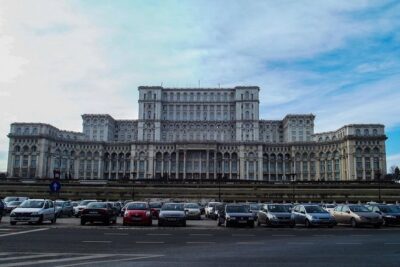
Communism in Bucharest – Landmarks, Museum & Communist Appetizers
Read our review →


Museum of Communism Ticket with Communist Coffee
Read our review →Browse the lists this tour appears in