
Reviewed · COMMUNIST HISTORY TOURS
Bucharest Communism: From Lenin to Ceausescu
Bucharest’s communist story begins with a vast act of destruction: three neighborhoods and about 40,000 households were cleared to make room for Ceausescu’s grand central boulevard and Palace of Parliament. This walking tour follows that political vision to Revolution Square, where the dictatorship finally cracked.
I like the way the tour links big buildings to daily life, from the palace and socialist boulevard to ration cards, empty shops, and the stated limit of about 2,000 calories a day. I also like its clear ending at the revolution, trial, and execution of Ceausescu. The main thing to consider is that entrance tickets are not included, and much of the experience is an outdoor walking lesson rather than an interior palace visit.
Key points to know before you go

- The route connects power and daily life: You move from Ceausescu’s grand building projects to food shortages, surveillance, and political fear.
- The walk covers the palace area and Revolution Square: The start is near Constitution Square, and the finish is at the place tied to the regime’s collapse.
- The history begins before Ceausescu: Expect discussion of Hegel, Marx, Engels, the Bolshevik Revolution, and Romania’s earlier social order.
- The food figures make the period concrete: The tour explains rationing through monthly amounts such as 500 grams of cheese, 10 eggs, and 1.5 kilograms of meat.
- Alex and Horia are named guides: Guide assignment can vary, but both are praised for clear explanations, humor, and answers to detailed questions.
- It is good value at $23: For 2.5 hours with a local guide, the price is modest, especially if you want context before visiting Bucharest’s museums.
Starting beside the socialist boulevard
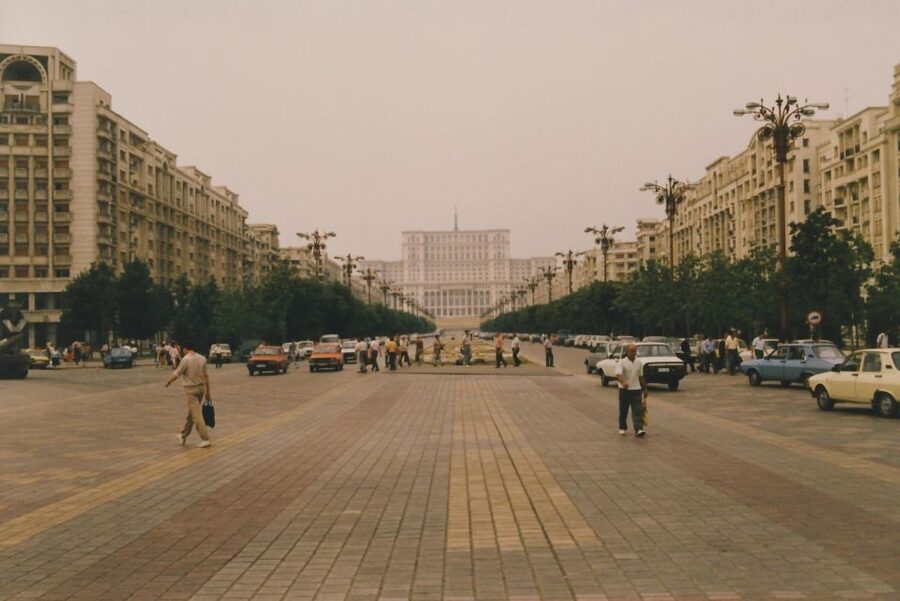
Meet next to The Coffee Shop Constitutiei, at Bulevardul Unirii 5. Arrive 10 minutes early. The location puts you close to the broad boulevard and the Palace of Parliament, so the subject is right in front of you before the talking begins.
This is a useful starting point because the boulevard is not just a grand avenue. It was part of Ceausescu’s plan to reshape Bucharest around political power. The scale can feel abstract until you hear what had to disappear first: three neighborhoods and 40,000 households.
I like this opening because it gives you a question to carry through the walk: how much human life can a government erase in the name of order, prestige, or ideology? You are not starting with a dry list of dates. You are starting with the cost of a building project.
The route is on foot and includes several stops close to one another. Wear comfortable shoes, and remember that Bucharest weather can make a two-and-a-half-hour outdoor walk feel longer. Food and drinks are not included, so bring water if you need it.
More communist-era history walks in Bucharest:
- The Real tour of Communism
★ 5.0 · 666 reviews - Life under Communism
★ 5.0 · 358 reviews - 3-Hour Guided Tour of Communist Bucharest
★ 4.9 · 303 reviews
The Palace of Parliament and the cost of ambition
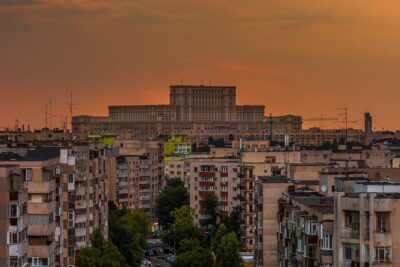
The Palace of Parliament is the visual center of the tour. It is described as the world’s second-largest administrative building, and its size explains much about Ceausescu’s rule. This was not simply an office block. It was a public display of state power, built into the remaking of central Bucharest.
You spend about 20 minutes here with guided sightseeing and walking. The guide uses the building to explain the demolition program, the political system behind it, and the way Ceausescu’s priorities shaped the capital.
Do not book this walk expecting a full palace interior visit. Entrance tickets are not included, and the experience here centers on the outside setting and the history attached to it. That is not a problem if you want an overview, but you should make separate plans if touring the building inside is important to you.
The palace works best as a starting lesson in scale. Once you understand what was removed to create it, the facade becomes more than a large photograph. It becomes evidence of how ideology reached into homes, streets, churches, and family life.
Antim Monastery and the older city beneath the plan
The short stop at Antim Monastery shifts the mood. After the broad socialist boulevard and the palace, you see a religious site that belongs to an older Bucharest. The visit lasts about 10 minutes and includes guided sightseeing.
This contrast matters. The tour is not only about communist buildings. It also shows the city that existed before the regime tried to reshape it. The monastery helps place Ceausescu’s plans against Bucharest’s earlier religious and urban traditions.
I would not expect a long interior visit here. The schedule moves quickly, and the stop is one part of a wider route. Still, it helps prevent the tour from becoming a single-theme march through concrete. You get a sense of the old city and the political pressure placed on it.
Patriarchal Cathedral and the changing role of religion
The Patriarchal Cathedral receives about 20 minutes, with a visit, guided explanation, sightseeing, and walking. It adds another layer to the story of Romanian society before and during communist rule.
Religion and dictatorship make an important pairing. The regime promoted its own authority, while religious institutions continued to exist within a system that tightly controlled public life. The cathedral gives the guide a real place to discuss that tension.
The stop also breaks up the long boulevard views. If you enjoy tours that use buildings as evidence, this is one of the more useful parts of the walk. You are not only hearing what the regime claimed to believe. You are looking at institutions and spaces that had to function under its rule.
A few more Bucharest trips worth a look
- Bucharest: Palace of Parliament Tickets and Guide
★ 4.3 · 3,182 reviews - Bucharest: Palace of Parliament Tickets and Guided Tour
★ 4.4 · 1,877 reviews - Bucharest: Parliament Palace Skip-the-line Ticket
★ 4.2 · 1,518 reviews - Bucharest: City Highlights Guided Walking Tour
★ 4.9 · 1,482 reviews
Bucharest’s fountains and Union Square
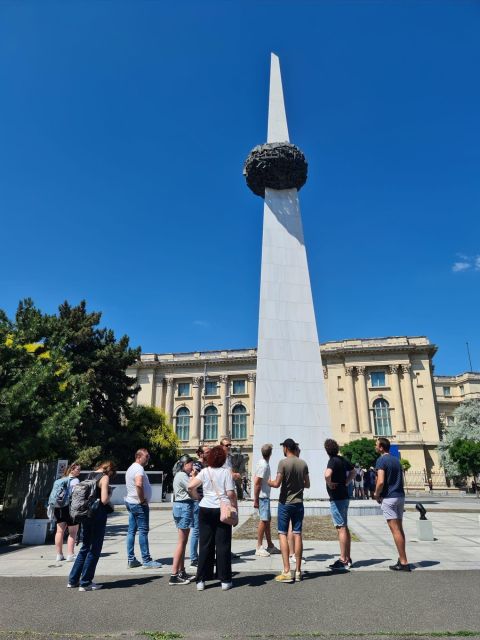
The Bucharest Fountains and Piața Unirii are brief stops, about five minutes each. The fountains offer a quick look at the monumental side of central Bucharest, while Union Square helps you understand the scale of the planned urban center.
These are not long visits, so keep your expectations in check. Their value comes from the connection between location and explanation. The guide can point out how public spaces were used to project order and achievement, even while ordinary people dealt with shortages and restrictions.
This is where the tour’s large numbers begin to meet the city itself. Grand avenues and fountains suggest abundance. The later discussion of rationing shows the gap between that image and everyday life.
Old Town, where the past feels less controlled
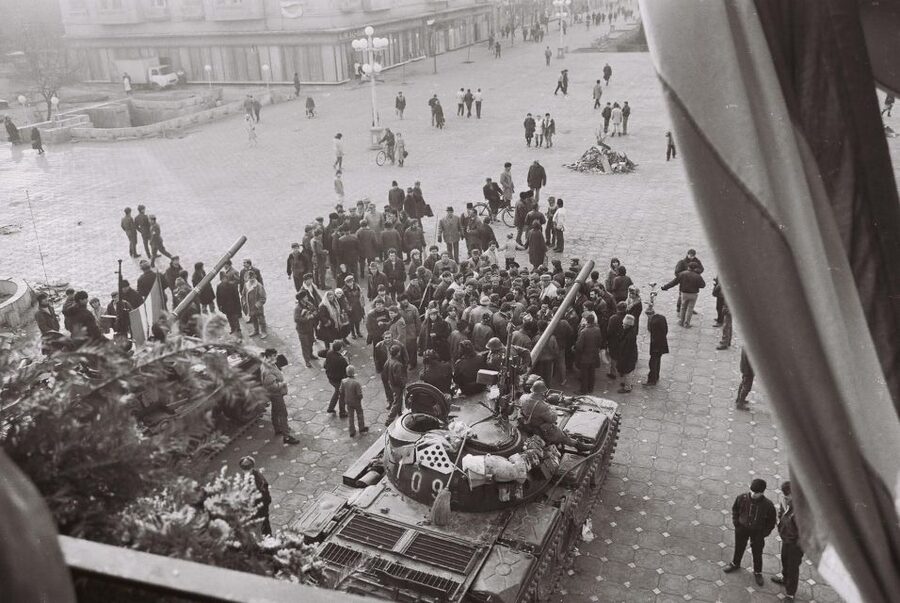
The stop in Bucharest Old Town lasts about 15 minutes. This is a welcome change of texture after the palace district, the broad roads, and the formal public spaces.
The Old Town helps you see Bucharest as a layered city rather than a capital built entirely around the communist period. The guide can connect its streets and older buildings to the social order that existed before communist rule, then explain how the dictatorship changed the country around them.
I like this part because it gives the history some human scale. A palace tells you about authority. An old neighborhood gives you a better sense of how a city is lived in. The visit is short, but it keeps the route from becoming too architectural or too focused on famous monuments.
University Square and the road to Revolution Square
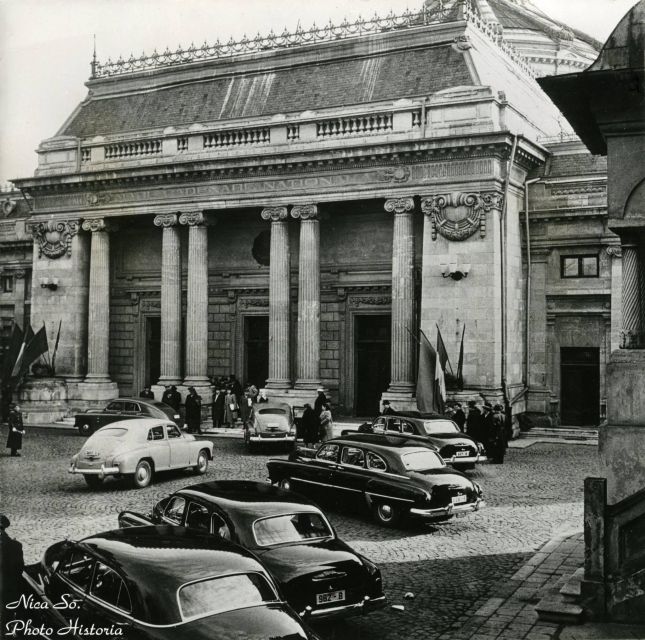
At University Square, the tour pauses for about five minutes before continuing toward the Royal Palace and Romanian Athenaeum. These central sites help connect politics, culture, education, and public protest.
The Royal Palace receives about 10 minutes of guided sightseeing. The Romanian Athenaeum receives another 10 minutes. Together, they broaden the story beyond Ceausescu’s personal rule. You see places tied to the monarchy, national culture, and public life, all within a city later dominated by communist authority.
This section is also where the tour can become especially useful for first-time visitors. You are moving through central Bucharest, but the guide is showing you how each location fits into changing ideas about the state and the nation.
The pace is brisk. Eleven stops in 2.5 hours means some places receive only a few minutes. I see that as a strength if you want an overview before exploring on your own. It is less suitable if you prefer to linger inside each monument or take extended photographs.
The final stop at Revolution Square

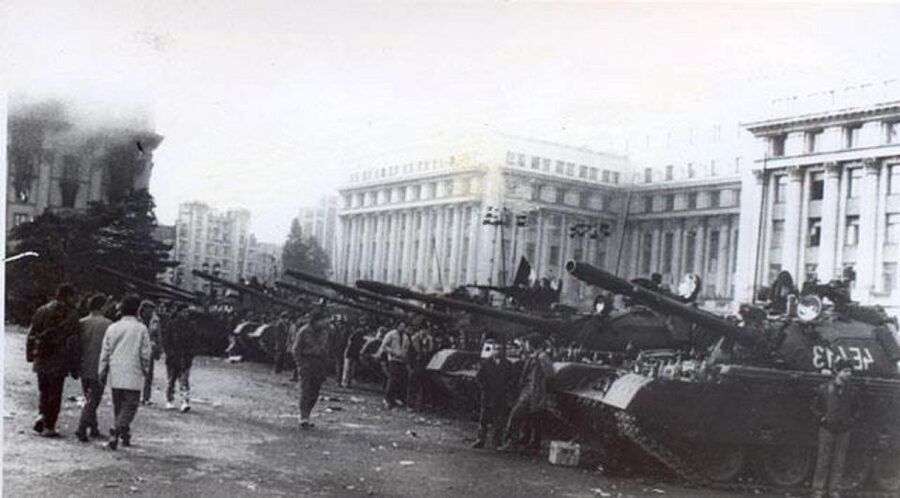
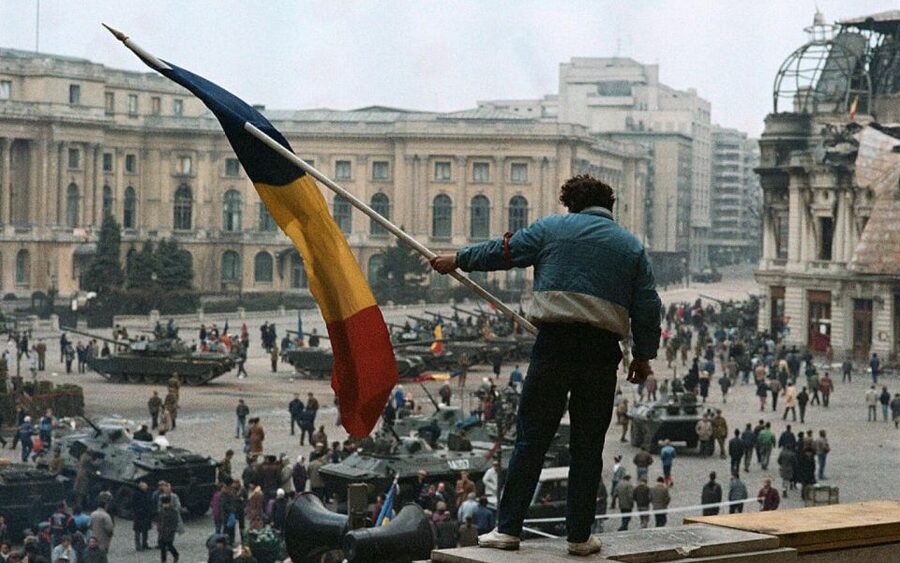
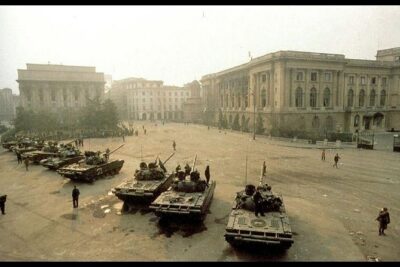
The tour ends at Revolution Square, with about 20 minutes devoted to the events that brought Ceausescu’s rule to an end. This is the strongest closing point because the earlier stops have already built the setting: the palace, the boulevard, the city’s institutions, and the pressure of daily life.
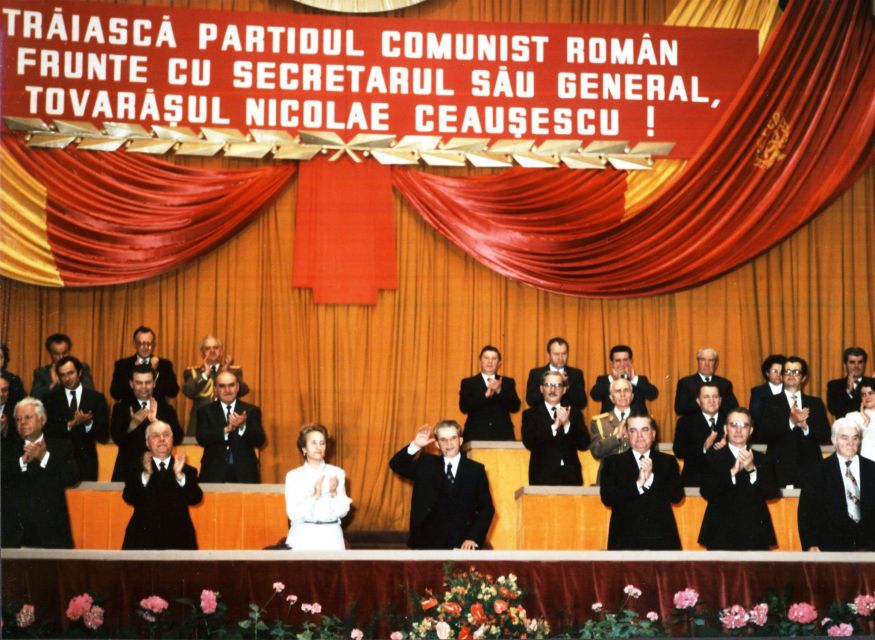
Here you learn about the group of agitators who plotted the end of the regime, the revolution, the trial, and the execution. The tour’s focus is not just that Ceausescu fell. It is how a dictatorship that had lasted 25 years reached its final days.
The ending also gives the tour a clear shape. It begins with political ideas and the remaking of the city, moves through ordinary life under control, and finishes with public resistance. Several people who have taken the walk especially value this final explanation because it brings the revolution into focus rather than treating it as a quick date at the end of a timeline.
If you have questions, this is a good time to ask them. The guides Alex and Horia are particularly well suited to visitors who want more than a basic outline. Alex is praised for explaining difficult material in a digestible way, using humor without making the subject feel light. Horia is also described as easy to talk with and willing to recommend books for further reading.
The human cost of rationing and surveillance
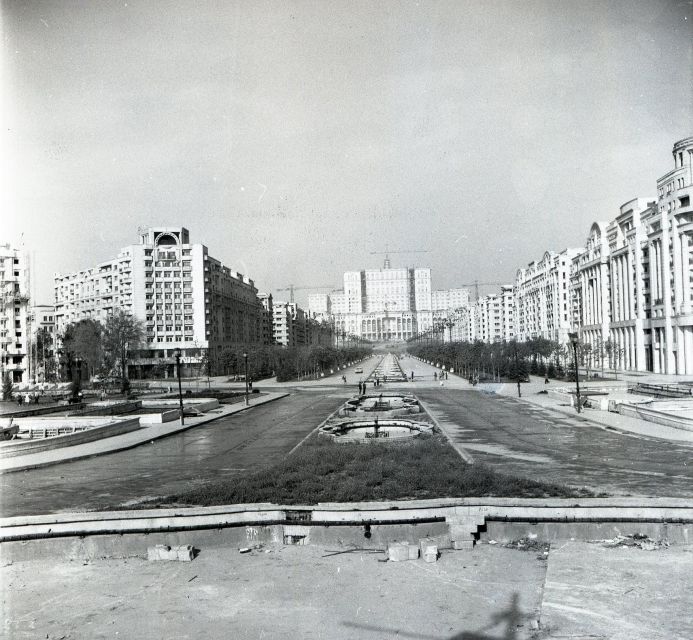
The strongest part of the tour may be its explanation of everyday life. Political history can become a parade of leaders and buildings. Here, the numbers make the dictatorship easier to grasp.
You hear about an official daily allowance of 2,000 calories, alongside monthly figures such as:
- 500 grams of cheese
- 10 eggs
- 1.5 kilograms of meat
Those amounts are not just trivia. They help you picture the strain placed on households and the difference between public claims of national progress and private experience. The guide also discusses food rationing and the secret police, two subjects that show how control reached into ordinary routines and personal trust.
The tour covers four classes and six years in prison as part of the broader political background, then traces the 25 years of Ceausescu’s dictatorship. Since the route also begins with Hegel, Marx, Engels, the feudal order in Eastern Europe, and the Bolshevik Revolution, you get a framework for how communist ideas developed before Romania’s own version took shape.
That early context is valuable, though it may feel dense if you want only a quick introduction to Ceausescu. I like it because it avoids presenting Romanian communism as a sudden, isolated event. You see the ideas, the political rise, the state system, and the effects on daily life.
The guide makes the difference
A history walk lives or dies by the guide. Here, the named guides Alex and Horia bring a strong record of clear delivery, humor, and patient answers. Alex in particular is praised for making the political story engaging and personal without losing detail.
That matters because the subject can be heavy. You are dealing with forced demolition, prison, surveillance, hunger, dictatorship, revolution, and execution. A guide who can explain the material in plain language helps you keep track of people and causes instead of getting lost in dates.
The guide also adds local perspective. One guide is described as able to discuss Bucharest beyond the central monuments, while another has recommended books to help visitors continue learning after the walk. You should not assume you will receive a particular guide, but the available names give you a useful sense of the tour’s teaching style.
The live format also lets you ask about points that interest you most. If you have family experience with communist rule, or a strong interest in totalitarian governments, you may find the conversation especially useful. If you know little about the subject, ask the guide to slow down when the political terms start to pile up.
Is $23 a fair price?
At $23 per person, I consider this good value for a 2.5-hour guided walk in central Bucharest. You are paying for a local English or Romanian-speaking guide who connects major sights with political history, not just for a stroll past buildings.
The value is strongest if you want context. You could walk past the palace, fountains, Old Town, and Revolution Square alone, but you would miss much of the link between them. The guide explains why the boulevard was built, what was destroyed, how rationing worked, and why Revolution Square matters.
The price does not include food, drinks, or entrance tickets. That keeps the base cost low, but it also means you need to budget separately for any paid attraction you want to enter. Since the walk itself is the main product, this is still a sensible choice for a first day in Bucharest.
Free cancellation up to 24 hours before the start and the option to reserve now and pay later add useful flexibility. Check the available start times when booking, and arrive at the meeting point 10 minutes early.
Who should book this Bucharest communism tour?
I would choose this experience if you want political history explained through real streets and buildings. It suits first-time Bucharest visitors who want a clear orientation, as well as returning visitors who want to understand the city’s communist layer.
It is a good match for:
- People interested in Ceausescu, the Cold War, or totalitarian governments
- Visitors who learn best through stories and places
- Anyone who wants to understand the Palace of Parliament before touring it inside
- History-minded visitors who appreciate background from Marx and Engels through the 1989 revolution
- People looking for a focused walking activity at a modest price
I would think twice if you dislike walking, want a slow museum visit, or expect every landmark to include an interior tour. Several stops are brief, and the main focus is explanation rather than extended time at each site.
Should you book it?
Book it if you want the Palace of Parliament and Revolution Square connected by a clear account of power, poverty, surveillance, and revolt. The best reason to go is the balance between monumental Bucharest and the ordinary lives affected by the regime.
Skip it only if you already know the political history well and want a purely architectural tour. For most visitors, the $23 price, strong guide focus, and final stop at Revolution Square make this one of the better short introductions to Bucharest’s communist past.
FAQ
How long does the tour last?
The tour lasts 2.5 hours.
What languages are available?
The live guide speaks English or Romanian.
Where does the tour start?
It starts at Bulevardul Unirii 5, next to The Coffee Shop Constitutiei.
Where does the tour finish?
It finishes at Revolution Square in Bucharest.
Is entry to the Palace of Parliament included?
No. Entrance tickets are not included.
What is included in the price?
A local guide is included. Food, drinks, and entrance tickets are not included.
Can I cancel or pay later?
You can cancel up to 24 hours in advance for a full refund. You can also reserve now and pay later.
Newest Bucharest trips on the site
- Winery touring & private wine tasting – one day private tour★ 5.0 · 3 reviews
- Bucharest: Dealu Mare Winery Private Trip with Wine Tasting★ 4.9 · 6 reviews
- Village Museum Bucharest Guided Tour★ 5.0 · 6 reviews
- Private Transfer from Giurgiu Port to Bucharest★ 4.5 · 12 reviews
- Airport Henri Coanda (Otopeni) to Bucharest – Private Transfer – Driver★ 5.0 · 5 reviews
- Salt Mine Tour from Bucharest with Entrance Ticket★ 4.5 · 19 reviews
- Wine tasting in Bucharest Old town – bonus cheese platter★ 4.5 · 6 reviews
- Walking tour of Bucharest★ 5.0 · 3 reviews
Communist History Tours, compared.
Bucharest Essential Tour: Old Town, Calea Victoriei & Communism
Read our review →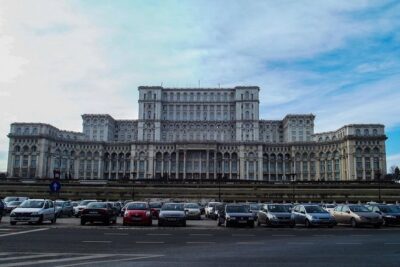
Communism in Bucharest – Landmarks, Museum & Communist Appetizers
Read our review →


Museum of Communism Ticket with Communist Coffee
Read our review →Browse the lists this tour appears in