
Reviewed · COMMUNIST HISTORY TOURS
Bucharest: Communism, Revolution & City Highlights Tour
Bucharest’s past comes into sharp focus when you walk from elegant palaces to the enormous avenues built by Nicolae Ceaușescu. I like the way this tour connects Revolution Square with the Palace of Parliament, showing not only what happened, but how the city was physically remade. I also like the contrast between restored Old Town and the cold scale of the former Communist Civic Center. The main consideration is simple: you do not go inside the Parliament or other public buildings.
The private format gives you room to ask questions and set a comfortable pace. Guides such as Mihai have earned especially strong praise for explaining Romanian communism, the 1989 revolution, and Bucharest’s wider story in a clear, engaging way.
Key points about Bucharest’s communist past
- Revolution Square: See where Ceaușescu gave his final speech before his rule collapsed.
- Old Town and Victory Avenue: Compare aristocratic Bucharest, restored historic streets, and later communist construction.
- Communist Civic Center: Learn how Ceaușescu displaced about 40,000 people to create his grand urban project.
- Palace of Parliament: Admire the exterior of the world’s heaviest building, with the building’s history explained by your guide.
- Private pacing: Walk less than 3 km over four hours, with time for photographs, rest, and questions.
- Flexible booking: Hotel pickup, an English or Romanian-speaking guide, private touring, and cancellation up to 24 hours before departure are included.
Bucharest told through two very different cities
The best reason to take this tour is the sharp visual divide it creates. Bucharest was once known as The Little Paris, a city of grand 19th-century buildings, royal institutions, cafés, and broad avenues. After World War II, communist rule reshaped the capital through demolition, control, and huge state projects.
You see that story on foot rather than from a coach window. One moment you are looking at an ornate palace or concert hall. Soon after, you are facing broad roads and oversized concrete buildings designed to project state power.
The tour covers about 3 km, spread across roughly four hours. That is not a long walk, but the slow pace matters. You stop often for photographs and explanations, so this is not a march from sight to sight. It is a conversation-led route, and the private setting lets you ask about subjects that interest you, from food rationing to surveillance and student protests.
Hotel pickup is included. Your guide waits in the hotel lobby beside reception, or downstairs in front of the building if your accommodation has no lobby. The tour finishes in central Bucharest near the Old Town, close to hotels, restaurants, museums, and shops.
More City Tours in Bucharest
- Bucharest: City Highlights Guided Walking Tour
★ 4.9 · 1,482 reviews - Bucharest: 2-Hour City Highlights Bike Tour
★ 4.8 · 269 reviews - Bucharest Tuk Tuk city tour
★ 5.0 · 188 reviews
Revolution Square and the final speech
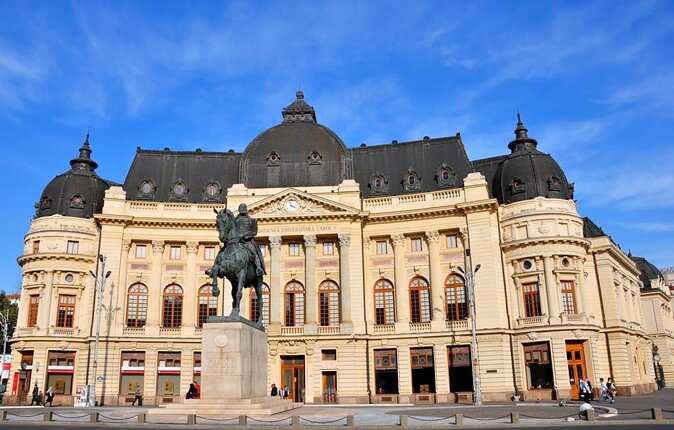
The opening section concentrates on some of Bucharest’s most important public buildings. The Romanian Athenaeum gives you a reminder of the capital’s earlier ambitions. Its elegant exterior helps explain why Bucharest earned its Parisian nickname before communist rule altered the city.
You then see the former Royal Palace, another useful marker of the old political order. These stops are mainly exterior visits and photo opportunities, but they give your guide the setting needed to explain Romania before, during, and after communism.
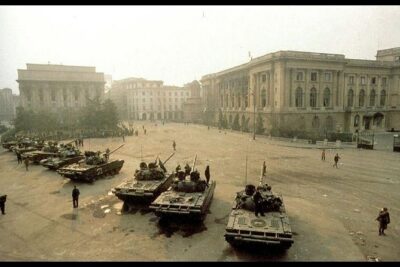
The emotional center is Revolution Square. Here, Ceaușescu delivered his final public speech in December 1989. The moment began as a display of authority and ended with the crowd turning against him, helping trigger the collapse of his government.
Your guide also points out the Memorial of Rebirth. The monument has become one of the most discussed modern landmarks in the square, and its unusual form invites questions about how Romania remembers the revolution. You will have time to look closely, take photographs, and ask how the events of 1989 unfolded.
This section works best if you care about political history, but it is also useful for first-time visitors. Revolution Square is not just another central plaza. It is where the city’s public space became a stage for a regime’s sudden loss of control.
Victory Avenue and University Square
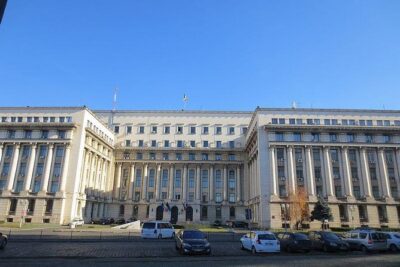
From Revolution Square, the route continues along Victory Avenue, one of Bucharest’s key historic streets. It once served as an address for aristocrats and institutions. Today, its buildings show several layers of the capital’s past, including embassies, palaces, older civic architecture, and communist-era additions.
The National Military Circle is another exterior stop along the route. It adds a military and institutional note to the story, while also showing the scale and form of central Bucharest’s older architecture.
University Square shifts the focus from official buildings to protest and daily life. Your guide explains student uprisings, Cold War pressure, and the atmosphere of surveillance that shaped life under Ceaușescu. This is a valuable part of the tour because communism was not only about monumental buildings. It affected what people could say, buy, read, and do.
The scheduled stop here lasts longer than the shorter photo stops elsewhere. That gives you room to connect the political story with ordinary experience. You hear about early communist reforms and Ceaușescu’s initial effort to act independently of Moscow, followed by growing repression, austerity, and control.
The route does not treat the communist era as one simple block. That is important. Romania’s 42 years under communism changed over time, and the tour explains both the early promise used by the regime and the severe conditions that helped turn public opinion against it.
Old Town, where the contrast becomes personal
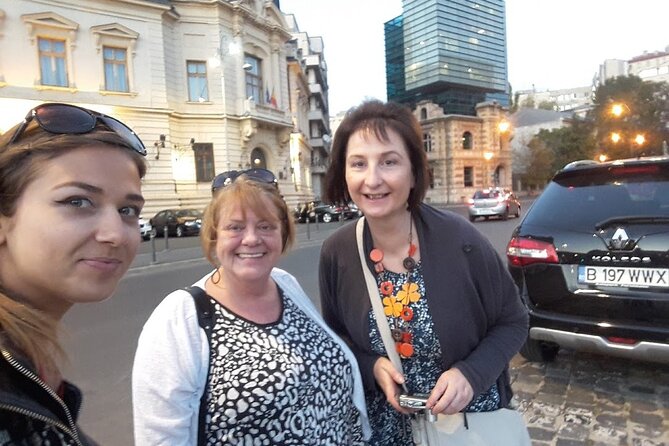
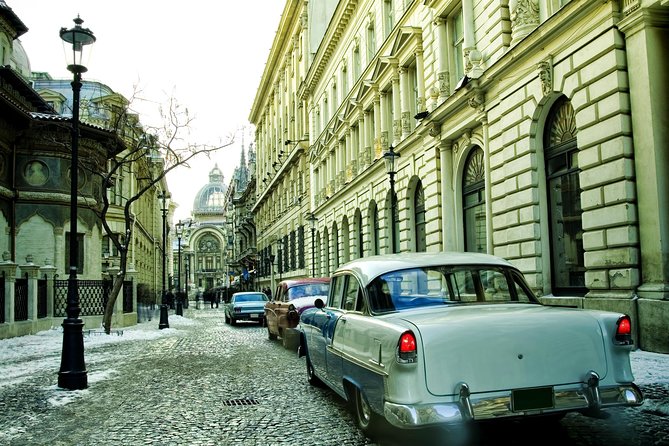
Old Town provides a welcome change of scale. Its cobbled streets, restored mansions, and older façades feel more intimate than the wide avenues of the Civic Center. You get a short break here, then spend about 75 minutes exploring the district with your guide.
This is where the tour places political events alongside everyday realities. You learn about food rationing, propaganda, human rights abuses, and the pressure of living under constant state control. Old Town is not simply a pretty stop for photographs. It helps you picture the neighborhoods and social life that existed before the city was remade on a much larger scale.
The contrast can be striking. In one direction, you see historic buildings that suggest Bucharest’s pre-communist character. In another, the discussion turns to the clearance of neighborhoods and the state’s attempt to impose a new socialist capital.
I find this part especially helpful for visitors who know little about Romanian history. A guide can explain the sequence without forcing you to rely on dates alone. You see the physical evidence while hearing how political decisions affected homes, families, and access to basic goods.
Old Town is also the practical end point for many sightseeing plans. Since the tour returns here after the Parliament stop, you can continue independently to a restaurant, museum, or shop. The activity ends near the Palace of the Deposits and Consignments, in the central Old Town area.
More communist-era history walks in Bucharest:
- The Real tour of Communism
★ 5.0 · 666 reviews - Life under Communism
★ 5.0 · 358 reviews - 3-Hour Guided Tour of Communist Bucharest
★ 4.9 · 303 reviews - Bucharest Essential Tour: Old Town, Calea Victoriei & Communism
★ 5.0 · 142 reviews
The Communist Civic Center and Palace of Parliament
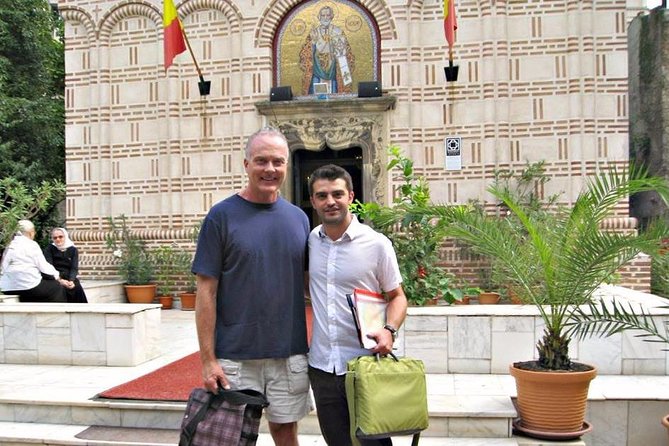
The final major section moves toward Ceaușescu’s former Communist Civic Center. This was intended to symbolize a socialist capital built around the power of the state. Its huge boulevards and monumental structures were designed to make the government appear permanent and supreme.
The cost was severe. About 40,000 residents were displaced, neighborhoods were erased, and large parts of the old city disappeared. The project remains a physical scar as well as an architectural curiosity.
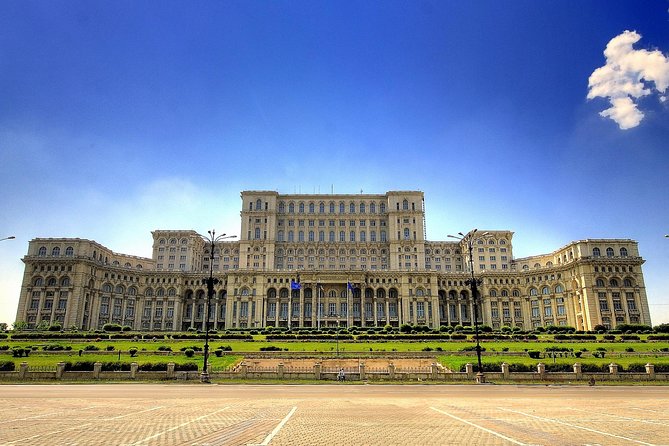
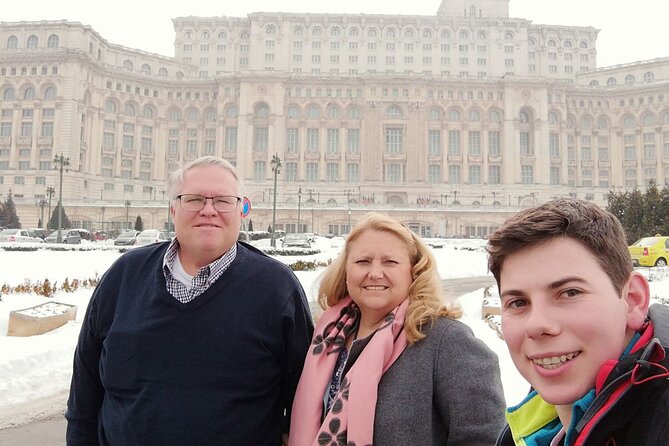
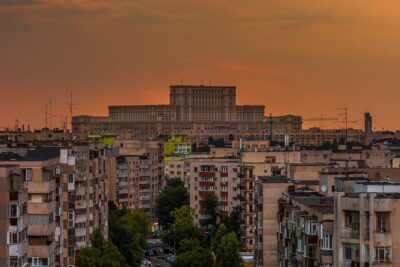
The Palace of Parliament is the most dramatic sight here. It is described as the world’s heaviest building, and its scale is difficult to grasp from photographs alone. Your guide explains how it fits into Ceaușescu’s vision and why its size matters politically, not just architecturally.
You see the building from outside. Entry to the Parliament is not part of this tour, and the same applies to other public or government buildings along the route. That limitation should be clear before booking. If you want to go inside, the building requires a phone reservation one day ahead, places can be limited, and conferences may sometimes close it to visitors. The tour provider can assist with a reservation if requested.
The exterior visit still has real value. You can study the huge frontage, broad approach, and relationship between the building and its surrounding avenues. Your guide supplies the missing context, including the people displaced to make the project possible.
One practical detail is worth noting. The planned experience is a walking tour, but one account describes Mihai driving to the Parliament during heavy snowfall before continuing through Old Town on foot. That suggests a private tour may allow some flexibility in difficult weather, but you should not assume transport is included as a standard feature. The official format remains walking.
What the guide adds to the experience
This tour depends heavily on the quality of its guide. The buildings matter, but much of the value comes from connecting them into a clear story.
Mihai is specifically praised for explaining Romanian communism and for keeping the discussion engaging beyond the expected four hours. He is also described as strong on Bucharest and Romanian history more broadly. Another guide is praised for taking time with questions and giving careful answers, while an earlier booking describes the company owner as passionate about making the communist era come alive.
You get an English or Romanian-speaking licensed guide, and the tour is private rather than shared with a large group. That changes the feel of the day. You can pause at Revolution Square, ask for more detail at University Square, or request recommendations for additional activities in Bucharest.
The private format is especially useful for complicated subjects. Romania’s communist period includes political repression, national independence from the Soviet Union, severe austerity, and the violent end of Ceaușescu’s rule. A private conversation lets you ask for clarification instead of trying to follow a fixed lecture.
Price, pace, and who gets the most from it
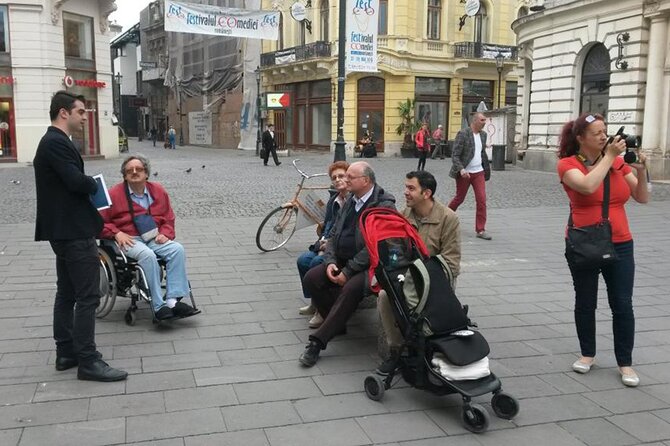
At $90 per person, this is not the cheapest way to see central Bucharest. The price makes more sense if you value hotel pickup, a private guide, historical interpretation, and a route tailored to your questions. A larger group tour may cost less, but it will not offer the same control over pace or discussion.
The tour is a good first-day choice if you want context before exploring Bucharest on your own. It covers the main central contrasts without exhausting you physically. Less than 3 km of walking, frequent stops, and a guide who can adjust the pace make it workable for many people, including those who prefer a slower sightseeing rhythm.
The route is listed as wheelchair accessible, but the experience takes place outdoors and includes cobbled Old Town streets. If mobility is a concern, discuss your needs with the guide in advance so the pace and route can be handled comfortably.
You should bring weather-appropriate clothing. The tour continues outdoors, and the February account involving heavy snowfall shows that conditions can affect the day. There are breaks for rest and refreshments, but food, snacks, and drinks are not included.
This tour suits you best if:
- You want a clear introduction to Romania’s communist era.
- You care more about context and conversation than entering interiors.
- You want to compare historic Bucharest with Ceaușescu’s monumental Civic Center.
- You prefer a private, slow-paced route.
- You want hotel pickup and an Old Town finish.
It is less suitable if your main goal is entering the Palace of Parliament or visiting museums and universities. Those interiors are outside the experience.
Should you book this Bucharest history tour?

Book it if you want Bucharest to make sense, not merely look attractive. The route links royal architecture, the 1989 revolution, Old Town, communist planning, and the Palace of Parliament into one readable story.
The strongest reasons are the private format, the short walking distance, and the guides’ clear focus on Romanian communism. The chief limitation is also clear: the Parliament and other public buildings are viewed from outside.
For a first visit, I would consider this a useful investment, especially if Mihai is available and the subject interests you. You leave with more than photographs of a giant building. You understand why Bucharest looks so divided between elegance and concrete, and how the city is still living with the choices made under Ceaușescu.
FAQ
How long does the Bucharest communism tour last?
The tour lasts about four hours.
How much walking is involved?
The route includes less than 2 miles, or about 3 km, of walking. It is described as slow-paced, with several stops for photographs, rest, and refreshments.
Is the tour private?
Yes. It is a private group experience with a licensed guide.
Which languages are available?
The live guide is available in English and Romanian.
Does the tour include hotel pickup?
Yes. The guide waits in your hotel lobby beside reception. If your accommodation has no lobby, the guide waits downstairs in front of the building.
Can I go inside the Palace of Parliament?
No. The tour includes an exterior visit only. Entry requires a phone reservation one day before the visit, availability is limited, and the building can sometimes close to visitors because of conferences.
Where does the tour finish?
The tour finishes in central Bucharest, in the Old Town area, near the Palace of the Deposits and Consignments.
Newest Bucharest trips on the site
- Winery touring & private wine tasting – one day private tour★ 5.0 · 3 reviews
- Bucharest: Dealu Mare Winery Private Trip with Wine Tasting★ 4.9 · 6 reviews
- Village Museum Bucharest Guided Tour★ 5.0 · 6 reviews
- Private Transfer from Giurgiu Port to Bucharest★ 4.5 · 12 reviews
- Airport Henri Coanda (Otopeni) to Bucharest – Private Transfer – Driver★ 5.0 · 5 reviews
- Salt Mine Tour from Bucharest with Entrance Ticket★ 4.5 · 19 reviews
- Wine tasting in Bucharest Old town – bonus cheese platter★ 4.5 · 6 reviews
- Walking tour of Bucharest★ 5.0 · 3 reviews
Communist History Tours, compared.
Bucharest Essential Tour: Old Town, Calea Victoriei & Communism
Read our review →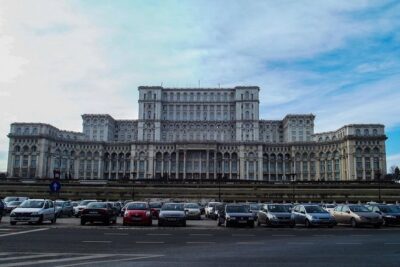
Communism in Bucharest – Landmarks, Museum & Communist Appetizers
Read our review →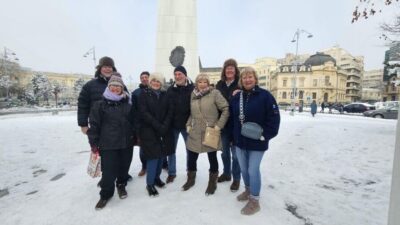

Museum of Communism Ticket with Communist Coffee
Read our review →Browse the lists this tour appears in