
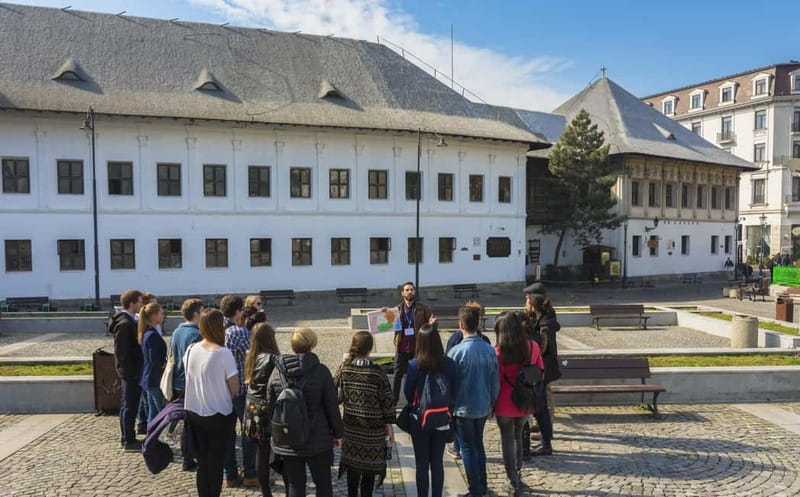
Reviewed · COMMUNIST HISTORY TOURS
Bucharest: Tour of Old Town, Calea Victoriei & Communism
Bucharest’s story changes block by block on this walking tour. You begin among royal palaces and French-style concert halls, pass the former Communist Party headquarters, then finish among medieval inns, small merchant houses, and quiet courtyards. The city’s contrasts are the main attraction.
I like the clear historical arc, from medieval Bucharest and Dracula’s influence to kings, world wars, Nicolae Ceaușescu, and the bloody end of Communism. I also like the route itself: Calea Victoriei and the Old Town give you both grand architecture and the everyday scale of old lanes.
The main consideration is the pace. Two and a half hours on cobblestones is manageable, but you will want comfortable shoes, and the tour takes place rain or shine. Some stops are viewed from outside, so this is primarily a walking and storytelling experience rather than a museum tour.
Key points to know before booking
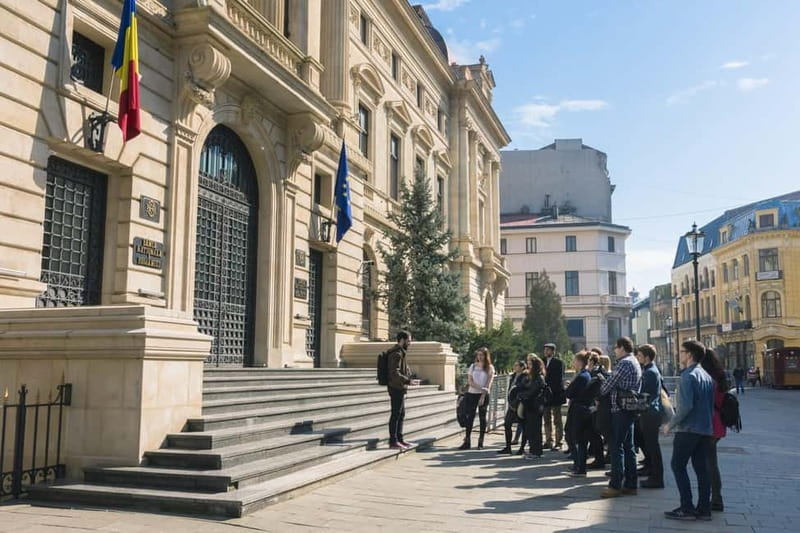
- The route connects three Bucharests: royal Bucharest around the Athenaeum, Communist Bucharest around Revolution Square, and medieval Old Town.
- The Communist-era story is a major part of the tour, including Ceaușescu’s rule and the 1989 revolution broadcast live on television.
- Calea Victoriei supplies the grand city views, with the Grand Hotel Continental, Telephone Palace, and Military Club.
- Old Town is explored on foot, with stops at the Macca-Vilacrosse Passage, Stavropoleos Church, and Manuc’s Inn.
- Guide Laura has received especially warm praise for professional, friendly storytelling and her ability to explain Romanian history.
- At $21 per person, the tour offers a low-cost way to orient yourself in central Bucharest without paying for museum admissions or meals.
Start with Bucharest’s grandest concert hall
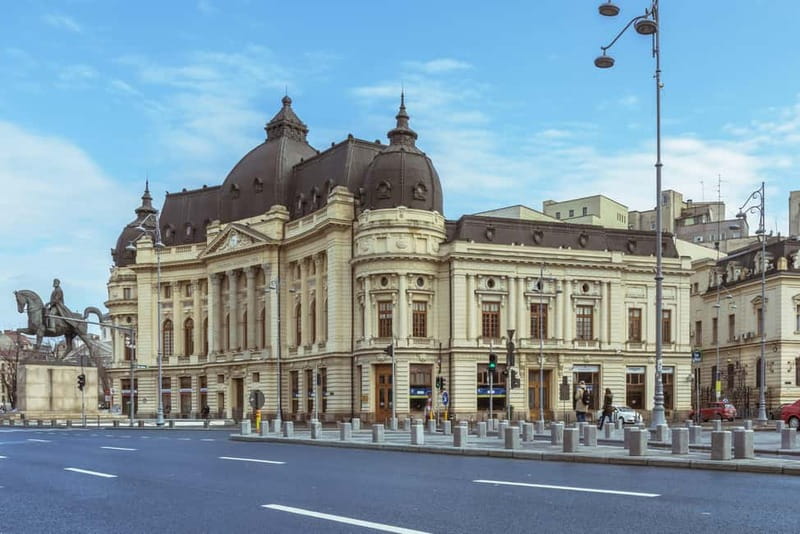
Your meeting point is the Romanian Athenaeum, where the guide waits in front of the columns on the building’s steps. Look for the name tag. This is a practical meeting place because the Athenaeum is one of Bucharest’s easiest landmarks to recognize.
The building gives you the right opening image of the city. Its neoclassical design reflects the period when Bucharest’s wealthy and royal circles looked toward France for style and inspiration. Around it are several important buildings from the same broad era, including the Royal Palace, the University Library, and the Athenee Palace Hotel.
I like beginning here because you see Bucharest before hearing about its darker 20th-century chapters. The city can first appear grand and polished, with broad avenues and ornate façades. The tour then gives you the political background that explains why this elegance was later cut through by Communist planning and monumental construction.
The opening stop is also useful if you have just arrived in Bucharest. You get your bearings in the central district before moving toward Revolution Square and Calea Victoriei. Do not expect an extended interior visit to the Athenaeum. The value here is the exterior setting, the surrounding architecture, and the guide’s explanation of the royal period.
More communist-era history walks in Bucharest:
- The Real tour of Communism
★ 5.0 · 666 reviews - Life under Communism
★ 5.0 · 358 reviews - 3-Hour Guided Tour of Communist Bucharest
★ 4.9 · 303 reviews
From King Carol to Revolution Square
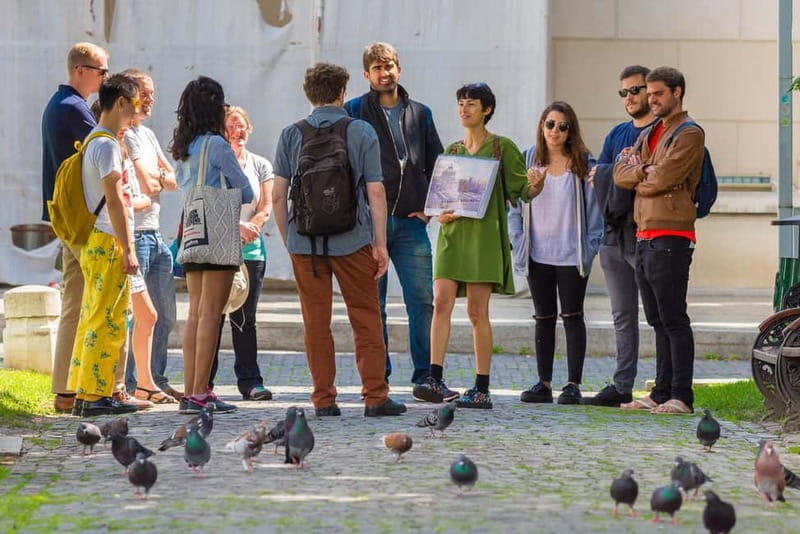
The next part moves toward the statue of King Carol, where the guide connects the monarchy, the world wars, and the political changes that shaped modern Romania. This is one of the places where a guide adds real value. Without context, Bucharest’s monuments can look like a collection of impressive buildings. With the story, they become markers of power changing hands.
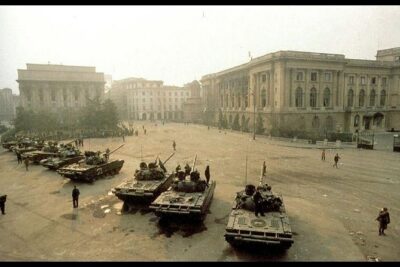
Then the mood shifts sharply at Revolution Square. The square contains the former headquarters of the Communist Party, the place where major decisions were made during the Communist period from 1950 to 1989. This is the point where the tour turns from royal display to government control and public fear.
The story of Nicolae Ceaușescu is central here. You hear about his role as Romania’s Communist dictator and the system of oppression that affected daily life. The tour also covers the 1989 revolution, including the fact that it was the first revolution in the world to be broadcast live on television.
That detail makes the events feel unusually immediate. Revolution Square is not treated simply as a photogenic plaza. It becomes a place to think about public protest, state power, and the speed at which an apparently permanent regime can collapse.
For me, this is the strongest historical section of the walk. It gives you a useful framework for understanding Bucharest’s mixture of monumental buildings, memorials, unfinished-looking spaces, and sudden changes in architectural scale. The drawback is that the subject matter is serious. If you prefer a light sightseeing walk, this part may feel heavy, but it is important to the city.
Walking the full character of Calea Victoriei
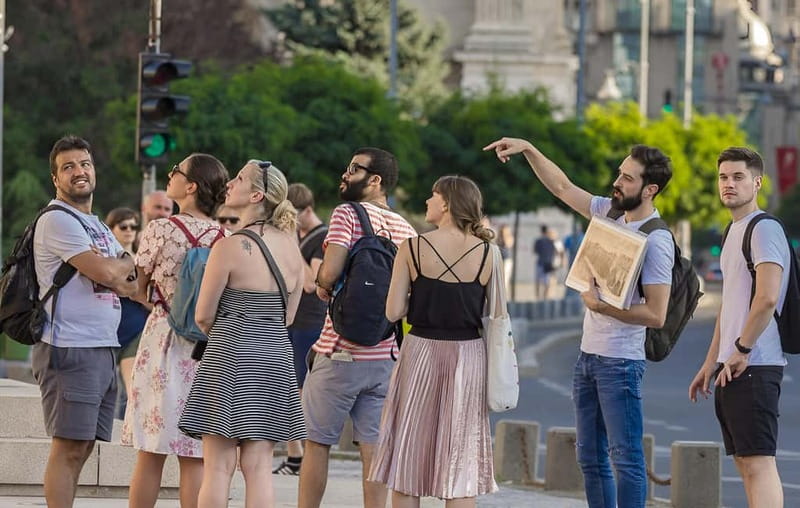
Calea Victoriei is Bucharest’s best-known and most extravagant central street, and the tour spends about an hour exploring it. This is where the royal and interwar city comes into sharper focus.
The route highlights the Grand Hotel Continental, the Telephone Palace, and the Military Club. Together, these buildings show several sides of Bucharest’s architectural identity. You see Belle Époque hotels, Art Deco design, and grand civic buildings built for a city that once wanted to be known as the Paris of the East.
The street also helps explain the old bourgeois life of interwar Bucharest. Hotels, clubs, offices, and public buildings gathered along this route, creating a setting for business, politics, and social life. The guide’s job here is not only to name façades, but to explain the people and ambitions behind them.
You should expect a walking commentary rather than a series of long indoor visits. That keeps the tour moving and allows you to cover more central ground in a short time. It also means you will want to look up often. Some details are above street level, and the larger impression comes from seeing one building after another in sequence.
Calea Victoriei is a good section for architecture lovers, but it is also useful for anyone trying to understand Bucharest’s changing public image. The city’s French influence, royal history, interwar confidence, and Communist interruption all appear along this one route.
The Macca-Vilacrosse Passage and Old Town’s smaller scale
From Calea Victoriei, the walk continues into the Old Town. The change is immediate. Grand avenues give way to cobblestone streets, narrow passages, small 19th-century merchant houses, and older buildings with a more irregular feel.
The Macca-Vilacrosse Passage is one of the route’s shorter stops, with about 15 minutes for a visit and explanation. Its intimate covered passage offers a welcome change from the large squares and formal avenues earlier in the tour. It is also a reminder that historic Bucharest is not only made up of palaces and official buildings.
Old Town brings together several periods. You might find medieval Oriental inns beside 19th-century commercial buildings, with imposing palaces appearing around the same network of lanes. The mix can look untidy in places, but that is part of the area’s character. This is a district best understood by walking through it rather than viewing it from a single lookout.
The cobblestones are manageable for most people, yet they are a good reason to wear supportive shoes. The tour is wheelchair accessible, but the old streets and changing surfaces may still affect how comfortable the route feels. If mobility is a concern, confirm the current route details before you go.
A few more Bucharest trips worth a look
- Bucharest: Palace of Parliament Tickets and Guide
★ 4.3 · 3,182 reviews - Bucharest: Palace of Parliament Tickets and Guided Tour
★ 4.4 · 1,877 reviews - Bucharest: Parliament Palace Skip-the-line Ticket
★ 4.2 · 1,518 reviews - Bucharest: City Highlights Guided Walking Tour
★ 4.9 · 1,482 reviews
Stavropoleos Church, a quiet pause in the center
Stavropoleos Church is scheduled for about 30 minutes, making it the longest individual visit in the Old Town section. It is the only active monastery in central Bucharest, and the building provides a calm pause after the traffic, grand avenues, and political history of the earlier route.
The church is known for its colorful design and intimate atmosphere. Its presence helps you see another side of Bucharest, one connected to religious life and small-scale craftsmanship rather than royal display or state power.
This stop is valuable because it changes the rhythm of the tour. You are not simply moving from one famous façade to the next. You have time to look closely and listen while the guide explains why the monastery matters within the center of the city.
As with the Athenaeum, do not assume that every stop means a long interior tour. The supplied details promise a visit and guided explanation, but the experience remains a walking tour rather than a church-focused excursion. Dress and behave respectfully in this active religious place.
Manuc’s Inn and the end of the walk
Manuc’s Inn is both a photo stop and one of the final sights. The inn represents the commercial side of old Bucharest, when merchants and visitors used traditional lodging houses along the routes through the city. Its courtyards and buildings help make sense of the Old Town’s older trading character.
This is an especially good place to connect the day’s themes. Earlier, you saw royal buildings designed to project modern European polish. In Old Town, Manuc’s Inn points to an older Bucharest shaped by merchants, travelers, and regional trade.
The route information lists Manuc’s Inn as the finish, while the meeting details say the activity ends back at the meeting point. Because those details do not perfectly match, confirm the exact end location when booking or meeting your guide. Either way, the stated route finishes in the central Old Town area, not at a distant suburb.
Ending near Manuc’s Inn is convenient if you want to continue exploring Old Town on your own. The tour does not include food or drinks, so you can choose your own place afterward rather than being tied to a group meal. It also means you should plan for the tour to finish as a walking tour, with no hotel drop-off included.
What $21 buys you in Bucharest

At $21 per person, this is a strong value if you want orientation, history, and central landmarks in one short outing. A private guide or longer specialist tour would cost more, while a self-guided walk would require you to organize the route and research the political background yourself.
The price includes a professional local guide and a map of Bucharest. It does not include food, drinks, hotel pickup, or hotel drop-off. There are no listed admission fees included, so you should think of the tour as a guided city walk rather than a ticketed attraction package.
The best value comes from the range of subjects covered in 2.5 hours. You get royal architecture, medieval stories, Dracula’s connection to Bucharest, interwar design, Communist oppression, the 1989 revolution, religious architecture, and Old Town landmarks.
That is a lot for one walk, so the tour cannot give every subject equal depth. If you want a specialist study of Dracula, Communist history, or architecture alone, a focused tour may suit you better. If you want a practical first look at central Bucharest, this broader route makes more sense.
Pace, language, weather, and guide style
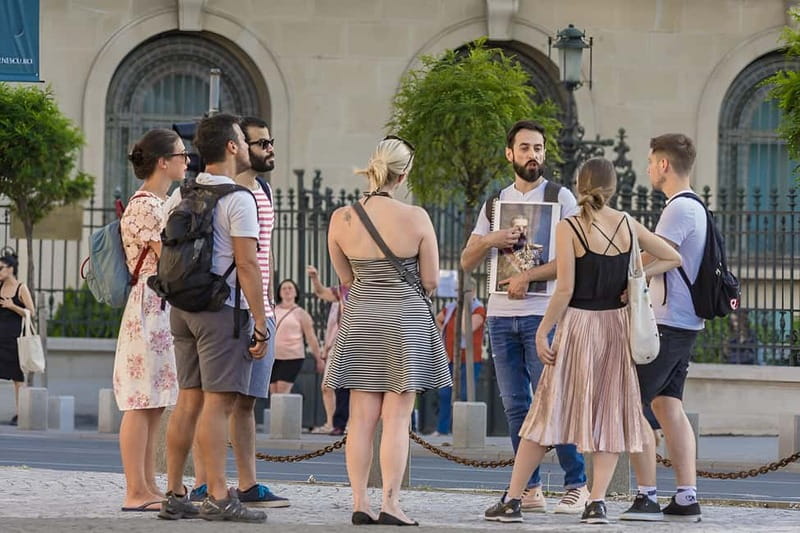
The tour runs for 2.5 hours, with availability depending on the date and starting time you select. English and Spanish are offered, and the guide is live rather than audio recorded. That matters in a city where the meaning of a building often depends on a quick explanation of who controlled it and why it was built.
The route includes a 30-minute walk and explanation at Revolution Square, about an hour along Calea Victoriei, 15 minutes at the Macca-Vilacrosse Passage, 30 minutes at Stavropoleos Church, and 15 minutes at Manuc’s Inn. These times give you a useful idea of the rhythm: the tour is not a slow museum visit, but it is more than a quick photo circuit.
Guide Laura has been praised for being friendly, professional, and generous with Romanian historical detail. If she leads your departure, expect an energetic historical walk with plenty of explanation. Guides can vary by departure, so the confirmed guide may not be Laura.
Bring comfortable shoes and a small amount of weather protection. The tour runs rain or shine, and much of the experience takes place outdoors. There is no promise of a weather cancellation, so check the forecast and dress for the conditions.
The activity is wheelchair accessible, which is useful information, though Old Town’s cobblestones may still make some sections less smooth. The guide and operator can give you the most useful current advice about the exact route.
You can cancel up to 24 hours in advance for a full refund, and the reserve-now, pay-later option keeps your plans flexible. These policies are helpful if your Bucharest schedule is still changing.
Who should book this Bucharest walk?
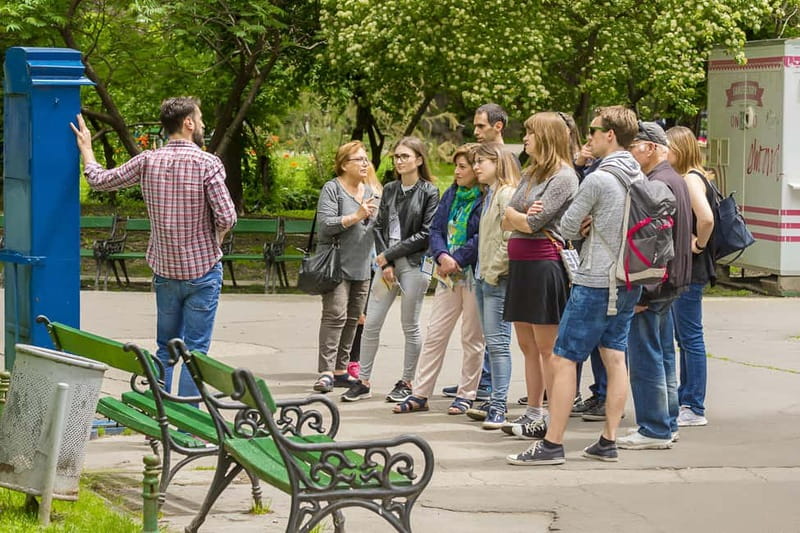
I would choose this tour for a first visit to Bucharest, especially if you want the city’s major central sights explained in one outing. It suits you if you enjoy history but do not want a lecture detached from the streets and buildings around you.
It is also a good fit for visitors with limited time. In 2.5 hours, you cover the Athenaeum, Revolution Square, Calea Victoriei, the Macca-Vilacrosse Passage, Stavropoleos Church, and Manuc’s Inn. You leave with a map, a better sense of direction, and a clearer idea of which areas deserve a longer return visit.
You may want something else if you dislike walking on cobblestones, want extensive interior access, or prefer a tour devoted only to one subject. The mix of royal history, Dracula, Communism, architecture, and Old Town is a strength for general sightseeing, but it naturally keeps each topic moving.
Should you book it?
Book this tour if you want Bucharest explained through its contrasts: royal grandeur beside Communist power, elegant Calea Victoriei beside rough-edged Old Town, and medieval trade routes beside modern political memory.
At $21, the route offers good value, particularly for a first day in the city. Wear comfortable shoes, prepare for outdoor walking in any weather, and confirm the final meeting-point details. If you want a friendly guide, strong historical context, and a compact introduction to central Bucharest, this is a sensible choice.
FAQ
How long does the Bucharest walking tour last?
The tour lasts 2.5 hours.
Where does the tour begin?
It begins in front of the Romanian Athenaeum, on the steps by the columns. The guide wears a name tag.
Where does the tour finish?
The itinerary lists Manuc’s Inn as the finish. The meeting information says the activity ends back at the meeting point, so confirm the exact end location when booking.
What languages are available?
The live guide is available in English and Spanish.
What sights are included?
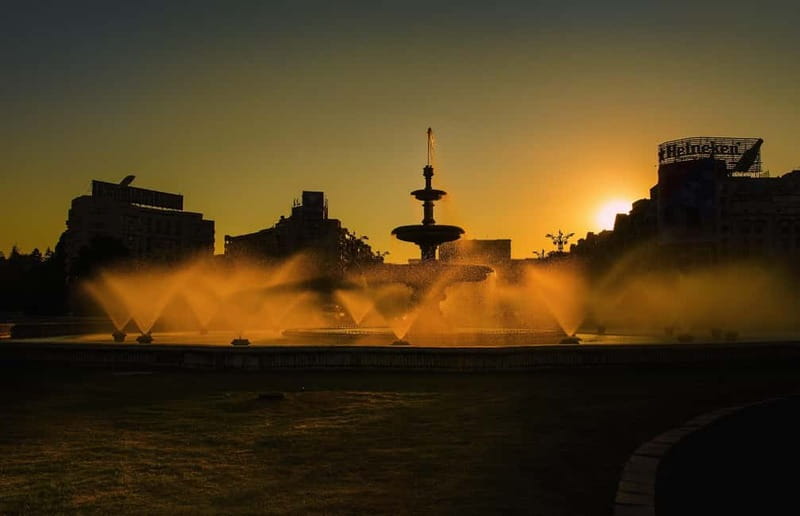
The route includes the Romanian Athenaeum, Revolution Square, Calea Victoriei, the Macca-Vilacrosse Passage, Stavropoleos Church, and Manuc’s Inn. It finishes near the fountains in Unirii Square according to the route description.
Is the tour wheelchair accessible?
Yes, the activity is listed as wheelchair accessible. Old Town’s cobblestone streets may still affect comfort, so confirm current route details if needed.
Does the tour run in bad weather?
Yes. The tour takes place rain or shine.
What should I bring?
Bring comfortable shoes. Food and drinks are not included.
Can I cancel the booking?
Yes. You can cancel up to 24 hours in advance for a full refund. You can also reserve now and pay later.
Newest Bucharest trips on the site
- Winery touring & private wine tasting – one day private tour★ 5.0 · 3 reviews
- Bucharest: Dealu Mare Winery Private Trip with Wine Tasting★ 4.9 · 6 reviews
- Village Museum Bucharest Guided Tour★ 5.0 · 6 reviews
- Private Transfer from Giurgiu Port to Bucharest★ 4.5 · 12 reviews
- Airport Henri Coanda (Otopeni) to Bucharest – Private Transfer – Driver★ 5.0 · 5 reviews
- Salt Mine Tour from Bucharest with Entrance Ticket★ 4.5 · 19 reviews
- Wine tasting in Bucharest Old town – bonus cheese platter★ 4.5 · 6 reviews
- Walking tour of Bucharest★ 5.0 · 3 reviews
Communist History Tours, compared.


Bucharest Essential Tour: Old Town, Calea Victoriei & Communism
Read our review →
Communism in Bucharest – Landmarks, Museum & Communist Appetizers
Read our review →


Museum of Communism Ticket with Communist Coffee
Read our review →Browse the lists this tour appears in