
Reviewed · CITY TOURS
Cluj – walking city tour
Cluj-Napoca’s best stories are packed into a walk of about two hours, from its oldest square to medieval churches, old fortifications, university buildings, and the grand Orthodox Cathedral. This private guided tour gives you more than a route between landmarks: it connects the city’s Hungarian, Romanian, religious, and academic past.
I like the start at Museum Square, where the Franciscan church and Carolina Obelisk set the tone at once. I also like the flexible route. If you have a particular interest in Cluj’s architecture, religious history, famous people, or family background, the guide can adjust the walk and answer questions as you go.
The main thing to consider is the price, $28.94 per person, for a tour lasting roughly two hours. That is fair if you value a personal guide and focused orientation, but it is not the choice for someone who wants a long museum visit or several paid interiors. The Matia Corvin House has an admission charge, and no ticketed interior visits are planned.
The essential points at a glance
- Museum Square gives you Cluj’s oldest urban setting, with the Franciscan church and Carolina Obelisk close at hand.
- St. Michael’s Church anchors the walk, one of Transylvania’s largest medieval churches and a major city landmark.
- The route brings together several traditions, including Catholic, Reformed, Piarist, and Orthodox places of worship.
- Medieval defenses remain part of the city center, especially along the old walls and at Tailors’ Tower.
- The tour is private and adjustable, so your interests can shape the pace and final stopping point.
- A guide can add personal context, as Joseph did when a guest’s Jewish family background led to a modified route.
Beginning in Museum Square, Cluj’s oldest corner
Meet at the Carolina Obelisk in Museum Square, Piața Muzeului 2, at 10:00 a.m. This is a useful starting point because you begin in one of the oldest parts of Cluj rather than with a broad modern-city overview.
You spend about 20 minutes here. The Franciscan church gives the square a strong religious and architectural focus, while the Carolina Obelisk provides a monument around which the guide can explain local events and people. Admission to this part of the walk is free.
I like this opening because it gives you a sense of Cluj as a layered city. The tour does not begin with a long transfer or a remote sight. You start among central landmarks, then move on foot through the Old Town.
The meeting point is near public transportation, and confirmation is provided when you book. The tour usually finishes at the Orthodox Cathedral, but the guide can agree on another ending point with you. That matters if you want to continue toward a restaurant, hotel, or another central sight.
More Walking Tours in Cluj-Napoca
- Cluj-Napoca: 2.5-Hour Guided Walking Tour
★ 4.8 · 104 reviews - Cluj-Napoca: 2.5-Hour Guided Walking Tour
★ 4.5 · 29 reviews - Cluj-Napoca Walking City Tour
★ 4.5 · 16 reviews
Matia Corvin House and the city’s royal connection
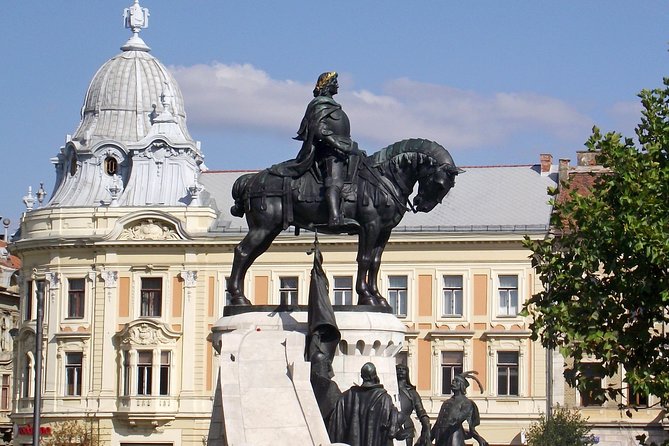
The next stop is Matia Corvin House, described as Cluj’s oldest civilian building. You spend about 15 minutes learning about Matia Corvin, one of Hungary’s most important kings.
This stop adds a personal and political figure to the city’s story. Instead of seeing old buildings as anonymous scenery, you get a connection between Cluj and the wider history of the Hungarian kingdom. The guide can explain why the building matters and how the king is remembered in the city.
Admission to the house is not included. The tour information also says that no interior visits requiring a ticket are planned, so you should treat this as an exterior stop unless you arrange otherwise with the guide. If you care strongly about going inside, ask before booking or at the start of the walk.
That small limitation is worth keeping in mind. This is primarily a city orientation tour, not a series of museum entries. You pay for the guide’s interpretation, route, and flexibility rather than a package of admission tickets.
St. Michael’s Church, the walk’s main landmark
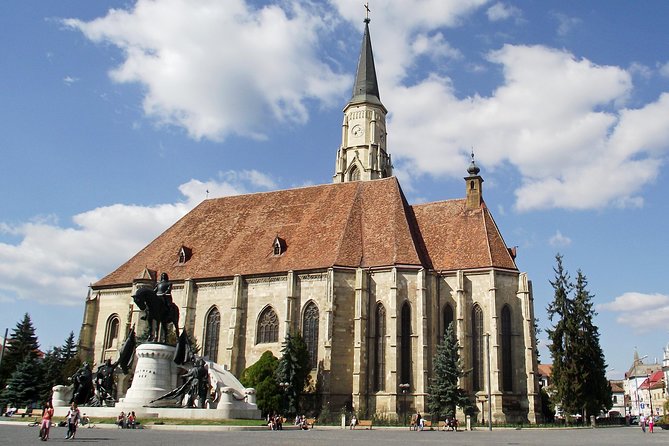
About 20 minutes are given to St. Michael’s Catholic Church, one of the largest medieval churches in Transylvania. This is likely to be one of the walk’s visual and historical high points.
The church provides a clear example of Cluj’s central European past. Its size alone helps you understand the importance of the medieval city, while its Catholic identity adds another layer to a place later shaped by Reformed, Orthodox, Jewish, and other communities.
Admission is free. The tour description points to a visit to the church, but it does not promise a special interior program or guaranteed access beyond what is open at the time. Church access can depend on services or local conditions, so your guide’s timing matters.
I like this part of the route because the guide can answer questions in the moment. You are not left to decode a large historic church from a few signs. A professional guide speaking English or French can explain the building’s place in Cluj’s past and point out details you might otherwise pass without noticing.
The Piarist Church and Cluj’s Baroque chapter
The walk continues to the Roman Catholic Church of the Holy Trinity, commonly known as the Piarist Church. You spend about 10 minutes here.
This church is identified as the first Baroque church built in what is now Romania. That makes it a useful contrast with St. Michael’s medieval Gothic character. Within a short walking route, you move from one major architectural period to another.
Admission is free. The stop is brief, so do not expect a long guided examination of every feature. Its value is in the comparison. Your guide can help you see how Cluj’s religious buildings reflect different periods, communities, and artistic tastes.
For first-time visitors, this kind of side-by-side contrast is one reason to choose a guided walk. A guide can place the buildings in order and explain their differences without asking you to carry a large guidebook around the city.
More walking tours in Cluj Napoca:
- Cluj : Must-See Attractions Walking Tour
★ 4.8 · 8 reviews - Cluj : Private Walking Tour with A Guide ( Private Tour )
★ 5.0 · 7 reviews - From Cluj: Winter Walking Trip on the Great Mountain
★ 5.0 · 5 reviews - Cluj-Napoca Walking City Tour
★ 5.0 · 5 reviews
Old walls and narrow streets
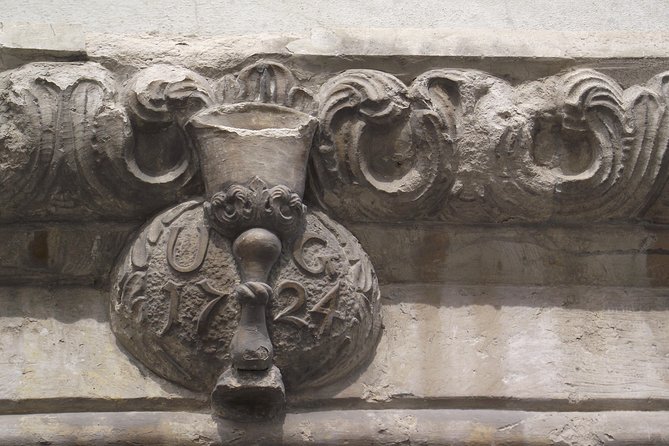
About 15 minutes are devoted to the City Walls of Cluj. The route uses narrow streets and shows portions of the 15th-century fortifications.
This is a quieter part of the walk than the large churches and squares. The old walls help you picture Cluj as a defended medieval settlement, while the smaller streets give the city a more intimate scale.
Only parts of the medieval defenses remain, so you should not expect a complete circuit or a fortress experience. The point is to identify what survives and understand how the walls fitted into the city. The guide’s explanation is especially useful here because the surviving sections may not look dramatic without context.
I appreciate this stop for another reason: it breaks up the grand monuments. You get a change from formal church facades and civic buildings, then continue toward the university district and another preserved piece of the fortifications.
Babeș-Bolyai University and the Reformed Church
The route passes the headquarters of Babeș-Bolyai University, one of Romania’s most important universities, with more than a century of history. The stop lasts about five minutes, so it is mainly an exterior orientation point.
This short pause gives you a way to understand Cluj as a university city. It also links the historic center to the institutions that continue to shape local life. The guide can explain the university’s place in the city, though the tour does not include a campus visit or lecture.
You then spend about 10 minutes at the Reformed Church, a 15th-century church known for its organ concerts. It also has one of the largest collections of coats of arms in this part of Europe.
This is a valuable stop if you enjoy church interiors, music, heraldry, or the religious divisions that shaped Transylvanian history. The Reformed Church adds a different tradition to the Catholic and Orthodox buildings elsewhere on the route.
The organ concerts are part of the church’s identity, but the tour does not include a concert. You should see this stop as a chance to learn about the building and its collection, not as a music event.
Tailors’ Tower and the role of the guilds
Tailors’ Tower, or Turnul Croitorilor, is one of the few defense towers preserved from Cluj’s medieval fortifications. The stop takes about five minutes.
The tower gives the city walls a human story. Its name points to the importance of guilds, the organized craft groups that helped shape urban life and defense. A brief explanation here can make the medieval city easier to picture: not just kings and churches, but also working trades and civic responsibilities.
Because the stop is short, you will not spend long inside a tower complex or see a large museum display. Still, it is a useful piece in the route’s larger picture. You have already seen surviving wall sections, and now you see one of the structures connected to that defense system.
Avram Iancu Square and the Orthodox Cathedral
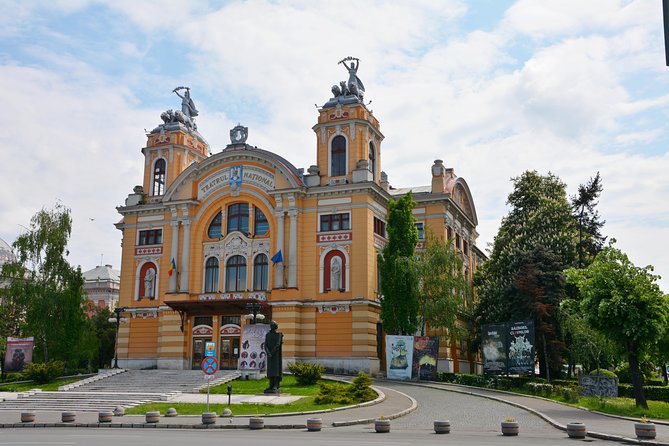
The route then reaches Avram Iancu Square, where many buildings, including the National Theatre, were built from the end of the 19th century onward. This shifts the focus from medieval Cluj to the city’s later public face.
The square helps you see how Cluj expanded and changed after the medieval period. Its architecture reflects a more modern civic ambition, with public buildings arranged around a major urban space.
The final stop is the Dormition of the Mother of God Metropolitan Cathedral, also called the Orthodox Cathedral. You spend about 15 minutes here, looking at the interior decoration of an Orthodox church.
Ending here gives the tour a clear religious and historical arc. You begin near a Franciscan church, visit Catholic and Reformed sites, and finish in an Orthodox cathedral. That range is one of the strongest features of the route. Cluj’s identity is not presented as a single story.
The usual ending is in Avram Iancu Square, but it is not fixed. You and the guide can decide where to finish. That flexibility is practical if you want to stop earlier, continue elsewhere, or adjust the walk around your plans for the rest of the day.
What the private format is worth at $28.94
At $28.94 per person, the tour costs more than walking through the center with a printed guide. The extra value comes from having a professional guide who can explain the sights, answer questions, and alter the route.
The group limit is 15 people, which keeps the experience from becoming a large bus-style outing. The tour is described as private, so you should clarify the exact group arrangement when booking if that point matters to you. Either way, the maximum stated size is modest for a walking tour.
I think the price works best for a first visit, a short stay, or anyone who wants a quick grasp of Cluj before exploring alone. In two hours, you see the major central landmarks without spending time planning the order yourself.
The value is less clear if you want paid interiors, long stops, or a full-day historical program. Meals, drinks, personal expenses, and entry tickets are not included. The route focuses on free sights and exterior interpretation, with the possible exception of the separately charged Matia Corvin House.
A guide who can adjust the story
The guide service is offered in English or French. The provider names professional, licensed guiding as part of the experience, and the tour is designed around questions rather than a fixed script alone.
One especially useful example involves a guide named Joseph. When he learned that guests had Jewish family backgrounds, he changed the route to address their connection to Cluj. That detail shows what the private format can do at its best: move beyond a standard list of buildings and respond to the people in front of the guide.
You should not assume Joseph will lead every departure, but his approach gives you a good question to ask when booking. If you have a family connection, architectural interest, religious focus, or a particular historical subject in mind, mention it in advance.
The strongest praise for this experience centers on the guide’s clear explanations, careful selection of dates and famous people, and ability to make local history understandable. I would place that ahead of the number of stops. A good guide can turn a short walk into a useful framework for the rest of your visit.
Timing, weather, and who should book
The tour starts at 10:00 a.m. and lasts about two hours. That leaves much of the day free for museums, meals, or independent sightseeing.
The walk requires good weather. If poor weather forces cancellation, you are offered another date or a full refund. You can also cancel for a full refund up to 24 hours before the start time. Changes or cancellations made later are not accepted for a refund.
Most people can take part, and the meeting point is near public transportation. The supplied details do not promise a particular accessibility arrangement, so ask the provider directly if you have mobility needs or need a route adjusted.
I would choose this tour if you want:
- A first look at Cluj’s Old Town
- A guide who can explain local history in English or French
- A short route covering several religious traditions
- A private or small-group setting
- An adjustable walk shaped by your interests
- A convenient morning activity before exploring on your own
I would choose another option if you want a museum-heavy day, interior access to every church, or a tour focused on food and nightlife. This walk is about orientation, context, and central landmarks.
Should you book the Cluj walking tour?
Book it if you want to understand Cluj quickly and prefer local explanation over a self-guided checklist. The route covers an unusually broad mix of medieval walls, churches, civic buildings, university history, and Orthodox decoration in about two hours.
The best reason to book is the flexible private format. Tell the guide what matters to you, especially if you have family ties or a strong interest in a particular community. At $28.94, it is a sensible purchase for a first morning in Cluj, provided you understand that ticketed interiors, food, drinks, and personal expenses are extra.
FAQ
Where does the Cluj walking tour start?
The tour starts at the Carolina Obelisk in Museum Square, Piața Muzeului 2, Cluj-Napoca.
What time does the tour begin?
The stated start time is 10:00 a.m.
How long does the walking tour last?
The tour lasts approximately two hours.
Where does the tour finish?
It normally finishes at the Dormition of the Mother of God Metropolitan Cathedral in Avram Iancu Square. The guide can agree on a different ending point with you.
What language does the guide speak?
The professional guide provides service in English or French.
What sights are included?
The route includes Museum Square, Matia Corvin House, St. Michael’s Catholic Church, the Piarist Church, sections of the City Walls, Babeș-Bolyai University, the Reformed Church, Tailors’ Tower, Avram Iancu Square, and the Orthodox Cathedral.
Are admission tickets included?
Most listed stops are free. Admission to Matia Corvin House is not included, and no ticketed interior visits are planned as part of the standard tour.
What happens if the weather is poor?
The experience requires good weather. If it is canceled because of poor weather, you can receive a different date or a full refund.
Newest Cluj Napoca trips on the site
- Private tour to Turda Salt Mine, Rimetea and Alba Iulia★ 4.8 · 5 reviews
- Turda Salt Mine, Gorge & Rimetea Village (private from Cluj)★ 5.0 · 5 reviews
- Turda salt mine and Corvin Castle day tour from Cluj★ 5.0 · 9 reviews
- 1250cc Motorcycle Rental from Turda★ 5.0 · 4 reviews
- Day Trip to Turda Salt Mine and Corvin Castle from Timisoara★ 5.0 · 10 reviews
- Discover Apuseni Mountains – Scarita Summit,Sipote Waterfall and Dumesti Village★ 5.0 · 17 reviews
- CLUJ ADVENTURE TOUR ! ZIP LINE and HIKE★ 5.0 · 15 reviews
- Turda salt mine, Rimetea village and Alba Iulia, from Cluj★ 5.0 · 11 reviews
City Tours, compared.
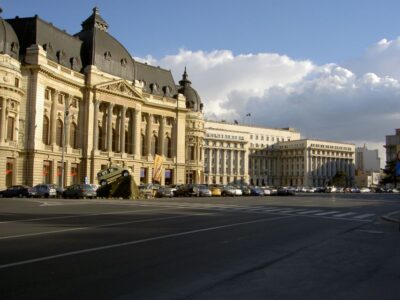
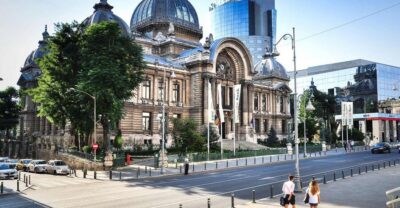

Bucharest Panoramic Sightseeing – Private City Tour
Read our review →
SB01 – City Tour Sibiu: Exploring the Heart of Transylvania
Read our review →
City Tour Sighisoara Legends & Landmarks A Walk Through Time
Read our review →Browse the lists this tour appears in