
Reviewed · COMMUNIST HISTORY TOURS
Communism Walking Tour from Lenin to Ceausescu in Bucharest
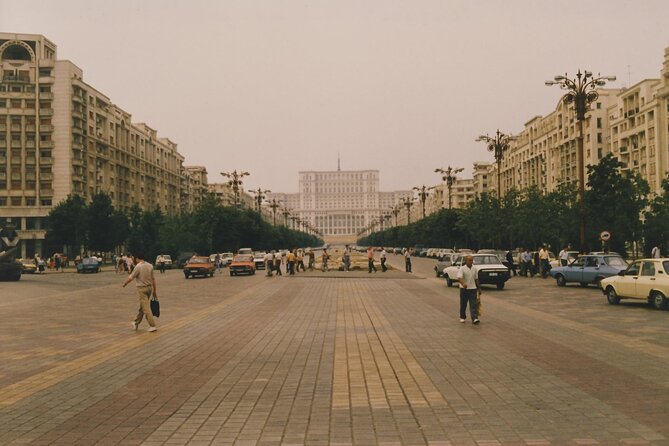
Bucharest’s communist story is easiest to grasp on foot, where grand boulevards, demolished neighborhoods, churches, royal buildings, and revolution sites sit close together. This 2.5-hour walk links those places in a clear route from the Palace of Parliament to Revolution Square, showing how Ceausescu reshaped the capital and how his rule ended.
I like the mix of major sights and personal stories, especially the stops at Antim Monastery and Old Town, where the cost of communist redevelopment becomes more visible. I also like that guides such as Alex connect political events to everyday life, making this more than a list of dates. The main drawback is that the tour is in English and does not include entry inside the Palace of Parliament or the museums along the way.
Key points at a glance

- Ceausescu’s grand project: Begin at the Palace of Parliament, the huge administrative building created during the final years of communist rule.
- A city rebuilt by force: See how the Socialist Victory Boulevard affected Antim Monastery, Old Town, and surrounding areas.
- The revolution made personal: University’s Square and Revolution Square bring the events of December 1989 into focus.
- A useful city walk: Cover nine central stops in about two and a half hours, ending near major cultural sights.
- Strong guide-led storytelling: Alex is noted for clear explanations, humor, and adapting the talk to a mixed-age group.
- Good value for a short tour: At $24 per person, the price is reasonable if you want context rather than paid admissions.
Why this Bucharest walk matters
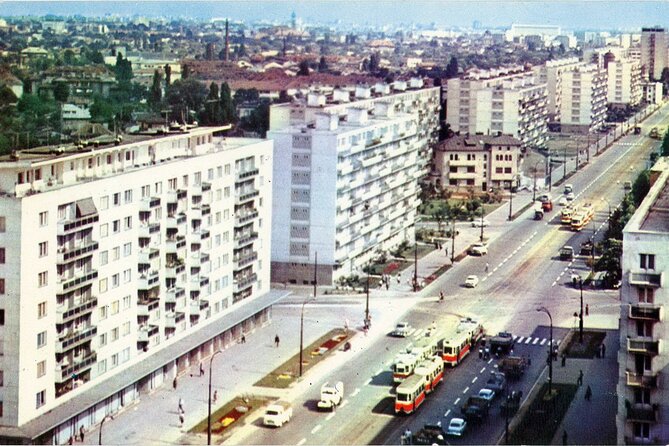
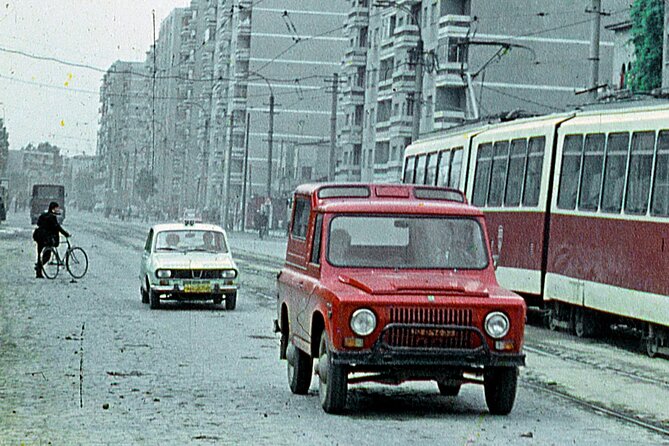
Communism in Romania can seem abstract if you only read about party leaders, shortages, and the 1989 revolution. This walk gives those events a physical setting. You see the buildings that expressed state power, the streets cleared for Ceausescu’s vision, and the squares where people challenged that power.
The route also avoids presenting the period as a simple story of old buildings versus new ones. You move from religious and royal landmarks to socialist planning, then to the public places tied to the fall of the regime. That sequence helps you understand how politics altered the shape of Bucharest.
The walk begins at 10:30 a.m. on Bulevardul Unirii, in front of the Palace of Parliament. It ends at Revolution Square. Since the group can include up to 25 people, expect a social walking tour rather than a private conversation. The size is still small enough for a guide to keep the route together, though you should stay close at crossings and busy city streets.
More Walking Tours in Bucharest
- Bucharest: City Highlights Guided Walking Tour
★ 4.9 · 1,482 reviews - Bucharest Highlights Walking Tour
★ 5.0 · 469 reviews - Bucharest: Ghost Stories & Romanian Mythology Walking Tour
★ 4.9 · 287 reviews
Starting at the Palace of Parliament
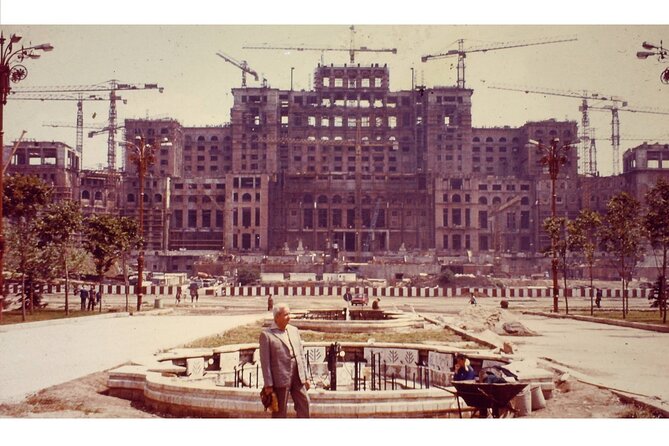
The Palace of Parliament is an imposing place to begin. You see the second-largest administrative building in the world, described here as part of the last major communist project in Bucharest. Its scale tells you at once that this tour is about power made physical.
The building was tied to Ceausescu’s plan to remake central Bucharest. The project required huge changes to the city, and the palace became the most visible symbol of that ambition. Your guide uses the exterior setting to explain how the final communist leadership viewed architecture, authority, and public space.
The visit here lasts about 20 minutes. The tour starts outside, and admission is listed as free because you are not being charged for entry into the building. If you want to tour the interior, you should treat that as a separate visit and make another plan. This walking experience is about the political meaning of the site, not an indoor Palace of Parliament tour.
Antim Monastery and the cost of a new boulevard
Antim Monastery provides an important change of scale. After the palace’s monumental size, you reach an older religious site that was almost demolished to make room for the Socialist Victory Boulevard.
This is one of the most useful stops because it shows what redevelopment meant beyond concrete and grand planning. Communist leaders wanted a broad route suitable for ceremonies and displays of state power. Older structures and established neighborhoods could become obstacles to that plan.
You spend about 15 minutes here. The stop is short, so listen for the connection between the monastery, the boulevard, and the wider destruction of parts of old Bucharest. I would not treat this as a full church visit. Its value is in seeing how a historic building survived beside a project designed to change the city around it.
The Patriarchate and the beginnings of political change
The Patriarchate, or Palatul Patriarhiei, brings religious and political history together. Its design was inspired by the Garnier Opera in Paris, giving the building a grand architectural character that contrasts with the more severe image many people associate with communist construction.
This place is linked both to the beginning of democracy in Romania and to the start of the communist movement. That makes it a useful bridge between the country’s earlier political life and the decades that followed.
The visit takes about 20 minutes. Your guide’s explanation matters here because the building alone cannot tell you why it is important. Alex, one of the named guides, is praised for connecting separate events and explaining how they fit together. His approach should help if you are new to Romanian politics or are traveling with family members of different ages.
More communist-era history walks in Bucharest:
- The Real tour of Communism
★ 5.0 · 666 reviews - Life under Communism
★ 5.0 · 358 reviews - 3-Hour Guided Tour of Communist Bucharest
★ 4.9 · 303 reviews - Bucharest Essential Tour: Old Town, Calea Victoriei & Communism
★ 5.0 · 142 reviews
Piata Unirii and the Socialist Victory Boulevard

Piata Unirii was built during the 1980s as part of the Socialist Victory Boulevard. Today, it is also known for its dancing fountains, which give the square a very different public mood from the one it had during the communist era.
The point is not simply to admire a fountain show. Your guide helps you read the square as a piece of urban planning. Wide open spaces and long boulevards allowed the state to stage parades and public events, while also making older parts of the city easier to control and reorganize.
You spend about 20 minutes here. The square is a good place to pause and look back at the route. From the Palace of Parliament to Piata Unirii, you can begin to see that the communist project was not one isolated building. It was a plan for the center of Bucharest.
Old Town after abandonment
Bucharest’s Old Town is often associated with restaurants, shops, and restored historic buildings today. On this tour, you see it through a different lens. During the communist era, the area was abandoned and treated as a symbol of the old order.
That detail adds balance to the tour. The communist state did not only create new buildings. It also neglected places that represented earlier political, social, or architectural traditions. Old Town helps you compare the official vision of a new socialist capital with the older city that remained nearby.
The stop lasts about 15 minutes. Since this is a short orientation rather than a full Old Town tour, you may want to return later if you want more time among the historic streets. Still, placing Old Town in the communist story gives your later sightseeing more meaning.
University’s Square and the 1989 revolution
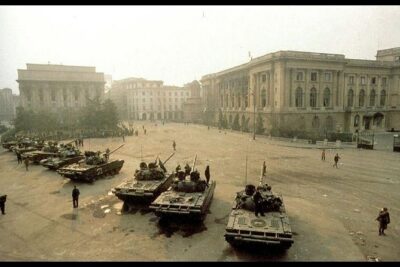
University’s Square is one of the most serious stops. Romania was the only country in the communist bloc where the regime ended in a bloody revolution, and many victims were shot in this square.
The guide’s job here is not just to name the location. You need the setting and the sequence of events to understand why the square became so important. The site connects public protest, state violence, and the collapse of Ceausescu’s rule.
The planned stop is about 15 minutes. That is enough for an introduction, but not a full seminar on the revolution. If you want a detailed study of December 1989, use this visit as a starting point and allow time for further reading or a museum visit.
This is also where the tour’s emotional tone changes. Earlier stops focus on construction, demolition, and political control. At University’s Square, the consequences become human and immediate.
The Royal Palace and the changing meaning of power
The Royal Palace now houses the National Art Museum. It was once the winter residence of Romania’s royal family, but in the first years of communism it became the Palace of the Republic and a protocol building.
That change in use is a compact lesson in regime change. The building remained, but its meaning was recast. A royal residence became a state site for a republic that rejected the monarchy and claimed to represent a new political order.
You spend about 15 minutes here. The tour does not include museum admission, so do not expect to see the art collections as part of the walk. If art is a priority, you can return separately. For the purposes of this tour, the important point is how the same building carried different messages under the monarchy and communism.
The Romanian Athenaeum and a national symbol
The Romanian Athenaeum, or Ateneul Roman, receives a shorter stop of about five minutes. It is one of Bucharest’s most representative buildings and appears on the five lei banknote.
That brief pause works as a visual reminder that Bucharest’s identity is not only communist. The city also presents older cultural and national symbols, many of which survived the political changes of the twentieth century.
Because the stop is short, you will mainly get an exterior explanation and a chance to orient yourself. Do not expect a concert, interior visit, or extended architectural lecture. Its role is to add cultural context before the final and most important stop.
Revolution Square and Ceausescu’s last speech
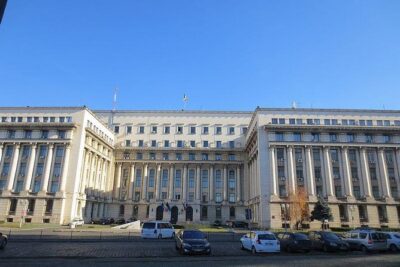
The tour ends at Piata Revolutiei, or Revolution Square. The main building here was the Central Committee of the Communist Party, and it is the place where Nicolae Ceausescu gave his last speech in front of the Romanian people.
This is the natural ending because the route has moved from the physical ambition of the communist state to its collapse. You have seen the palace, the boulevard, the neglected Old Town, and the squares tied to protest. Now the story reaches the moment when public confidence in Ceausescu’s rule broke apart.
The final stop lasts about 25 minutes, the longest single stop on the route. That gives the guide time to explain the speech, the political crisis, and the events that followed. The square is also a practical place to finish, since you can continue exploring central Bucharest from here.
The guides and the quality of the storytelling
The strongest part of this experience is the guide-led connection between sites. Alex is specifically noted for explaining Romanian communism in a way that worked for a three-generation group. His storytelling, humor, scientific background, and ability to adjust to the group are useful qualities on a subject that can become dry or confusing.
Lucia is also named among the guides. One English-speaking participant who did not understand English well found it difficult to follow, even with Google translation. That is a fair warning: you need enough English to follow a spoken historical explanation. A phone translation app may help with individual words, but it is not a substitute for understanding a continuous talk while walking.
The guide makes a large difference here. The buildings do not explain themselves, and several stops are brief. If you want an efficient introduction to Romania’s recent past, this format works well. If you prefer to read at your own pace or ask long questions at every site, a private tour or museum visit may suit you better.
What $24 buys you
At $24 per person, the tour offers a solid amount of guided context for a two-and-a-half-hour walk. You are paying for a local guide and a carefully connected route, not for admission tickets, food, drinks, or private transport.
The value is strongest if you are visiting Bucharest for the first time. You cover nine significant places and learn how they relate to one another. Afterward, you can return to the Palace of Parliament, Old Town, the National Art Museum, or Revolution Square with a clearer sense of what you are seeing.
The value is lower if you want interior access. No admission is included, and the schedule allows only short exterior visits at several sites. Think of this as a historical city walk, not an all-inclusive sightseeing package.
The tour is recommended by 100 percent of the available participants and has a five-star rating from 21 reviews. That is a small sample, so I would not treat it as proof that every guide or every departure will feel identical. Still, the pattern supports the main strength of the experience: engaging explanations, especially from Alex.
Who should book this walk
I would choose this tour if you want to understand Bucharest beyond its attractive central streets. It suits first-time visitors, students of twentieth-century history, families with older children, and anyone curious about how a political system changed a capital city.
It is also a good choice for a three-generation group because the route combines sightseeing with stories rather than relying on a long technical lecture. The tour can work for most people, and service animals are allowed. It is near public transportation, though the information does not specify a particular bus, tram, or metro connection.
You should think twice if you dislike walking, need frequent indoor breaks, or want a full museum experience. The route covers nine stops, and some of the most important explanations happen outdoors. Comfortable shoes and water would be sensible, though food and drinks are not included.
The maximum group size is 25 people. That keeps the price low, but it also means the experience may feel less personal than a private walk. Free cancellation is available up to 24 hours before the 10:30 a.m. start, giving you some flexibility if your plans change.
Should you book it?
Book this tour if you want the story behind Bucharest’s streets, not just a quick look at its monuments. For $24, you get a well-shaped route, nine central stops, and a clear introduction to the communist period and the 1989 revolution.
The best reason to book is the chance to hear the city explained by a local guide who can connect Ceausescu’s construction projects with the lives affected by them. The main caution is simple: this is an English walking tour with exterior visits and no included admissions. If that matches your plans, it is a practical and worthwhile way to begin exploring Bucharest.
FAQ
How long does the communism walking tour last?
The tour lasts approximately 2 hours and 30 minutes.
What time does the tour begin?
The tour starts at 10:30 a.m.
Where does the tour start?
The meeting point is Bulevardul Unirii 5, București 040101, Romania, in front of the Palace of Parliament.
Where does the tour end?
The tour ends at Revolution Square, also called Piața Revoluției, in Bucharest.
Which language is the tour offered in?
The tour is offered in English.
What is included in the price?
A local guide is included. Admission tickets, food, and drinks are not included.
How many people can join the tour?
The tour can have a maximum of 25 participants.
Which places are visited?
The route includes the Palace of Parliament, Antim Monastery, the Patriarchate Palace, Piata Unirii, Old Town, University’s Square, the Royal Palace, the Romanian Athenaeum, and Revolution Square.
Can I cancel the booking?
You can cancel up to 24 hours before the start time for a full refund. Cancellations or changes made less than 24 hours before the start are not refunded or accepted.
Newest Bucharest trips on the site
- Winery touring & private wine tasting – one day private tour★ 5.0 · 3 reviews
- Bucharest: Dealu Mare Winery Private Trip with Wine Tasting★ 4.9 · 6 reviews
- Village Museum Bucharest Guided Tour★ 5.0 · 6 reviews
- Private Transfer from Giurgiu Port to Bucharest★ 4.5 · 12 reviews
- Airport Henri Coanda (Otopeni) to Bucharest – Private Transfer – Driver★ 5.0 · 5 reviews
- Salt Mine Tour from Bucharest with Entrance Ticket★ 4.5 · 19 reviews
- Wine tasting in Bucharest Old town – bonus cheese platter★ 4.5 · 6 reviews
- Walking tour of Bucharest★ 5.0 · 3 reviews
Communist History Tours, compared.
Bucharest Essential Tour: Old Town, Calea Victoriei & Communism
Read our review →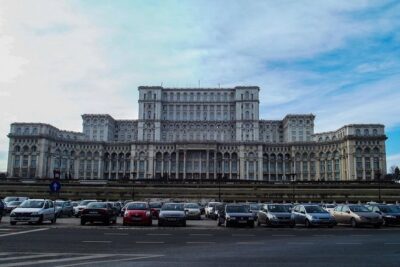
Communism in Bucharest – Landmarks, Museum & Communist Appetizers
Read our review →


Museum of Communism Ticket with Communist Coffee
Read our review →Browse the lists this tour appears in