
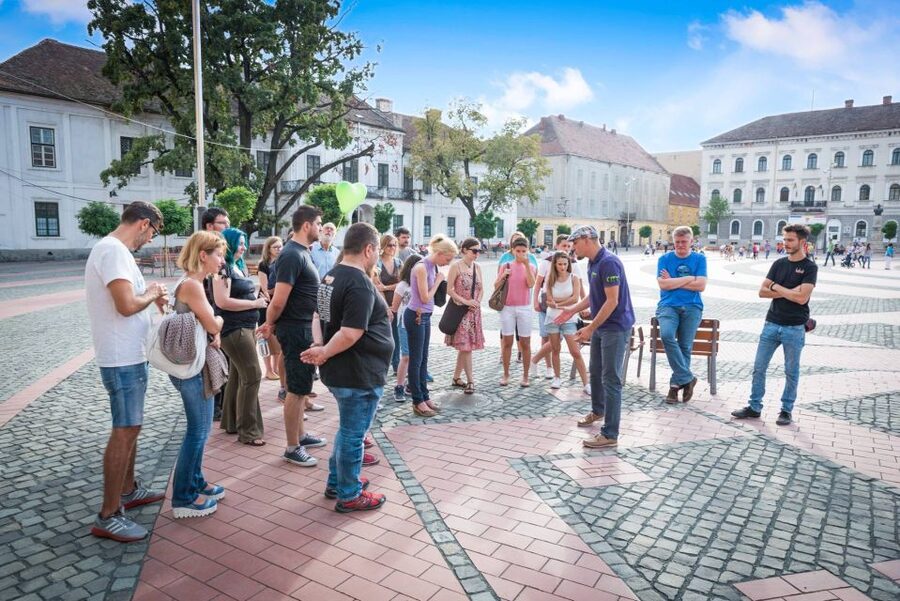
Reviewed · WALKING TOURS
Timisoara: Classic Walking Tour
Timișoara’s story takes you from Ottoman baths and bazaars to Austrian fortifications, early electric streetlights, and the 1989 uprising against communism. This two-hour private walk gives you a useful timeline, then fills it with the kind of local stories that help the city make sense.
I like the focus on how people live today, not just on old stones. I also like the small-group format, with guides such as Armand and Alex Muntean praised for warm storytelling and for keeping children involved. The main consideration is scope: two hours gives you a strong introduction, but not an in-depth visit to every major church or museum.
- Ottoman Timișoara: Hear where the Turkish bath, bazaar, and Central Mosque once stood.
- Austrian reconstruction: Learn how the city changed after imperial troops took control in the early 18th century.
- Early urban technology: Discover Timișoara’s place in the history of electric streetlights and suburban trams.
- Modern Romanian life: Discuss the 1989 revolution and how Romanian society has changed in recent decades.
- Private guiding: Walk with an English- or Romanian-speaking guide in a private group.
- Flexible booking: Pay later and cancel up to 24 hours before the start for a full refund.
A Two-Hour Introduction to Timișoara
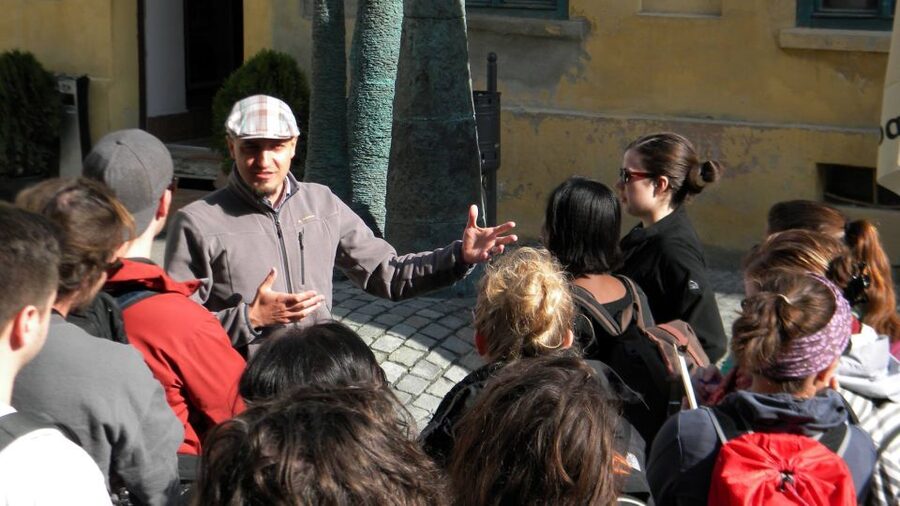
Timișoara is easiest to understand as a city built in layers. Ottoman rule left one story, the Habsburg period reshaped the streets and buildings, and the communist era still colors the way people talk about public life.
This walking tour begins with Romania today, then works backward through the city’s past. That order is useful. Instead of treating history as a list of dates, your guide connects older events to the city you see around you now.
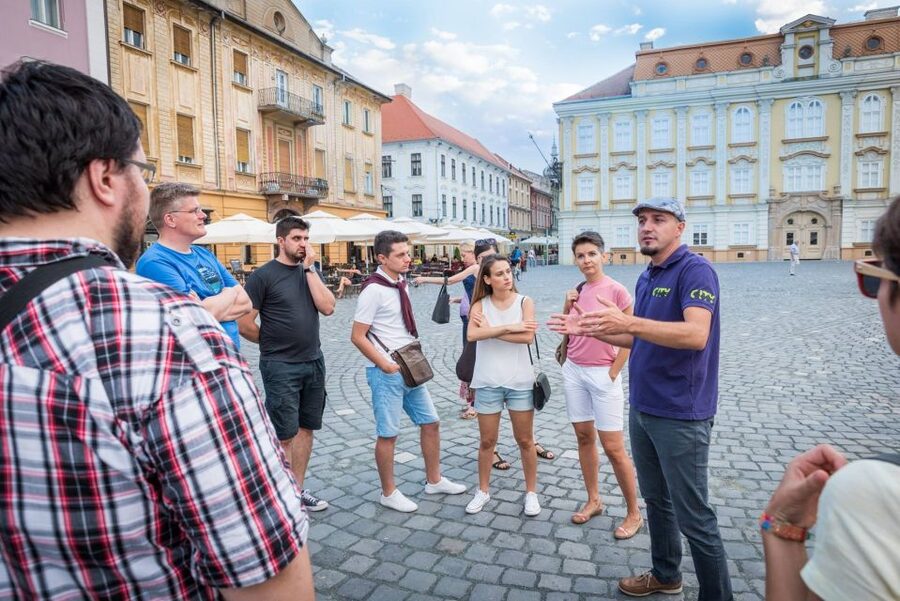
You meet outside the tourist information center. From there, the route unfolds on foot through central Timișoara. The exact sequence of stops can vary with the guide, but the main themes are clear: conquest, rebuilding, technology, and political change.
The two-hour length is a sensible choice if you are visiting Timișoara for a short time or want a first look before exploring on your own. It is long enough to provide a real story, yet short enough to fit into a busy day. You should not expect a museum tour or a detailed interior visit at every religious building. This is primarily a city walk and an explanation of how Timișoara developed.
Starting With Romania Today
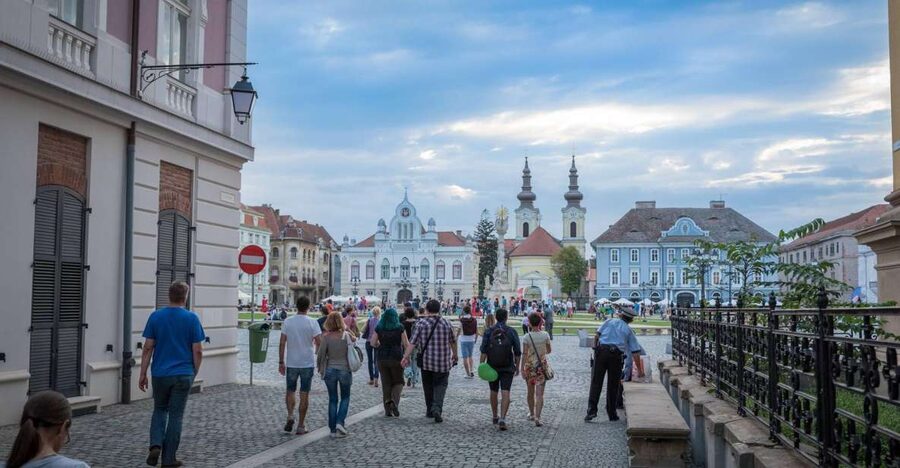
The opening discussion about Romania’s present situation gives the tour a useful human angle. You get a basic sense of the country before moving into Timișoara’s past, including how society has changed over the last several decades.
That matters because the city’s history is not safely locked away in the past. The communist period and the 1989 revolution remain part of modern Romanian identity. A good guide can explain these subjects in plain terms and show how political change affected daily life.
The tour also aims to answer a question many first-time visitors have: what is it like to live here now? That makes the experience more personal than a standard list of monuments. You can ask about Romanian society, local life, and the difference between historical events and the way people remember them.
Language options are English and Romanian. If you need a guide in English, select that option when booking. The private format also gives you more room to ask questions than you would usually have on a large group walk.
More walking tours in Timisoara:
- Timisoara All in One – Walking and Tram Tour
★ 5.0 · 72 reviews - Timisoara: Guided Walking Tour
★ 4.9 · 38 reviews - Timișoara Highlights – Walking Tour
★ 5.0 · 28 reviews
From the Mongol Invasion to Ottoman Rule
The historical story reaches back centuries, beginning with the Mongol invasion. You will not receive every detail of medieval Banat history in two hours, but this opening provides the long view.
The city’s Ottoman period is one of the most interesting parts of the walk. Timișoara was under Turkish rule, and the guide points out where important Ottoman sites once stood. These include a public bath, a bazaar, and the Central Mosque.
The value here is not just seeing surviving buildings. In many cases, the Ottoman structures are gone. Your guide helps you picture the city that existed before later rulers rebuilt it. A vanished bath or market can tell you plenty about how a city worked, even when only the location remains.
This part also helps prevent a common mistake: seeing Timișoara as purely Central European in style. Its identity comes from several periods, and Ottoman rule is a major part of that story. The walk makes those changes easier to follow from street level.
The Austrian Rebuild in the Early 18th Century
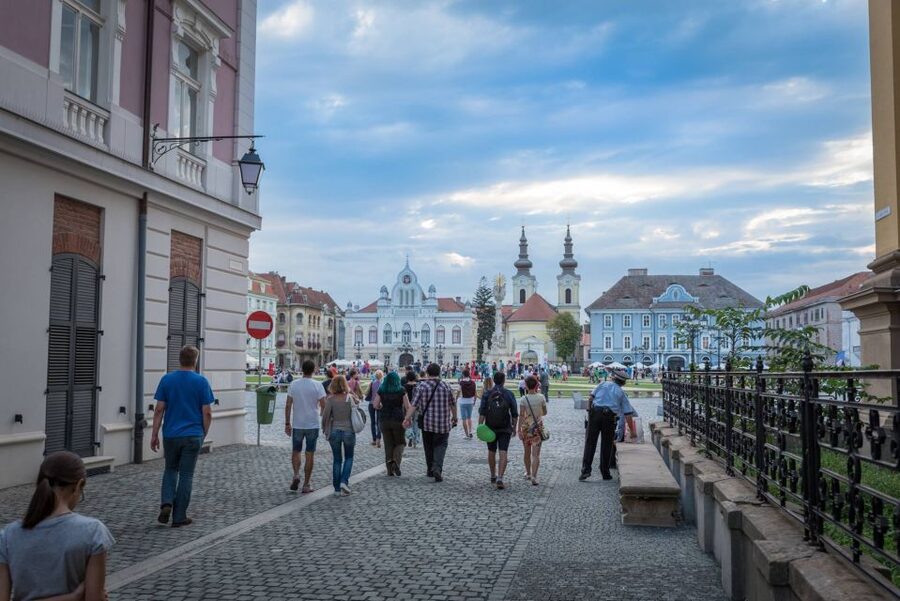
A major turning point came when Austrian imperial troops conquered Timișoara at the beginning of the 18th century. The city was then rebuilt in a new form.
Wooden medieval buildings disappeared. New streets, houses, and a system of fortifications were laid out. This was not a minor renovation. It changed the city’s shape and its architectural direction.
I especially like this section because it explains why the central streets look the way they do. Rather than simply admiring façades, you learn that the urban plan reflects military needs, imperial control, and a deliberate rebuilding program.
The guide can also help you imagine the scale of the change. A city made largely of medieval wooden structures gave way to a more organized settlement shaped by Austrian planning. That shift is one of the clearest examples of history you can read directly from the streets.
The limitation is that a walking tour cannot show every stage of the reconstruction in detail. If you want architectural analysis of individual buildings, you may need extra time on your own. The tour’s role is to give you the framework, so the streets stop looking like unrelated sights.
Trams, Streetlights, and a Modern City
Timișoara’s history is not only about rulers and wars. The tour also covers the city’s early public transport and lighting systems.
You learn how one of the first trams in the world connected the suburbs with the city center. That detail gives you a glimpse of a city trying to link its growing population with its urban core.
You also hear that Timișoara was the first place in continental Europe to use electric streetlights. This is the kind of fact that works well on a walking tour because it changes how you see ordinary streets. A lamp, a road, or a transport route becomes part of a much bigger story about technology and city life.
These subjects add balance to the political history. Timișoara was not only conquered and rebuilt. It also took part in the wider changes that shaped modern European cities.
Your guide may share additional anecdotes along the way. The experience is designed to include entertaining details, not just formal historical information. That makes the material easier to remember, especially if you are walking with children or with people who do not usually seek out history tours.
A few more Timisoara trips worth a look
- The Classic Tour of Timisoara
★ 5.0 · 154 reviews - Weekly Guided Tour in English – Tuesday, Thursday, Saturday
★ 5.0 · 84 reviews - Danube Gorge & Banat Waterfalls
★ 5.0 · 27 reviews - The Grand Tour of Communist Ages at Timisoara
★ 5.0 · 17 reviews
The 1989 Revolution and Timișoara Today
The tour reaches into contemporary history with the revolution against Romania’s communist regime. Timișoara played an important role in that period, and the subject gives the earlier parts of the walk a modern point of connection.
A guide can explain the city’s recent past in a way that a sign or plaque cannot. You can ask how people understand the revolution today and how the country changed afterward. The provided information does not promise a separate museum visit or a set of specific revolutionary sites, so think of this as an informed conversation woven into the walk.
This is one reason the tour works well near the start of a stay in Timișoara. You gain background for later conversations, monuments, and independent sightseeing. You also hear about Romania as a living country, not only as a place with old empires behind it.
The tone may depend on your guide. Armand has been singled out for combining city stories with personal anecdotes, while Alex Muntean has been praised for knowing the Banat region thoroughly and adjusting his explanations for children. Those details suggest that the human side of the tour matters as much as the timeline.
Storytelling That Works for Adults and Children
The strongest feature of this experience is the guide. The tour depends on explanation, conversation, and the ability to turn a complex past into a clear walk through town.
Armand is known for making the route personal with stories about the city and his own experiences. Alex Muntean has also led the walk, with a style that can work for families. That does not mean every departure will have the same guide, so treat those names as examples rather than a guarantee.
The private-group setup is important. One recorded booking had only four people, which allowed for a personal format. The standard information identifies the activity as a private group, but it does not give one fixed maximum size. Before booking, check the group details if the size of your party matters.
For adults, the benefit is being able to ask direct questions about Romanian life, politics, and history. For children, the mix of trams, fortifications, battles, vanished buildings, and personal stories may be easier to follow than a formal lecture.
The tour should suit you if you prefer a guide who talks with you rather than simply reciting dates. It may be less suitable if you want long periods of quiet sightseeing or extensive time inside churches and museums.
What the $42 Price Means
At $42 per person, this is not the cheapest way to walk through Timișoara. The value depends heavily on the size of your private group.
For a small party, the price buys a focused introduction with a live guide, a clear historical sequence, and the freedom to ask questions. That can be worthwhile in a city whose Ottoman, Austrian, communist, and modern layers are not always obvious at first glance.
The price does not include museum admission, transport, food, or a separate attraction ticket. You are paying for the guide and the walking tour. Since the experience lasts two hours, I would view it as an orientation rather than a full-day sightseeing product.
If you are on a tight budget and comfortable researching the city yourself, you could explore central Timișoara without booking a guide. But you would miss the links between the Ottoman sites, Austrian rebuilding, public transport, electric lighting, and the 1989 revolution. The tour earns its cost through context, not through a long list of included admissions.
The private format is the key question. For one or two people, $42 each may feel high. For a family or small group sharing a private departure, the price can make better sense, especially if you value a flexible conversation and a guide who can adapt to children.
Timing, Meeting Point, and Practical Planning
The meeting point is in front of the tourist information center. That is a useful place to begin because it is simple to locate and gives you a clear central reference point.
Allow the full two hours and wear comfortable shoes. The activity is a walking tour, and the supplied details do not indicate a vehicle or seated portion. You should plan for a city walk rather than a hop-on, hop-off experience.
Starting times depend on availability. If you want the tour early in your stay, check the schedule before building the rest of your day around it.
The activity offers free cancellation up to 24 hours before the start, with a full refund. You can also reserve now and pay later, which helps if your Timișoara plans are still shifting.
There is no separate accessibility information provided. If you have specific mobility needs, ask before booking so the operator can explain the route and walking conditions.
What the Tour Does Not Try to Do
A fair review should say what you will not get. This is not presented as a cathedral interior tour, museum visit, food walk, or transport history excursion with a tram ride.
One person specifically suggested adding the Three Hierarchs Cathedral to the route. That is a useful clue about the tour’s scope. The cathedral may not be included as a dedicated stop, so check the current route if seeing it is important to you.
You also should not expect every Ottoman building to survive. Some sites are locations where the bath, bazaar, or mosque once stood. For some people, that requires imagination. For others, it is the most rewarding part because the guide shows how the city has changed rather than presenting only preserved monuments.
The walk gives you an overview, not a specialist lecture on every era. That is a strength if you want a clear first look. It is a limitation if you already know Timișoara well and want detailed architectural or political research.
Who Should Book This Timișoara Walk
I would recommend it to first-time visitors who want to understand the city before exploring alone. It is also a good fit for families, especially when the guide can adapt the storytelling for children.
The tour suits you if you care about present-day Romania as much as medieval and imperial history. The discussion of modern society, the communist period, and the 1989 revolution gives the walk more weight than a simple old-town circuit.
It is less ideal if you want a long, leisurely visit inside major buildings or if you dislike guided conversation. You should also compare the $42 cost with your group size. A small private party gets the most from the format, while solo visitors may want to weigh the price against the short duration.
Should You Book the Classic Walking Tour?
Book it if you want a friendly historical orientation led in English or Romanian, with room to ask about Romanian life today. The blend of Ottoman history, Austrian rebuilding, early urban technology, and the 1989 revolution gives you a useful way to read Timișoara.
The strongest reason to choose it is the guide-led storytelling. Armand and Alex Muntean have each shown the kind of personal, adaptable approach that makes a city walk memorable, though your assigned guide may differ.
Skip it if you want a detailed cathedral visit, museum access, or a longer architectural study. Otherwise, for a two-hour introduction to Timișoara and its many changes, this private walk offers solid value when shared by a small group.
FAQ
How long does the Timișoara Classic Walking Tour last?
The tour lasts two hours.
What is the price of the tour?
The listed price is $42 per person.
Where does the tour meet?
You meet in front of the tourist information center.
Is the tour private?
Yes. The activity is offered for a private group.
Which languages are available?
The live tour guide can conduct the tour in English or Romanian.
What historical periods does the tour cover?
The walk covers Timișoara from the Mongol invasion through Ottoman rule, Austrian imperial control and rebuilding, early modern technology, and the 1989 revolution against communism.
Does the tour discuss Ottoman sites?
Yes. You learn where the Turkish public bath, bazaar, and Central Mosque once stood.
Does the tour include information about trams and electric lighting?
Yes. The guide explains the early tram connection between the suburbs and city center, as well as Timișoara’s use of electric streetlights.
Can I cancel the booking?
Yes. You can cancel up to 24 hours before the tour for a full refund. You can also reserve now and pay later.
Newest Timisoara trips on the site
- The Grand Tour of Communist Ages at Timisoara★ 5.0 · 17 reviews
- Timisoara Downtown Dream Tour★ 5.0 · 5 reviews
- Bite your way through Timisoara – Timisoara’s Street Food Tour★ 5.0 · 14 reviews
- Ecumenical Tour of Timisoara★ 5.0 · 15 reviews
- The Jewish Heritage Tour of Timisoara★ 5.0 · 9 reviews
- Nera Gorge National Park – Private Day Tour from Timisoara★ 4.5 · 4 reviews
- Timisoara: Private Walking Tour with a Local Guide★ 4.5 · 5 reviews
- Timisoara: Jewish Heritage Walking Tour★ 5.0 · 4 reviews
Walking Tours, compared.

Ghost Stories & Romanian Mythology Walking Tour
Read our review →
Walking Tour- Delightful Bucharest (Highlights, Stories, Sights)
Read our review →
Browse the lists this tour appears in