
Reviewed · MARAMURES TOURS
3 Day Tour of Maramures
Maramures is one of Romania’s best places to see traditional village life still in use, not simply arranged for display. Over three days, you visit painted wooden graves, tall timber churches, home workshops, old farming tools, and a former prison that records the country’s communist years.
I like the close contact with local makers, especially the rug weaver in Botiza and the potter in Sacel. I also like the range of the program: it moves from folk customs and woodwork to the Holocaust and communist repression, giving you a fuller picture of the region.
The main drawback is the amount of driving from Cluj-Napoca, combined with full sightseeing days. At $763.34 per person, the value depends on how much you want a private guide and arranged access to small villages rather than a cheaper, less personal trip.
What makes this three-day tour special
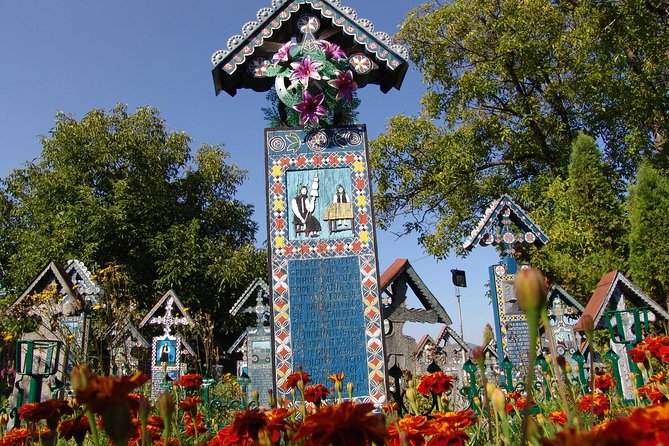
- Merry Cemetery in Sapanta: See bright blue wooden crosses carved with portraits, scenes, and short verses about the dead.
- Local crafts in Botiza and Sacel: Meet people making plant-dyed wool rugs, Dacian-style pottery, ritual masks, and carved wood objects.
- Sighet’s former prison museum: Learn about Romanian communism inside the actual cells where political prisoners were held.
- Maramures wooden churches: Visit the immense wooden complex at Barsana and the 75-meter Sapanta-Peri church.
- Water-powered village machinery: In Sarbi, old mills still serve community needs, including fulling, carding, and distilling equipment.
- Private touring: Only your group takes part, with private transport, an English-speaking local guide, and two nights of three-star accommodation.
Why Maramures rewards a three-day visit
The best part of this tour is its balance. You do not spend three days looking only at churches or only at rural crafts. Instead, the program shows how people in Maramures have worked, worshipped, remembered their dead, and endured political change.
That matters because the region can be misunderstood as a folk museum. The village stops are more useful when you meet people who still weave, carve, farm, shape clay, and maintain old machinery. Your guide acts as translator and bridge. One guide named Teo is praised for knowing local families and helping visitors speak with them directly. If Teo is not available for your departure, ask who will lead your trip and how much time is normally spent with local craftspeople.
The tour begins and ends at Piața Unirii 15 in central Cluj-Napoca. The start time is 9:30 a.m., and private transport is included. That removes the need to piece together regional buses, village taxis, and rural appointments on your own.
The tradeoff is simple: Maramures is not close to Cluj. You should expect road time each day, especially on the outward and return journeys. I would choose this tour for the access and interpretation, not because it is the quickest way to see northern Romania.
More three-day trips from Cluj Napoca:
- 3-Day Medieval Transylvania Package Tour
★ 4.7 · 31 reviews - 3-Day Explore Transylvania from Bucharest
★ 5.0 · 17 reviews - 3-Day Tour of Transylvania’s Landmarks from Bucharest
★ 5.0 · 16 reviews
Day one: bright graves and hard lessons in Sighet
The first day begins with the Merry Cemetery in Sapanta, where you have about an hour and a half. Its wooden crosses are painted in the famous Sapanta blue and decorated with carved images and verses about the people buried there.
The cemetery is unusual because it does not hide the ordinary details of a person’s life. The epitaphs can praise good qualities, describe a trade, or gently expose a weakness. Taken together, they form a local record in verse. You will get more from the visit if you read the scenes as social history rather than treating the cemetery as a collection of colorful markers.
Admission is included, and the scheduled time is generous enough for a careful walk. The paths and outdoor setting mean you should wear practical shoes and be ready for weather. The tour does not provide meals, drinks, or snacks, so carry something for the road.
Next comes Sapanta-Peri Monastery, with about 30 minutes to see its enormous wooden church. At 75 meters, it is described as the tallest wooden church in the world. The church sits in a pleasant setting, and its height makes it an easy landmark to appreciate even during a short stop.
Thirty minutes will not allow for a slow visit or extended reflection. Still, it works well after the cemetery because both places show how important wood, handwork, and religious tradition are in Maramures. The contrast is also useful: the cemetery feels personal and local, while the monastery makes a grander visual impression.
The day then turns sharply toward modern political history at the Memorial of the Victims of Communism and of the Resistance in Sighet. This former prison now uses its cells as museum rooms. You have about an hour and a half to follow Romania’s story from 1945 through the fall of the Berlin Wall in 1989.
This is not a light sightseeing stop. The exhibits examine imprisonment, political control, and the workings of communism. The setting gives the museum weight because you are seeing the actual prison rather than a purpose-built display hall. I would pay close attention here, since the visit adds meaning to the villages you see later. Maramures is not only about old customs. Its people also lived through the same political system that reshaped the rest of Romania.
The final stop is the Elie Wiesel Memorial House, now home to the Museum of Jewish Culture in Maramures. You have around 30 minutes. The displays focus mainly on the Holocaust and the Jewish community of Sighet, and the house is connected to Elie Wiesel, the Nobel Peace Prize winner and author of Night.
The schedule also allows, if you wish, for a visit to the Sephardic Synagogue, the Jewish Cemetery, and the Holocaust Monument. Since the listed time is short, ask your guide how these additions fit into the day. This is an important stop, but the subject matter deserves attention rather than a rushed checklist.
Day two: timber monasteries and skilled hands
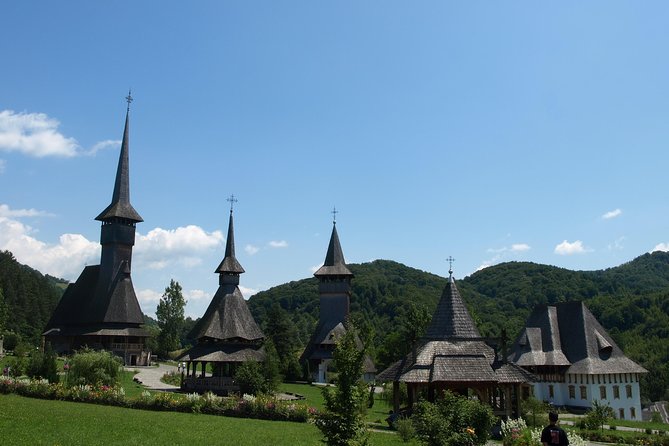
Day two opens at Barsana Monastery, where you have about an hour and a half. The complex is built entirely in wood and includes flowers and open views around the buildings. It is one of the most striking religious sites in northern Transylvania, but the appeal is not only visual.
Barsana shows the high level of craftsmanship used in Maramures religious buildings. Look at the proportions, timber details, and relationship between the structures. The visit is likely to be one of the most photogenic parts of the tour, but do not let photographs replace the chance to ask your guide how wooden religious architecture fits local life.
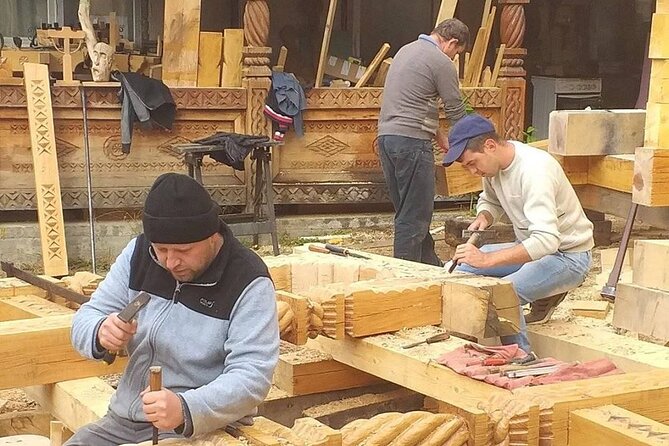
In the same village, you visit a large wood-carving workshop. That pairing is smart. The monastery lets you see finished work on a grand scale, while the workshop brings you closer to the tools and techniques behind it. The program does not promise a hands-on class, so think of this as a chance to watch and ask questions.
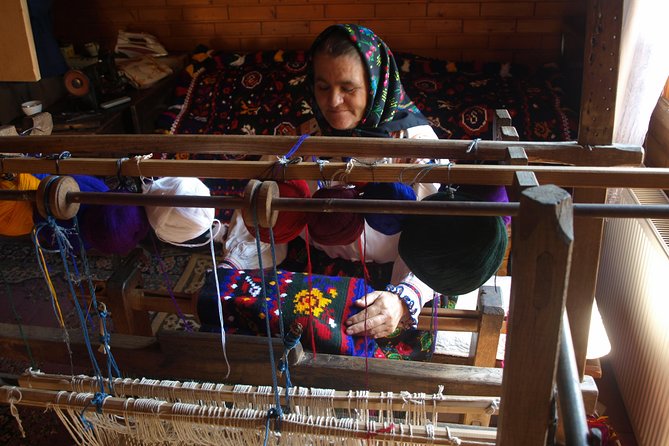
Botiza shifts the focus from wood to wool. You spend about an hour with a woman who makes woolen rugs using dyes made from plants and old decorative motifs. This wall-carpet tradition was added to UNESCO’s Representative List of the Intangible Cultural Heritage of Humanity in 2016.
That recognition matters, but the real value is seeing the skill in a working setting. Plant dyes and antique patterns connect the rug to local knowledge passed between generations. You may also see people working in the fields and visit a mineral spring in the village. These details help you understand that village culture is not limited to festival costumes or souvenir shops.
The Botiza visit is free, as are the other village meetings on days two and three. That does not mean the encounters have no value. Your tour fee covers transport, guiding, accommodation, and the arrangement of access, which is particularly useful when a workshop is in someone’s home or yard.
Sacel gives you about an hour and a half and packs in several distinctive meetings. The first is with the only ceramist in the village still making Dacian-style unglazed pottery. The plain surface is part of the point. You are seeing a specific regional form rather than generic Romanian pottery made for a tourist market.
You may also meet someone who makes wool and sheepskin ritual masks, along with a wood carver and a woman living in a 100-year-old wooden house. Availability can affect these encounters, so keep your expectations flexible. The tour promises access to special local skills, but rural visits do not operate like fixed museum galleries.
I especially like this part of the itinerary because it gives you several ways to understand craft. You see clay, wool, leather, wood, and domestic architecture in one afternoon. If you enjoy buying souvenirs, this is also the time to ask about prices and whether an item is locally made, but souvenirs are not included in the tour cost.
Day three: Breb, old machines, and a curious sight
Breb begins the final day with about an hour and ten minutes. You meet local residents, including the village poet, and visit a crafts workshop. The stop is less about one grand monument and more about personal contact.
That can be the most rewarding kind of visit, but it depends on conversation. Your guide’s translation skills matter here. A local guide with trusted relationships can help you ask about work, village life, and creative traditions without turning the meeting into a formal performance.
At Sarbi, you spend about an hour seeing machines powered by water. The group includes a fulling mill, a carding mill, a whirlpool, and an alcohol distillery. These devices still operate for community needs, which makes the stop different from simply looking at old farm equipment behind glass.
The machines show how water once supported several parts of rural production. Fulling and carding relate to wool preparation, while the distillery points to another use of local resources and equipment. The scheduled hour is enough for an introduction, though visitors who love industrial history may wish for more time.
The last stop is Budesti, with about an hour before the return to Cluj-Napoca. You see what the program calls Romania’s most unusual optical illusion and visit a fine medieval wooden church.
The optical illusion is not explained in detail in the available tour information, so let it surprise you rather than searching for a preview. The wooden church provides a calmer final stop and brings the trip back to the religious architecture that appeared at Sapanta-Peri and Barsana.
After Budesti, you return to Cluj-Napoca, where the tour ends at the original meeting point. The third day is not a short city excursion. Plan for a full day and keep your evening schedule open.
A few more Cluj Napoca trips worth a look
- Maramures best, full day tour from Cluj
★ 5.0 · 33 reviews - Classic Romania Tour – small group in 8 days: Transylvania and Maramures
★ 5.0 · 22 reviews - From Cluj-Napoca: Maramures Day Tour
★ 5.0 · 19 reviews - The Best of Maramures in One Day
★ 5.0 · 16 reviews
What the $763.34 price includes

At $763.34 per person, this is a serious purchase. The value comes from the private format rather than from luxury. You receive private transportation, a professional local guide, two nights in three-star accommodation, two breakfasts, and entrance fees and taxes.
The private setup is important in Maramures. A large coach can take you to famous monasteries, but it is less suited to small village homes, craft workshops, and conversations that need translation. With only your group taking part, the guide can spend more time where your interests lie, within the limits of the day’s schedule.
Three-star lodging keeps the tour practical rather than high-end. Breakfast is included, but all other meals, drinks, and snacks are your responsibility. You should budget separately for lunch, dinner, refreshments, tips, souvenirs, and travel insurance.
Group discounts may improve the per-person cost if you are booking with family or friends. For a solo participant, the price is harder to justify unless private transport and personal guiding are central to your plans. For a small group, it can compare more favorably with arranging hotels, a car, fuel, entrance fees, and a local interpreter separately.
Who should book this Maramures tour
I would choose this trip if you want rural Romania with context and personal contact. It suits people who enjoy crafts, religious buildings, local stories, and difficult twentieth-century history in equal measure.
You should have a moderate level of physical fitness. The tour involves three sightseeing days, walking at cemeteries and monasteries, and getting in and out of transport repeatedly. The schedule is not presented as strenuous, but it is not a restful hotel holiday either.
This tour is also a good fit if you prefer a private activity in English. You can ask questions as you go, and the guide can translate during local meetings. If you are looking for nightlife, long free periods, or a food-focused trip, this program is less suitable.
The cancellation rule is strict close to departure. You can receive a full refund if you cancel at least three full days before the start time. Changes or cancellations inside that period are not accepted or refunded, so confirm your plans before booking.
Should you book it?
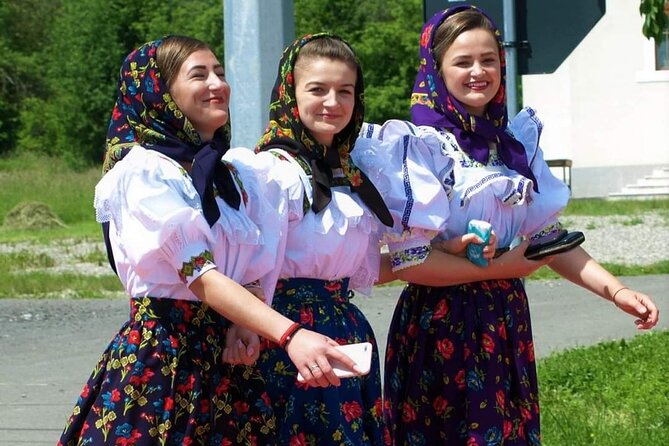
Book this tour if your main goal is to meet people who still practice Maramures crafts and to understand the region beyond its postcard churches. The Merry Cemetery, Sighet prison, Elie Wiesel’s birthplace, Barsana, Botiza, Sacel, Breb, Sarbi, and Budesti make a remarkably varied three days.
I would be more cautious if you dislike long road journeys or prefer to set your own pace. The price is not low, and meals are extra. But if you value a private guide, local translation, arranged village access, and a clear route from Cluj-Napoca, the cost buys far more than transport between sights. It gives you a way into a living region that is difficult to reach with a standard sightseeing schedule.
FAQ
Where does the tour start and end?
It starts at Piața Unirii 15, Cluj-Napoca 400394, Romania, at 9:30 a.m. The tour ends back at the same meeting point after the return from Budesti.
Is this a private tour?
Yes. Only your group takes part in the activity, with private transportation and a professional local guide.
Is the tour offered in English?
Yes. The tour is offered in English.
What accommodation is included?
Two nights of three-star accommodation are included, along with two breakfasts.
Are meals included?
Two breakfasts are included. Lunches, dinners, drinks, and snacks are not included.
What fitness level is required?
You should have a moderate level of physical fitness. The program includes several sightseeing stops across three days and walking at cultural and religious sites.
Newest Cluj Napoca trips on the site
- Private tour to Turda Salt Mine, Rimetea and Alba Iulia★ 4.8 · 5 reviews
- Turda salt mine and Corvin Castle day tour from Cluj★ 5.0 · 9 reviews
- Turda Salt Mine, Gorge & Rimetea Village (private from Cluj)★ 5.0 · 5 reviews
- 1250cc Motorcycle Rental from Turda★ 5.0 · 4 reviews
- Day Trip to Turda Salt Mine and Corvin Castle from Timisoara★ 5.0 · 10 reviews
- Discover Apuseni Mountains – Scarita Summit,Sipote Waterfall and Dumesti Village★ 5.0 · 17 reviews
- CLUJ ADVENTURE TOUR ! ZIP LINE and HIKE★ 5.0 · 15 reviews
- Turda salt mine, Rimetea village and Alba Iulia, from Cluj★ 5.0 · 11 reviews
Maramures Tours, compared.
Classic Romania Tour – small group in 8 days: Transylvania and Maramures
Read our review →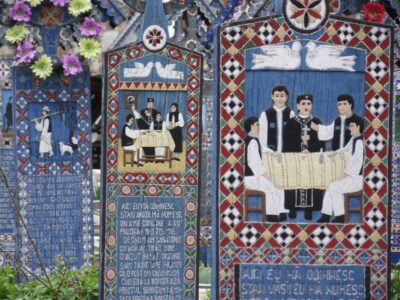


Two days tour to Maramures: local experiences and culture
Read our review →
A Journey Back in Time: Countryside from Transylvania and Maramures – 15 Days
Read our review →
Your rendez-vous with Europe’s past: time-travel to Maramures, Transylvania
Read our review →Browse the lists this tour appears in