
Reviewed · HISTORICAL TOURS
Bucharest: Small Group History, Art & Secrets Tour
Bucharest’s story is written in grand concert halls, royal buildings, quiet courtyards, communist monuments, and café-lined passages. This three-hour walk connects those pieces, beginning at the Romanian Athenaeum and ending at the vast Palace of Parliament, with an expert guide to explain what you are seeing.
I like the mix of famous sights and smaller stops, especially the old churches, covered passages, and street art that can be easy to miss on your own. I also like the guides’ practical touch. Elena, Helen, Stefan, Alexandra, and Alessandro are praised for clear storytelling and useful food and café suggestions.
The main drawback is the pace and amount of walking. You stop often, but most visits are photo stops rather than interior visits, and the route may feel demanding if you have mobility limits or dislike walking on city streets.
Key points to know before booking
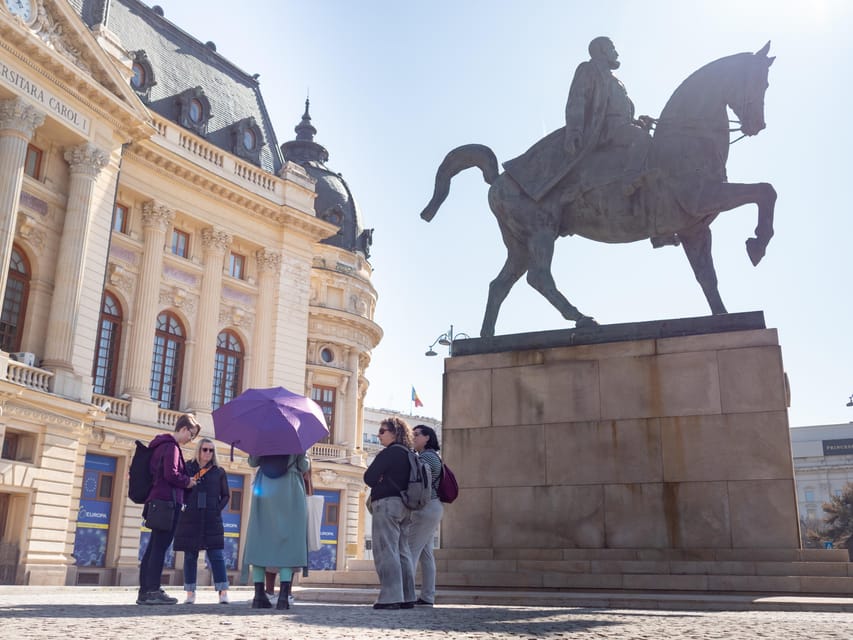
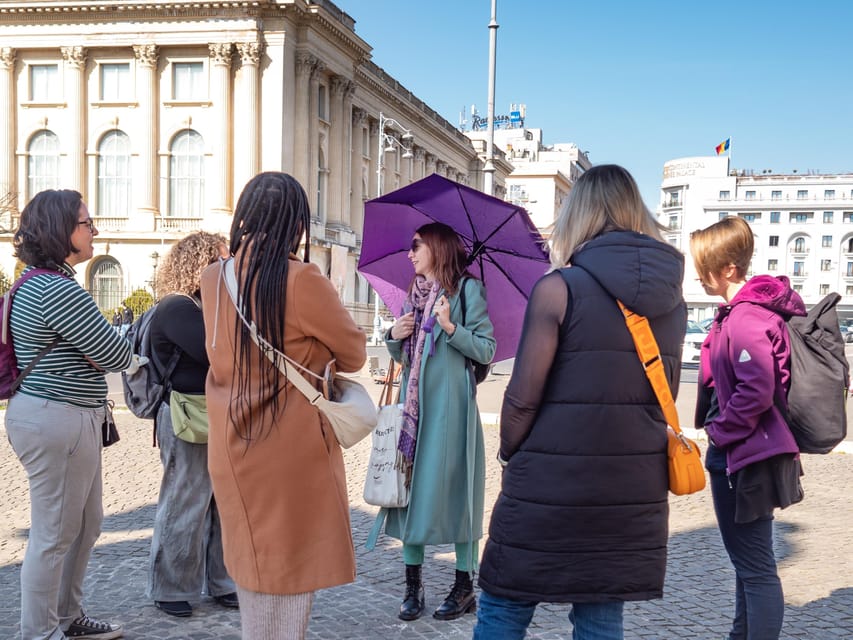
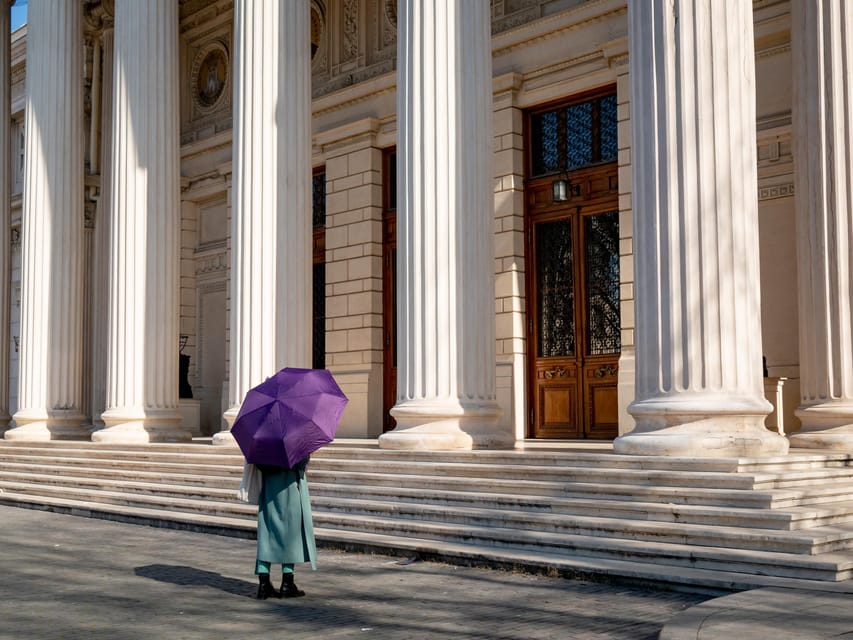
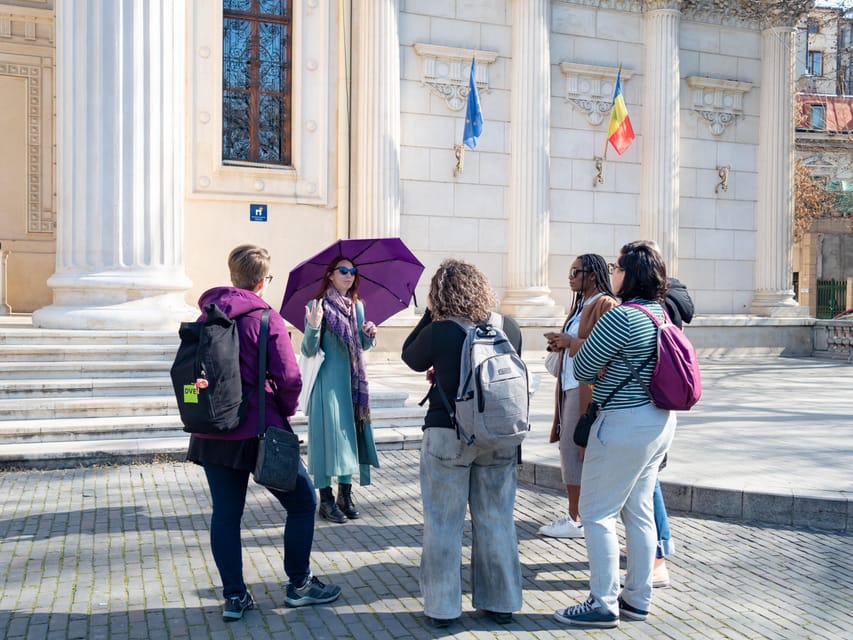
- Start at the Athenaeum: Meet by the columns with a purple umbrella, then begin beside Bucharest’s grandest concert hall.
- History with political weight: Revolution Square and the Palace of Parliament bring Romania’s royal, communist, and post-communist past into focus.
- A strong Old Town walk: Stavropoleos Monastery, Caru’ cu bere, CEC Palace, Manuc’s Inn, and the passages give you a varied look at central Bucharest.
- Local flavor between monuments: A 25-minute café stop offers time for coffee or tea and a chance to ask your guide for ideas.
- Good value for a short introduction: At $22, you get three hours with a local professional artist guide, though entrance fees and refreshments cost extra.
- Plan for practical comfort: Wear proper walking shoes, carry water, and leave large luggage behind.
Why this walk works as a first look at Bucharest
I like this tour because it does not treat Bucharest as a single-style city. In one morning or afternoon, you move from neoclassical architecture to royal symbolism, communist-era politics, Orthodox religious buildings, Belle Époque passages, and modern street art.
That variety matters. Bucharest can be difficult to read at first. The center mixes elegant façades with worn buildings, busy roads with peaceful courtyards, and carefully restored landmarks with places that show their age. A good guide helps you connect those contrasts instead of simply pointing at buildings.
The tour is led by a local professional artist guide, and the guide language options are English, French, Italian, and Spanish. The strongest guide names associated with the experience include Elena, also called Helen, along with Stefan, Alexandra, Alessandro, and Elvis. Their styles differ, but the common thread is clear storytelling, political context, and a willingness to answer questions.
At $22 per person, the value is good if you want orientation and context without committing to a full-day excursion. The price covers the guided walk and the café break in the schedule, but not food, drinks, or entry to attractions. Since most stops are viewed from outside, you are paying mainly for the route and the explanation rather than admission tickets.
More Historical Tours in Bucharest
- Bucharest: 3-Hour Dark History Tour with a Local
★ 4.9 · 301 reviews - Guided Walking Tour of Historical Bucharest
★ 5.0 · 84 reviews - Bucharest Jewish Heritage | Holocaust Memorial | Private Car Tour
★ 5.0 · 38 reviews
Starting beneath the Romanian Athenaeum
The meeting point is in front of the Romanian Athenaeum, by the columns and the purple umbrella. This is a useful landmark, though one booking experience noted that the meeting place can be tricky to find if you are unfamiliar with the area and that a taxi may not leave you right at the entrance.
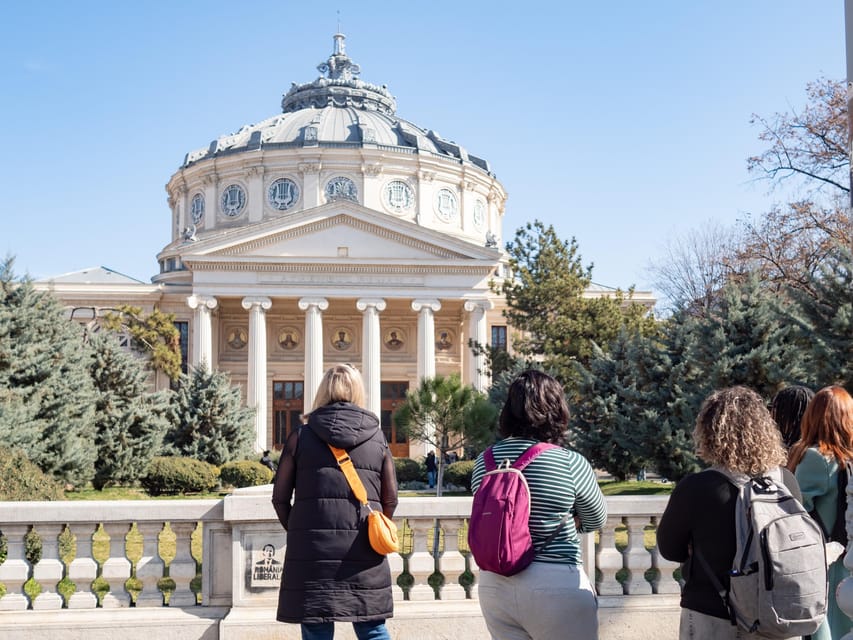
The Athenaeum gives the tour a strong opening. Its grand neoclassical design reflects Bucharest’s ambition to present itself as a European cultural capital. The building is home to the George Enescu Philharmonic Orchestra, so your guide can place the architecture in the setting of Romania’s music and arts scene.
You should expect an exterior introduction and time for photographs, not a guaranteed concert hall visit. That is typical of this route, which focuses on the city streets and major façades. If you want to see inside the Athenaeum, check separately for opening arrangements or performances.
Royal symbols and Revolution Square
The Royal Palace of Bucharest comes next, with about 10 minutes for a guided explanation and photographs. This stop helps you understand the city’s royal period and the public image Romania wanted to project through formal architecture.
At Revolution Square, the subject turns more sharply toward modern politics. The square is tied to the events that brought down Nicolae Ceaușescu’s communist government in 1989. The guide’s explanation is important here because the buildings and monuments alone cannot tell you why this place matters.
I would pay close attention at this stop. The tour is not simply about dates and rulers. It looks at how political power shaped Bucharest’s streets, public spaces, and buildings. Guides such as Elvis have been praised for explaining Cold War politics, while Elena and Alexandra are noted for making difficult material easy to follow without burying you in facts.
Kretzulescu Church and the city’s smaller details
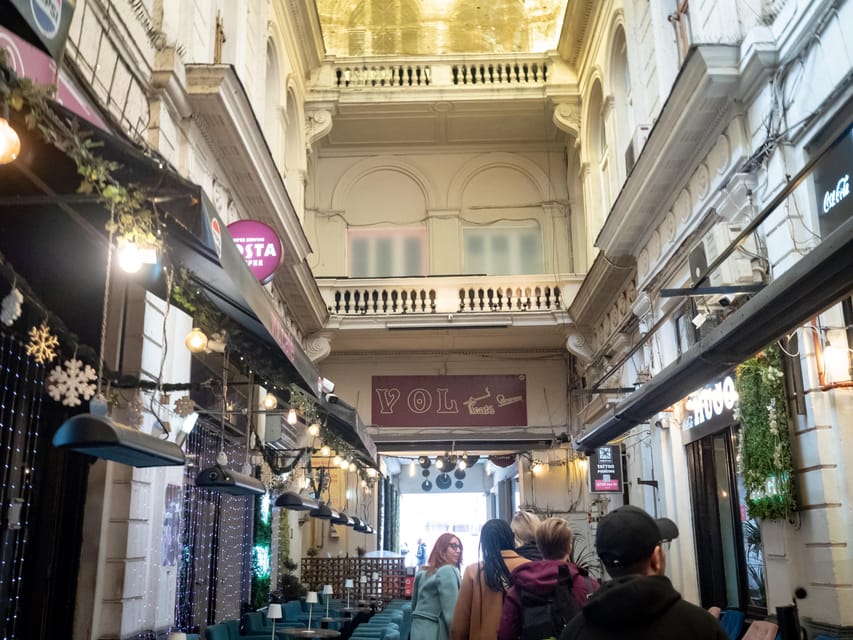
Kretzulescu Church provides a change of scale. After the broad spaces and official buildings, you see a more intimate religious structure with a distinctly Romanian setting. The stop lasts about 10 minutes, enough for an explanation and photographs.
This is one reason I prefer a walking route like this to a simple bus circuit. You get close enough to notice the relationship between old churches, government buildings, theatres, and ordinary city life. The church also shows how much of Bucharest’s identity sits in smaller places rather than only in the famous monuments.
The route then moves to Pasajul Englez, or English Passage, followed by Umbrellas Street. These are short stops, but they add color and texture to the walk. Umbrellas Street is especially suited to photographs, while Pasajul Englez shows the character of Bucharest’s covered walkways and side routes.
Do not expect a long stay at either location. The listed timing is about 10 minutes per stop, so your guide will keep the group moving.
More history tours around Bucharest:
- Private Bucharest: History & Food with Traditional Meal
★ 5.0 · 34 reviews - Bucharest Historical Food Tour in Old Center
★ 5.0 · 21 reviews - Half-Day Jewish Heritage Walking Tour in Bucharest
★ 5.0 · 20 reviews - Private Tour – Food, Culture, History & Traditions
★ 5.0 · 18 reviews
Odeon Theatre and the National Military Circle
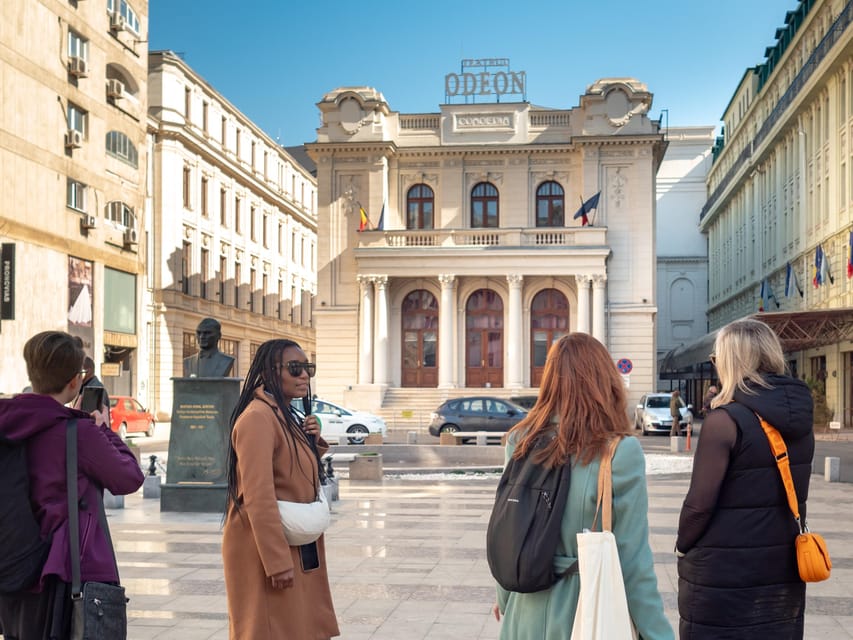
The Odeon Theatre brings the arts back into the route. The theatre is part of central Bucharest’s cultural life, and it fits naturally with the opening visit to the Athenaeum. Together, these stops show that the city’s performance tradition is not confined to one grand concert hall.
The National Military Circle adds another formal architectural stop. Here, your guide can explain the role of military institutions and the building’s place in the central city. The sequence works well because the tour keeps shifting between culture, state power, and everyday urban spaces.
You will have time to photograph both locations and hear a guided explanation, but you should not plan on entering every building. This tour is best understood as an outdoor city walk with context, not a series of interior museum visits.
The café break and useful local advice
After the first group of sights, the tour pauses at a local café for about 25 minutes. Coffee and tea are listed for the break, while meals and drinks are not included in the tour price. Confirm what you want to order and what is covered on the day.
I see real value in this pause. Three hours of walking and listening can be tiring, especially in poor weather, and a seated break keeps the tour from becoming a nonstop march. One guide also used the pause and the end of the walk to suggest places to eat and drink, including an in-house pastrami spot that received especially strong approval.
This is also your best moment to ask for advice tailored to the rest of your stay. Guides have suggested cafés and food places, and they can help you decide what to see after the tour. That personal exchange is often more useful than a printed list.
Passages, banks, and Bucharest’s grand façades
After the café, the route reaches Macca-Vilacrosse Passage. Its covered glass-and-metal arcade gives the center a different mood from the broad government squares. It is a good place to notice how Bucharest’s old commercial streets were designed for browsing, meeting, and shelter from the weather.
The National Bank of Romania follows. This is another impressive official building, and the stop gives your guide a chance to explain the role of finance in the city’s development. The tour’s strength is the way it places such institutions beside churches, theatres, restaurants, and narrow passages.
At Stavropoleos Monastery, the character changes again. This compact religious site is one of the most appealing stops on the route, with a quiet presence that contrasts with the traffic and formal buildings nearby. You will have a guided photo stop rather than a guaranteed extended visit inside, so treat this as an introduction and return later if you want more time.
Caru’ cu bere, CEC Palace, and the history museum
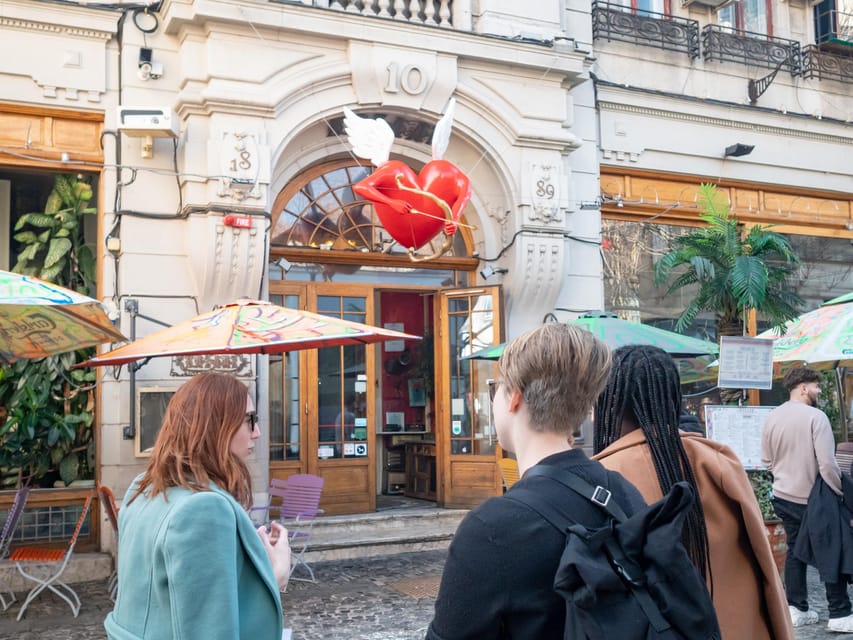
Caru’ cu bere is one of Bucharest’s best-known historic restaurants. The stop lets you see its exterior and hear why it matters to the city’s dining and architectural culture. If you plan to eat there later, ask the guide about timing and reservations rather than trying to fit a full meal into the walk.
CEC Palace provides another striking façade, with a style that reflects Bucharest’s late 19th-century confidence. It is an excellent photo stop and helps explain why the city gained its old nickname of Little Paris, although the tour covers more than just French-inspired architecture.
The National Museum of Romanian History is next. The building and its collections represent a major part of the country’s public memory, but this itinerary does not include museum admission. You will receive an outdoor introduction, so anyone wanting the full exhibits should schedule a separate visit.
That distinction is worth keeping in mind. A three-hour walk can show you where the major institutions are and explain why they matter. It cannot give you enough time to explore every interior.
Manuc’s Inn and Antim Monastery
Manuc’s Inn is one of the most atmospheric places on the route. The stop includes a short break, photographs, and a guided explanation. Historic inns like this help you picture Bucharest as a meeting point for merchants, local residents, and visitors before modern hotels and broad transport routes changed the center.
The stop is brief, so you will not experience it as a long meal or extended courtyard visit. Still, it is a useful place to pause and absorb the older character of the city.
Antim Monastery follows. Like Stavropoleos, it adds a religious and architectural layer to the walk. The two monasteries prevent the route from becoming a parade of state buildings. They also give you a better sense of the city’s spiritual traditions and the importance of courtyards and smaller sacred spaces.
Ending at the Palace of the Parliament
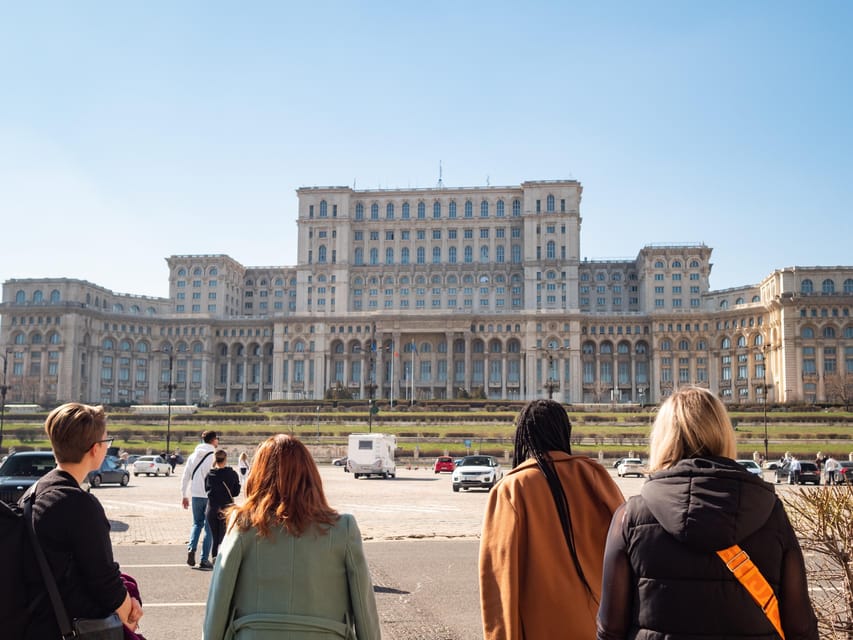
The final stop is the Palace of the Parliament, with about 15 minutes for photographs and sightseeing. This enormous building is described as the second-largest administrative building in the world, and its scale is hard to grasp from photographs alone.
The important part is not just its size. The palace is tied to Ceaușescu’s communist rule, the destruction and reshaping of central Bucharest, and the human and financial cost of the project. A good guide can explain why the building remains both a major sight and a difficult subject.
The tour ends here, rather than returning you to the Athenaeum. Plan your next move before you start, especially if you need to reach a hotel, restaurant, or station. The end point also makes sense geographically: the walk progresses across the central area and finishes with the city’s most imposing political symbol.
The schedule lists a 15-minute stop, not a full interior tour. Entrance fees are not included, so you should not assume that the walk provides access to the palace. If you want to see the inside, arrange that separately and allow additional time.
Walking effort, group size, and practical comfort
The tour lasts three hours and includes many short stops, plus a 25-minute café break. The frequent pauses make the route easier to follow, but they do not remove the physical demand of walking between sites.
Wear comfortable shoes and bring water. A camera is useful, particularly for the Athenaeum, the passages, churches, Caru’ cu bere, CEC Palace, and the Parliament building. Large bags and luggage are not allowed, so leave suitcases elsewhere.
A small group is available, which should make it easier to hear the guide and ask questions. The activity is listed as wheelchair accessible, but it is also marked as unsuitable for people with mobility impairments. Because the route involves a lot of walking and city streets, I would confirm your specific needs before booking rather than relying on the general accessibility label.
The experience offers free cancellation up to 24 hours before the start and lets you reserve now and pay later. Those options are useful if your Bucharest plans are still moving around.
Who will get the most from this tour
I would choose this walk if you have limited time in Bucharest and want a strong first orientation. It suits history fans, architecture lovers, art-minded visitors, and curious first-time arrivals who want both major landmarks and less obvious streets.
It is also a good choice if you value a guide who can suggest what to do next. The guides have been praised for clear English, fluent foreign-language delivery, patient answers, and practical food recommendations. Elena and Helen are especially associated with lively explanations and good pacing, while Stefan, Alexandra, Alessandro, and Elvis have also led highly regarded walks.
You may want a different plan if your priority is entering every major building. The tour includes no attraction entrance fees, and most stops are outside. It also may not suit you if you want a slow, relaxed stroll with long periods at each site.
Should you book the Bucharest History, Art and Secrets Tour?
I would book it for $22 if you want an affordable, well-rounded introduction to central Bucharest. The route covers an impressive number of places, and the guides add the political and cultural context that makes the city easier to understand.
Book it early in your visit if possible. You can use the café break to ask about food and later sightseeing, then return to the places that deserve more time, such as Stavropoleos Monastery, the Athenaeum, the National Museum of Romanian History, or the Palace of the Parliament.
Skip it only if walking for three hours is a concern or if you want an interior-focused tour. For most first visits, the combination of landmarks, side passages, churches, street art, local advice, and serious historical context makes this a sound value.
FAQ
Where does the tour begin?
The tour begins in front of the Romanian Athenaeum, by the columns with a purple umbrella.
Where does the tour end?
The tour ends at the Palace of the Parliament.
How long does the tour last?
The tour lasts three hours.
What languages are available?
Live guides are available in English, French, Italian, and Spanish.
Are entrance fees included?
No. Entrance fees to attractions are not included, and meals and drinks are also excluded from the tour price.
What should I bring?
Bring comfortable walking shoes, water, and a camera. Large bags and luggage are not allowed.
Newest Bucharest trips on the site
- Winery touring & private wine tasting – one day private tour★ 5.0 · 3 reviews
- Bucharest: Dealu Mare Winery Private Trip with Wine Tasting★ 4.9 · 6 reviews
- Village Museum Bucharest Guided Tour★ 5.0 · 6 reviews
- Private Transfer from Giurgiu Port to Bucharest★ 4.5 · 12 reviews
- Airport Henri Coanda (Otopeni) to Bucharest – Private Transfer – Driver★ 5.0 · 5 reviews
- Salt Mine Tour from Bucharest with Entrance Ticket★ 4.5 · 19 reviews
- Wine tasting in Bucharest Old town – bonus cheese platter★ 4.5 · 6 reviews
- Private Wine Tasting at Bucharest’s First Wine Bar★ 5.0 · 3 reviews
Historical Tours, compared.
Bucharest Jewish Heritage | Holocaust Memorial | Private Car Tour
Read our review →
Private Bucharest: History & Food with Traditional Meal
Read our review →

Discover Romania’s Wine Heritage in Brasov’s Historic Center
Read our review →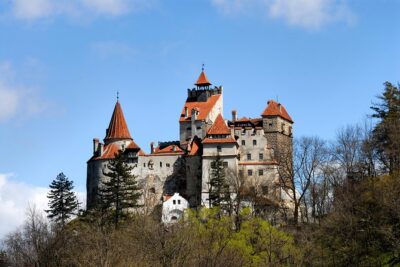
Experience the History of Bran Castle and Saxon Fortifications in Burzenland
Read our review →Browse the lists this tour appears in