
Reviewed · COMMUNIST HISTORY TOURS
Snagov Monastery, Ceaușescu Mansion, & Village Museum – 6h
Snagov Monastery delivers the tour’s biggest surprise: it sits on an island about 40 minutes from Bucharest and is linked with the tomb of Dracula. From there, the day swings back into the capital, moving from traditional houses to the private rooms of Nicolae and Elena Ceaușescu, then on to the places where Romania’s 1989 revolution began.
I like the sharp contrast between rural Romanian life and communist power. I also like having a private car and guide, since the route covers several far-flung places and can be adjusted for your group. The main drawback is pace. The advertised six hours includes many stops, so some visits will be brief, especially if you want time inside every major building.
Key points to know before booking
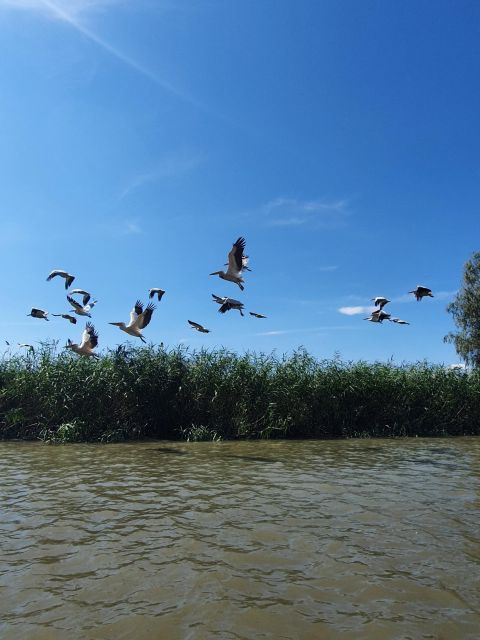
- Snagov Monastery sits on an island, making it one of the more unusual stops near Bucharest.
- The Village Museum gathers traditional houses from across Romania in an open-air setting.
- Ceaușescu Mansion shows private life behind a public dictatorship, with the family residence preserved for visits.
- Calea Victoriei and Revolution Square connect royal, communist, religious, and modern Bucharest in one city walk and drive.
- A private vehicle and multilingual guide make the long route easier and allow changes during the day.
- The $254 per-person price includes transport and guiding, but entrance fees, listed at about 17 euros per person, are extra.
Why this six-hour route works
This experience is best understood as two tours joined together. The first half reaches outside Bucharest, where you see traditional village life and an island monastery. The second half returns to the city for a concentrated look at royal Bucharest, Ceaușescu’s rule, and the December 1989 revolution.
That mix gives you useful context. The Village Museum shows how ordinary families lived with local materials and practical systems. Ceaușescu Mansion shows how Romania’s ruling family lived in private. Revolution Square then shows where the political system began to collapse.
You travel in a private car or minibus reserved for your own family or friends. That matters here. The route includes Snagov, the northern part of the city, central Bucharest, and the Parliament area. A private vehicle saves you from arranging separate taxis and gives the guide room to change the order of stops.
The guide can speak Romanian, English, Italian, French, Spanish, or German. The driver-guide remains with you throughout the experience. No guide name is provided in the tour details, so you should not expect to request a particular person unless you arrange that directly before booking.
More Monastery Tours in Bucharest
- Princely Court of Târgoviște and Curtea de Argeș Monastery
★ 4.5 · 50 reviews - Small Group Tour to Mogosoaia Palace & Snagov Monastery
★ 4.4 · 41 reviews - Sacred Monasteries Private Tour: Snagov, Țigănești & Căldărușani
★ 5.0 · 32 reviews
Village Museum: Romania in one open-air stop
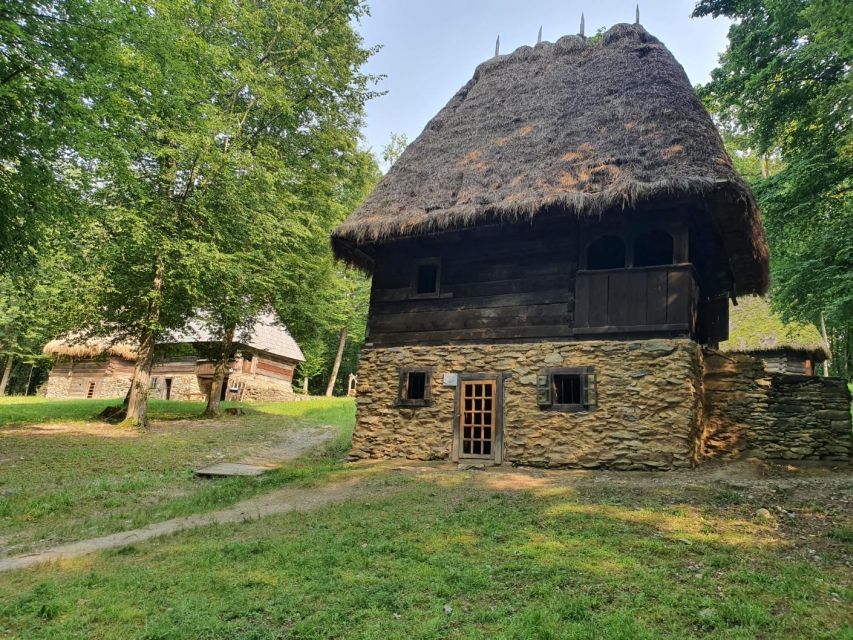
The Dimitrie Gusti National Village Museum is a strong opening stop because it gives you a quick visual introduction to the country. In about an hour, you see traditional houses brought together from different parts of Romania, including buildings made from wood, adobe, stone, and other local materials.
The museum is not simply a collection of pretty old buildings. The point is to show how people organized daily life around local resources. Homes, mills, wooden churches, and other structures reveal practical choices shaped by climate, work, faith, and available materials.
I would pay attention to the differences between the buildings rather than trying to see every detail. The guide can explain how village traditions helped preserve a shared Romanian identity across separate regions. That makes the stop more useful than a quick photo visit.
You should also keep the one-hour timing in mind. The museum covers a large area, and the schedule does not allow a slow, room-by-room study of every house. If rural architecture is your main interest, you may want to ask at the start which buildings deserve extra time.
The setting also provides a calmer contrast to central Bucharest. You get open-air views and a sense of how an ecological, self-sufficient household might have functioned before modern utilities and mass construction changed daily life.
Snagov Monastery and the Dracula connection
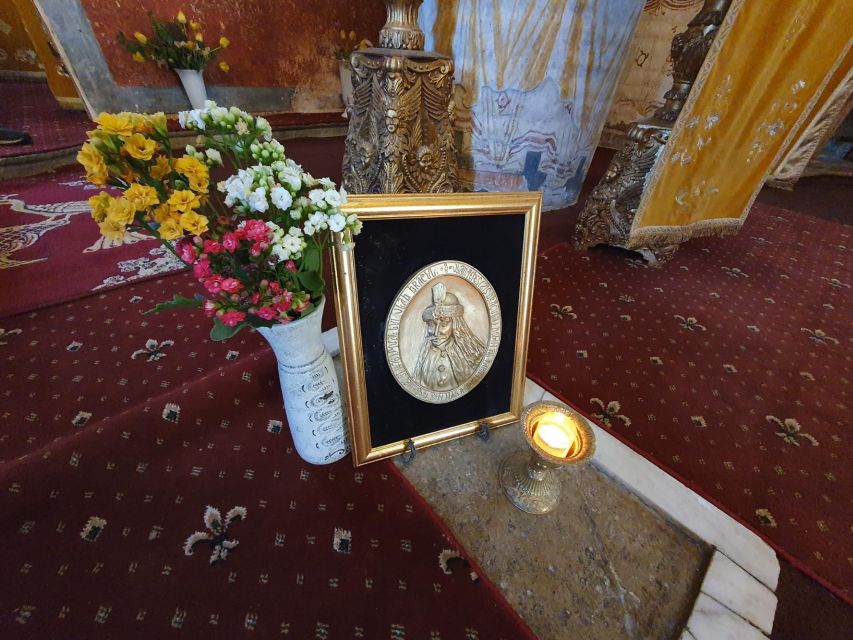
Snagov Monastery is the most unexpected stop. It is about 40 minutes outside Bucharest and sits on an island, so the approach feels different from a normal city excursion. The monastery’s setting gives the visit a quiet, separated quality even though it is close to the capital.
The site is associated with Dracula’s tomb. That connection attracts visitors, but the place is more interesting when you treat the Dracula story as a doorway into Romanian history and folklore, not as the whole reason to go.
Your stop lasts about an hour and includes a guided visit, sightseeing, and time for photographs. The island setting is the main visual reward. You get a change of scenery, a religious site, and a story that has traveled far beyond Romania.
There is one practical point to clarify before departure: the schedule describes a photo stop and visit, but it does not specify every access detail or how much time is spent inside. Ask your guide how the visit will work on your date. Conditions at a small historic site can affect the exact rhythm of the stop.
For many people, Snagov will be the day’s most memorable location because it does not look like a standard Bucharest attraction. It also keeps the tour from becoming a full day of city streets and museum interiors.
Ceaușescu Mansion: private luxury behind a public ideology
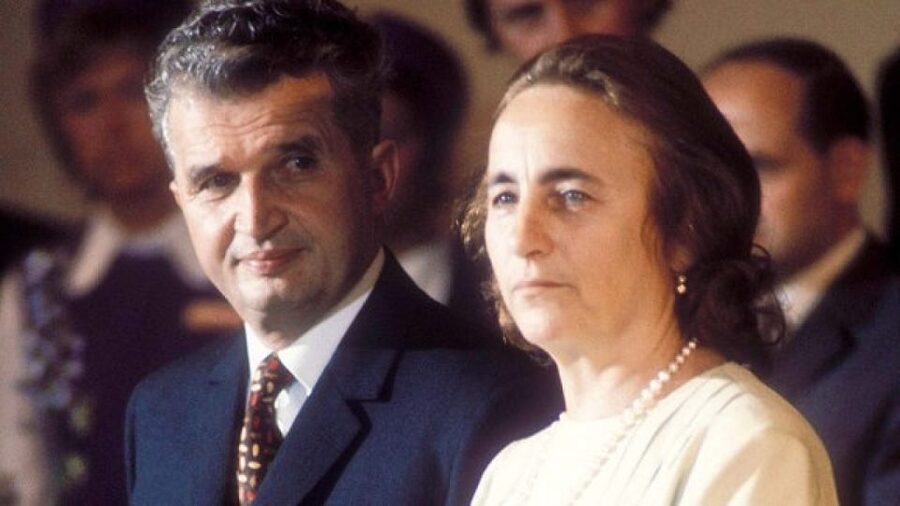
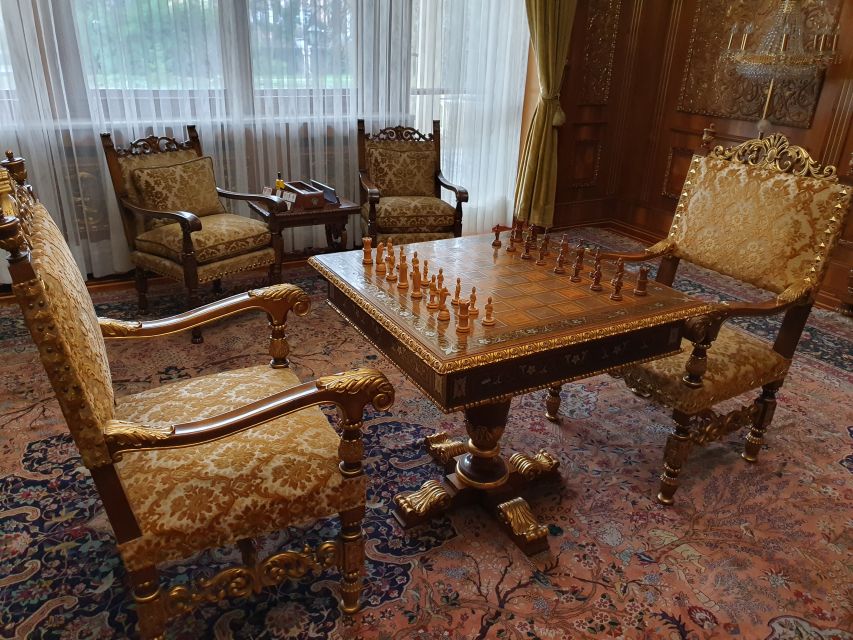
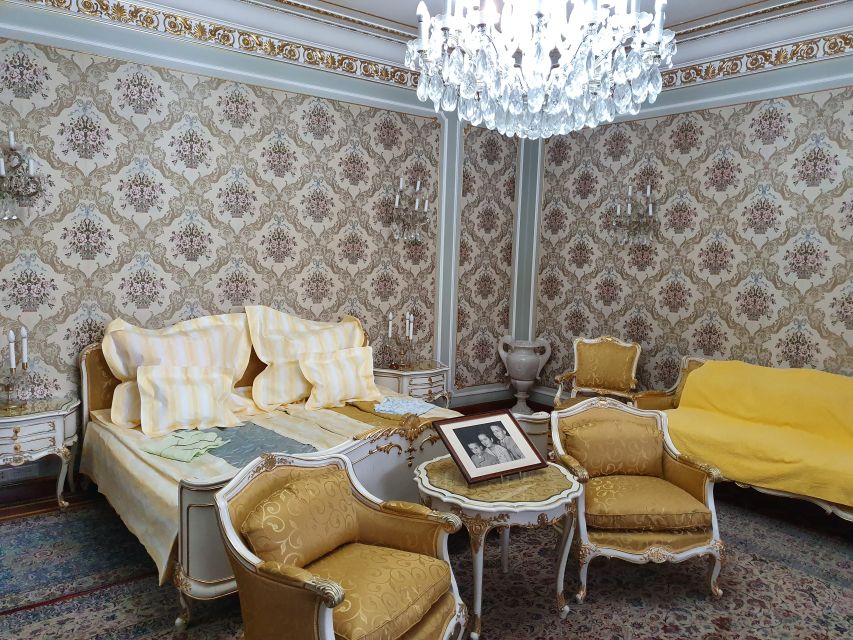
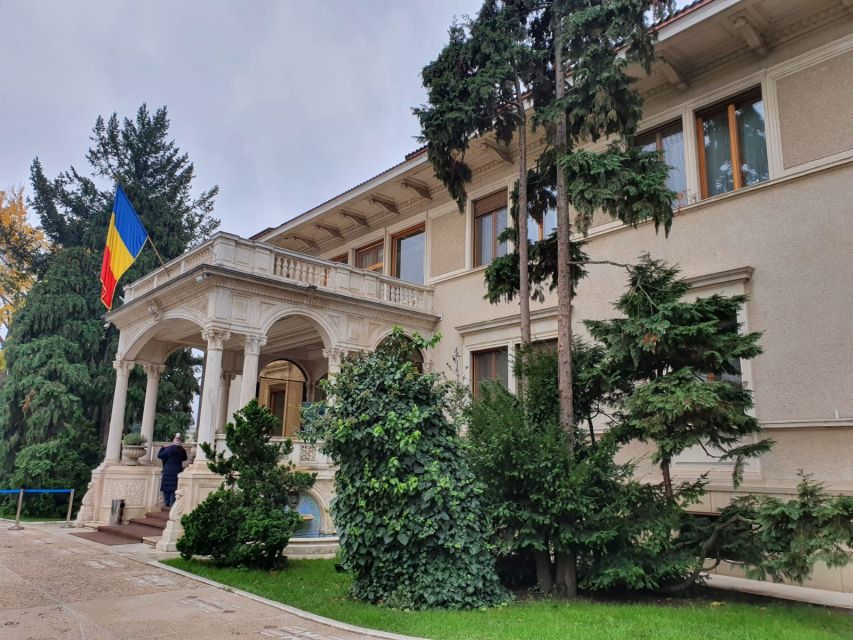
The former Ceaușescu residence, known at the time as the Spring Palace, offers a very different view of Romania. Nicolae and Elena Ceaușescu lived there with their children, Nicu, Zoia, and Valentin, from 1965 until 1989.
The home was built in the mid-1960s and enlarged between 1970 and 1972. Its design involved architect Aron Grimberg-Solari, while Robert Woll worked on the gardens and furniture. Those details matter because the building was not just a government office. It was a carefully planned private environment for the ruling family.
Inside, you can consider the gap between official communist ideals and the family’s personal surroundings. The public message stressed equality and modest living. The mansion, by contrast, was a protected residence designed around comfort, privacy, and status.
The tour allows about an hour for the house. That is enough for a guided overview, but not necessarily enough for a slow examination of every room. If the Ceaușescu period interests you, listen closely to the guide’s explanation of the family structure and the building’s changes over time.
I find this stop valuable because it humanizes a political era without excusing it. You do not simply see another grand residence. You see the private setting of a family that controlled Romania for a quarter-century, then connect it with the public places visited later in the day.
More Village Museum visits:
- Palace of the Parliament, Village Museum & Ceaușescu Mansion
★ 4.9 · 31 reviews - Traditions in Bucharest: Village Museum and Wine Tasting Tour
★ 5.0 · 27 reviews - Private Bucharest city tour visit the Palace of the Parliament & Village Museum
★ 4.5 · 21 reviews - Traditions in Bucharest: Village Museum and Wine Tasting
★ 5.0 · 8 reviews
Calea Victoriei: Bucharest’s strongest historical contrast
Calea Victoriei is the main city stretch of the tour, with about 90 minutes assigned to visiting, sightseeing, and free time. This avenue brings together old Orthodox churches, museums, theaters, restaurants, shops, music stores, and major architectural landmarks.
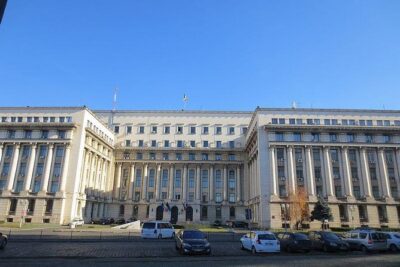
The route also shows Bucharest’s political contradictions. The Royal Palace and the former Central Committee of the Romanian Communist Party represent very different systems of power. Your guide can explain how the city’s buildings reflect changes in monarchy, communism, and the post-1989 period.
You may also see the National History Museum, the Romanian Athenaeum, and the CEC Palace during this part of the day. The avenue is a useful place for photographs and a short walk, but the time is shared among many sights. Do not expect a full interior visit to every building.
The shopping time is modest but practical. You may find souvenirs, music, gifts, tea shops, or a place to pause. Food and drinks are not included, so this is the sensible point to ask your guide about arranging a short break if your group needs one.
Calea Victoriei works best for visitors who enjoy urban contrasts. One block may suggest royal Bucharest, another communist administration, and another the city’s current café and retail life. The guide’s explanations are important because the buildings alone cannot always tell you why the street matters.
Revolution Square and the end of Ceaușescu’s rule
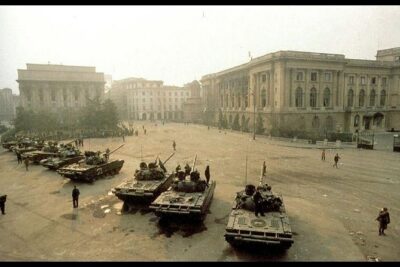
Revolution Square is a short stop of about 30 minutes, but it carries enormous political weight. This is where the December 1989 revolution began, and where the former Central Committee building became tied to the collapse of Ceaușescu’s government.
The visit helps connect the mansion with the dictatorship’s public ending. You have just seen where the family lived. Here, you hear about the moment people challenged the regime and Ceaușescu fled by helicopter.
The square is also a place to think about the human cost of political change. The tour description points to the sacrifice involved in removing Ceaușescu from power, as well as later questions about the family’s fortune, state security, and offshore accounts.
Because the stop lasts only half an hour, expect a guided explanation and sightseeing rather than a long museum visit. Stay close to the guide and use the time to ask specific questions. This part of the tour rewards context more than photography.
The Athenaeum, CEC Palace, and Parliament
The Romanian Athenaeum receives about 30 minutes. You can walk around it with the guide, take in its architecture, and place it within Bucharest’s cultural life. It is one of the city’s key architectural landmarks and gives the route a welcome shift from politics to music and public culture.
The CEC Palace follows with about 15 minutes for a break, photographs, a visit, and free time. The short allocation tells you what to expect: an exterior-focused stop rather than an extended interior tour. It is useful as a quick architectural pause during a packed day.
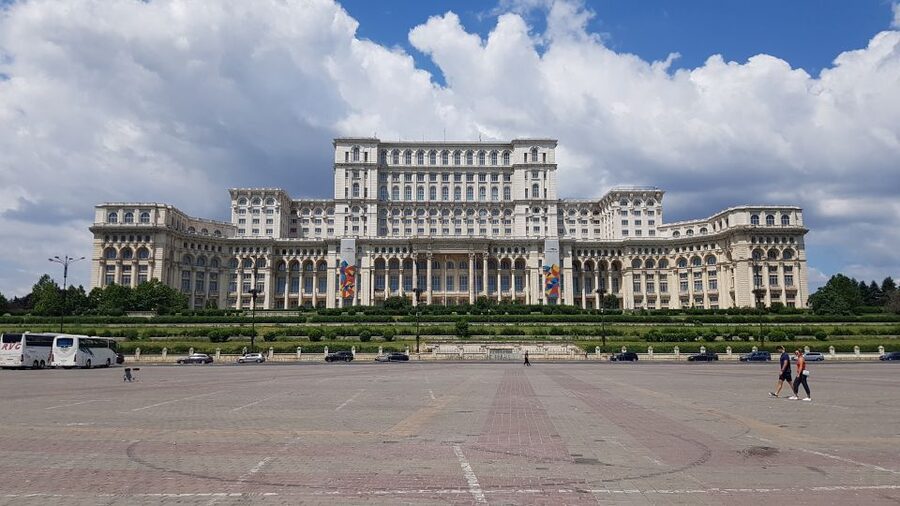
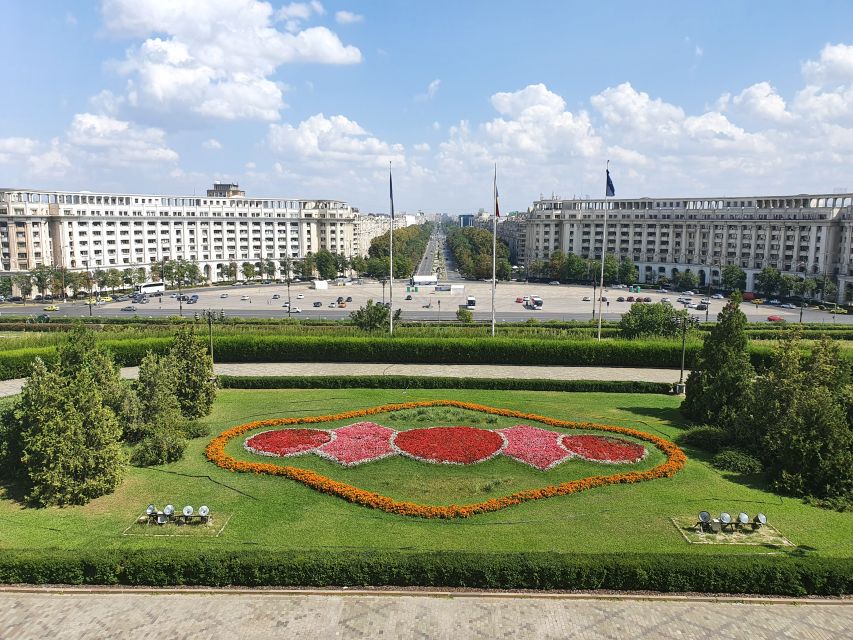
The Palace of the Parliament receives about 30 minutes for a photo stop, visit, guided sightseeing, and walk. The building is one of the clearest symbols of Ceaușescu-era construction and political ambition. Seeing it after the mansion and Revolution Square helps you compare private residence, state power, and popular revolt.
The schedule does not promise a full interior tour of the Parliament building. If entering the building is essential to you, confirm the exact arrangement before booking. Treat this portion as a guided city overview with selected stops rather than a detailed museum program.
Price, pace, and what you receive
At $254 per person, this is not a budget sightseeing trip. The value depends heavily on your group size. For a small private group, the price buys a vehicle, fuel, parking, road tolls, and a private multilingual guide for a route that would be awkward to arrange independently in six hours.
Entrance fees are extra and estimated at about 17 euros per person. Food and drinks are also not included. Add those costs before comparing the tour with a standard city excursion.
The flexibility is the strongest practical benefit. You can request changes to the daily route even after the tour begins. That does not mean every stop can receive unlimited time, but it gives your guide a way to respond if your group prefers the Village Museum over shopping, or the Ceaușescu sites over a quick city walk.
The main concern is the timetable. The listed visits add up to a demanding day, and several city stops are short. The six-hour label likely works because some visits are quick, some are photo stops, and the guide combines nearby sights. Still, you should not book this expecting long, unhurried visits everywhere.
The pickup is from Bucharest, with the driver holding a sign showing your last name. Free cancellation is available up to 24 hours before departure, and you can reserve while paying later. Starting times depend on availability.
Who should book this tour?
I would choose this route if you want a broad first look at Bucharest and nearby Snagov without managing transport yourself. It suits families, couples, and small groups who value a private guide and want both traditional culture and 20th-century political history.
It is also a good match for anyone curious about contrasts. You see modest rural homes, a legendary monastery, an authoritarian leader’s private residence, royal and cultural buildings, and the site of a revolution in one outing.
I would hesitate if you prefer slow museum visits or want to focus on only one subject. The schedule asks you to keep moving. A dedicated Village Museum visit, a full Ceaușescu-focused tour, or a separate Parliament visit could offer more depth.
The consistently perfect rating across the three available verified bookings supports the tour’s basic appeal. The comments describe an informative guide, an excellent overall experience, and a day full of contrasts, including communist buildings, Art Deco and Baroque city architecture, the lake setting, and the Dracula connection. That is exactly where this tour earns its place: not through one single attraction, but through the range of ideas packed into one private route.
Should you book it?
Book this tour if you want maximum variety in one day, private transport, and a guide who can explain Romania’s traditional life, communist past, and revolution in one connected story.
Skip it if you want a relaxed schedule or extensive time inside each attraction. For the right group, $254 per person can be fair because transport and guiding are built in. Just budget for the separate entrance fees and accept that the day favors breadth over slow exploration.
FAQ
How long does the tour last?
The stated duration is six hours, with pickup and return in Bucharest.
Is the tour private?
Yes. The car or minibus is reserved for you and your friends or family.
Is hotel pickup included?
Pickup in Bucharest is included. The driver holds a sign with your last name.
Which languages can the guide speak?
Guiding is available in Romanian, English, Italian, French, Spanish, and German.
Is Snagov Monastery outside Bucharest?
Yes. It is about 40 minutes from Bucharest and sits on an island.
Is Dracula connected with Snagov Monastery?
Yes. The monastery is presented as the place associated with Dracula’s tomb.
Are entrance fees included?
No. Entrance fees are separate and estimated at about 17 euros per person.
Are food and drinks included?
No. Food and drinks are not included in the tour price.
Can the itinerary be changed?
Yes. The private format allows flexibility for changes to the daily route, including changes made after the tour starts.
More Communist-Era History Walks in Bucharest
- The Real tour of Communism
★ 5.0 · 666 reviews - Life under Communism
★ 5.0 · 358 reviews - 3-Hour Guided Tour of Communist Bucharest
★ 4.9 · 303 reviews - Bucharest Essential Tour: Old Town, Calea Victoriei & Communism
★ 5.0 · 142 reviews
More Monastery Visits Around Bucharest
- Private Half Day Trip to Snagov Monastery & Mogosoaia
★ 4.1 · 29 reviews - Hike to Poenari Fortress, Vidraru Dam, Argeș Monastery – Private
★ 5.0 · 26 reviews - Small Group Tour to Mogosoaia Palace and Snagov Monastery
★ 5.0 · 23 reviews - Mystical Monasteries, Dracula’s Tomb and Mogosoaia Lake Palace – Private Tour
★ 5.0 · 20 reviews
Newest Bucharest trips on the site
- Winery touring & private wine tasting – one day private tour★ 5.0 · 3 reviews
- Bucharest: Dealu Mare Winery Private Trip with Wine Tasting★ 4.9 · 6 reviews
- Village Museum Bucharest Guided Tour★ 5.0 · 6 reviews
- Private Transfer from Giurgiu Port to Bucharest★ 4.5 · 12 reviews
- Airport Henri Coanda (Otopeni) to Bucharest – Private Transfer – Driver★ 5.0 · 5 reviews
- Salt Mine Tour from Bucharest with Entrance Ticket★ 4.5 · 19 reviews
- Wine tasting in Bucharest Old town – bonus cheese platter★ 4.5 · 6 reviews
- Private Wine Tasting at Bucharest’s First Wine Bar★ 5.0 · 3 reviews
Communist History Tours, compared.
Bucharest Essential Tour: Old Town, Calea Victoriei & Communism
Read our review →
Communism in Bucharest – Landmarks, Museum & Communist Appetizers
Read our review →

Museum of Communism Ticket with Communist Coffee
Read our review →Browse the lists this tour appears in