
Reviewed · COMMUNIST HISTORY TOURS
Timisoara: Grand Communism Tour
Timisoara’s communist past is not locked away in a distant museum. It is tied to a basement club, a church, a cemetery, and streets where ordinary people took an extraordinary risk in December 1989. This tour follows that path, showing you how Romania moved from decades of Communist Party rule to the uprising that brought down Nicolae Ceausescu.
I like the small group limit of 10, which gives the guide room to explain difficult subjects and answer questions. I also like the way the route leaves the postcard center behind, taking you into places connected with daily life and political change. The main drawback is the subject itself: this is a serious, sometimes painful tour, not a light sightseeing stroll.
Key points to know before booking
- Start at SCARTZ club: The tour begins at a former misfit club and continues into its basement Communist Consumer Museum.
- Follow the 1989 uprising: The Reformed Hungarian Church marks the place where Timisoara’s revolt began.
- Hear personal stories: Guides including Andrei, Sergiu, and Roberta explain the era through family experiences as well as political facts.
- Travel between important sites: Transportation is included, useful because the stops are spread around Timisoara.
- Plan for 3.5 hours: The length gives the subject room to breathe, but you should be ready for a history-focused morning or afternoon.
- Budget for the memorial: The Revolution Memorial costs an additional 20 RON.
Why Timisoara is the right place for a Communist history tour
Timisoara offers a particularly clear way to understand Romania’s final Communist years. The tour does not treat communism as an abstract political label. It links national events to buildings and people in one city, then shows how local opposition helped trigger the 1989 Revolution.
You begin with Nicolae Ceausescu, the country’s most notorious Communist-era leader. The guide sets his rule inside a wider 50-year political story, explaining how Romania’s government, society, and relationship with the outside world changed before the uprising.
That context matters. If you only visit a Revolution monument, 1989 can feel like a sudden burst of courage with no background. Here, you hear how decades of pressure, resistance, shortages, fear, and official control created the conditions for revolt.
The best guides also bring the era down to a human scale. Andrei has been praised for clear English, an easy manner, and family stories that make life under communism easier to picture. Roberta and Sergiu have also led highly rated visits, giving the tour a guide team with experience explaining this subject to an international audience.
More communist-era history walks in Timisoara:
- The Grand Tour of Communist Ages at Timisoara
★ 5.0 · 17 reviews - The Real tour of Communism
★ 5.0 · 666 reviews - Life under Communism
★ 5.0 · 358 reviews
Starting at SCARTZ and entering the Communist Consumer Museum
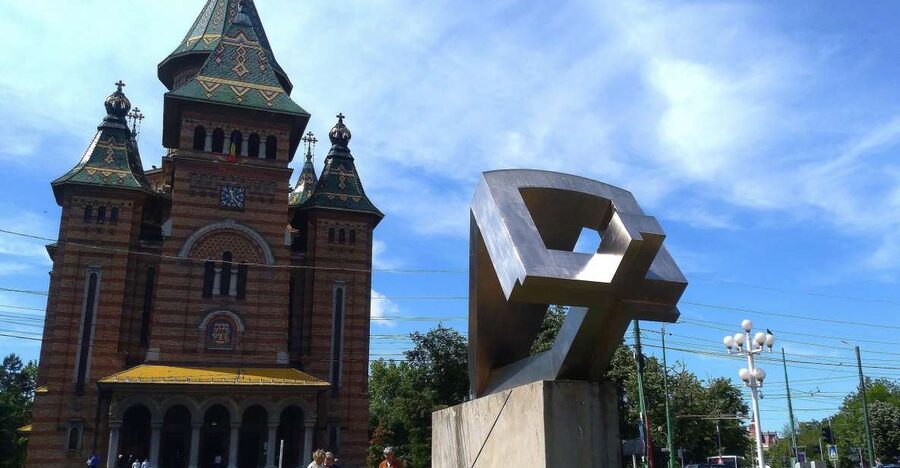
Meet in front of the Orthodox Cathedral. From there, the route leads to SCARTZ, described as a misfit club rather than a polished historical institution. That is an appealing beginning because it avoids the feel of a formal lecture hall.
The Communist Consumer Museum is in the club’s basement. Its subject is everyday consumption, a useful counterpoint to the political story above it. You are not only learning who held power. You are also looking at how that system shaped ordinary wants, choices, and household life.
This stop helps answer a question many visitors carry with them: what did communism feel like in practical terms? Political speeches and dates explain the system, but consumer objects and daily routines can make it more understandable. The museum gives the guide a place to discuss the gap between official promises and the limits people faced in daily life.
The setting is part of the appeal, but it also means you should not expect a large national museum with dozens of grand galleries. The value comes from the guide’s explanation and the unusual location. If you prefer military displays, monumental architecture, or a long list of artifacts, this may feel modest. If you want a more personal look at daily life, it is a smart first stop.
The resistance of the 1950s and 1960s
Next, the tour visits the Anti-Communist Resistance Movement Monument. Here, the story moves earlier than 1989, to the harsh opposition that Romanians mounted during the 1950s and 1960s.
This part is important because it challenges the idea that resistance began only when Ceausescu’s regime weakened. Opposition existed much earlier, often under dangerous conditions. The guide explains how people pushed back against the Communist system and what that opposition meant in a period when open dissent could carry severe consequences.
You will get more from this stop if you keep asking how political control affected real families. The tour is strongest when it connects national events to personal memory, and the guides may add family accounts from people who lived through the period.
The monument itself is not just a photo stop. Give the guide time to explain its meaning before moving on. The setting helps place Romania’s later revolution in a longer story of resistance rather than presenting it as an isolated event.
The Reformed Hungarian Church and the first spark of revolt
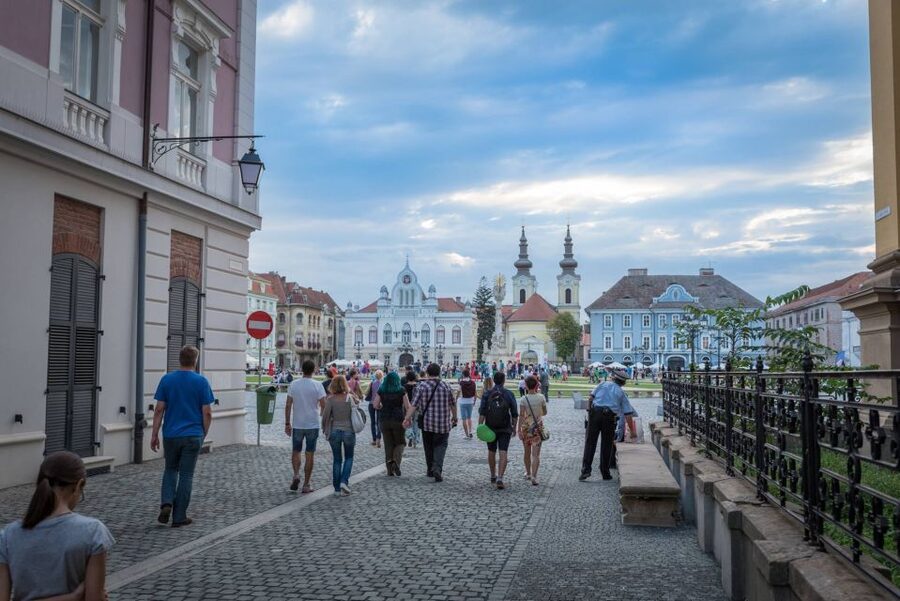
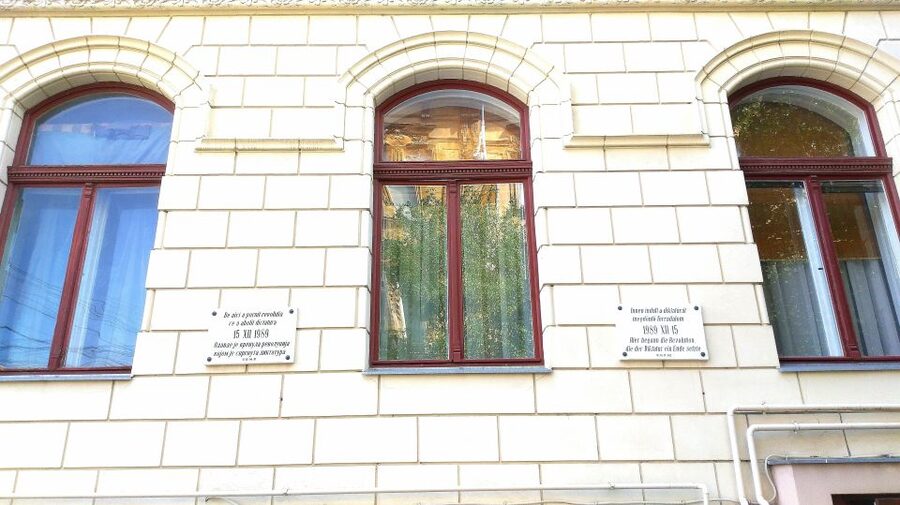
The Reformed Hungarian Church is one of the most significant stops on the route. It is identified as the place where the December 1989 uprising began.
That location carries extra weight because the first protests were tied to a local dispute involving the church’s pastor, Laszlo Tokes, though the supplied tour details focus on the church as the starting point of the uprising. From here, the guide explains how a protest grew into a wider challenge to the Communist government.
This stop makes the 1989 Revolution feel immediate. You are not simply hearing about a date in a textbook. You are standing at a place connected to the first public action that spread through Timisoara and helped bring down Ceausescu’s rule.
The church also adds an important human element. Religious and ethnic identity formed part of the story, and the location reminds you that political change often begins with a local issue that exposes much larger frustrations.
A few more Timisoara trips worth a look
- The Classic Tour of Timisoara
★ 5.0 · 154 reviews - Weekly Guided Tour in English – Tuesday, Thursday, Saturday
★ 5.0 · 84 reviews - Timisoara All in One – Walking and Tram Tour
★ 5.0 · 72 reviews - Timisoara: Guided Walking Tour
★ 4.9 · 38 reviews
Seeing the former Communist Party headquarters
The route also includes the local headquarters of the former Communist Party. This is a useful counterpoint to the Reformed Hungarian Church. One site represents the beginning of public resistance. The other represents the machinery of the system being challenged.
You can use this stop to ask the guide how power operated locally. The tour’s purpose is not simply to point at a building and attach a date. It is to explain the relationship between political authority, public institutions, and ordinary residents.
The contrast between the church and party headquarters gives the tour a clear physical rhythm. You move from a place where people gathered in opposition to a place associated with the authorities they opposed. That makes the route easier to follow and helps you understand the geography of the revolt.
The Cemetery of Revolution Heroes
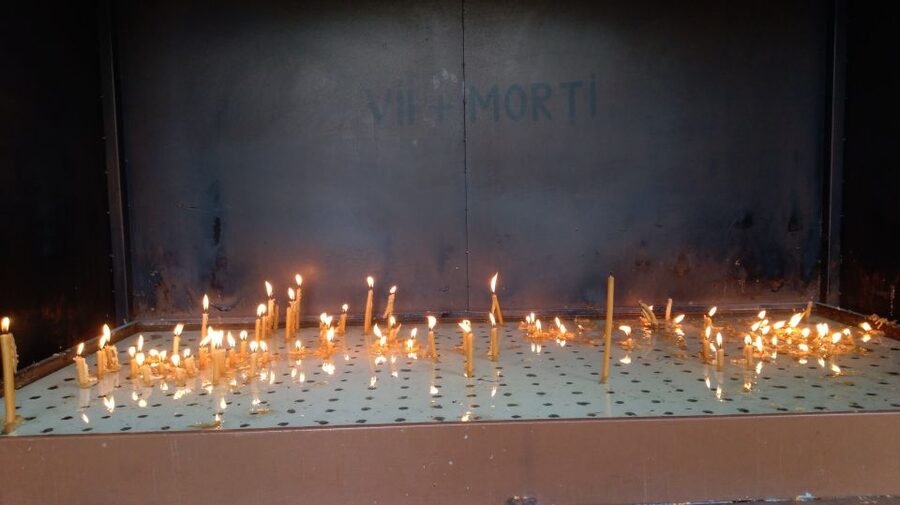
At the Cemetery of Revolution Heroes, the tone becomes more personal. The guide explains the final events that led to the end of Ceausescu’s regime and remembers the people who died during the Revolution.
A cemetery can communicate loss more directly than a timeline. Here, the revolution has names, graves, and families rather than only political consequences. You should expect this section to be solemn, especially after hearing how quickly protests developed into deadly conflict.
This is one of the places where the tour’s focus on firsthand memory matters most. Guides who draw on family experiences can help explain how the events affected people beyond the headlines. The best approach is to listen carefully and allow the site to remain quiet when appropriate.
The cemetery may be difficult for young children or anyone looking for a cheerful city outing. It is also not a stop to rush through. If you want to understand why the Revolution remains such a powerful part of Timisoara’s identity, give this visit your full attention.
Ending at the Revolution Memorial
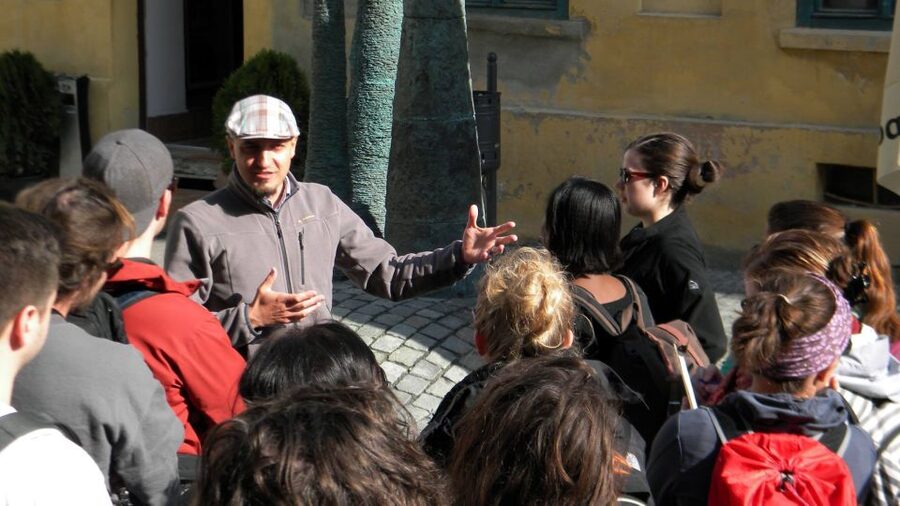
The final stop is the Revolution Memorial of Timisoara. The site honors the people who took part in the anti-Ceausescu Revolution, which ultimately helped end Ceausescu’s rule in Romania.
The entrance fee is not included and costs 20 RON. That is a small extra charge, but you should carry some local currency or be prepared to pay separately. The memorial gives the tour a natural ending because it gathers the main themes together: political repression, public courage, loss, and the collapse of the old regime.
I like ending here rather than at a general sightseeing landmark. The route finishes with a place devoted directly to the people and events you have been discussing. It keeps the tour’s focus on Timisoara’s role in 1989.
The memorial is also a useful place to ask final questions. You may want to clarify the sequence of events, compare Timisoara with developments elsewhere in Romania, or ask how the city remembers the Revolution today.
What the 3.5-hour format feels like
Three and a half hours is a solid length for this subject. A shorter tour might give you a few dates and a quick photo stop. This one has enough time for several sites, political background, and personal stories.
Transportation between stops is included, which matters because the itinerary is spread across the city. You will not need to work out separate routes between the museum, monuments, church, cemetery, and memorial.
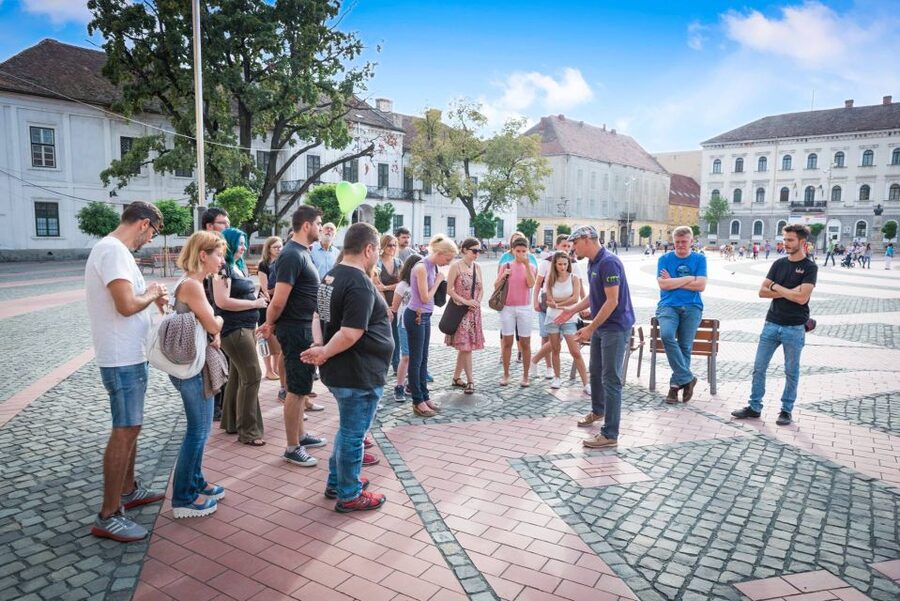
The group is limited to 10 people. That is small enough for a more direct conversation with the guide, especially at places where the history raises questions. It also helps keep the experience from turning into a crowded lecture.
Still, expect a fairly serious pace. You will visit several sites and listen to a substantial amount of explanation. Wear comfortable shoes and bring water, particularly in warm weather, but understand that the tour is built around interpretation rather than long free periods.
The guides and the value of personal stories
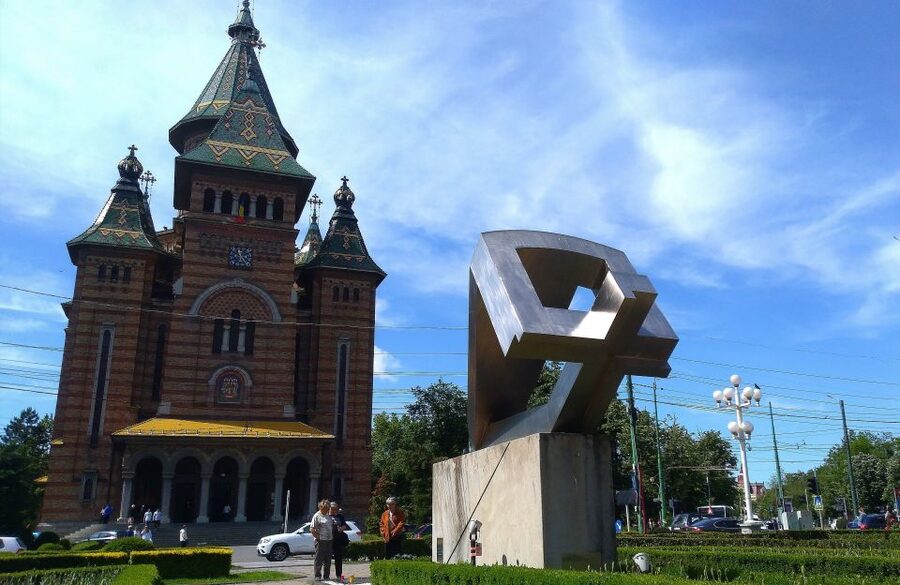
The guide can make or break a history tour, and this experience has received especially strong praise for its guide team. Andrei is noted for flawless English, engaging storytelling, and an easygoing style. He has also studied in the Netherlands, a detail that helped him connect naturally with people from that country.
Sergiu, also listed in some feedback as Sergio, has been praised for professional guiding and clear delivery. Roberta has been singled out for explaining the Communist period through her own family’s experience. These details suggest a guide team that can move between broad political history and personal memory.
You should not assume you will receive a particular guide when booking. The practical point is that the tour has been led by several guides who can explain the topic in English or Romanian. If you have a preference for language, confirm it when you reserve.
Personal stories are valuable here, but they should support the facts rather than replace them. The strongest version of this tour gives you both: a clear account of Romania’s political development and a sense of how that period affected families, neighborhoods, and daily routines.
Is $70 a fair price?
At $70 per person, this is not the cheapest way to spend three and a half hours in Timisoara. The price needs to be judged against what is included: a live guide, transportation between stops, a small group capped at 10, and access to several locations tied directly to the Communist era and 1989 Revolution.
The extra 20 RON for the Revolution Memorial is modest, but factor it into your budget. The Communist Consumer Museum is part of the route, while the memorial fee is specifically separate.
I see the price as reasonable for visitors who want serious historical context without arranging several sites independently. You are paying for the connections between locations, not simply for transport. If you already know Romanian Communist history well and only want to see the monuments, the value is less convincing.
For first-time visitors who want to understand why Timisoara matters, the guided structure earns its keep. You could walk past many of these places without realizing their role in the country’s political story.
Who should book this experience?
I would recommend this tour to you if you enjoy political history, modern European history, or guided walks that explain how a city changed. It is also a good choice if you have already seen Timisoara’s main squares and want to understand the parts of the city connected with recent history.
You will get the most from it if you are willing to listen, ask questions, and accept a sober tone. The tour is not designed as entertainment, and the cemetery and Revolution Memorial can be emotionally heavy.
Families with older teenagers may find the subject worthwhile, especially if they are studying twentieth-century Europe. Younger children may not have enough background to follow the political story or may find the memorial sites difficult.
The small group is a strong fit for solo visitors and couples who prefer conversation over a large coach tour. The English-language option also makes the tour practical for international visitors who want more than a brief English-language introduction at a museum.
Practical details before you go
The meeting point is in front of the Orthodox Cathedral. Check the starting time when you book, since availability can vary.
The activity lasts 3.5 hours and is offered with live guiding in English or Romanian. Transportation between stops is included. The Revolution Memorial entrance costs 20 RON extra.
You can cancel up to 24 hours before the start for a full refund, and you can reserve now while paying later. Those terms are useful if your Timisoara schedule is still shifting.
The overall rating is 4.9 from 13 reviews, with repeated praise for clear explanations, personal stories, strong English, and routes that go beyond the most touristic parts of town. I would still book it for the subject and structure, not simply for the score.
Should you book the Grand Communism Tour?
Book it if you want to understand Timisoara through the Communist era and the 1989 Revolution, rather than only admire its architecture. The stops are specific, the route has a clear historical arc, and the small group gives the guide room to explain personal and political details.
Skip it if you want a relaxed sightseeing tour, dislike cemeteries and memorials, or have little interest in twentieth-century politics. For everyone else, this is a useful way to connect Romania’s national story with the actual places where Timisoara’s resistance took shape.
FAQ
Where does the tour meet?
Meet in front of the Orthodox Cathedral in Timisoara.
How long does the tour last?
The tour lasts 3.5 hours.
What languages are available?
The live tour guide is available in English and Romanian.
How large is the group?
The tour is limited to 10 participants.
Is transportation included?
Yes. Transportation between the tour stops is included.
Is the Revolution Memorial entrance included?
No. Entry to the Revolution Memorial costs an additional 20 RON.
Can I cancel the booking?
Yes. You can cancel up to 24 hours in advance for a full refund. You can also reserve now and pay later.
Newest Timisoara trips on the site
- Bite your way through Timisoara – Timisoara’s Street Food Tour★ 5.0 · 14 reviews
- The Grand Tour of Communist Ages at Timisoara★ 5.0 · 17 reviews
- Timisoara Downtown Dream Tour★ 5.0 · 5 reviews
- Ecumenical Tour of Timisoara★ 5.0 · 15 reviews
- The Jewish Heritage Tour of Timisoara★ 5.0 · 9 reviews
- Nera Gorge National Park – Private Day Tour from Timisoara★ 4.5 · 4 reviews
- Timisoara: Private Walking Tour with a Local Guide★ 4.5 · 5 reviews
- Timisoara Dream Tour in Elisabetin Neighborhood★ 5.0 · 3 reviews
Communist History Tours, compared.


Bucharest Essential Tour: Old Town, Calea Victoriei & Communism
Read our review →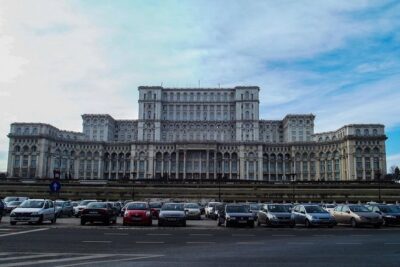
Communism in Bucharest – Landmarks, Museum & Communist Appetizers
Read our review →
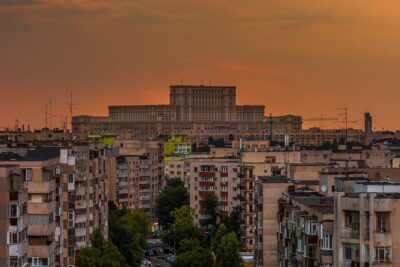


Museum of Communism Ticket with Communist Coffee
Read our review →Browse the lists this tour appears in